Updated June 2026
Why “Vietnam Rainy Season” Is the Wrong Frame
Travelers search “Vietnam rainy season” looking for one answer. The country doesn’t cooperate. Vietnam stretches 1,650km from north to south across three distinct climate zones, and the monsoon systems affecting each region arrive from different directions on different schedules. What’s peak wet season in Saigon is peak dry season in Hoi An. What’s flooding in Hue is clear and cool in Hanoi.
The more useful question: what’s the weather like in the specific region you’re visiting, in the specific months you’re going?
✓Quick Answer
South Vietnam (Saigon, Mekong Delta, Phu Quoc): rainy season May–October. Central Vietnam (Hoi An, Hue, Da Nang): rainy season October–January. North Vietnam (Hanoi, Ha Giang, Sapa): rainy season May–September. No single month is bad everywhere — use this guide to route around the worst of it.
South Vietnam Rainy Season (May–October)
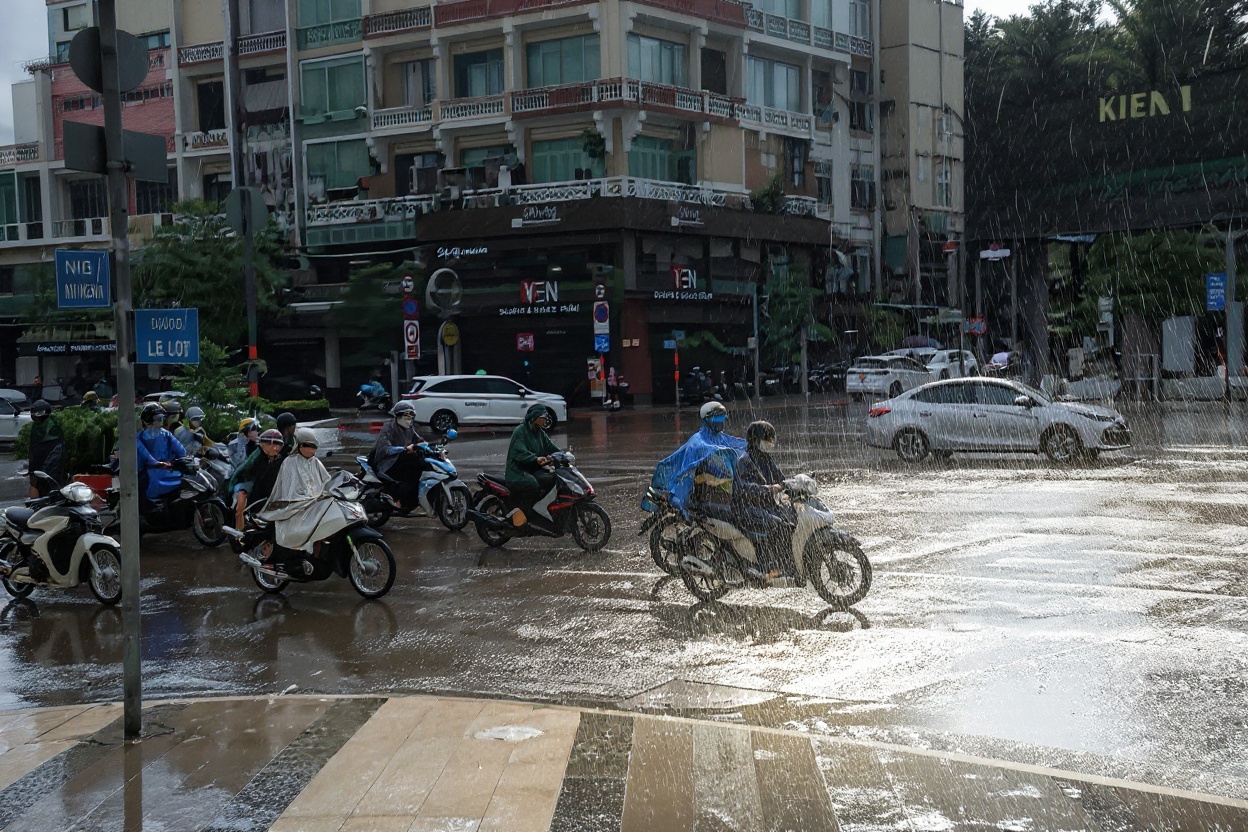
The southwest monsoon hits southern Vietnam between May and October. Saigon, the Mekong Delta, and Phu Quoc all get the same system. This is not the same as “it rains constantly from May through October.” The pattern is more specific: clear or partly cloudy mornings, heavy rain in the afternoon or evening (usually 3–6pm), clearing by nightfall.
Average rainfall in Saigon peaks at 300–320mm in September and October. That sounds like a lot. Distributed across afternoon showers, it means about 16–18 rain days per month — most of which don’t meaningfully interrupt a day of sightseeing if you’re indoors or under cover between 3 and 6pm.
ℹKnow Before You Go
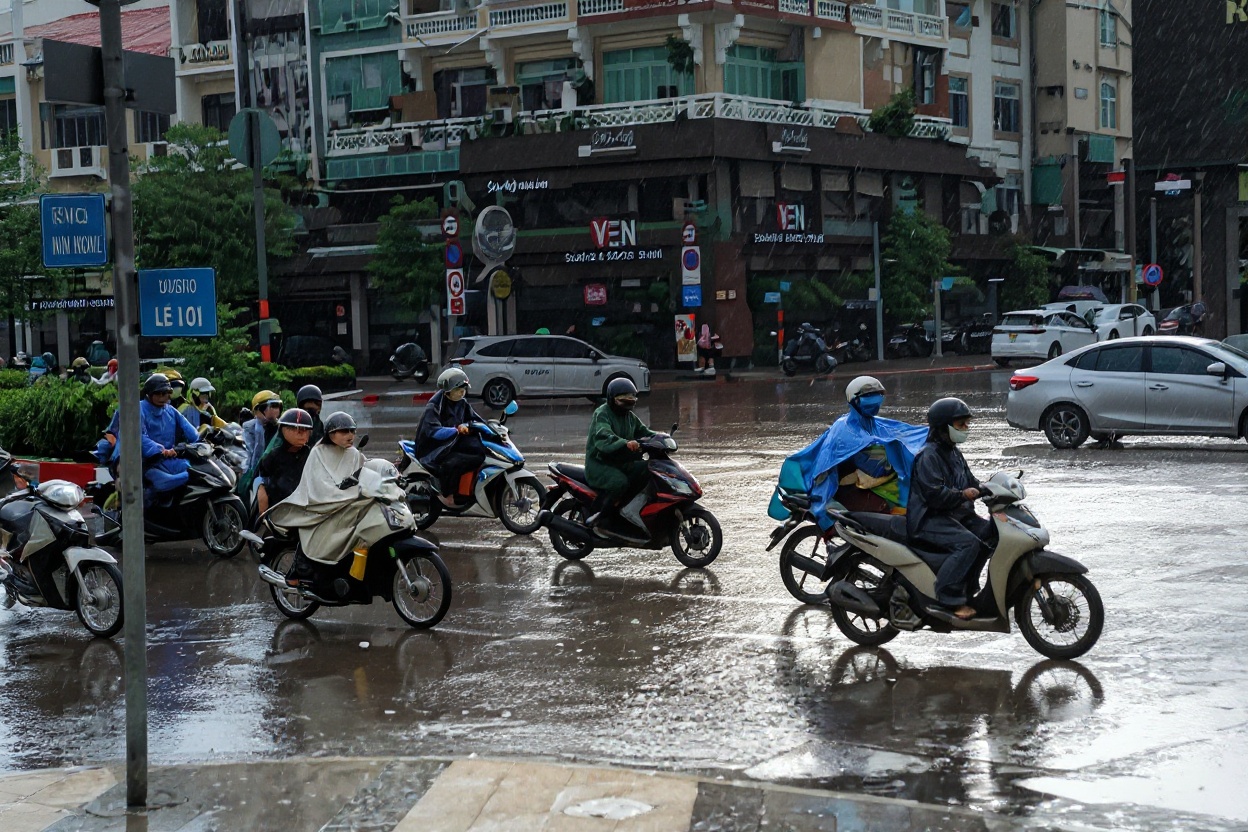
Saigon’s drainage system struggles with the heaviest downpours. Street flooding after a peak September rainstorm is normal and can reach ankle-to-knee depth on some blocks for 30–60 minutes. It drains fast. Flip-flops are the practical footwear choice; leather shoes are a liability.
Phu Quoc in Rainy Season (May–October)
Phu Quoc gets hit harder than the mainland during rainy season. The island sits exposed to the southwest monsoon with no terrain shelter, and monthly rainfall from June–August can reach 400–500mm. Wave heights increase significantly, which closes the swimming beaches on the western side and makes boat tours to the Archipelago rough to dangerous.
The practical impact: most island activities become limited from June–August. The beach scene evaporates. Accommodation prices drop 30–50%. If you’re going to Phu Quoc specifically for the beaches and diving, May–October is the wrong window. If you’re fine with rain, discounted hotels, and near-empty beaches when it’s not actively raining, it can work.
Mekong Delta in Rainy Season
The Mekong Delta floods seasonally — this is not a malfunction but the ecosystem it was built around. Rice paddies, fish traps, and floating markets are all calibrated to the annual flood pulse. The Delta from August–October sees water levels at their highest, which actually makes some boat travel easier and the landscape more dramatic.
The floating markets at Cái Răng (near Can Tho) are most active in the early morning regardless of season. Rain affects them less than you’d expect — the vendors are on boats anyway. For the full Delta logistics, see our Mekong Delta travel guide.
Central Vietnam Rainy Season (October–January)
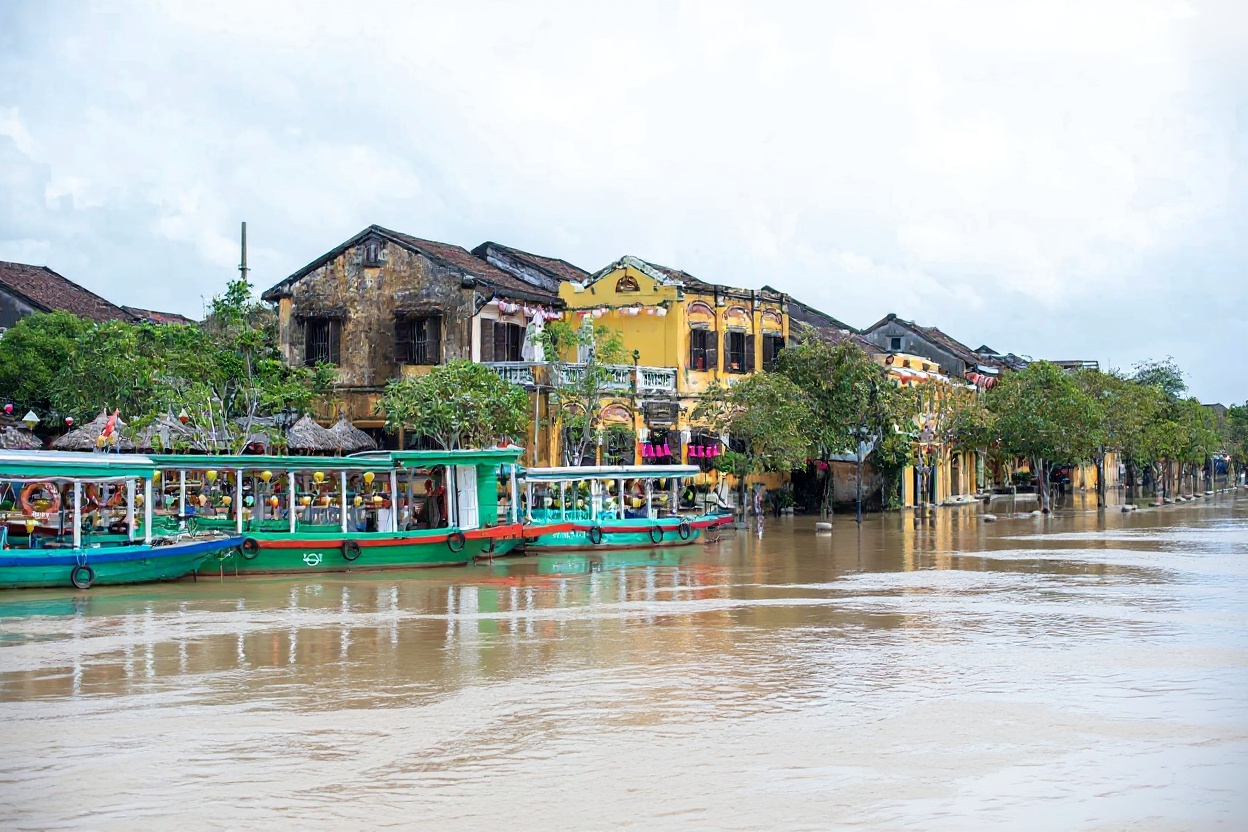
Central Vietnam operates on the opposite monsoon system from the south. While Saigon is drying out from October onward, the northeast monsoon arrives on the central coast and delivers its heaviest rain from October through January. This is the part of Vietnam that catches most travelers off guard.
Hoi An floods. This is not an anomaly or a climate change story — it’s a documented annual event that’s been happening for centuries. The Thu Bon River backs up during sustained heavy rain, and the Ancient Town, built on the river floodplain, goes under. In bad years (November 2020, October 2022) the main streets see 1–1.5m of water. In normal years, 30–60cm for 1–3 days.
⚠Real Talk
Hoi An flood photos are spectacular. The Ancient Town under water with lanterns reflected in it genuinely looks like a painting. Some travelers specifically plan for flood season. Most travelers who show up unprepared in late October are annoyed rather than charmed. Know which one you are before you book.
Da Nang in Rainy Season
Da Nang takes the central coast rain hard but manages it better than Hoi An because the city has better drainage infrastructure and less built environment on flood-prone ground. The beaches become completely unswimmable from October–January — rough surf, strong currents, posted warnings. The Da Nang beach scene is a different experience in a city than it is at the beach. The city itself remains functional and walkable, just wet.
Hue in Rainy Season
Hue is the wettest city in Vietnam by annual rainfall — around 3,000mm per year, with the bulk arriving October–January. The Perfume River floods, the imperial citadel grounds go damp, and the atmospheric grey mist that Hue photographers love is actually just permanent low cloud for three months. The tombs and temples are still accessible. The motorbike rentals still run. Bring a rain jacket, not a poncho — the wind from the coast makes ponchos useless.
The central Vietnam rainy season is the strongest argument for building a flexible itinerary. If October–January is your window and central Vietnam is on your list, build in the ability to shift south if the forecast turns bad. See our Vietnam best time to visit guide for the full month-by-month breakdown.
North Vietnam Rainy Season (May–September)
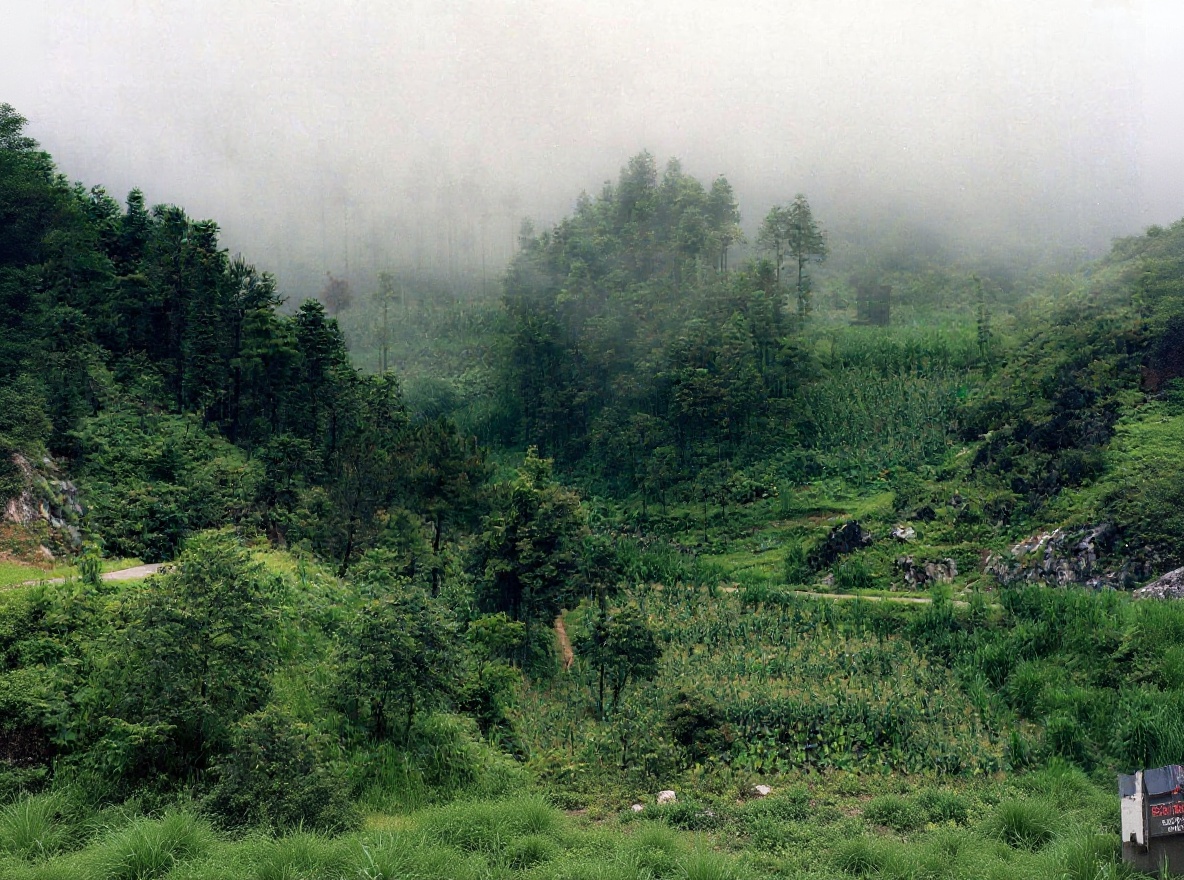
Northern Vietnam’s rainy season runs May through September, driven by the southwest monsoon arriving from the Gulf of Tonkin. Hanoi gets hot, humid, and showery. Ha Giang, Sapa, and Mu Cang Chai get the full mountain version: daily mist, afternoon rain, temperatures that drop 10°C from the valley floor to the peaks, and roads that turn to mud after sustained downpours.
Hanoi in Rainy Season
Hanoi’s rainy season is the city at its least photogenic and most human. The air is thick with humidity, temperatures sit at 33–37°C, and afternoon thunderstorms arrive two or three times a week. The Old Quarter’s stone streets drain slowly. Street food stalls operate regardless. Air conditioning in cafés becomes the organizing principle of the day.
The museums — Vietnam Museum of Ethnology, Hoa Lo Prison — are better in rain season because tourists thin out and the experience becomes less crowded. The Temple of Literature courtyard in a light rain has a specific quality that the dry-season tour groups eliminate. Hanoi in August is uncomfortable but not impossible. Budget travelers find room prices 20–30% lower than peak October–March season.
Ha Giang Loop in Rainy Season
The Ha Giang Loop in rainy season is the version that tests riders. The mountain roads between Dong Van and Meo Vac become technical — wet rock, landslide debris on bends, visibility cut to 50m in cloud. People still do it. Some find the green-drenched landscape worth the difficulty. Most motorbike accidents on the loop happen in wet conditions.
The honest read: if you’re an experienced mountain motorbike rider who has ridden in wet conditions before, June–August Ha Giang is hard but possible. If this is your first time on a semi-automatic in mountains, wait for October–November when the roads dry, the buckwheat flowers bloom, and the light is extraordinary. For full logistics, see our Ha Giang Loop guide.
Sapa and Mu Cang Chai in Rainy Season
Here’s the counter-intuitive truth about northern mountain rainy season: the rice terraces are greenest from July–September, and the harvest gold of October–November only happens because of the preceding rains. Sapa’s trekking trails are muddy from June–September. The views are frequently clouded out. But the villages are less crowded, the farmers are working the fields, and the landscape has a saturated green that the dry season can’t match.
Mu Cang Chai’s famous terraces peak in color during September–October, right as the rains are ending. The crowds arrive in October. The rains that made the terraces worth photographing happened in June–September. There’s a useful lesson in there about the relationship between difficult travel conditions and the rewards that follow them.
Typhoon Season: The Actual Threat
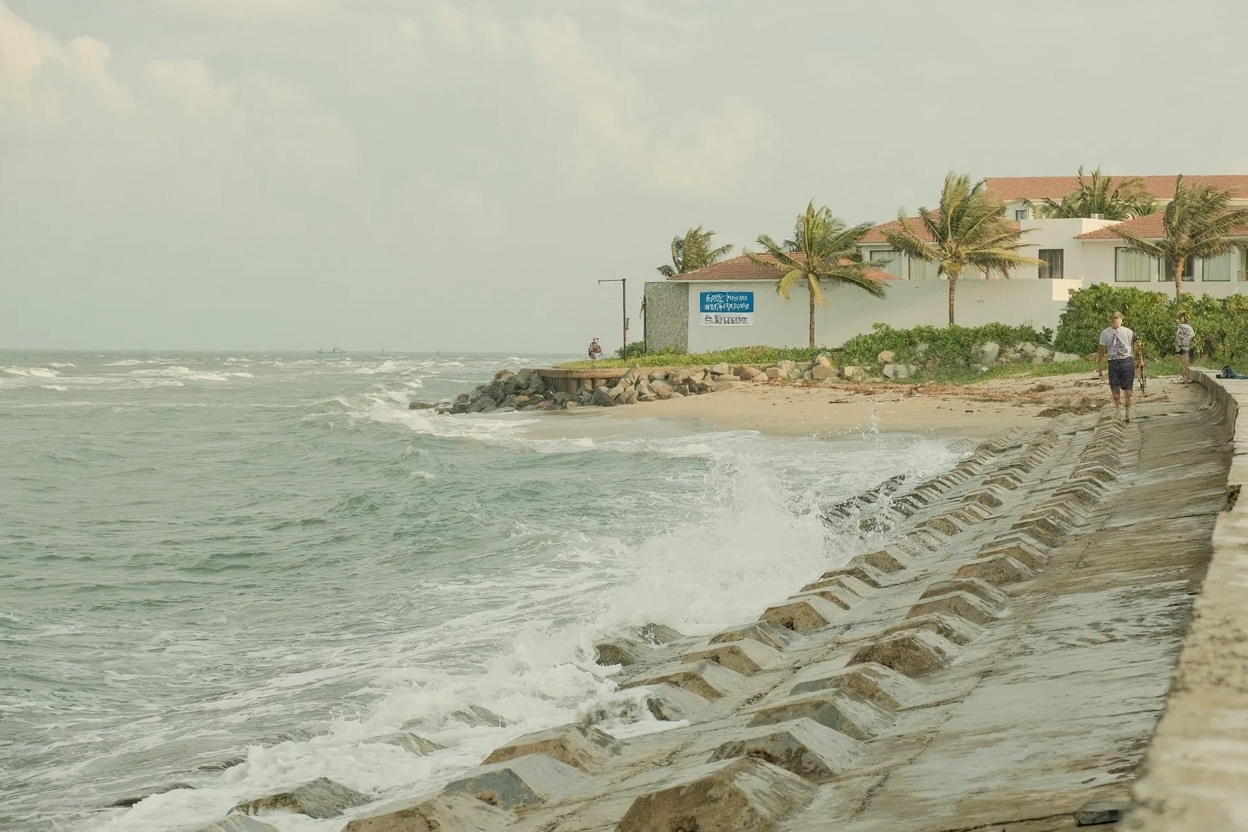
Typhoons (bão — say: bow) are a real threat on the central coast from September to November, occasionally extending into December. The Vietnamese coast sits in a typhoon corridor, and 5–10 named storms hit the central and northern coast each year. Not all of these make landfall; fewer still cause significant disruption to travelers.
The practical impact of typhoon season: flights get cancelled, boats stop running, and roads occasionally close for 24–72 hours around direct hits. The storm itself usually passes fast. The aftermath — flooding, debris, road damage — sometimes lingers for days in mountainous areas.
How to handle it: check the Vietnam Meteorological and Hydrological Administration (VNMHA) forecast during October–November if you’re on the central coast. Vietnamese weather apps (VNCuaToi, Weather Vietnam) give localized forecasts that are more accurate than international apps for predicting local shower patterns. If a typhoon is tracking toward Da Nang or Hue, move inland or south — Saigon is almost always clear when the central coast is getting hit.
↗Insider Tip
Typhoon advisories sound more alarming than the reality usually is for the average traveler. The storms that cause real disruption — Category 3+ making direct landfall — happen 2–3 times per decade. More commonly you get 1–2 days of heavy rain and strong wind before the system passes. Adjust your plans for 48 hours, not 2 weeks.
Month-by-Month: Where to Go and What to Expect
The clearest way to plan is by month rather than by season, cross-referenced with where you’re going:
January: North is cool and dry (excellent). South is dry season peak. Central is still getting late monsoon rain — Hoi An in January has its flood risk behind it but remains cool and overcast. Best region: everywhere except central coast.
February: North warms up. Tết (lunar new year) falls in late January or February — this reshuffles everything. Everything closes for 3–7 days, domestic transport is overwhelmed, Hanoi empties out. Plan around it or into it consciously. See our Vietnam Tết guide for the full picture.
March–April: Best overall window. North warming and dry. Central coast drying out. South still dry season. Prices rise accordingly — peak season for experienced travelers who know this.
May: Southern rainy season begins. North gets warmer and stickier. Central coast starting its long dry window (the best months for Hoi An and Da Nang beaches). Sapa and Ha Giang start getting rain — green but muddy.
June–August: South gets afternoon showers daily. Phu Quoc seas rough. Central coast is the dry-season winner — 30°C, low humidity, clear beach days. North is rainy season proper — Hanoi hot and humid, mountain roads wet. Ha Long Bay is calm and warm but hazy.
September–October: Central coast typhoon risk rising. South starting to dry out. North beginning its golden season — Hanoi in October is genuinely one of the best weather windows in the country. Mu Cang Chai and Sapa rice terraces hit peak color late September to mid-October.
November–December: Central coast peak rainy season. Hoi An flood risk highest in November. South fully dry. North cool and clear — the best weather Hanoi gets all year. Ha Giang in late November has almost no tourists and extraordinary light.
Rainy Season Upsides: The Things Guides Don’t Say
Every rainy season article focuses on the inconvenience. Here’s what the inconvenience buys you:
Price drops of 20–40% on accommodation in affected regions. Budget travelers who can tolerate afternoon showers will find Vietnamese rainy season one of the best-value travel windows globally.
Crowd reduction that’s dramatic. Ha Long Bay in the wet months (May–September) has a fraction of the boats that clog it in November–March. The karst scenery is less sharp through the haze, but you can actually hear yourself think on the boat deck.
The green. Vietnam’s rice paddies, jungle slopes, and mountain valleys hit their maximum saturation in rainy season. Ha Giang in August, when the rain clears briefly and the light hits the terraced valley below Ma Pi Leng, looks like a fantasy version of a country. It’s real. You have to be there in the rain to see it.
Authentic rhythm. Vietnamese cities in tourist low season operate for Vietnamese people, not for travelers. The restaurants that only open for locals. The market that’s just a market, not a “cultural experience.” This is the version of Vietnam that residents experience year-round — rainy season gives you access to it.
Jake’s Take: When I Actually Go
I’ve been to every part of Vietnam in every season over five years. The rainy-season trips that worked best: Saigon in July (afternoon showers, empty museums, cheap hotels), Hue in November (everything grey and atmospheric, the tourist crowds gone, the bún bò Huế at 6am in an empty restaurant while rain drummed on the awning), and Hanoi in September when the lake reflects the storm clouds and the city smells like wet stone and frangipani.
The ones that were genuinely hard: Hoi An in November 2020 during the historic flood, when I spent three days on the second floor of a guesthouse watching furniture float past the window. Not the plan. But also — the guesthouse owner’s family cooked for everyone stranded upstairs, and the city looked like nothing I’d seen before or since. Worth it, in retrospect. Not worth planning for.
The practical rule I use: rain season is a discount trigger, not a cancellation trigger. If prices drop, crowds thin, and my itinerary can flex, the rain is usually manageable. If I have fixed activities that require specific conditions — diving, Ha Giang riding, beach time — I time those around the regional dry windows.
What to Pack for Vietnam Rainy Season
The transport situation in rain: Grab (Vietnam’s Uber equivalent) runs through most rain. City buses run through most rain. The xe ôm (say: say-ohm — motorbike taxi) drivers put on their ponchos and keep going. The only transport that reliably stops: boats when seas are rough (Phu Quoc, Ha Long Bay, Con Dao), and mountain roads after landslides (Ha Giang, Sapa). For a full rundown on how to get around regardless of season, see our Vietnam transport guide.
Umbrella versus poncho: poncho wins in Vietnam for practical reasons. The streets are narrow, the wind unpredictable, and motorbike riding (even as a passenger) makes umbrellas useless. A lightweight packable poncho (15,000–25,000 VND from any street vendor) is the honest answer. Pack quick-dry clothes over cotton — a wet cotton t-shirt in 35°C humidity is a specific kind of miserable.
Waterproof bag liners for your backpack matter more than the bag’s own waterproofing rating. Keep your passport, electronics, and documents in a waterproof pouch. Your camera matters less than you think — most modern smartphones handle light rain fine. What doesn’t handle rain: leather shoes, anything that molds, any sock that isn’t merino or synthetic.
Frequently Asked Questions
Is Vietnam worth visiting in rainy season?
Yes — with regional awareness. Southern Vietnam’s rainy season (May–October) involves afternoon showers that rarely derail a full day. Northern Vietnam’s rainy season (May–September) is more disruptive for outdoor activities but still very travelable. Central Vietnam’s rainy season (October–January) is the one to plan around most carefully, especially if Hoi An or Hue are on your list.
What months should I avoid Vietnam?
There’s no month to avoid Vietnam entirely — but there are regional windows to be aware of. Hoi An and Hue in October–November carry genuine flood risk. Phu Quoc in June–August has rough seas and limited beach access. Ha Giang Loop riding in July–August is technically challenging on wet mountain roads. If those specific experiences are your main goals, time around them.
Is Vietnam rainy season bad for travel?
Rarely. Most of Vietnam’s rainy season rain arrives as afternoon showers rather than all-day monsoon. Mornings are usually clear. Temperatures stay warm. The rain itself is often warm enough that getting caught in it isn’t unpleasant. The main practical issues are flooding in low-lying areas (Hoi An), muddy roads in mountain areas (Ha Giang, Sapa), and reduced beach access on exposed coasts (Phu Quoc, Da Nang).
How do I plan a Vietnam itinerary around the rainy season?
Route south-to-north October–April (south is dry, north and central still manageable), or north-to-south May–September (north is wet, south drying out, central is the sweet spot). The classic backpacker route — Hanoi → Hue → Hoi An → Saigon — works best October–April when all three zones have tolerable conditions simultaneously. For a full route plan, see our Vietnam itinerary guide.
Does it rain all day in Vietnam rainy season?
Rarely. Outside of sustained weather events (typhoon season on the central coast, October–November), most rainy-season rain in Vietnam follows a predictable afternoon pattern: clear or overcast morning, thunderstorm or heavy shower in the mid-afternoon, clearing by evening. Plan active outdoor activities for morning. Museums, cafés, and covered markets for the afternoon window. The exception is Hue in November–December, which can have 4–5 consecutive grey days with persistent drizzle — plan extra buffer days if you’re visiting then.
Is Vietnam safe during typhoon season?
Generally yes — the vast majority of typhoon systems that form in the South China Sea either don’t make landfall in Vietnam or weaken significantly before they do. Direct hits from major storms are rare (roughly 1–2 times per decade at Category 3+). More commonly, typhoon season means elevated rain and wind for 1–2 days while a system passes offshore. Monitor VNMHA forecasts during October–November if you’re on the central coast, and keep your itinerary flexible enough to wait out a 48-hour weather window.
FAQ
When is Vietnam’s rainy season?
Vietnam has multiple rainy seasons depending on the region. The south (Saigon, Mekong Delta, Phu Quoc) gets its rainy season May–November, with heaviest rain July–September. Central Vietnam (Hue, Hoi An, Da Nang) gets its rain October–December. The north (Hanoi, Ha Giang, Sapa) has a wet season May–September.
Can you travel Vietnam during the rainy season?
Yes — the rainy season doesn’t mean constant rain. In the south, it typically means an hour or two of heavy afternoon downpours, then clear skies. Travel is still entirely feasible; accommodation and tours run normally. The exceptions are Ha Giang in July–August (landslide risk) and central Vietnam in October–November (flooding can close roads).
Does rain affect outdoor activities in Vietnam?
Some activities close during heavy rain — boat tours on Ha Long Bay or the Mekong are sometimes cancelled in severe weather. Ha Giang Loop motorcycle trips become genuinely dangerous on wet roads. Most other activities (temples, food tours, city exploration) continue regardless of rain.
Is Vietnam cheaper during the rainy season?
Yes — accommodation drops 20–40% at coastal resorts like Nha Trang, Mui Ne, and Phu Quoc during their respective low/rainy seasons. Flights are cheaper. Crowds are thinner at major attractions. If your destination’s rainy season is your travel window, it’s worth accepting some rain for the price and crowd benefits.
What should I pack for Vietnam’s rainy season?
A lightweight packable rain jacket (not an umbrella — too hard to manage on motorbikes and in markets). Quick-dry clothing. Waterproof bag cover or dry bags for electronics. Sandals rather than sneakers for walking in wet streets. Most rain comes in short heavy bursts — you don’t need full wet-weather gear.