Last updated: June 2026 — Tết 2027 falls January 29.
I’ll give you the honest version: Tết is one of the most interesting times to be in Vietnam and one of the worst times to visit Vietnam. Both of those things are true simultaneously. It depends entirely on what kind of traveler you are and what you’re willing to let go of.
Here’s what actually happens during Tết, what’s worth being there for, and what you need to know before you book flights that land on January 30th.
What Is Tết and When Does It Happen?
Tết Nguyên Đán (say: tet ngwen dan — literally “Feast of the First Morning of the New Period”) is the Vietnamese Lunar New Year — the most important cultural, religious, and family holiday in Vietnam. It marks the transition between the old and new lunar calendar year and typically falls between late January and mid-February in the Gregorian calendar.
The date changes every year. The main Tết celebrations:
- Tết 2027: January 29 (Year of the Goat)
- Tết 2028: February 17 (Year of the Monkey)
The official holiday runs for 5–7 days, but the practical reality is more like 10–14 days: the week before Tết sees massive domestic travel as Vietnamese people return home to family, and the week after involves gradual reopening of businesses and slow return from home provinces. Many small restaurants and family-owned shops take 2 weeks off total.
✓Quick Answer
Tết 2027 falls on January 29. Book any Vietnam trip in January or February with awareness of the Tết window. The 3 days before and 3 days after the main holiday are the most disruptive — transport is either packed or stopped, services are closed, and tourist infrastructure largely disappears. The New Year’s Eve itself (Giao Thừa) is spectacular and worth being in a major city for.
What Happens in Vietnam During Tết
The Week Before — Travel Chaos and Market Fever
The 7–10 days before Tết is when Vietnam moves. Domestic airlines are full. Sleeper buses are full. Train tickets sell out months in advance. Millions of Vietnamese workers travel from the cities where they work back to the provinces where their families live. Hà Nội and Hồ Chí Minh City’s populations drop noticeably in the final days before the holiday.
The markets in the week before Tết are extraordinary. Every city market transforms into a flower market — kumquat trees (cây quất, say: kay kwat) in terracotta pots, yellow apricot blossoms (hoa mai, say: hwa my) in the south, peach blossoms (hoa đào, say: hwa dao) in the north, all sold alongside traditional foods, red envelopes (bao lì xì, say: bow lee see), and the five-fruit trays (mâm ngũ quả) that every household prepares. The flower and kumquat markets around Hồ Tây (West Lake) in Hà Nội, running for 3–4 days before the holiday, are one of the best market experiences in Vietnam regardless of season.
Giao Thừa — New Year’s Eve
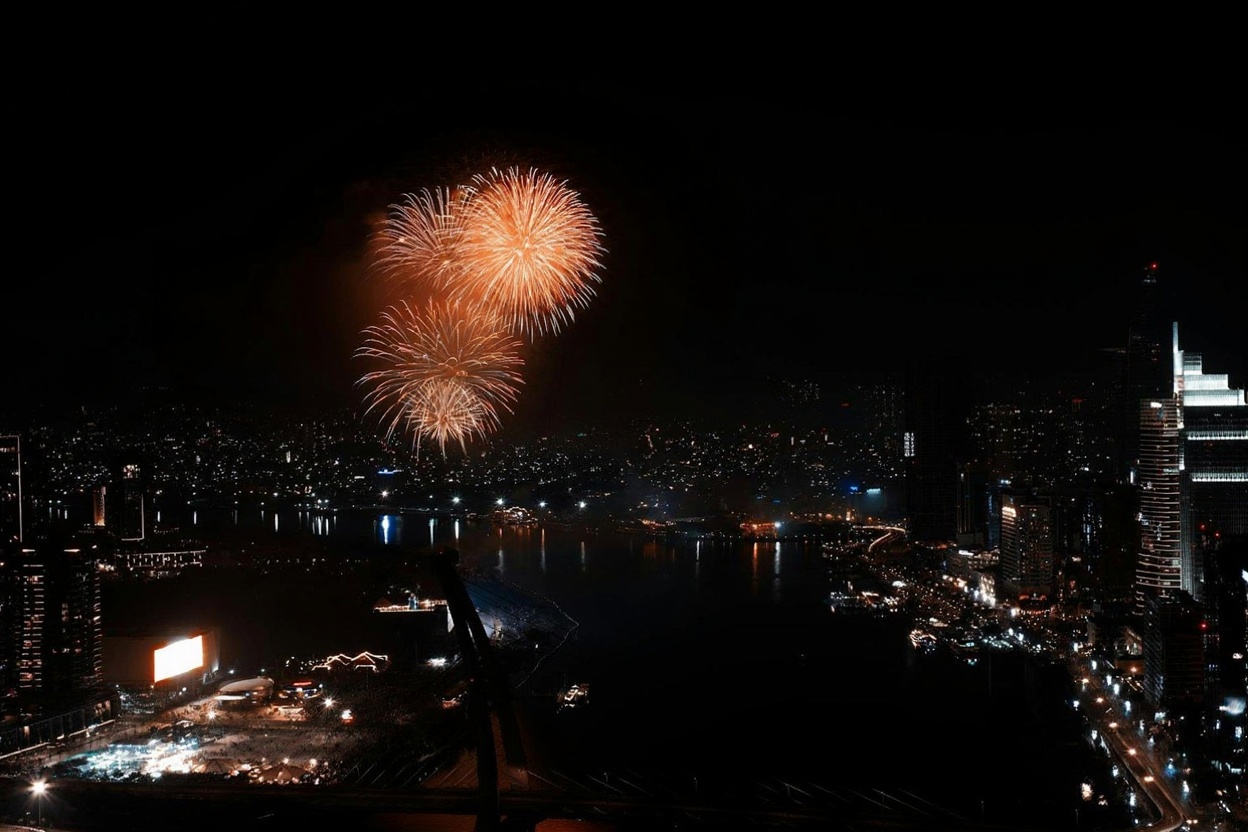
The transition moment (Giao Thừa, say: gow twah) between the old and new year happens at midnight on the first day of the lunar new year. Fireworks launch from multiple points across the major cities simultaneously — in Hà Nội, the main display is over Hoàn Kiếm Lake, visible from the Old Quarter. In Hồ Chí Minh City, the main display is at the Bến Bạch Đằng riverfront.
The fireworks last 15–20 minutes and are genuinely spectacular — a major display, not a local amateur show. The crowds around Hoàn Kiếm Lake on Giao Thừa night are enormous; position yourself at a viewing spot an hour before midnight to secure a clear sightline. After the fireworks, Vietnamese families traditionally visit temples and pagodas in the first hours of the new year to pray for luck and to receive the first good fortune (xông đất, say: sohng dat) of the year.
★Jake’s Pick
Stand on the Hoàn Kiếm Lake pedestrian bridge at 11:50pm on Tết Eve. The crowd around you will be almost entirely Vietnamese families. The old men in their best áo dài. The kids in red. The couples taking photos in front of the illuminated Turtle Tower. And then the fireworks start from four different points around the lake simultaneously and the crowd noise becomes something you feel rather than hear. This is the best free thing to do in Vietnam.
The Holiday Days — Beautiful Emptiness
The 3–4 days immediately after the New Year are unlike any other time in Vietnam. The cities are quiet. The motorbike traffic that normally makes Hà Nội and Hồ Chí Minh City chaotic is largely absent. The air is cleaner. The streets that are normally jammed are walkable. Families visit each other’s homes. Children receive red envelopes with money. The few restaurants that stay open — mostly catering to foreign travelers and local people away from their families — are quiet.
Walking through the Old Quarter of Hà Nội on the morning of the first day of Tết is one of the stranger and more memorable experiences available in Vietnamese travel. The normally gridlocked streets are empty enough to walk in the road. The sounds are different — bird calls that the traffic noise normally masks, the distant pop of firecrackers from a courtyard, the smell of incense from the house altars. It’s the city at its quietest, in a way it will only be for these few days.
In Hồ Chí Minh City, the Tết quiet has a different character — a city that’s normally one of the most intensely urban environments in Southeast Asia becomes navigable on foot. Bùi Viện walking street, normally wall-to-wall with bars and tourists, is empty enough to hear your footsteps. The Bến Thành market, closed, has a different visual presence than usual — a landmark building that normally disappears into the surrounding commerce suddenly visible in its own right. The city doesn’t look like itself, and that’s exactly what makes it worth being in.
The restaurants that stay open during the main holiday days are worth knowing in advance. In Hà Nội: the tourist-focused restaurants around Hoàn Kiếm Lake typically stay open, as do the pho shops that serve Vietnamese workers who’ve stayed in the city. The Lotte Center food court stays open. In Hồ Chí Minh City: the Phạm Ngũ Lão backpacker street has multiple places that operate through the holiday because their customers are travelers who didn’t go home for Tết either. International hotel restaurants operate throughout, usually with a holiday menu.
The honest downside: most of what you might want to do is closed. Restaurants, coffee shops, tourist sites, tour operators, motorbike rental shops — all closed for the main holiday days. If you planned to spend Tết doing the usual Vietnam itinerary, most of it won’t be available.
The Hội An Lantern Festival — Tết’s Best-Kept Highlight
On the 15th day of the first lunar month — approximately 2 weeks after the main Tết holiday — Hội An holds its monthly lantern festival. The Old Town turns off its electric lights and the streets are illuminated entirely by silk lanterns. The Hoài River is lit with floating candles. It happens every month on the full moon, but the 15th day of the first lunar month (Tết’s full moon) is the most elaborate and most attended.
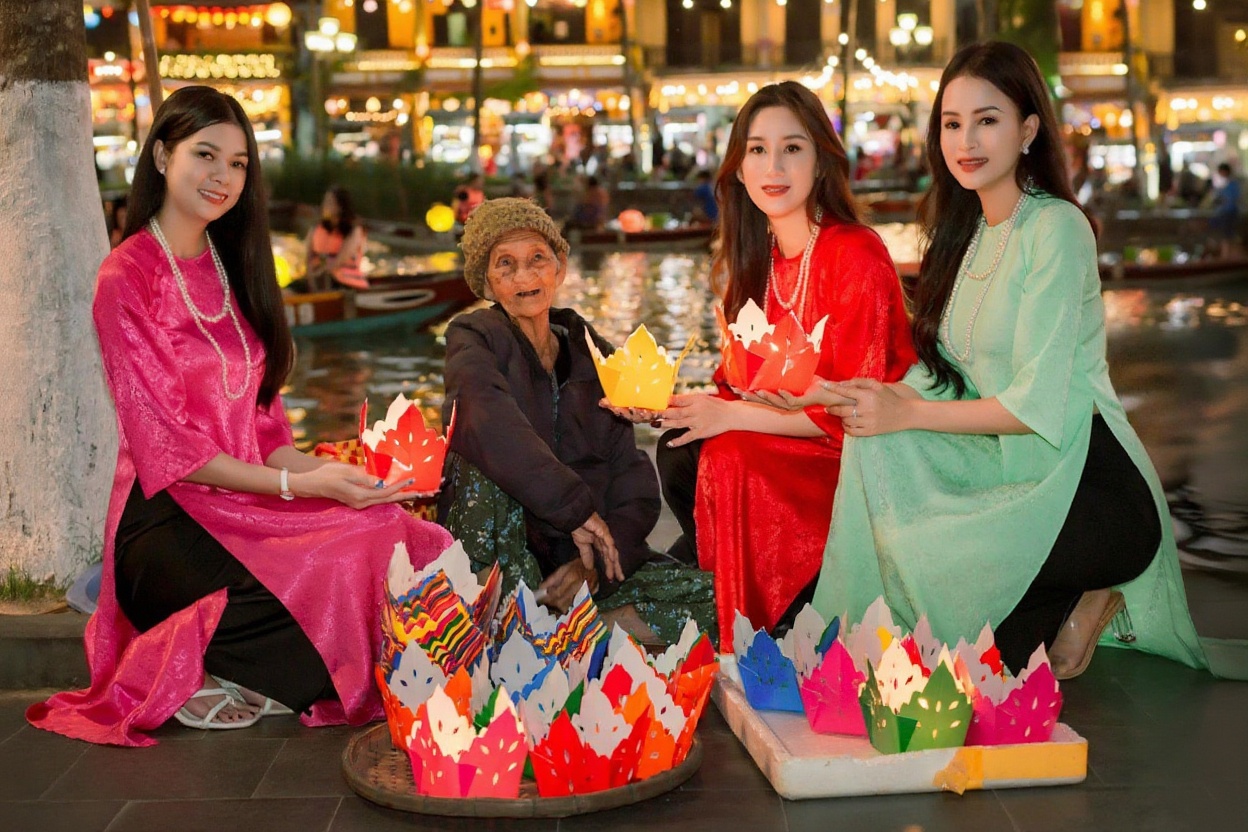
If you time a Vietnam trip around Tết, building in the Hội An full moon 2 weeks later is the best possible combination: New Year’s Eve fireworks in Hà Nội or Hồ Chí Minh City, then the country slowly reopening as you travel south, arriving in Hội An for the 15th-day lantern festival. This sequence — two weeks of gradual reawakening from Tết through the central coast — is one of the more specific and less-written-about ways to experience Vietnam.
Klook has the widest selection for Vietnam and is usually the cheapest. KKday is strong on day trips and local experiences.
wn:
Come during Tết if: You have significant flexibility — no fixed must-see list, no rigid daily plan. You’re interested in the cultural experience over the tourist experience. You’re willing to improvise meals and transport because many of your usual options won’t be operating. You want to see Vietnamese cities in their quietest, most atmospheric state. You’re specifically targeting the New Year’s Eve fireworks or the Hội An lantern festival.
Don’t come during Tết if: You have a specific itinerary that relies on restaurants, tours, and tourist sites being open. You’re doing a cruise or organized tour that operates on a fixed schedule. You need reliable domestic transport — flights are packed, buses are packed or stopped, and the booking infrastructure gets complicated. You’re a first-time Vietnam visitor trying to see the standard highlights — Tết is not the best introduction.
⚠Real Talk
Most of the negative Tết reviews from travelers come from people who didn’t know what they were arriving into: “everything was closed,” “we couldn’t find food,” “the taxi driver charged triple.” These are all predictable consequences of arriving without preparation. With preparation — understanding what closes, booking accommodation and some meals in advance, having cash for inflated Tết prices — the same week becomes a completely different experience.
Practical Tết Survival Guide
Book flights early: Flights into and out of Vietnam in the 2 weeks around Tết sell out and/or become very expensive. Book 3–4 months ahead.
Book accommodation: Hotels stay open during Tết; most are fully booked in major cities for the holiday period. Book as far ahead as possible, especially for Hà Nội on New Year’s Eve.
Carry cash: Most ATMs work during Tết but the businesses that are open — some convenience stores, a few tourist-oriented restaurants, international hotels — may have limited change. Carry more cash than you think you need.
Food strategy: Hotels serving breakfast and dinner are your most reliable option during the main holiday days. Tourist-area restaurants in Hội An and Hồ Chí Minh City’s Phạm Ngũ Lão backpacker district tend to stay open because their customer base (foreign travelers) doesn’t go home for the holiday. Local restaurants run by expats and non-Vietnamese owners stay open. Know where these are before the holiday starts.
Transport: Grab still operates during Tết, but wait times are longer and surge pricing applies on the main holiday nights. Avoid trying to take long-distance sleeper buses in the 3 days before the holiday — they’re packed and the booking infrastructure can be unreliable. Fly or book well ahead.
Tết Traditions Worth Understanding
A few specific traditions that will make more sense if you know about them before you arrive:
Red envelopes (bao lì xì): Adults give children red envelopes containing money as a Tết gift. If a Vietnamese family invites you into their home during Tết, it’s appropriate to bring a small gift — fruit, tea, or a box of bánh (traditional cakes). Arriving empty-handed is not a faux pas but bringing something is warmly received.
First visitor (xông đất): The first person to enter a Vietnamese home on the first day of Tết is believed to set the luck for the household for the entire year. Vietnamese families are very careful about who this person is — it’s typically an invited guest with good health, good fortune, and a compatible astrological sign. If you’re invited to visit a Vietnamese friend’s home on Tết morning, understand this is a significant gesture of trust and affection.
Kumquat trees and peach blossoms: The yellow kumquat tree (in the south) and the pink peach blossom branch (in the north) are the defining visual symbols of Tết. Both represent luck and prosperity. The flower markets in Hà Nội and Hồ Chí Minh City in the days before Tết, selling these in enormous quantities, are worth walking through even if you’re not buying.
Ancestor worship: Tết has a strong ancestor veneration component — families set up elaborate altars with food offerings, incense, and fruit for deceased relatives. The smell of incense during Tết (a constant presence in residential neighborhoods) is one of the sensory signatures of the holiday.
For planning the broader Vietnam itinerary around Vietnamese holidays and the best times to visit, the Vietnam best time to visit guide covers month-by-month, including how Tết affects travel across different regions. For the Hội An lantern festival specifically, the Hội An things to do guide has the logistics.
Frequently Asked Questions
When is Tết 2027?
Tết 2027 falls on January 29 (Year of the Goat). The official holiday runs January 29 to February 4, with practical closures extending a few days before and after. Tết 2028 falls on February 17 (Year of the Monkey).
Is Vietnam good to visit during Tết?
It depends on your priorities. The New Year’s Eve fireworks, the pre-holiday flower markets, and the quiet atmosphere of the holiday days are genuinely worth experiencing. The practical downsides are significant: most restaurants, shops, and tourist sites close for several days, domestic transport is severely disrupted, and prices in the tourist-open establishments are elevated. Come with flexibility and low expectations for your normal itinerary.
What is open in Vietnam during Tết?
International hotels stay open. Some tourist-area restaurants (especially in Hội An, Hồ Chí Minh City’s backpacker district, and Hà Nội’s Old Quarter) stay open because their customers are foreign travelers. Convenience stores (Circle K, GS25, Winmart) stay open. Temples and pagodas stay open and are actively visited. Grab operates with surge pricing on peak nights.
Should I avoid Vietnam during Tết?
Only if you have a rigid itinerary that requires all the usual tourist infrastructure to be operating. If you’re flexible, curious about Vietnamese culture at its most concentrated, and happy to adapt your plans around the holiday, Tết is one of the most memorable times to visit. The New Year’s Eve fireworks alone are worth booking around if your schedule allows.
The Honest Take
Tết is the best and worst time to visit Vietnam, depending on what you’re after. It’s the best if you want to see the country doing what it actually values rather than performing for tourists — the family reunions, the ancestor altars, the flower markets, the midnight fireworks that the whole city watches together. It’s the worst if you need the tourist infrastructure that makes a normal Vietnam trip work.
The travelers who have the best Tết experiences are the ones who go in knowing exactly what they’re getting into: a country on holiday, not a tourism industry. The Vietnamese families lighting incense at the ancestral altar, the children receiving red envelopes, the old couples walking the quiet lake paths at midnight — none of that is staged. Not a country putting on a show for them, but a country giving itself a week to be entirely focused on something other than the hospitality industry. That’s a rare thing to witness from the outside. If you go in knowing that, you’ll leave understanding Vietnam better than most two-week itineraries would give you.
Two things worth sorting before you land: a Vietnam eSIM so you have data the moment you clear customs, and travel insurance — medical costs for uninsured foreigners in Vietnam are significant.
Airalo eSIMs activate instantly. Buy before departure — airport SIM queues in Vietnam can take 30+ minutes.
The Best Cities for Tết
Hà Nội: The best city in Vietnam for Tết, by a significant margin. The Hoàn Kiếm Lake area on New Year’s Eve has the most atmospheric fireworks viewing in the country. The Old Quarter’s pre-Tết flower markets along Hàng Lược street are genuinely special. The quiet of the Old Quarter on the first morning of the new year — a neighborhood that normally has the density of a Southeast Asian street market operating 18 hours a day — has a quality that’s impossible to manufacture at any other time of year.
Hồ Chí Minh City: The fireworks from the Bến Bạch Đằng riverfront are excellent and the city’s Tết decorations along Nguyễn Huệ walking street are elaborate. The city doesn’t get as quiet as Hà Nội on the holiday days — it’s a larger, more diverse population with a higher percentage of residents who stay — but it has a different atmosphere from the rest of the year regardless.
Hội An: Specifically good for the 15th-day lantern festival rather than the main Tết holiday. The Old Town of Hội An, already a well-preserved heritage precinct, becomes something genuinely remarkable when lit only by silk lanterns — a version of the space that daytime visitors never see. The 15th-day full moon festival happens every month, but the first lunar month version (Tết’s full moon) is the largest and most attended. If you can be in Hội An 14–15 days after the main Tết holiday, plan your schedule around it.
Huế: The imperial city has its own distinct Tết character — the Thế Miếu ancestral temple complex within the Imperial City opens for ceremonial events, and the traditional Huế Tết food (bánh chưng, say: ban chwong; giò lụa, say: yo loo-ah) is at its best during the holiday week. Less visited by foreign travelers during Tết than Hà Nội or Hội An, which means fewer crowds at the main Tết events. For travelers who want the Tết experience without navigating the large-city fireworks crowd, Huế is the right balance: enough of the holiday atmosphere to feel the holiday, small enough to move through it comfortably.