Last updated: May 2026 — prices and logistics verified May 2026.
Phu Yen is the coastal stretch that most travelers drive past on the way between Quy Nhon and Nha Trang — our Phu Yen guide makes the case for stopping.
Most travelers I’ve met in Phú Yên showed up because someone told them about the rock formation. They stayed longer than planned because the province kept producing things they hadn’t expected to find — a French-built lighthouse at Vietnam’s eastern tip, a 130-year-old Gothic church sitting in the middle of farmland, a fishing village that became famous through a movie and then somehow stayed quiet anyway.
What makes this province different from the other central coast stops isn’t the scenery — it’s the absence of scaffolding around it. No ticket kiosks with laminated signage. No organized “cultural village” experiences with costume rental. No boats full of tourists wearing matching orange life jackets circling a famous bay. Just the actual thing, at the actual price, with local people who are still surprised when a foreigner shows up.
I’m going to give you the eight things worth doing here, ranked roughly by how much they’ll stick with you after you leave. None of them require a tour. All of them require a motorbike.
1. Gành Đá Đĩa — Walk on the Basalt Reef at Dawn
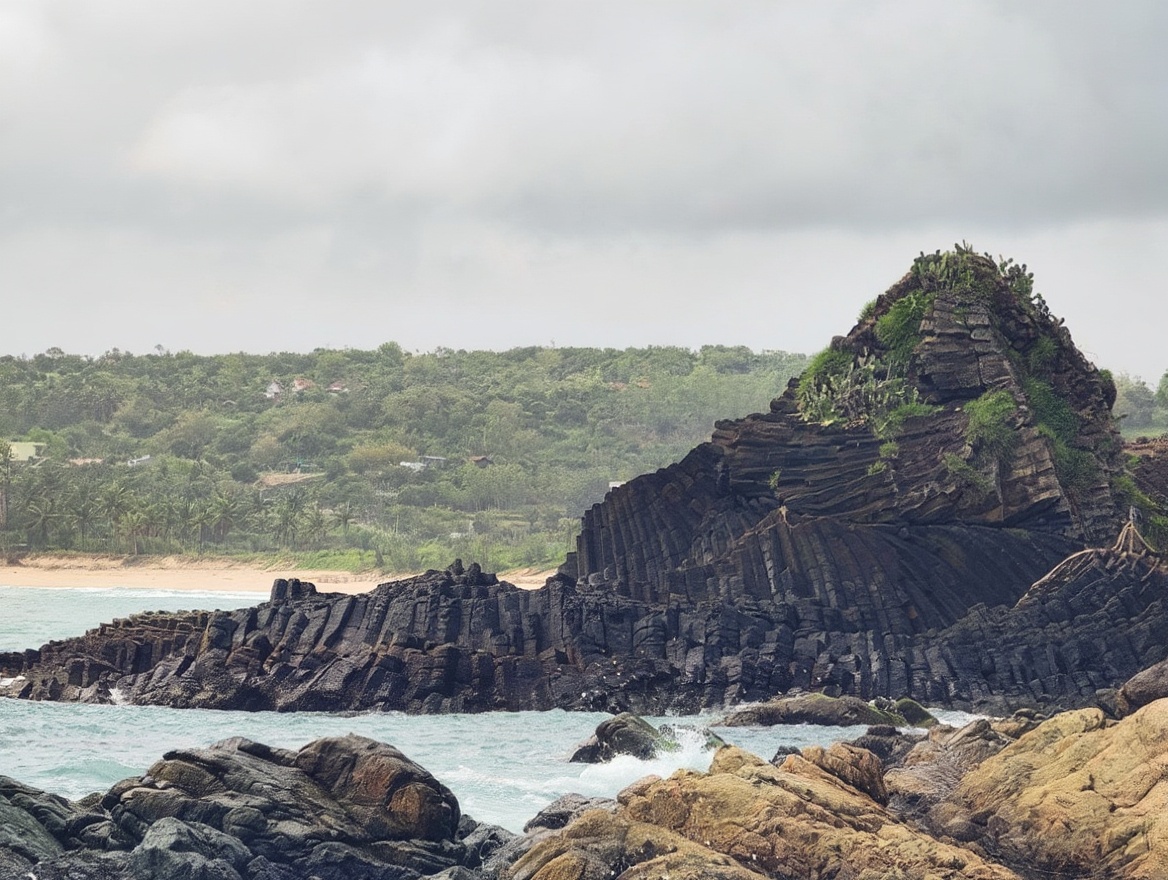
Thirty-five thousand interlocking basalt columns, most of them hexagonal, packed together so tightly the formation looks like someone tiled the ocean floor. At low tide you can walk right out onto it. At high tide, the ocean crashes against the outer columns with enough force to feel it through your feet on the rock behind you.
It’s 23km southeast of Tuy Hòa in Hòa Tâm commune, Đông Hòa district — coordinates 13.02° N, 109.35° E. Entry: 40,000 VND (~$1.50) (verified May 2026). Allow 60–90 minutes.
✓Quick Answer
Go before 9am in summer. The black basalt absorbs heat fast — by 11am the rocks are too hot to touch with bare hands and too bright for good photos. Dawn light on the columns is genuinely worth the early alarm. In the dry season (January–August), low tide in the morning puts you on the reef at the best possible time.
The geological formation is similar to the Giant’s Causeway in Northern Ireland — basalt cooled and contracted into geometric columns. Here they angle horizontally into the coast rather than standing vertical, which gives Gành Đá Đĩa its flat, tiled appearance. The Vietnamese name means roughly “rocky plate reef” — which is exactly what it looks like.
At peak dry season, expect a handful of Vietnamese domestic tourists on weekends and almost nobody on weekdays. The parking area has a few vendors selling coconuts and snacks. Beyond that, there’s very little infrastructure — which is the correct amount of infrastructure for a UNESCO-candidate geological formation.
Who should skip it: Anyone with limited mobility — the reef surface is uneven and requires stepping between columns. The path from the parking area to the reef is about 300m and has some rocky sections. Sandals are fine for the path; bare feet are better on the reef itself.
↗Insider Tip
The best spot for photos is at the outer edge of the reef where the columns angle down into the water. Get there at low tide before 8am. The light comes from the east — directly behind you if you’re facing the water — which means morning light hits the columns front-on without the harsh midday shadow. Check tide times before you go: a simple web search for “tide Tuy Hòa” gives you the schedule.
2. Mũi Điện — Vietnam’s First Sunrise
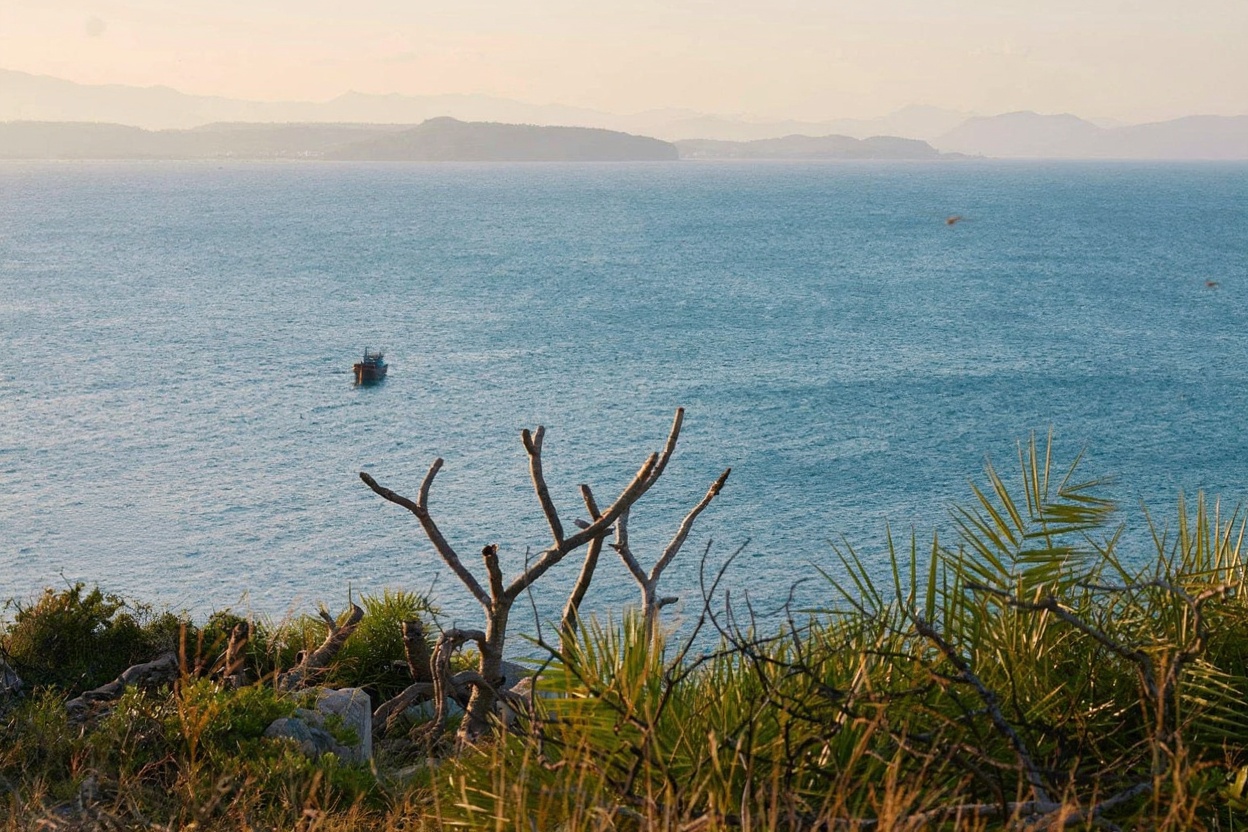
Mũi Điện (say: mwee dyen) is Vietnam’s easternmost point on the mainland — which means it’s one of the first places in the country to see the sun each morning. The French built a lighthouse here in 1890. It’s still working. The headland drops off into open ocean on three sides, and at 110m above sea level, there’s nothing between you and the horizon.
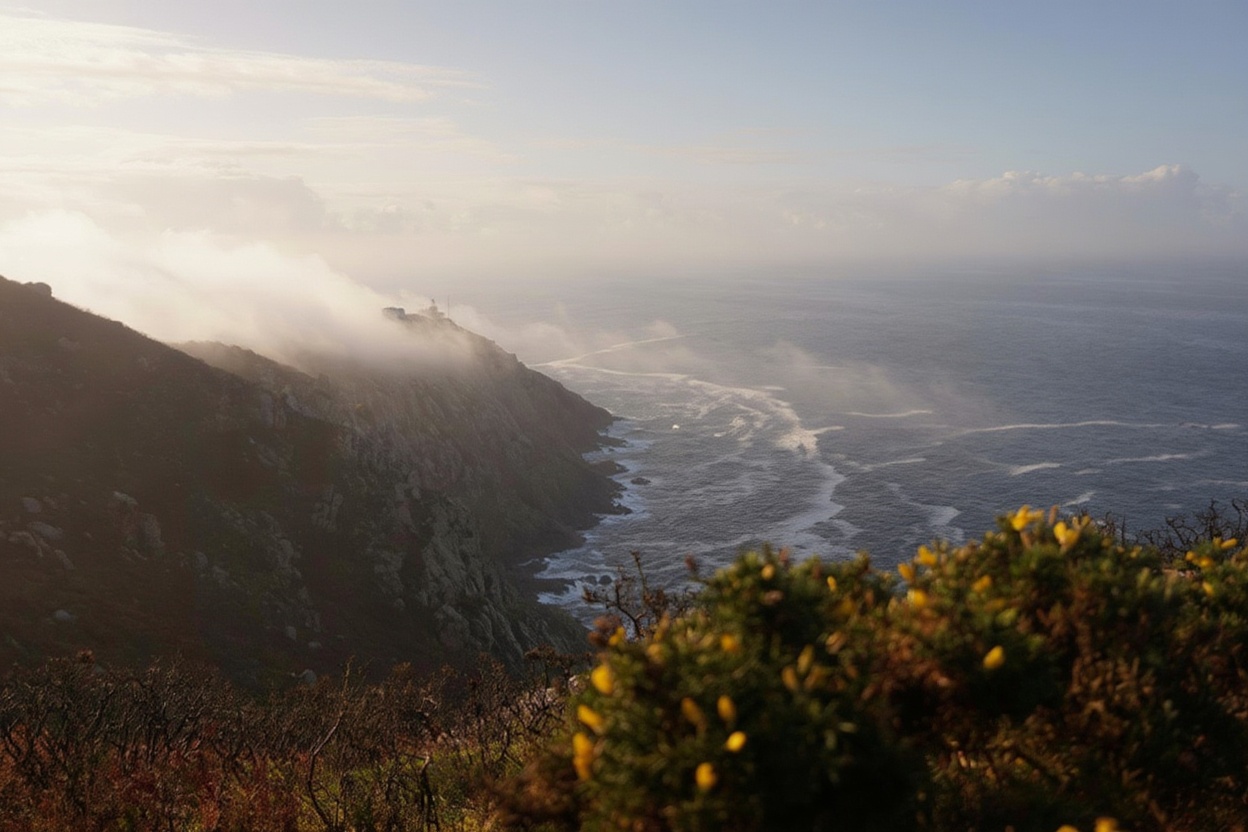
It’s 35km southeast of Tuy Hòa. The approach road via Đèo Cả (Cả Pass) has views over the bay that’ll make you pull over twice before you even get there.
✓Quick Answer
If you’re going for sunrise, leave Tuy Hòa by 4:30am. The ride takes about an hour in the dark on empty roads — bring a headlamp for the path from the parking area to the headland. No entry fee as of May 2026. The lighthouse itself isn’t always open for climbing; the views from the surrounding headland are the reason to come.
Even without the sunrise angle, Mũi Điện is worth the ride. The headland walk is maybe 20 minutes from the parking area. The cliffs are dramatic. The ocean is unobstructed. And on a weekday you may be the only person there.
The approach on the Đèo Cả (Cả Pass) is one of the better mountain-road sections in central Vietnam — the kind that makes you pull over, turn the engine off, and just stare at the bay below. Đèo Cả sits at around 300m elevation. The view east on a clear morning is the ocean glittering all the way to the horizon. There’s a small roadside coffee spot at the summit that opens around 6am and sells cà phê for 15,000 VND (~$0.60). Worth knowing about if you’re riding in the dark toward a sunrise.
Mũi Điện and Gành Đá Đĩa are both to the southeast of Tuy Hòa but in different directions. They don’t combine neatly on the same morning unless you’re willing to put in 80–90km total. The Day 1 itinerary in the card below sequences them with a logical route — Gành Đá Đĩa first (northwest of Mũi Điện), then Mũi Điện, then south to Vũng Rô.
3. Bãi Xép — The Beach That the Film Made Famous
Bãi Xép (say: bai sep) became famous through Tôi Thấy Hoa Vàng Trên Cỏ Xanh — a 2015 Vietnamese film shot largely around this fishing village. Vietnamese tourists have been coming ever since. Foreign travelers still barely know it exists.
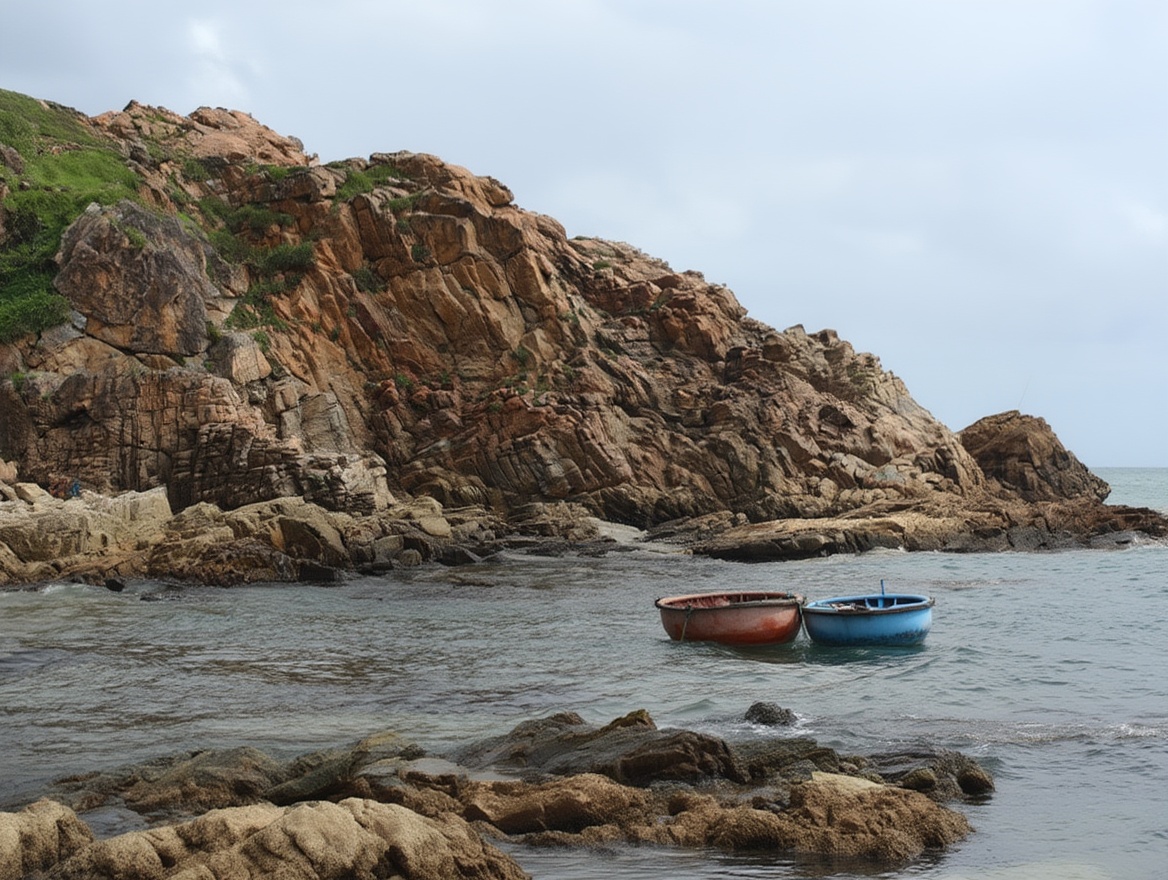
It’s in An Hải commune, Tuy An district, about 30km north of Tuy Hòa. A boat from the An Hải commune fishing port costs 50,000 VND (~$2) per person (verified May 2026), or you can reach it by motorbike via the coastal road and walk down the path.
Weekday mornings before 9am: quiet, just fishing boats and the sound of waves. Weekend afternoons in July: domestic Vietnamese tourists, selfie spots marked with signs, street food carts. Same beach. Very different experiences.
→Who It’s For
Travelers who want to see what a Vietnamese coastal village looks like before the tourism infrastructure arrives. Not ideal if you want beach facilities — there are no sunloungers, no bars, limited shade. Perfect if you want to sit on a rock and watch fishing boats for an hour.
4. Hòn Yến — Walk on the Coral at Low Tide
Hòn Yến (say: hon yen — “swallow island”) is a small island accessible by boat from An Hải commune — the same port as Bãi Xép. During low tide, the coral reef surrounding the island rises above the waterline and becomes walkable. Coral formations at knee height, no snorkel gear required, colors that look like someone oversaturated a photo — pale lavender brain coral, clusters of staghorn, deep orange sponge between the rocks.
Combine the Hòn Yến boat trip with Bãi Xép in one half-day outing — tours typically run together for around 200,000–350,000 VND (~$8–13) per person for both stops. The boats leave when they have enough passengers — usually from around 7:30am. Arrive at the An Hải commune pier early and negotiate directly with the boat operators rather than through a middleman in Tuy Hòa.
Dry season only — from roughly September through December the reef is submerged and the sea is rough. Tidal timing matters: low tide in the morning, ideally two to three hours after the lowest point, gives you both dry reef to walk on and enough water in the channels to see the fish. Check tide tables before you book the boat.
ℹKnow Before You Go
Hòn Yến coral is fragile. Step only on sandy patches and bare rock — not on the coral itself. The island has enough coral damage from previous visitors who didn’t know this. If a vendor or boat operator doesn’t mention it, you still know. Wear shoes with thin soles you don’t mind getting wet — the reef surface is rough on bare feet and slippery in places.
5. Vũng Rô Bay — Snorkeling in a Mountain-Ringed Bay
About 30km south of Tuy Hòa on the road toward Nha Trang, Vũng Rô (say: voong roh) is a bay enclosed on three sides by mountains. The water is clear in the dry season — turquoise in the shallows, deeper blue further out. Boat snorkeling trips run from the main pier in calm weather [VERIFY: around 150,000–250,000 VND (~$6–10) per person for a group trip].
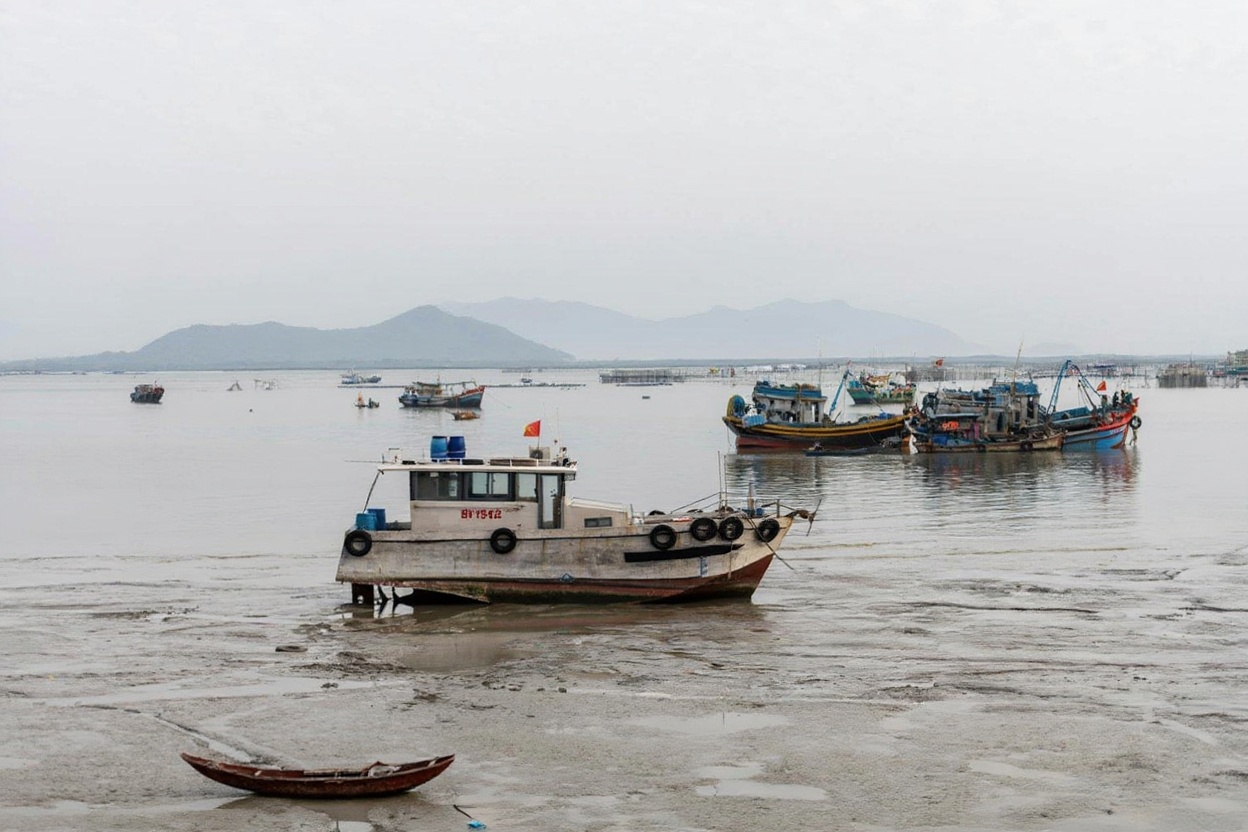
The bay also has a wartime history most travelers don’t know about. In February 1965, a North Vietnamese cargo ship landed here covertly, smuggling weapons south as part of the maritime Hồ Chí Minh Trail. It was discovered and became a significant event in the early years of the American war. There’s a small monument near the pier. The contrast between the calm turquoise water and that history is very Phú Yên — quiet about its depth.
Lunch near the Vũng Rô pier is worth planning into the day. Grilled fish, crab, and shrimp — caught the same morning — at seafront restaurants that charge what the food is actually worth: 80,000–150,000 VND (~$3–6) per main dish. Order the grilled cá hồng (say: ka hong, red snapper) if it’s on the board. It usually is.
⚠Real Talk
Vũng Rô is one of the more logistically uncertain stops in Phú Yên. Snorkeling boat trips depend on sea conditions and group size — there may not be a trip running the day you arrive if the water is rough or the operators can’t fill the boat. Build flexibility into Day 1: if Vũng Rô doesn’t work out, the drive along Đèo Cả and the pier lunch are worth the trip regardless.
6. Mằng Lăng Church — The One Nobody Has on Their List
I almost missed this. It wasn’t on my original list. My GPS took me to the wrong coordinates and I ended up in someone’s driveway before a kid on a bicycle pointed me in the right direction.
Mằng Lăng Church (say: mang lang) is a Gothic-style Catholic church built in 1892, sitting in the middle of agricultural land about 35km north of Tuy Hòa in Tuy An district. The French colonial architecture — stone walls, pointed arches, a bell tower that doesn’t belong in this landscape — against rice fields and palm trees is genuinely surreal.
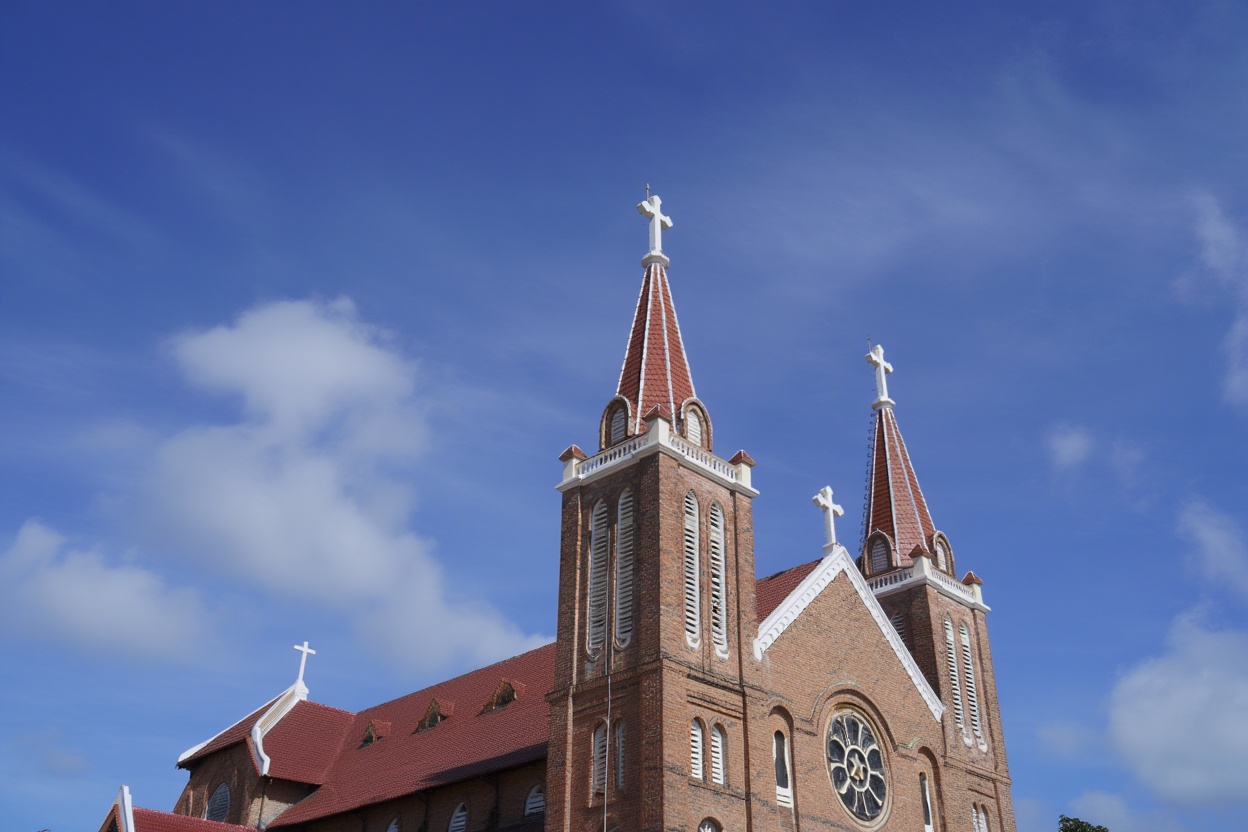
It’s still an active parish church. The compound is open to visitors outside of service times. No entry fee. The cemetery behind the church is old and atmospheric — this is where the first Vietnamese Catholic martyr is buried, in the 19th century.
★Jake’s Pick
This is the best thing in Phú Yên that nobody puts on a list. Combine it with Bãi Xép on a north-of-Tuy-Hòa day — they’re in the same district, about 10km apart. The juxtaposition of a 130-year-old European stone church and a beach famous from a Vietnamese coming-of-age film is only possible in a province this undervisited.
7. Tuy Hòa Morning Market — Before the City Wakes Up
The Tuy Hòa central market opens around 5:30am. Fresh seafood from overnight boats comes in from around 6am — cá ngừ đại dương (say: ka ngoo dai owong, yellowfin tuna) being weighed and argued over by fishmongers who have clearly been awake longer than you have. The smell is fresh fish and charcoal smoke and the particular saltiness of morning coastal air.
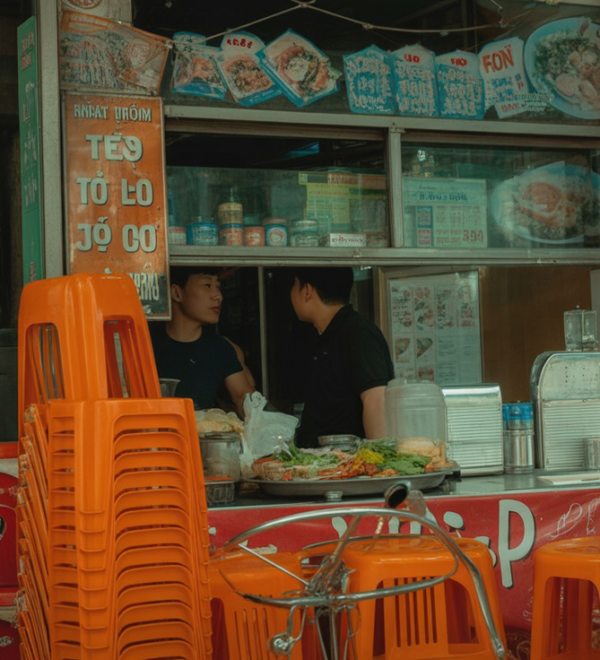
Vendors set up bánh mì grills nearby. Cà phê sữa đá (iced milk coffee) in small plastic cups costs around 15,000–20,000 VND (~$0.60–0.80). The whole market is aimed entirely at local people buying food for the day — nothing is staged for tourists, because there aren’t really any tourists yet.
Worth an hour before you ride out to Gành Đá Đĩa. It also tells you exactly what to order that evening when you find a seafront restaurant — you’ve seen what’s coming off the boats.
8. The Coastal Motorbike Loop — The Whole Province in Two Days
Phú Yên is best understood as a two-day motorbike circuit out of Tuy Hòa. The province is compact enough that you can hit all the main sites without backtracking significantly.
Day 1 — South circuit (Gành Đá Đĩa + Mũi Điện + Vũng Rô): Leave Tuy Hòa early. Gành Đá Đĩa first while the light is right and the heat hasn’t built. Then south on Highway 1A through Đèo Cả toward Mũi Điện and Vũng Rô. Lunch at a seafront restaurant near Vũng Rô pier. Back to Tuy Hòa via the coast road.
Klook has the widest selection for Vietnam and is usually the cheapest. KKday is strong on day trips and local experiences.
> Morning boat to Bãi Xép and Hòn Yến. Back by noon. Dry off. Lunch in Tuy Hòa. Then north to Mằng Lăng Church in the afternoon light. Evening back in the city for tuna by the water.
For everything you need to know before getting on a bike in Vietnam, our Vietnam motorbike rental guide covers licenses, insurance, and what to watch for on mountain pass roads — all relevant here.
Practical Notes Before You Go
Motorbike rental: 100,000–180,000 VND (~$4–7) per day from shops near Tuy Hòa central market. Semi-automatic is the right choice for mountain pass sections. Check the brakes before you leave the lot — ask them to do it in front of you.
Timing: Dry season runs January to August. Avoid October to December — Phú Yên has flooded badly in typhoon season and some sites become inaccessible. For the broader Vietnam weather picture, the best time to visit Vietnam guide has month-by-month detail.
Getting here: Fly into Tuy Hòa (TBB airport) from Hanoi or Ho Chi Minh City, or come by train on the Reunification Express. From Quy Nhon: sleeper bus, 2 hours, 80,000–120,000 VND (~$3–5). From Nha Trang: bus, 2.5–3 hours. The Quy Nhon to Phú Yên journey is one of the better short-hop coastal rides in the region.
Where to sleep: Tuy Hòa city is the base — everything in this article is a day ride from there. Mid-range hotels in Tuy Hòa run 400,000–800,000 VND (~$15–30) per night. The beachfront area around Tuy Hòa Beach (Bãi Tuy Hòa) has a cluster of hotels 1–2km from the market. Avoid booking anything that describes itself as a “resort” — those are mostly Soviet-era state properties that haven’t been meaningfully updated. A clean private room near the market area is functionally better.
Food: The seafront area around the Tuy Hòa fishing pier has the best cá ngừ đại dương options — yellowfin tuna grilled, sashimi-style, or in soup. Expect 80,000–150,000 VND (~$3–6) per dish at the honest local spots. If someone’s selling tuna in a restaurant with photos on the wall and English menus, you’ve wandered into the wrong place. Walk until the menu is only in Vietnamese.
Phú Yên slots in naturally on a central Vietnam coastal route — two nights here between Quy Nhon and Nha Trang adds almost nothing to your travel time and gives you something that neither of those cities can.
Frequently Asked Questions
What is Phú Yên most famous for?
Gành Đá Đĩa — the basalt hexagonal reef — is the main draw for international visitors. Among Vietnamese travelers, Phú Yên is most associated with the 2015 film Tôi Thấy Hoa Vàng Trên Cỏ Xanh, which was shot around Bãi Xép beach and brought a wave of domestic tourism to the province.
How do I get from one attraction to another in Phú Yên?
Rent a motorbike in Tuy Hòa — it’s the only practical way to cover the province. Sites are 20–40km apart and Grab coverage outside the city is unreliable. If you don’t ride, hire a xe ôm (say: say ohm) driver for the day; negotiate 400,000–600,000 VND (~$15–23) upfront for a full-day private driver. Taxis cover Tuy Hòa city only.
Is Gành Đá Đĩa similar to the Giant’s Causeway?
Geologically yes — both are basalt column formations created by cooling lava. The main difference is orientation: the Giant’s Causeway columns stand mostly vertical, while Gành Đá Đĩa’s columns angle horizontally into the coast, creating a flat tiled-floor effect rather than a stepped cliff. Also, no coach tour buses at Gành Đá Đĩa. Not yet, anyway.
Can I visit Phú Yên as a day trip from Nha Trang?
Technically yes, but it’s not worth it. Nha Trang to Tuy Hòa is about 2.5–3 hours each way. That leaves you maybe 4 hours to cover a province that needs two full days to do properly. Gành Đá Đĩa alone is 23km from Tuy Hòa. Spend the night — it changes the experience completely.
Two things worth sorting before you land: a Vietnam eSIM so you have data the moment you clear customs, and travel insurance — medical costs for uninsured foreigners in Vietnam are significant.
Airalo eSIMs activate instantly. Buy before departure — airport SIM queues in Vietnam can take 30+ minutes.
The Honest Summary
Eight things to do in Phú Yên — and the province delivers all of them without a single tourist trap in sight. No overpriced boat tour operator in a branded polo shirt. No lantern-lit shopping street. No “authentic local experience” that three guidebooks have already stamped with a price tag.
The basalt reef is real. The lighthouse is old and French and genuinely dramatic. The church in the farmland is one of the stranger and more beautiful things I’ve seen in Vietnam. And the tuna is just great tuna.
Rent a motorbike, get up early twice, and go before someone installs a selfie frame at every viewpoint.