Vietnam in May 2026: The Shoulder Month the North Does Best
May gets overlooked. It sits between the dry cool of spring and the full summer push of July–August, and most itinerary guides treat it as a transitional footnote. That’s a mistake — especially if you’re planning a North Vietnam trip.
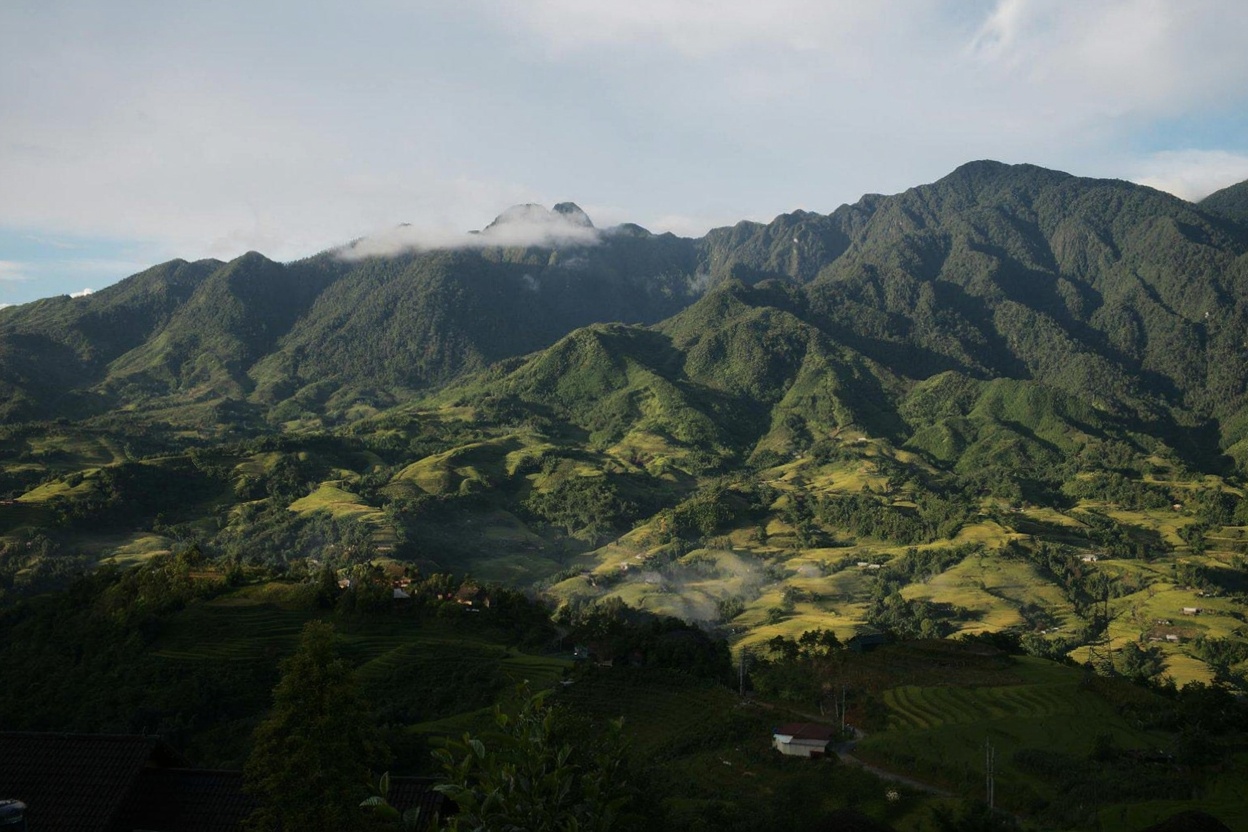
In the north, May is one of the cleaner months of the year: temperatures rising but not yet brutal, rice terraces filling with water and turning an electric green, the Ha Giang Loop before the summer bike touring crowds arrive. In central Vietnam, it’s the tail end of beach season — Da Nang and Hoi An are hot and dry before typhoon season arrives in October. In the south, the rainy season is starting, which matters if you’re planning beach time in Mui Ne or Phu Quoc.
The short version: May is a strong month if you’re heading north or through the center. It’s a tricky month if your whole trip is beach-focused on the southern coast. This guide breaks it down by region, traveler type, and the one public holiday that catches people off guard every single year.
> **Quick Answer:** May is excellent for North Vietnam (Ha Giang, Hanoi, Sa Pa, Ninh Binh) and central beaches (Da Nang, Hoi An). South Vietnam starts its rainy season — fine for HCMC city travel, less ideal for beach destinations. Expect a public holiday crowd spike around May 1.
The May Holiday Spike (and How to Work Around It)
May 1 is International Workers’ Day — a nationwide public holiday in Vietnam. Combined with April 30 (Reunification Day), the country gets a 4–5 day holiday window that triggers a significant domestic travel surge.
What this means practically: trains and buses on popular routes (Hanoi→Da Nang, HCMC→Da Lat, HCMC→Phu Quoc) book out 2–3 weeks in advance. Hotel prices spike 30–60% in coastal destinations during April 30–May 3. If you’re in Vietnam during this period and not prepared, you’ll feel it.
The work-around: either be in Hanoi or HCMC for the holiday (cities don’t spike as much — it’s beach and mountain destinations that fill), or book transport 3+ weeks ahead. After May 3, the crowds evaporate and prices drop back to normal.
> **Quick Answer:** Book transport 3+ weeks ahead if traveling April 29–May 3. After May 3, normal pricing and availability return immediately.
North Vietnam in May: The Case for Going Now
If you’re choosing between April and June for a North Vietnam trip, May is the sweet spot.
Hanoi in May sits at 28–32°C — warm but not the energy-draining 36°C+ of July–August. The rain hasn’t arrived in force yet (June–August bring the heaviest northern rains). Sightseeing is comfortable. The Old Quarter at 8 AM before the heat builds is the city at its best.
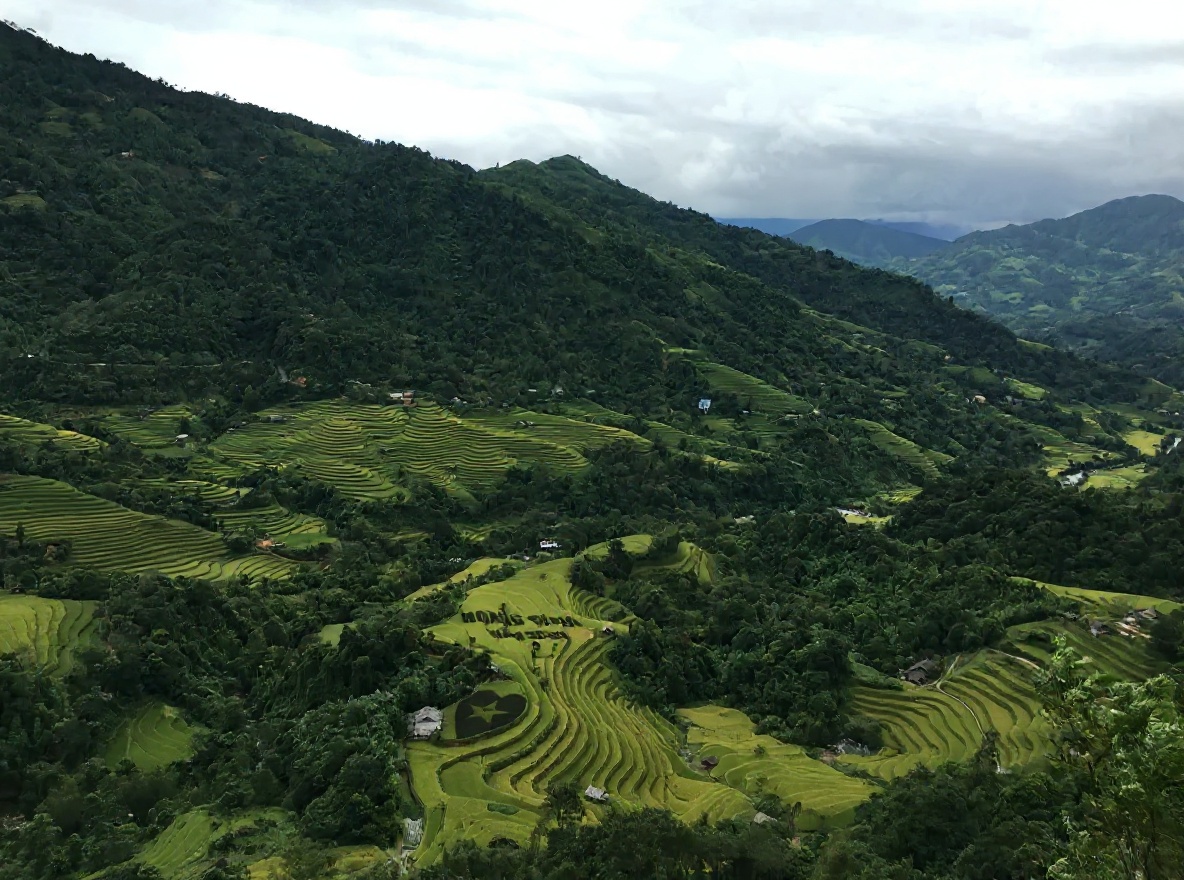
Ha Giang Loop in May is in a genuinely distinctive state: the buckwheat flowers of October–November are long gone, but the rice terraces are filling with water for the wet-season planting. The landscape shifts from dry and golden to green and wet. Some travelers prefer October’s flower season; others prefer the lush May green. The main difference is that May gets fewer visitors than autumn peak — you’re more likely to have a stretch of the loop to yourself.
Mù Cang Chải in May is worth mentioning separately. This is the start of the water-filling season for the terraces — the UNESCO-recognized rice terraces around La Pán Tẩn and Chế Cu Nha villages begin filling in May and reach their photographic peak in June. If you missed the golden harvest window in September–October, May gives you the green mirror reflection alternative — different, not lesser. The road from Nghĩa Lộ to Mù Cang Chải takes about 2 hours; most travelers combine it with a Sa Pa visit or make it a standalone overnight from Hanoi (7 hours by bus). See our Mù Cang Chải guide for current road conditions and homestay options.
Sa Pa and the Hoàng Liên Son range in May: warming up, less foggy than winter, and the hillside villages are doing pre-planting work. The Fansipan summit (3,143m) is accessible via cable car year-round but May offers better summit visibility than the foggy winter months. The cable car costs 900,000 VND round-trip (including the funicular from base station) — not cheap by Vietnam standards, but the summit views in clear May weather are the ones that make the price make sense. See our Sa Pa trekking guide for current trail conditions and whether to cable car or trek by season.
Ninh Binh in May: the water levels are rising in Tràng An and Tam Cốc. Boat trips through the karst gorges feel different from the dry-season version — the landscape is fuller and greener. Bái Đính Pagoda sees domestic visitors from the holiday weekend but quiets by mid-May.
Central Vietnam in May: Last Beach Month Before Typhoon Watch Begins
Da Nang and Hoi An in May are hot — 30–34°C — but dry. May is consistently one of the lower-rainfall months for central Vietnam, and the sea is flat and clear. This is objectively good beach weather if heat doesn’t bother you.
The catch: typhoon season in central Vietnam officially starts in October, but the psychological shift happens earlier. By June–July, savvy long-term travelers start watching the weather apps more carefully. May carries none of that anxiety — it’s the tail end of the dry window.
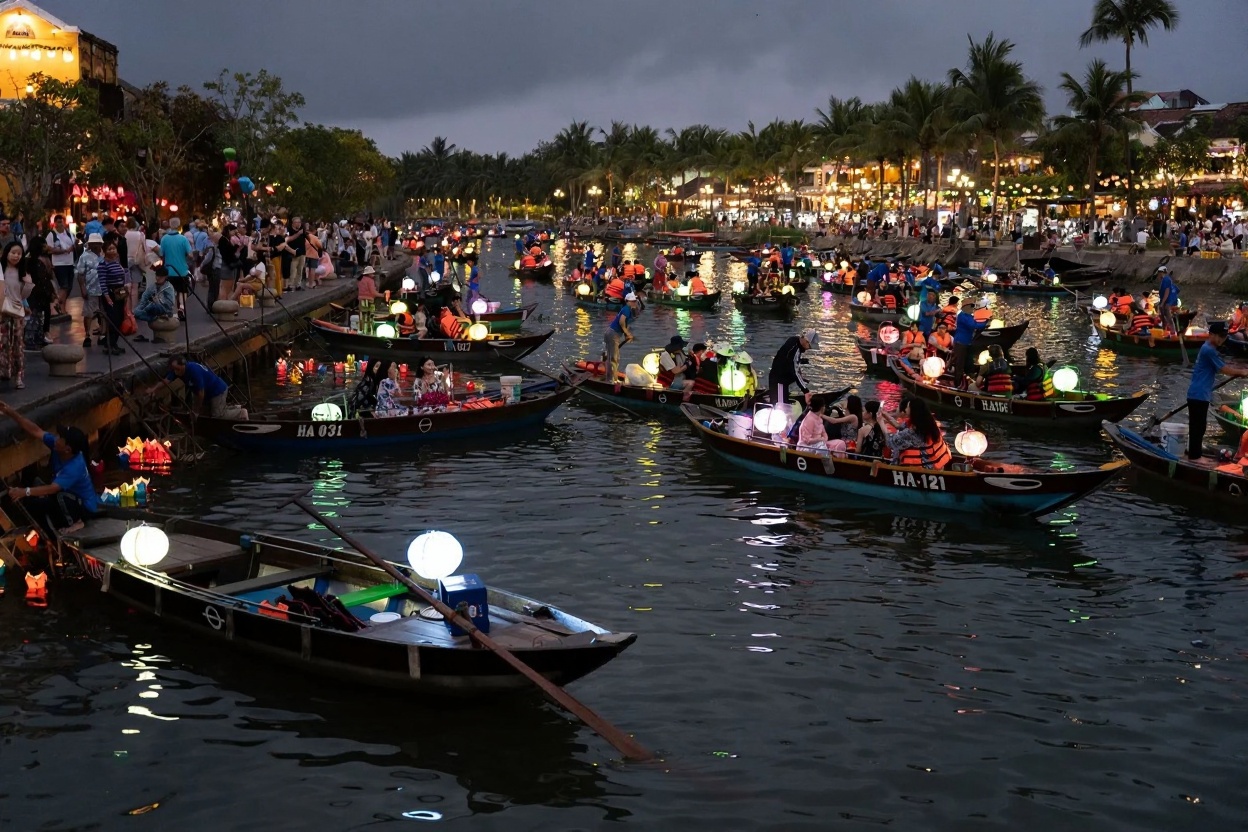
Hoi An Ancient Town in May: manageable compared to July–August peak. Still gets tourist traffic but not the dense European summer crowds. Lantern Festival (14th of each lunar month) falls in May and is the best time to walk the Ancient Town after dark with the crowds thinned. The streets, the river, the paper lanterns — it’s the version of Hoi An that photos try to capture.
Hue in May: hot. The Imperial Citadel in direct afternoon sun is unpleasant. Visit early morning or late afternoon. Hue’s restaurant scene — bún bò Huế, bánh khoái, cơm hến — doesn’t care what month it is and remains one of Vietnam’s most distinctive food cities year-round. Our Hue food guide covers the specific dishes and where to find them.
South Vietnam in May: The Rainy Season Reframe
May is when the southwest monsoon arrives in southern Vietnam. By mid-May, HCMC is getting afternoon and evening downpours most days. This is not the end of the world for a city trip — showers typically last 1–2 hours, then clear. HCMC functions fine in rain, and the wet season actually suppresses the worst of the city’s heat.
But Phu Quoc and the southern coast beaches in May are a different story. The sea gets rough, the skies grey, and beach time becomes unreliable. Phu Quoc has its real beach season November–April; May is the start of the off-season. Hotels are significantly cheaper but the weather is the trade-off.
Mekong Delta in May: the rivers are rising and the delta becomes lush. If you’re interested in the delta’s working life rather than just pleasant river scenery, the wet season version is more interesting — the floating markets and canal villages look different when the water is high. The Mekong delta tour guides actually prefer the wet season for more dramatic scenery.
> **Quick Answer:** HCMC city travel is fine in May — afternoon showers, nothing more. Phu Quoc and southern beaches are entering off-season; skip unless you want cheap hotels and don’t mind unreliable beach days.
Who Should Go to Vietnam in May
North Vietnam trekkers and loop riders. Ha Giang Loop and Sa Pa trekking in May avoid the October–November buckwheat peak crowds while getting genuinely beautiful green landscape. The Loop in May is cooler than July–August, drier than June, and significantly less busy than the autumn peak. This is the window for independent riders who don’t want to be in a convoy of 30 motorbikes.
First-time visitors on a classic north-to-south itinerary. If you’re doing Hanoi → Ninh Binh → Hue → Da Nang → Hoi An → HCMC, May works well for every stop except the southern beaches at the end. The center has good beach weather; the north is pleasant; HCMC is manageable. Just don’t plan a Phu Quoc extension at the end.
Budget travelers who missed the Tet price spikes. After May 3, accommodation and transport settle back to low-season pricing in most destinations. You get the good northern weather without paying April festival rates.
Who should avoid May: anyone whose trip is primarily about southern coast beach time (Phu Quoc, Mui Ne, Con Dao). These destinations are entering their off-season. The beaches are less reliable and the sea state is often poor.
Real Talk: What’s Bad About May
The heat in central Vietnam is the main complaint. Hue in May sits at 33–35°C with full humidity, and the city’s major sights (Imperial Citadel, royal tombs) involve a lot of outdoor walking with limited shade. I’ve done Hue in May and watched people give up halfway through the citadel because they underestimated the afternoon sun. Morning starts before 8 AM and a hat with a wide brim are non-negotiable.
The May 1 holiday is a genuine disruption for unprepared travelers. Vietnam’s internal tourism is massive — tens of millions of Vietnamese traveling domestically over a 4-day weekend hits transport capacity hard. If you arrive in country on April 28 expecting to buy a train ticket to Da Nang for April 30, you’ll find the sleeper trains fully booked and be stuck with a budget airline fare at 3x the normal price. I watched this happen to a Danish couple in Da Nang in 2023. They laughed about it eventually.
The start of the rainy season in the south is also unpredictable. Some years May starts late with dry days stretching into the second week; some years the monsoon arrives hard in the first week. If you’re doing a southern beach trip and betting on May being dry, check recent weather patterns the month before.
Hue Festival (2026)
2026 is a Hue Festival year. The festival is biennial (even years) and typically runs in late April or early May — exact dates for 2026 hadn’t been confirmed at time of writing, but the core festival period historically falls within the April 30–May window. The festival includes theatrical performances at the Imperial Citadel, traditional music (nhã nhạc court music is a UNESCO cultural heritage), street performances, and a significant craft village fair.
If you’re considering a May visit to central Vietnam, it’s worth timing to catch the Hue Festival. The city fills with visitors but the festival is genuinely worth experiencing — it’s one of the few events in Vietnam that showcases royal cultural heritage with actual production quality rather than a tourist-show approximation. Check huemuseum.org.vn for 2026 dates as they’re announced.
Suggested Itineraries for a May Trip
May works best when you concentrate the trip in the north or use a north-to-center structure. Here are three configurations that make sense for the month:
10-day North Vietnam focus (recommended): Fly into Hanoi. Two nights in the city. Train or overnight bus to Ninh Binh for 2 nights — boat through Tràng An when the water is at its greenest. Bus to Ha Giang for 3 nights on the Loop. Back to Hanoi 1 night. Fly out. This is an efficient, coherent trip that uses May’s northern conditions well and avoids the south entirely. See our Ninh Binh guide for boat timing and our Ha Giang Loop guide for what to prep.
2-week classic north-to-center: Hanoi (3 nights) → Ninh Binh (2 nights) → overnight train to Hue (2 nights, visit Imperial Citadel early morning) → Da Nang (1 night) → Hoi An (4 nights). Fly HCMC or Da Nang. This hits the best May conditions for both regions and gives you beach time in Hoi An without committing to a southern beach destination in rainy season.
Budget May trip (2 weeks): Wait until May 4 when the public holiday premium drops. Fly into Hanoi on a cheap fare. Overland the whole way south using the overnight train: Hanoi → Hue → Da Nang → Hoi An → Da Lat by bus. Da Lat in May is pleasant — 18–23°C, cooler highland air, and significantly cheaper than the coastal beach towns. Fly HCMC out.
Packing for Vietnam in May
The right kit varies significantly by region in May:
For North Vietnam: Light layers for Hanoi (28–32°C but air-conditioned interiors everywhere). Rain jacket or packable poncho for the afternoon showers — not a heavy wet-season mac, just something to keep a shirt dry during a 30-minute squall. Sunscreen. For Ha Giang and mountain areas, an extra layer for evening temperatures at altitude (15–18°C in the evenings at 1,500m+).
For Central Vietnam: Maximum sun protection. Hat with wide brim, SPF 50+ sunscreen, UV-protective shirts. The Hue citadel and Da Nang’s Marble Mountain are exposed outdoor sites in full sun — I’ve seen sunburned travelers badly underestimate the central Vietnam May sun. Reef sandals or water shoes for Hoi An if you’re there during a brief rain event that briefly floods a street or two.
For South Vietnam: Lightweight fast-dry clothes, an umbrella (locals carry them and they’re everywhere for 30,000 VND), waterproof sandals. The south’s May rain is warm — you won’t get cold — but you will get wet if you’re out during a downpour without cover.
General May packing across all regions: bug repellent with DEET (mosquito activity picks up with the warm and wet conditions), a small padlock for hostel lockers, and a power bank — the heat drains phone batteries faster than you expect.
Costs and Booking in May
May is generally shoulder season in Vietnam, with the exception of the May 1 holiday spike. What you can expect:
Accommodation: Hanoi Old Quarter guesthouses run 250,000–450,000 VND/night for a decent private room outside the holiday weekend. Hoi An mid-range hotels are 600,000–1,200,000 VND. Phu Quoc beach resorts drop to 30–50% of peak prices — a resort that costs $150/night in February might be $60–80 in May if you’re willing to gamble on beach weather.
Flights: Domestic fares in May (outside May 1 weekend) are normal. International flights to Vietnam in May are typically mid-range — not January-cheap, not July-August peak. The Hanoi–HCMC domestic route around May 1 books out fast for Vietnamese domestic travelers — if your itinerary requires this flight around the holiday, book it when you book your international tickets.
Attractions: Ha Giang motorbike rentals run 200,000–350,000 VND/day in May — the same as most months, but you have more choice of bikes as the October peak rental crush hasn’t started. Boat tours in Ninh Binh are 200,000–250,000 VND per person. No significant seasonal price changes for entry fees and experiences in May.
The overall May budget story: similar to March–April (shoulder season), noticeably cheaper than July–August in popular northern destinations, and significantly cheaper than Tet period (January–February). For a 2-week trip budget, Vietnam in May is as cost-efficient as it gets for the north. Our full Vietnam budget travel guide has current daily cost breakdowns by traveler type.
FAQ: Vietnam in May
Is May a good time to visit Vietnam?
Yes, especially for North Vietnam (Hanoi, Ha Giang, Sa Pa, Ninh Binh) and central Vietnam (Da Nang, Hoi An). May is warm with manageable rain in the north, hot and dry in the center, and the start of rainy season in the south. The May 1 public holiday creates a transport booking crunch around April 29–May 3 — book ahead or plan around it.
Is Vietnam hot in May?
North Vietnam: 27–32°C — warm but manageable. Central Vietnam: 30–35°C — hot, especially Hue. South Vietnam: 28–34°C with high humidity and afternoon rain. The hottest region in May is central Vietnam (Hue, Phong Nha). If heat is a concern, North Vietnam and highland areas (Da Lat, Sa Pa) are more comfortable.
Does it rain a lot in Vietnam in May?
Depends on the region. North Vietnam gets 8–12 rain days in May — typically short afternoon showers. Central Vietnam is the driest region in May (4–6 rain days) — tail end of dry season. South Vietnam is the wettest in May (14–18 rain days) — the southwest monsoon has arrived. Overall, May is not a high-rain month for most of Vietnam except the south.
What is the Hue Festival?
Hue Festival is a biennial cultural festival held in Hue, Vietnam in even years (next: 2026). It celebrates the Imperial city’s cultural heritage with traditional music (nhã nhạc), theatrical performances, craft fairs, and citadel events. Historically held around the April 30–May period. One of Vietnam’s more authentic heritage festivals — worth timing a Hue visit around if it falls during your trip window.
Should I go to Phu Quoc in May?
Generally no — May is the start of Phu Quoc’s rainy season. Hotels drop in price significantly (sometimes 40–60% off peak), but the sea is rough and beach days are unreliable. If budget is the absolute priority and you’re OK with reading in a hammock on rainy afternoons, it works. For reliable beach weather, Phu Quoc’s season is November–April. See our Phu Quoc guide for a full month-by-month breakdown of what the island is like at each point of year.
Is it worth going to Vietnam in May vs April or June?
May is a reasonable middle-ground. April is slightly cooler in the north and avoids the May 1 holiday pressure, but it comes with higher prices around Easter and Khmer New Year period (mid-April). June marks the start of heavier northern rains and the pre-peak domestic season price rises. May threads the needle: post-spring-festival, pre-monsoon, pre-summer-crowd. If you’re flexible, May is typically the cheaper and less crowded option of the three for a northern Vietnam trip.