Updated June 2026
Vietnam’s Domestic Airlines: Who They Are
Vietnam Airlines
Vietnam’s flag carrier. Full-service, includes checked luggage (23kg typically), seat selection, and meal service on longer flights. Costs 20–40% more than budget carriers for the same route. Worth it when you’re flying to a remote airport (Côn Đảo, Phú Quốc in rough weather, Điện Biên Phủ) where flight cancellations have consequences and a premium carrier’s reliability matters. Vietnam Airlines has the best cancellation and rebooking policy of the domestic carriers.
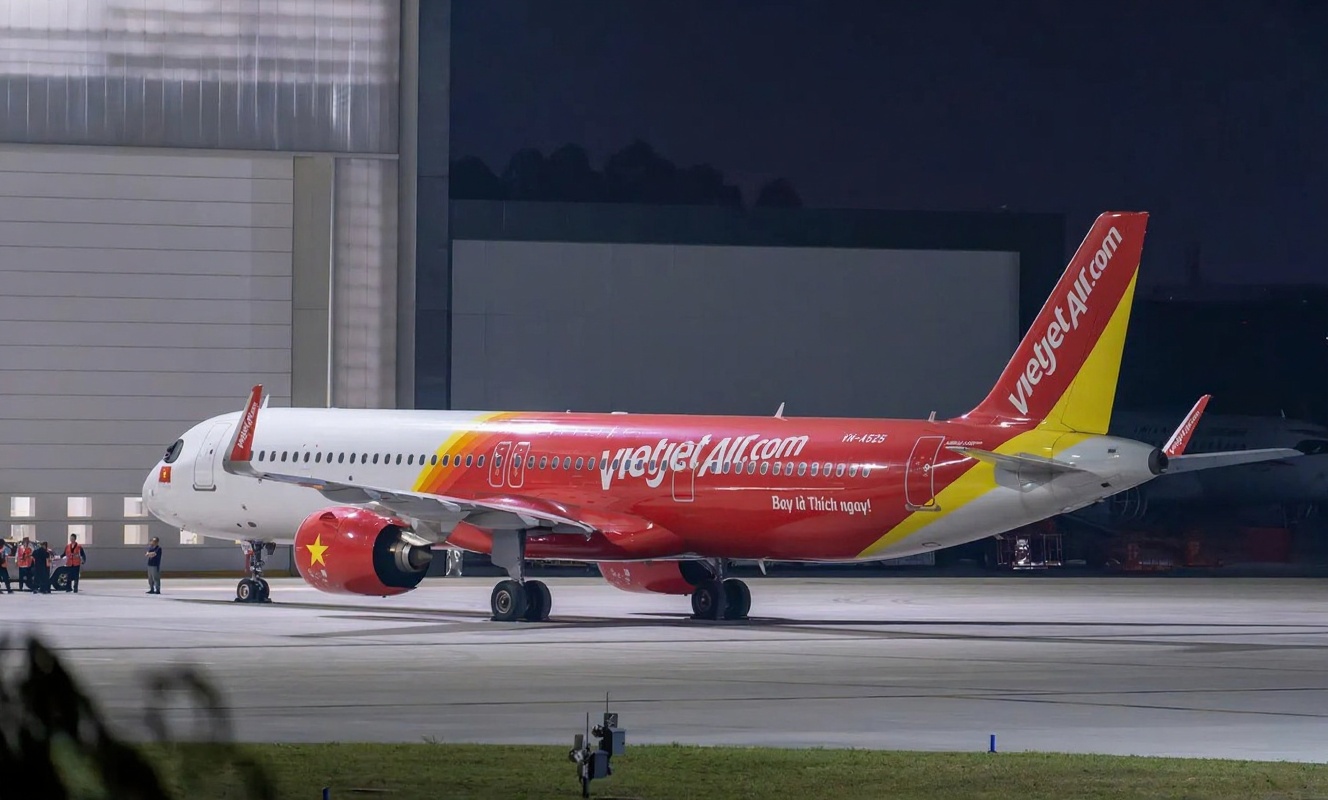
VietJet Air
The most popular budget carrier. Hanoi → HCMC for 350,000–800,000 VND ($13–30) base fare, multiple flights per day. The catch: every single add-on costs extra. Hand luggage: 7kg included. Checked bag: 200,000–350,000 VND depending on when you add it. Add it at the airport: significantly more. Seat selection: fee. Snacks: fee. If you’re traveling with a backpack under 7kg and booking 3+ weeks out, VietJet is genuinely cheap. If you have a checked bag and book late, it’s frequently not cheaper than Vietnam Airlines after fees.
Bamboo Airways
Positioned between full-service and budget. Includes 7–10kg carry-on, sometimes includes 20–23kg checked luggage depending on the fare class. Better legroom than VietJet, comparable prices, and often slightly more reliable departure times. Less well-known internationally but very popular with Vietnamese domestic travelers. Check Bamboo first if you have a checked bag — the inclusive luggage allowance often makes it better value than VietJet plus bag fees.
Vietravel Airlines
The newest carrier, launched 2021. Limited routes — mostly connections to tourist destinations (Phú Quốc, Đà Lạt, Đà Nẵng) from Hà Nội and HCM. Not available on Google Flights; book via vietravelairlines.vn or Traveloka. Usually competitive on price for its specific routes.
Real Prices: What Domestic Flights Actually Cost
✓Quick Answer
Book 3–5 weeks out for best prices. Hanoi → HCMC: $35–80 total on VietJet/Bamboo with a checked bag. Hanoi → Da Nang: $25–60. Da Nang → HCMC: $30–70. Add 15% for same-week booking, 50%+ for same-day.
Hanoi (HAN) to Ho Chi Minh City (SGN)
2 hours flight time. This is the route where flying wins decisively — the overnight train takes 30+ hours, the sleeper bus is 40+ hours. Unless you’re deliberately doing the train for the experience (valid — it’s genuinely great), fly this. Price range: 800,000–2,200,000 VND ($30–85) total for VietJet or Bamboo with a 20kg checked bag, booked 3–4 weeks out.
Hanoi (HAN) to Da Nang (DAD)
1 hour 15 minutes. This is where the math gets interesting. The overnight train Hanoi → Da Nang takes 15–16 hours and costs about 500,000–750,000 VND in a 6-berth soft sleeper — and you sleep through it, saving a hotel night. A VietJet flight costs 600,000–1,500,000 VND total with bag and gets you there in 75 minutes. The train is often the better choice here unless you have very limited time. See our Vietnam night train guide for booking the Hanoi–Da Nang route.
Da Nang (DAD) to Ho Chi Minh City (SGN)
1 hour 10 minutes. Fly this. The alternative is a 15-hour overnight train or a 20-hour bus — technically doable but the time cost is high. VietJet and Bamboo operate this route frequently, prices typically 700,000–1,800,000 VND ($27–68) total with bag.
Hanoi (HAN) to Phu Quoc (PQC)
2 hours 5 minutes direct. No land alternative exists (Phu Quoc is an island). Vietnam Airlines and VietJet both operate this route. Book at least 4–6 weeks out for peak season (November–February) — this route fills fast and prices spike aggressively. Budget 1,200,000–2,500,000 VND ($46–95) total with bag in advance; much more last-minute.
HCMC (SGN) to Con Dao (VCS)
45 minutes. Con Dao is reachable by ferry from Vũng Tàu or by flight from HCMC. Vietnam Airlines dominates this route — limited competition keeps prices higher than most domestic routes. Budget 1,500,000–2,800,000 VND ($57–106) each way. The ferry from Vũng Tàu is cheaper but takes 3–4 hours and is affected by sea conditions. See our Con Dao from Saigon guide for the current options.
How to Book Vietnam Domestic Flights
Best Booking Platforms
Google Flights — covers Vietnam Airlines, VietJet, and Bamboo. The best first stop for price comparison across a date range. Use the calendar view to find the cheapest day in a window. Limitation: doesn’t show Vietravel Airlines or the full ancillary fee picture.
Traveloka — covers all Vietnamese carriers including Vietravel. Available in English, shows real-time prices, allows seat selection and add-ons at booking. The most complete domestic flight booking platform for Vietnam.
Airline direct websites — vietjetair.com, bambooairways.com, vietnamairlines.com. Sometimes have exclusive promotions not available on aggregators. VietJet regularly runs flash sales (check their Facebook page). The downside: no easy comparison between carriers.
12go.asia — useful for combining flight comparison with bus and train options to see the total journey picture. Particularly good when you’re unsure whether to fly or take the night train.
Booking Timing
The sweet spot for domestic Vietnam flights is 3–6 weeks out. Book earlier for peak season (Tet week, Christmas/New Year, July–August domestic travel peak). Book later and you pay 2–4x the base fare — Vietnamese domestic routes have dynamic pricing that spikes hard in the week before departure.
Tet period specifically: book domestic flights 2–3 months in advance if you’re traveling around Tet dates. The Hanoi–HCMC route around Tet (7–10 days before and after) is the most expensive domestic flight in Vietnam and the most frequently cancelled due to weather. Build in buffer days.
Flight vs. Train vs. Bus: When Each Wins
Airport Logistics: Arrivals and Getting to City
Hanoi Nội Bài Airport (HAN)
35km from the Old Quarter. Options: Grab (~250,000–380,000 VND GrabCar), airport bus 86 (45,000 VND, slow but cheap, drops at the old quarter area), or minibus 7 (60,000 VND, faster). The Grab pickup zone is well-signed. Our Hanoi airport guide has the full transport breakdown with current pricing.
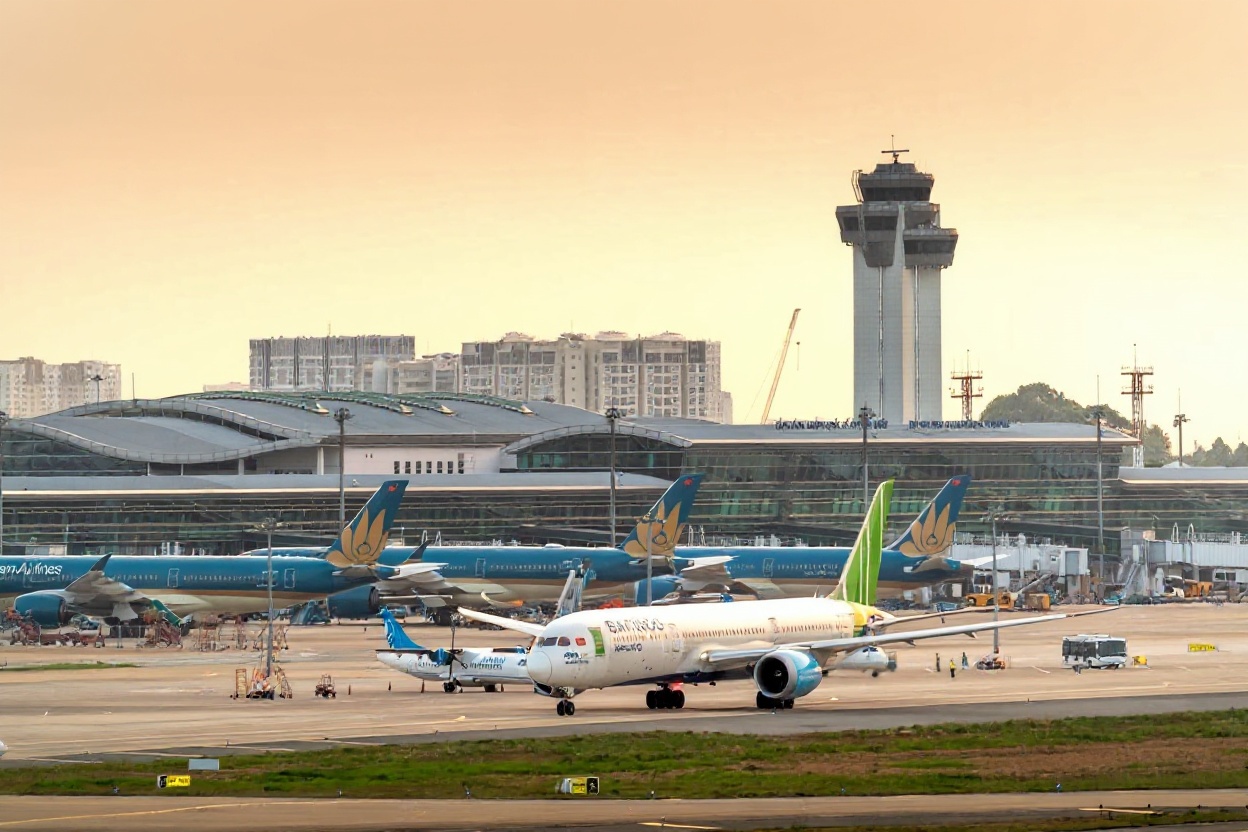
Ho Chi Minh City Tân Sơn Nhất Airport (SGN)
7km from District 1. Grab is the easiest option (~150,000–220,000 VND for GrabCar). Airport bus 109 runs to Bến Thành Market area for 20,000 VND. Our Saigon airport guide has current transport options including the new metro connection.
Da Nang International Airport (DAD)
3km from the city center. Grab is cheapest at 60,000–80,000 VND for the short run downtown. This is one of Vietnam’s most conveniently located airports — the compact city makes airport transport a minor issue rather than a major one.
Hidden Fees and How to Avoid Them
The domestic flight price you see on Google Flights is rarely what you pay. Here’s the full fee picture for budget carriers:
Checked baggage. VietJet’s cheapest fares include zero checked luggage. Adding 20kg costs 200,000–350,000 VND if you add it at booking; 400,000–600,000 VND if you add it online after booking; up to 900,000 VND if you add it at the check-in counter. Add it at booking. Always. Bamboo Airways often includes 20kg in its standard fare — check the fare rules before assuming.
Seat selection. Both VietJet and Bamboo charge for seat selection beyond the random assignment. For a 75-minute flight, random assignment is fine. For the Hanoi–HCMC 2-hour flight, paying 50,000–100,000 VND for a window seat is a reasonable call. Skip it for anything under an hour.
Card payment fees. Some carriers add a 1–2% card processing fee. This shows up at the final payment step. It’s minor but adds up across multiple bookings — check if there’s a “pay by bank transfer” option to avoid it (VietJet’s app sometimes offers this).
Change and cancellation fees. Budget carrier tickets are often non-refundable or have change fees that equal the ticket price. Vietnam Airlines allows free changes on flexible fares. For VietJet and Bamboo, buy travel insurance if you have any schedule uncertainty — it’s cheap (50,000–100,000 VND/person) and the airlines’ own change fees are painful. Our Vietnam travel insurance guide covers which policies actually cover domestic flight cancellations.
Small Airports and Less-Known Routes
Beyond the three main hubs, Vietnam has a network of smaller airports that most travelers never see:
Điện Biên Phủ (DIN) — serves the historic battlefield city and northern highlands. Vietnam Airlines operates this route from Hanoi. The flight is 50 minutes; the alternative is an 8-hour overnight bus through mountain roads. For history travelers, the battlefield is extraordinary and the flight makes it viable as a 2-day detour from a Hanoi base.
Đồng Hới (VDH) — the airport for Phong Nha-Kẻ Bàng National Park and its cave system. VietJet and Vietnam Airlines operate flights from Hanoi and HCMC. Alternatively, the overnight train from Hanoi takes 7–8 hours and drops you at Đồng Hới station 15 minutes from town. The train wins on price; the flight wins on time. See our Phong Nha guide for the full getting-there breakdown.
Pleiku (PXU) and Buôn Ma Thuột (BMT) — Central Highlands airports. Not major tourist destinations but useful for travelers exploring the coffee country and highland culture of Vietnam’s interior. Limited English-language booking information; Traveloka works best for these routes.
Côn Đảo (VCS) — Vietnam Airlines monopoly means prices are higher than comparable routes. Book as far in advance as possible. See our Con Dao guide for current ferry vs. flight cost comparison.
Jake’s Take: When I Stopped Flying and Why I Started Again
When I first arrived in Vietnam in 2021, I had a romantic idea about taking trains everywhere and never flying domestic. I’ve been on the Reunification Express multiple times. It’s genuinely one of the better train journeys in Southeast Asia — the stretch from Da Nang to Hue goes through the Hải Vân Pass with sea views that no flight can replicate.
But I’ve also spent 30 hours on a train from Hanoi to HCMC when a 2-hour flight existed. I’ve done it twice. The second time I confirmed that the romantic idea runs out somewhere around hour 18 when you’ve finished your book, the AC has broken in your carriage, and a toddler three berths over has been crying for four hours.
The rule I’ve arrived at: fly the long routes without sentimentality. Take the train where the journey is the point or the cost-benefit clearly favors it. The Hanoi–Hue overnight train is still something I’d recommend to every first-time visitor — it’s a genuine travel experience. The Hanoi–HCMC train is something I’d recommend only if you have unlimited time and a very good book.
FAQ: Vietnam Domestic Flights
Which is the cheapest airline for domestic flights in Vietnam?
VietJet and Bamboo Airways compete on the lowest base fares. VietJet often has the cheapest headline price but the narrowest luggage allowance (7kg carry-on). Bamboo sometimes includes a checked bag in its standard fare, making the total price competitive. Always compare the total price including your expected luggage on both carriers before booking. Vietnam Airlines is typically 20–40% more but includes checked luggage and offers better reliability.
Can I book Vietnam domestic flights online without a Vietnamese card?
Yes. All four airlines accept international Visa/Mastercard on their websites. VietJet and Bamboo sometimes have card authentication issues with non-Vietnamese cards — if your payment fails, try Traveloka or 12go.asia which process international cards more reliably. Google Flights also works for comparison and redirects to carrier sites for booking.
How early should I arrive at Vietnam domestic airports?
60–90 minutes is comfortable for most domestic departures. Nội Bài (Hanoi) and Tân Sơn Nhất (HCMC) have longer security queues and benefit from arriving 90 minutes early. Da Nang Airport is smaller and 60 minutes is typically sufficient. Budget airlines sometimes board aggressively — be at the gate 20+ minutes before departure.
Is it better to take the train or fly in Vietnam?
Depends on the route. Fly: Hanoi–HCMC, Da Nang–HCMC, any island destination. Train or fly (either works): Hanoi–Da Nang, Hanoi–Hue (overnight train is a great experience). Train clearly wins: Hue–Da Nang (the Hai Van Pass section is spectacular, takes 2.5 hours, costs almost nothing). Bus: any route where there’s no airport at the destination (Mui Ne, Mekong Delta towns).
What happens if my flight is delayed or cancelled in Vietnam?
Budget carrier delays are common, especially during typhoon season (October–November, central Vietnam) and Tet. Your compensation rights depend on the cause: weather cancellations typically get you a rebook, not a refund. Vietnam Airlines has better delay compensation policies than VietJet or Bamboo. For budget carriers: travel insurance is the practical solution. If cancelled at the airport, airline staff at the check-in counter are your first call — the call center queues are usually worse. If rebooking fails, ask for a flight voucher rather than cash refund; that tends to process faster.
What is the luggage limit for Vietnam domestic flights?
Vietnam Airlines standard economy: 23kg checked + 12kg carry-on. VietJet cheapest fare: 7kg carry-on only, zero checked (add checked bag at booking). Bamboo Airways standard fare: 20kg checked + 7kg carry-on on most routes. All carriers: oversized or overweight bags at the counter cost significantly more than pre-purchasing — always add luggage at booking if you need it.
Are Vietnam domestic flights safe?
Yes. Vietnam’s aviation safety record is strong. The Civil Aviation Authority of Vietnam (CAAV) operates under ICAO standards, and Vietnam Airlines has maintained IATA Operational Safety Audit (IOSA) certification consistently. VietJet and Bamboo both operate modern Airbus A320/A321 family aircraft. Vietnam’s airports and ATC are well-developed. The main practical risk isn’t safety — it’s on-time performance during monsoon season and Tet.
What to Expect at Vietnam Domestic Terminals
Vietnam’s main airports have separate domestic and international terminals. At Nội Bài (Hanoi), Terminal 2 handles international flights and Terminal 1 handles domestic — they’re connected by a free shuttle bus (10 minutes). If you’re transiting from an international arrival to a domestic connection, factor in this transfer time. 90 minutes minimum for a transit at Hanoi or HCMC is the safe threshold.
Tân Sơn Nhất in HCMC has a similar layout. The domestic terminal gets crowded during peak periods — Tet, public holidays, and weekends. Security queues at TSN domestic can run 20–30 minutes at peak times. Factor this in.
Da Nang, Phú Quốc, and Cam Ranh (Nha Trang) airports are more compact with combined international/domestic areas. Security at these airports is typically faster.
Food and coffee at domestic terminals: all major airports have coffee shops and food kiosks. Prices are higher than street level (a Highlands Coffee at the airport runs 55,000–70,000 VND versus 35,000–45,000 VND outside). The food is adequate but unremarkable. If you’re connecting through Hanoi domestically and have time, the Grab ride from Terminal 1 to the Old Quarter for a bowl of bún chả and back is mathematically doable with a 3-hour connection. I’ve done it. I don’t recommend it as stress management.
One Mistake I See Travelers Make Constantly
Booking non-refundable, non-changeable VietJet fares and then building an itinerary that depends on everything going exactly right.
Vietnam’s domestic flights are useful precisely because they’re fast and cheap. They stop being useful when a delay cascades into a missed connection, a cancelled hotel night, and a panicked rebooking at peak prices. The practical fix: never book a domestic flight less than 6 hours before an international departure. Build buffer nights at both ends of any domestic segment that matters.
The other mistake: booking the cheapest possible fare for a route where the train exists and is actually better. The Hanoi–Hue train at night gives you a sleeper berth, dinner from the station food stalls, and the Hải Vân Pass at dawn through the compartment window. No $30 VietJet flight can replicate that experience. See our Vietnam train guide for sleeper train booking and route recommendations.
The Bottom Line on Domestic Flights in Vietnam
Vietnam’s domestic aviation network is one of the most useful tools available to independent travelers. The country is long and thin — 1,650km from tip to tip — and the budget airline competition has pushed fares to a level that makes flying genuinely affordable rather than a splurge decision. When a Hanoi–HCMC flight costs $30 and the alternative is 30 hours on a train, the calculation is obvious.
Use domestic flights to cover the big north-south distances fast, then slow down and use trains, buses, or motorbikes within regions. The classic pattern: fly into Hanoi, overland south through the central coast (Ninh Binh → Hue → Da Nang → Hoi An) over 10–14 days, fly into or out of HCMC. You see the country without sacrificing a week to transport.
Book through Google Flights or Traveloka for price comparison. Add luggage at booking time, not at the airport. Check in online the day before to skip the counter queue. That’s the entire system — the rest is just choosing which window seat you prefer.
For the full picture on getting around Vietnam, including trains, sleeper buses, and motorbike rental, see our Vietnam transport guide.