
Vietnam’s entry requirements are straightforward for most US travelers — but “straightforward” doesn’t mean “you can skip the checklist.” Immigration officers turn people away for expired passports, missing e-Visa QR codes, and photo quality failures that could have been avoided with five minutes of prep. This guide covers every document requirement, what to bring to the immigration counter, and what happens if something goes wrong.
The Core Requirements: What You Need to Enter Vietnam
For US citizens entering Vietnam in 2026:
1. Valid US passport
Must be valid for at least 6 months beyond your intended departure date from Vietnam. If your passport expires in less than 6 months from your departure date, renew before traveling — Vietnamese immigration will deny entry and the airline will deny boarding. Passport renewal takes 6–8 weeks standard, 2–3 weeks expedited. Apply early if your passport is expiring within the next year and you’re planning Vietnam travel.
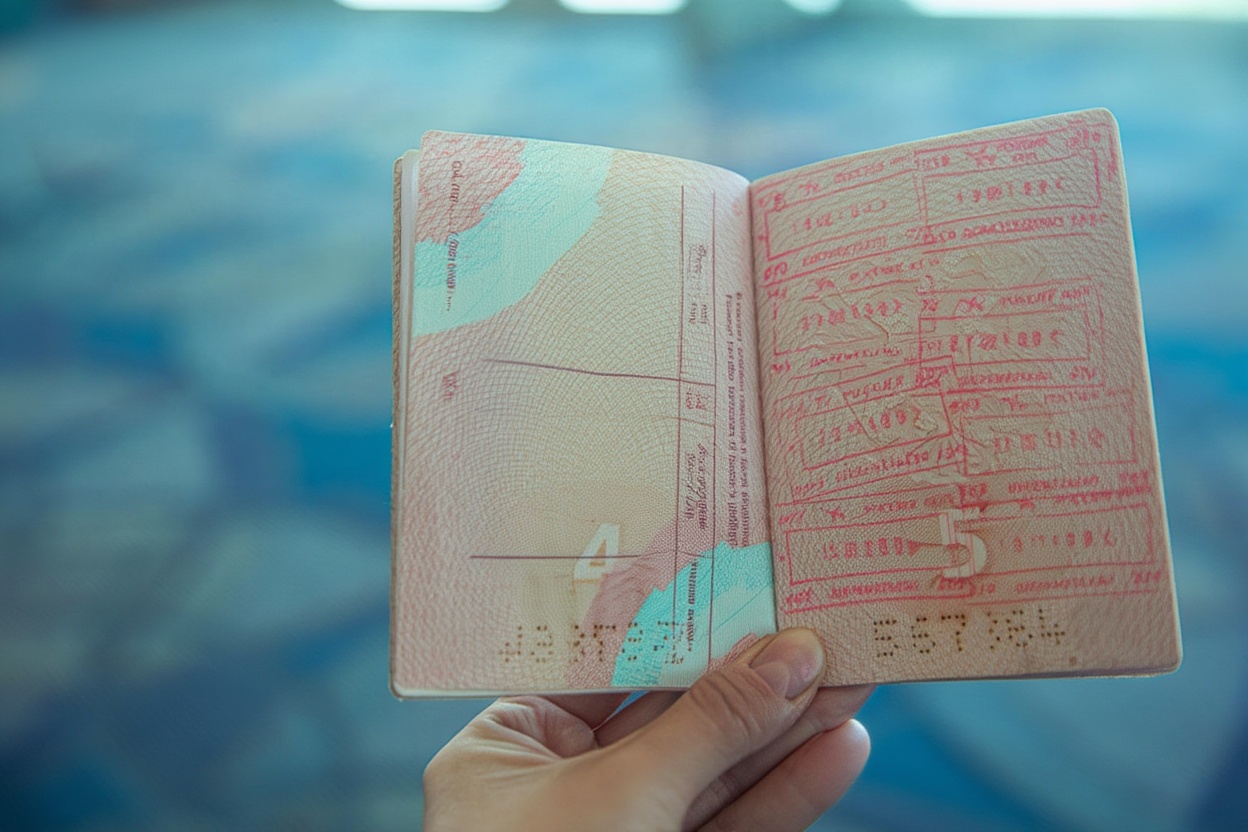
2. At least 2 blank pages
Vietnamese immigration uses one page for the entry stamp, and your exit stamp uses another. You need a minimum of 2 blank facing pages. Many airlines also require blank pages, so check your passport count before departure rather than at the gate.
3. Visa clearance (one of three options)
Option A: Visa-free entry (for US citizens, 45 days). No application required. Option B: Vietnamese e-Visa ($25, applied for at evisa.xuatnhapcanh.gov.vn, valid 90 days). Option C: Visa on arrival (requires prior approval letter, now largely replaced by e-Visa). Most travelers use either the 45-day visa-free entry or the e-Visa.
4. Proof of onward travel (sometimes required)
Vietnam doesn’t officially require proof of onward travel, but immigration officers may request it at their discretion. This is more common at land borders and when officers suspect long-term overstay intentions. Have your outbound flight booking or onward bus ticket accessible on your phone. For a full breakdown of fees and what to expect, see our guide to Vietnam visa cost.
5. Accommodation confirmation (sometimes requested)
Your first night’s accommodation address. A hotel confirmation email satisfies this. If staying with friends or family, have their address ready.
e-Visa Requirements: What the Application Needs
If you’re applying for the Vietnamese e-Visa at evisa.xuatnhapcanh.gov.vn, you’ll need:
Personal information:
Full name exactly as on your passport (including all middle names)
Passport number
Date of birth
Nationality
Passport issue date and expiry date
Intended entry date (the date you plan to arrive in Vietnam)
Intended exit date
Intended entry point (airport or border crossing)
Intended exit point
Two photos:
Photo 1 — Your face: Passport-style photo, straight-on, white background, no glasses, no hat, no shadows, face clearly visible, taken within the last 6 months. Format: JPEG, minimum 600×800 pixels, maximum 5MB. The system has automatic photo quality checking — low-quality photos are rejected and require resubmission. Take the photo in good daylight against a white wall, not in shadow or harsh backlighting.
Photo 2 — Passport biographical page: The page with your photo and personal information. Photograph it flat with even lighting — no shadows, no glare, all text clearly legible. The entire page must be visible in the photo, not cropped. Format: same as above.
Payment: $25 by credit or debit card (Visa, Mastercard). Have your card details ready — the payment system occasionally fails on the first attempt due to bank security checks on international transactions. A backup card from a different bank is useful.
Processing time: Typically 3 business days, occasionally longer during Vietnamese national holidays. Apply at minimum 7 days before travel; 14 days provides buffer for corrections or resubmission if your photos are rejected.
Passport Photo Requirements in Detail
The e-Visa face photo requirements follow the same standard as a US passport photo. The specific criteria:
- Straight-on view of face — no angle or three-quarter view
- Neutral expression or natural smile with mouth closed
- Eyes fully open and visible
- No glasses (prescription or sunglasses)
- No headwear (except for religious reasons)
- White or off-white background only — no patterns, no colored backgrounds
- Face centered in the frame, head and shoulders visible
- No shadows on face or background
- Photo taken within the past 6 months
- Not a photocopy of another photo
The system rejects photos automatically for quality issues. The most common rejection reasons: sunglasses or glasses in the frame, colored or patterned background, too much shadow on the face, blurry or low-resolution image. If rejected, you restart from the photo upload step — the rest of your application information is not lost.
For the passport biographical page photo: ensure you photograph it on a flat surface in natural daylight or even artificial light. The critical quality check is that all printed text is legible in the digital version — the officer needs to read your passport number and name clearly.
Requirements for Children Traveling to Vietnam
Children under 14 traveling with parents: no separate visa required if entering on parental passport (for countries that allow children listed on parental passports) or using a child’s own passport with the same 45-day visa-free entry as adults.
US children traveling on their own passport: same requirements as adults — passport valid for 6 months, 45-day visa-free or e-Visa as applicable. Children under 16 typically have no objection to entry, but it’s advisable to carry: the child’s birth certificate, parents’ ID, and a notarized letter from any non-traveling parent giving permission for travel (this is a recommendation for smooth border crossing rather than a Vietnam-specific requirement).
Unaccompanied minors (under 18 traveling without parents): airlines have specific policies, and Vietnamese immigration may request documentation of the receiving party and purpose of travel. Standard documentation: notarized parental consent letter with contact details for the receiving adult in Vietnam.
Special Circumstances and Edge Cases
Dual citizenship: Vietnamese immigration is aware that some travelers hold Vietnamese-American dual citizenship. Vietnamese law does not officially recognize dual citizenship — if you hold Vietnamese nationality, you may be required to enter on your Vietnamese passport rather than your US passport. Entering on your US passport when you hold Vietnamese nationality is technically illegal under Vietnamese law; enforcement is inconsistent but exists. Consult a Vietnamese immigration lawyer if this applies to you.
Prior Vietnam entry refusal: A prior entry refusal to Vietnam does not automatically disqualify you from future entry, but it should be disclosed if asked and can result in additional scrutiny. If you were refused entry due to documentation issues (expired passport, visa problems) rather than security concerns, a clean application with correct documentation usually resolves the issue.
Criminal record: Vietnam does not access foreign criminal databases during standard tourist entry. Minor criminal records from other countries are unlikely to affect entry. Serious drug trafficking convictions may be flagged through Interpol cooperation, but standard misdemeanor or minor criminal history doesn’t trigger Vietnamese immigration concern. For serious convictions, consult a Vietnamese consulate before purchasing flights.
Israeli passport holders: Vietnam and Israel do not have formal diplomatic relations. Vietnamese law technically prohibits entry for holders of passports from countries Vietnam doesn’t recognize diplomatically, though Israeli travelers have generally been able to enter Vietnam. Check current entry conditions with the Vietnamese embassy before travel if this applies.
Journalists and researchers: Entering Vietnam on a tourist visa and conducting journalism or research is technically prohibited. Journalists covering Vietnam require appropriate press visas. Enforcement against individual tourist-visa travelers doing informal reporting is minimal but legally clear.
What to Bring to Immigration at the Airport
Have these ready before you reach the immigration counter:
Your passport (open to the biographical page — the officer will want to see it immediately)
E-Visa PDF (downloaded and accessible offline on your phone, or printed)
Return or onward flight booking (digital or printed, accessible offline)
Hotel confirmation for first night (email or booking.com confirmation)
Completed arrival card if required (handed out on the plane or available at the immigration desk)
Keep these in a bag you can access without removing your luggage from the belt or digging through your pack. Fumbling at the immigration counter slows the line and delays your entry. A passport wallet with your e-Visa printout tucked in is the most efficient setup.
Requirements by Entry Point: Airport vs Land Border
Entry requirements are technically the same regardless of entry point, but the experience and practical application differ significantly between airports and land borders.
International airports (Nội Bài Hanoi, Tân Sơn Nhất HCMC, Đà Nẵng, Phú Quốc): The most efficient and consistent entry points. Officers at major airports are experienced with the volume of foreign tourists and process entries quickly. Visa-free entry for US citizens is standard. E-Visa checks are routine. English language at the immigration desk is functional if limited. Expect 10–25 minutes from the immigration queue to exit baggage claim at these airports during normal hours.
Land borders (Mộc Bài from Cambodia, Lao Cai from China via Yunnan, Lao Bảo from Laos, others): Land borders are slower, have fewer officers, and are less experienced with large volumes of Western tourists. Visa-free entry is technically valid here too, but enforcement varies. Some land border officers have issued shorter-than-45-day stamps on 45-day visa-free entry — getting an e-Visa for land border crossings removes this uncertainty. Queueing times can be 45 minutes to 2+ hours during peak bus arrivals. Carry more cash (VND or USD) at land borders for any informal fees that sometimes appear — though official fees are not required, certain crossings have developed a culture of minor informal “processing” fees.
Sea entry (ferries from Cambodia to Phu Quoc, cruise ship arrivals): Ferry crossings from Cambodia’s Kep or Kampot to Phu Quoc are straightforward with standard entry requirements. Cruise ship arrivals have specific port immigration procedures; your cruise operator provides the documentation requirements specific to Vietnamese ports of call.
Visa Requirements for Non-US Nationalities
If you’re traveling with friends or family members who hold non-US passports, requirements vary:
Visa-free entry (45 days) available to: Citizens of Australia, UK, Canada, Germany, France, Italy, Spain, Netherlands, Belgium, Denmark, Sweden, Norway, Finland, Poland, Czech Republic, Russia, Japan, South Korea, Singapore, Thailand, Malaysia, Indonesia, Philippines, and approximately 20 other nationalities. Full list available at immigration.gov.vn.
Visa-free entry (15 days) available to: Some additional ASEAN member countries and bilateral agreements with shorter terms. Check the current list — the visa-free policy has expanded significantly since 2023 and may have been updated further.
e-Visa (all nationalities): The Vietnamese e-Visa is available to citizens of over 150 countries at the same $25 fee and 90-day maximum. If a nationality is not on the visa-free list, the e-Visa is the standard tourist entry method. Apply at evisa.xuatnhapcanh.gov.vn regardless of nationality.
Visa not available: Citizens of a small number of countries cannot obtain Vietnamese tourist visas or e-Visas due to diplomatic relations issues. This affects very few nationalities. If in doubt, check with the Vietnamese embassy in your country.
What Vietnam Does NOT Require
Knowing what you don’t need is as useful as knowing what you do:
Vietnam does NOT require: proof of travel insurance (though strongly recommended for practical reasons), yellow fever vaccination certificate (unless arriving from a yellow fever-endemic country), proof of financial means (no minimum funds requirement, though officers may ask), HIV testing, any other medical documentation, or advance hotel booking beyond your first night’s accommodation if asked.
Vietnam does NOT mandate: a return flight booked before entry, a fixed itinerary, or registration with any government authority in advance (aside from the e-Visa if applicable). The 2023 visa rule changes specifically removed several previous requirements to streamline tourism.
Vietnam DOES have entry restrictions for nationals of certain sanctioned countries. If you’re a US citizen, this doesn’t affect you. For non-US travelers, the embassies.vn website has current entry status by nationality.
The e-Visa Application Timeline
Planning your e-Visa application around these checkpoints:
12+ weeks before travel: Confirm your passport validity (6 months past departure date required). If it expires within 6 months of your return date, begin passport renewal now.
4 weeks before travel: Submit your e-Visa application. This provides ample buffer for any resubmission required due to photo rejection or processing delays during Vietnamese holidays.
1 week before travel: Confirm e-Visa approval received. Download the PDF. Save it in multiple locations: email, phone photos app, cloud backup. Print one copy.
Day of travel: Pack passport + e-Visa printout + outbound flight booking in an accessible location (not in checked baggage).
The minimum safe timeline: 2 weeks before travel. Do not apply the day before departure — processing delays do occur, and e-Visa rejections require resubmission.
Two things worth sorting before you land: a Vietnam eSIM so you have data the moment you clear customs, and travel insurance — medical costs for uninsured foreigners in Vietnam are significant.
Airalo eSIMs activate instantly. Buy before departure — airport SIM queues in Vietnam can take 30+ minutes.
Frequently Asked Questions
Can I enter Vietnam with a damaged passport?
A damaged passport may be rejected at Vietnamese immigration. “Damaged” means water damage, torn pages, ink smears over the biographical data, or a binding that doesn’t hold the pages together. Minor wear (slight scuffs on the cover, light creasing) is generally fine. If in doubt: renew your passport before travel. The specific concern is whether the biographical page remains clearly legible — if the machine-readable zone at the bottom of the photo page is obscured or unreadable, immigration systems cannot process it.
What do I need for a Vietnam visa extension inside Vietnam?
Extending a tourist visa inside Vietnam requires visiting the immigration office (Cục Quản lý Xuất nhập cảnh) in Hanoi (44 Trần Phú), HCMC (161 Nguyễn Đức Cảnh), or Da Nang (7 Trần Quý Cáp). Bring your passport, current visa, 2 passport photos, completed extension application form, and payment for the extension fee (approximately 400,000–600,000 VND depending on extension duration). Processing takes 3–5 business days, during which your passport stays at the immigration office. Extensions are at the discretion of the immigration officer and are not guaranteed — particularly for consecutive extension requests. The practical alternative to extension is the visa run: exit Vietnam briefly and re-enter on a fresh 45-day visa-free stamp (or use an e-Visa with multiple entry).
What if I don’t have a return flight booked?
Most travelers entering on 45-day visa-free entry don’t have a hard return flight — they have a flexible itinerary. This is generally fine at Vietnamese airports, where immigration officers don’t consistently request proof of onward travel from US passport holders. Land borders can be stricter. Options if requested: have a bus or train booking out of Vietnam (a Hanoi–Beijing bus booking, for example), or book a fully refundable outbound flight as a placeholder that you cancel after entry. In practice, the majority of US tourists entering Vietnam have no issues without onward travel documentation.
How long does passport renewal take for a Vietnam trip?
US passport renewal takes 6–8 weeks standard processing, 2–3 weeks expedited (additional $60 fee). If your passport expires within 6 months of your return date from Vietnam, start the renewal process at least 10 weeks before your departure to allow buffer time. Apply in-person at a passport acceptance facility (many post offices accept passport applications) or by mail for renewals. Expedited processing is advisable for any international trip within 3 months. In emergencies (departure within 5 business days), a passport appointment at a regional passport agency can issue a passport in 24–48 hours — call 1-877-487-2778 to schedule. Note: e-Visa applications require a valid current passport; don’t apply for your e-Visa until you have your renewed passport in hand.
Does the e-Visa entry date have to match my exact arrival?
The e-Visa specifies an intended entry date. You can arrive before that date (the visa is valid from the intended entry date, not from application date), but you cannot enter after the entry date if it makes your stay exceed the visa’s validity period. Practically: if your visa is valid from June 1 to August 31 (90 days), you can enter on June 1 or later, as long as you depart by August 31. Arriving on May 31 when your visa starts June 1 means you’d need to use the 45-day visa-free entry instead — this usually works if you’re a US citizen, but requires different handling at immigration. Set your e-Visa entry date to the actual arrival date or a day before as a conservative buffer.
What if my name on the e-Visa doesn’t exactly match my passport?
Your name on the e-Visa must match your passport exactly — including all middle names and the exact order of names. A mismatch (for example, the e-Visa lists “John M Smith” while your passport reads “John Michael Smith”) can cause processing delays or refusal at immigration. If you submitted with a name mismatch and receive your e-Visa with an error, contact Vietnamese immigration through the evisa portal before travel to correct it — amendments require resubmission in some cases. On minor discrepancies (middle name abbreviated vs spelled out), immigration officers generally accept with a brief check of both documents. On substantial mismatches (wrong name entirely), you will be redirected for secondary processing and may be denied entry. Check the name field twice before submitting the application.
Do I need to apply for a new e-Visa every time I visit Vietnam?
Yes. The Vietnamese e-Visa is valid for a specific entry period (up to 90 days from your specified entry date). Each visit requires a new application at $25. There is no multi-year visa or long-stay tourist visa for Vietnam — the options for longer stays are the 45-day visa-free entry (renewable via brief exit and re-entry), the e-Visa (90 days), or proper long-stay visas (business, work, investor, or family reunion categories requiring Vietnamese sponsorship). Frequent visitors to Vietnam often use a combination of visa-free entries and e-Visas depending on trip length. The $25 e-Visa for 90 days is by far the most cost-effective option for stays over 45 days. Because the application only takes about 20 minutes and approval arrives in roughly 3 business days, building a new e-Visa into your pre-trip checklist is easy — just treat it the same way you’d book your accommodation: do it before you arrive, not after.
Can I enter Vietnam if I’ve been refused entry before?
A previous entry refusal to Vietnam doesn’t automatically bar you from future entry, but Vietnamese immigration maintains records and an immigration officer has discretion to deny entry without providing a reason. If you were refused for a technical reason (expired passport, wrong visa type, missing document) and that issue is now resolved, subsequent applications are generally processed normally. If the refusal was for a substantive reason (suspicion of intent to work illegally, prior overstay, security flag), the underlying issue needs to be resolved — sometimes through a formal written appeal to the Vietnam Immigration Department. When applying for a new e-Visa, you’ll be asked to declare any prior immigration refusals. Answer truthfully — false declarations are grounds for rejection and can create longer-term complications. Most travelers asking this question are in the “technical reason, now resolved” category and have no ongoing issues.