
Last updated: May 2026 · Jake Morrison · 5 years in Vietnam
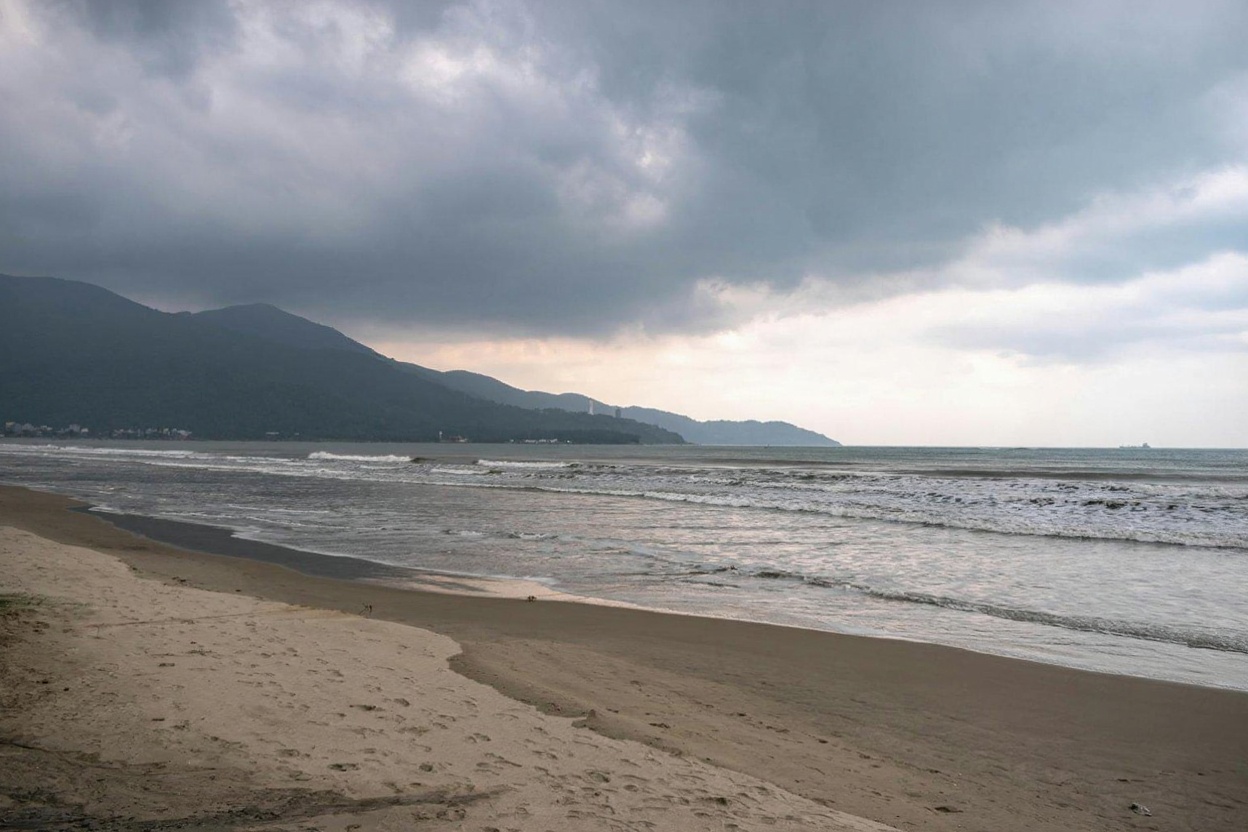
I spent a September in Da Nang once without properly understanding the typhoon risk. I knew it might rain. I didn’t know “might rain” meant three days of sustained wind and horizontal rain, restaurants closing, and the beach completely off-limits. My backup was to take the train to Hoi An. The train was delayed by track flooding. I ended up eating instant noodles in my guesthouse for a day and a half and watching the river rise.
That’s September on the central coast. It’s not every year — some Septembers have a 3-day typhoon and then a beautiful stretch. Some have two storms. The point isn’t that September is uniformly bad; it’s that the variance is higher than any other month and planning around it requires honest contingency thinking.
September at a Glance — The Risk Map
September’s weather divides Vietnam into three clear zones: the north (cooling, improving), the central coast (highest typhoon risk), and the south (steady monsoon, manageable). Understanding which zone your itinerary falls in is the whole job.

North Vietnam in September — The One Bright Spot
The north in September is genuinely viable — particularly late September, when Hanoi drops from its August peak and the quality of the days improves noticeably. Hanoi sits at 26–32°C in September — still warm, still humid, but the extreme heat of June and July is receding. The rain comes in heavier bursts than the rest of the year (13–17 rain days) but clears quickly. The city is functional and increasingly pleasant as the month goes on.

Ha Giang in September is worth discussing carefully. The Loop is open. The road is passable. The weather runs 18–26°C at riding altitude, which is comfortable. The catch: September is the tail end of the rainy season for the north, and Ha Giang specifically sees heavy rainfall through September that can cause landslides on the mountain sections, particularly around the Ma Pi Leng Pass approaches and the road between Meo Vac and Khau Vai. These are not frequent events but they happen, and when they do, sections of the Loop are blocked for 6–24 hours while road crews clear debris. The guesthouses in Dong Van and Meo Vac deal with this routinely — it’s a regional reality, not a rare emergency — but build an extra day into any September Ha Giang itinerary.
Ninh Binh in September: the rice paddies around Tam Coc are reaching the end of the growing season — the fields are deep green, close to harvest weight, the terraces full. The rain is frequent but the landscape absorbs it differently here than on the coast. The boat caves at Trang An are accessible and atmospheric in September light. Crowds are genuinely low — September is off-peak for domestic tourism in the north. Accommodation prices are at their annual low. Use our Vietnam itinerary guide to map your route around September’s weather zones before you book.
Ha Long Bay in September is navigable but variable. The typhoon season that devastates the central coast doesn’t hit Ha Long Bay directly as often — the bay is partially sheltered by geography — but storms do occasionally affect the region, and foggy, grey days are more common than in April-May. The value case for Ha Long Bay in September: budget 2-night cruises that cost 1,800,000–2,200,000 VND (~$68–83) per person in peak season drop to 1,200,000–1,600,000 VND (~$45–60) in September. The bay in September mist looks genuinely atmospheric — different from the blue-sky version, but not without appeal. The practical advice: book a cruise operator with a solid cancellation and rescheduling policy, and go with realistic expectations for the weather conditions.
The national park at Cúc Phương (say: kook fwong) — Vietnam’s oldest, 2 hours from Hanoi near Ninh Binh — is worth a September mention. The park is in full leaf through September, the trails passable if muddy, and the Endangered Primate Rescue Centre and Turtle Conservation Centre within the park both operate year-round. September is one of the quieter visitor months. A day trip from Ninh Binh (taxi 250,000–350,000 VND, ~$9.50–13.30 each way) combines well with a morning at Trang An and afternoon at Cuc Phuong — manageable without the summer crowds that fill the park on Vietnamese school holiday weekends.
Sapa in September runs 15–20°C. The trekking trails are wet and in some places muddy — particularly the lower routes through the Muong Hoa Valley near Cat Cat Village. The higher routes stay drier. The rice terraces are in their pre-harvest heavy green, not yet the gold of October, and the morning mist in the valley is consistently present through September. Sapa in September rewards the photographer willing to get their boots muddy more than it rewards the traveler expecting postcard conditions.
✓Quick Answer
Best northern Vietnam destinations in September: Ninh Binh (low crowds, green paddies), Hanoi (late September cooling), Ha Giang (viable but build extra day for weather). Sapa is workable but trails are muddy. The north is the safest September bet in Vietnam by a wide margin — it’s the entire rationale for going in September at all.
Central Vietnam in September — The Honest Risk Assessment
September is the month when the South China Sea becomes the most active typhoon-generating basin in the western Pacific. Storms form east of the Philippines and track westward — the central Vietnamese coastline is directly in the corridor. Da Nang, Hue, Hoi An, and Quy Nhon collectively take more direct and near-direct typhoon hits in September and October than in any other months combined.
What a typhoon means on the ground: 24–72 hours of pre-storm wind and rain, followed by the storm itself (often 6–18 hours of sustained strong winds and heavy rain), followed by a clearing period. During the storm: flights cancelled, transport stopped, outdoor activities impossible. After the storm: flooding in low areas (particularly Hoi An), debris on roads, some businesses closed for cleanup. Recovery is typically 1–3 days.
⚠Real Talk
The typhoon risk in September on the central coast is real and statistically significant — not a travel writer’s hedge. In any given September week in Da Nang, there is roughly a 1-in-5 chance of weather severe enough to disrupt your itinerary meaningfully. Over a 10-day central coast trip in September, the probability of at least one significant disruption day is above 50%. These are not scare statistics — they’re the reason travel insurance is mandatory for this month on this coastline.
Quy Nhon in September is slightly more sheltered than Hoi An — its bay faces east-southeast rather than directly east, and the surrounding headlands provide some protection from certain storm tracks. “Slightly better” is still not good. Quy Nhon in September sees 12–16 rain days and occasional typhoon passage. It’s the best option on the central coast in September, which is not the same as being a good option.
If your flight itinerary forces central Vietnam in September: Hue for culture (indoors-accessible sites), Quy Nhon over Hoi An, and travel insurance with weather disruption cover. Accept that one or two days of your trip will be weather-limited. Plan indoor activities as genuine alternatives, not just backup plans — the Hue Imperial City, the Hoi An Museum of Trading Ceramics, the war history museum in Quy Nhon — all worth doing regardless of what the sky is doing.
South Vietnam in September — Mid-Monsoon Life
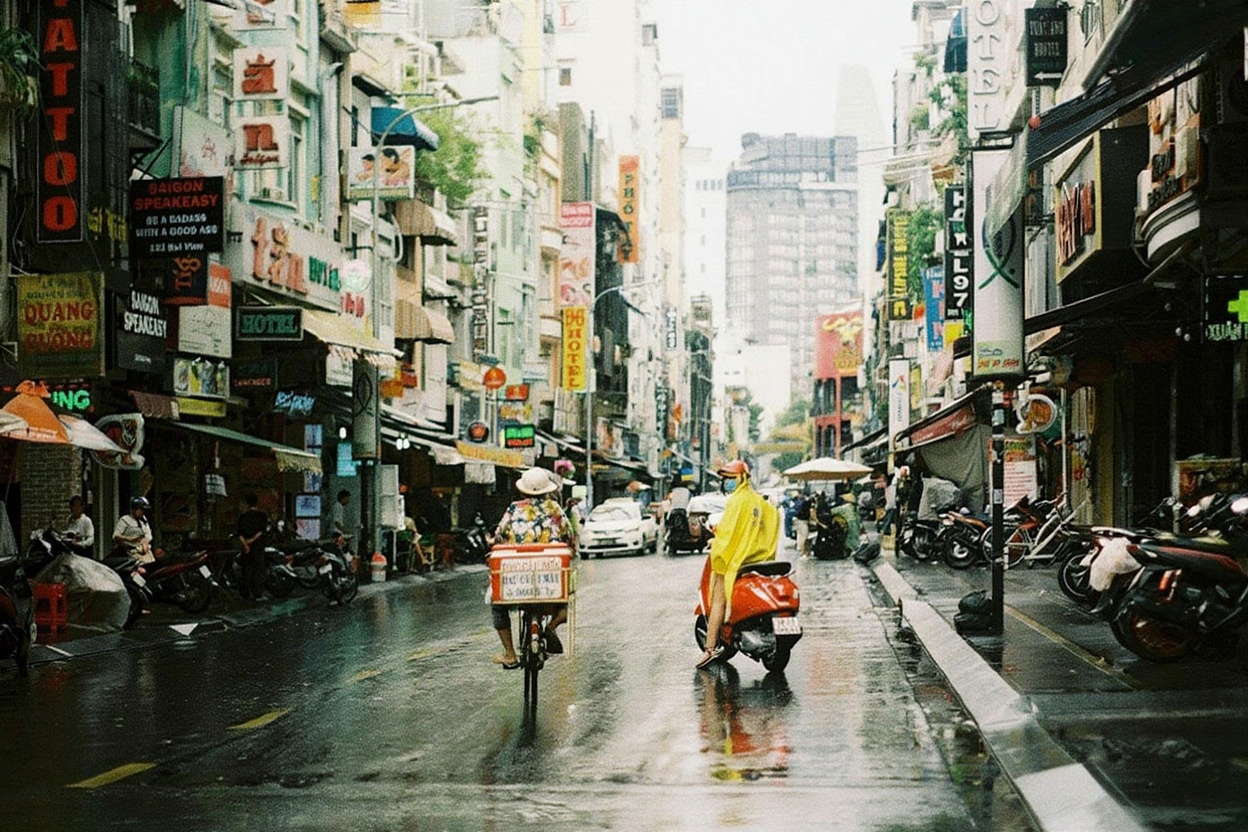
HCMC in September is in the middle of its monsoon season — 18–22 rain days, daily afternoon downpours from 3–5pm that are heavier and more sustained than the brief showers of October. The city manages fine; HCMC has been running its street life around the monsoon for decades. The markets, museums, and food corridors operate normally. The outdoor café culture retreats under awnings. The morning hours (6–11am) are reliably usable.
The Mekong Delta in September is at its highest flood level. This is a feature, not a bug, for the right traveler. The flooded delta in September looks unlike any other month — kilometre-wide expanses of brown-green water where dry-season rice paddies sat, stilted houses rising from the flood, the floating market boats navigating channels that were roads three months ago. The Can Tho riverside guesthouses and the Tràm Chim boat tours in Đồng Tháp are operating. The Cai Rang floating market runs regardless of water level — the boats just navigate different channels.
The HCMC street food scene in September operates on a rhythm that locals know well and tourists rarely discover: the market vendors start at 5am and run until the first big rain hits around 3pm. The Ben Thanh night market area on Pham Ngu Lao restarts at 6pm after the rain clears and runs until midnight. Some of the most interesting HCMC food experiences — the bún bò Huế stall at the back of the Binh Tay Market in Cholon, the bánh mì cart on Nguyen Trai Street near the Reunification Palace — are quieter in September than in any other month. There are no tour groups. The locals eating next to you aren’t performing for an audience.
Phu Quoc in September is the island’s worst month. September and October combine the highest rainfall totals with the roughest sea conditions. The west coast beaches — normally the calmer side — take the brunt of the southwest monsoon. Swimming is inadvisable on most days. Tour operators cancel snorkelling and island-hopping trips with regularity. If Phu Quoc is the specific destination, October already starts to improve and November-April is the correct window. September Phu Quoc is a known problem that is better avoided than managed.
The September Exception — Dalat
There is one destination in Vietnam that genuinely works in September without significant weather caveats: Dalat (Đà Lạt — say: dah laht). The highland city sits at 1,500m in the Central Highlands, above the coastal weather systems. Its September temperature runs 17–23°C — cool, comfortable, and dramatically different from the sweating coast or the monsoon south. Rain falls, but as afternoon showers rather than sustained storms. The city’s French colonial architecture, flower gardens, and café culture are all fully operational.
Dalat in September is quiet. The domestic tourist surge that hits the city in Christmas and around Tet hasn’t arrived. The strawberry farms and coffee plantations outside the city are running their harvest tours. The Langbiang Mountain (Núi Lang Biang — say: nwee lang byang) trekking is wet but the trail is maintained. For travelers with flexibility, a September Dalat week — arriving via HCMC or Nha Trang — is one of the more pleasant things you can do in Vietnam this month. It sits outside the typhoon corridor, above the monsoon heat, and operates at a pace that doesn’t match any other city in the country.
What Dalat in September specifically offers that other months don’t: the flower gardens (Vườn Hoa Thành Phố — say: voo-un hwah tanh foh) at Xuan Huong Lake are in September bloom, with dahlias and chrysanthemums that don’t appear in summer heat. The cà phê chồn (say: ka fay chawn — weasel coffee) farms outside the city are running tours and the harvest season for the robusta beans used in this process begins in September. The French villas and colonial architecture in the central Dalat residential area look different in September mist than in the clear summer air — more atmospheric, less postcard. The city’s central market (Chợ Đà Lạt — say: chaw dah laht) is worth two hours: the highland produce section has varieties of vegetables and fruits specific to the elevation — artichokes, persimmons, local strawberries — that don’t appear in coastal Vietnam markets.
Getting to Dalat in September: fly from HCMC (45 minutes, 400,000–900,000 VND, ~$15–34 one way) or take the open tour bus from Mui Ne or Nha Trang (4–5 hours, 150,000–250,000 VND, ~$5.70–9.50). From Da Nang, fly via HCMC or take the overnight bus through the Central Highlands (10–12 hours, not comfortable but cheap at 200,000–350,000 VND, ~$7.60–13.30). Budget accommodation in Dalat in September runs 200,000–350,000 VND per night (~$7.60–13.30) — the low-season discount from the Christmas/New Year peak is substantial.
September’s Hidden Advantage — Prices
September is the lowest-price month in Vietnam’s travel calendar. Not slightly lower — significantly lower. Accommodation that costs 600,000–900,000 VND per night (~$22–34) in October drops to 350,000–550,000 VND (~$13–20) in September across most destinations. Phu Quoc resorts that run 2,000,000 VND/night (~$76) in January can be found for 800,000–1,200,000 VND (~$30–45) in September, though the beach conditions don’t justify the visit. Tour prices are negotiable in September in a way they aren’t in peak months. This applies everywhere: Hanoi guesthouses, Ha Giang homestays, Ninh Binh hotels.
The budget implication: September is when you can upgrade your accommodation without upgrading your budget. A mid-range Hanoi hotel that’s genuinely nice — courtyard, breakfast, actual hot water — costs 500,000–700,000 VND (~$19–26.60) in September. The same hotel charges 900,000–1,200,000 VND (~$34–45) in October. The weather difference between late September and early October in Hanoi is marginal. The price difference is not. For cost-conscious travelers with flexible schedules, arriving in late September and leaving in early October gets you northern Vietnam at low-season pricing with transitional-season weather — the best deal in the calendar if you time it right.
Tour operators and activity companies in the north are also in their quiet period in September. Ha Giang jeep tour operators who run 1,800,000–2,500,000 VND (~$68–95) per day in October will negotiate in September. The Ninh Binh boat tour operators on the Trang An lagoon accept walk-up pricing that doesn’t exist in high season. This isn’t a guarantee — it’s a seasonal reality that rewards travelers willing to negotiate rather than accept the first price quoted.
→Who It’s For
September in Vietnam is for: travelers locked into September dates who are willing to route north, or who specifically want Dalat’s highland escape. It is NOT for: central coast beach plans, Ha Long Bay expectations, Phu Quoc itineraries. If you have any flexibility at all, October or November delivers everything September promises the north, plus reopens the central coast.
Two things worth sorting before you land: a Vietnam eSIM so you have data the moment you clear customs, and travel insurance — medical costs for uninsured foreigners in Vietnam are significant.
Airalo eSIMs activate instantly. Buy before departure — airport SIM queues in Vietnam can take 30+ minutes.
FAQ — Vietnam in September
Is September a good time to visit Vietnam?
For the north (Hanoi, Ha Giang, Ninh Binh, Sapa) — yes, particularly late September when temperatures start dropping from the summer peak. For the central coast (Da Nang, Hoi An, Hue, Quy Nhon) — no, September is the highest typhoon risk month of the year. For the south (HCMC, Phu Quoc) — manageable in HCMC, not recommended for Phu Quoc. September is the month with the most routing constraints in Vietnam’s calendar.
When do typhoons hit Vietnam?
The typhoon season runs roughly June through November, with peak frequency in September and October. The central coast — from Da Nang down to Quy Nhon and up through Hue — takes the most direct hits. The north is occasionally affected by typhoon remnants. The south and Phu Quoc are more sheltered from direct typhoon strikes but experience heavy monsoon throughout the same period. The best real-time typhoon tracking resource is the Joint Typhoon Warning Center (jtwc.navy.mil) or the Vietnam Meteorological and Hydrological Administration (vnmha.gov.vn).
What is there to do in Vietnam in September if I’m stuck with these dates?
North Vietnam: Ha Giang Loop, Ninh Binh boat caves, Hanoi city, Halong Bay (accept weather variance). Highlands: Dalat — highland temperature, café culture, strawberry farms, no typhoon risk. South: HCMC city and Mekong Delta flood season (the delta at high water is worth seeing). Avoid: the entire central coast, Phu Quoc, and any beach-dependent itinerary. Keep days loose, book refundable accommodation where possible, and carry a proper waterproof jacket everywhere.
What is the cheapest month to visit Vietnam?
September is the cheapest month across most of Vietnam — accommodation, tours, and transport all drop to their annual low. The trade-off is weather: typhoon risk on the central coast, deep monsoon in the south, and heavy rain in the north. Late September is the sweet spot for budget travelers: prices are still at low-season levels but the north is already starting to improve toward October conditions. A Hanoi guesthouse that costs 400,000–600,000 VND in October can be found for 250,000–400,000 VND in September. Ha Giang jeep tours that are fully booked in October have availability and price flexibility in September.
Is Ha Long Bay open in September?
Yes, cruises run in September. The weather brings some foggy and overcast days, and occasional heavy rain. The dramatic clear-sky Ha Long Bay views of April-May are less reliable in September — the bay often sits under grey skies with limited visibility. Typhoon season means some cruise itineraries are shortened or re-routed when storms approach. For the guaranteed clear-water, blue-sky Ha Long Bay experience, April or May are the correct months. September is the fallback when dates don’t permit otherwise. See our Vietnam best time to visit guide for a full month-by-month breakdown across all regions.