Last updated: May 2026 · Jake Morrison · 5 years in Vietnam
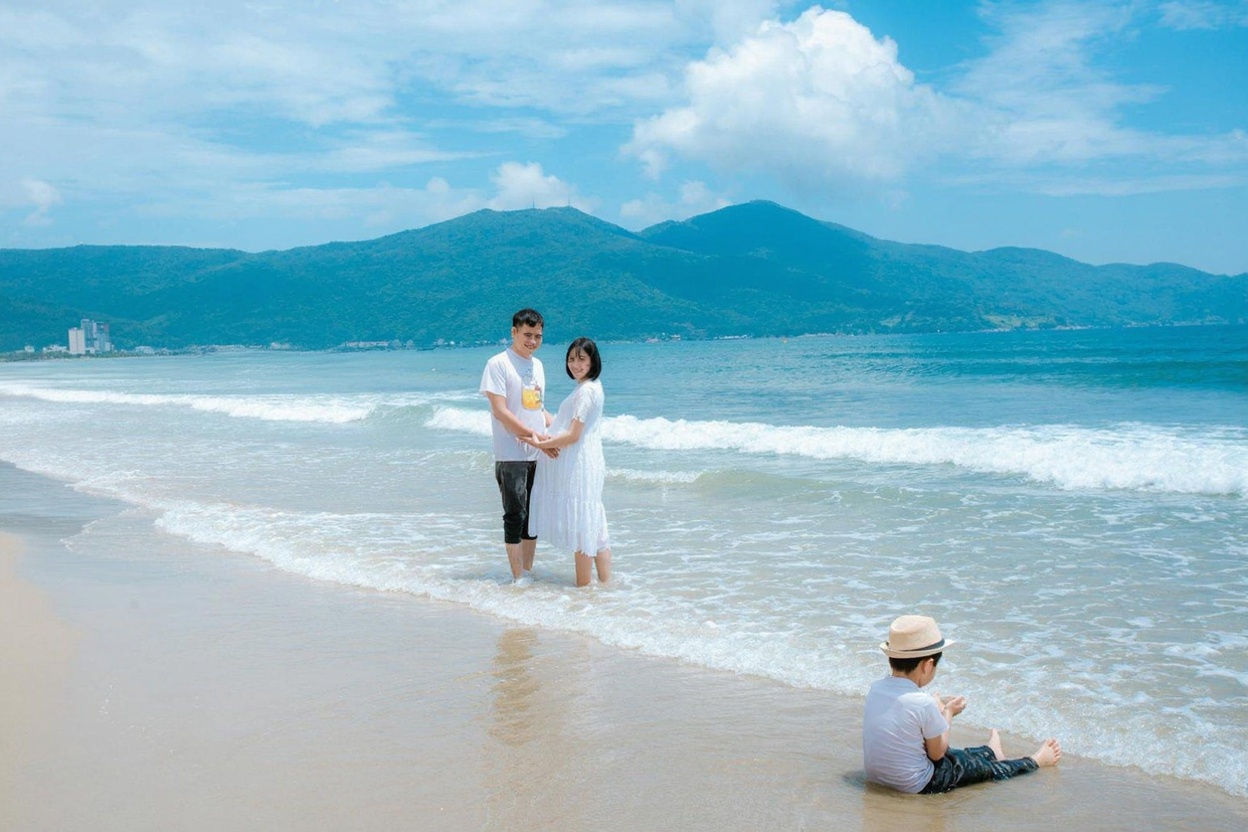
I’ve spent every July in Vietnam except one — the year I left for Thailand in late June to “escape the heat” and came back in September. The irony is that the one July I missed was, by most accounts, one of the better Julys weather-wise on the central coast. I’ve stopped trying to escape the Vietnamese summer. The country in peak summer has its own energy: the beach culture at 6am before the heat builds, the evening food markets in Da Nang and Hue that run until midnight because no one wants to be inside, the way Hoi An fills with lanterns and sound every evening in the warm dark. July in Vietnam is uncomfortable if you fight it. If you move with its rhythms, it’s something else.
The traveler who does July in Vietnam successfully is the one who: books everything ahead, times outdoor activity for early morning or evening, stays somewhere with good air-conditioning for the afternoon hours, and builds an itinerary around the beach rather than in spite of it.
→Who It’s For
July is for travelers who have a fixed summer holiday window and don’t have the luxury of choosing March or October. It’s also for anyone who specifically wants Vietnam at its most socially alive — the beach towns in peak season, the night markets running at maximum energy, the seafood restaurants doing their best business. It’s not for travelers who want quiet temples and empty streets: July delivers neither. It’s also not for northern highland trekking — Ha Giang in late July is wet and the off-road tracks are deteriorated. Go central coast or go south for the monsoon food scene.
July at a Glance — Peak Summer
July is the apex of Vietnam’s summer travel season. Vietnamese school holidays are fully underway. International summer tourists are at peak volume. The coastal infrastructure — transport, accommodation, restaurants — is running at maximum capacity. Understanding this is not a reason to avoid July; it’s the context within which July planning happens.
North Vietnam in July — Hanoi’s Hardest Month
Hanoi in July is the city at its thermometer maximum. The temperature can hit 38–40°C on peak summer days and the humidity makes the real-feel temperature higher still. The city deals with it the way it always has: trà đá (say: trah dah — iced tea) at every corner for 5,000 VND (~$0.19), ceiling fans in every pho shop, the streets quieting to a specific midday hush between 11am and 3pm when even the motorbike traffic thins. Hanoi’s Old Quarter in July is best understood as two cities: the 6–10am version (active, loud, full of street food stalls steaming in the early heat), and the 11am–4pm version (air conditioning, iced coffee, horizontal rest).
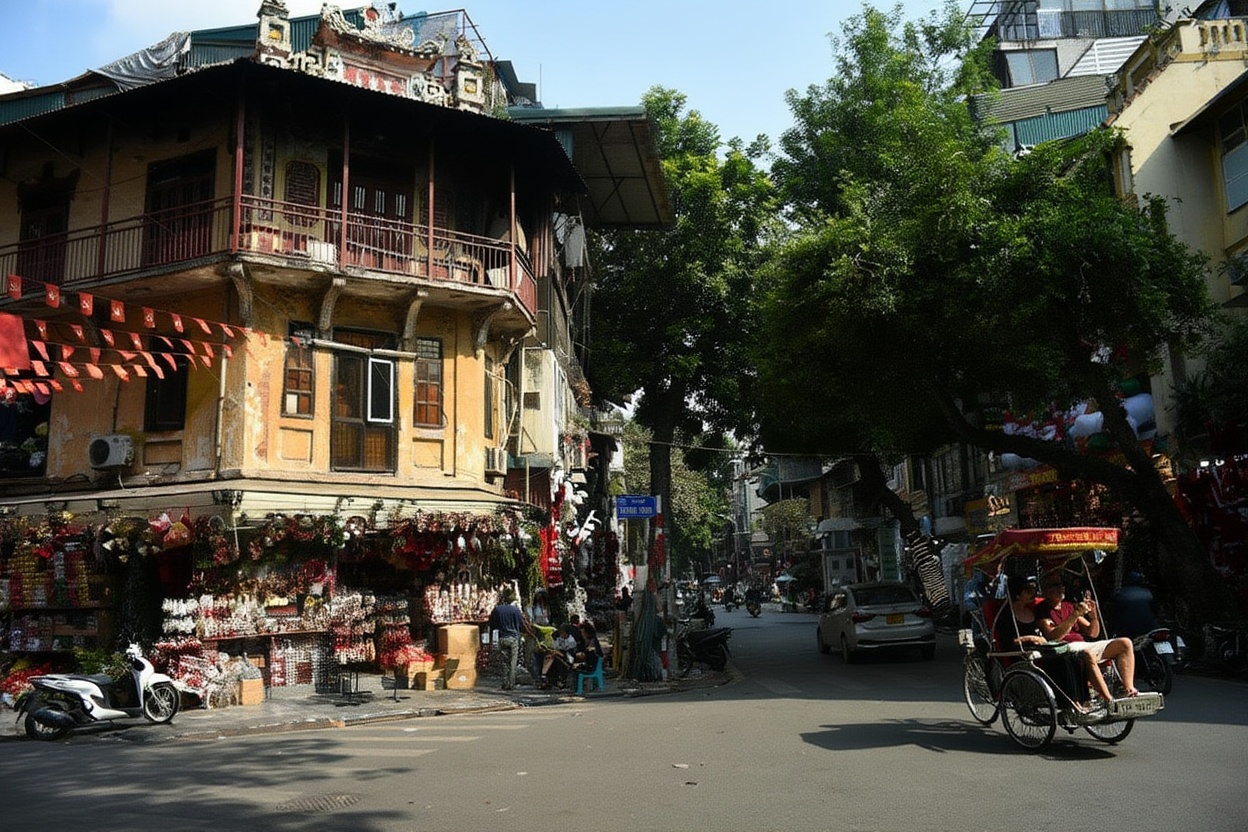
The practical Hanoi July: eat breakfast on the street before 8am (bún chả at 50,000–60,000 VND, ~$1.90–2.30 per bowl), do the outdoor sites (Hoan Kiem Lake, the Temple of Literature at 70,000 VND, ~$2.65) before 10am, spend midday at the Vietnam Museum of Ethnology (40,000 VND, ~$1.50 — air-conditioned, genuinely excellent) or in the best discovery in July Hanoi, which is the network of rooftop coffee shops in the Old Quarter where electric fans create a cross-breeze that makes the afternoon liveable. Hoan Kiem Lake at dusk, 6–7pm, is the version that reminds you why the city works.
Ha Giang Loop in July: possible but wet. The Loop remains technically open throughout July — the main paved route from Ha Giang town through Dong Van and Meo Vac is maintained. The issue is the frequency and intensity of rain: July sees 20–25 rain days, and some days the afternoon downpour runs heavy enough to reduce visibility and soften the unpaved sections where the road edges the gorge. The off-road tracks to smaller villages are muddy and sometimes impassable. The guesthouses in Dong Van and Meo Vac are at their annual capacity peak — the school holiday surge hits the Loop hard in July, and the combination of conditions and crowds makes this the least optimal month for Ha Giang riding. If July is the only window, go early in the month (first two weeks), check forecasts obsessively, and book guesthouses a week ahead.
Sapa in July: the trekking trails above 1,500m are wet and the paths to remote H’mong villages can be slippery and difficult. The standard Muong Hoa Valley circuit — Cat Cat Village, Lao Chai, Ta Van — is manageable with good trail shoes and a dry window. The Saturday Bac Ha market runs regardless of weather. The rice is growing tall now — not the fluorescent green of May-June but a deeper, fuller green. Sapa town itself is at peak domestic tourist volume in July; the Sunday market at the town square draws bus loads of Vietnamese visitors. If Sapa is on the itinerary, the early morning before the tour groups arrive from Lao Cai is the version worth setting an alarm for.
✓Quick Answer
Ha Giang Loop in July: open and rideable but increasingly challenging. Expect 20+ rain days, muddy side tracks, and peak accommodation pressure. The main paved circuit is accessible; the adventure riding off the main route deteriorates significantly. Early July is better than late July. Go in May, early June, or September-October for the better Loop experience.
Central Vietnam in July — Beach Season at Maximum
The central coast in July is at its beach season peak. Da Nang, Hoi An, and Hue are in dry-season mode: 5–8 rain days, temperatures at 30–37°C, seas warm and clear. This is also when the central coast is at its busiest: the combination of Vietnamese domestic summer holidays and international summer travel means every beach town is running at maximum capacity from the second week of July through the first week of August.
Da Nang in July is fully operational and genuinely good for a beach holiday if you accept the conditions. My Khe Beach runs for 30km and the crowds, while real, distribute along it in a way that still gives options. The 6am early morning beach — Vietnamese families doing their seaside exercises, the water clear and cool before the sun builds — is the version most overseas visitors miss by sleeping in. Non Nuoc Beach at the southern end is less crowded than the tourist hotel strip. The Marble Mountains (50,000 VND, ~$1.90) remain the best half-day activity — go at 7:30am when the cave interiors are cool and the stone hasn’t yet absorbed the day’s heat. The Dragon Bridge on Sunday night at 9pm: free, spectacular, book a table at the riverside restaurants that hour if dinner is planned. Our Vietnam itinerary guide can help you fit this into a longer trip.
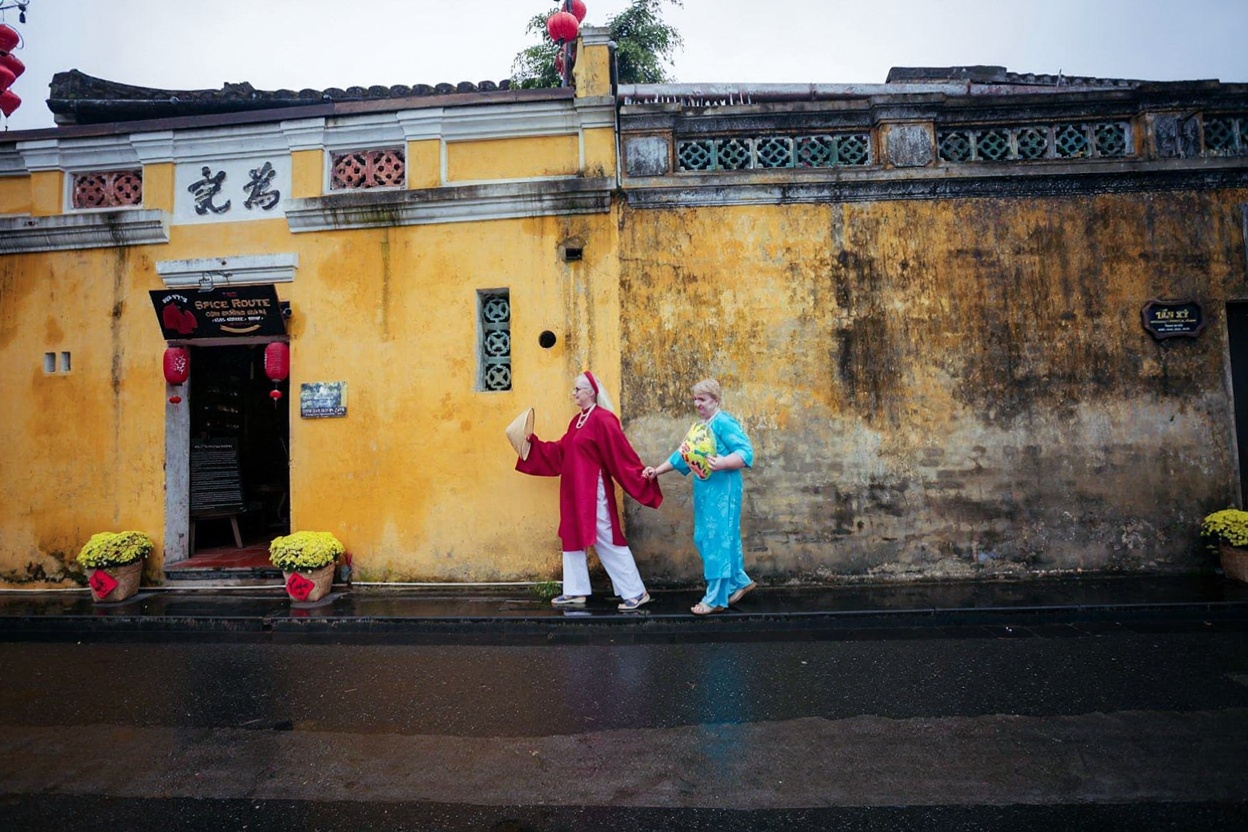
Hoi An in July is at its most commercially alive and its most expensive. The Ancient Town — the UNESCO-listed core — fills with international tourists in the evening, the tailors operate at full capacity taking 24–48 hour orders, and the Thursday and Tuesday lantern festival nights (Hoi An Night — first day of the lunar month, floating candles on the Thu Bon River) draw the largest monthly crowds of the year. Accommodation prices in July are at their annual maximum — a room that costs 350,000 VND (~$13.30) in March costs 650,000–900,000 VND (~$24.70–34.20) in July. Book 3–4 weeks ahead for July stays. The cooking classes and the bicycle circuit of the surrounding rice fields both work well in July: start at 7am before the heat peaks, carry water, finish by 11am.
Hue in July is the central coast’s best-kept summer secret. The city is dry, culturally rich, and significantly less crowded than Da Nang and Hoi An. The Hue Festival (biennial — held in even years, including 2026, in April — not July) is not running, but the permanent cultural infrastructure — the Imperial Citadel (150,000 VND, ~$5.70), the Royal Tombs (150,000 VND each, ~$5.70), the Thien Mu Pagoda — is operating without the flood-season damage that affects autumn visits. The Perfume River at dawn from the Dong Ba Bridge is the Hue image that earns its cliché. Hue’s restaurant scene in July is running at summer capacity: Bún bò Huế (say: boon bo hway) — the city’s own beef noodle soup, richer and spicier than pho — at 50,000–70,000 VND (~$1.90–2.65) at the morning market stalls on Truong Dinh Street.
South Vietnam in July — Monsoon Peak
The south in July is at its wettest. HCMC records its highest monthly rainfall of the year in July — average 310mm, with 18–22 rain days. The rain pattern is specific and predictable: dry mornings from 6–11am, building cloud cover through midday, heavy downpour from 2–4pm, clearing by 5–6pm. This is not random monsoon weather; it’s a schedule. The traveler who structures the HCMC day around this schedule moves through July without significant disruption. The traveler who books a Mekong Delta day tour that returns at 4pm is going to be wet.
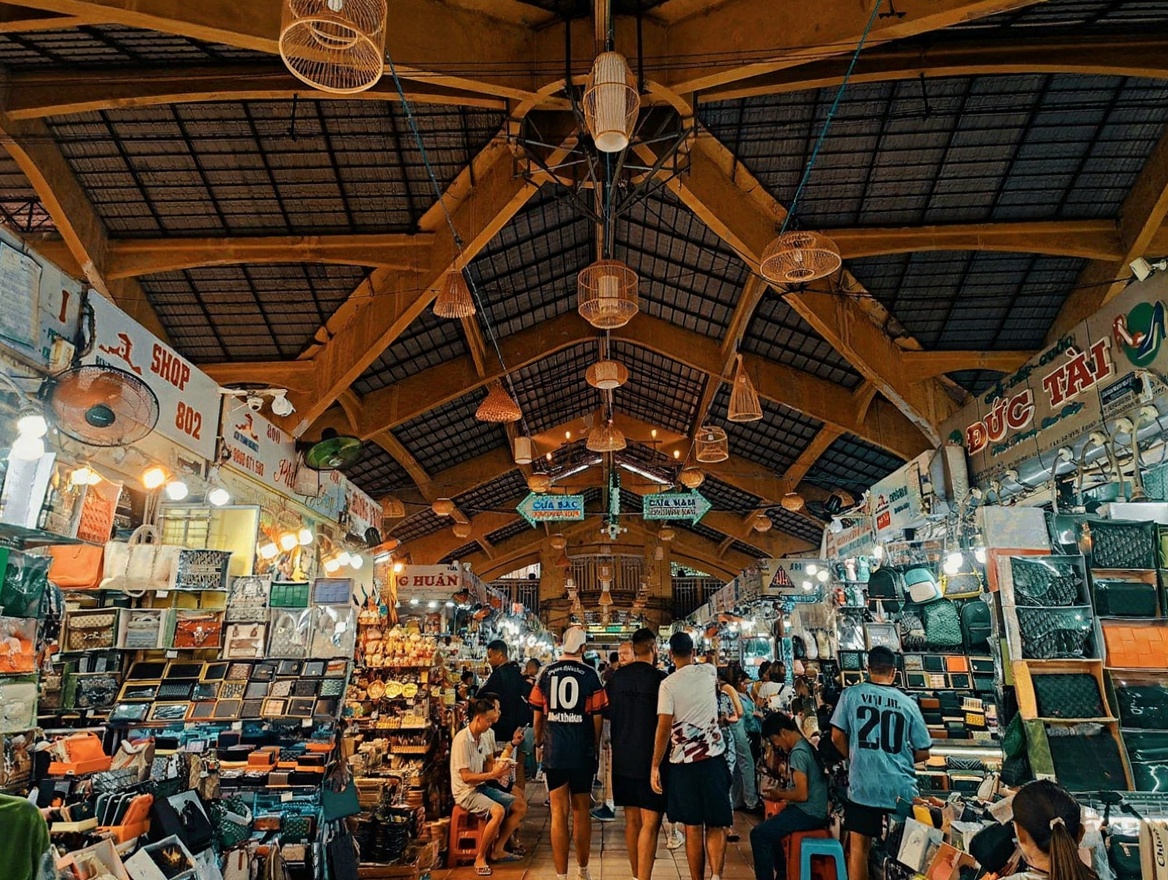
HCMC in July: the morning hours are gold. Ben Thanh Market and the surrounding streets from 7–10am, the Bến Thành food court breakfast, the walk along Nguyen Hue pedestrian boulevard before the heat commits — all of this works in July. The War Remnants Museum (40,000 VND, ~$1.50) and the Reunification Palace (40,000 VND, ~$1.50) are indoors, air-conditioned, and genuinely absorbing for 2–3 hours. The evening after the rain clears is the best time for the food scene: Phạm Ngũ Lão (say: fam ngoo lao) Street and the District 1 back alleys fill with travelers and locals sharing plastic tables, mosquito-citronella candles burning on every table, the city in its gregarious evening mode.
Con Dao in July: turtle nesting at full peak. The July-August period is when the highest concentration of green sea turtle (Chelonia mydas — vích, say: vik) females come ashore at night. The National Park guided night tours (100,000–150,000 VND, ~$3.80–5.70) are booked days in advance in peak season. Book the tour the same day you arrive at the National Park office — phone bookings are not reliably honored. The beaches outside the main nesting protection zones (Bai Nhat Beach, Bai An Hai) are operational for swimming through most of July. Con Dao in July is the one south Vietnam destination that justifies a visit — the wildlife experience is unmatched and the island’s small size (15km across) means the rain disruption is contained.
The Mekong Delta in July: the flood season is beginning in the upstream provinces. Can Tho and the floating markets (Cai Rang floating market at 5:30am, 200,000–300,000 VND, ~$7.60–11.40 for the shared boat tour) are operating, but the Delta road system south of Can Tho starts getting complicated in late July as water levels rise. This is not the optimal window for deep Mekong exploration — save the Delta for November-February when water levels are lower and the boat routes through narrow canals are cleaner.
What’s Hard About July
July 2023 was the year I tried to do Ha Giang in the third week of July — the week that everyone in Hanoi seemed to have the same idea. I’d left booking the guesthouses in Dong Van until four days out, assuming (incorrectly) that the mountains in peak summer would still have availability. Every guesthouse I contacted was full. I ended up riding the Loop sleeping in the only available rooms — a homestay where the mattress was closer to a mat and the shared bathroom had a cold water tap that ran intermittently. The Loop was still beautiful. The accommodation situation was avoidable with a two-week advance booking. July Ha Giang is fully booked on weekends by mid-month. Don’t repeat my mistake.
The other July hard reality: the heat at low elevation is relentless. Hanoi at 38°C and 80% humidity is not comfortable for sustained outdoor activity. The traveler who arrives in Hanoi in July expecting to walk the Old Quarter all day and do day trips to Ninh Binh in the afternoon is going to be miserable by day two. Build the July Hanoi day around the heat, not despite it. The city is still excellent — just different from how it feels in March.
⚠Real Talk
Prices on the central coast in July are at their annual maximum. A Hoi An hotel that costs $15 in October costs $40 in July. The same beach, the same Ancient Town, the same food — just double the price and triple the crowd. If you have flexibility in your travel dates and July isn’t a fixed constraint, October through April gives you the same central coast experience at a fraction of the July cost. If July is fixed — own it, book early, and enjoy the beach season’s specific energy rather than fighting it.
How to Route Vietnam in July
The July routing question is simpler than other months: central coast is the strongest hand and everything else requires planning around its limitations.
Central Coast Focus (10–14 days): Fly into Da Nang → Hoi An 3 nights (midweek check-in) → Da Nang 2 nights (beach mornings, indoors afternoons) → Hue 3 nights (early morning tomb visits) → fly home or connect north. Book all accommodation 3–4 weeks ahead. This is the July version most international travelers run — it works, but it requires accepting that July Hoi An is busy and expensive.
North-to-South (for travelers who can tolerate Hanoi heat, 2–3 weeks): Hanoi 2 nights (early morning / evening only outdoor) → Ninh Binh 2 nights (boat tours at 7am) → fly to Da Nang → Hue → Hoi An → Quy Nhon (quieter than Hoi An in July) → fly HCMC → depart. This spread distributes the July crowd pressure across multiple stops rather than concentrating it at one beach town.
South + Island (for wildlife-focused or monsoon-tolerant travelers): HCMC 3 nights (morning activity, afternoon indoors, evening food) → fly Con Dao 3–4 nights (turtle nesting season peak) → back to HCMC → fly Da Nang. Con Dao is the July sleeper destination — the wildlife experience is at its peak, the island handles the monsoon better than the mainland south, and the crowd level never reaches the Da Nang peak regardless of season.
Two things worth sorting before you land: a Vietnam eSIM so you have data the moment you clear customs, and travel insurance — medical costs for uninsured foreigners in Vietnam are significant.
Airalo eSIMs activate instantly. Buy before departure — airport SIM queues in Vietnam can take 30+ minutes.
FAQ — Vietnam in July
Is July a good time to visit Vietnam?
Yes, with calibrated expectations. July is peak beach season on the central coast — Da Nang, Hoi An, and Hue are at their driest and most energetic. It’s Vietnam’s busiest and most expensive month for coastal destinations. The north is hot and wet: Hanoi at 38°C, Ha Giang Loop manageable but wet. The south is in full monsoon. July rewards travelers who accept the peak-season conditions: book everything ahead, time outdoor activity to early morning and evening, build accommodation costs into the budget. It’s not the optimal time to visit Vietnam — but it’s absolutely viable.
How hot is Vietnam in July?
Hot. Hanoi averages 29–38°C with high humidity — the hottest month of the year for the north. Da Nang and Hoi An hit 30–37°C with sea breeze moderating the beach heat. HCMC is 26–33°C — warm but slightly cooler than the north and central because the monsoon rain keeps temperatures in check. At altitude (Sapa, Ha Giang, Dalat), temperatures are significantly cooler: Ha Giang riding altitude at 20–27°C. If July is fixed and heat is a major concern, Dalat (1,500m elevation, average 18–22°C year-round) is the outlier that works in summer. If you’re weighing other months against July, our Vietnam best time guide breaks down the full seasonal picture.
Is Hoi An worth visiting in July?
Yes, but calibrated to peak-season realities. Hoi An in July is at its busiest, most expensive, and most atmospheric — the lantern festival, the evening Ancient Town, the Thu Bon River at dusk are all operating at full intensity. The downside: accommodation doubles in price, weekends are densely crowded, and the tailors are booked 48 hours out. The practical approach: book 3–4 weeks ahead, arrive on a Tuesday or Wednesday, do the Ancient Town at 7am and after 6pm, avoid Saturday evening if possible. The town is still worth visiting — it just requires planning that March didn’t.
What is the weather like in Vietnam in July?
It depends entirely on the region. North Vietnam (Hanoi, Ninh Binh): hot and humid with afternoon thunderstorms, 29–38°C. Northern highlands (Ha Giang, Sapa): 20–28°C with heavy rain season, 20–25 rain days. Central coast (Da Nang, Hoi An, Hue): dry and hot, 30–37°C, 5–10 rain days — the dry season extends through August here. South Vietnam (HCMC, Mekong): full monsoon, 26–33°C, 18–22 rain days with heavy afternoon downpours. Islands: Phu Quoc wet season (avoid), Con Dao slightly better but still wet.
July vs August — which is better for Vietnam?
Nearly identical conditions. July is marginally hotter in Hanoi; August has slightly more typhoon risk on the central coast. The crowd level and prices are comparable — both are peak domestic holiday months. If forced to choose: early July over late August, because the typhoon risk on the central coast builds through August and peaks in September-October. The central coast’s dry season runs July through August reliably in most years, but late August occasionally sees the first tropical disturbances. For the northern highlands, both months are wet — the September transition begins the green turning toward gold.
Where is the best place to go in Vietnam in July?
Best options in priority order: Da Nang and Hoi An (beach season peak, central coast dry season), Hue (dry, cultural, less crowded than Da Nang), Dalat (1,500m altitude, 18–22°C year-round, mountain escape from the coastal heat), Con Dao (turtle nesting season peak, relatively quiet island despite July). Skip: Phu Quoc (wet season), HCMC for anything outdoor (monsoon), Ha Giang in the third and fourth week of July (wet roads, overbooked accommodation). Quy Nhon in July is mixed — some good days but rain frequency has increased from the June window.