Last updated: May 2026 · Jake Morrison · 5 years in Vietnam

June is the month I direct travelers toward the central coast if they have no strong preference about the north or south. The math is clean: Da Nang and Hoi An in June have the best beach weather in the calendar year, fewer international tourists than March-April, and the domestic crowd surge — while real — is mostly a weekend phenomenon. Weekday June in Hoi An is still manageable. It’s the Friday-to-Sunday version that requires booking ahead.
The Hue exception is the thing most travel guides miss. Vietnam’s climate is generally described as “south wet, north wet, central complicated” — and June is exactly where “central complicated” reveals itself. While Da Nang and Hoi An are in full dry season, Hue — just 100km north — benefits from the Truong Son mountain range blocking the southwest monsoon from the west. June through August is Hue’s driest stretch of the year. The city that floods in October and November is bone-dry in summer. This is not obvious and it matters for anyone building a central Vietnam itinerary.
→Who It’s For
June is for beach travelers who’ve missed the March-April ideal window and want the central coast before the October floods arrive. It’s for the Ha Giang contingent who can only travel in June — the Loop is excellent in early June and the green is still there, but the mid-June deadline is real. It’s not for south Vietnam beach destinations: Phu Quoc is in wet season, the Mekong Delta floods slowly, and HCMC operates under its monsoon routine. If the itinerary is “beach + culture + maybe some north highland scenery,” June works well with the right routing.
June at a Glance — The Summer Peak
Vietnam’s school summer holidays start June 1. This is the single fact that most shapes June travel for independent visitors: domestic tourism surges across all regions, and the destinations that were peaceful in March are now packed on weekends with Vietnamese families, school groups, and domestic road-trippers. Understanding this is not a reason to avoid June — it’s a reason to plan around the weekend concentration of crowds.
North Vietnam in June — The Green Window Closes
The northern highlands in early June are an extension of the May rice terrace window: Ha Giang’s valleys are still vivid green, Sapa’s terraces are full of young rice, and the Ha Giang Loop roads are clear. But the weather progression is moving toward the heavy rain season, and by mid-to-late June the conditions begin to change meaningfully. The window for comfortable highland travel is open — but it has an expiration date this month.
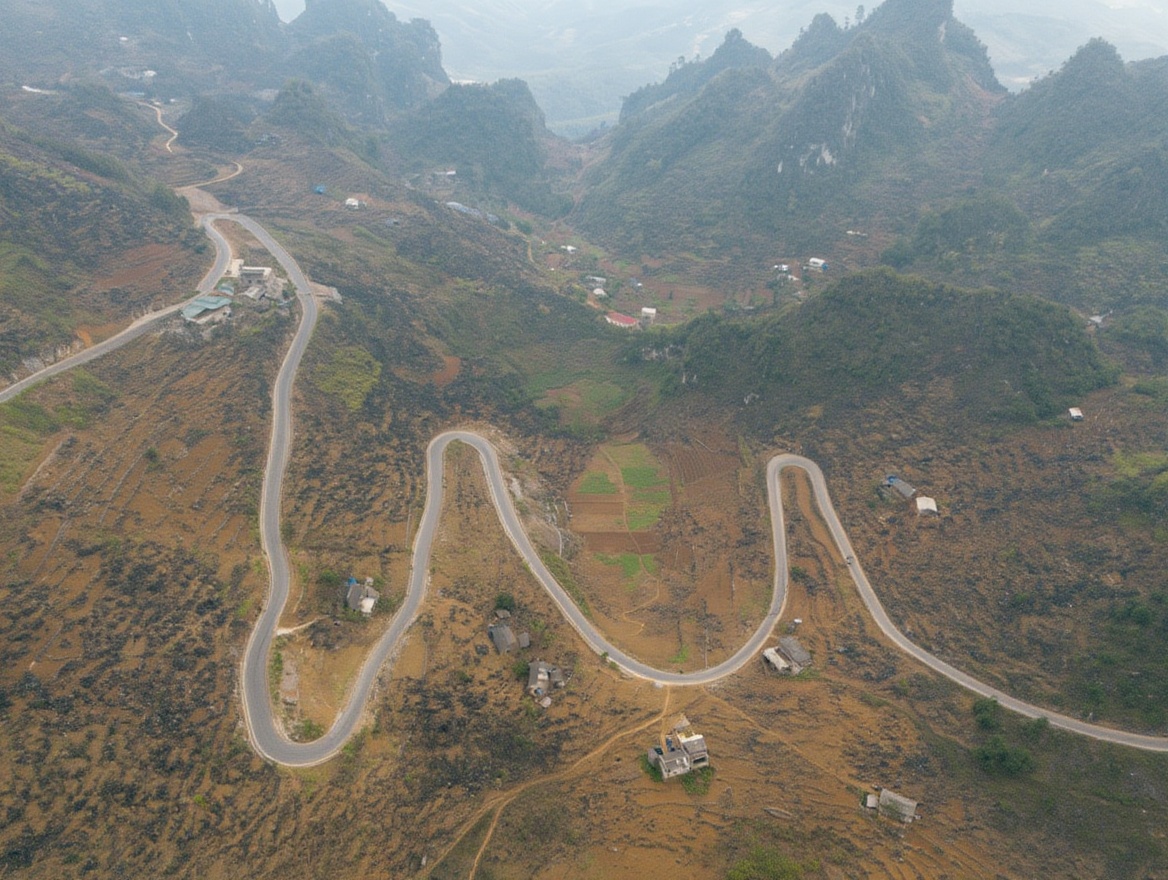
Ha Giang Loop in early June: still excellent. The same logic as May applies — the temperature at riding altitude is 22–27°C, the green is at maximum saturation, and the guesthouses in Dong Van are operating at summer capacity. Book accommodation 5–7 days ahead. The difference from May: by mid-June, the rain frequency increases and some sections of the Meo Vac to Ha Giang return road can get muddy after heavy overnight rain. This is not a safety issue for the main paved route — it becomes a concern only on the off-road tracks that connect smaller villages. The Loop itself runs on paved roads and remains rideable through June, but the “it might rain every afternoon” reality sets in from mid-month onward.
Sapa in June: the terraces are still lush, the Saturday Bac Ha market is running, and trekking conditions hold. By late June, trail conditions begin to deteriorate on the muddier paths — the Cat Cat Village loop and the main routes are fine, but longer multi-day treks toward Y Ty or Lung Khau Nhin become less reliable after heavy rain. For a 2–3 day Sapa circuit focused on the Muong Hoa Valley, June is still viable throughout the month.
Hanoi in June is the city at its most demanding. The temperature peaks at 34–36°C, the humidity is high, and the brief afternoon storms that characterize Hanoi’s summer dump heavy rain for 30–60 minutes before clearing. The city is not unpleasant — Hanoi’s summer café culture is built for exactly this: ice coffee, rooftop shade, tiled floors that hold the cool. The outdoor activities (Hoan Kiem Lake, the Old Quarter, Tay Ho at sunset) work best before 9am and after 5pm. Midday is for air-conditioned options: the Vietnam Museum of Ethnology (40,000 VND, ~$1.50), the Temple of Literature (70,000 VND, ~$2.65), the French Quarter colonial architecture from inside a coffee shop window.
✓Quick Answer
Ha Giang Loop in June: good in early-to-mid June, increasingly wet from mid-month. The green is at peak through mid-June. If June is your only window for the Loop, go in the first three weeks and book guesthouses ahead. The main paved route remains accessible — the issue is mud on side tracks and afternoon rain on riding days, not road closures.
Ninh Binh in June: crowded. The domestic school holiday surge hits Ninh Binh hard because it’s a 2-hour bus ride from Hanoi, cheap to visit, and Vietnamese families know it well. The Trang An boat tours and Tam Coc are packed on weekends — arrive at 7am for the first boats out or wait until late afternoon when tour groups have cleared. The rice field landscape is at its most verdant and the karst scenery doesn’t change with the tourist volume. Go on a Tuesday or Wednesday if timing is flexible.
Central Vietnam in June — The Beach Season Peak
The central coast in June is Vietnam’s beach season at its full heat. Da Nang, Hoi An, Quy Nhon, and Hue are all in their driest, sunniest stretch of the calendar. The trade-off is temperature: 30–36°C with sea breeze keeping the beach itself comfortable, but the ancient towns and cultural sites requiring disciplined early morning timing.
Hue in June is the most underrated summer destination in Vietnam. While most guides write off the old imperial capital as a winter-spring destination (October-March), they’re working from the flood-season logic that applies in October-November. June is Hue’s opposite: dry, clear, hot. The imperial tombs outside the city — Tu Duc, Minh Mang, Khai Dinh — are best visited in this dry window when the moats are full and the grounds are maintained rather than flood-damaged. The Thien Mu Pagoda (say: tee-en moo) at dawn, when the seven-tiered tower catches low light and the Perfume River is still — that’s the Hue that stays with you. Go before 8am. The 50°C heat from the stone walls at noon in the Imperial Citadel is unpleasant in a way that diminishes the experience.
Hoi An in June: the Ancient Town is at its crowd peak for the year. Vietnamese school holiday families, domestic tourists from Hanoi and HCMC, and a wave of international visitors who book summer holidays in June combine to make weekends in Hoi An genuinely busy. The accommodation prices reflect this — budget rooms that were 300,000 VND (~$11.40) in March are 500,000–700,000 VND (~$19–26.60) in June. The town is still beautiful and the lantern festival night is still magical, but book accommodation minimum 2 weeks ahead for any June weekend stay.
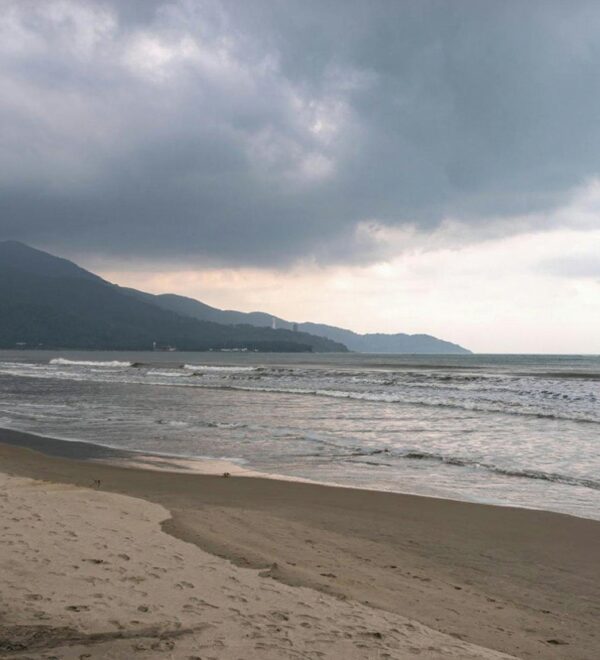
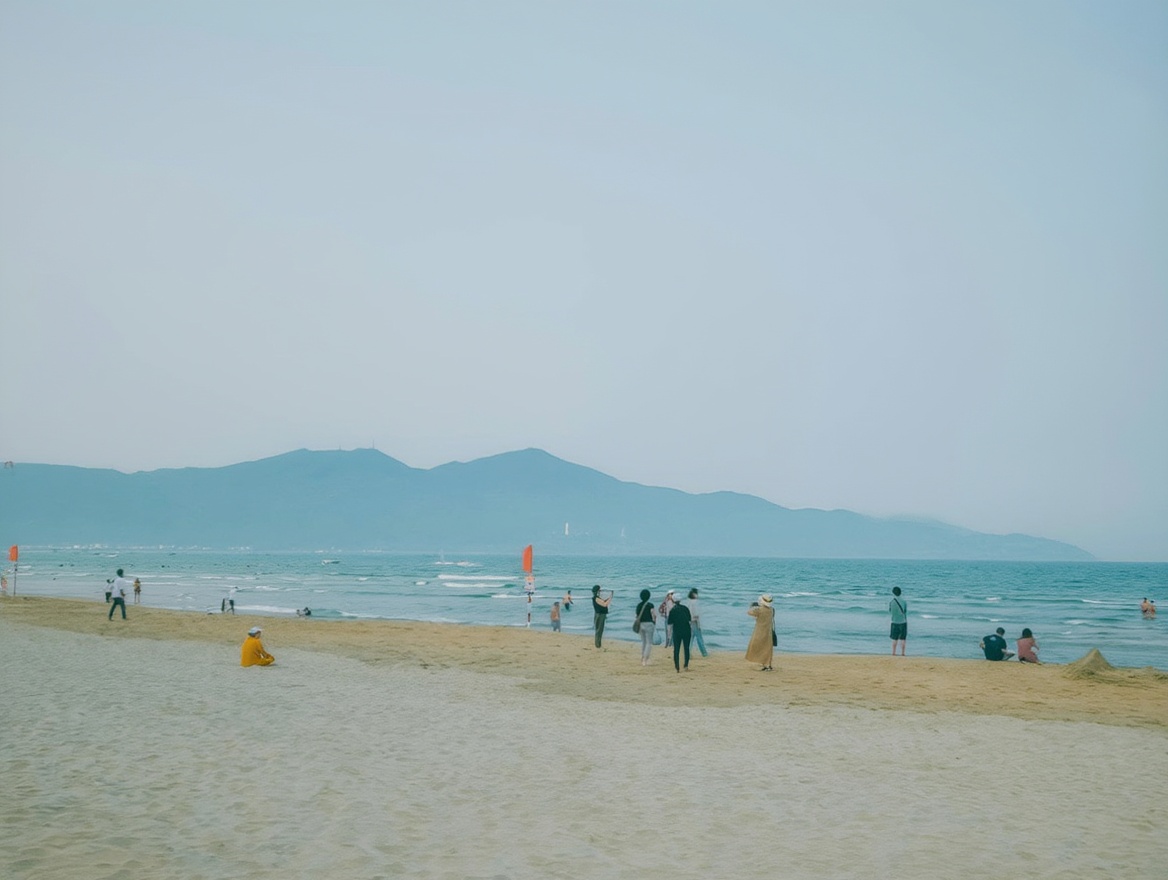
Da Nang in June: excellent for beach, complicated for timing. My Khe Beach is at its most active — clear water, warm temperatures (27–29°C sea temp), and enough wind to make it comfortable. The beach runs for 30km with sections that are quieter even on peak weekends — the northern end near the airport is where the Vietnamese families cluster, the southern stretches near Non Nuoc are more spread out. The Dragon Bridge fire show on Sunday nights remains the reliable free spectacle regardless of crowd level. Ba Na Hills theme park (1,200,000 VND, ~$45.50) — the golden-hand bridge and the French colonial buildings at altitude — is overpriced but the 1,400m elevation means it’s genuinely cooler than Da Nang below. Worth it if you have children in the group; overpriced for solo or couple travelers.
Quy Nhon in June: still holding its dry season pattern but more variable than May. Rain days increase from 5–8 in May to 8–12 in June. The beach conditions (Ky Co Beach, Bai Xep, Eo Gio) are still good, the seafood market on Ngo Van So Street is full. What changes in June is the domestic tourist volume — Quy Nhon was a quiet beach alternative in March and April; it’s no longer quiet in June. Book accommodation a week ahead minimum. The Sunday afternoon ferry to Ky Co (100,000 VND round trip, ~$3.80) fills fast from mid-June.
South Vietnam in June — Monsoon in Full Rhythm
HCMC in June has settled fully into its monsoon routine: 26–32°C, heavy afternoon downpours, 18–22 rain days. The humidity is real. The city doesn’t stop — Vietnamese street food culture operates entirely through monsoon season, and the 3pm rain that clears by 5pm becomes background noise after two days. HCMC in June is operational. It’s just not the optimal beach-and-outdoor-activity version of the city.
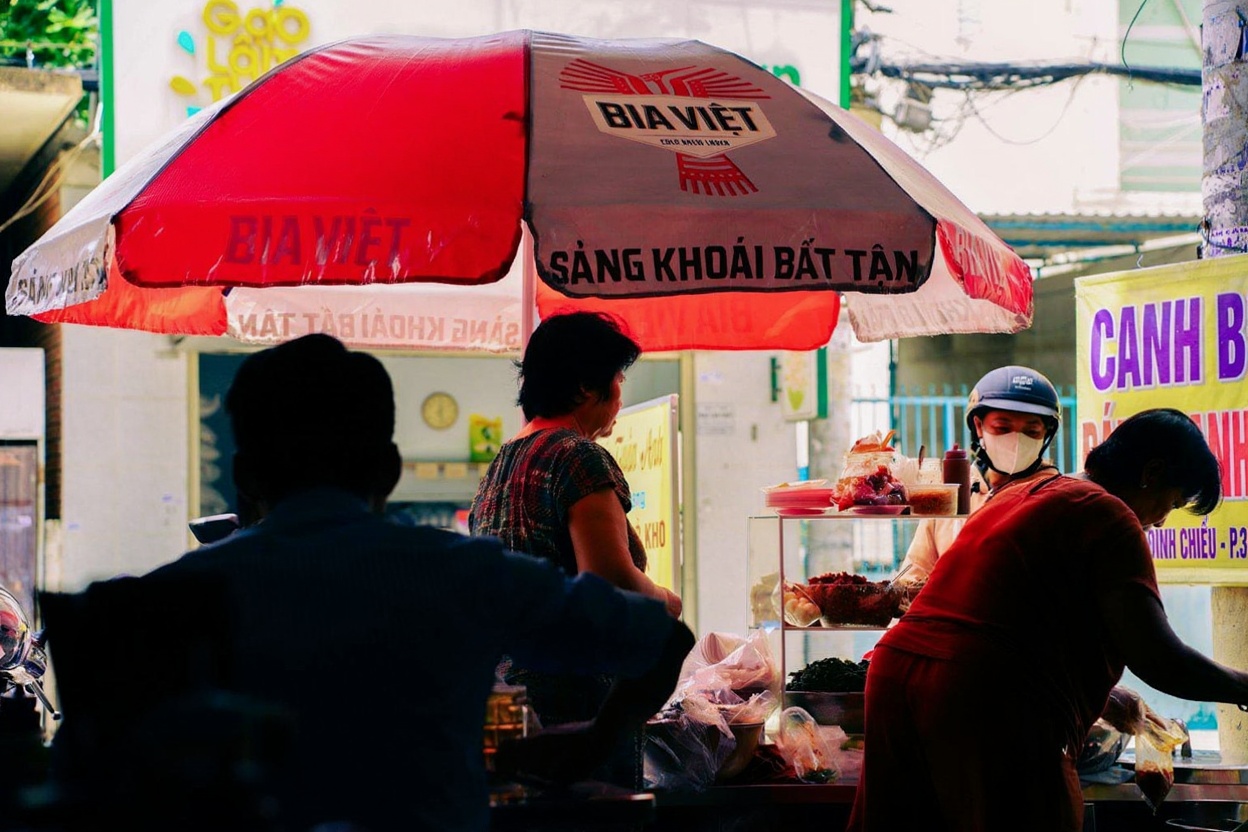
For HCMC specifically: the indoor culture is the June strategy. The War Remnants Museum, the Reunification Palace, the Museum of Vietnamese History, the Ben Thanh Market interior — all of these are better in June’s air-conditioned context than in the outdoor scramble that makes April in HCMC exhausting. The food scene is peak June: Bún bò Huế (say: boon bo hway) at 60,000–80,000 VND (~$2.30–3.05) in the District 3 morning market, Cơm tấm (say: kum tum) broken rice at 50,000–70,000 VND (~$1.90–2.65) at the 24-hour joints near Pham Ngu Lao — the rain drives everyone toward food and the options are exceptional.
Con Dao in June: the turtle nesting season is at peak activity. Green sea turtles (Chelonia mydas) come ashore at night on the protected beaches — Bai Chuoi, Bai Dat Doc — and the National Park runs guided night walks (100,000–150,000 VND, ~$3.80–5.70 per person). June has more nesting activity than May but fewer visitors than July-August. It’s the sweet spot if Con Dao’s conservation wildlife experience is the purpose. The sea crossing from Vung Tau (roughly 4 hours by fast ferry, 500,000 VND, ~$19) can get choppy in June — check the forecast and book the fast ferry rather than the slow boat when swell is predicted.
Phu Quoc in June: skip it. The southwest monsoon is fully established, the west coast beaches are rough, and many of the snorkelling tours to the An Thoi Islands are cancelled. The accommodation prices drop significantly (peak season rooms halve in price) but a cheap room on a wet island is still a wet island. November through April is the Phu Quoc window; everything from May through October involves compromise.
What I Got Wrong About June
I booked a Ha Giang Loop departure for June 20 one year, thinking “the Loop is a summer activity, June is summer, this works.” It does work — the Loop is rideable in June. What I didn’t factor in was the specific rhythm of late June: the afternoon rain arrives reliably at 2–3pm and can run heavy for two to three hours on the day it really commits. Riding a motorbike at altitude in heavy rain on mountain roads is not dangerous on the main route, but it’s deeply unpleasant. I spent two of the four Loop days waiting out rain under roadside shelter with a Vietnamese thermos of trà đá (say: trah dah — iced tea) that the roadside woman had been selling for years and would keep selling after I was gone. The Loop was still worth it. But the mid-June weather variable is real and it changed the trip from “great” to “mixed” in a way that early June wouldn’t have. Go in the first two weeks of June for the Ha Giang experience; leave the third and fourth weeks for other plans.
⚠Real Talk
The “Vietnamese school holidays begin June 1” fact changes every beach town in the country. Hoi An on a June Saturday is not the same town as Hoi An on a Tuesday in March. Nha Trang fills up. Da Nang beach is shoulder-to-shoulder at the Novotel end. None of this is catastrophic — Vietnam’s beach infrastructure handles the load — but the independent traveler who shows up in June expecting the quiet it gets in October is going to be surprised. Book ahead. Arrive on weekdays. Leave the Saturday beach scene to the Vietnamese families who’ve earned their summer holiday.
How to Route Vietnam in June
The June routing question is: how much of the country do you want to cover and which version of the country are you after?
Central Focus (10–12 days): Fly into Da Nang → Hoi An 3 nights (avoid weekend check-in) → Da Nang 2 nights → Hue 3 nights → fly home or connect north. This is the June sweet spot — three of the country’s best cultural destinations in their driest month. Hue to Da Nang by local train (the Hai Van Pass section is one of Vietnam’s great rail experiences — 90,000–120,000 VND, ~$3.40–4.55 for the regional train) is better than the bus and still fast enough. Do the Hue tombs in early morning. Do the Hoi An ancient town from 7–10am and 6–8pm. Use the central afternoon heat for beach or café time.
North Highlands + Central (14–21 days): Fly into Hanoi → sleeper bus to Ha Giang (first week of June only) → 4 days Loop → back to Hanoi → overnight train to Da Nang → Hoi An → Hue → depart. This front-loads the northern highland experience before the rain degrades conditions, then transitions to the central coast’s dry season peak. The temperature jump from Ha Giang’s 22°C riding altitude to Da Nang’s 33°C beach heat is significant — plan the transition day with indoor activities.
Con Dao Detour (for the wildlife-focused traveler): HCMC 2 nights → fly or ferry to Con Dao 3–4 nights → back to HCMC → fly Da Nang or Hoi An. Con Dao in June is the wildlife season at active peak and there are no other tourists doing the turtle walk experience at 2am on a dark beach. This is the trip you tell people about for years. Book the National Park night tour (chia sẻ — say: chya shay — is the word staff use for “the group walk” as opposed to a private booking) at least 3 days ahead in June; the tours sell out mid-week.
For the full month-by-month breakdown, see our best time to visit Vietnam guide.
Two things worth sorting before you land: a Vietnam eSIM so you have data the moment you clear customs, and travel insurance — medical costs for uninsured foreigners in Vietnam are significant.
Airalo eSIMs activate instantly. Buy before departure — airport SIM queues in Vietnam can take 30+ minutes.
FAQ — Vietnam in June
Is June a good time to visit Vietnam?
Yes, for the central coast and northern highlands (early June only). Hue, Da Nang, and Hoi An are in their driest and sunniest stretch of the year — beach conditions are excellent, cultural sites are dry, and the worst of the May-June tourist surge is spread across a month rather than concentrated on a single week. The north works in early June for Ha Giang and Sapa. The south is in full monsoon and not a beach destination. The main challenge: domestic Vietnamese school holiday crowds surge from June 1, making weekends busy at all the popular central coast stops.
Is it too hot to visit Vietnam in June?
Hot, yes — too hot, no. Da Nang and Hoi An hit 30–36°C. Hanoi can touch 36°C on peak summer days. The heat requires discipline: outdoor cultural sites before 10am and after 4pm, beach from 7–10am and 4–6pm, midday in shade or air-conditioning. Hue in June is genuinely hot — the Imperial Citadel at noon in June is uncomfortable in a way that changes the experience. The highland north (Ha Giang, Sapa) are cooler at altitude: 22–27°C, which is warm but not punishing. If heat is a major concern, Sapa or Ha Giang over HCMC or Hanoi for the June itinerary.
What is Hue like in June?
Hue in June is the underrated choice. June is one of Hue’s driest months — the Truong Son mountain range blocks the southwest monsoon from the west until October. While Hue floods severely in October-November, it’s bone-dry in summer. The imperial tombs are at their best condition, the Perfume River boat tours operate without interruption, and the city has fewer tourists than Da Nang and Hoi An. It’s hot (30–36°C) but the heat is a different problem than the floods and mold of October. June is one of the best months to visit Hue.
Can I do the Ha Giang Loop in June?
Early June: yes, excellent. The green is at peak, roads are clear, temperature at altitude is 22–27°C. Mid-to-late June: possible but plan around rain. Afternoon showers become more frequent and heavier from mid-June. The main paved Loop route (Dong Van → Meo Vac → Mau Due → Ha Giang) remains rideable all month. Side tracks to smaller villages get muddy. The Loop in June is not unsafe — it requires checking the forecast and building flexibility into your riding schedule. Book guesthouses in advance (5–7 days minimum) as summer booking fills fast.
June vs May — which is better for Vietnam?
May for the whole country at slightly lower temperatures and before the school holiday crowd surge. June for specifically the central coast at its driest and the Ha Giang green window in early month. The key June advantage over May: Hue is at its best in June (dry season), not May. The key May advantage over June: the school holiday crowds haven’t arrived yet and Ha Giang has more weather-stable days for the Loop. If the itinerary is central-coast-focused, June is marginally better. For a full-country itinerary, May gives more options with less crowd pressure.
Where should I go in Vietnam in June if I want to avoid crowds?
Quy Nhon over Hoi An and Da Nang — still running dry season but not yet at the July-August domestic peak. Con Dao is genuinely uncrowded even in June (it’s far, the ferry is expensive, the island has no party scene). Ha Giang early in the month before the full summer booking rush. Hue on weekdays — the school holiday crowd hits Da Nang and Hoi An harder than Hue. Phong Nha is another central option: the caves are cool (literally — the cave interiors stay at 18–20°C regardless of outside temperature), the crowds are lower than Hoi An, and the Paradise Cave (250,000 VND, ~$9.50) is one of Vietnam’s genuinely spectacular natural sites.