Last updated: May 2026 · Jake Morrison · 5 years in Vietnam
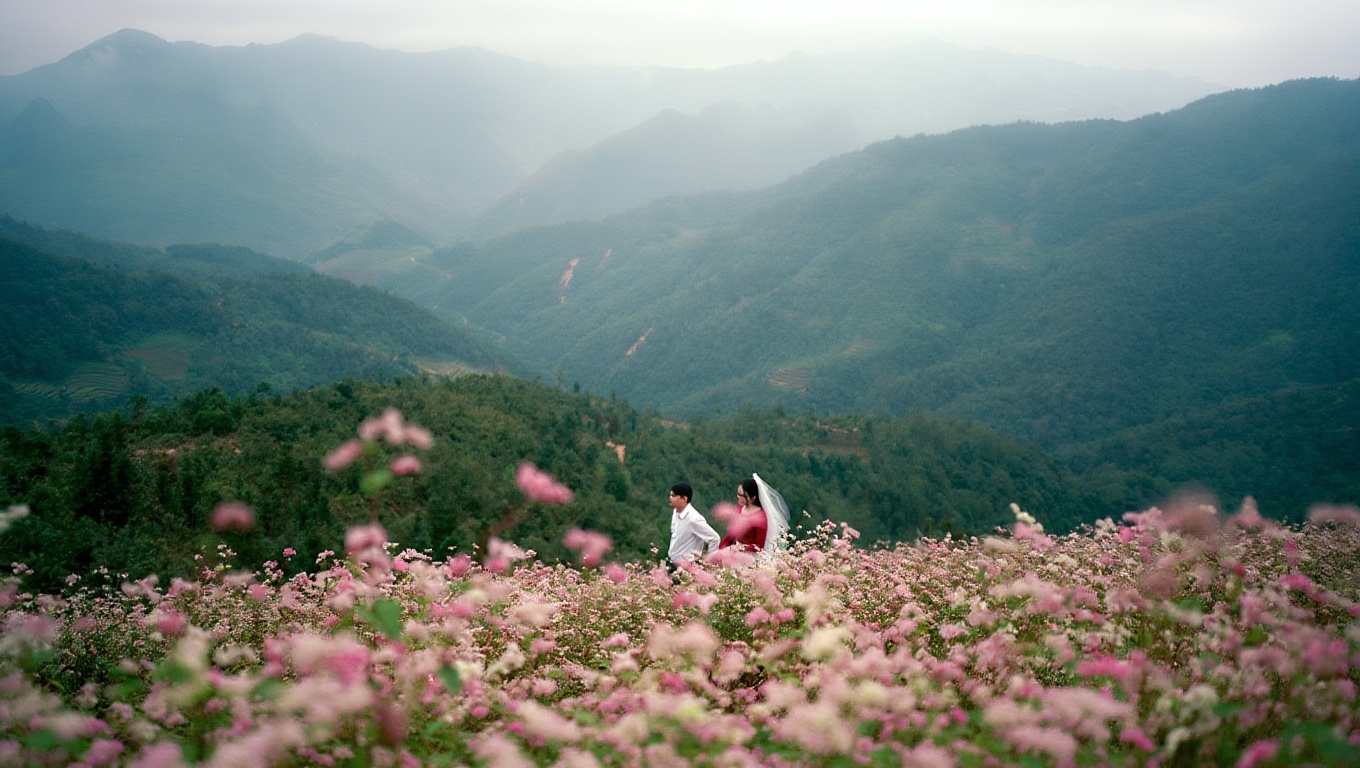
I’ve done Ha Giang in October twice and I understand why people plan their entire Vietnam trip around this month. The buckwheat flowers (hoa tam giác mạch — say: hwa tam zak mak) cover the slopes below Dong Van in pink and white. The karst peaks stand above them in the clear post-rain sky. The light at 5pm, when everything turns gold, is the kind of thing you take 200 photos of and none of them are as good as just standing there.
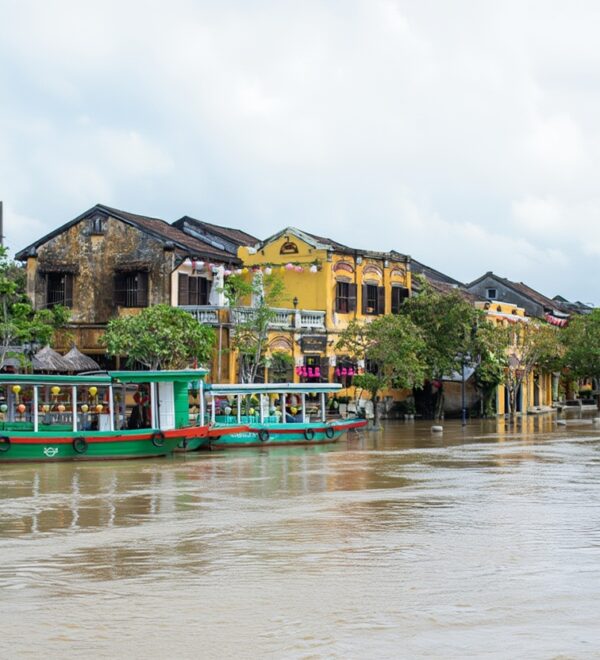
I’ve also been in Hoi An during a late October rainstorm. Flooded streets, cancellations, the ancient town looking less like a lantern festival and more like a drainage problem. That experience clarified the routing question: October in Vietnam means choosing sides.
October at a Glance — The Country Splits
October is the most regionality-dependent month in Vietnam’s calendar. The north is dry, cool, and spectacular. The central coast is actively risky from a weather standpoint. The south is transitioning into dry season. Any itinerary that tries to do all three in October needs honest contingency planning for the central section.
North Vietnam in October — The Best Month of the Year
No hedging: October is the best month to be in northern Vietnam. Temperatures in Hanoi sit at 22–28°C — perfect walking weather. Ha Giang and Sapa are cooler at 15–23°C, still warm enough for comfortable riding and trekking days. The monsoon rains have mostly cleared but left the landscape at its most saturated green before the harvest gold sets in.
Ha Giang in October is the headline. The buckwheat flowers bloom on the slopes below Dong Van and Meo Vac in late September and run through October into early November, depending on the year. The hoa tam giác mạch is pink, almost magenta, growing wild on terraced fields and roadsides between the limestone karst peaks. The Loop in October looks nothing like any other month. It’s the version that fills Instagram travel accounts and the reason Ha Giang guesthouses book up weeks in advance in late September.
The practical side: Ha Giang in October is genuinely busy. Guesthouses in Dong Van and the homestays in Tu San Valley fill up. Book 7–10 days ahead minimum — not the 2–3 days that works fine in March. The Loop itself is navigable but slower; more motorbikes, more people stopped at the same viewpoints. The flowers are worth it. Just plan for the crowd level rather than being surprised by it.
✓Quick Answer
Ha Giang buckwheat flowers: typically bloom late September to early November, peak is mid-October. The exact timing shifts year to year by 1–2 weeks depending on rainfall. Check the Vietnam travel forums or Ha Giang tourism Facebook groups in late September for that year’s bloom status — locals post updates daily during peak bloom.
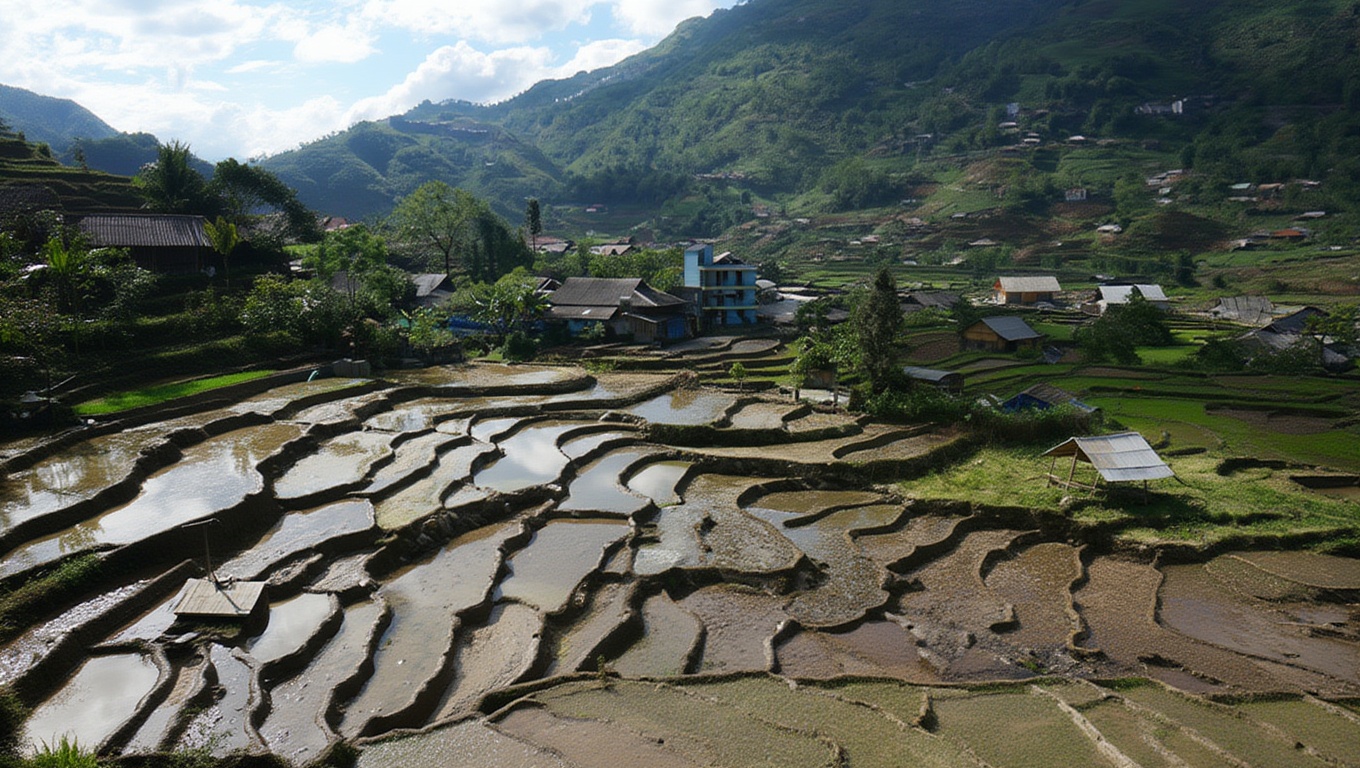
Sapa in October is the rice harvest window. The Muong Hoa Valley terraces turn from green to yellow-gold in late September and the harvest runs through October. The H’mong and Red Dao villages are actively working the terraces — tractors on some of the flatter plots, hand harvesting on the steeper ones. It’s the most genuinely lived-in version of Sapa you’ll see. The tourist industry runs alongside it; the harvest happens regardless.
Hanoi in October is a different city from the sweating, humid version of July. The temperature drops, the rain that fell through September starts to ease, and the city moves at a different pace. The Old Quarter is walkable — actually walkable — without stopping every 100 metres to find shade. The weekend walking street around Hoan Kiem Lake is at its most lively. Egg coffee at Dinh Tien Hoang, bún chả for lunch at 50,000 VND (~$1.90), then an afternoon in Hoan Kiem — this is the Hanoi that people mean when they say they loved Hanoi.
Ninh Binh in October deserves more attention than it gets. The area around Trang An and Tam Coc is at its most lush — the residual rain of the September monsoon has kept everything deeply green, and the first days of October cool bring the crowds down compared to the high summer. The boat tours at Trang An (200,000 VND, ~$7.60, 2.5 hours) run through cave systems and past limestone karst walls that are dripping with vegetation in October. It looks like a scene from a film set. The Hang Mua viewpoint (100,000 VND, ~$3.80) requires the 500-step climb but delivers one of the better panoramas in northern Vietnam when the light is right — go in early morning before the haze builds.
The practical Ha Giang Loop planning for October: the standard route is 4 days minimum, better in 5. The sequence is Hanoi overnight bus to Ha Giang city (200,000–250,000 VND, ~$7.60–9.50, 6–7 hours) → Day 1: Ha Giang city to Dong Van (the dramatic section, Ma Pi Leng Pass, Nho Que River viewpoint) → Day 2: Dong Van to Meo Vac (market day on Sunday — worth timing if possible) → Day 3: Meo Vac back to Ha Giang via the southern loop route → Day 4: Ha Giang to Hanoi bus. In October, add a half day in Dong Van to walk the buckwheat fields at dawn when the light is low and the crowds from Ha Giang city tours haven’t arrived yet. The flowers are best before 8am.
Motorbike rental in Ha Giang city: 120,000–180,000 VND per day (~$4.55–6.85) for a semi-automatic Honda at the standard rental shops near the market. In October, add 30,000–50,000 VND per day above the base rate for “October premium” — rental shops know the demand. Book by contacting guesthouses in advance; they’ll arrange the bike pickup the morning you arrive from Hanoi.
Central Vietnam in October — The Honest Warning
October and November are the wettest months on Vietnam’s central coast. This is not a slight inconvenience — in bad years, it means flooding in Hoi An’s Ancient Town, washed-out roads between Hue and Da Nang, and several consecutive days of sustained rain that make beach itineraries look ambitious.
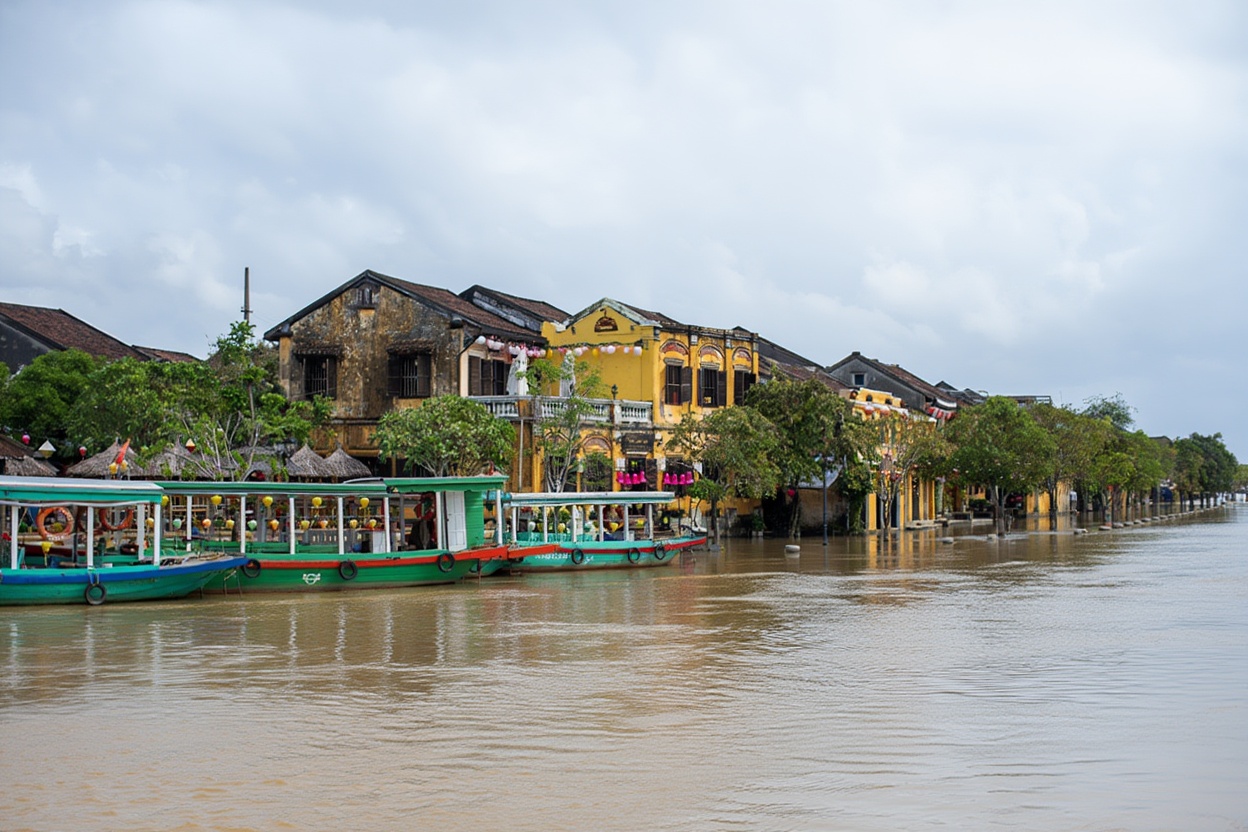
The rain pattern in October central Vietnam: not constant drizzle but heavy intermittent rain events. A day with 10cm of rainfall in 6 hours, followed by two clear days. The week can average out to “not too bad” in terms of total sunshine hours, but the flooding events are unpredictable. Hoi An in particular sits low — when the Thu Bon River rises, the Ancient Town floods. It has happened every October for decades. In some years it’s ankle-deep water that locals wade through cheerfully. In bad years, it’s knee-deep and the restaurants close.
⚠Real Talk
Every October someone asks “is Hoi An flooding right now?” on Reddit and gets 20 answers ranging from “it was fine last week” to “I had to leave early.” The honest answer: Hoi An floods in October most years. Whether it floods during your specific week there is a coin flip. Travel insurance that covers weather disruptions is not optional for an October central Vietnam itinerary.
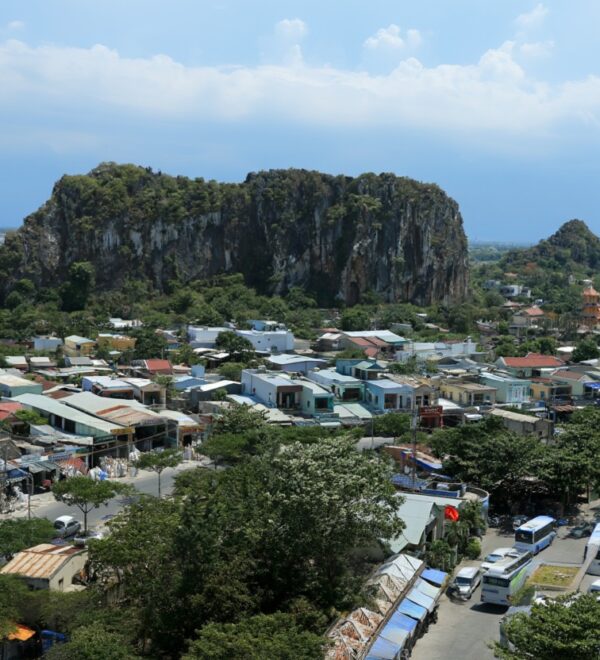
Da Nang is less flood-prone than Hoi An but still sees 14–18 rain days in October. The beach is not reliably swimmable. My Khe at 27–29°C but with grey skies and heavy surf is a different experience from the clear blue April version. The city works fine in October — it’s a city, not just a beach resort — but if your Da Nang vision centres on the beach, October is the wrong month.
Quy Nhon in October fares better than Hue and Hoi An. It sits slightly south of the worst of the central rain system, and its beaches are more sheltered. There are still rainy days — 14–18 per month — but the flooding events that hit Hoi An are less common here. If your central Vietnam itinerary is flexible, shifting from Hoi An to Quy Nhon in October is the lower-risk choice.
Hue in October: the city itself handles rain reasonably well. The Imperial City and the royal tombs are visited in rain every year without major disruption. The food — bún bò Huế in a covered street-stall in the rain — is arguably the best version of itself. The Perfume River in October rain has a specific atmosphere. If you’re going to Hue for the cultural sites rather than outdoor activities, October is manageable. Just don’t plan to motorbike the countryside villages.
South Vietnam in October — Wet Season Logistics
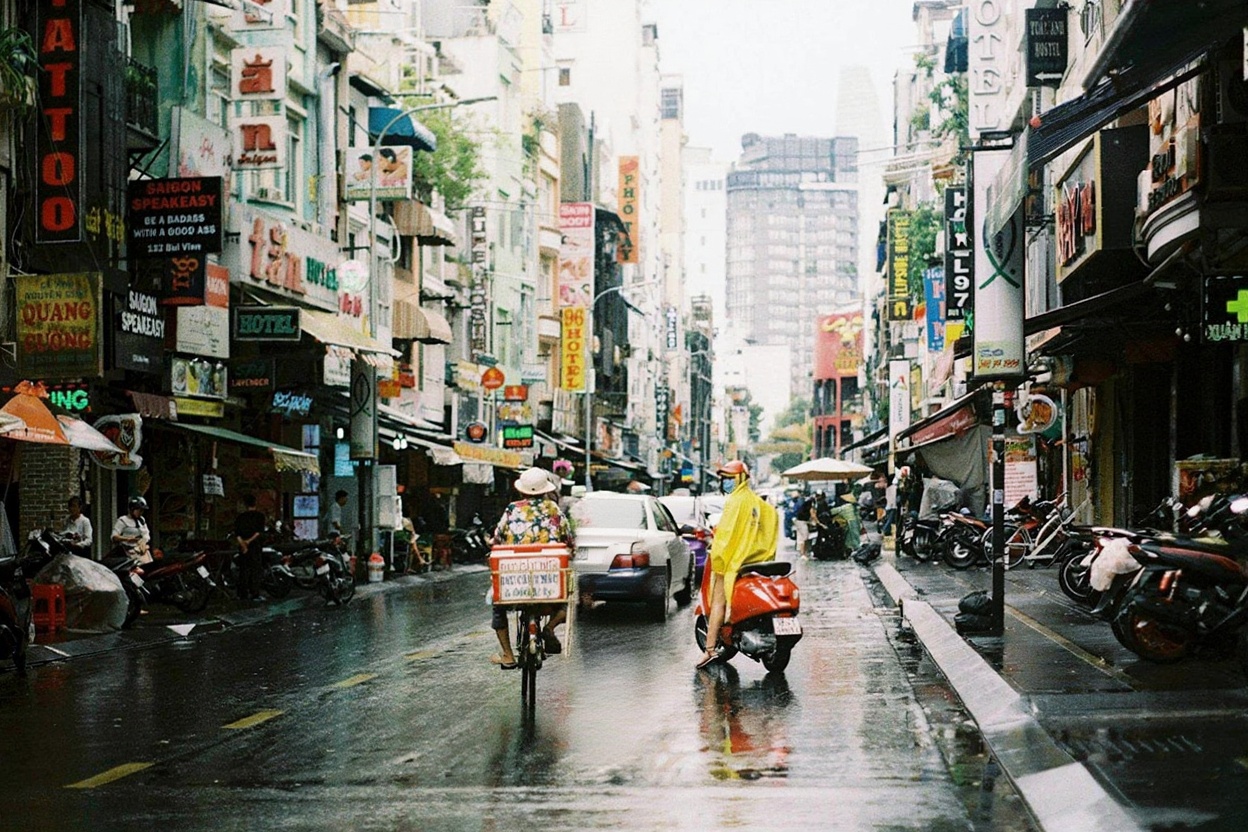
HCMC in October is in the middle of its wet season — 16–20 rain days, afternoon storms that arrive with reliable theatrical timing around 3–4pm and clear by 6pm. The city doesn’t shut down in rain. The museums, markets, and street food scene operate regardless. The afternoon storm is so predictable that planning around it is easy: outdoor activities in the morning, indoor or covered activities in the afternoon, streets again by evening.
The Mekong Delta in October is at its highest water level — the annual flood season fills the delta’s channels and inundates the lower-lying areas. This is actually one of the best times to visit: the floating rice harvest is happening, water levels bring the floating market boats closer to accessible points, and the delta scenery is green and wide in a way it isn’t in dry season. The Can Tho guesthouses know what they’re doing with October guests — they’ve adjusted their boat routes and market timing to the high water conditions.
Phu Quoc in October is still in wet season — the island’s dry window runs November to April. October is one of the wettest months, with rough seas and limited beach activity. If you want Phu Quoc, come back in November or later. October Phu Quoc is not the island it gets advertised as.
HCMC in October is wet but functional. The afternoon storm pattern (3–4pm downpour, clearing by 6pm) is almost clockwork by mid-October. What breaks in October HCMC: outdoor activities from 2–5pm. What works fine: everything before noon, indoor museums and markets all day, the street food corridors from 5pm onward. The War Remnants Museum (40,000 VND, ~$1.50) and Ben Thanh Market are both indoor and fully functional in rain. The Bến Thành night market area on Pham Ngu Lao stays active in October evenings regardless of earlier rain. The city has been dealing with October monsoon for centuries — don’t assume it shuts down.
For the Mekong Delta in October, the flooding that fills the channels actually enables a specific experience that dry season doesn’t offer. The Tràm Chim National Park in Đồng Tháp province reaches its peak water level in October — the flooded cajuput forests accessible by small boat become genuinely surreal at this time of year. It’s not marketed heavily to foreign tourists, which means it’s genuinely uncrowded. A 2-hour boat trip through flooded forest in October Mekong — water hyacinths clogging the channels, kingfishers on the branches above — is one of the stranger and better things you can do in Vietnam at this time of year.
The October Routing — Getting It Right
The mistake most October travelers make: booking north-to-south thinking the central coast will “probably be fine.” Sometimes it is. Often it isn’t. The smarter routing for a full-country October trip separates the north from the central coast with a direct south leg.
Option A — North only (safest): Fly into Hanoi, do Ha Giang Loop (4–5 days), Sapa (3 days), Ninh Binh (2 days), Hanoi (2 days), fly out. Ten to twelve days in northern Vietnam during its best month. No central coast risk.
Option B — North + south skip (smart): Fly into Hanoi, spend 8–10 days in the north, fly directly to HCMC or Phu Quoc (even though Phu Quoc is still wet in October, HCMC is manageable). Skip the central coast entirely. Return from HCMC.
Option C — Full country with contingency: North → Central (accept the rain risk, have flexible dates and rain gear) → South. Works if your central coast stops are chosen wisely (Quy Nhon over Hoi An, Hue for culture not beach), your itinerary has buffer days, and you have insurance.
One specific route that works well in October for a 2-week trip: fly into Hanoi, train or bus to Ninh Binh for 2 nights (the area earns 2 nights in October), bus north to Ha Giang for the Loop (4–5 days), return to Hanoi (2 nights), fly to Da Nang then bus to Quy Nhon (avoid Hoi An for the weather reasons above) for 3 nights, fly HCMC and spend 2 nights before the return flight. This skips the worst of the central coast rain zone while getting Quy Nhon’s acceptable October conditions and the full northern Vietnam peak season experience.
Phong Nha (Quảng Bình province — say: kwang binh) in October is a specific mention. The cave region sits north of the central coast rain system’s worst corridor, and while it does get October rain, the caves themselves are interior environments — weather-independent. Phong Nha-Ke Bang National Park’s Son Doong, Hang En, and Tu Lan cave systems are accessible in October with the right tour operator. If caves are the specific draw, October is fine. If you’re going to Phong Nha for the surrounding landscape and motorbike riding, hold off for February-April.
→Who It’s For
October is for travelers who specifically want the Ha Giang buckwheat flowers or Sapa harvest terraces — these are genuine once-a-year phenomena worth routing a trip around. For everyone else, November delivers similar northern Vietnam conditions with a dramatically improved central coast picture.
Two things worth sorting before you land: a Vietnam eSIM so you have data the moment you clear customs, and travel insurance — medical costs for uninsured foreigners in Vietnam are significant.
Airalo eSIMs activate instantly. Buy before departure — airport SIM queues in Vietnam can take 30+ minutes.
FAQ — Vietnam in October
When do the Ha Giang buckwheat flowers bloom in October?
The buckwheat flowers (hoa tam giác mạch) typically begin blooming in late September and peak in mid-October, running through early November. The exact timing shifts by 1–2 weeks year to year depending on rainfall. Check Ha Giang travel Facebook groups or r/VietnamTravel in late September for that year’s real-time bloom reports — locals and recent travelers post updates during the bloom season.
Does Hoi An flood in October?
Most years, yes — at least partially. Hoi An’s Ancient Town sits low next to the Thu Bon River, and October-November rains regularly cause flooding that ranges from ankle-deep puddles to knee-deep water that forces restaurant closures. It’s not guaranteed every year, but it’s common enough that travel insurance covering weather disruptions is genuinely recommended for October central Vietnam trips. If flooding is a deal-breaker, go to Quy Nhon instead — lower flood risk, better October beaches.
Is October a good time to visit Vietnam overall?
For northern Vietnam specifically, October is arguably the best month of the year. Hanoi is at perfect temperature, Ha Giang has its buckwheat flowers, Sapa has its harvest terraces. For the central coast, October is the highest-risk month weather-wise. For the south, it’s wet season but manageable in HCMC. The summary: exceptional north, risky central, acceptable south. Route accordingly.
October vs November — which is better?
October wins for northern Vietnam (buckwheat flowers, harvest terraces). November wins for central and south Vietnam (Da Nang, Hoi An, and Quy Nhon dry out significantly in November; Phu Quoc enters peak dry season). For a full-country trip: November is safer overall. For a north-focused trip: October is the headline month.
What should I pack for Vietnam in October?
North: light-to-mid clothes, a packable rain jacket, warm layer for Ha Giang and Sapa evenings (15°C at night). Central coast: a proper rain jacket (not a poncho — a real waterproof jacket), waterproof sandals, and flexible dates. South: light clothes, light rain layer for afternoon storms, swimwear only if you’re in HCMC rather than Phu Quoc.
Can I visit Ha Long Bay in October?
Yes, with lower risk than July–September. The peak typhoon season for Ha Long Bay is June–September; October is generally calmer. There will still be occasional foggy days and some rain, but the dramatic cancellation risk of high typhoon season is lower. October views can be spectacular when clear — the karsts in crisp autumn light are different from the hazy summer version. Check the cruise operator’s cancellation policy before booking, and consider this a weather-dependent activity rather than a guaranteed one.
Is Vietnamese food different in October?
In the north, yes — autumn in Hanoi brings specific seasonal foods. Cốm (say: kawm) — green sticky rice made from young rice grains — appears in October, sold by street vendors in lotus-leaf parcels near Hoan Kiem Lake. Bánh cốm (say: bahn kawm) cakes in green wrappers show up in bakeries. The seasonal crab season peaks in October in the north. These are small details but they’re the kind of thing that makes October Hanoi different from any other month. For the full regional breakdown by month, see our Vietnam best time to visit guide.