Last updated: May 2026 · Jake Morrison · 5 years in Vietnam

The Saigon-to-Dalat trip has one constant regardless of method: the final 30–40 kilometres of climbing from the coastal lowlands up the switchback mountain road to Dalat’s 1,500m elevation. This section exists whether you’re in a car, bus, or taxi from the airport — it’s why all ground transport takes longer than the straight-line distance suggests. The bus drivers know these roads and take them at a pace that is simultaneously reassuring and mildly alarming until you’ve done it twice. The reward is arriving in Dalat and stepping out into 17°C air when HCMC was 33°C three hours ago.
Option 1 — Fly from HCMC to Dalat (Fastest)
VietJet Air and Bamboo Airways operate the HCMC (SGN) to Dalat (DLI) route daily. The flight is 55 minutes. Prices range from 500,000–1,200,000 VND (~$19–45.50) for economy, depending on how far in advance you book and the day of travel. Book 2–3 weeks ahead for the lowest fares; last-minute prices on this popular short-haul route can spike to 2,000,000+ VND (~$76+).
Lien Khuong Airport (DLI) is 28km south of Dalat city center. From the airport to the city:
Grab (recommended): Open the Grab app immediately on landing and book a GrabCar before you reach the exit — 150,000–220,000 VND (~$5.70–8.35). This is consistently the best value option and avoids the negotiation theater at the taxi rank.
Airport taxi: The metered taxis outside arrivals run 200,000–350,000 VND (~$7.60–13.30). Use only metered taxis with the meter running from the airport gate, not the tout-operated “fixed price” cars who approach you in the arrivals hall. Reputable meters: Dalat Tourist Taxi, Mai Linh.
Airport shuttle: A shared minibus shuttle runs from the airport to the central Hoa Binh Square area for 50,000–70,000 VND (~$1.90–2.65) per person — ask at the information counter inside arrivals. Slower (multiple stops) but the cheapest ground transfer.
✓Quick Answer
Saigon to Dalat by air: VietJet or Bamboo, 55 minutes, 500,000–1,200,000 VND (~$19–45.50) booked in advance. The airport is 28km from the city — Grab to city center is 150,000–220,000 VND (~$5.70–8.35). Total door-to-door time including airport processes: approximately 3–3.5 hours. The right option for travelers with a fixed 3-day window who want maximum time in the city.
Option 2 — Overnight Sleeper Bus (Best Budget Option)
The overnight sleeper bus from HCMC to Dalat is the standard backpacker route and remains the best budget option for the journey. Total time: 7–8 hours. Price: 200,000–280,000 VND (~$7.60–10.65) per seat. Departs from HCMC around 9–11pm, arrives Dalat 5–7am.
Best operator: Phương Trang (FUTA Bus Lines) — the most reliable bus company on the HCMC-Dalat route, with clean sleeper buses and a reasonable on-time record. Book online at futabus.vn or at their booking counter in the Mien Dong Bus Station (Bến xe Miền Đông — say: ben say myen dong) in HCMC’s Binh Thanh district, or at their independent booking office on Xo Viet Nghe Tinh street near the Binh Thanh bus station area. Many guesthouses in the Pham Ngu Lao backpacker area also sell FUTA tickets directly — a legitimate convenience with a 10,000–20,000 VND (~$0.38–0.76) service markup.
:italic;”>Phuong Trang/FUTA sleeper bus — the standard HCMC to Dalat overnight option
The overnight bus format: you recline in a semi-flat sleeper seat (not fully flat — it’s 160 degrees, not 180), the bus plays Vietnamese karaoke music until approximately midnight (bring earphones), and you arrive in Dalat at dawn when the city is at its most atmospheric. The cold air at 5:30am when the bus doors open after 7 hours from sea-level HCMC is reliably startling and reliably good. From the Da Lat bus station (Bến xe Đà Lạt), Grab or xe ôm to the city center runs 40,000–70,000 VND (~$1.52–2.65).
Other operators: The Sinh Tourist, Hanh Cafe, and various Pham Ngu Lao booking offices offer the same route at similar prices. Quality varies more between these than with FUTA — FUTA’s fleet is newer and more consistently maintained. For the overnight bus specifically, the difference in bus quality matters more than the 30,000 VND (~$1.15) price difference.
Option 3 — Day Bus (Scenic, Slower)
Day buses on the HCMC-Dalat route operate on the same schedule and price point as the overnight buses — 200,000–280,000 VND (~$7.60–10.65), 7–8 hours — but depart in the morning (typically 7–9am from HCMC, arriving 3–5pm). The practical advantage over overnight: you can see the landscape. The mountain switchback section of the route — the 30–40km climb from the lowlands through the Lang Biang massif to Dalat’s plateau — is genuinely scenic. Pine forest, waterfalls on the roadside cliffs, the temperature dropping measurably as you climb. The overnight bus passes through this section in darkness; the day bus gives you the visual payoff.
The practical disadvantage: you arrive in the afternoon, which is your check-in time rather than your first morning in the city. For a 3-day Dalat trip, losing the first afternoon to travel is meaningful. For travelers on 5+ day trips or those who want the scenic experience, the day bus makes sense. The FUTA day departures from HCMC leave from the same Mien Dong Bus Station — check futabus.vn for the specific morning schedule.
Option 4 — Private Car or Limousine Van
A private car or limousine van (16-seater minivan style, “xe limousine” — say: say lee-moo-zeen) from HCMC to Dalat takes 4–5 hours driving time and runs 2,000,000–3,500,000 VND (~$76–133) for the vehicle (not per person). For a group of 3–4 people splitting the cost, this becomes 500,000–1,000,000 VND per person (~$19–38) — comparable to the flight price but with door-to-door pickup, more comfort than the bus, and faster than the bus on the mountain road due to the vehicles used.
Limousine van services on the HCMC-Dalat route typically operate as shared transfers at a fixed per-person price (250,000–350,000 VND, ~$9.50–13.30) with hotel pickup included — this is cheaper than a private car and more comfortable than the bus, with 7–8 seats rather than a full bus. Book through your HCMC hotel or via Baolau.vn, which aggregates transfers and shows real-time availability.
→Who It’s For
Private car or limousine van is for: groups of 3–4 people (cost becomes competitive), travelers with heavy baggage (the bus luggage limits are enforced), families with young children who need more comfort and flexibility on the mountain road, and anyone who wants the freedom to stop at the highland roadside viewpoints during the climb. The single traveler does better with the flight or overnight bus; the flexibility premium of a private car doesn’t justify the price at solo rates.
What I Got Wrong About the Saigon-Dalat Trip
The first time I did the HCMC-to-Dalat route I booked a mid-range private transfer (not the FUTA bus, not the flight — a minivan service advertised at my Pham Ngu Lao guesthouse for 350,000 VND, “direct, 5 hours”). The 5-hour estimate was based on optimistic traffic and no stops. The actual departure time slipped from 8am to 10am because the minivan waited for a full load, which took two hours of my morning. Then there was a “mandatory” stop at a highway lacquerware shop — the driver’s cousin’s shop — that added 45 minutes I hadn’t agreed to. I arrived in Dalat at 5pm instead of 1pm, losing the afternoon I’d planned for the lake circuit. The lesson: for minivan services booked through guesthouses, ask specifically “does this stop anywhere along the route?” If the answer is “just one small stop” — that stop is a commission arrangement, not a petrol break. The FUTA bus has a fixed schedule and fixed stops. Use FUTA.
Practical Tips Before You Go
A few things that make the HCMC-Dalat trip smoother regardless of transport method:
Pack a light layer for arrival. HCMC at 32°C and Dalat at 17°C are the same country but different climates. If you’re arriving by overnight bus at 5:30am, a jacket is not optional. The cold air at the Da Lat bus station in the early morning after seven hours in an air-conditioned bus from sea-level HCMC is startling every single time.
Book FUTA bus online rather than at a booking office. futabus.vn shows real-time availability, the prices are the same as the counter, and you can secure a seat on the specific departure you want rather than showing up and taking whatever is available. The overnight bus fills on Friday and Saturday nights — book these at least 3 days ahead.
For the flight: book VietJet rather than Bamboo for the cheapest fares. VietJet’s flash sales on the SGN-DLI route can bring fares to 300,000–500,000 VND (~$11.40–19) — the Bamboo equivalent is typically higher. Check both, check multiple dates if flexible, and book when the VietJet promotional fare appears. The base fare on both airlines is low; the add-ons (checked baggage, seat selection) are where the price builds.
From the Dalat bus station, use Grab rather than the xe ôm (motorbike taxi) touts outside. The xe ôm drivers at the Da Lat bus station arrival area quote significantly above Grab rates to arriving passengers — 100,000–150,000 VND for a trip that Grab shows at 50,000–70,000 VND. Open the Grab app before walking outside.
Option Comparison — Which One Is Right for You
What to Expect on the Mountain Road
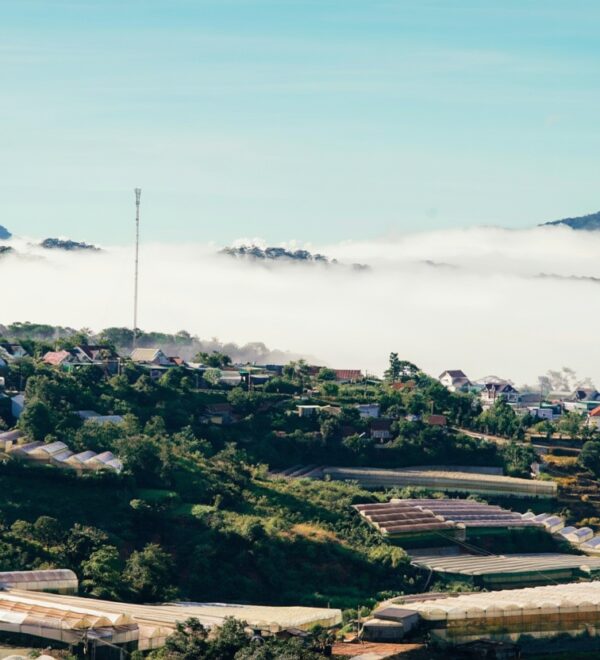
The highland approach to Dalat on the Quoc Lo 20 highway — the main road from the south — includes the Prenn Pass (Đèo Prenn — say: deo pren), a 10km switchback section that climbs 500 vertical metres through pine forest. This is the section that makes HCMC-Dalat a different category of road trip from a flat coastal drive. The road is well-maintained and two lanes throughout; Vietnamese bus drivers and private car drivers negotiate the switchbacks with confidence. Motion sickness is a real possibility for susceptible travelers — sit at the front of the bus if available, keep the window cracked, and have dramamine on hand if you know mountain roads affect you.
The Datanla Falls (Thác Datanla) are visible from the road near the top of the Prenn Pass — some day buses make a brief stop here and private car drivers will stop on request. Worth 15 minutes if the schedule allows.
Combining Dalat with Other Destinations
Dalat sits in the Lam Dong highlands midway between HCMC and the central coast beach towns — a geographic position that makes it a natural stop within a broader south and central Vietnam circuit rather than a standalone round-trip from HCMC.
HCMC → Dalat → Nha Trang: The most common combination. From Dalat, the bus or private car descends to the coast and Nha Trang in 4–5 hours (200,000–280,000 VND by FUTA bus, or 1,800,000–2,500,000 VND for a private car). The route drops 1,500 metres of elevation on the coastal descent — the inverse of the Prenn Pass experience on arrival from HCMC — and arrives in Nha Trang’s beach warmth with the temperature difference making the sea immediately appealing. This is a logical 2-destination circuit: fly HCMC → Dalat, 3 days, then bus Dalat → Nha Trang, 3 days, then fly Nha Trang → HCMC or continue north.
HCMC → Dalat → Mui Ne: The second common combination. Mui Ne is 3–4 hours by bus from Dalat on the coastal descent (200,000–250,000 VND via FUTA). The sand dunes, kite surfing, and beach resort energy of Mui Ne are a complete contrast to Dalat’s highland atmosphere — the pairing works well as a 5–7 day south Vietnam circuit. Book the bus Dalat → Mui Ne in advance as the shared transfers fill on weekends.
HCMC → Dalat → Hoi An: A longer circuit that works for 2–3 week travelers. After Dalat, the logical next stop is either Nha Trang (overnight from Dalat, then onward to Hoi An by sleeper bus or train from Nha Trang) or a direct bus from Dalat through Nha Trang to Da Nang (12–14 hours, 400,000–600,000 VND via open bus passes). The open tour bus passes sold in Pham Ngu Lao allow flexible boarding at multiple stops on the coastal route — Dalat is one of the standard stops.
The practical planning note: Dalat’s bus station connects to all the coastal cities (Nha Trang, Phan Thiet/Mui Ne, Da Nang, Hoi An) as well as back to HCMC. The FUTA app shows real-time availability for these routes. Most travelers book each leg 1–3 days ahead rather than booking a full open bus pass, which gives more flexibility on timing without sacrificing much in price.
Getting Around Dalat Once You Arrive
Dalat’s city center is walkable — the Xuan Huong Lake circuit, the market area, the night market, and most accommodation in the villa district are within a 2km radius. For the outer attractions (Truc Lam Monastery, Crazy House, Cau Dat plantation), Grab operates reliably in Dalat and runs significantly cheaper than flagging down a motorbike taxi at the tourist spots. Motorbike rental is available at 150,000–250,000 VND (~$5.70–9.50) per day from shops near the night market — a good option for confident riders who want flexibility for the highland countryside circuit. For everything to do and see once you arrive, our Dalat travel guide covers the full picture. Before you leave, check our Saigon things to do guide to make the most of your time in HCMC before the highland road north.
Two things worth sorting before you land: a Vietnam eSIM so you have data the moment you clear customs, and travel insurance — medical costs for uninsured foreigners in Vietnam are significant.
Airalo eSIMs activate instantly. Buy before departure — airport SIM queues in Vietnam can take 30+ minutes.
FAQ — Getting from Saigon to Dalat
How long does it take to get from Saigon to Dalat?
By flight: 55 minutes in the air, approximately 3–3.5 hours door-to-door including airport processes and the 28km transfer from Lien Khuong Airport. By sleeper bus: 7–8 hours. By private car or limousine van: 4–5 hours. The ground options are all significantly longer than the flight because the mountain road from the coastal lowlands up to Dalat’s 1,500m elevation adds travel time regardless of the vehicle.
12Go covers most Vietnam routes — sleeper buses, trains, and island ferries. Compare schedules and book in advance during peak season (Dec–Feb, Jun–Aug).
What is the cheapest way to get from HCMC to Dalat?
The overnight sleeper bus via Phuong Trang (FUTA Bus Lines) — 200,000–280,000 VND (~$7.60–10.65) per person, 7–8 hours. Book at futabus.vn or through your HCMC guesthouse. The overnight timing means you don’t spend a waking day on the bus, which makes it time-efficient as well as budget-friendly. The flight can be cheaper if booked 3–4 weeks ahead (500,000 VND starting fares exist in advance) but the bus is consistently cheaper for same-week or last-minute travel.
Is there a train from Saigon to Dalat?
No — there is no direct rail connection between HCMC and Dalat. The historic Dalat–Phan Rang–Saigon railway was demolished in the 1970s and only the 8km heritage section from Dalat to Trai Mat survives as a tourist attraction. The options are flight, bus, or private car. The bus via Phuong Trang (FUTA) is the most commonly used ground transport.
How do I get from Dalat airport to the city center?
The airport (Lien Khuong, 28km south of Dalat city) is best navigated with Grab — open the app on landing, book before you leave the arrivals hall: 150,000–220,000 VND (~$5.70–8.35). Metered airport taxis (Mai Linh, Dalat Tourist Taxi) run 200,000–350,000 VND (~$7.60–13.30). A shared minibus shuttle to Hoa Binh Square runs 50,000–70,000 VND (~$1.90–2.65) per person from the airport information counter. The tourist taxis at the arrivals exit approach travelers with fixed rates starting at 400,000–500,000 VND — don’t use these. For a broader overview of moving between destinations, see our Vietnam transport guide.
Can I take a motorbike from Saigon to Dalat?
Yes — the HCMC to Dalat motorbike ride is a popular route for independent riders. The Quoc Lo 20 highway from HCMC runs 300km to Dalat and takes 6–8 hours depending on stops. The route passes through Di Linh (a notable coffee-growing town), the lowland rubber plantations, and the highland pine forests before the Prenn Pass climb. A semi-automatic Honda Wave (rental from Pham Ngu Lao area in HCMC: 150,000–200,000 VND/day) handles the route comfortably. Budget riders sometimes buy cheap motorbikes in HCMC for 3,000,000–6,000,000 VND (~$114–228) and resell in Hanoi at the end of a full-country ride. This requires a full day for the HCMC-Dalat leg and is not recommended for inexperienced riders — the mountain road section requires confident riding and good brakes.
How far is Dalat from Ho Chi Minh City?
Dalat is approximately 300km from Ho Chi Minh City by road. The straight-line distance is shorter, but the mountain road routing (including the Prenn Pass climb from the coastal lowlands to 1,500m) makes all ground transport longer than the distance suggests. By air: 55 minutes from Tan Son Nhat Airport (SGN) to Lien Khuong Airport (DLI). By road: 4–5 hours by private car, 7–8 hours by bus. The elevation gain is what adds the time — the Prenn Pass section alone (the final 30–40km) takes 45–60 minutes in a bus.
Is the bus safe on the mountain road to Dalat?
Yes — the Quoc Lo 20 highway and the Prenn Pass section are well-maintained and FUTA Bus operates modern fleets on the route. The switchback mountain road requires experienced drivers and local operators navigate it daily without incident. The main consideration is motion sickness rather than safety: the 10km switchback section affects susceptible travelers. Sit at the front of the bus (request a front seat when booking), keep a window slightly open, and bring dramamine if mountain roads have affected you previously. Night buses navigate this section in darkness, which some travelers find less unsettling than seeing the drop on the day bus — both are safe, the psychology differs.
Where does the FUTA bus to Dalat depart from in HCMC?
FUTA Bus (Phương Trang) departs from Mien Dong Bus Station (Bến xe Miền Đông) in Binh Thanh district, approximately 5km from the Pham Ngu Lao backpacker area. Grab from Pham Ngu Lao to Mien Dong runs 60,000–90,000 VND (~$2.28–3.42). Book tickets at futabus.vn or at the FUTA counter at the station. Many Pham Ngu Lao guesthouses sell FUTA tickets with a small service fee — a legitimate convenience if you’re staying nearby. Allow 30–45 minutes to reach the station from the backpacker district during evening rush hour (5–7pm) — the HCMC traffic at departure time is the most variable part of the schedule.