Last updated: May 2026
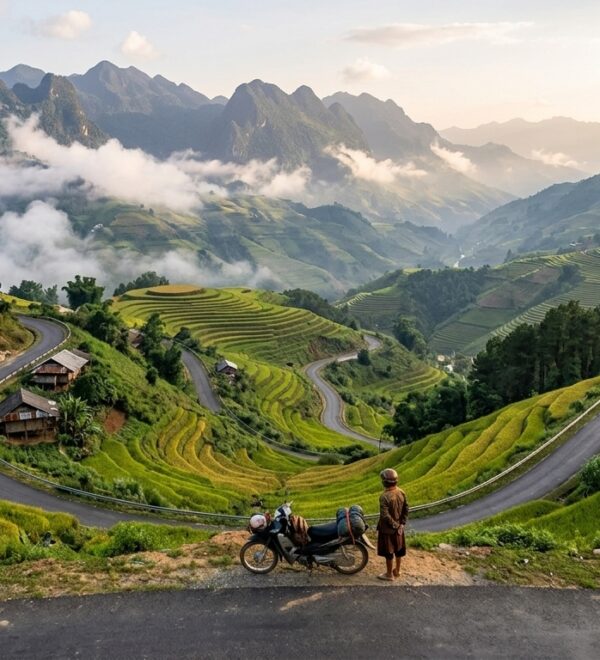
Nobody takes a bus to Mai Chau and thinks it was the wrong call. But a lot of people take a limousine van, arrive without having seen the countryside, and spend two days wondering why the valley feels slightly flat. The journey matters here. Highway 6 west of Hoa Binh climbs through proper karst hill country. The view from Thung Khe Pass — where the road crests before dropping into the Mai Chau valley — is worth stopping for regardless of how you got there.
This guide covers every realistic option for getting from Hanoi to Mai Chau: bus, limousine van, motorbike, and private car. Prices are current as of early 2026. Times assume no major traffic, which isn’t guaranteed on Friday afternoons.
Option 1: Public Bus from My Dinh Station
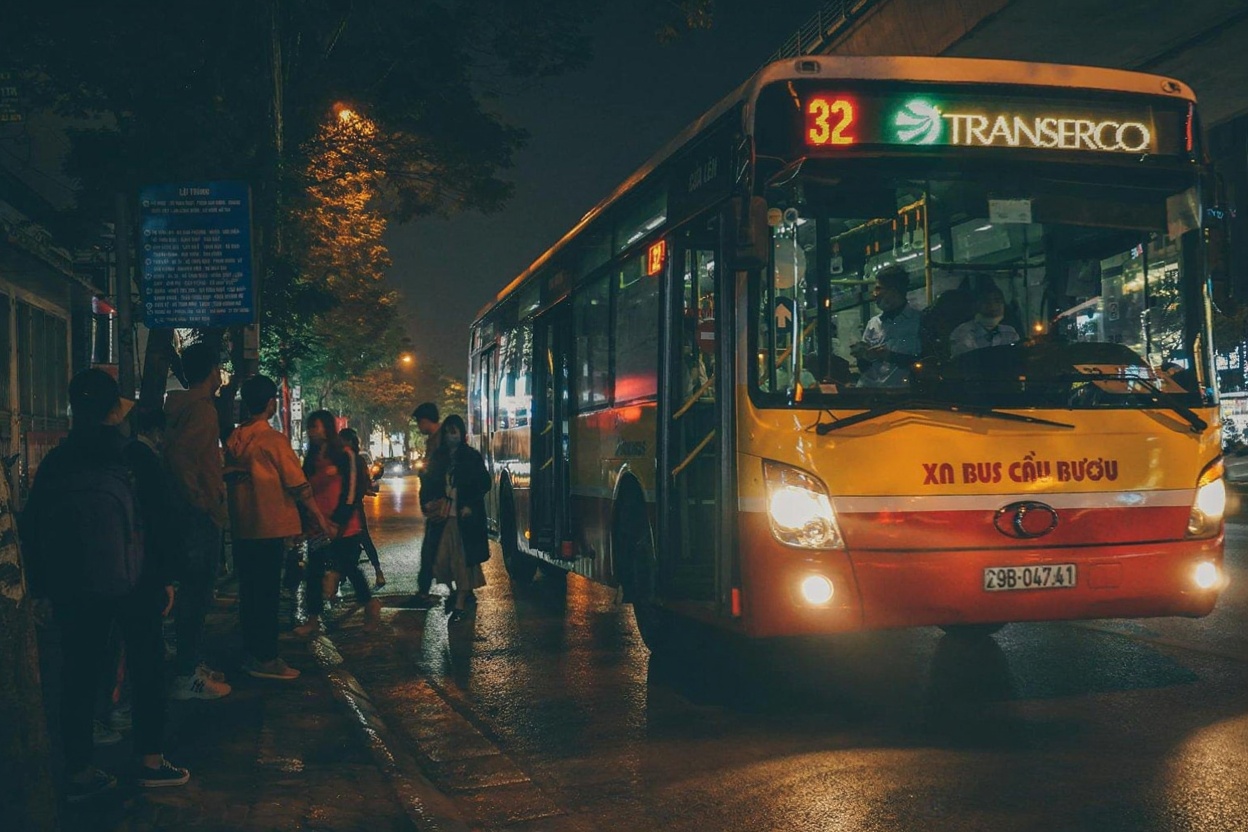
My Dinh Bus Station (Bến xe Mỹ Đình) on the west side of Hanoi is the departure point for buses to the northern and northwestern provinces. Multiple companies run Hanoi–Mai Chau routes, leaving approximately every 30–60 minutes from around 6am through early afternoon.
✓Quick Answer
Bus from My Dinh to Mai Chau: 80,000–100,000 VND (~$3–4), departs every 30–60 minutes from 6am, journey 3–3.5 hours. Bus drops at Mai Chau town, 8km from Ban Lac village. Get a xe ôm (50,000–70,000 VND) or bike rental in town to reach the village.
**Getting to My Dinh from central Hanoi:** Grab or taxi from the Old Quarter runs 100,000–160,000 VND (~$4–6) depending on traffic. Budget 30–45 minutes from Hoan Kiem Lake. Alternatively, bus #34 from Tran Hung Dao street goes to My Dinh for 9,000 VND, but add an hour and some luggage management.
**At the station:** Look for the My Dinh bus hall signs and the counter for Hoa Binh/Mai Chau routes. You can buy a ticket at the window — no advance booking required for this route. Buses fill up but rarely turn passengers away; early morning departures are less crowded.
**On the bus:** Standard Vietnamese long-distance bus — reclining seats, functional air conditioning, a TV playing Vietnamese pop music videos at a volume that discourages sleep. Your bag goes in the hold or overhead. Journey time: 3–3.5 hours to Mai Chau town.
**The last 8km problem:** Buses drop at Mai Chau town (thị trấn Mai Châu), not at Ban Lac village. From the bus stop, you need to cover 8km to the village. Options:
– Xe ôm from the bus stop: 50,000–70,000 VND (~$2–3) to Ban Lac
– Rent a bicycle in town and cycle the 8km flat road (50,000 VND/day)
– Some homestays will arrange pickup from the town bus stop if you WhatsApp ahead
→Who It’s For
The public bus is ideal for solo budget travelers comfortable navigating Vietnamese bus stations and the final stretch independently. If you’re traveling as a couple or small group, the limousine van costs about the same per person with significantly less hassle.
Option 2: Limousine Van with Hotel Pickup
The most popular option for independent travelers. Limousine vans (16-seat or smaller minivans) depart from central Hanoi with hotel pickup included and drop passengers directly at Ban Lac village or their specific homestay. No bus station navigation, no final-stretch problem.
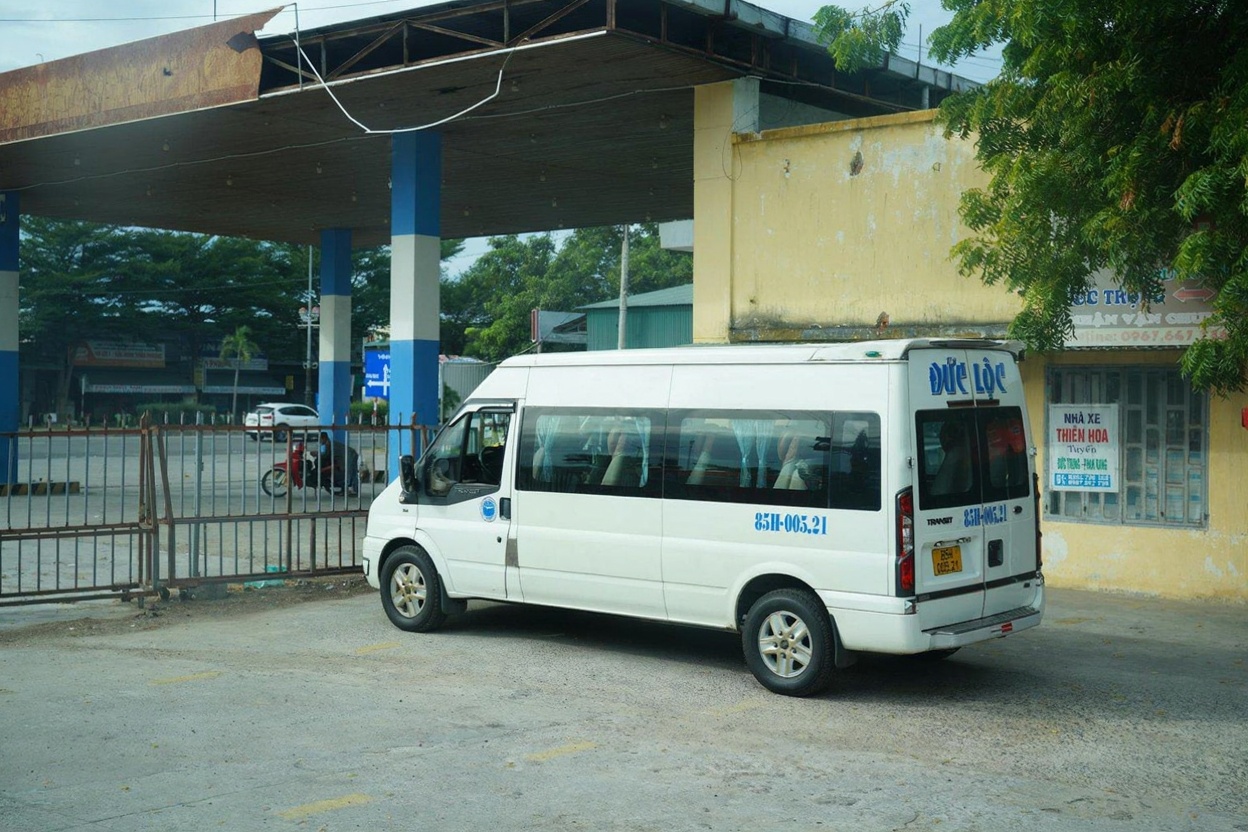
**Price:** 180,000–250,000 VND per seat (~$7–10), depending on operator and whether pickup is from the Old Quarter, West Lake, or further out. Round trips can be booked as a package: 350,000–450,000 VND (~$13–17) per person return.
Chau limousine van” in Google Maps to find current operators; check reviews on Google rather than the company’s own website.
**Pickup logistics:** Drivers typically collect passengers from the hotel or a nearby meeting point. Confirm the exact pickup location when booking. Departure times are approximate — they wait until the van is adequately full, which usually happens within the stated window.
**Direct drop vs. Mai Chau town drop:** Confirm before booking that the van goes directly to Ban Lac village (Bản Lác), not just to Mai Chau town. Most tourist-oriented operators go to the village; budget options may stop at the town and leave you with the 8km gap.
Option 3: Motorbike from Hanoi
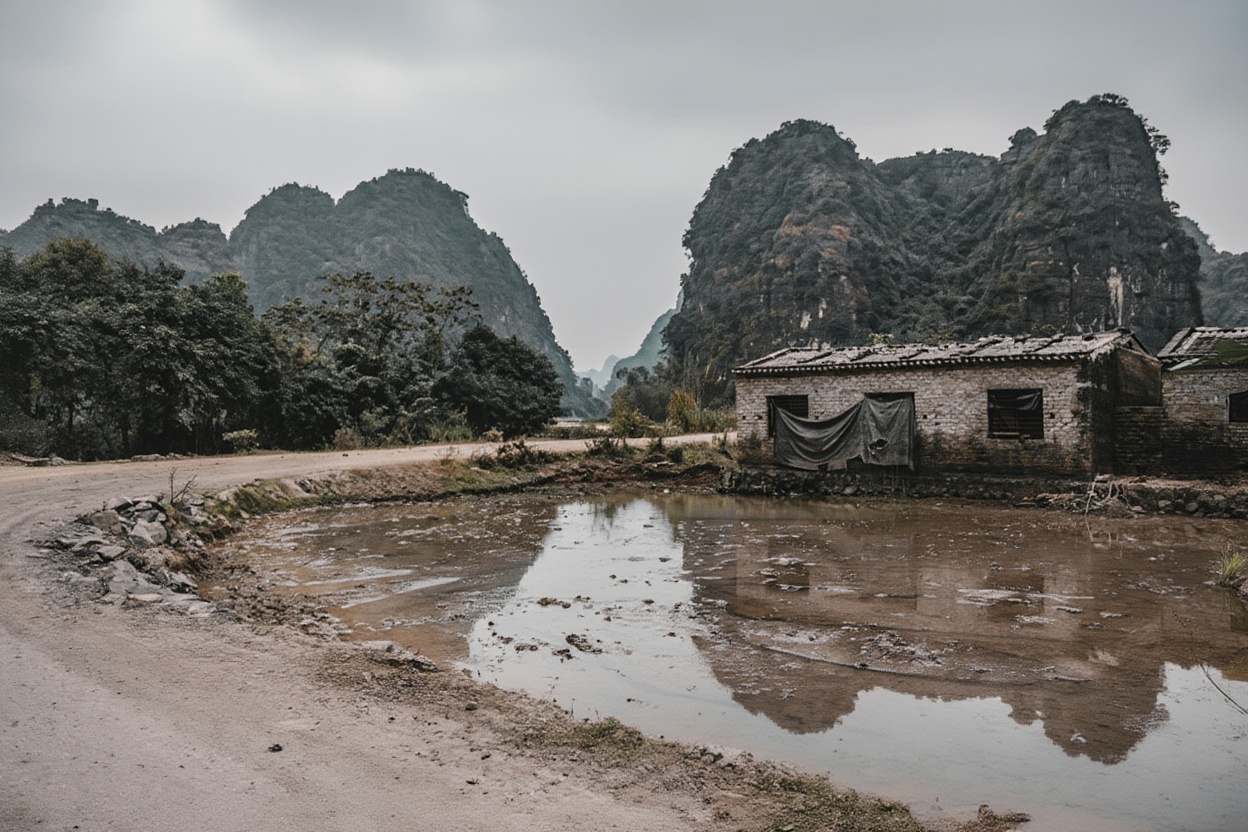
Highway 6 is one of the better roads heading out of Hanoi in any direction. Past the city’s western edge, traffic thins quickly. The road through Hoa Binh town and into the hills is well-maintained, with proper asphalt, manageable curves, and enough straight sections to make progress without being dull. The mountain stretch between Hoa Binh city and Thung Khe Pass — roughly the final 50km before the valley descent — is the reason motorbike riders leave Hanoi with no regrets.
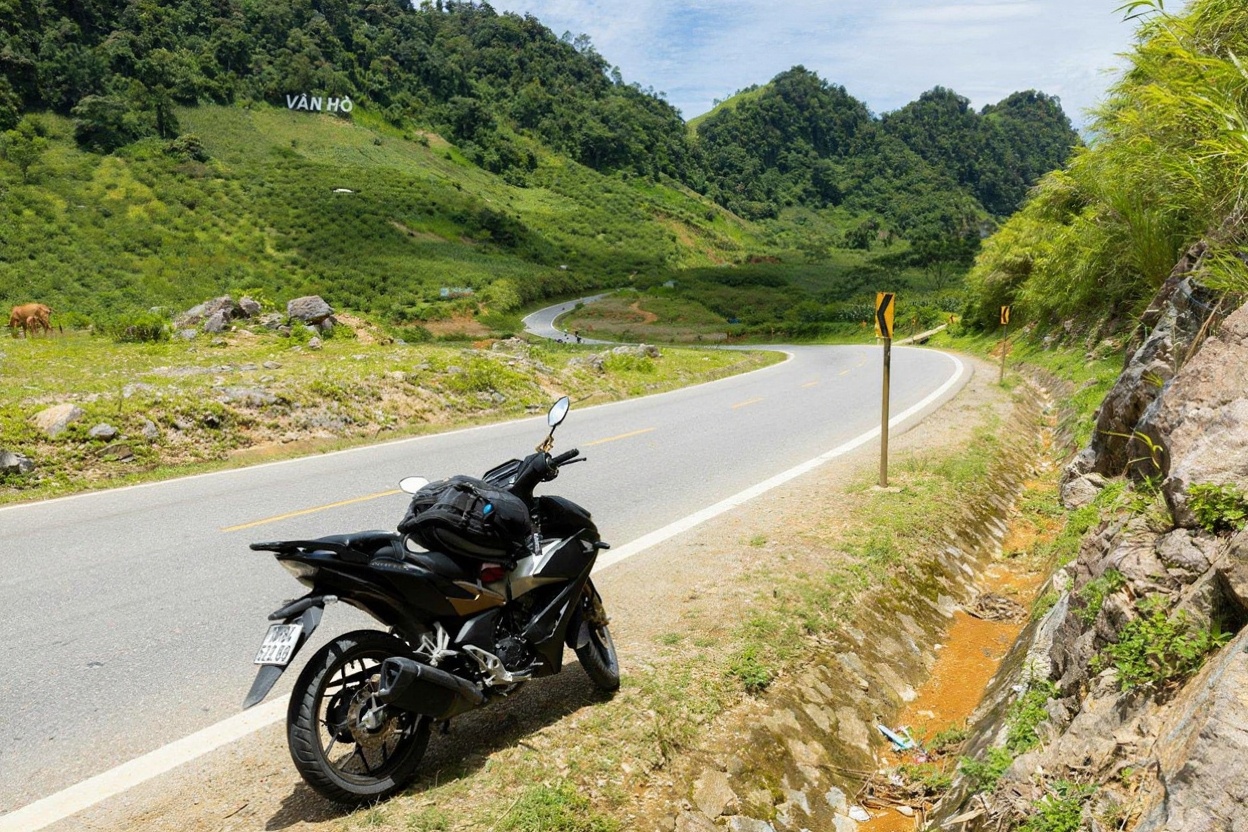
**Time:** 3.5–4.5 hours from central Hanoi to Ban Lac, including one sensible stop at the pass or in Hoa Binh city for fuel and coffee.
Klook has the widest selection for Vietnam and is usually the cheapest. KKday is strong on day trips and local experiences.
ộ 6). Pass through Hà Đông, then follow signs for Hòa Bình. Continue on QL6 through Hoa Binh city, then climb into the hills. Thung Khe Pass is unmistakable — the road crests and drops. The valley floor appears. Turn left at the Mai Chau town junction and follow signs for Bản Lác.
**Motorbike rental in Hanoi:** Automatic motorbikes rent for 120,000–180,000 VND/day (~$5–7) from shops in the Old Quarter. Semi-automatics (better for mountain roads) run 160,000–220,000 VND/day. Confirm the rental covers inter-provincial travel before taking it — some rental shops technically restrict this but practically don’t enforce it. Get the shop’s phone number in case of breakdown.
**What the road is actually like:** The Hanoi–Hoa Binh section involves roughly 70km of suburban and semi-urban highway with trucks. It’s manageable but not exciting. The interesting section begins west of Hoa Binh city. One piece of honest advice: leave before 7:30am to clear Hanoi’s western sprawl before the morning commute peaks.
↗Insider Tip
Stop at Thung Khe Pass (Đèo Thung Khe, also called White Mayo Pass) before descending. There’s a viewpoint area with vendors selling cơm lam (bamboo rice) and sugarcane juice. The valley laid out below from this vantage — the flat green grid, the white houses, the limestone backdrop — is the best view of Mai Chau you’ll see. Don’t skip it for time.
Option 4: Private Car
Private car makes sense for groups of 3–4 splitting the cost, families with luggage, or anyone who wants door-to-door service without sharing a van with strangers. Price per vehicle runs 1,200,000–1,800,000 VND (~$45–70) one-way, depending on car type and whether pickup is from the city center or airport.
**How to book:** Through your Hanoi hotel, any tour agency, or Grab’s GrabCar Premium. For the better value, negotiate with a hotel-connected driver the day before. Ask for a price that includes waiting time (if you want the driver to return you) or arrange a pickup call for the return. Confirm the drop point is Ban Lac village, not Mai Chau town.
**Journey time:** 2.5–3 hours in a car that doesn’t stop at My Dinh to fill up like the bus does. Drivers generally take Highway 6 without detours.
**Return logistics:** Most private car bookings are one-way unless negotiated otherwise. For the return trip, either arrange a specific pickup with your driver, book a new car from Mai Chau town (available through Grab in the area or through your homestay), or take the limousine van back to Hanoi.
Getting from Mai Chau Town to Ban Lac Village
If your bus or car drops you at Mai Chau town (the administrative center), you’re 8km from Ban Lac. This gap trips up travelers more than anything else on this route.
Options from the town:
– **Xe ôm** (motorbike taxi): 50,000–70,000 VND to Ban Lac. Drivers wait near the bus stop. Agree the price before getting on.
– **Grab:** Works in the area — open the app and check availability. Sometimes Grab motorbikes appear; sometimes not.
– **Bicycle rental in town:** If you plan to cycle the valley anyway, rent here and cycle the 8km flat road into Ban Lac. Takes about 20 minutes at an easy pace.
– **Homestay pickup:** WhatsApp or call your homestay before arriving. Many will send a motorbike or arrange transport for a small fee (30,000–50,000 VND) or free if you’re staying two nights.
When to Leave Hanoi and Timing Your Arrival
The most important transport decision is not which option you take — it’s when you leave.
**Leave Hanoi by 7–8am** to arrive at Mai Chau by late morning, giving you the afternoon to cycle and settle before the valley evening. Arrival after 2pm means you’ve missed the best light for the valley floor.
**Avoid Friday afternoon departures.** Hanoi’s western traffic on Fridays (3–7pm) is brutal. The limousine van that takes 2.5 hours on a Tuesday takes 4 hours on a Friday. If you can only go on a weekend, leave Saturday morning before 7am — traffic clears much faster on Saturday than Friday.
**Weekday arrivals:** If your schedule allows arriving on a weekday (Monday–Thursday), the valley has significantly fewer tourists and the morning cycling experience is qualitatively different. Weekend Mai Chau and weekday Mai Chau are not the same trip.
⚠Real Talk
I booked a “8am departure” limousine van that left at 9:15am because the operator was waiting for more passengers. That’s standard practice — the stated departure time is the earliest you’ll leave, not a guarantee. Factor in 30–60 minutes of potential delay when planning your arrival and what you’ll do when you get there.
Combining Mai Chau with Other Destinations
Most travelers treat Mai Chau as a standalone overnight trip from Hanoi. But the geography of northwest Vietnam makes a few logical combinations that turn a 2-day detour into a proper week-long circuit.

**Mai Chau → Pu Luong → Hanoi (4–5 days total):** The most natural extension. Spend 1–2 nights in Mai Chau, then continue 30–40km northeast to Pu Luong Nature Reserve for 2 nights. Return to Hanoi from Pu Luong via a different route (some operators run direct Pu Luong–Hanoi vans). Total trip: a compressed but satisfying northwest circuit hitting two distinct valleys with different ethnicities (White Thai in Mai Chau, Muong and Thai in Pu Luong) and different landscapes.
**Mai Chau → Ninh Binh → Hanoi (4 days total):** A less obvious combination but logistically workable. From Mai Chau, you can travel southeast through the karst hills toward Ninh Binh — roughly 120km by the back road. Some operators offer this specific route. It connects two of northern Vietnam’s most scenic day-trip destinations without backtracking through Hanoi. Useful for travelers arriving or departing via Noi Bai Airport.
**Hanoi → Moc Chau → Mai Chau (for motorbike riders):** Moc Chau Plateau is 70km northwest of Mai Chau on Highway 6, famous for tea plantations and the Son La province apple orchards. Motorbike riders sometimes loop: Hanoi → Moc Chau (1 night) → backtrack to Mai Chau (1 night) → Hanoi. Adds 140km to the trip but gives a fuller picture of the northwest highlands. Best in October–November when Moc Chau’s plum and peach trees are in pre-bloom.
→Who It’s For
The standalone 2-day Mai Chau trip is for Hanoi-based travelers with limited time who want one proper northern village experience. The Mai Chau + Pu Luong combination is for anyone with 4–5 days and genuine interest in hill-tribe cultures. The full northwest motorbike circuit (adding Moc Chau or continuing to Son La) is for riders with 7+ days who want a proper regional journey.
What the Journey Actually Looks Like
Every option gets you to the same valley. The route via Highway 6 is the same whether you’re in a bus, a van, or on a motorbike. But the experience of the journey differs significantly, and for some travelers the ride matters as much as the destination.
**Hanoi to Hoa Binh (75km, 90–120 minutes):** The urban sprawl of western Hanoi takes longer than you expect to clear — construction sites, suburban traffic, the usual congestion that makes any Vietnamese city’s exit feel like an obstacle course. By the time you hit the bridge over the Da River into Hoa Binh city, the air is noticeably cleaner. Some buses stop here briefly. If you’re on a motorbike, the small coffee shops along the Hoa Binh waterfront are worth 15 minutes.
**Hoa Binh to Thung Khe Pass (50km, 60–80 minutes):** This is where the trip earns its reputation. The road climbs steadily through forested limestone hills. Small roadside communities appear and disappear. You’ll pass through Thung Nai reservoir area — a broad blue-grey expanse between drowned limestone karsts that looks genuinely otherworldly on a misty morning. The road narrows slightly and the curves increase as you approach the pass.
**Thung Khe Pass to Ban Lac (30km, 30–40 minutes):** The descent from the pass into the Mai Chau valley is the money shot. The road drops through switchbacks with the valley growing larger below you. At the bottom, it flattens out onto the valley floor, turns into a two-lane road lined with fields, and deposits you into the gentle rhythm of the valley. Ban Lac’s stilted houses appear on the left after the Mai Chau town junction.
Getting Back: Mai Chau to Hanoi
Return transport follows the same options in reverse. The main consideration is which morning bus you need to catch to make onward plans work.
**Limousine van returns:** Most operators run 1–2 departures from Ban Lac in the late morning or early afternoon (typically 12pm–2pm). This gets you back to Hanoi by mid-afternoon. Book the return with the same operator that brought you out, or ask your homestay to arrange it the evening before.
**Bus from Mai Chau town:** Buses back to Hanoi’s My Dinh station depart throughout the day. Get a xe ôm from Ban Lac to the town (50,000–70,000 VND), then board the next bus. Last buses back to Hanoi typically leave by 4–5pm; confirm current times locally.
**Continuing to Pu Luong:** Rather than returning to Hanoi, many travelers continue northeast 30–40km to Pu Luong Nature Reserve. Shared vans run between the valleys (200,000–350,000 VND per person) — ask your homestay to arrange transport the evening before. See our Pu Luong guide for what’s there. Once you’re there, see our Mai Chau trekking guide for the best valley routes on foot.
For more northern Vietnam transport options from Hanoi, the day trips from Hanoi guide covers the full range of overnight circuits worth considering.
Two things worth sorting before you land: a Vietnam eSIM so you have data the moment you clear customs, and travel insurance — medical costs for uninsured foreigners in Vietnam are significant.
Airalo eSIMs activate instantly. Buy before departure — airport SIM queues in Vietnam can take 30+ minutes.
Frequently Asked Questions
How far is Mai Chau from Hanoi?
Mai Chau is about 155km from central Hanoi via Highway 6. Journey time is 3–3.5 hours by bus or limousine van on a normal traffic day. On a motorbike, allow 3.5–4.5 hours including a stop at Thung Khe Pass.
What is the cheapest way to get from Hanoi to Mai Chau?
Public bus from My Dinh Bus Station — 80,000–100,000 VND (~$3–4) per person. You’ll need to add 50,000–70,000 VND for a xe ôm from Mai Chau town to Ban Lac village. Total cost around 130,000–170,000 VND (~$5–7) per person.
Is there a direct bus from Hanoi Old Quarter to Mai Chau?
No direct public bus from the Old Quarter. You need to get to My Dinh Bus Station first (30–45 minutes by Grab from Hoan Kiem). Limousine vans with hotel pickup solve this problem — they collect from the Old Quarter or West Lake area and drop at Ban Lac village.
Can I do a Hanoi to Mai Chau day trip?
Technically possible — a 7am departure gets you there by 10am, giving 5–6 hours in the valley before a return bus. But it wastes what makes Mai Chau good: dawn cycling, evening cultural show, the valley at quiet hours. The overnight trip is the correct version of this destination.
Is the road from Hanoi to Mai Chau safe for motorbike riders?
Highway 6 to Mai Chau is well-paved and manageable for experienced riders. The Hoa Binh–Thung Khe section has mountain curves but nothing extreme. The main hazard is trucks between Hanoi and Hoa Binh city. Avoid rainy season riding if you’re not confident on wet mountain roads (May–September has the most rain).
How do I get from Mai Chau to Pu Luong?
The road between Mai Chau and Pu Luong is about 30–40km. Shared transport arranged through homestays runs 200,000–350,000 VND per person. Ask your homestay the evening before departure to arrange a shared van or motorbike taxi. The journey takes 1–1.5 hours depending on road conditions.
For a full overview of the city before you head out, the Hanoi travel guide covers neighborhoods, transport hubs, and where to base yourself.