Last updated: May 2026
Most people who say they “trekked” in Mai Chau cycled between two villages on a flat path between rice paddies. That’s not wrong — the cycling is genuinely good — but it’s not trekking. The real walking here starts when you leave the valley floor and hit the limestone karst wall that rings the basin on three sides. Up there, in the forest above the paddy line, is where Mai Chau actually earns its walking reputation.
This guide separates the easy valley walks from the actual hill trekking, explains what a guide costs and when you need one, and covers Hang Kia–Pà Cò — the Hmong highlands that most valley-only visitors miss entirely.
Valley Floor Walks: Self-Guided (Free)
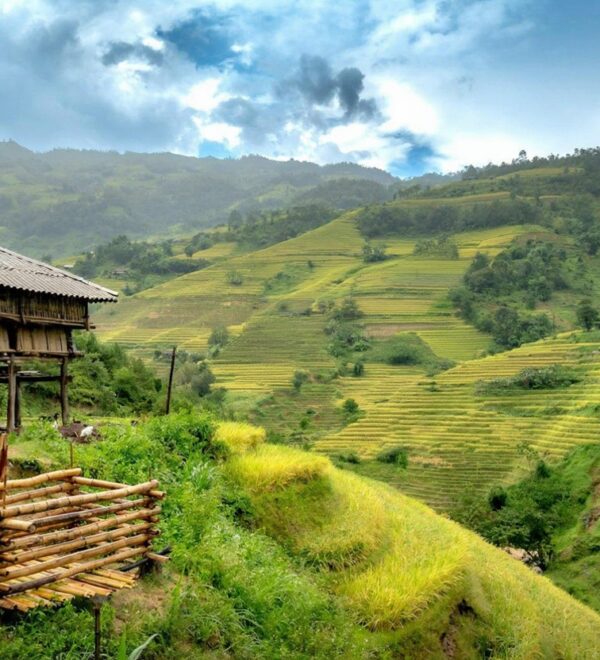
The flat valley floor between Ban Lac, Pom Coong, and Van village is the most accessible walking in the Mai Chau area. Paths follow the edges of paddy fields, connect through small villages, and are almost impossible to get seriously lost on — the limestone mountains form a visual boundary on every side.
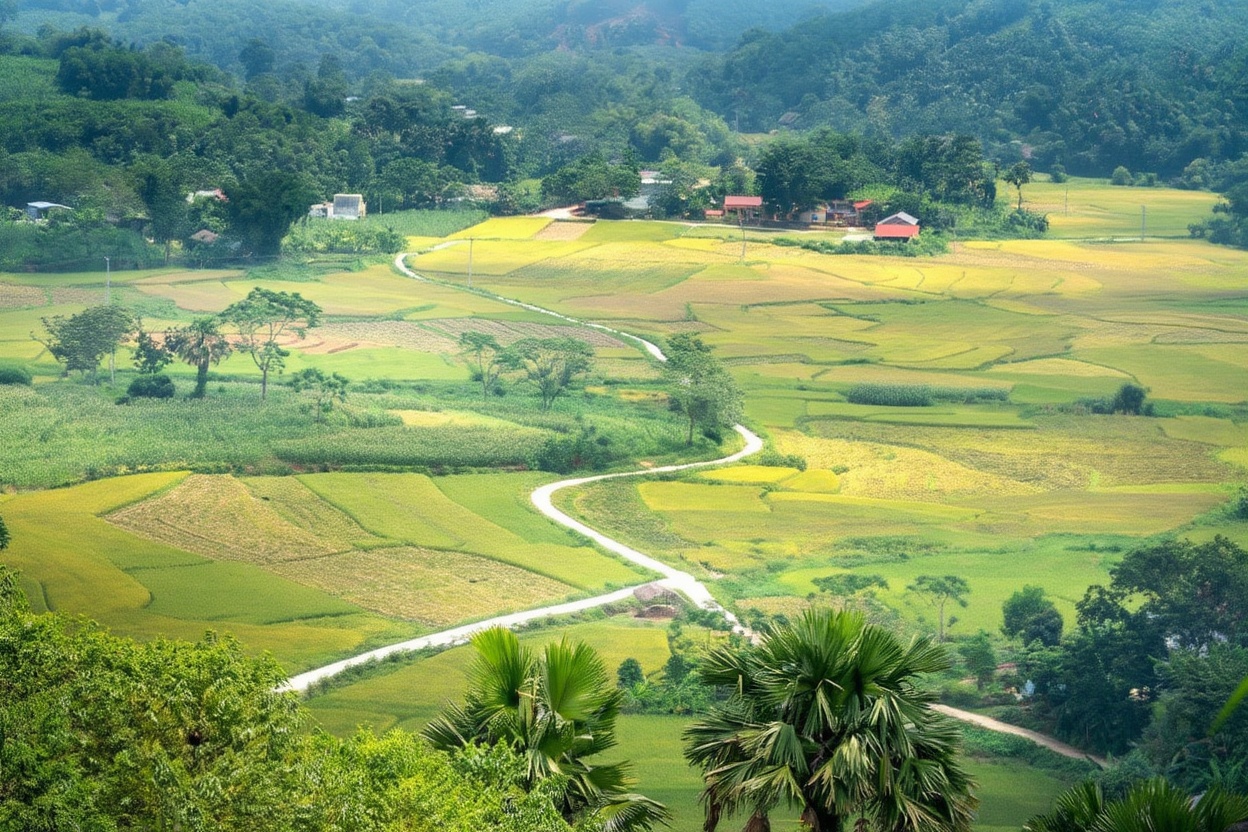
**Ban Lac → Pom Coong → Van Village circuit (10–14km):** Start at Ban Lac, head northeast on the main valley path toward Pom Coong (1.5km). Continue east toward Van village (5km from Ban Lac). The path passes through farmland, small family plots, and the occasional rubber tree grove. Return the same way or loop back on the road. On foot: 3–4 hours with stops. On bike: 60–90 minutes.
**North valley exploration:** From Ban Lac, the path heading north (toward the limestone wall) is less used and more interesting than the east-west route. After about 2km the paddy gives way to orchards and then to forested slope. You can follow the base of the limestone cliffs without climbing — good birdwatching area in the morning hours.
**What to expect:** Dirt paths (some sections paved), no significant elevation, occasional motorbike traffic. Village dogs bark but rarely do more. Farmers going about their day — women carrying loads on shoulder poles, men working the paddies with water buffalo. A camera earns more smiles than suspicion.
ℹKnow Before You Go
Valley paths can be muddy after rain. The dry-season paths (November–April) are firm and easy. Post-monsoon paths (August–September) can be ankle-deep in sections. Wear sandals or light trail shoes, not flip-flops, if you’re going beyond the main Ban Lac–Pom Coong stretch.
Village-to-Village Treks with a Guide (Half Day)
Several homestay operators in Ban Lac offer guided village walks — typically 3–5km loop routes that go beyond the standard cycling circuit to villages that see fewer visitors. These aren’t technical hikes; they’re guided community walks with cultural commentary.
**What guides cost:** 150,000–250,000 VND per person (~$6–10) for a 3–4 hour morning walk. Groups of 2–4 people are most common; solo travelers can often join an existing group. Ask your homestay the evening before — guides are local community members, not full-time professionals.
**What the walk includes:** Commentary on White Thai farming practices, visits to family compounds (weaving demonstrations in working households rather than tourist stalls), orchards, and usually a mid-route stop for rượu cần (rice wine from a communal pot) at someone’s house. The communal rice wine stop sounds gimmicky in print but rarely feels that way in practice.
**Quality variation:** Guide quality varies significantly. The best guides speak reasonable English and have genuine knowledge of Thai culture and agriculture. Some guides are just farmers who know the paths. Ask at your homestay for recommendations rather than accepting whoever shows up. A good guide is the difference between an interesting morning and an expensive walk.
★Jake’s Pick
Ask specifically for a guide who can take you to a working weaving household — not a weaving shop, but a family still using a backstrap loom for their own use. Some homestay contacts can arrange this. The difference between watching weaving performed for tourists and watching a grandmother make fabric she’ll wear is something you can feel immediately.
Full-Day Hill Treks into the Limestone
The limestone karst that walls in the Mai Chau valley isn’t just scenery — it’s accessible. Several trails climb from the valley floor into the forest above. These are the treks that differentiate Mai Chau from just another village cycling destination.
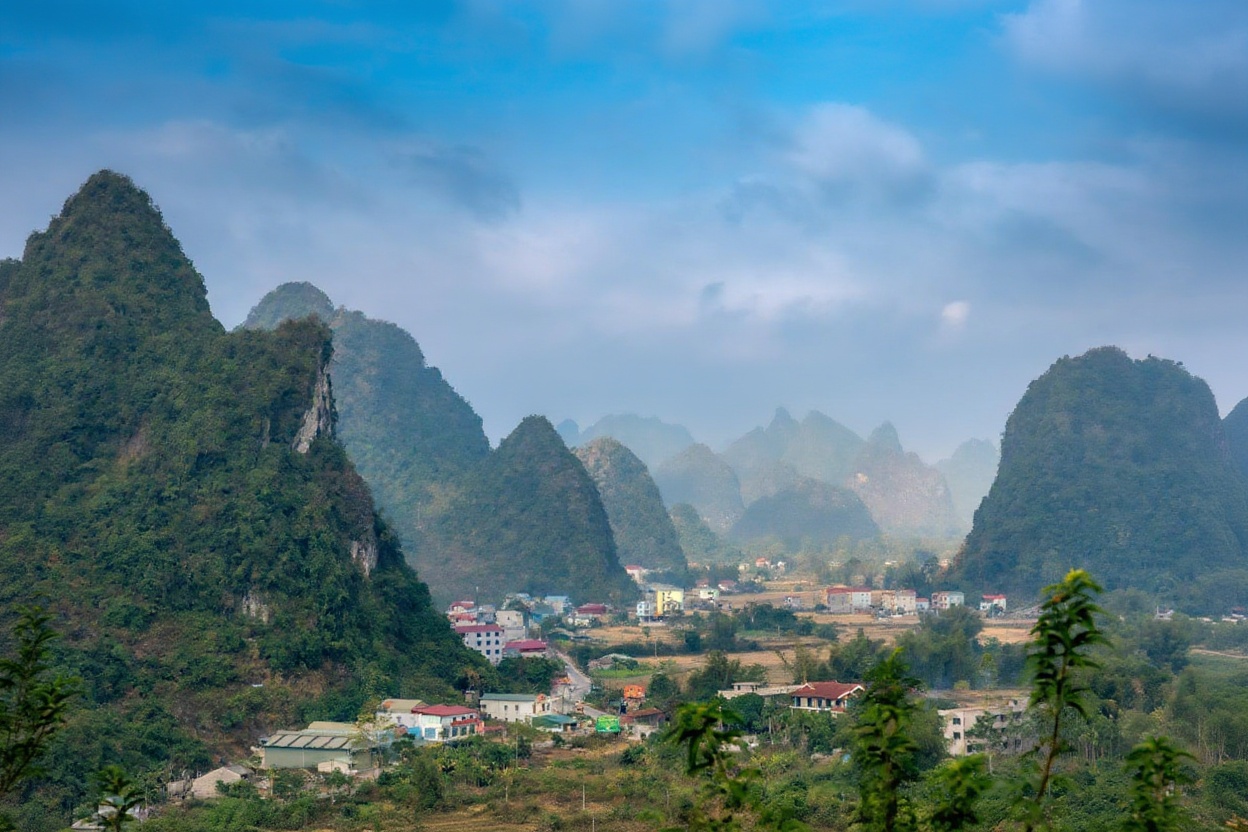
**The forest trails above Ban Lac:** Local guides offer full-day treks (6–8 hours) that climb from the valley floor into the forested karst. The ascent from ~400m (valley floor) to the ridge takes 2–3 hours. At the top: views across the valley, secondary growth forest with diverse birdlife, and the occasional stream crossing. Descent by a different route.
**Cost:** 250,000–400,000 VND per person (~$10–16) for a full-day guided trek with lunch included. Groups of 3–5 make the most sense economically. Confirm the route and elevation gain before booking — some “full-day treks” are still valley floor routes charged at hill-trek prices.
**What to bring:** Good footwear (trail shoes minimum, boots preferable on the ascent), 2+ liters of water, rain layer (the forest holds mist even on clear valley days), and snacks. The guide usually arranges a packed lunch, but confirm this when booking.
**Physical difficulty:** The ascent is genuinely demanding — 400–600m elevation gain on sometimes steep, rooty forest paths. Not technical, but not a gentle stroll. Reasonable fitness required. The descent is harder on the knees than the ascent. Allow an honest assessment of your hiking experience before committing to the full-day option.
Hang Kia–Pà Cò: The Hmong Highlands Day Trip
Twenty-five kilometers beyond Ban Lac, the road climbs steeply to two H’Mong (người H’Mông) communities at 1,000–1,200m elevation. Hang Kia and Pà Cò are ethnically and culturally distinct from the White Thai valley below — different dress, different language, different architecture. The contrast between the two communities half an hour apart is one of the most interesting cultural experiences in the northwest.
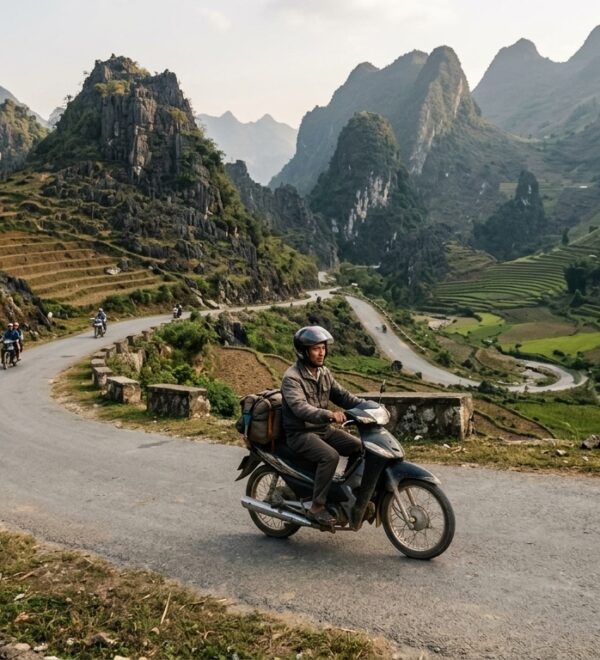
**Getting there:** Motorbike only (the road is not navigable by car during rain and some bicycles couldn’t handle the climb). From Ban Lac, take the road northwest toward Hang Kia. The climb is steep — roughly 600m elevation gain over 15km. Allow 40–60 minutes each way. Motorbike rental from Ban Lac: 150,000–200,000 VND/day for a semi-automatic.
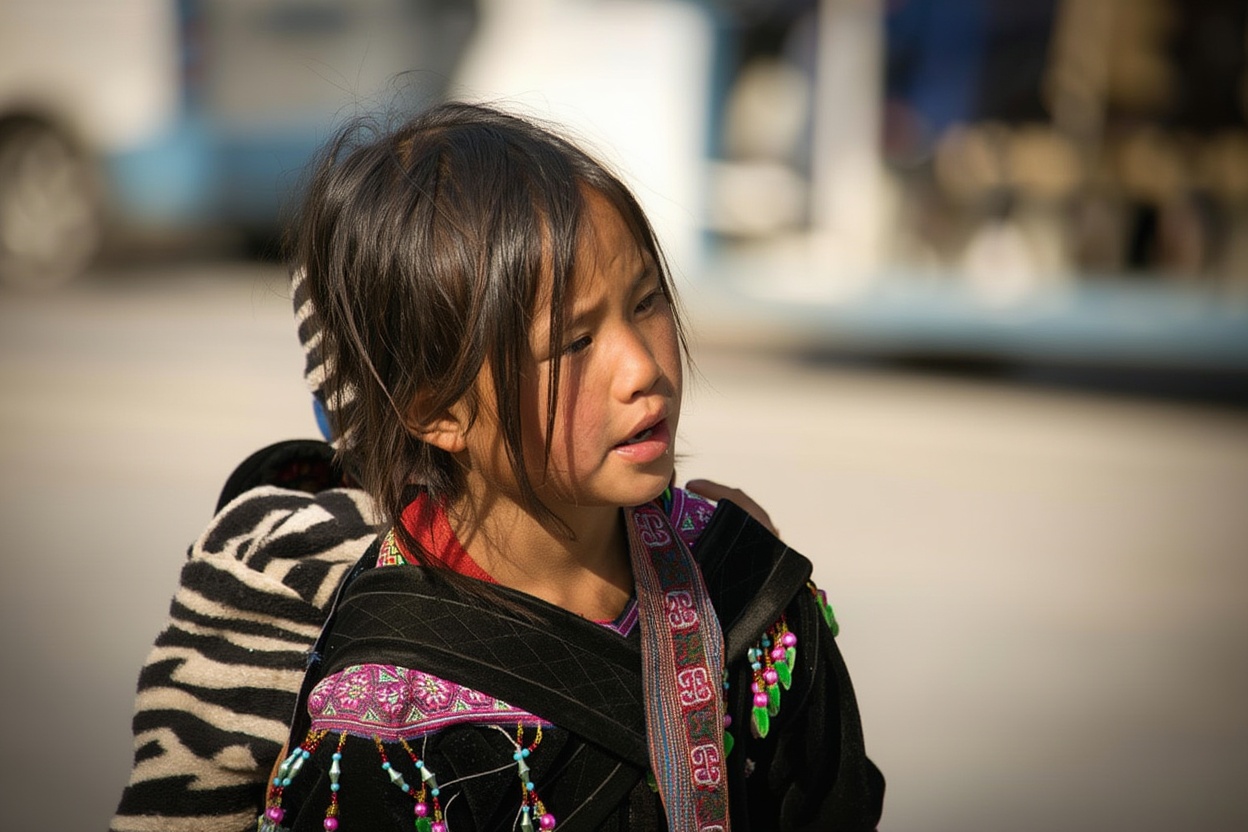
**What’s there:** Hang Kia village has a Sunday morning market (worth the overnight timing if you can arrange it) where Hmong families from surrounding hills come to sell and trade — vegetables, animals, textiles, and the social encounter that markets in remote highland areas still provide. The women’s embroidered indigo-and-red clothing at the market is among the most visually striking traditional dress still worn daily in northern Vietnam.
**Pà Cò** is smaller and quieter. Less market infrastructure, more genuine residential village atmosphere. The view east from the Pà Cò ridge line across the Thanh Hoa karst is significant — on a clear day you can see toward the Pu Luong highlands.
**Combining with a walk:** You can leave the motorbike in Hang Kia village and walk between the two communities (3–4km on a ridge path) before motorbike return to Ban Lac. The path is clear and you don’t need a guide for this specific stretch.
⚠Real Talk
Hang Kia has had a documented history of opium cultivation, and some tourism materials avoid mentioning it. That’s done the place no favors — the community has largely moved toward agricultural diversification, and travelers arriving with suspicion rather than curiosity make for uncomfortable interactions. Go with the same open-minded approach you’d bring to any remote minority community.
What Season to Trek
Trekking conditions in the Mai Chau area change significantly by season. The decision isn’t just about comfort — it’s about whether the paths are passable and whether the leeches are out.
**October–April (optimal):** Dry, firm paths, clear views from the limestone ridges, cool temperatures in the forest (15–22°C on the hill trails). October–November has the added bonus of golden rice harvest in the valley, making the combination of valley cycling and hill trekking maximally rewarding. This is the window to book.
**May–June:** Rain starts but usually in afternoon bursts, not all-day rain. Morning treks are generally fine. Paths begin getting slippery. The valley turns vivid green — good light for photography from the ridge.
**July–August:** Avoid hill trekking. Heavy rain makes the limestone paths slippery and dangerous. Leeches emerge in the forest and are numerous above 600m — a minor but persistently annoying hazard. Valley floor walks remain fine.
**September:** Transition month. Rain begins tapering. Second half of September often has good weather and the rice harvest begins. Risk worth taking if you’re traveling then.
Cycling vs Trekking: How to Prioritize Your Time
This is the question most people ask after looking at the map: should I spend my morning on a bike or on foot? The honest answer depends on how long you’re staying and what you came for.
If you have one night: cycle. The valley floor at dawn on a bicycle is the defining experience of Mai Chau. It’s flat, visually dramatic, and completely free. You can cover more ground and more variety in two hours of cycling than you can in four hours of walking. Don’t overthink it — rent a bike the moment you arrive and be on it before the day-trippers show up.
If you have two nights: morning one on a bike (valley floor, pre-breakfast), then the second day’s morning for a guided village walk or the Hang Kia motorbike day trip. This gives you the valley at its best and the cultural depth that cycling alone doesn’t provide.
If you have three nights: do all three options — valley cycling, half-day guided village walk, and the Hang Kia excursion. The three activities complement each other; none overlap significantly.
→Who It’s For
Cycling suits everyone — no fitness requirement, no guide cost, no logistics. Village walks suit travelers who want cultural context beyond what the visual landscape provides. Hill trekking suits people who specifically came to walk in the mountains and have genuine hiking experience. Hang Kia suits anyone curious about the contrast between White Thai and Hmong cultures, which is striking and underappreciated.
What to Pack for Mai Chau Trekking
The packing requirements for Mai Chau trekking are lighter than Sapa or Ha Giang. You’re not at altitude, the trails don’t require technical gear, and the distances are manageable in a half or full day. But a few specific items make the difference between comfortable and miserable.
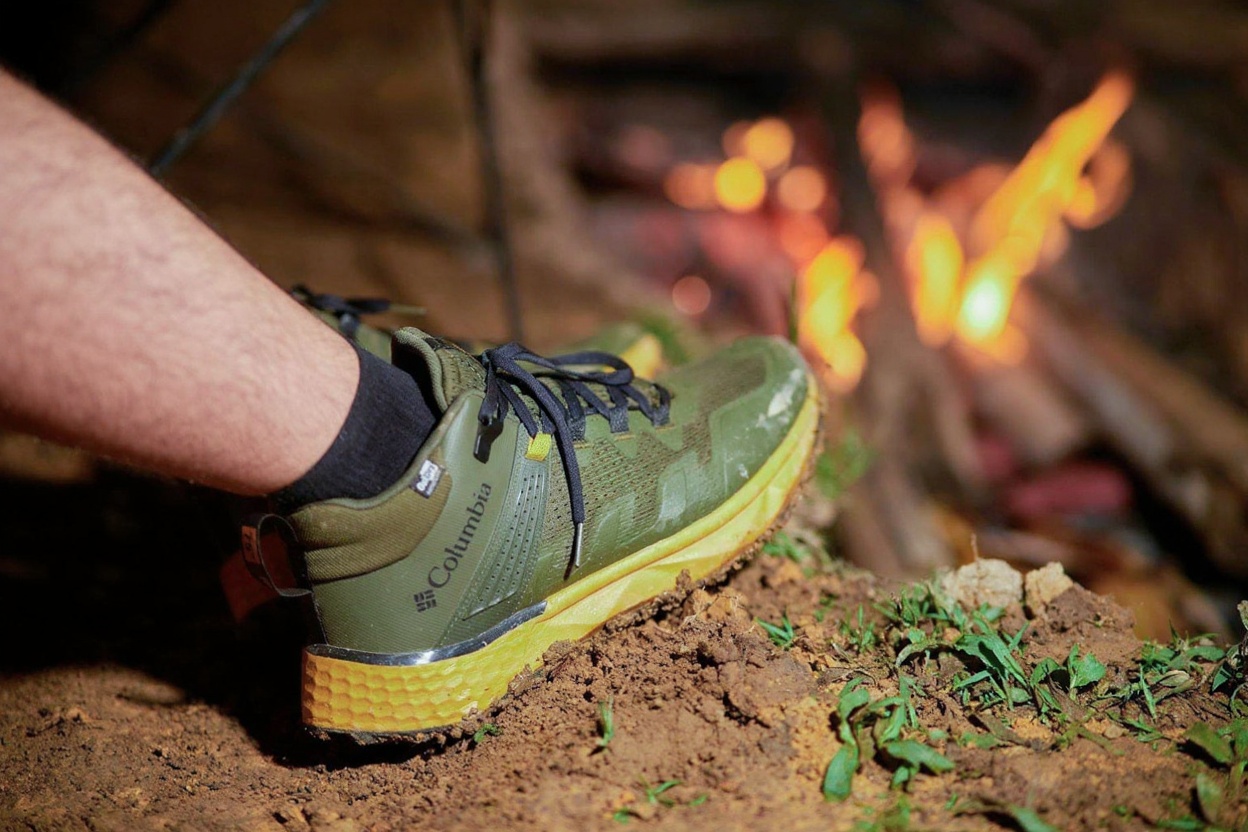
**Footwear:** Trail shoes or light hiking boots for the limestone forest — the tree roots and wet rock require grip that sandals don’t provide. For valley floor walks, sandals are fine. For Hang Kia, closed shoes are necessary for the motorbike ride and optional walking.
Klook has the widest selection for Vietnam and is usually the cheapest. KKday is strong on day trips and local experiences.
or the full-day hill trek. No reliable water sources on the forest trails above the valley. In the valley, homestays and small stalls sell cold water (5,000–10,000 VND per bottle).
**Rain layer:** A packable rain jacket. Even dry-season mornings in the limestone hills carry mist, and afternoon showers arrive quickly in the shoulder months (May, October). A jacket that packs to fist size adds negligible weight and matters when it rains.
**Sun protection:** The valley floor is exposed from 9am onward. Hat, sunscreen, or a long-sleeve light shirt. The forest above provides shade; the valley paddies provide none.
**Cash:** Guides are paid in cash. Bring 500,000 VND in small bills (~$20) for a full-day trek, or 300,000 VND for a half-day. There are no ATMs in Ban Lac — bring from Hanoi or use the ATM in Mai Chau town (8km from the village).
**Insect repellent:** For rainy season forest walking (June–September), DEET-based repellent reduces leech encounters. In the dry season it’s less critical but still useful for evening walks in the valley.
**What not to bring:** Heavy backpacks, trekking poles (unnecessary on these trails), significant cash beyond guide fees and village purchases, or expectations calibrated to Sapa. Mai Chau’s trekking is honest, modest, and accessible. It doesn’t pretend to be anything else.
Jake’s Honest Assessment
I’ll be honest about what I got wrong: I spent two trips in Mai Chau never going above the valley floor. I cycled to Pom Coong, I walked between the paddy fields, and I told people that was the trekking. The third trip I rented a motorbike, drove to Hang Kia on a Sunday morning, and watched the Hmong market with no other tourists present. That was the experience the valley had been withholding because I hadn’t bothered to leave it.
The road to Hang Kia climbs hard for the first 10km after the valley floor ends. I stopped at a roadside stall selling sugarcane juice about two-thirds up and asked the woman running it how long the road went. She pointed at the top of the visible ridge and said something I didn’t catch in Vietnamese. The ridgeline I could see turned out to be a false summit — another 20 minutes of climbing beyond it. The village arrived without warning: a cluster of stone houses, smoke from cookfire, the smell of something frying in oil, women in the blue-black Hmong dress carrying loads from the market stalls. I sat on a wall for an hour and watched the market dissolve. No one tried to sell me anything. That was the whole point.
The hill trek into the limestone is worth doing once — good forest, proper elevation, honest views. But if I had to pick one activity that changed how I understood the Mai Chau area, it’s the Hang Kia morning market. Book a Sunday overnight in Ban Lac specifically to make the market timing work.
For more on what the valley offers beyond trekking, see the full Mai Chau travel guide.
Two things worth sorting before you land: a Vietnam eSIM so you have data the moment you clear customs, and travel insurance — medical costs for uninsured foreigners in Vietnam are significant.
Airalo eSIMs activate instantly. Buy before departure — airport SIM queues in Vietnam can take 30+ minutes.
Frequently Asked Questions
Do I need a guide for trekking in Mai Chau?
For valley floor walks between Ban Lac, Pom Coong, and Van village: no guide needed. The paths are clear and the valley is hard to get lost in. For hill treks into the limestone forest: yes, a guide is strongly recommended. The paths are less marked and the limestone terrain is disorienting in mist. For Hang Kia–Pà Cò by motorbike: no guide, but the road is the only navigation you need. If you’re still planning the journey up, our Mai Chau from Hanoi guide covers transport options and timing to get you to Ban Lac without hassle.
How much does a trekking guide cost in Mai Chau?
Half-day village walks: 150,000–250,000 VND per person (~$6–10). Full-day limestone hill trek: 250,000–400,000 VND per person (~$10–16), usually with lunch included. Book through your homestay rather than approaching independent guides at the village entrance — the homestay-connected guides have more accountability.
Is there trekking from Mai Chau to Pu Luong?
Not as a walking route — the distance is 30–40km through mixed terrain, making it a multi-day expedition beyond standard trekking packages. Most travelers who want both valleys go by motorbike or shared van between them and trek separately in each area. Some operators offer guided 3-day Pu Luong trekking packages starting from Mai Chau.
What is the best trek in Mai Chau?
For a full-day experience: the limestone forest trail above Ban Lac with an experienced local guide. For a half-day and the most culturally rewarding option: a guided village walk to a working White Thai household that still weaves on a traditional loom. For an independent day trip: Hang Kia–Pà Cò by motorbike, timed for Sunday morning market.
Are there leeches on the trails in Mai Chau?
Yes, in the forest above the valley floor during rainy season (roughly June–September). Leeches are present on the limestone trail system when conditions are wet. They’re more nuisance than hazard — pull them off, apply pressure if they bleed. Wearing long socks and closed shoes significantly reduces contact. Dry season trekking (October–April) sees minimal leech activity.
Can I trek from Mai Chau to a waterfall?
There are streams and small waterfalls in the limestone hills above the valley, typically reached via the full-day guided trek. Specific waterfall destinations aren’t commonly marketed as standalone attractions — they’re usually waypoints within the hill trek route. Ask your guide specifically if there’s a waterfall on the planned route; some days it’s part of the itinerary and some days it isn’t, depending on the trail condition.
Is Mai Chau trekking suitable for children?
Valley floor walks and cycling are entirely suitable for children of any age — flat paths, manageable distances, interesting sights. The guided village walks (3–5km) work for children 8+ with basic walking endurance. The full-day limestone hill trek (6–8 hours, 400–600m elevation gain) is appropriate for older teenagers with hiking experience only. Hang Kia by motorbike can include children as passengers.
How does Mai Chau trekking compare to Sapa?
Sapa offers more dramatic elevation, longer established trekking routes, and more diverse minority cultures across a larger area. Mai Chau is lower-key, less commercialized (relatively), and the valley itself is arguably more photogenic. Mai Chau’s walk quality is honestly lower than Sapa’s best routes — but the absence of tour group saturation and the cycling dimension make it a different kind of experience rather than a lesser one. If trekking is your primary reason for the trip, Sapa is the better destination. If you want a mixed cycling-walking-cultural experience without Sapa’s tourist density, Mai Chau wins. If you want both valleys in one trip, our Pu Luong travel guide covers the routes and what to expect on the other side.