Last updated: May 2026
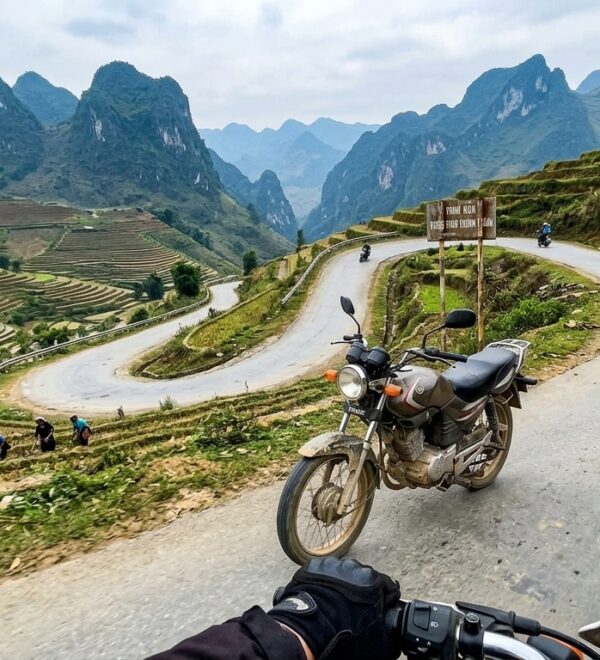
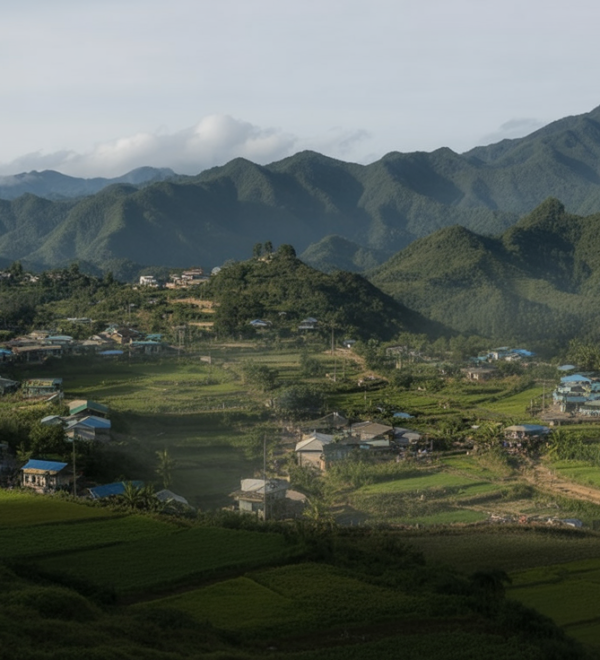
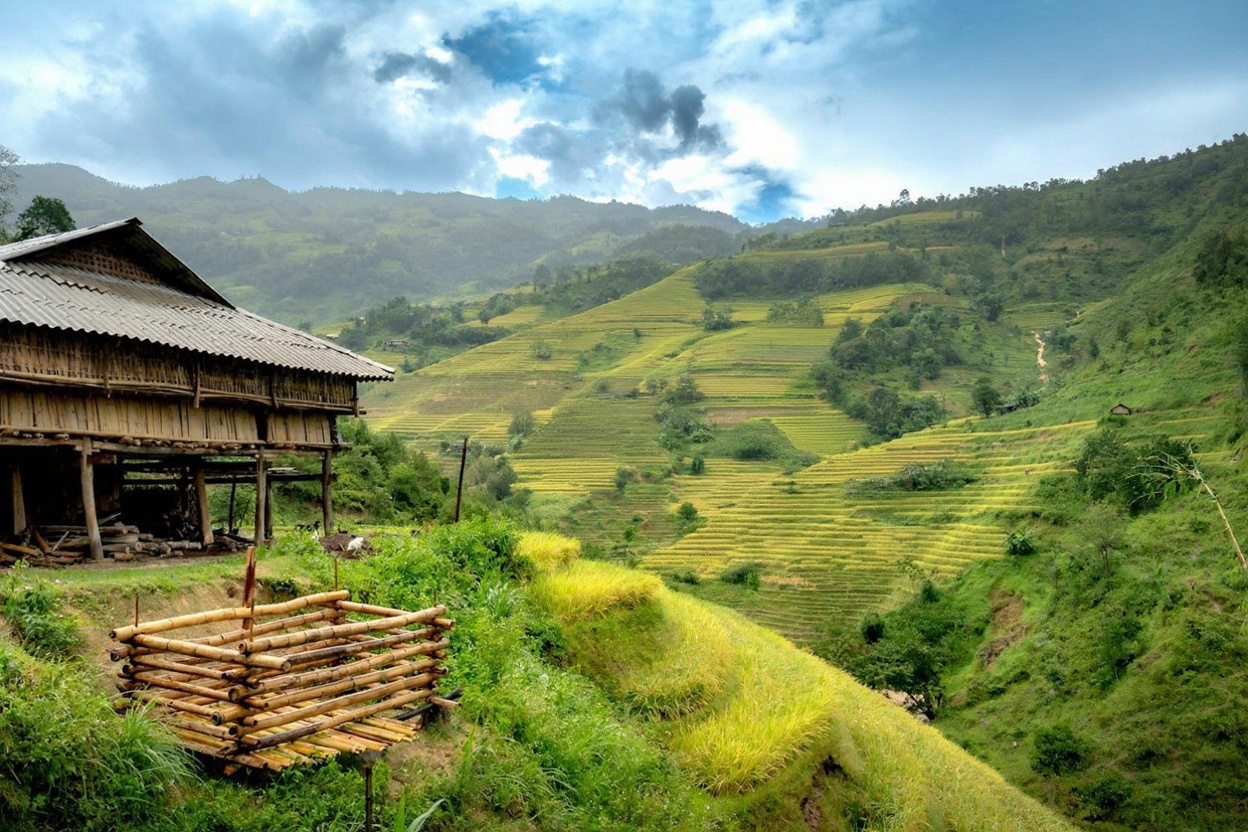
The valley appears suddenly. You’re grinding through karst hills on Highway 6, tucked into second gear behind a truck loaded with lime, and then Thung Khe Pass drops away. Below you: a flat green floor ringed by jagged limestone peaks. Stilted wooden houses on stilts. Someone’s washing strung between bamboo poles, catching the afternoon light. A woman in a white-and-indigo thổ cẩm (toh kahm — traditional woven fabric) crosses a dirt path between paddy fields without looking up.
I didn’t expect to feel it that way. I’d written Mai Chau off as a staged cultural-tourism loop — weaving demonstration, cultural show, bus back to Hanoi by Sunday afternoon. I was wrong, specifically about what time of day matters and which village to be in. This guide corrects that mistake so you don’t repeat it.
How to Get to Mai Chau from Hanoi
The route is Highway 6 west — through Hoa Binh city, then climbing into the hills toward Thung Khe Pass before descending into the valley. Total distance from central Hanoi: about 155km. Without traffic, that’s 3 hours. With traffic leaving Hanoi on a Friday afternoon, add 45–90 minutes.
✓Quick Answer
12Go covers most Vietnam routes — sleeper buses, trains, and island ferries. Compare schedules and book in advance during peak season (Dec–Feb, Jun–Aug).
Hanoi to Mai Chau is 155km, roughly 3 hours by car or bus on Highway 6. Buses depart from My Dinh station (80,000–100,000 VND, ~$3–4) every 30–60 minutes in the morning. Limousine vans run 180,000–250,000 VND per seat (~$7–10) with hotel pickup.
**By bus (cheapest):** From Hanoi’s My Dinh Bus Station (Bến xe Mỹ Đình), take any bus heading to Hoa Binh or Mai Chau. Buses run approximately every 30–60 minutes from 6am. Cost: 80,000–100,000 VND (~$3–4). Journey time: 3–3.5 hours depending on traffic. Ask the driver to drop you at Mai Chau town (thị trấn Mai Châu), then take a xe ôm (say: say-ohm — motorbike taxi) or rent a bike to Ban Lac village (8km, 50,000–70,000 VND by motorbike).
**By limousine van (easiest):** Several operators run 16-seater vans from central Hanoi hotels to Mai Chau. Price: 180,000–250,000 VND per seat (~$7–10), with hotel pickup. Book through your accommodation the day before. Journey time: 2.5–3 hours.
**By motorbike (best experience):** The ride on Highway 6 through Hoa Binh Province is legitimately scenic. The mountain stretch between Hoa Binh city and Thung Khe Pass has views worth stopping for. Allow 3.5–4.5 hours including one stop. Park at your homestay in Ban Lac.
**By private car:** Book through any Hanoi tour agency or Grab. Cost: 1,200,000–1,800,000 VND (~$45–70) one-way for the vehicle. Good for groups of 3–4. Most drivers will wait or arrange a return pickup.
**Getting around once there:** Rent a bicycle at your homestay immediately. Flat valley cycling is the main activity and paths don’t accommodate cars. Bike rental: 50,000–80,000 VND/day (~$2–3). The valley floor is easy cycling — no elevation, good light, dirt paths alongside the paddies.
The Valley Villages — Where to Base Yourself
Mai Chau valley has several White Thai (Thái Trắng, tye trung) villages. They’re connected by the same flat cycling paths, but they’re not the same experience. Which one you pick matters more than people think.
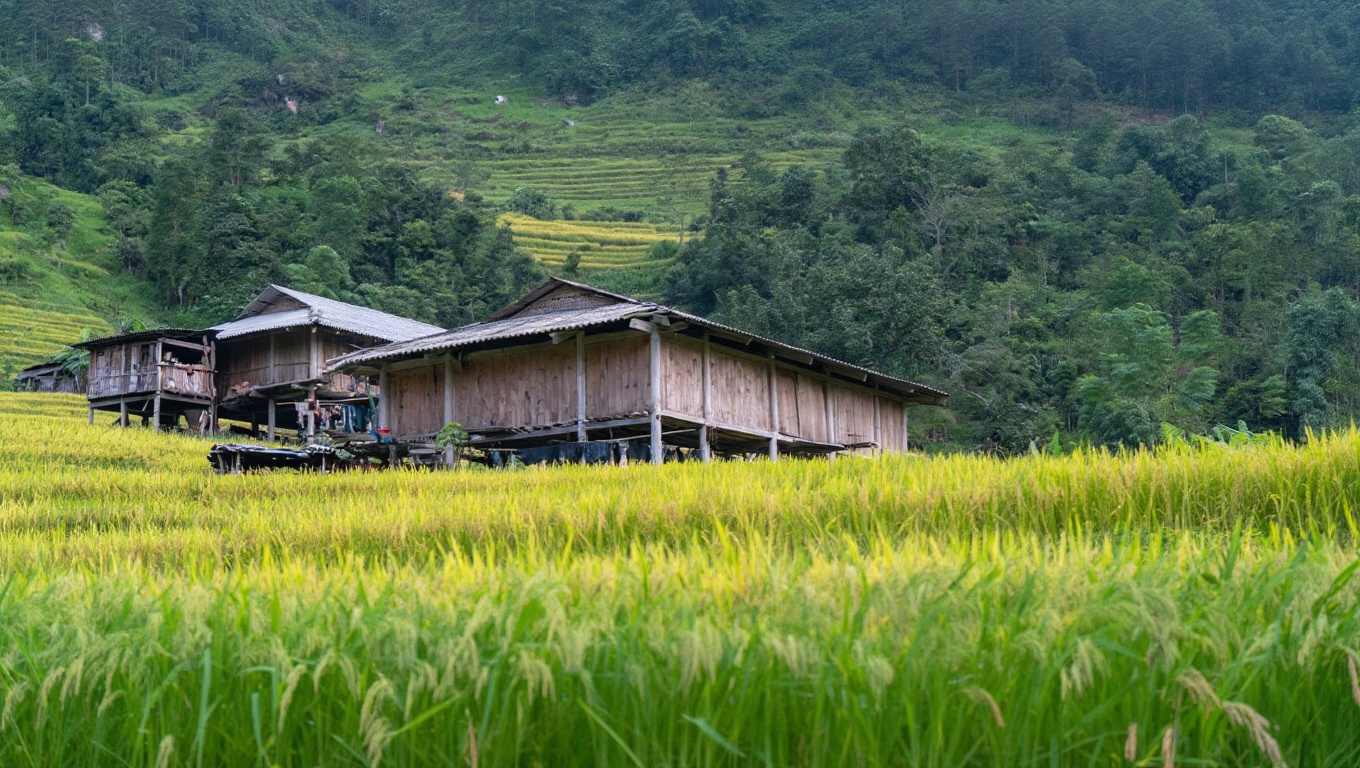
**Bản Lác (Ban Lac)** is the main village. Most homestays, most tourists, most weaving stalls, and the nightly cultural show. It’s organized and easy. The stilted houses around the edge of the village are genuine — families actually live in them. The central area near the weaving stalls gets overrun on weekend afternoons. If this is your first visit to a minority village in the north, start here — the infrastructure makes the experience accessible.
**Bản Pom Coong (Pom Coong)** is 1.5km east of Ban Lac, reachable by bike in 10 minutes on the valley path. It’s quieter. The homestays are fewer but the views across the paddy from the raised floors are arguably better. No cultural show most nights, which means your evening is either a quiet dinner under the house with the family or a bike ride to Ban Lac for the show, then back.
**Bản Văn (Van village)** is even further — 5km from Ban Lac — and sees almost no independent tourists. Getting there requires a bike and some navigation. No English spoken. Worth the effort if you’re confident on a bike and want to see what the valley looked like fifteen years ago.
→Who It’s For
Ban Lac works for first-timers, couples, and families who want a structured introduction to White Thai culture. Pom Coong is for independent travelers who want to cycle and be left alone. Van village is for experienced Southeast Asia travelers who don’t mind getting a bit lost.
What to Do in Mai Chau (The Honest List)
The honest list is short. That’s not a criticism — it’s the point. Mai Chau is for slowing down, not ticking attractions. But there are a few specific things that actually earn their reputation.
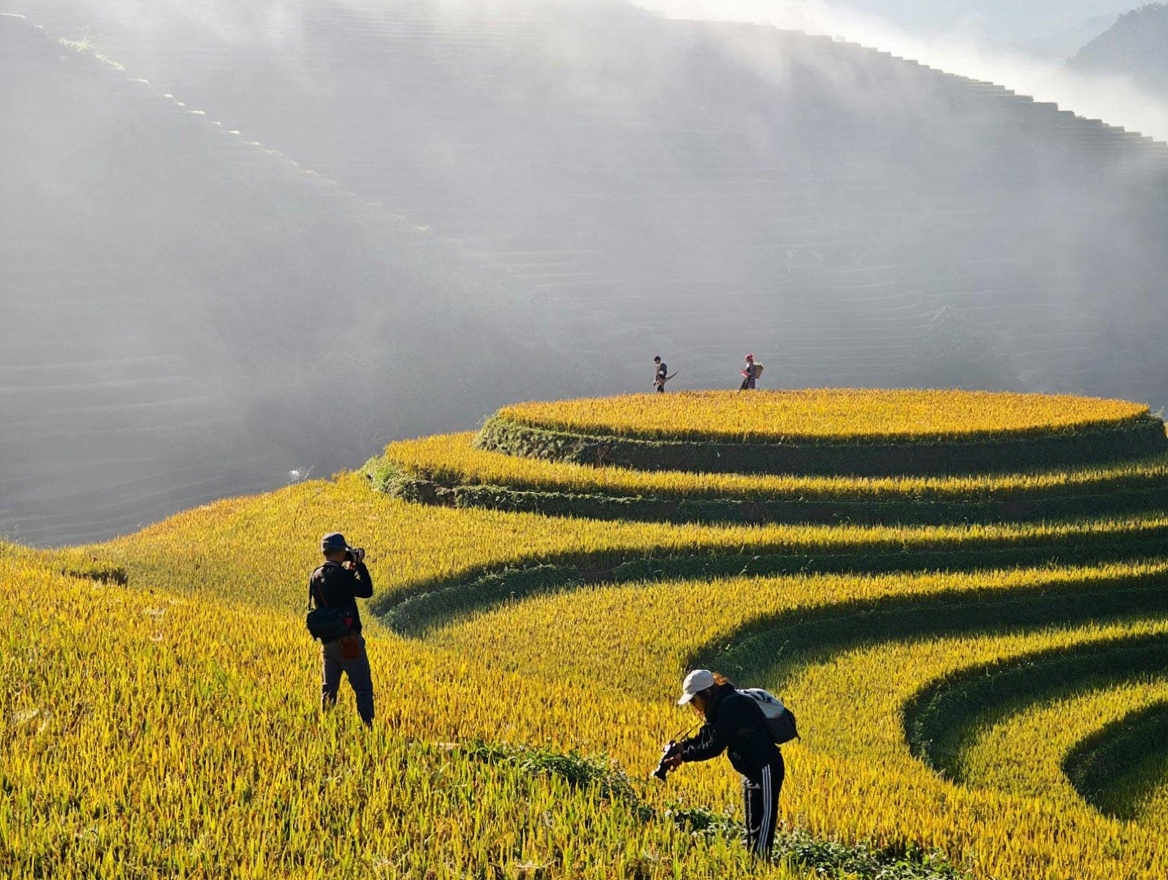
**Cycle the valley at dawn.** Get on a bike at 6:30–7am. The coaches from Hanoi don’t arrive until 9am at the earliest. For those 90 minutes, the paths alongside the paddy fields are empty except for farmers and water buffalo. The light is low and golden. The karst peaks have morning mist around them. This is the best version of Mai Chau. Do not sleep through it.
Klook has the widest selection for Vietnam and is usually the cheapest. KKday is strong on day trips and local experiences.
orms traditional White Thai dances and music in a large stilted house for tourists. It costs 50,000–80,000 VND (~$2–3) per person, included in some homestay packages. It’s somewhat staged — but the music is genuinely played on traditional instruments, and the costumes are accurate to White Thai textile traditions. Worth one evening.
**White Thai weaving workshops.** Several families in Ban Lac and Pom Coong still weave on traditional backstrap looms. The workshops are real — you can watch the actual process of creating thổ cẩm fabric. The souvenir stalls, however, are largely machine-made items from Hanoi suppliers. If you want handmade fabric, ask specifically which items are handwoven (dệt tay, det tay) and buy directly from the weaver, not the stall.
**Mo Luong Cave (Hang Mo Luong).** About 8km from Mai Chau town toward Hang Kia. A short cave system with some interesting formations — 30–45 minutes in and out. Not Phong Nha level, but worth it if you have a motorbike and a free afternoon. Entrance: 30,000–50,000 VND (~$1–2). Bring a torch.
**Hang Kia–Pà Cò.** Two H’Mong villages 25km beyond Ban Lac at 1,000m+ elevation. Ethnically and culturally distinct from the White Thai in the valley — Hmong women wear heavily embroidered dark indigo skirts, the architecture is stone rather than stilted wood. The road climbs steeply. Motorbike required. Allow a full day. Sundays have a morning market.
↗Insider Tip
The single best activity in Mai Chau costs nothing: wake up at 6am, take your rental bike north on the main valley path (away from Ban Lac), and ride until you hit a village you haven’t heard of. Turn around when you feel like it. Nobody will bother you.
Where to Stay in Mai Chau
Most people stay in a stilted house homestay. This is correct. The traditional homestay experience — sleeping on a mat on a raised wooden floor, hearing the village quiet down at night, waking to roosters and the smell of woodsmoke — is why you came here. Don’t default to the concrete guesthouse in Mai Chau town.
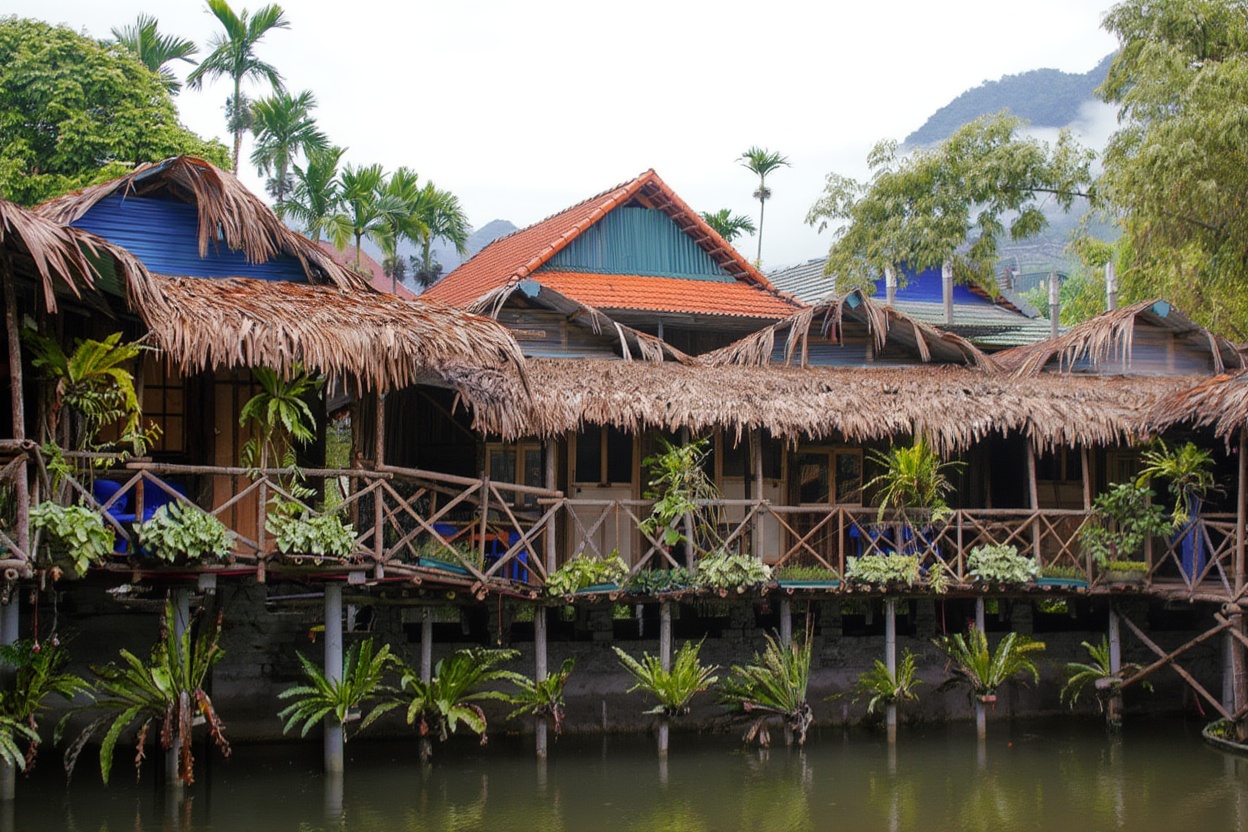
**Budget homestays** in Ban Lac and Pom Coong: 150,000–350,000 VND per person (~$6–14), typically including dinner and breakfast cooked by the family. Conditions vary — some have shared bathrooms and concrete floors beneath the raised section; others are more traditional. Ask explicitly if bathroom facilities are on-site.
; drive from Ban Lac, usually on slightly elevated ground with valley views. Prices start at 1,500,000–2,500,000 VND per night (~$60–100). Infinity pool, restaurant, tour packages. It’s a different category of trip — not wrong, just not the village experience. For those wanting to push further on foot, see the Mai Chau trekking guide for routes into the Hang Kia highlands.
ℹKnow Before You Go
Stilted house floors are thin and carry sound. Other guests, the family getting up at 5am, livestock below the house — all audible. Light sleepers should bring earplugs. Also: nights in the valley are genuinely cool October through March. Pack a layer even if Hanoi was hot when you left.
What to Eat and Drink in Mai Chau
White Thai food in the north is heavily wood-fire and steam based. At a proper homestay dinner, you’ll be sitting cross-legged on the floor around low lacquered tables with dishes that have been prepared over the same wood-burning stove the family uses every day.
**Cơm lam** (cum lahm) — sticky rice cooked inside a bamboo tube over fire. The bamboo imparts a faint grassy smoke. Eaten by pulling the rice cylinder out and breaking off chunks. Found everywhere in the valley; 15,000–25,000 VND per tube at roadside stalls.
**Thịt trâu gác bếp** (tit trow gahk bep) — smoked buffalo meat dried above the kitchen fire for weeks. Dense, chewy, heavily salted, with a smoke flavor that builds. Found in most homestay dinners and sold in vacuum packs as a souvenir.
**Rượu cần** (roo-ou kun) — communal rice wine drunk through long bamboo straws from a clay pot. The pot sits in the center of the table. Everyone drinks, the pot gets refilled periodically. Alcohol content varies wildly (roughly 15–25% ABV by feel). The ritual is the point as much as the drink.
**Canh chua** — a sour fish soup with river herbs. The sourness comes from local fermented vegetables rather than tamarind (unlike southern versions). Best at homestay dinners, not restaurants.
Avoid eating at the restaurants in Mai Chau town if you’re staying in Ban Lac — the food is identical to a mid-range Hanoi tourist restaurant and costs twice as much for half the atmosphere.
When to Visit Mai Chau
The valley has two genuinely distinct seasons and several reasons to choose one over the other depending on what you want to photograph and how you want to feel.
**September–October (peak photography):** The rice turns from green to deep gold in late September. By early October, harvesting is underway — you’ll see farmers in conical hats cutting by hand, water buffalo loading bundles, and the paddies in that specific late-afternoon honey light. Weekend crowds are at their worst during this period, but arrive Thursday or Friday and you’ll have the valley mostly to yourself.
**April–May:** The seedlings go in and the valley is a grid of vivid green against the grey limestone. Less dramatic than harvest but arguably more peaceful. Temperatures are pleasant — 22–28°C in the valley. Rain starts picking up from May onward but usually falls at night.
**November–March:** Quiet season. Cooler (can drop to 10–12°C at night in December–January). Morning mist is spectacular but you’ll want a jacket for the cycling. Fewer tourists, better homestay rates. Flower Festival at nearby Hang Kia in November if you time it right.
**June–August:** Avoid if possible. Heavy rain turns the valley paths muddy, temperatures are 30–35°C by midday, and the rice is mid-cycle green without the gold. Also peak domestic tourism season — weekends especially.
⚠Real Talk
Mai Chau on a weekend is a different place from Mai Chau on a Tuesday. Hanoi tour buses do a day-trip circuit that includes lunch and a cultural show, arriving around 9am and leaving by 3pm. If you’re there during those hours on Saturday or Sunday, the paths near Ban Lac resemble a foot traffic jam. Go weekday, arrive Friday evening, leave Sunday morning before the coaches.
How to Plan Your Time: 1-Night vs 2-Night Itinerary
The question most people get wrong is not how long to spend but when to arrive. Mai Chau rewards early arrivals and punishes late ones. An 8am arrival on a Wednesday beats a 2pm arrival on Friday every time, regardless of how many nights you’re staying.
**1-Night Itinerary (minimum viable trip)**
Arrive by mid-afternoon. Drop bags at homestay, rent a bike immediately. Cycle 30–45 minutes in whatever direction feels open — the paths north of Ban Lac toward Van village are good. Return for the evening cultural show in Ban Lac (even from Pom Coong, it’s 10 minutes by bike). Dinner at the homestay — take whatever the family is serving rather than ordering off a menu. The shared meal is half the experience.
Next morning: 6:30am, back on the bike. This is the session that justifies the whole trip. An hour of cycling before breakfast while the valley is in low light and the tour buses are still in Hanoi. Breakfast at the homestay, pack out by 10am.
**2-Night Itinerary (recommended)**
Day 1 same as above. On Day 2, take a motorbike or bike further: Mo Luong Cave in the morning (8km, 30–45 minutes in the cave), then south along the valley toward the quieter agricultural areas in the afternoon. Some homestays can arrange a guided walk to a rubber or tea garden. Evening: skip the cultural show the second night and have dinner with the family instead — by night two, if you’ve been friendly and curious, the dynamic shifts.
Day 3: early morning cycle again (it’s worth it twice), then depart for Hanoi by 9am or continue to Pu Luong via the connecting road.
→Who It’s For
1 night works for travelers with limited time who treat Mai Chau as a break from the Hanoi–Ha Long Bay–Sa Pa tourist triangle. 2 nights is for anyone interested in the culture and cycling more than the logistics. Anything beyond 2 nights requires genuinely enjoying being still — the valley doesn’t have enough activities to fill a third day for most people.
Pu Luong — The Next Valley Over
Thirty kilometers northeast of Mai Chau, past a ridge of limestone hills, is Pu Luong Nature Reserve — a wilder, terrace-rice valley with Muong and Thai minority villages, waterfalls, and almost no day-trippers. If Mai Chau is the accessible introduction, Pu Luong is the graduate course.
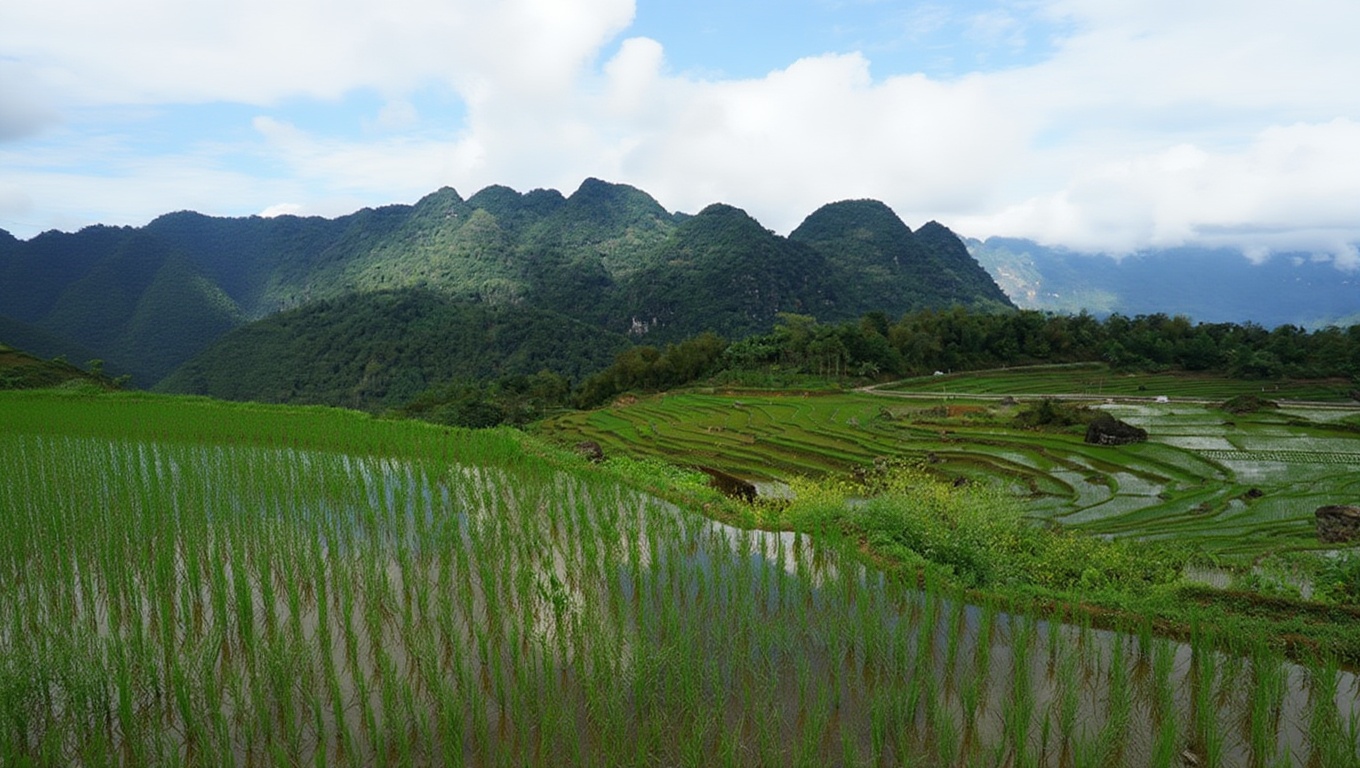
The road connecting them has improved significantly in recent years — most guesthouses in either valley can arrange transport between the two (200,000–350,000 VND by shared van or motorbike taxi). Combining 1 night in Mai Chau and 2 nights in Pu Luong is a logical and efficient circuit from Hanoi.
Pu Luong has its own article — see our Pu Luong travel guide for the full picture on villages, trekking, and how to get there.
Jake’s Honest Take on Mai Chau
The confession: I spent my first trip to Mai Chau entirely in Ban Lac with a tour group. We arrived Saturday at 10am, ate a set lunch, watched a cultural show, slept in the premium homestay, and left before noon Sunday. I thought I’d seen Mai Chau. I hadn’t.
The second trip was a Tuesday in October. I rode a rented motorbike from Hanoi, arrived at 8:30am before the buses, cycled to Pom Coong and Van village before lunch, and spent the afternoon in a hammock under a stilted house listening to someone weave. That version of the valley — quiet, unhurried, actually inhabited — is the one worth making the trip for. The access decision matters more than any individual activity in the valley.
For more on getting around northern Vietnam, see the day trips from Hanoi guide — Mai Chau is one of several overnight circuits worth planning around.
Two things worth sorting before you land: a Vietnam eSIM so you have data the moment you clear customs, and travel insurance — medical costs for uninsured foreigners in Vietnam are significant.
Airalo eSIMs activate instantly. Buy before departure — airport SIM queues in Vietnam can take 30+ minutes.
Frequently Asked Questions
How do I get from Hanoi to Mai Chau?
Bus from My Dinh station (80,000–100,000 VND, ~3.5 hours), limousine van with hotel pickup (180,000–250,000 VND, ~2.5–3 hours), or motorbike on Highway 6 (~3.5–4.5 hours including stops). Private car runs 1,200,000–1,800,000 VND for the vehicle. Most people use the limousine van for convenience.
How long should I spend in Mai Chau?
One night is the minimum and works well — arrive mid-afternoon, cycle at dawn, leave after breakfast. Two nights allows time for a motorbike day to Hang Kia–Pà Cò or a bike ride to Van village. Three nights starts to feel slow unless you’re also combining with Pu Luong.
Is Mai Chau worth visiting?
Yes, if you go weekday and cycle early. The valley landscape is genuinely beautiful, the homestay experience is authentic enough, and it’s the most accessible northern ethnic minority destination from Hanoi. Don’t expect a hidden-village experience — it’s developed — but it’s developed in ways that mostly preserve what makes it worth visiting.
What is the best village to stay in Mai Chau?
Ban Lac for first-timers — most facilities, cultural show, easy logistics. Pom Coong for a quieter experience — same stilted-house setting, fewer tourists, 10 minutes by bike from Ban Lac’s show if you want it. Both are White Thai villages. Van village is the most authentic but has minimal tourist infrastructure.
What should I bring to Mai Chau?
A jacket (mornings and evenings are cool October–March), cash (no ATMs in Ban Lac — use the ATM in Mai Chau town or bring from Hanoi), comfortable shoes for cycling and walking, insect repellent for evening. If you’re cycling Van village or Hang Kia, bring a full water bottle and download an offline map.
Can I do Mai Chau as a day trip from Hanoi?
Technically yes — buses run both directions and the round trip is feasible in one long day. But it’s a waste of the valley’s main appeal. The best of Mai Chau (dawn cycling, evening family dinner, morning light over the paddy) requires staying overnight. The day-trip version is exactly what makes the place feel overrun.
What is Mai Chau famous for?
White Thai ethnic minority culture — particularly the traditional woven textiles (thổ cẩm), stilted-house architecture, and the nightly folk dance performances. The valley landscape itself — flat green paddy fields ringed by limestone peaks — is the other main draw. It’s often combined with Pu Luong Nature Reserve for a longer northern Vietnam hill-tribe circuit.
Is there an ATM in Mai Chau?
Yes, in Mai Chau town (thị trấn Mai Châu), about 8km from Ban Lac village. There are no ATMs in the villages themselves. Bring enough cash from Hanoi to cover your entire stay — homestay, bike rental, cultural show, and food. A 2-night budget trip runs roughly 600,000–900,000 VND (~$24–35) in total village costs. For the broader regional picture, our northern Vietnam guide covers how Mai Chau fits into a longer north-focused itinerary.