Updated: May 2026
The archipelago has 16 islands. Most travellers never leave the main one.
That’s not necessarily a mistake — Con Son Island has enough for 3–4 days without a boat. But if you want to understand why divers and marine biologists keep coming back to Con Dao, you need to get on the water and go further out.
This guide covers every beach worth visiting, how to reach them, what they’re actually like in person, and when to come.
The Quick Answer: Which Beach Is Best?
Depends entirely on what you want. Here’s the honest version:
✓Quick Answer
Bai Dat Doc for photos and swimming, Bai Nhat for convenience, Lo Voi for solitude, Hon Bay Canh outer island for the best snorkelling and sand in the archipelago. All require motorbike or boat — there’s no beach within walking distance that’s worth prioritising over the others.
Bai Nhat — The Beach You’ll Actually Use Most
Walk 1.5 kilometres south from Con Son town and you hit Bai Nhat (say: bye nyut). It’s the closest thing Con Dao has to a neighbourhood beach — the one you walk to in the early morning before the heat arrives, or late afternoon when the light goes orange and the water looks nothing like it did at noon. For full trip planning beyond the beaches, our Con Dao travel guide covers getting there, where to stay, and how long to spend.
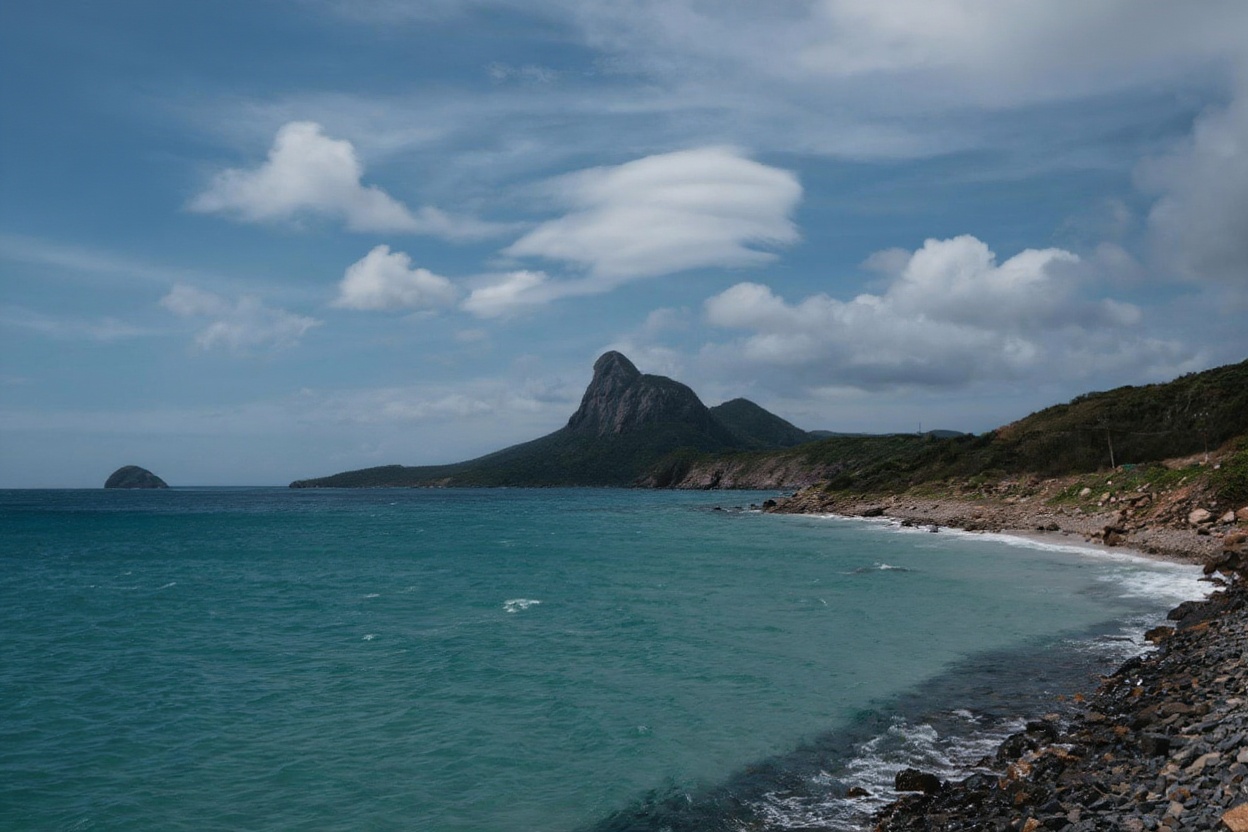
The beach curves around a small bay backed by forested hills. The water is shallow for the first 20 metres, which makes it the best spot for non-swimmers and families. The sand is pale and coarse rather than fine — not the powdery stuff of Phu Quoc, but clean and comfortable.
What changes here is the crowd pattern. By Vietnamese standards, Bai Nhat stays remarkably quiet. On a weekday in shoulder season, you might share it with six people. On a holiday weekend, maybe forty. Con Dao never gets the mass tourism numbers of more accessible beaches, which is precisely why its beaches feel like beaches should.
The snorkelling off Bai Nhat is decent but not remarkable — visibility 4–8 metres depending on conditions, scattered coral, small reef fish. If you want the real stuff, you need a boat.
ℹKnow Before You Go
There are no beach bars, no sunbed rentals, no vendors of any kind at Bai Nhat. Bring water, sunscreen, and everything you need. The nearest place to eat is back in Con Son town.
→Who It’s For
Travellers staying in Con Son town who want a morning or evening swim without organising transport. Not for people who prioritise snorkelling quality — the outer islands are far better for that.
Bai Dat Doc — The Postcard Shot
Three kilometres south of Con Son, Bai Dat Doc (say: bye dat dok) is the beach in every photograph of Con Dao. And for once, the photographs are honest — it really does look like that.
Two kilometres of pale sand, a line of casuarina trees along the back, water that goes from pale turquoise at the shore to deep blue at the horizon. The Six Senses resort sits at the southern end, discreet enough that you barely notice it from the main beach section. There are no vendors, no beach chairs for hire, no speakers playing tinny pop. Just sand and water and the sound of the South China Sea moving against the shore.
The water is clearer than Bai Nhat and deeper faster, which makes it better for longer swims. Snorkelling is possible off the rocks at the southern end — 6–12 metre visibility in calm conditions — but the best coral is still on the outer islands.
I’ve been to Bai Dat Doc in March, April, and once in November. April hit the sweet spot: the light was perfect until around 10am, the water was flat and clear, and I had the main section of the beach to myself for almost two hours. By noon, three other groups had arrived. Total beach population: maybe fifteen people.
For perspective: that’s about as busy as it gets.
⚠Real Talk
Bai Dat Doc gets direct sun from around 9am to 4pm with no shade on the sand itself. In June–August, you’re looking at 33–36°C with full sun exposure. Bring a tent-style beach shelter or go early and leave by 10am. The afternoon heat on this beach is serious.
Getting here: 3km south of Con Son town on the main road, well-signposted. Motorbike is the standard approach — 150,000–200,000 VND (~$6–8) per day rental from Con Son town, multiple shops on the main street. The road is sealed and straightforward.
Lo Voi Beach — When You Want to Disappear
Lo Voi sits on the southwestern coast, about 6 kilometres from Con Son town by road. The road is sealed for the first four kilometres, then becomes a dirt track through national park forest for the final two. In the dry season, any motorbike handles it without trouble. In October–November, parts of the track get muddy.
The beach is narrower than Bai Dat Doc and the surrounding forest comes closer to the water’s edge. There are boulders at both ends that create small sheltered pools good for floating rather than swimming. On three separate visits, I’ve never seen more than two other people here at the same time. Once, I had it entirely to myself for four hours.
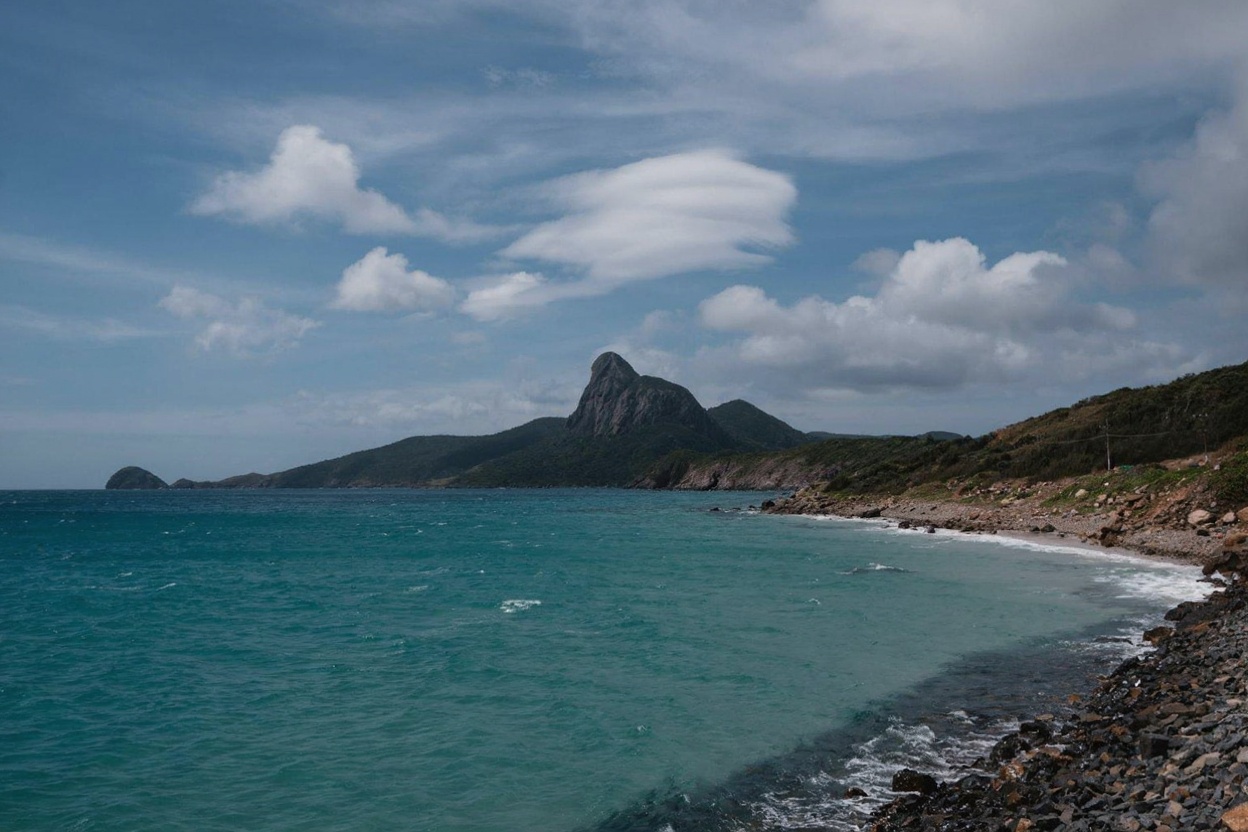
The solitude has a practical reason: it requires effort. The dirt track section puts off people without motorbike experience, and there’s genuinely nothing here in terms of facilities — no toilet, no shade structure, nothing. You park at the end of the track, walk down a short path through trees, and arrive at a beach that looks like someone forgot to build infrastructure on it.
That is, in fact, the entire point.
↗Insider Tip
Lo Voi faces west, which means afternoon light. If you go for sunset, plan to leave before full dark — the dirt track section is significantly harder to navigate without good light. Bring a head torch as backup.
→Who It’s For
Motorbike-comfortable travellers who genuinely want solitude over amenities. Not suitable for first-time motorbike riders — the track requires confidence. Not worth it if you need facilities.
Dam Trau Beach — Inside the National Park
Dam Trau is 8 kilometres northeast of Con Son town, inside Con Dao National Park territory. It’s longer than Bai Nhat with a slightly different character — the surrounding forest is denser, the bay is more sheltered, and there’s a small lagoon at the northern end that becomes a swimming pool during low tide.
The road from Con Son town passes through the national park entrance area and follows the coast. It’s sealed the entire way — an easier ride than Lo Voi. The park doesn’t charge an entry fee just to access the beach, but if you’re doing any hiking in the park itself, register at the national park office in Con Son town beforehand.
The water at Dam Trau is calmer than Bai Dat Doc, which makes it better for snorkelling in choppy conditions. Visibility varies: 5–10 metres on good days, less when the wind picks up from the northeast. There’s scattered coral around the rock formations at both ends of the bay.
I went on a Tuesday in April and found two Vietnamese families already set up. It felt like a picnic more than a beach day — they’d brought a full gas cooker, several kilograms of seafood, and enough ice to survive a siege. The smell of grilling shellfish drifted across the sand all afternoon. Nobody seemed to mind that I was eating a sad sandwich about thirty metres away.
ℹKnow Before You Go
Dam Trau has a small food/drink stall that operates irregular hours — don’t count on it. The standard advice applies: bring your own water and snacks.
The Outer Islands — Where the Real Beaches Are
This is what most first-time visitors miss. The 15 uninhabited islands around Con Son aren’t just scenery from the ferry — they have beaches that make everything on the main island look like a rehearsal.
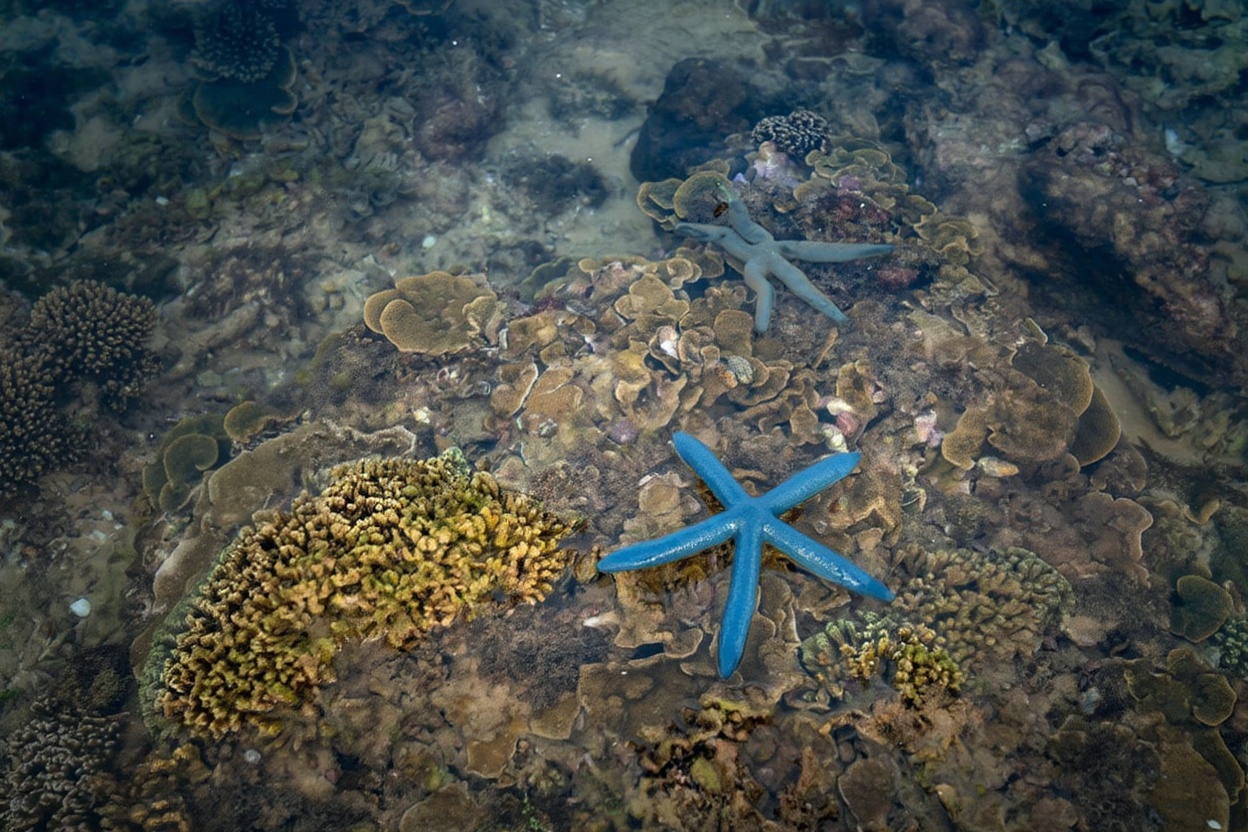
The standout is Hon Bay Canh (say: hon bay kahn), 15 kilometres east of Con Son. The beaches here have finer sand than anything on the main island, the water is shallower and clearer, and the coral reef in the bay holds more diversity than anywhere accessible from shore. Sea turtle nesting season runs June–September on these beaches — if you visit during this window, the park runs organised night watches (more on that below).
Other islands worth noting:
- Hon Tai — Smaller and quieter than Hon Bay Canh. Good snorkelling on the leeward side. Sea turtles nest here too.
- Hon Cau — Known for the best coral in the archipelago, but access requires a diving or snorkelling tour rather than a casual day trip. The reef slopes start at 5 metres and go deep.
- Hon Tre Lon — Beach-focused rather than snorkelling-focused. Fine sand, shallow water, occasionally included in boat tour circuits.
How to get to the outer islands: Book through Con Dao National Park office or through your accommodation. Prices range from 400,000–700,000 VND (~$16–27) per person for a group day trip, depending on which islands are included and whether the price covers snorkelling gear and lunch. Private boat charters run 2,000,000–4,000,000 VND (~$78–156) for the boat, not per person — worth it if you have a group of 4–6.
↗Insider Tip
The national park office on Vo Thi Sau street in Con Son town runs official outer island tours. Booking through them is cheaper than through hotels and the money stays local. Show up in person — their phone response is unreliable.
Sea Turtle Nesting: The Beach Experience Worth Planning Around
Con Dao National Park manages one of the most significant sea turtle nesting programs in Southeast Asia. Green turtles (Chelonia mydas) nest on the beaches of Hon Bay Canh and Hon Tai between June and September, with peak activity in July–August.
The park runs night watches on the nesting beaches from June to September. You register at the national park office in Con Son, pay the park entry fee (40,000 VND / ~$1.50) plus a guide fee (150,000–300,000 VND / ~$6–12 depending on group size), then take a boat to the nesting island at around 8–9pm and wait.
Klook has the widest selection for Vietnam and is usually the cheapest. KKday is strong on day trips and local experiences.
g is unpredictable. Most groups wait 2–4 hours. Some wait all night and see nothing — conditions, tide, and random chance all play a role. The guides know the signs: fresh tracks, disturbed sand at the waterline, the particular stillness that means something large is moving up the beach in the dark.
I went in August. We sat on the edge of the tree line for three hours, no torches, no phone screens, the only light coming from the water. The guide touched my arm at around midnight. A metre from the waterline, something the size of a dining table was hauling itself out of the South China Sea.
You don’t talk. You don’t move much. You watch a green turtle lay 80–120 eggs in the sand while the island makes exactly the sounds islands make at midnight when nobody else is there.
Book 3–5 days ahead during peak season — the park limits group sizes to protect the turtles. If you’re visiting specifically for turtle watching, build flexibility into your Con Dao schedule.
→Who It’s For
Anyone who can handle 2–4 hours of patient waiting in the dark with no guarantee of a sighting. Not recommended for young children. Genuinely worth planning a Con Dao trip around if you visit June–September. Worth asking about regardless of season — occasional off-season nesting does occur.
Snorkelling and Diving: What You’ll Actually See
Con Dao’s marine park protects around 14,000 hectares of ocean. The enforced no-fishing zones around the outer islands have allowed coral to recover significantly since the 1990s — what you see here is measurably better than most accessible reef in southern Vietnam.
For snorkellers, the outer islands are the target. Hon Bay Canh’s bay has coral heads starting at 1–2 metres, reasonable fish diversity, and occasional sea turtle sightings above the reef. Visibility runs 8–15 metres on clear days.
For divers, Hon Cau is the top site — wall diving from 5–25+ metres with strong fish populations. Dive shops in Con Son run 2-dive day trips for 700,000–1,200,000 VND (~$27–47) per person including equipment. The main operator is Con Dao Dive Center, based near Con Son pier.
Current conditions matter here more than most places. The park is fully exposed to South China Sea swell during the northeast monsoon (October–January). Diving is possible during this window but conditions can be rough and some dive sites become inaccessible. February–May is the most consistent window — water flat, visibility best, temperatures around 27–29°C.
⚠Real Talk
Con Dao’s dive infrastructure is limited compared to Nha Trang or Phu Quoc. There are 1–2 operators in town, not 15. Book ahead by email or phone. If they’re fully booked or conditions are bad, you don’t have alternatives. This is part of what makes Con Dao Con Dao — but arrive expecting it.
When to Go: Con Dao Beach Seasons
Con Dao sits off the southern tip of Vietnam, which gives it a different weather pattern from the central coast. The island doesn’t get the severe typhoon exposure of Da Nang or Hue, but it does have two distinct seasons that affect beach quality significantly.
February to May is the sweet spot. Dry season, consistent sunshine, flat water, and snorkelling visibility at its peak. The island is accessible and the outer island trips run reliably. This is when I’d plan a dedicated beach trip to Con Dao.
June to September brings heat, occasional afternoon rain, and sea turtle nesting season. If the turtles are the point, June–September is when you come. Beach conditions are generally still good between rain events. The outer islands run weather-dependent — calm mornings often work fine even in this window.
October to January sees the northeast monsoon with sustained swell and regular rain. Some travellers visit and have perfectly good beach days — weather is genuinely variable. But outer island trips frequently cancel, diving conditions deteriorate, and the risk of a washout is real. I’d choose a different island in this window unless you have flexible dates and low expectations.
Getting Around to the Beaches
Con Son Island is small — 20 kilometres long, 10 wide — and the main road that connects town to the key beaches is sealed and straightforward. The entire circuit can be done in under two hours by motorbike without stopping.
Motorbike rental: 150,000–200,000 VND (~$6–8) per day from multiple shops on the main street in Con Son town. Semi-automatics (step-through scooters) are the norm. Fuel up before heading south — there’s one petrol station near town and nothing further out. Most shops open by 7am.
12Go covers most Vietnam routes — sleeper buses, trains, and island ferries. Compare schedules and book in advance during peak season (Dec–Feb, Jun–Aug).
Bicycle: Some guesthouses offer bicycle hire (50,000–80,000 VND / ~$2–3 per day). Bai Nhat is achievable by bicycle. Bai Dat Doc is doable in the morning before the heat builds. Lo Voi and Dam Trau are not realistic by bicycle — too far and too exposed to midday sun.
Taxis and motorbike taxis: Available in Con Son town. A taxi to Bai Dat Doc runs around 80,000–120,000 VND (~$3–5) one-way. Not practical for beach days where you want to stay several hours — few drivers will wait. Better to rent a motorbike.
For outer islands: the national park organises boat trips from Con Son pier. Departure times vary by season and tide — confirm the night before with your accommodation or the park office directly.
What I Got Wrong on the First Trip
I spent my first Con Dao visit almost entirely on Bai Nhat. It’s the closest beach to town, the hotel recommended it, and I told myself I’d do the outer islands “tomorrow.” On day three, the weather turned. The boat trip to Hon Bay Canh cancelled. I left Con Dao having snorkelled in 4-metre visibility when there was 15-metre clarity 45 minutes away by boat.
The lesson: book the outer island trip on day one. Not day two, not “let’s see how the weather looks.” Day one. Weather can change on 24-hour notice and the boat trips need calm conditions. Every day you wait is a day you might lose it.
This is also why I now suggest spending your first afternoon in Con Dao at the national park office rather than at the beach. Book the outer island trip, confirm the turtle watch (if it’s that season), pick up the park map. Then go to the beach. The beaches aren’t going anywhere. The calm weather window might be.
Two things worth sorting before you land: a Vietnam eSIM so you have data the moment you clear customs, and travel insurance — medical costs for uninsured foreigners in Vietnam are significant.
Airalo eSIMs activate instantly. Buy before departure — airport SIM queues in Vietnam can take 30+ minutes.
Frequently Asked Questions
Which beach in Con Dao is best for swimming?
Bai Dat Doc has the clearest water on the main island for swimming — 2km of beach, deeper faster than Bai Nhat, good visibility. Bai Nhat is better for families with young children due to shallower water. Both are clean and calm during dry season (Feb–May).
Is there good snorkelling in Con Dao?
Yes, but the best snorkelling is on the outer islands, not the main island beaches. Hon Bay Canh and Hon Cau have coral reef with 8–15 metre visibility in good conditions. Day trips run 400,000–700,000 VND per person. Main island snorkelling exists at Bai Dat Doc and Dam Trau but is significantly less impressive.
When is the best time to visit Con Dao beaches?
February to May for the best beach conditions — flat seas, clear water, reliable sunshine. June to September if sea turtle watching is the priority. Avoid October to January if outer island access matters — the northeast monsoon brings choppy conditions and frequent tour cancellations.
Can I see sea turtles in Con Dao?
Yes, during nesting season June–September on the outer island beaches. The national park runs organised night watches costing 150,000–300,000 VND plus park entry (40,000 VND). Book at the park office 3–5 days ahead during peak season. Sightings aren’t guaranteed — turtle behaviour is unpredictable — but success rates are high in July–August.
How do I get to Con Dao beaches without a motorbike?
Bai Nhat is walkable (1.5km from Con Son town). For Bai Dat Doc and further beaches, take a taxi (80,000–120,000 VND one-way) or hire a bicycle from your accommodation. Outer island beaches require a national park boat trip — no motorbike required, book through the park office or your hotel.
Are Con Dao beaches crowded?
No. Con Dao’s limited flights and no road connections keep tourist numbers low year-round. Even at peak times (Vietnamese national holidays), the beaches see nothing like the crowds of Phu Quoc or Nha Trang. On a typical weekday in shoulder season, you might share Bai Dat Doc with under ten other people.
Is there food or anything near Con Dao beaches?
No food stalls, restaurants, or vendors at any of the main beaches. Con Son town (walkable from Bai Nhat, 3km from Bai Dat Doc) has restaurants and convenience stores. Bring water, sunscreen, and food if you’re planning a long day. Dam Trau has an irregular small kiosk but don’t plan around it.
How does Con Dao compare to Phu Quoc for beaches?
Depends what matters to you. Phu Quoc has more beach infrastructure — sunbeds, beach bars, vendors, watersports rentals. Con Dao has near-total absence of infrastructure but significantly better water quality, no crowds, and access to a functioning marine park. Serious snorkellers and divers rate Con Dao’s outer islands above anything on Phu Quoc. Phu Quoc wins for convenience and amenities.
For the full picture on what to do beyond beaches in Con Dao, see our Con Dao things to do guide. If you’re planning the trip from Saigon, the Saigon to Con Dao transport guide covers every flight option and what to book first.