Last updated: May 2026 — prices and logistics verified May 2026.
I’m going to tell you something upfront that most accommodation guides skip: Nha Trang has a fake reviews problem.
This doesn’t mean you can’t find good places to stay here — you absolutely can. It means verifying independently before you book. Check Google Maps photos, look for recent reviews on multiple platforms, and be sceptical of any property with a suspiciously high rating and no negative reviews at all.
With that caveat in place, here’s where to actually stay.
The Two Main Areas — And Which to Pick
The Backpacker Zone — Bùi Thị Xuân and Nguyễn Thiện Thuật Streets
This is where independent travelers cluster, and for good reason. The streets around Bùi Thị Xuân and Nguyễn Thiện Thuật run parallel to the beach, about two blocks inland from the tourist strip. You’re a 5–8 minute walk from the sand, surrounded by local restaurants, and paying 30–40% less than equivalent rooms on Trần Phú boulevard.
The area has a mix of budget hostels, guesthouses, and small mid-range hotels. Noise level is manageable — you’re not next to beach clubs or resort pool bars. Street food is right outside your door.
Best for: Solo travelers, budget travelers, people who want to eat well without going far. Anyone who’d rather have an extra 150,000 VND in their pocket than a partial ocean view.
Trần Phú Boulevard — Beachfront Strip
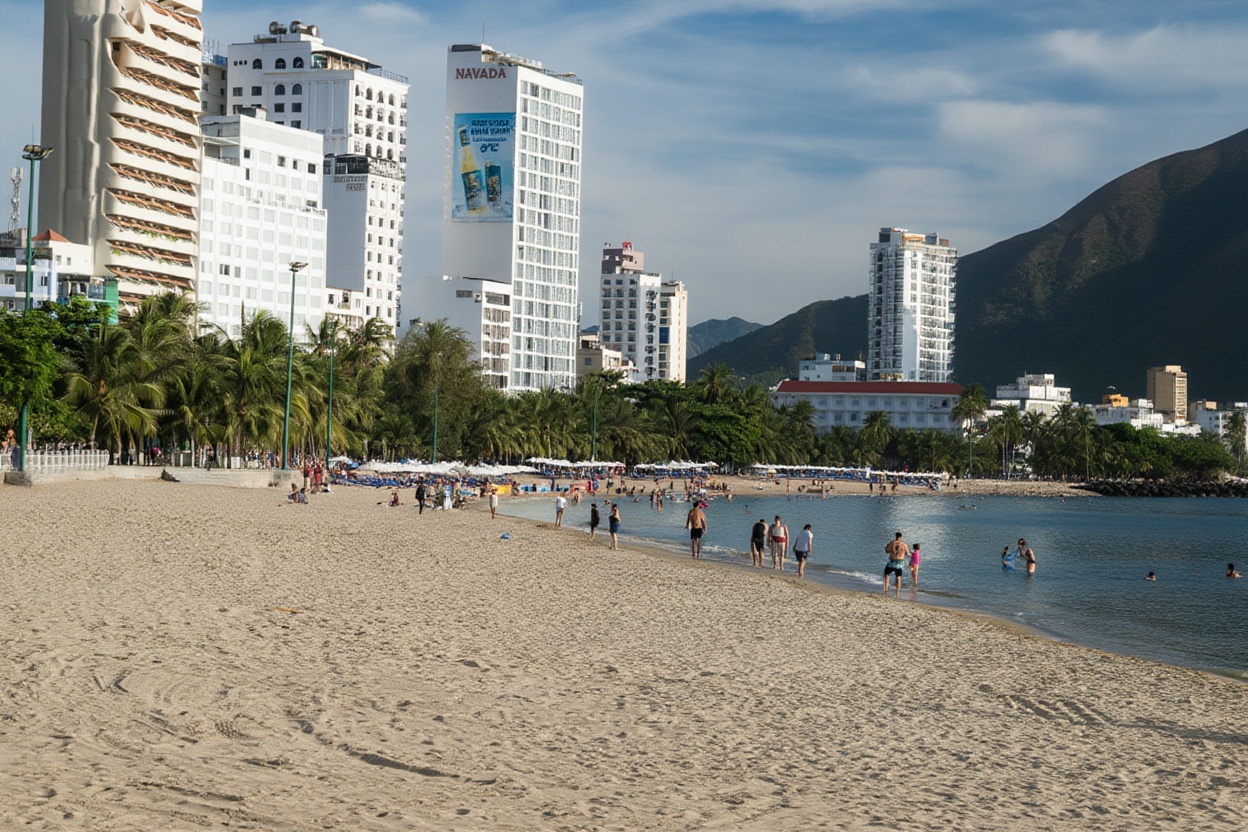
The main beachfront road has everything from international five-star chains to mid-range hotels charging luxury prices for the location alone. The ocean view is real. The value is often not.
If you’re coming to Nha Trang specifically for a beach holiday — sunrise from your balcony, walking to the sand in sandals, resort facilities — the beachfront is the right choice. Just do your due diligence on the specific property. Look at Google Maps user photos, not the professional shots on the booking page.
Best for: Couples, longer stays, people who specifically want resort-style accommodation and are paying for the experience rather than the nightly rate.
⚠Real Talk
The most common complaint in Nha Trang accommodation isn’t price — it’s “nothing like the photos.” A 3-star hotel with honest photos and clean rooms beats a 4-star with AI-enhanced booking imagery every time. The backpacker zone has fewer inflated expectations because nobody is paying for views they’re not getting.
Where to Stay by Budget
Budget — Dorms and Cheap Privates
The backpacker hostels on Bùi Thị Xuân and the surrounding streets offer dorm beds from 100,000–200,000 VND (~$4–$8) — AC, lockers, shared bathrooms, the usual. Quality varies more here than in Hanoi or Hoi An, where the hostel scene has been refined by years of competition.
The best budget private rooms sit in the 250,000–400,000 VND (~$10–$16) range — small, clean, AC, private bathroom. Don’t expect windows or natural light at this price point in Nha Trang. You’re paying for location and a clean bed, nothing more.
What to look for: Recent reviews specifically mentioning cleanliness and AC function. Nha Trang’s humidity is high and a broken AC in July is genuinely miserable. Look for places where guests mention checking in was easy and staff were responsive to issues.
Mid-Range — The Value Zone
The best value accommodation in Nha Trang sits between 450,000 and 900,000 VND (~$18–$36) per night — clean mid-range hotels or guesthouses, usually with a small pool, proper beds, and enough space to not feel cramped. One to two blocks from the beach.
At this price point, verify that the “pool” in the photos is actually functional and not decorative. Verify that “sea view” means actual sea and not a sliver of water through a gap in the buildings across the street. Both of these discrepancies appear in Nha Trang mid-range listings more than they should.
The streets between Trần Phú and Nguyễn Thiện Thuật — particularly Hùng Vương and Nguyễn Trãi — have good mid-range options that are close enough to the beach to walk, far enough from the strip to avoid resort pricing.
Splurge — Beachfront Resorts
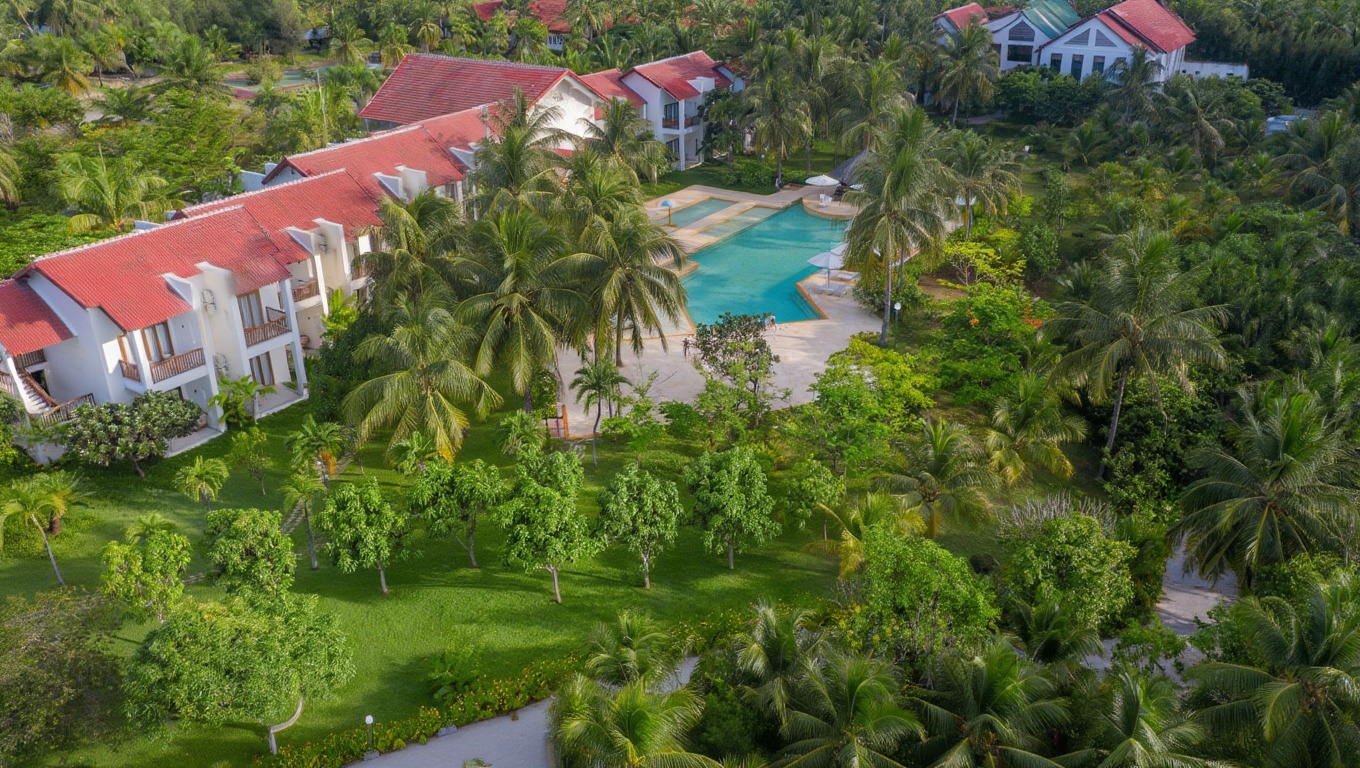
Nha Trang has genuine luxury options along Trần Phú — international chains with direct beach access, infinity pools, multiple restaurants, and the kind of service infrastructure that justifies the price. At the 3,000,000–8,750,000 VND (~$120–$350) level, the fake review problem essentially disappears because these properties have enough brand accountability to maintain actual standards.
The Sheraton, InterContinental, and a handful of Vietnamese luxury brands anchor the top end. Book directly with the hotel for the best rates and flexible cancellation.
Tips for Booking Accommodation in Nha Trang
Verify photos independently: Before booking, search the hotel name on Google Maps and look at user-uploaded photos rather than the professional shots. The gap between the two is where the truth lives.
Check cancellation policy: Nha Trang’s high season pricing means properties sometimes hold non-refundable rates. Book refundable where possible until you’ve confirmed the property looks like its photos.
Peak season timing: June through August, prices run 30–50% above the rates listed above. A room that costs 450,000 VND in March costs 650,000–700,000 VND in July. Book 2–3 weeks ahead for peak season.
Grab is your friend: Don’t get into vehicles arranged by guesthouse staff unless you’ve verified the price. Grab from your accommodation to anywhere in the city runs 25,000–60,000 VND. Inflated taxi fares from guesthouses are common in Nha Trang.
Where to Stay in Nha Trang FAQ
Is Nha Trang safe for tourists?
Yes, with standard precautions. Petty theft and transport scams (inflated taxis, cyclo fares) are the main concerns — not violent crime. Use Grab exclusively for transport. Don’t leave valuables on the beach unattended. The city is genuinely easy to navigate and most interactions are straightforward.
ok 2–3 weeks ahead minimum, especially if you want mid-range with pool access. For February–May: 1 week ahead is usually fine for most options. October–December (monsoon): walk-in rates are often available, though options thin out if you want quality at budget prices.
Checking Out — Practical Notes
Most Nha Trang hotels have a noon checkout. If you’re catching an afternoon bus or late flight, ask about late checkout early — many properties will hold your luggage even if they won’t extend the room. Budget an extra 100,000–200,000 VND (~$4–$8) to secure a late checkout at budget properties; mid-range hotels often do it free if the room isn’t sold that night.
For airport transfers: Cam Ranh Airport is 30km south of the city. Don’t accept fixed-price transfers arranged by your hotel at the front desk without checking Grab first. A Grab to the airport runs 250,000–350,000 VND (~$10–$14) and takes 35–45 minutes. Hotel-arranged taxis to the airport commonly run 450,000–600,000 VND for the same trip.
If you arrived by overnight bus from Hoi An and it’s 6am with a room that doesn’t check in until 2pm — most backpacker hostels in the zone will let you store luggage, use the bathroom, and even grab a shower for 50,000–80,000 VND (~$2–$3). Ask at the front desk when you arrive.
Two things worth sorting before you land: a Vietnam eSIM so you have data the moment you clear customs, and travel insurance — medical costs for uninsured foreigners in Vietnam are significant.
Airalo eSIMs activate instantly. Buy before departure — airport SIM queues in Vietnam can take 30+ minutes.
The Bottom Line
Nha Trang has excellent accommodation across every price range. The challenge is finding it amid the noise of inflated listings and gamed reviews.
One block from the beach, in the mid-range zone, with verified photos and a flexible cancellation policy — that’s the formula that works. Everything else is optimising around it.
Once you’re settled in, the Nha Trang Things To Do guide covers two days worth of activities that go well beyond the beach. And if you’re still working out when to come, the Nha Trang Best Time page has the full month-by-month weather breakdown.
Is it worth staying on Tran Phu Beach in Nha Trang?
Tran Phu is convenient but packed. The beach itself is fine for swimming, but the strip is loud at night and heavily tourist-facing. If you want a quieter base, look at Biet Thu Street one block back — same access, less noise, cheaper rooms.
Specific Areas Worth Knowing
Beyond the two main zones, a few streets deserve a mention for specific traveler types.
Biet Thu Street (Biệt Thự) — one block back from Trần Phú, this street runs parallel to the beachfront strip and has a cluster of mid-range hotels at 15–20% lower prices than equivalent rooms on the main drag. You get the same 5-minute walk to the beach, less road noise, and smaller crowds at breakfast. This is the recommended zone for first-time mid-range visitors who don’t want to overpay for the address.
North Beach area (near Lê Thành Phương Street) — the northern end of the bay, past the Sailing Club, is quieter than the central beach strip. Fewer street-side restaurants but also fewer touts and beach vendors. A handful of guesthouses here offer good value. Best for travelers who want a beach holiday rather than a party-adjacent hotel zone.
Tây Hồ area — further from the beach, this residential area north of the main tourist zone has a cluster of locally-run guesthouses that cater primarily to Vietnamese domestic visitors. Prices are the lowest in the city (150,000–300,000 VND for a clean private room), English is limited, and you’re a Grab ride from the beach. Works well for extended stays on a tight budget.
What to Actually Look For When Booking
Given Nha Trang’s documented review manipulation issue, the standard booking platform filters are less reliable here than elsewhere in Vietnam. A more reliable checklist:
1. Google Maps user photos. Search the property name on Google Maps and look at photos uploaded by guests — not the venue. These are harder to game than booking platform photos and typically show the real room quality, view, and cleanliness. Pay attention to bathroom photos — this is where the gap between advertised and actual quality is most revealing.
2. Recent reviews on multiple platforms. A property with 4.7 on Booking.com but 3.9 on Google Maps is a yellow flag. Recent reviews (last 3 months) matter more than the aggregate score.
3. Verify the “sea view” claim. Nha Trang’s city density means that “sea view” can mean a sliver of water between buildings, visible only from a standing position at a specific angle. Ask specifically: is the view from the bed or only from the window standing up? Is it obstructed?
4. Pool condition. Many mid-range hotels advertise pools that are either small rooftop dipping pools, occasionally closed for maintenance, or poorly maintained. Recent guest photos of the pool specifically are the best verification.
5. Noise level. Trần Phú is a main road. Rooms facing the street have traffic noise from early morning. Ask for a room facing the courtyard or a back-facing room if you’re a light sleeper.
Seasonal Strategy: When to Book and What to Pay
Nha Trang has one of Vietnam’s most pronounced seasonal pricing swings. Understanding the calendar prevents overpaying.
February–April (shoulder-to-peak transition): Good weather, not yet at summer price levels. Book 1–2 weeks ahead for most options. This is the best combination of weather and value — the sweet spot that experienced travelers target.
June–August (peak domestic season): Prices spike 30–60% above shoulder rates. Vietnamese domestic tourists from HCMC fill the city on weekends. Book 3–4 weeks ahead for any mid-range property with a pool. Budget hostels fill up too — don’t rely on walk-in availability in July.
October–December (monsoon): Walk-in rates are available, sometimes at deep discounts. The trade-off is weather — rough seas and grey skies mean the beach experience is significantly reduced. If you need accommodation and the weather has already gone bad, you can negotiate well below listed rates directly at the front desk.
Tết (late January/early February): Domestic tourism surge. Prices spike for the 5–7 days around the Lunar New Year. Book 3–4 weeks ahead or avoid the specific Tết week entirely if pricing matters to you.
Getting from Your Accommodation to the Main Beaches
Nha Trang’s main beach (Trần Phú) is a 6km arc of city beach — walkable from most accommodation in the center. The southern end near Bãi Dương is cleaner and less crowded than the busy middle section near the Sailing Club.
For island beaches (Hòn Mun, Hòn Tằm, Hòn Miễu), you’re joining a boat tour from the pier at Cầu Đá — a 15-minute Grab from anywhere in the city center (40,000–60,000 VND). Don’t pay for hotel-arranged island tour transport; Grab directly to the pier is cheaper and faster.
For the city itself: most accommodation in the backpacker zone and mid-range strip is walkable to the night market, the Pasteur Street food corridor, and the promenade. Nha Trang’s center is compact enough that a scooter rental (120,000–200,000 VND/day) isn’t strictly necessary unless you’re planning temple visits or reaching Doc Let Beach (45km north).
Where to Stay in Nha Trang — More FAQs
Which area is best for families in Nha Trang?
The beachfront strip (Trần Phú) works best for families — direct beach access means no road crossings with young kids, and the larger resort hotels have proper pools, kids’ menus, and luggage storage. Mid-range options around Biet Thu Street are the next best choice: quiet, walkable to the beach, and significantly cheaper than front-row beachfront.
Is it safe to walk at night in Nha Trang?
The tourist center is safe for evening walks — the promenade, night market, and restaurant strips are well-lit and busy. The main risk at night is opportunistic scooter bag-snatching; keep your phone in your front pocket and don’t have valuables hanging from your shoulder on the street. The beach at night is fine with a group but less advisable alone after midnight.
How do I get from Cam Ranh Airport to my hotel?
Cam Ranh Airport is 30km south of the city. Grab to central Nha Trang: 250,000–350,000 VND (~$10–$14), 35–45 minutes. Shared shuttle buses exist (around 80,000–100,000 VND) but drop at a fixed point, requiring an additional short taxi ride. Hotel-arranged airport transfers typically run 450,000–600,000 VND — check if Grab is cheaper before committing. The Grab pickup zone at Cam Ranh is well-signed outside arrivals.
The Fake Reviews Problem — How to Protect Yourself
I’ve stayed in Nha Trang three times across different years and I’ve watched the review situation get worse, not better. In 2022, a guesthouse on Bùi Thị Xuân that I’d recommend to people based on an older visit had been taken over by new management and quietly replaced with a different property behind the same listing. The Booking.com page kept the old reviews. Guests arrived to find a completely different standard of room.
The practical fix that works: search the exact property on Google Maps. Look at the photo upload dates. A property with glowing platform reviews but Google Maps photos from one user uploaded two months ago showing water stains on the ceiling is telling you something the algorithm isn’t.
Cross-check on TripAdvisor too — the three-platform approach (Booking, Google Maps, TripAdvisor) catches most of the discrepancy. If all three agree the place is good, it probably is. If one is significantly out of step with the others, investigate before committing to a non-refundable rate.
Nha Trang is not uniquely dangerous for tourists — it’s just a city where this specific problem (review gaming in the accommodation sector) is more prevalent than the Vietnamese average. The solution is the same one that works everywhere: verify independently, book refundable where possible, and trust photos from guests over photos from the venue.