Last updated: May 2026 · Jake Morrison · 5 years in Vietnam
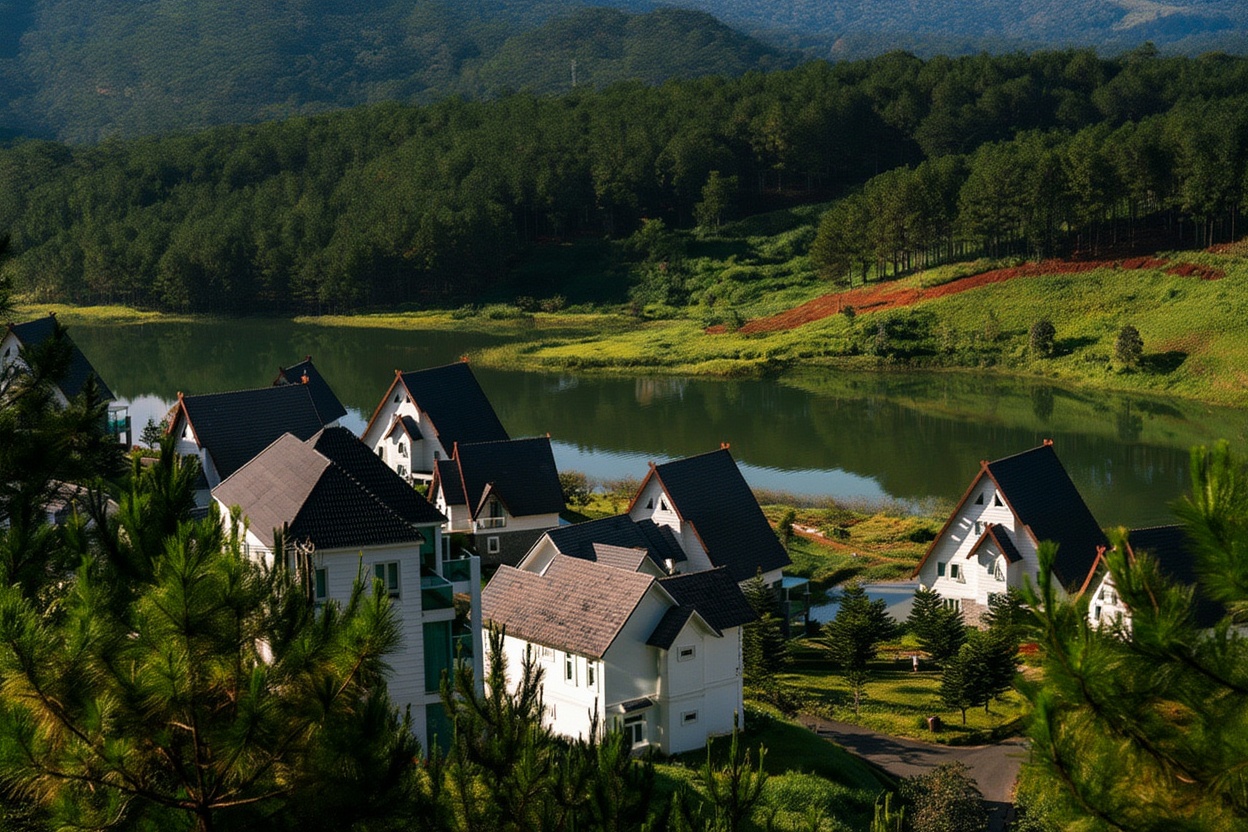
I’ve stayed in both areas and the difference is palpable in a way that’s hard to explain without visiting. The city center near Hoa Binh Square is functional Vietnam: concrete commercial buildings, convenience stores, the bus station nearby, a perfectly reasonable base. The villa district is pine trees, 1930s architecture, the smell of wood fires on cool evenings, morning mist visible from the window. Same city, same distance to all the attractions (15–20 minutes on foot). But the sensory experience of waking up in the villa district at 7am with the pine forest fog outside the window is the specific Dalat experience that the city center doesn’t deliver.
What the Villa District Actually Feels Like
The Huynh Thuc Khang street area, which runs uphill from the northwest bank of the lake through the densest concentration of original French colonial villas, is the physical heart of what makes Dalat’s accommodation different from anywhere else in Vietnam. Walking it at 6am: the pine tree canopy above the road filters the early light, the mist sits in the gardens of the properties that have maintained their original landscaping, a dog belonging to the guesthouse owner pads out to inspect the morning visitor, the smell of wood smoke from a kitchen starting its fire for breakfast. This is not atmosphere invented for tourists; the people who live on these streets have lived here for decades. The villas are their houses, converted to guesthouses when tourism came, but the neighbourhood character predates the tourism economy by generations.
The practical experience of staying in a villa district guesthouse: the room is typically smaller than an equivalent city-center hotel room at the same price, the furniture older (wooden wardrobes, iron bed frames, tiled floors), and the morning breakfast taken in a small dining room or garden where the guesthouse owner’s family is also eating. This is not a luxury experience. It’s a specific kind of atmospheric accommodation that coastal Vietnam’s resort hotels can’t replicate. What makes it work is the building itself — the weight of the walls, the height of the ceilings, the way the light comes through the old windows. The city-center hotels at the same price point are functional. The villa district guesthouses are memorable. For the full picture on the city before deciding where to base yourself, see our Dalat travel guide.
→Who It’s For
The villa district is for: travelers on 3+ night stays who want Dalat’s specific atmosphere and have budget for mid-range accommodation (600,000–1,200,000 VND/night). Couples, solo travelers interested in the colonial history, anyone who wants to wake up in a French colonial property at 1,500m altitude with a cup of highland arabica coffee before the morning mist lifts. The city center is for: travelers passing through for 1–2 nights en route, groups prioritizing budget, travelers arriving late by bus who need proximity to transport connections. It’s a perfectly serviceable base; it just doesn’t deliver the specific Dalat quality that makes most first-time visitors want to return.
Where to Stay in Dalat — By Area
Villa District (Recommended): The streets northwest and north of Xuan Huong Lake — Tran Hung Dao, Huynh Thuc Khang, Phan Dinh Phung (upper section), Nguyen Binh Khiem. This is where the majority of boutique guesthouses and renovated French colonial villas operate. The area is quieter than the city center (traffic thins significantly on the hill roads), the architecture provides the distinctive Dalat visual context, and the walk to the lake (Xuan Huong) takes 10–15 minutes downhill — a pleasant morning routine. Grab or motorbike taxi to the night market runs 30,000–50,000 VND (~$1.15–1.90).
City Center (Budget and Convenience): The streets around Hoa Binh Square, Nguyen Chi Thanh (backpacker strip near the night market), and the Da Lat Market area. This is where the cheapest hostel beds are, where bus connections from the Da Lat bus station are most accessible, and where the night market is within walking distance. The trade-off: the buildings are more modern, the streets are louder, and the specific Dalat atmospheric quality is less present. For travelers doing 1–2 nights en route elsewhere and prioritizing budget over experience, the city center area is the practical choice.
South of the Lake (Dalat Palace Hotel Area): The southeast side of Xuan Huong Lake, along Le Duan road, is where the Dalat Palace Hotel and the Da Lat Palace Golf Club are located. The accommodation options here are at the luxury end of the spectrum — the Palace Hotel is the most historically significant property in the city and worth a drink at the terrace bar even if you’re not staying. The golf course provides a green buffer that keeps this area quieter than the city center. Grab from this area to the night market: 40,000–60,000 VND (~$1.52–2.28).
Comparing Dalat’s Two Main Areas
Budget Accommodation in Dalat
Dalat’s budget accommodation is concentrated on Phan Dinh Phung street in the lower city center and in the Nguyen Chi Thanh backpacker strip near the night market. Dormitory beds in hostels run 150,000–250,000 VND (~$5.70–9.50) per night. Private budget rooms are 350,000–500,000 VND (~$13.30–19). At this price range, the difference between city center and villa district is minimal — the budget hostels are in the city center area regardless.

What to look for in Dalat budget accommodation: a good bed warmer (electric blanket or duvet — Dalat’s 15°C evenings make this non-optional in December-February), hot water, and proximity to the Xuan Huong Lake walk. The best budget options have small breakfast areas serving artichoke tea and bánh mì — this is not universal but worth specifically searching for when booking. Reviews on Booking.com that mention “cold at night” without mentioning heating are a flag; Dalat requires accommodation that accounts for its temperature.
Mid-Range — Villa Guesthouses (The Sweet Spot)
The mid-range villa guesthouses in Dalat are the city’s best accommodation value. These are renovated French colonial villas — typically 10–20 rooms, wooden floors, small gardens with pine trees, sometimes fireplaces in common areas — priced at 600,000–1,200,000 VND (~$22.80–45.50) per night. Breakfast is usually included: Vietnamese coffee (the phin filter version, not instant), fresh baguette (the French bread tradition is alive in Dalat), local jam, and typically fresh fruit from the highland farms.
The villa district northeast of the lake (Tran Hung Dao street and the surrounding hillside streets) has the highest concentration of these properties. What distinguishes the better ones: the age of the building and its maintenance (newer concrete “villa style” buildings don’t deliver the same atmosphere as actual 1930s construction), the garden (pine trees and stone paths rather than concrete yard), the breakfast quality, and the view — the villas on the upper hillside streets have views of the surrounding pine-covered hills and sometimes the lake. Book with photos that show the actual building exterior; many listings use “villa” loosely to describe modern construction.
★Jake’s Pick
Mid-range villa guesthouses on the Huynh Thuc Khang street hillside, north of the lake — not a specific property (they change hands and quality shifts), but the street itself. Any property here that shows actual 1930s construction in the photos, has a garden with pine trees, and charges 700,000–1,000,000 VND/night (~$26.60–38) is likely the best Dalat sleep available in that price range. Book with photos, not just the description.
High-End — The Dalat Palace and Other Options
The Dalat Palace Hotel (Khách sạn Dalat Palace — say: kahk san dah laht pah-las) is the most historically significant accommodation in the city. Built in 1922 as the Grand Hotel du Lac, it’s been operating for over a century on the southeast bank of Xuan Huong Lake. The 1922 colonial architecture — the long low facade, the arched windows, the formal gardens sloping to the lake shore — is the physical context that makes understanding why the French chose Dalat as a highland resort immediately clear. Rooms run 3,000,000–6,000,000 VND (~$114–228) per night, which is significantly below what comparable colonial heritage hotels cost in Hoi An or Hue. Book directly with the hotel — the website tends to offer better rates than OTAs.
Ana Mandara Villas Dalat (French colonial cluster of 1920s villas, 3–5 minutes from the city center by taxi, rates from 2,500,000 VND/night, ~$95) is the main competitor to the Palace for travelers who want colonial heritage accommodation at high-end prices. The property is smaller and more intimate than the Palace; the Villa 9 and Villa 10 rooms with lake views are specifically recommended by travelers who’ve stayed there.
For a mid-high option that delivers boutique experience without heritage prices: several villa district properties in the 1,200,000–2,500,000 VND range (~$45.50–95) offer private villa rooms with gardens, fireplaces, and the full colonial atmosphere at below-luxury prices. These are the best value point in Dalat if the Palace price range is beyond the budget but the city-center hostel experience is not what the trip calls for.
What I Got Wrong About Dalat Accommodation
The first Dalat trip, I booked the cheapest available room near the bus station because I was arriving late at night and figured I’d check in and deal with location in the morning. The room was fine — clean, hot water, warm enough. The location was a 25-minute walk from Xuan Huong Lake through streets I didn’t know. By the time I’d walked to the lake for the dawn circuit on my first morning, it was already 8am and the mist had cleared. I spent two days walking 25 minutes each way to reach the lake. The villa district guesthouses at similar prices — I checked after the trip — were 10 minutes from the lake uphill. Same price. Different experience. Book the villa district.
⚠Real Talk
Dalat accommodation prices triple during the biennial Da Lat Flower Festival in December. A villa guesthouse room that costs 700,000 VND (~$26.60) in January costs 2,000,000–2,500,000 VND (~$76–95) during festival week. This is not a scam — it’s standard peak-event pricing in a city with limited inventory. Book festival week accommodation 6–8 weeks ahead and expect to pay peak rates. The alternative: arrive the week before the festival (mid-December, same excellent weather, lower prices) and leave before the festival crowds arrive.
Tips for Booking Dalat Accommodation
Dalat’s accommodation market has specific dynamics that differ from coastal Vietnam destinations. A few practical notes before booking:
Read the reviews for heating comments. Dalat’s temperature range (12–24°C depending on month) means heating matters in ways that coastal Vietnam accommodation doesn’t need to address. Reviews that mention the room was cold at night without mentioning an electric blanket or heater are a flag. Reviews that specifically mention “electric blanket provided,” “warm and cosy despite the cold outside,” or “extra blankets available” are positive signals.
Verify the building age in photos. “Villa-style” is a marketing term used freely in Dalat for properties ranging from genuine 1930s French colonial construction to 2019 concrete buildings shaped to look vaguely colonial. The distinction matters for atmosphere: the genuine old buildings have wooden floors that creak, high ceilings, old-growth pine views from the windows, and the specific smell of aged timber that makes waking up in a Dalat villa different from any other Vietnamese guesthouse. Ask for photos of the actual building exterior in the booking message, or look for TripAdvisor reviews that reference the building age.
Book breakfast-included options. Dalat’s highland breakfast culture — Vietnamese coffee from local beans, fresh baguette (the French bread tradition is real here), local jam, highland fruit — is part of the experience. Properties that include breakfast tend to have guesthouses who care about the full experience, not just the room. The breakfast quality is a proxy indicator for guesthouse quality generally. A proper Dalat breakfast (hot phin filter coffee, fresh baguette, strawberry jam from the Cu Hiep farms, a bowl of congee if the owner is Vietnamese-style traditional) takes 30 minutes and sets the tone for the morning in a way that a 7-Eleven pastry near a city-center hostel does not.
For group travel, consider a whole-villa rental. Dalat’s real estate rental market has full colonial villa rentals available for multi-night stays at 3,000,000–7,000,000 VND/night (~$114–266) for entire 3–4 bedroom properties — cheaper per person than individual hotel rooms for groups of 6–8. Platforms like Airbnb and Agoda Homes have Dalat listings. The full-villa option gives access to a working kitchen (useful for the highland produce market runs) and the complete colonial domestic experience.
December Flower Festival booking timeline: If visiting during the Da Lat Flower Festival (held in even years including 2026, final week of December), book 6–8 weeks ahead for villa district properties. By 4 weeks out, the better mid-range properties have sold out. Budget city center accommodation remains available closer to the date but at 2–3x the standard December prices. The week before the festival (mid-December, typically December 14–21) has the same excellent weather at 40–60% lower prices — consider arriving early and leaving before festival week.
Two things worth sorting before you land: a Vietnam eSIM so you have data the moment you clear customs, and travel insurance — medical costs for uninsured foreigners in Vietnam are significant.
Airalo eSIMs activate instantly. Buy before departure — airport SIM queues in Vietnam can take 30+ minutes.
FAQ — Where to Stay in Dalat
Where is the best area to stay in Dalat?
The villa district northwest of Xuan Huong Lake — specifically the streets around Tran Hung Dao, Huynh Thuc Khang, and Nguyen Binh Khiem. This area has French colonial villa guesthouses priced at 600,000–1,200,000 VND/night (~$22.80–45.50), the most atmospheric streets in the city, and a 10–15 minute walk to the lake for the dawn circuit. The city center near Hoa Binh Square is a serviceable alternative for budget travelers prioritizing price over atmosphere, but the villa district is worth the modest premium for most visitors.
Festival (even years) are 2–3x the standard rates at every level — book far ahead.
Is the Dalat Palace Hotel worth it?
For travelers who appreciate colonial heritage accommodation, yes — it’s among the most characterful hotels in Vietnam at its price point. The 1922 building on the Xuan Huong Lake shore provides immediate context for Dalat’s French colonial history and the gardens are genuinely beautiful. At 3,000,000–6,000,000 VND/night (~$114–228), it’s expensive for Vietnam standards but significantly below comparable heritage hotels in Hoi An or Hue. If the budget exists and historic accommodation is the priority, the Palace is worth booking. Have a drink at the terrace bar regardless of whether you’re staying — it’s 80,000–120,000 VND (~$3.05–4.55) for the view.
Do Dalat guesthouses provide heating?
The better ones do — electric blankets, heated mattress pads, or portable heaters in the room. This matters in January especially, when Dalat evenings reach 12–14°C. Checking for heating provision is one of the most important booking filters for December-February visits. Reviews that mention “cold room” without resolving it with a heating mention are a red flag. Reviews that mention “cosy and warm despite the cold outside” are the booking signal you want. The city center budget hostels often have dormitory common areas that are heated; private rooms vary by guesthouse.
Is it safe to stay in Dalat?
Yes — Dalat has one of the lowest crime rates of any Vietnamese tourist city. Petty theft is uncommon, the smaller city scale means fewer scam operations than HCMC or Hanoi, and the tourist infrastructure is established and generally straightforward. The main practical safety note for accommodation: Dalat’s mountain roads in the villa district can be slippery after rain at night — if arriving by motorbike in the dark, take the main roads rather than the steeper hill shortcuts. The city is genuinely safe for solo travelers of all genders; the villa district’s quiet streets are among the more relaxed environments for independent travel in Vietnam.
Can I walk from my accommodation to Dalat’s main attractions?
From the villa district: Xuan Huong Lake is a 10–15 minute walk, the Da Lat Market is 20–25 minutes, the night market is 20–30 minutes. These are all walkable in Dalat’s cool climate. From the city center: the night market is within 10 minutes, the lake is 20–25 minutes. The Crazy House, Truc Lam Monastery, and Datanla Falls are all 3–6km from the center — Grab (30,000–70,000 VND, ~$1.15–2.65) or motorbike rental makes these easy. Dalat is compact enough that no accommodation area is inconveniently far from the main sites; the difference between areas is atmosphere, not accessibility.
What should I look for in a Dalat villa guesthouse?
Four things: actual age of construction (1930s–1950s buildings over modern “villa style” construction), a garden with pine trees (not a concrete yard), included breakfast with real Vietnamese coffee (phin filter, not instant), and a room heating option (electric blanket or duvet) — Dalat’s evenings reach 12–15°C in January and heating matters. Photos of the actual building exterior rather than just interiors are the key booking tool. Reviews that mention “cold but they gave extra blankets” without mentioning a heating problem are a positive signal for the breakfast and atmosphere quality. For what to fill your days with beyond the lake walk, our Dalat things to do guide covers the full picture.