Last updated: May 2026 · Jake Morrison · 5 years in Vietnam
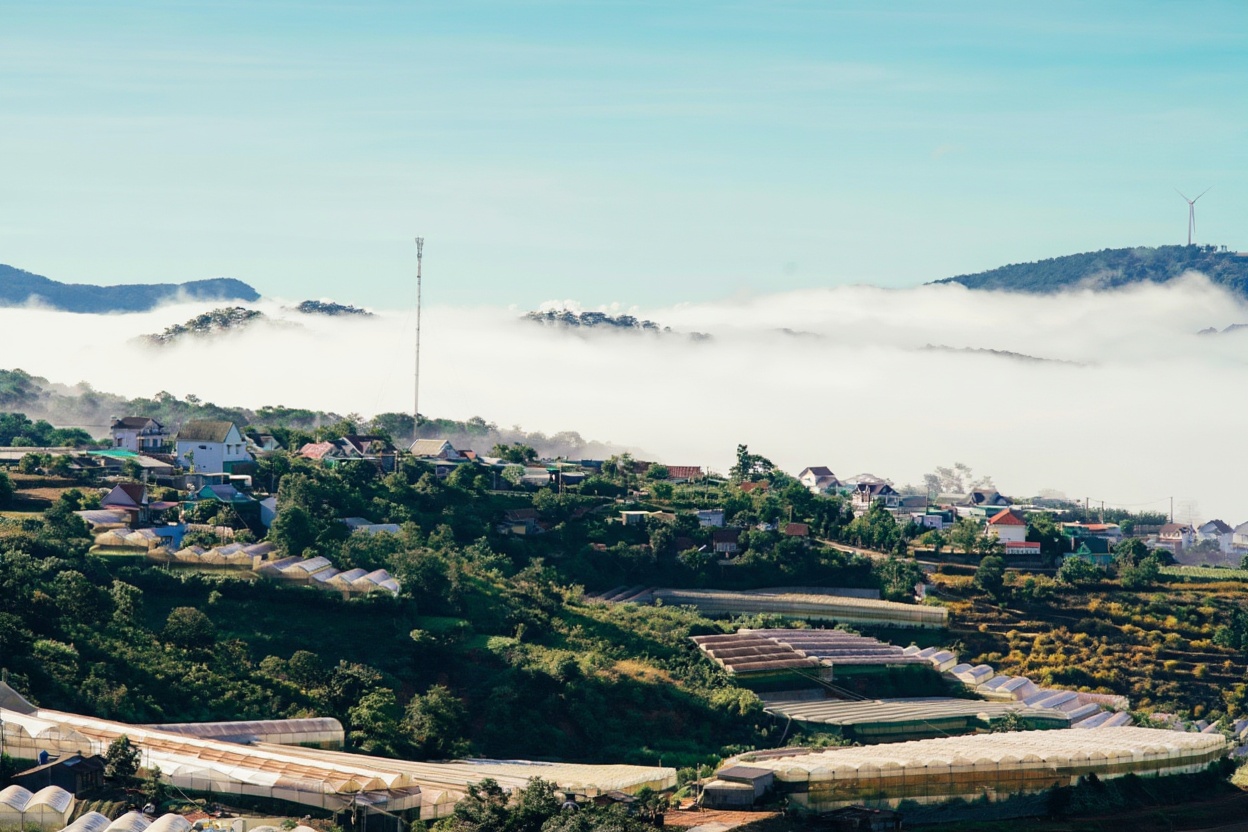
I’ve drunk a lot of Vietnamese coffee in a lot of Vietnamese cities. Hanoi has its egg coffee culture and the filter drip tradition. HCMC has its condensed milk cà phê sữa đá (say: kah feh shwa dah) served in a plastic bag with ice. But Dalat is the only city in the country where the cup of coffee in front of you and the farm it came from are in the same frame of view. Standing in the Cau Dat tea and coffee plantation in the morning mist, then sitting in a villa district café in the afternoon drinking arabica from the same elevation — that sequence is specific to Dalat and it changes how the coffee tastes.
How Vietnamese Coffee Works — A Primer for First-Timers
Vietnamese coffee culture is built around two things that most foreign visitors don’t expect: robusta beans and sweetened condensed milk. The robusta-based filter coffee that’s served everywhere in Vietnam — dripped through a small phin filter directly over a glass, then mixed with condensed milk — is the foundation of daily Vietnamese life from 5:30am onward. It’s stronger than espresso in caffeine content, intensely dark, and the sweetness from the condensed milk is not a tourist accommodation — it’s how Vietnamese people have been drinking coffee since the French introduced it in the 19th century and robusta cultivation made it widely available.
Understanding this matters for Dalat specifically: the coffee farms around the city produce beans that end up in this daily ritual. When you visit a Cau Dat arabica farm or drink a single-origin pour-over in a villa district café, you’re seeing the more recent specialty coffee layer that sits on top of a century-old filter tradition. Both versions are authentic. Neither is the “real” Dalat coffee. The local coffee shop near the Da Lat Market where the stall owner has a phin filter on every table and condensed milk in a jar is as legitimate as the third-wave specialty café charging 80,000 VND for a Cau Dat pour-over. For everything beyond the coffee farms, our Dalat travel guide covers the full city.
ℹKnow Before You Go
When ordering at local Vietnamese cafés, “cà phê” defaults to strong robusta filter with condensed milk unless specified otherwise. “Cà phê đen” (black) is the same filter coffee without the milk. “Cà phê đá” (iced coffee) is the condensed-milk version served over ice — the standard summer order. “Cà phê bột” means ground coffee, which signals you want the real drip method rather than instant. Learning these four terms before arriving in Dalat (or anywhere in Vietnam) will spare you the experience of receiving Nescafé when you expected phin coffee.
Dalat’s Coffee Growing Region
The Lam Dong Province, in which Dalat sits, is one of Vietnam’s five main coffee-growing provinces. The Central Highlands coffee region (Tây Nguyên — say: tie nyen) runs from Kon Tum in the north through Pleiku, Buon Ma Thuot (Đắk Lắk, Vietnam’s coffee capital), and southward into the Lam Dong highlands. Buon Ma Thuot is where the highest concentration and volume of Vietnamese robusta grows; Dalat’s position at 1,500m gives it slightly different growing conditions — cooler temperatures, more mist, the possibility of arabica cultivation at the higher elevations around Cau Dat.
Vietnamese coffee production is dominated by robusta (Coffea canephora) — a higher-caffeine, more bitter bean that grows well at 300–800m elevation. Arabica (Coffea arabica) requires cooler temperatures and higher elevation — in Vietnam, the Cau Dat area above Dalat (1,400–1,600m) is one of the few viable arabica-growing zones. The difference in the cup: robusta is intense, earthy, sometimes harsh — the Vietnamese condensed milk tradition evolved partly to balance it. Arabica from Cau Dat is gentler, more acidic, and better suited to the single-origin café presentations that the Dalat specialty coffee scene has built around it.
Cau Dat Tea and Coffee Plantation
The Cau Dat area, 12km south of Dalat on the road toward the coast, is the most accessible working tea and coffee plantation in the Lam Dong highlands. The plantation was originally established by the French during the colonial period (1930s) and remains in operation as both a commercial tea producer and a tourism destination. The morning mist at Cau Dat — the highland valley filled with low cloud, the tea rows running in geometric curves across the hillside, the occasional worker in a conical hat moving between the rows — is the image that appears on Vietnamese tourism posters for a reason.
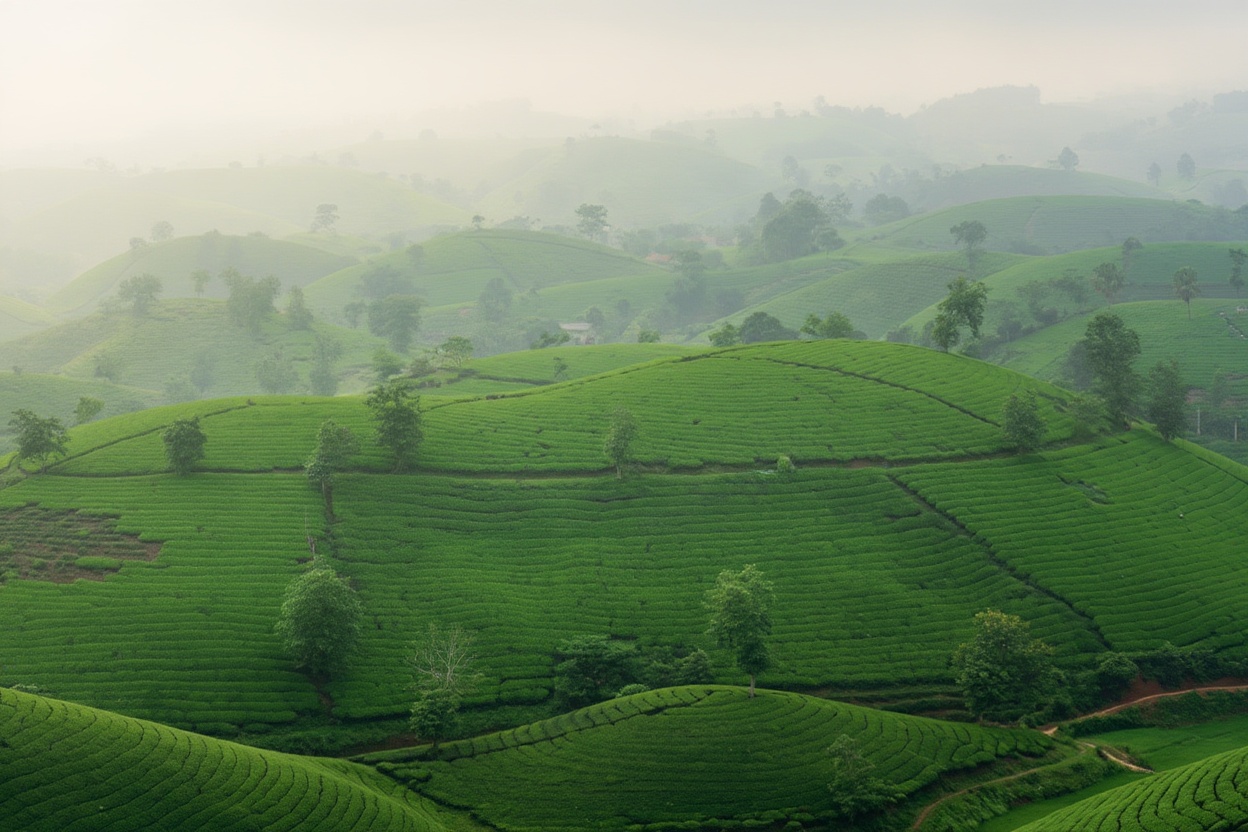
Getting there: Grab from Dalat city center runs 80,000–120,000 VND (~$3.05–4.55) one way, or Cau Dat is included in most countryside motorbike tour itineraries. The plantation entrance area has vendors selling locally grown and processed tea and coffee — the Cau Dat loose-leaf tea (100,000–200,000 VND, ~$3.80–7.60 per 100g) is genuinely good and worth buying. The coffee at the plantation café is made from the arabica grown in the surrounding fields: 40,000–60,000 VND (~$1.52–2.28) for a brewed cup that tastes different from the robusta blends that most Vietnamese coffee shops default to.
The practical visit: go before 10am when the mist is still in the valley and the light is low. Allow 2–3 hours for the plantation walk, the café, and the produce market. Combine with the Elephant Falls (Thác Voi, 30,000 VND, ~$1.15) which is on the same road, 6km further south — the two make a logical half-day circuit from Dalat by Grab or motorbike.
Weasel Coffee Farms — What They Are and Whether to Visit
Weasel coffee (cà phê chồn — say: kah feh chon) is the Vietnamese version of kopi luwak: coffee cherries that have been eaten by Asian palm civets (cầy hương — say: kay hwong), passed through their digestive system, collected from their excrement, cleaned, and processed. The fermentation during digestion changes the bean chemistry — proponents say it reduces bitterness and adds complexity; skeptics say the difference is placebo and the production method is an unpleasant thing to build a tourist industry around. Both positions have merit.
The Dalat weasel coffee farms — several operate near the city, most concentrated on the road toward the Truc Lam Monastery area — are tourist-facing operations: civets in enclosures (the “wild-collected” claim made by some operations is rarely verifiable), a demonstration of the processing, and a tasting. The coffee itself is expensive: a cup runs 200,000–500,000 VND (~$7.60–19) depending on the operation. Whether that price reflects actual production costs or tourism premium is unclear. The farms are worth visiting for the agricultural education about how weasel coffee works and the civet biology — the cup itself doesn’t obviously justify the price compared to well-sourced arabica at a fraction of the cost.
⚠Real Talk
If you’re interested in ethical sourcing: the palm civet farms in Dalat (and everywhere weasel coffee is produced) are a mixed story. Some operations farm civets in cages fed a diet limited to coffee cherries — a welfare concern. The small-operation farms that genuinely collect from wild civets moving through highland forest are the exception, not the rule. Ask the farm directly about their collection method before paying. The alternative: buy well-sourced Cau Dat arabica and ask the vendor where it was grown. You’ll get better coffee with a cleaner conscience.
The Best Coffee Cafés in Dalat
The Dalat café scene divides cleanly between the tourist-facing strip (Nguyen Chi Thanh street, the backpacker area near the night market) and the villa district cafés north and northwest of Xuan Huong Lake. The villa district is where the better coffee is. The cafés here are often set in renovated French colonial villas — wooden floors, fireplaces that matter in Dalat’s 15°C evenings, gardens where the coffee is served at iron tables under pine trees. For more ways to fill your time in the highlands, see our Dalat things to do guide for the full city itinerary.
What to order in a Dalat café:
Cà phê phin (say: kah feh fin) — the classic Vietnamese drip filter method, a small steel dripper placed over a glass, medium-dark robusta dripping through in 3–5 minutes. With condensed milk it’s cà phê sữa (say: kah feh shwa); black it’s cà phê đen (say: kah feh den). 30,000–50,000 VND (~$1.15–1.90) at local cafés, higher at tourist-facing spots. This is the foundation of Vietnamese coffee culture and what most of the country runs on.
Single-origin arabica (cà phê bột — say: kah feh boat — specify “arabica Cau Dat” if asking) is available at the better specialty cafés in the villa district, typically as pour-over or Aeropress. 60,000–90,000 VND (~$2.28–3.42) per cup. The difference from robusta is pronounced — lighter body, more fruit acidity, cleaner finish. Worth trying once in Dalat specifically, where the origin is local.
Cà phê trứng (say: kah feh choong — egg coffee): a Hanoi invention that has spread nationally — egg yolk whipped with condensed milk and poured over espresso or strong drip coffee. Rich, custardy, dessert-adjacent. Most Dalat cafés now serve it. 40,000–70,000 VND (~$1.52–2.65). Best drunk in the morning at altitude in a colonial villa — the combination is specific and good.
↗Insider Tip
The artichoke tea (trà atiso — say: trah ah-tee-so) sold at every Dalat café and market is made from dried artichoke flowers grown in the highland fields around the city. It’s subtly sweet, mildly bitter, and completely unique to this region — artichokes grow here because the temperate climate makes them viable in a way that’s impossible at sea level in Vietnam. A cup runs 20,000–35,000 VND (~$0.76–1.33). Buy a bag of dried artichoke flowers at the night market (50,000–100,000 VND per 100g, ~$1.90–3.80) to brew at home — it keeps for months.
Jake’s Dalat Coffee Confession
I spent the first two Dalat trips drinking whatever the guesthouse put in front of me — a commercial robusta blend made with powdered milk, served in a styrofoam cup. I assumed that’s what Dalat coffee was. It took meeting a Vietnamese coffee farmer on the third trip (he was selling at a night market stall and I asked where his coffee was from) to understand that the Cau Dat arabica in his bag was grown 12km from where we were standing, roasted by his family, and completely different from the commercial blend I’d been drinking. He made me a cup with a field phin filter right there at the stall. 40,000 VND (~$1.52). It was one of the better cups of coffee I’ve had in Vietnam. The souvenir coffee I bought from airport gift shops before that trip, the “premium Dalat coffee” in the tourist packaging — I’d been buying the wrong thing for years. Ask where the beans are from. The answer changes the cup.
Specialty Coffee in Dalat — The Emerging Scene
Dalat’s specialty coffee scene is small but genuine — a handful of cafés in the villa district that source single-origin beans from Cau Dat and other Lam Dong highland farms, roast in-house, and serve pour-over and filter methods that reflect the bean’s character rather than covering it with condensed milk. This is still a minority offering in a city where the robusta filter tradition dominates, but it’s grown consistently over the last five years as Vietnamese coffee culture in major cities has shifted toward third-wave awareness.
The villa district café circuit is worth a dedicated morning. Start at the Xuan Huong Lake northwest corner where a cluster of cafés opens at 6:30am — the view across the water with low morning mist is the compensation for the early alarm. Move uphill through the Tran Hung Dao street café strip where the French colonial villas house the most atmospheric options. The cafés here often have interior fireplaces (functional in Dalat’s cool evenings) and garden terraces where the pine trees provide shade. This is where to have the second or third coffee of the morning, slower and more considered than the first one at the lake. Most of these cafés sell single-origin highland beans — ask, buy a 200g bag, and the Dalat coffee experience continues at home long after the trip.
The practical implication for the traveler: don’t order “cà phê” and expect a single-origin pour-over. Ask explicitly for “cà phê bột Arabica” (ground arabica coffee) and whether the café has a specific highland origin. If the answer is yes and they can tell you where the farm is, you’re in the right place. If the answer involves instant coffee or pre-ground commercial robusta blend, decide whether the view from the villa terrace justifies the cup regardless of its origin.
Coffee Souvenir Buying in Dalat
The Da Lat Night Market and the Da Lat Market building are the main retail points for coffee to take home. What to buy and what to avoid:
Buy: Whole-bean or coarsely ground Cau Dat arabica from vendors who can tell you the farm or cooperative origin. The Dalat organic coffee cooperatives sell through the night market at 150,000–300,000 VND (~$5.70–11.40) per 200g — better quality and cleaner sourcing than the tourist-facing weasel coffee operations. Also: dried artichoke flowers for tea (50,000–100,000 VND/100g), which is genuinely unavailable outside the highland growing region.
Avoid: Pre-packaged “Dalat coffee” with no origin information on the packaging — these are usually commercial robusta blends with Dalat branding rather than locally grown product. The weasel coffee gift packs at tourist price points (400,000–800,000 VND per 100g, ~$15.20–30.40) unless you’ve verified the farm’s sourcing practice directly.
Two things worth sorting before you land: a Vietnam eSIM so you have data the moment you clear customs, and travel insurance — medical costs for uninsured foreigners in Vietnam are significant.
Airalo eSIMs activate instantly. Buy before departure — airport SIM queues in Vietnam can take 30+ minutes.
FAQ — Dalat Coffee
Is Dalat known for coffee?
Yes — Dalat sits at the southern end of Vietnam’s Central Highlands coffee belt and the Lam Dong province is a significant coffee-growing region. Both robusta and arabica are grown here, with the Cau Dat area (12km south of the city) producing arabica at high elevation. Dalat is unique in Vietnam for being a city where you can visit working coffee farms in the morning and drink locally grown beans in the afternoon. The specialty coffee scene is small but growing — the villa district cafés are the entry point.
What is weasel coffee in Dalat?
Weasel coffee (cà phê chồn) is coffee produced from beans that have been eaten and passed through Asian palm civets. The digestive process changes the bean chemistry — the coffee is considered smoother and less bitter by proponents. In Dalat, several farms near the Truc Lam Monastery road offer visits and tastings at 200,000–500,000 VND (~$7.60–19) per cup. The farms vary in sourcing ethics — some use caged civets fed a coffee-cherry diet, others claim wild collection. Ask about the sourcing method before visiting.
What is artichoke tea and where can I try it in Dalat?
Artichoke tea (trà atiso) is brewed from dried artichoke flowers grown in the Dalat highland fields — the temperate climate makes artichoke cultivation possible here in a way that’s not viable at sea level in Vietnam. It’s subtly sweet, mildly bitter, and unique to the region. Available at virtually every café in Dalat (20,000–35,000 VND per cup, ~$0.76–1.33) and sold in dry goods form at the night market (50,000–100,000 VND per 100g). It’s one of the first things to try on arrival.
Where is the best coffee in Dalat?
The villa district cafés north of Xuan Huong Lake are the better option over the tourist-strip options near the night market. Look for cafés in renovated French colonial villas that list Cau Dat arabica or Lam Dong single-origin on their menu. The Cau Dat plantation café itself is worth the 12km trip for the origin experience. For atmosphere over origin: any of the lakeside cafés on the north bank of Xuan Huong Lake at 6am, before the tourist boats start, with a drip filter cà phê phin and the morning mist over the water.
Can you visit coffee farms in Dalat?
Yes — the Cau Dat tea and coffee plantation 12km south of the city is the most accessible working farm and worth the trip specifically for the origin experience. Grab from the city runs 80,000–120,000 VND (~$3.05–4.55) one way, or include Cau Dat in a countryside motorbike tour that typically also covers Elephant Falls. Most Easy Rider guides include a coffee farm stop. The plantation café serves locally grown arabica at 40,000–60,000 VND (~$1.52–2.28) per cup. The weasel coffee farms closer to the city (near Truc Lam road) are more tourist-facing — worth visiting once for the process education, not necessarily for the coffee itself.
What makes Dalat coffee different from other Vietnamese coffee?
Altitude and growing conditions. Dalat’s 1,500m elevation and temperate climate make arabica cultivation viable — a bean that grows at higher elevation and produces a gentler, more acidic cup than the robusta that dominates everywhere else in Vietnam. The Cau Dat area grows arabica in the same misty highland conditions as specialty coffee regions in Ethiopia or Colombia. The result: Dalat is the only place in Vietnam where you can drink locally grown arabica within view of the farm that grew it. The robusta culture is still dominant in Dalat’s cafés, but the single-origin arabica layer is genuine and worth specifically seeking out.
How much does coffee cost in Dalat?
Local café cà phê phin (drip filter): 25,000–40,000 VND (~$0.95–1.52). Tourist-facing cafés in prime locations: 45,000–70,000 VND (~$1.71–2.65). Single-origin arabica pour-over at specialty cafés: 60,000–90,000 VND (~$2.28–3.42). Egg coffee (cà phê trứng): 40,000–70,000 VND (~$1.52–2.65). Weasel coffee tasting: 200,000–500,000 VND (~$7.60–19). The regular Vietnamese filter coffee at a local café is the best value — the premium options need to earn their price.