Last updated: May 2026 — beach conditions and logistics verified May 2026.
Phu Yen is the coastal stretch that most travelers drive past on the way between Quy Nhon and Nha Trang — our Phu Yen guide makes the case for stopping.
Phú Yên has been described as the next Đà Nẵng. It isn’t. It won’t be. The province has roughly 189km of coastline, almost none of it developed in any meaningful way, and a population that is still more focused on pulling yellowfin tuna out of the South China Sea than on renting paddleboards to tourists. Tuy Hòa city, the provincial capital, feels more like a working Vietnamese port town than a beach resort — which is a description, not a criticism.
What you won’t find here: beach clubs, banana boat rentals, cocktails served in plastic cups on the sand, or any tour operator who speaks fluent English. What you will find: fishing coves, open-ocean headlands, mountain-ringed bays, a basalt reef you can walk on, and almost zero competition for any of it.
This is a good thing. Here are the five beaches worth knowing about — what they’re actually like, who they’re for, and what order to visit them in.
1. Bãi Xép — The One the Film Made Famous (But Didn’t Ruin)
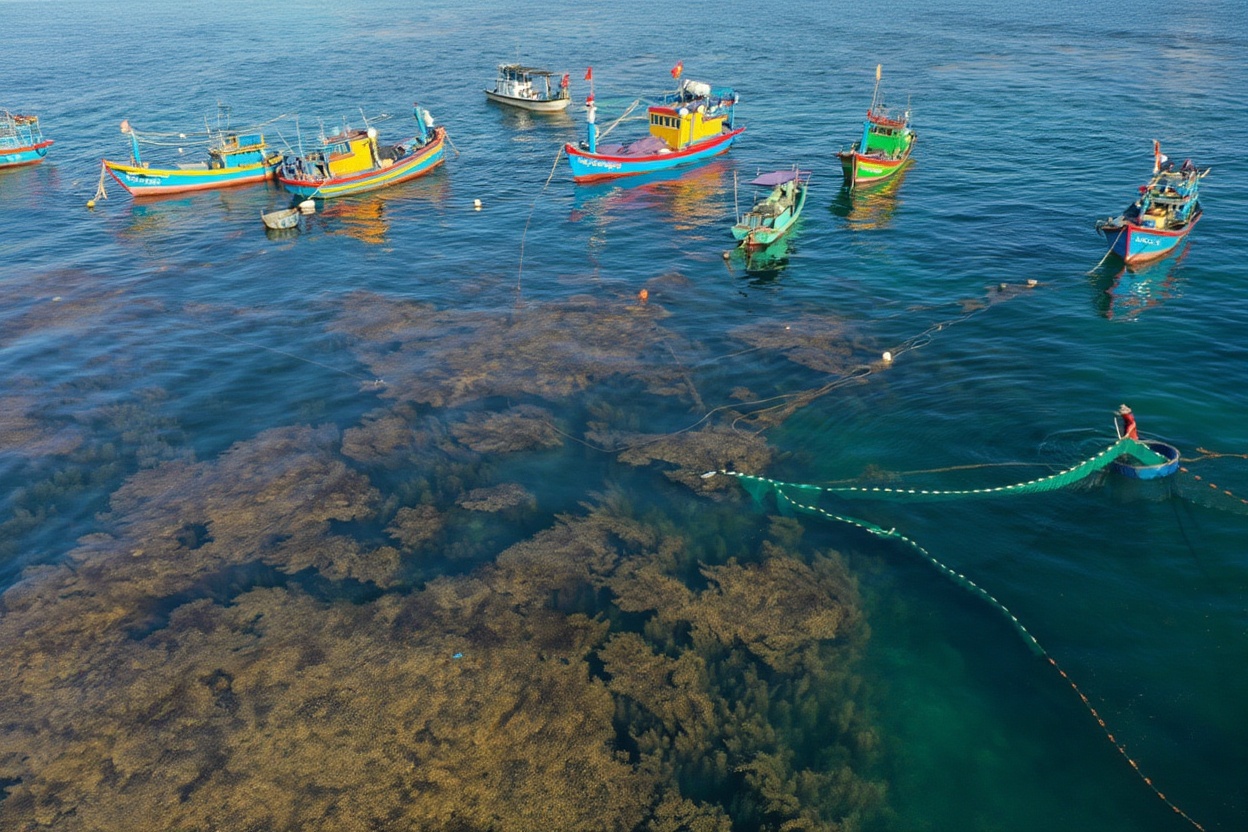
Bãi Xép (say: bai sep) is a small fishing cove in An Hải commune, about 30km north of Tuy Hòa city. The 2015 Vietnamese coming-of-age film Tôi Thấy Hoa Vàng Trên Cỏ Xanh was shot largely around this village, and Vietnamese domestic tourists have been coming ever since. Foreign travelers still barely know it exists.
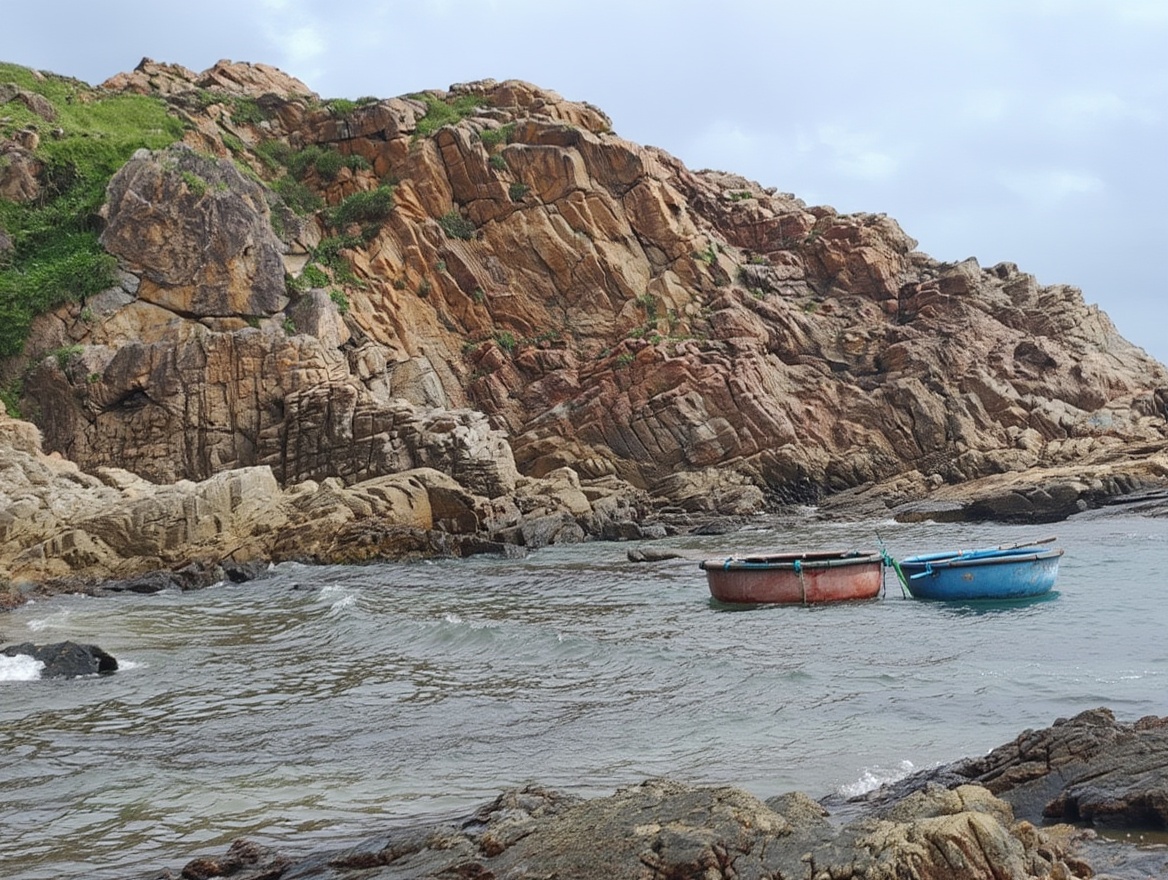
The beach itself is small — maybe 200m of coastline, sheltered by rocky outcrops on both sides. The water is green in the shallows, darker further out. Fishing boats anchor in the cove overnight; in the morning, they leave and the cove goes quiet except for the sound of water against rock.
Access: by motorbike on the coastal road to An Hải commune, or by boat from the An Hải fishing pier for 50,000 VND (~$2) per person — the boat trip takes about 10 minutes and gives you the arrival angle the film used.
✓Quick Answer
Go on a weekday before 9am. Bãi Xép on a Wednesday morning in March is a different beach from Bãi Xép on a Saturday afternoon in August. Same cove, same rocks — completely different mood. No entry fee, no facilities, no shade structures. Bring water.
The village around the beach is still a working fishing community. Kids play on the concrete jetty. Nets dry on bamboo poles. Old women sell coconuts from a wheeled cart near the path down to the water. The domestic tourism has been absorbed without changing much — which either means Phú Yên is more resistant to tourism pressure than most Vietnamese coastal towns, or the volume just hasn’t hit yet. Either way: go now.
The film that made Bãi Xép famous — Tôi Thấy Hoa Vàng Trên Cỏ Xanh, directed by Victor Vũ — is one of the highest-grossing Vietnamese films ever made. It’s set in 1980s rural Phú Yên and follows two brothers growing up near the coast. The seascape shots are genuinely beautiful, and they capture something true about the province: the quality of light here in the dry season, the particular gold it turns in the late afternoon, is different from anywhere else I’ve seen on the central coast. That’s not marketing. It’s just how the light falls east-facing at this latitude in dry-season Phú Yên.
→Who It’s For
Travelers who want the look and feel of an undiscovered Vietnamese coastal village — not a beach day. There’s no shade, no snorkeling (the water is shallow and rocky), and the swimming is only decent. If you want to lie on sand in the sun, Long Thủy is better. If you want to sit on a rock and stare at a fishing cove for an hour, Bãi Xép is better.
2. Bãi Môn — Where the Reef Meets the Sea
Bãi Môn (say: bai mohn) sits at the base of Mũi Điện headland — Vietnam’s easternmost point on the mainland. The beach is a crescent of dark sand at the foot of the cliffs, almost enclosed by rock on both sides. The waves here are bigger than anywhere else on the Phú Yên coast because there’s nothing between Bãi Môn and open ocean.
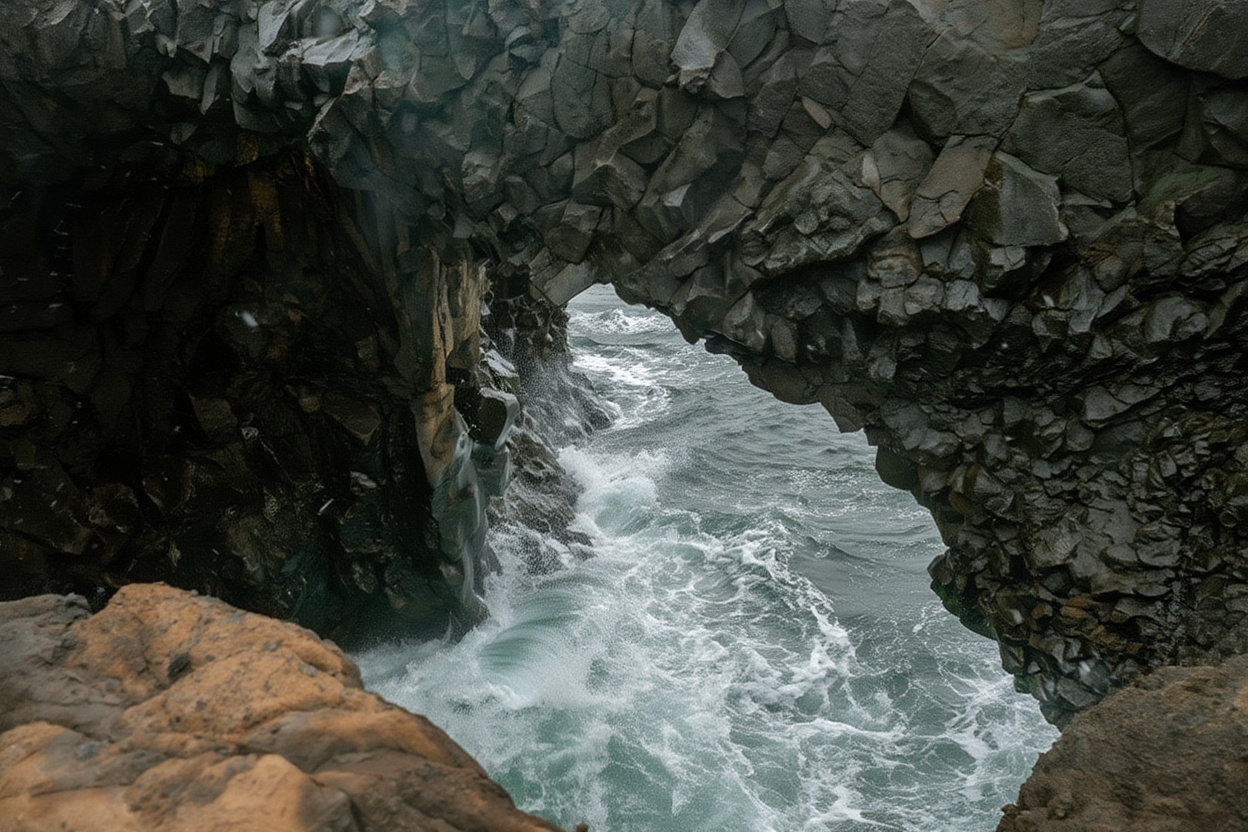
It’s 35km southeast of Tuy Hòa. Getting there involves the Đèo Cả mountain pass — which is one of the better coastal drives in central Vietnam and worth doing for itself. The road climbs to around 300m, with views over the bay to the east, then drops back down to sea level near the pier area. From the Mũi Điện parking area, a footpath leads to Bãi Môn — allow 20–25 minutes each way. The path is rough in sections; sandals work, but closed shoes are easier on the loose rock near the base of the cliffs.
✓Quick Answer
Bãi Môn is for the walk and the drama, not for swimming. The surf is unpredictable and there are no lifeguards — strong swimmers in calm conditions only. The view of the headland from the beach, looking back up at the 1890 French lighthouse 110m above you, is the actual attraction. No facilities. No entry fee. No phone signal.
I came here expecting a beach. What I found was more like the end of the world — in the best possible sense. Black sand, salt spray, cliffs on three sides, and the feeling that the continent had simply run out of room and stopped. The lighthouse up on the headland looks like it belongs in Brittany, not in a Vietnamese fishing province. Which is exactly the point.
ℹKnow Before You Go
Bãi Môn is best combined with a sunrise at Mũi Điện headland — the two are 20 minutes apart on foot. If you’re making the 4:30am ride from Tuy Hòa for sunrise, factor in an extra hour after to get down to the beach before the heat builds.
3. Long Thủy Beach — The Best Swimming in the Province
Long Thủy (say: long twee) is 15km south of Tuy Hòa — the most practical beach in Phú Yên for a full day’s swimming. Four kilometres of flat, open sand with a gradual depth increase that makes it safe and comfortable in the water. The waves are consistent but not punishing. The sand is pale and fine. On a weekday in April, you might be the only foreigner there.
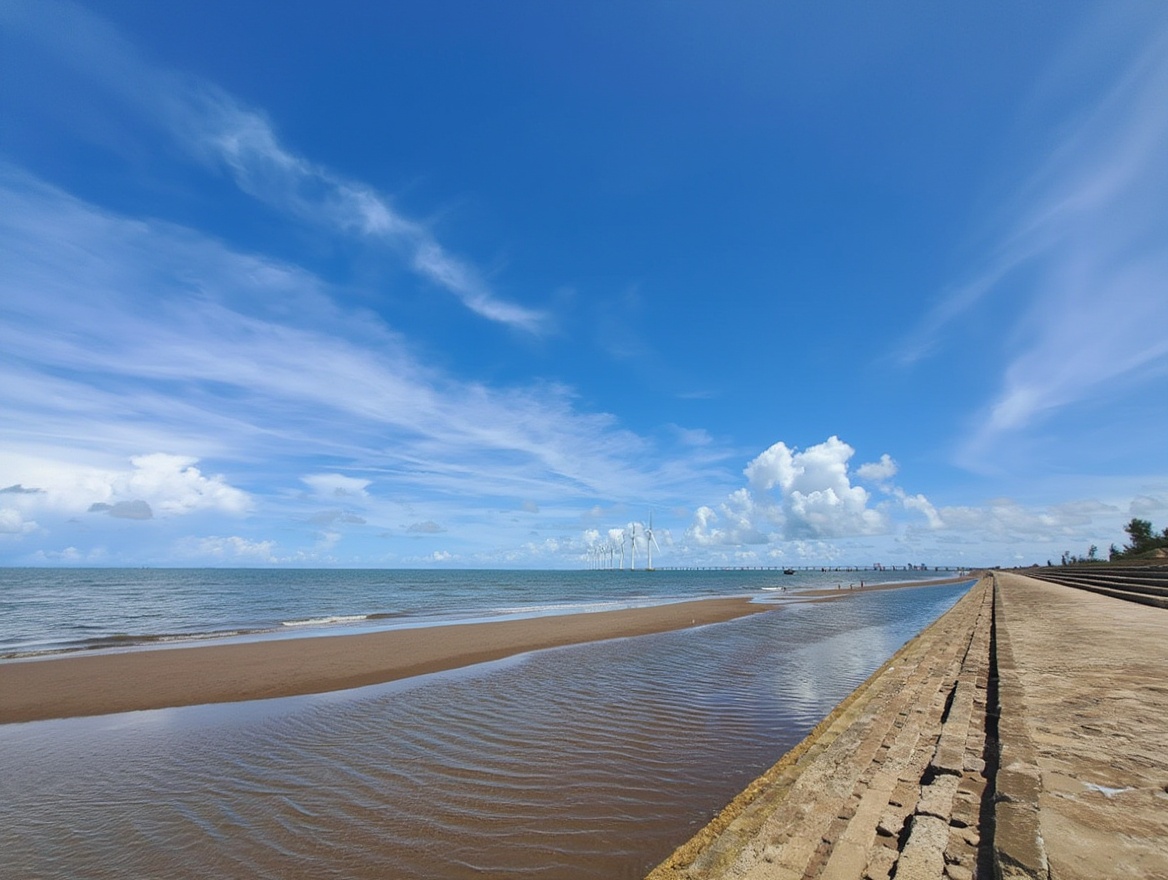
Long Thủy has a few small guesthouses and seafood restaurants directly behind the beach — the only beach in Phú Yên with this kind of built-in infrastructure. A grilled fish and cold beer situation is available at basic seafront places for 80,000–150,000 VND (~$3–6) per dish. Nothing elaborate, nothing overpriced, no laminated menu with photos. They cook what came off the boats.
The beach gets domestic Vietnamese weekend visitors in July–August, which is when it becomes noticeably busier — think families with coolers and umbrellas, not crowds. Outside those months, or on weekdays at any time of year, it’s quiet. The water is clearest between March and June before the southwest monsoon starts sending swells up the coast from the south.
One thing Long Thủy has that the other Phú Yên beaches don’t: you can stay here. The cluster of small guesthouses along the beach road charges 250,000–500,000 VND (~$10–19) per night for a clean private room with a fan and sometimes air-conditioning. Waking up 50m from the water and walking down to swim before breakfast is a different experience from commuting 15km from Tuy Hòa for the same beach. Worth considering if you want two full days on the water rather than on a motorbike.
★Jake’s Pick
This is the beach to actually use as a beach — swimming, napping in a hammock, eating grilled fish, watching the sunset. Combine it with a Vũng Rô snorkeling trip in the morning (they’re in the same direction south of Tuy Hòa), dry off at Long Thủy for the afternoon, and you have the best possible beach day in the province.
4. Bãi Tuy Hòa — The City Beach (Manage Your Expectations)
Bãi Tuy Hòa is right in the city — a wide, flat beach backed by hotels and the city promenade. It’s convenient, which is its main selling point. The water is swimmable but not spectacular. The sand is average. The main reason to be here is for sunsets, which are genuinely good, and for the evening promenade culture — locals walking, eating corn on the cob from vendors, flying kites as the heat drops out of the day.
It’s the default beach for anyone staying in Tuy Hòa who doesn’t want to ride 15–30km to get to water. As the base camp beach — the one you walk to after dinner — it works fine. As the reason to come to Phú Yên, it doesn’t.
⚠Real Talk
Every beach guide about Phú Yên includes Bãi Tuy Hòa with the same stock photo. The beach isn’t bad. It’s just not why you’re here. Spend 30 minutes at sunset, eat your corn, then go ride north or south the next morning.
5. Vũng Rô Bay — Not Really a Beach, But Better Than Most
Vũng Rô (say: voong roh) is a bay, not a beach — enclosed on three sides by mountains, calm in the dry season, crystal clear in a way that open-coast beaches in the province generally aren’t. The “beach” is a narrow strip of sand near the fishing pier, secondary to the snorkeling and boat trips. But the water quality is exceptional.
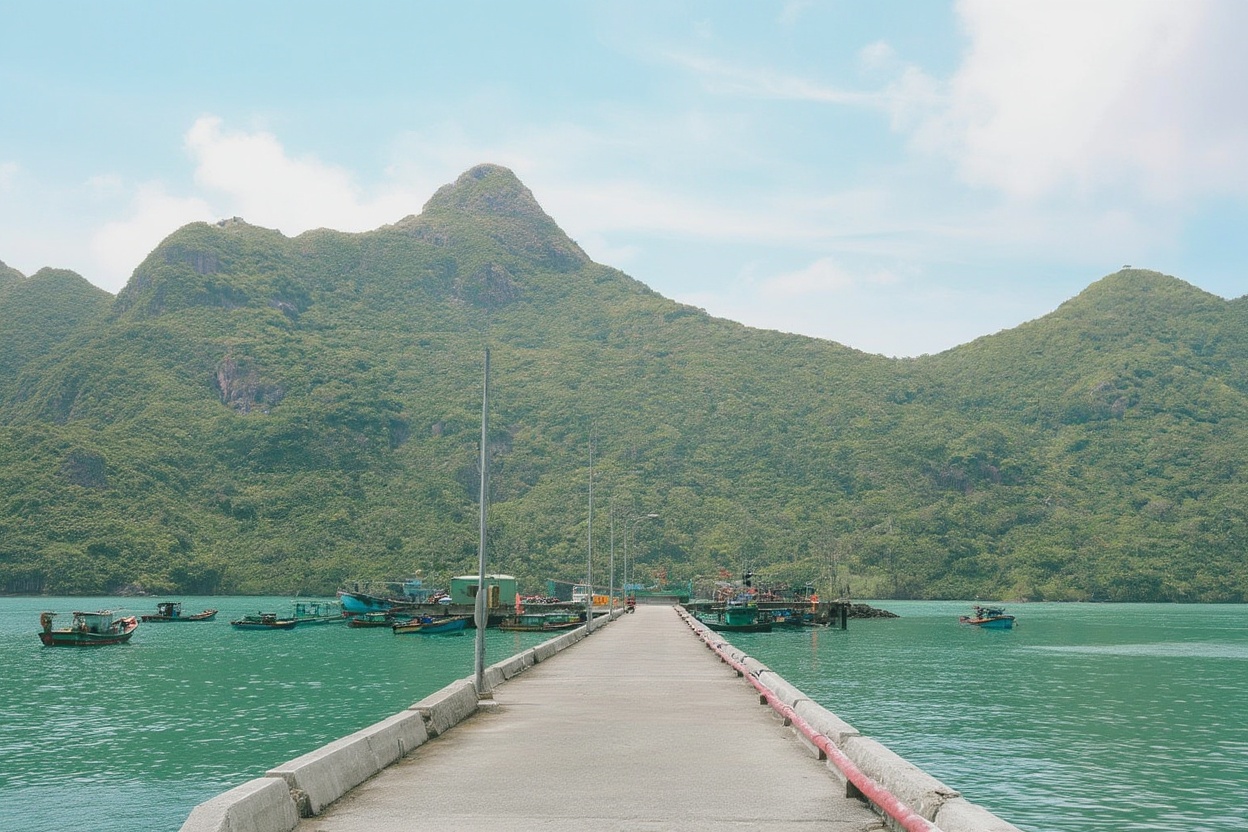
It’s 30km south of Tuy Hòa on the road toward Nha Trang, past the Đèo Cả pass. Snorkeling boat trips from the pier run during calm weather for around 150,000–250,000 VND (~$6–10) per person for a group trip — negotiate directly with the boat operators at the pier, not through hotels or tour desks in Tuy Hòa, which charge a finder’s fee.
The bay has wartime significance: a North Vietnamese cargo ship docked here secretly in February 1965, smuggling weapons south as part of the maritime Hồ Chí Minh Trail. It was discovered and became a defining moment early in the American war in Vietnam. There’s a small monument near the pier. Worth two minutes of attention.
⚠Real Talk
Vũng Rô snorkeling is weather-dependent and boat-operator-dependent. If there’s a swell, the trip doesn’t run. If there aren’t enough people to fill the boat, the operator may not go. Build flexibility into your planning — if it doesn’t work, the drive through Đèo Cả and the seafood lunch near the pier are both worth the trip regardless.
The Phú Yên Beach Order — How to Do All Five
All five beaches and bays fit into the same two-day motorbike circuit used for the general sightseeing loop:
Practical Notes for Phú Yên Beach Travel
Best time to visit: The dry season runs from January to August. Water clarity peaks between March and June before the southwest swell builds. July and August are hot and occasionally crowded with domestic Vietnamese summer visitors. October through December brings typhoon risk and occasional flooding — some beach access roads in the south become impassable. For month-by-month detail on all of Vietnam, the Vietnam weather guide covers the central coast specifically.
Getting to Phú Yên: Fly into Tuy Hòa Airport (TBB) from Hanoi or Ho Chi Minh City, or take the Reunification Express train to Tuy Hòa station — the train journey down the central coast past Đèo Cả is genuinely scenic. From Quy Nhon: 2 hours by sleeper bus, 80,000–120,000 VND (~$3–5). From Nha Trang: 2.5–3 hours.
Motorbike rental: Everything above requires a motorbike. Grab doesn’t operate reliably outside Tuy Hòa city. Motorbike rental shops cluster near the Tuy Hòa central market — 100,000–180,000 VND (~$4–7) per day for a semi-automatic. Check the brakes and lights before you accept the bike. The Đèo Cả mountain pass requires working brakes going downhill and a headlamp if you’re riding before dawn for a sunrise.
Sunscreen: The Phú Yên coast faces east, which means morning sun is direct and intense, especially on the dark basalt and dark sand beaches where the ground reflects heat upward. Bring strong SPF and reapply every hour. I arrived at Gành Đá Đĩa without sunscreen on a clear July morning, spent 90 minutes on the reef, and looked like a boiled prawn for three days. Not recommended — especially at Bãi Môn where there’s no shade and the dark sand radiates heat from below.
Drinking water: No beach in Phú Yên has vendors selling water at reasonable prices past the parking area. Bring your own. 1.5 litres minimum for a half-day beach trip. The heat and the riding dehydrate you faster than you’ll notice until you’re already behind.
What to eat near the beaches: Phú Yên is Vietnam’s top yellowfin tuna province — the cá ngừ đại dương (say: ka ngoo dai owong) comes out of the South China Sea every night and ends up on grills near the fishing piers by morning. Order it grilled whole, as cá kho (say: ka koh — braised in a clay pot with caramel and fish sauce), or raw in the thick sashimi style local to the province. Expect 80,000–150,000 VND (~$3–6) per dish at honest local spots. Any restaurant that’s added ocean-themed murals to its walls and put English descriptions next to the prices has adjusted its pricing accordingly — walk further until the menu is in Vietnamese only.
Phú Yên slots naturally into a central Vietnam coastal route — two nights here between Quy Nhon and Nha Trang adds almost nothing to your travel time and gives you beaches that neither city can match for character. For the full picture on what to do beyond the beaches, the Phú Yên things to do guide covers Gành Đá Đĩa, Mằng Lăng Church, and the coastal motorbike circuit.
Frequently Asked Questions
What is the best beach in Phú Yên?
It depends on what you want. Bãi Xép is the most atmospheric — a fishing village cove that became famous through a 2015 Vietnamese film, best on a weekday morning. Long Thủy is the best for actual swimming — 4km of flat, calm beach south of Tuy Hòa with gradual depth. Bãi Môn is the most dramatic — dark sand at the foot of cliffs at Vietnam’s eastern edge, better for views than for swimming.
Can I swim at Phú Yên beaches?
Yes, but selectively. Long Thủy is the safest and most comfortable for swimming — calm, gradual depth, no dangerous currents in dry season. Bãi Xép is rocky and shallow — better for wading than swimming. Bãi Môn has open-ocean surf that’s unpredictable — strong swimmers only in calm conditions. Vũng Rô Bay is calm and clear, with snorkeling from a boat rather than off the beach.
Are Phú Yên beaches crowded?
Not by Vietnamese beach standards. Even at peak season (July–August), Phú Yên doesn’t see the crowds that hit Đà Nẵng or Nha Trang. Weekdays are significantly quieter than weekends year-round. Most foreign travelers don’t come here yet — which is the whole point.
Do I need a motorbike to reach Phú Yên beaches?
For most of them, yes. Bãi Tuy Hòa is walkable from the city center. Everything else — Bãi Xép (30km north), Bãi Môn (35km southeast), Long Thủy (15km south), Vũng Rô (30km south) — requires transport. Motorbike rental in Tuy Hòa costs 100,000–180,000 VND (~$4–7) per day. If you don’t ride, hire a xe ôm (motorbike taxi) driver for a full day and negotiate 400,000–600,000 VND (~$15–23) upfront.
Two things worth sorting before you land: a Vietnam eSIM so you have data the moment you clear customs, and travel insurance — medical costs for uninsured foreigners in Vietnam are significant.
Airalo eSIMs activate instantly. Buy before departure — airport SIM queues in Vietnam can take 30+ minutes.
The Honest Summary
Five beaches in a province that barely appears in English-language travel content — none of them with beach bars, resort infrastructure, or Instagram activation campaigns. The fishing boats are real. The village at Bãi Xép is real. The lighthouse at Bãi Môn was built in 1890 and is still working. The tuna at the Tuy Hòa market came off a boat this morning.
The reason to come to Phú Yên before the boutique hotels and the boat tour operators figure it out is that right now, these beaches are just beaches. The province does not yet know it’s supposed to be a destination. When it does, it’ll be too late for the version you’re reading about now.
Rent the motorbike. Go north. Go south. Come back sunburned and full of grilled tuna. That’s the whole plan — and it costs less than a single night at a beach resort anywhere else on the central coast.