Updated June 2026
Why Grab Beats Metered Taxis in Vietnam
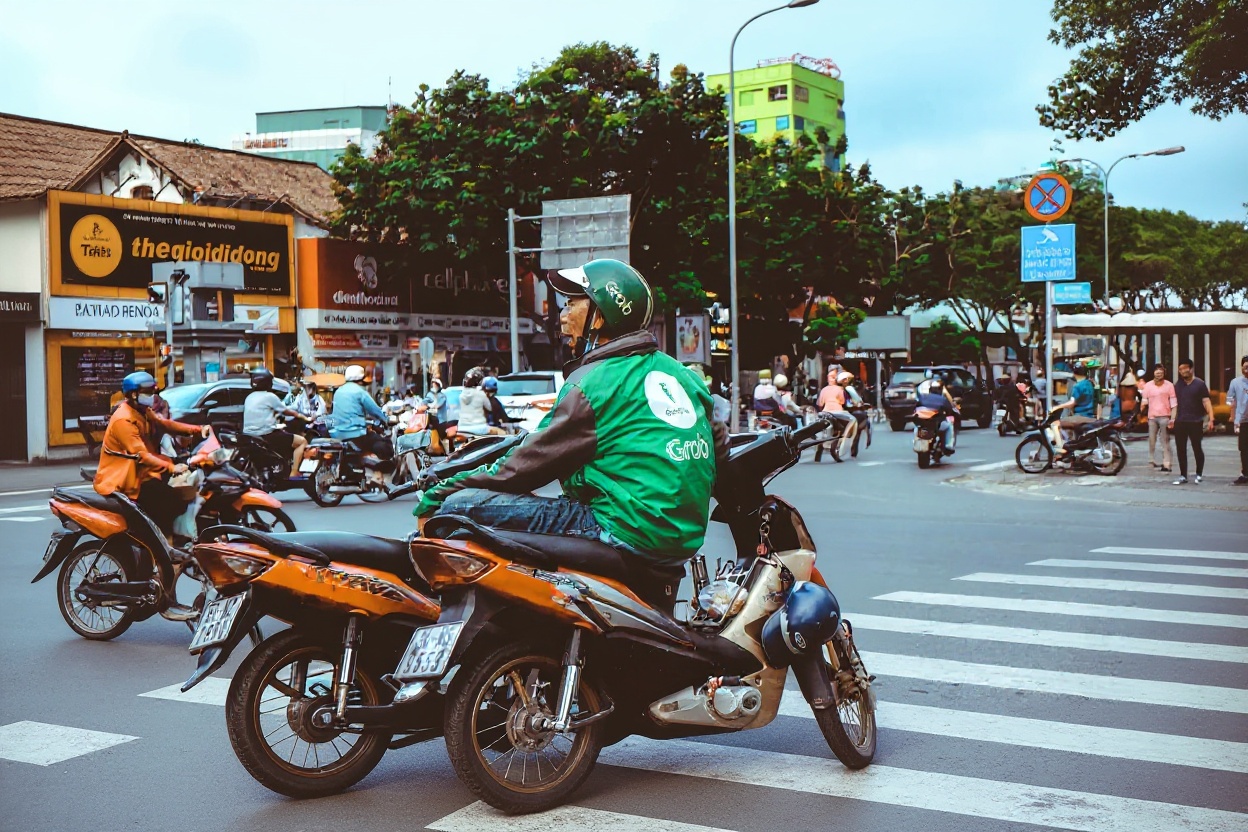
Traditional metered taxis in Vietnam work fine, but Grab has essentially won the market for independent travelers. The reasons are practical:
No negotiation. You see the price before you confirm. The driver can’t claim the meter was broken or that there’s a surcharge for luggage or that the route was longer than expected. The fare is the fare.
No language barrier. The app passes your destination to the driver via GPS. You don’t need to pronounce “Tây Hồ” or show a written address. The phone handles it.
Dispute mechanism. If a driver cancels last-minute, takes a wildly different route, or behaves badly, you can report it in the app and it actually matters — your Grab rating and payment history give you standing to file complaints that get acted on.
Surge is visible and predictable. When demand is high, the app shows you the current multiplier. You can wait 5 minutes or just pay it — but you know what you’re getting.
✓Quick Answer
Download Grab (free, iOS/Android) before you land. Create an account with your phone number — a local Vietnamese SIM makes this easier but international numbers work. Set your payment to card or Grab Pay. You’re ready to go.
Setting Up Grab in Vietnam
Download and Account Setup
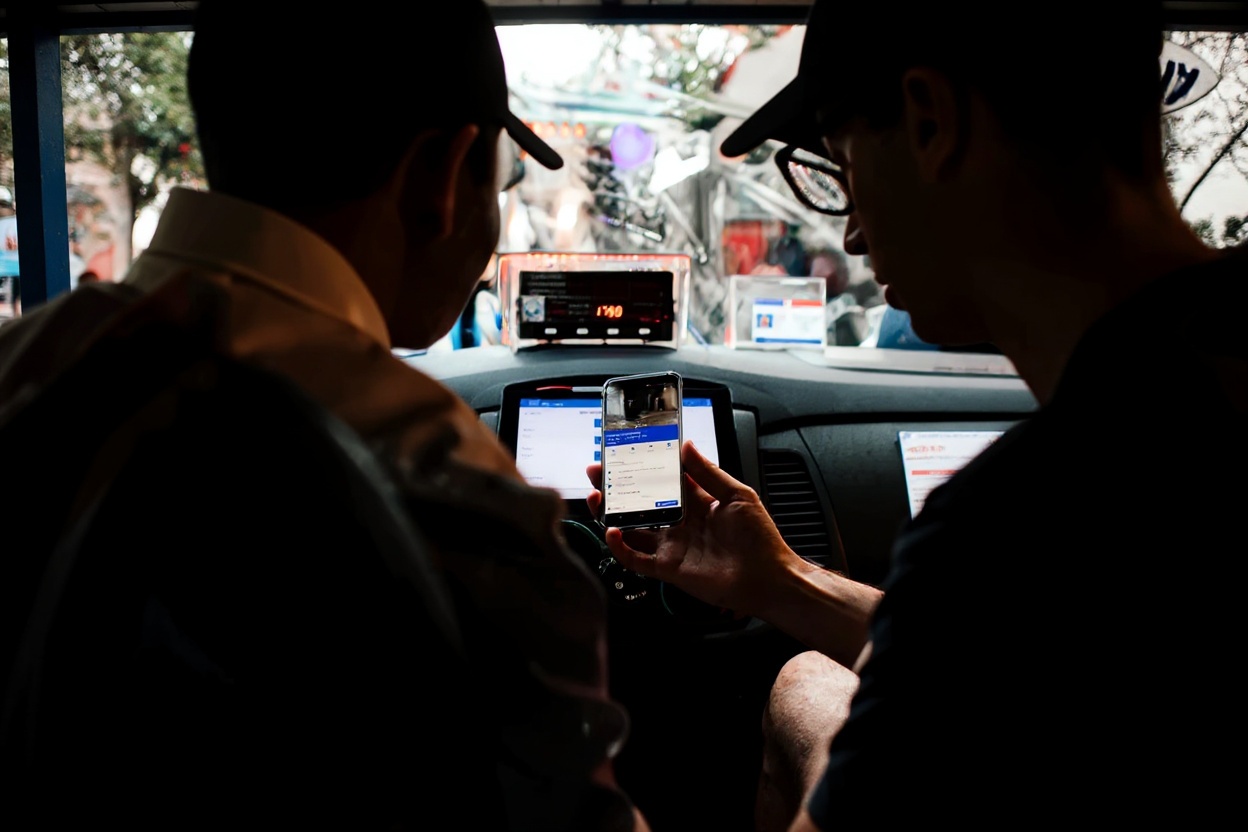
Grab is available in both App Store and Google Play. Download it before you land — airport wifi is congested and this is not the time to be setting up an account.
Account setup requires a phone number for verification. Your home country number works — you’ll get an SMS verification code. If you’ve already picked up a Vietnamese SIM (Viettel or Vietnamobile are cheapest — our Vietnam SIM card guide has the full breakdown), use that instead. It’s marginally faster for future verifications.
Payment Options
Grab in Vietnam accepts:
- Cash (Grab Cash) — pay the driver at the end of the ride. Works everywhere, no setup required.
- Card (Visa/Mastercard) — add your card in the app under Payment. Foreign cards work but sometimes get declined for the first transaction — try adding it before you need it urgently.
- GrabPay — Grab’s in-app wallet. You top it up via card or bank transfer. Allows split fare and is the smoothest payment experience.
- Momo or VNPay — Vietnamese e-wallets. Only useful if you’ve already set these up via a Vietnamese bank account.
My setup: card linked as backup, cash payment selected as default for most rides. Cash removes any card authentication friction and is what most drivers prefer anyway.
GrabBike vs GrabCar: Which to Use in Vietnam
This is the real decision point and it changes by city and situation.
When GrabBike Wins
In Hanoi’s Old Quarter during morning and evening rush hour (7–9am, 5–7pm), a GrabBike will get you somewhere in 15 minutes that a car takes 45 minutes to cover. The motorbike can filter through the traffic gaps that four-wheeled vehicles can’t. In the tight street grid of Hanoi’s 36 Streets, a GrabBike is often the only rational choice.
GrabBike also wins on price for any ride under 5km. You’re paying 25,000–50,000 VND for a distance that would run 80,000–120,000 VND by car.
What you’re giving up: weather protection (bring a rain jacket in monsoon season), helmet for luggage (you can’t take large bags), air conditioning. If it’s raining seriously or you have a backpack plus a duffel, get a car.
When GrabCar Wins
Airport runs are car territory. You have luggage, you’re not in a rush (you’ve built travel time into your airport arrival), and you want AC after a long flight. GrabCar from Nội Bài Airport (Hanoi) to Old Quarter: 250,000–380,000 VND (~$9.50–14.40). From Tân Sơn Nhất Airport (HCMC) to District 1: 150,000–250,000 VND (~$5.70–9.50).
Rain. If it’s genuinely pouring and you’re wearing anything other than a rain jacket, GrabCar is the right call. Vietnamese rain in monsoon season is not gentle English drizzle — it’s vertical water that soaks through your bag in 3 minutes.
Groups. Three people in a GrabCar costs the same as two GrabBikes but you stay together and can talk. The math flips at 5–6 people where GrabXL becomes the answer.
✓Quick Answer
GrabBike for anything under 5km or in heavy traffic. GrabCar for airport, rain, groups, or when you have real luggage. GrabBike is roughly 40–60% cheaper than GrabCar for equivalent distances.
Safety: Verifying Your Grab Driver
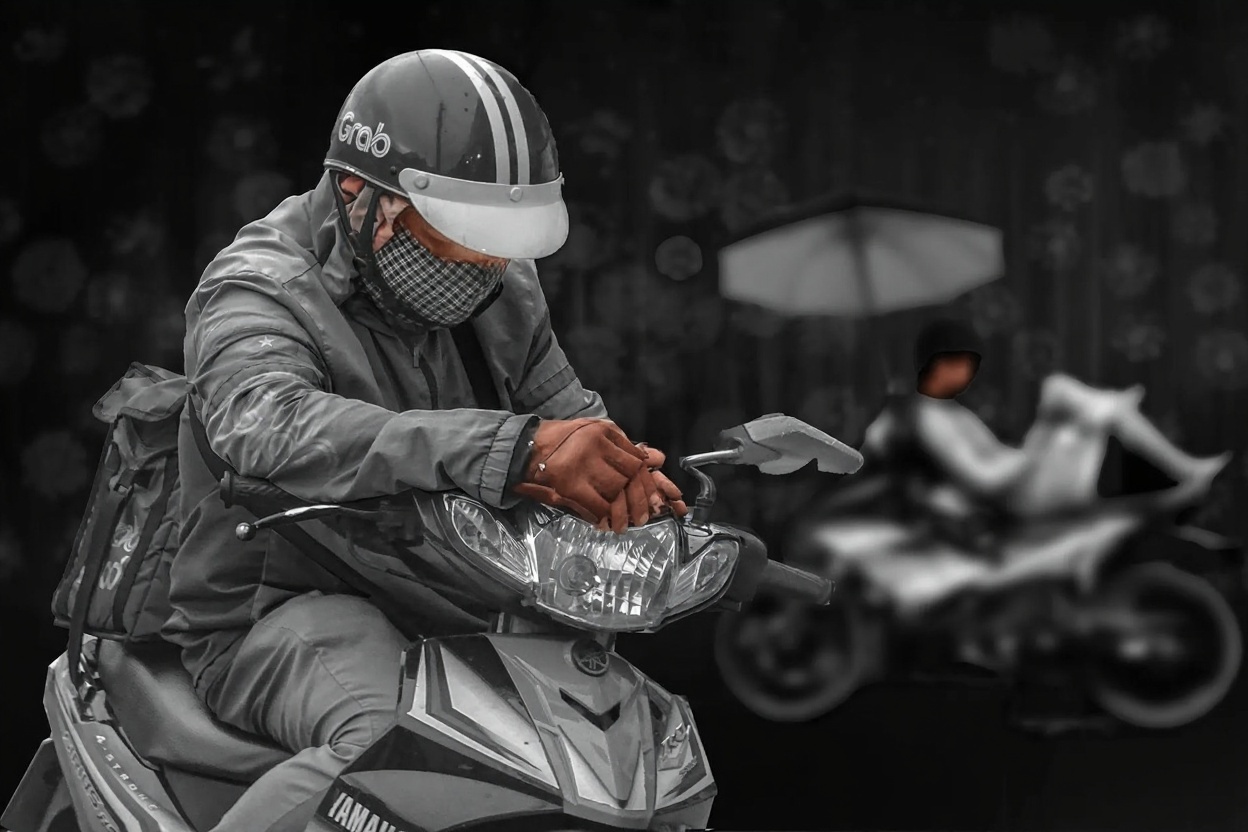
This is the part that matters more than people realize. Fake Grab drivers — people who wear green jackets and approach you at airports and tourist areas pretending to be Grab drivers but using unmetered pricing — are a real phenomenon, mostly concentrated around major airports and big tourist hotspots like Bến Thành Market in HCMC.
The verification process takes about 10 seconds and eliminates this risk completely:
- When your driver is assigned, note the name, photo, and license plate shown in the app
- When a vehicle approaches, check the plate against the app before you get in or on
- If the driver’s face doesn’t match the photo, decline the ride and request a new driver
- At airports: walk past the crowd of people approaching you at arrivals and book a Grab from inside the terminal or in the designated rideshare pickup area
A legitimate Grab driver will wait patiently while you check their plate. They’re used to it. A fake Grab driver will pressure you to get in quickly, tell you “the app is slow,” or claim the plate “just changed.” Trust the app over the driver’s story.
ℹKnow Before You Go
Nội Bài Airport (Hanoi) has a dedicated Grab pickup zone outside the terminal. Ask airport staff for “taxi công nghệ” (say: tak-see kong-neh) pickup zone. Avoiding the street-level metered taxi queue saves you both money and argument.
Grab in Each Major City: What’s Different
Hanoi
Hanoi traffic is chaotic in ways that Grab doesn’t fix — it just puts you in the chaos with a clear price. GrabBike is heavily recommended for Old Quarter navigation. Grab drivers in Hanoi are generally reliable but sometimes need to call you to clarify your pickup location in the maze of Old Quarter streets — pick up the call, they’re not scamming you, the street numbering is genuinely confusing.
Airport pickups at Nội Bài run 250,000–380,000 VND for GrabCar to Old Quarter (35km). This is a good value compared to the airport transfer services offered by hotels.
Ho Chi Minh City (Saigon)
HCMC is Grab’s strongest market in Vietnam. Coverage is excellent everywhere, wait times are short even in outer districts, and the motorbike culture means GrabBike is a completely normal way to get across town. Surge pricing is more common here during rain and rush hour than in Hanoi.
Fake Grab drivers cluster at Tân Sơn Nhất Airport and around Bến Thành Market. The plate-check protocol is especially important here.
Da Nang
Grab works well in Da Nang but the city is spread out enough that GrabCar is often more appropriate than GrabBike — distances between the beach, the city center, and Marble Mountain are car-appropriate. The Da Nang things to do guide has logistical detail on getting around the city’s spread-out attractions.
Hoi An
Hoi An’s Ancient Town is vehicle-restricted (no motorized transport allowed on many streets). Grab drops you at the edge of the walking zone. For the Ancient Town itself, rent a bicycle (30,000–50,000 VND/day) — you can drop a Grab pin at your hotel, get a ride to a bike rental shop, and switch to pedal power for the rest of the day.
Hue
Grab coverage is good in Hue city. For the royal tombs (Tự Đức, Minh Mạng) south of the city, GrabBike or GrabCar gets you there — the tombs are spread out over a large area and cycling between them in the heat is miserable without a good touring loop. See our Hue things to do guide for the logical order to visit them.
Grab Pricing: What Rides Actually Cost in 2026

Pricing varies by city, time of day, and whether there’s surge pricing. Here are real-world fares from 2026 to calibrate your expectations:
When Does Surge Pricing Hit?
Grab surge in Vietnam clusters around four situations: morning rush hour (7–9am weekdays), evening rush hour (5–7pm weekdays), afternoon rain events (3–6pm during monsoon months), and late night on weekends after 11pm when bars clear out.
The surge is visible in the app before you confirm — you see “1.3x” or “1.8x” next to the fare. The fix is simple: wait 5–10 minutes and refresh the estimate. Surge pricing in Vietnam usually resolves faster than in Western cities because there are a lot of drivers in the system. If it’s truly raining hard in HCMC at 5pm, sometimes you just pay the 1.8x because there’s no sensible alternative.
GrabFood and Other Grab Services Worth Knowing
The Grab app in Vietnam bundles several services that most tourists never open. A few are genuinely useful:
GrabFood is the food delivery arm. Coverage in Hanoi, HCMC, Da Nang, Hoi An, Hue, and most secondary cities is excellent. Delivery runs 20,000–35,000 VND per order. Minimum order is typically 50,000–70,000 VND. The range of restaurants is comprehensive — including local Vietnamese spots that don’t have English menus, where the dish photos in the Grab listing are the easiest way to order. For remote work days, rainy afternoons, and post-midnight hunger, GrabFood is worth having set up.
GrabExpress (package delivery) is occasionally useful for travelers who buy things at markets and want them delivered to a later destination within the same city — say, buying ceramics at Bát Tràng pottery village outside Hanoi and having them delivered to your hotel rather than carrying them. This is an edge case but it exists.
GrabRent appears in the HCMC version of the app — it’s a by-the-hour car hire service with a driver, useful for day trips to the Mekong Delta where you want flexibility rather than a fixed tour. Pricing is roughly 500,000–700,000 VND for 4 hours. Not the cheapest option but the GPS-trackable driver and Grab dispute mechanism make it safer than hiring an unmarked private car from a hotel.
Grab vs Xe Ôm (Motorbike Taxi): When to Go Local
Vietnam’s traditional xe ôm (say: say-ohm) drivers still exist, mostly older men with motorbikes waiting at corners near markets, bus stations, and tourist sites. They’re not in the app. You negotiate price in person.
When xe ôm wins over Grab: when there’s no mobile data signal, when you’re at a spot where no Grab driver will go (deep in a market, a narrow alley), or when the negotiated price genuinely beats the app (rare but happens for very short trips). When Grab wins over xe ôm: every other time. The guaranteed price, driver accountability, and GPS routing removes all the variables that make xe ôm negotiation uncomfortable for first-time visitors.
The haggling culture around xe ôm is specifically addressed in our Vietnam haggling guide — but honestly, Grab has made it mostly irrelevant for getting around cities.
Jake’s Confession: The Time Grab Saved Me From Myself
In late 2021, before I really trusted the app, I spent 15 minutes arguing with a metered taxi driver outside my hotel in Hanoi because the fare came out to 185,000 VND for a 4km journey that Grab quoted at 45,000 VND for a GrabBike. The driver had “taken a necessary detour” through what appeared to be two extra districts. We settled at 120,000 VND after I showed him the Grab price on my phone, which felt like a win at the time but really wasn’t.
After that I used Grab exclusively for 4 years. In hundreds of rides across Vietnam I can count the genuine problems on one hand — one driver who couldn’t find the pickup location (resolved with a phone call), one surge pricing situation I didn’t read carefully. That’s it. The app works. Use it.
Grab Tips That Take a Week to Figure Out (Here Instead)
Pin your pickup location precisely. Grab’s default GPS pin often lands you in the middle of a block rather than at the exact building. Drag the pin to the exact entrance where you’ll be standing — the narrow alleys of the Old Quarter in Hanoi particularly need this treatment. Drivers arrive at the pin, not at a general address.
Add a note for the driver. The Grab app has a “note to driver” field. Use it. “White building, blue gate” or “opposite the 7-Eleven” saves you the experience of standing on a corner while your driver circles the block calling you four times.
Rate consistently and honestly. Your passenger rating matters. Drivers accept or decline ride requests partly based on passenger rating. Vietnamese riders rarely give below 5 stars for anything reasonable. If you rate 3 stars because the car smelled like cigarettes, you’re calibrating against a different cultural standard. Rate 5 unless there was a genuine problem.
GrabBike helmets. Drivers carry one extra helmet for passengers — you don’t need to bring your own. The helmets are typically the basic open-face style. They meet Vietnamese legal requirements. If you’re doing a lot of GrabBike riding and want something better, a lightweight half-shell helmet (available at Decathlon in Hanoi, HCMC, and Da Nang for around 300,000–500,000 VND) is a reasonable investment for a longer trip.
Cancel fee awareness. Grab charges a cancellation fee (typically 15,000–25,000 VND) if you cancel after the driver has already started moving toward you. This is reasonable — they’ve committed their time. If you book and immediately realize you entered the wrong destination, cancel within 30 seconds of confirming to avoid the fee. For general transport planning, see our Vietnam transport guide.
Be ready at the pickup point. Vietnamese Grab drivers cancel quickly if they don’t see you when they arrive. The app shows you the driver moving toward you in real time — watch it and walk to the pickup point when they’re about 2 minutes away, not 30 seconds. Drivers have queue pressure to complete multiple rides and will cancel on a passenger who’s making them wait more than 3–4 minutes without communication.
Rainy day strategy. When it starts raining hard in any Vietnamese city, demand spikes and Grab drivers either surge their prices or temporarily go offline. Open the app, check the surge multiplier, and decide if you want to pay it or wait it out somewhere covered. If you have time flexibility, 15–20 minutes of waiting in a café after a heavy shower usually brings surge prices back down. For a full guide to dealing with Vietnam rain, our Vietnam rainy season guide has city-specific advice.
FAQ: Grab in Vietnam
Is Grab safe in Vietnam?
Yes, with one caveat: always verify the driver’s plate number and photo before getting in or on. Legitimate Grab drivers will wait while you check. Fake Grab drivers wearing Grab jackets but not registered in the system are common at airports and tourist areas. The app’s verification system eliminates this risk if you use it consistently.
Can I use Grab in Vietnam without a Vietnamese phone number?
Yes. You can register with your home country phone number for SMS verification. You don’t need a local SIM to use Grab, though a Vietnamese SIM (available from Viettel or Vietnamobile for about 100,000–150,000 VND) makes the overall trip easier for data access.
Is Grab cheaper than taxis in Vietnam?
Usually yes, especially for GrabBike vs metered taxis. GrabCar vs reputable metered taxis (Vinasun, Mai Linh) is closer — sometimes GrabCar is slightly more, sometimes less, but the price certainty and no-negotiation aspect makes it worth any small premium. Avoid unmarked “taxis” with no meter — these are almost always overpriced.
Does Grab work in smaller Vietnamese cities?
Grab covers all major Vietnamese cities and most secondary towns including Hà Giang, Ninh Bình, Đà Lạt, and Quy Nhơn. In very small towns or remote areas, coverage drops off. In places like Hà Giang town, xe ôm (local motorbike taxis, negotiated in person) are often the only option for getting out to the Loop.
What’s the difference between Grab and Be in Vietnam?
Be (from VNG Corporation) is Grab’s main Vietnamese competitor. It has similar pricing, good coverage in HCMC and Hanoi, and can be slightly cheaper during Grab surge periods. Most travelers use only Grab since it’s internationally known, but downloading both apps gives you comparison leverage during surge situations.
Is GrabFood worth using in Vietnam?
Yes. GrabFood covers most Vietnamese dishes at most restaurants, delivery runs 20,000–35,000 VND (~$0.75–1.35) per order, and minimum orders are typically 50,000–70,000 VND. For days when you’re working from your guesthouse and don’t want to deal with going out for lunch, it’s genuinely useful.