Updated June 2026
Which Bike to Get: Semi-Auto, Manual, or Scooter
This is the decision that matters most and that most guides gloss over. Vietnam has three main rental categories:
Semi-automatic (xe số — say: say-soh): A clutchless manual — you shift gears with your left foot but have no clutch lever. The most common bike in Vietnam. Honda Wave, Yamaha Jupiter, Suzuki Smash. Reliable, fuel-efficient (2L/100km), easy to find parts for. The bike that Vietnamese people actually ride. This is the right choice for anyone comfortable on a bicycle and willing to spend 20 minutes practicing in a parking lot.
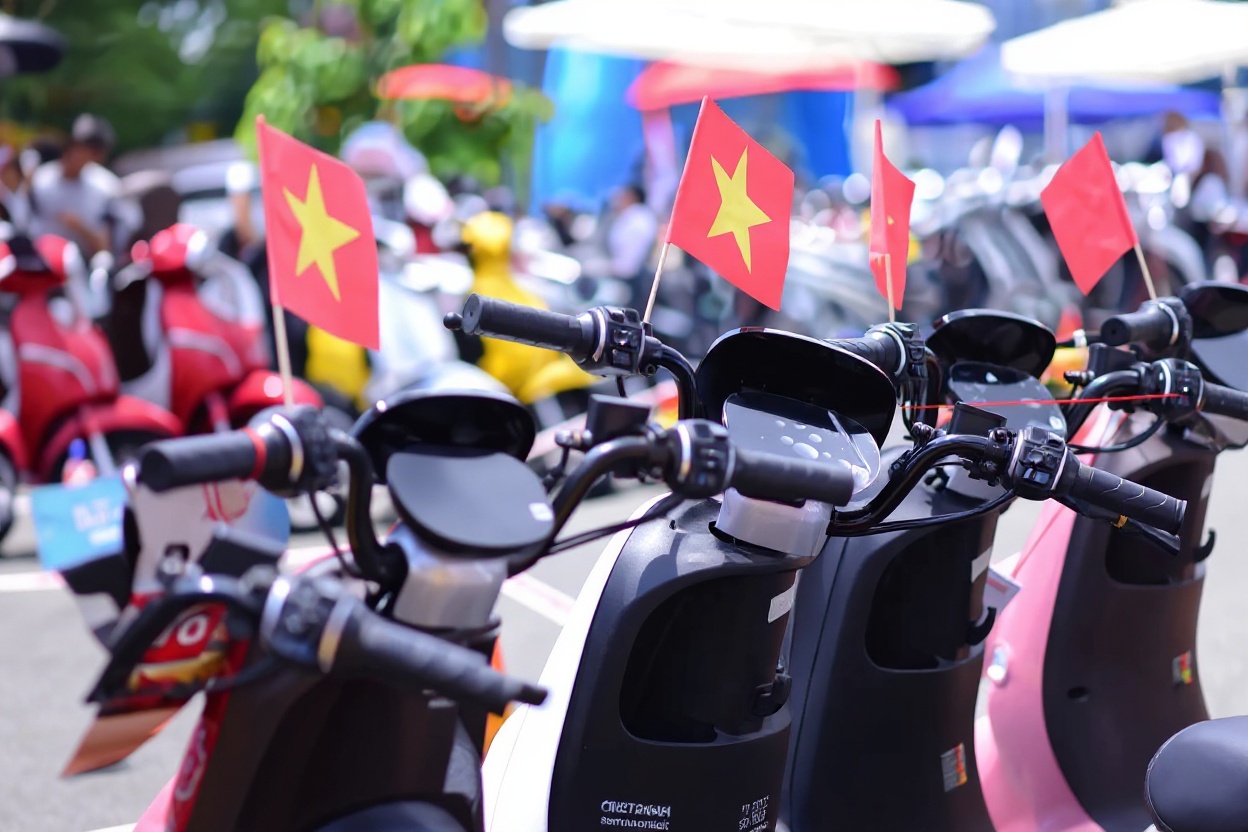
Scooter/automatic (xe tay ga — say: say-tie gah): Twist-and-go. Honda Vision, Yamaha Nouvo, Sym Angel. Easier to learn, slightly more expensive to rent (150,000–250,000 VND/day), heavier and less maneuverable on mountain roads. Fine for city riding. Not ideal for Ha Giang or mountain passes where a manual or semi-auto gives better control.
Manual (xe côn — say: say-kon): Full clutch, usually a 125cc or 150cc trail bike (Honda XR, Yamaha WR, or an older Minsk). For mountain routes — Ha Giang, Hai Van Pass, the Ho Chi Minh Trail — this is what experienced riders choose. Harder to learn, more expensive (200,000–350,000 VND/day), more power where it counts.
✓Quick Answer
First time on a motorbike in Vietnam: semi-automatic in a city. City riding comfortable, planning mountain routes: semi-auto or manual 125cc. Experienced rider doing Ha Giang Loop: manual 125–150cc trail bike. Just want to explore a beach town: scooter.
Rental Prices by City and Bike Type (2026)
Where to Rent: Best Cities and What to Look For
Hanoi
The best rental area in Hanoi is the Old Quarter, specifically the streets around Bảo Khánh and Hàng Bè. Tigit Motorbikes (multiple locations) is the most consistently recommended shop for tourists — their bikes are newer, their contracts are clearer, and they have an English-speaking process for deposits and insurance. Expect to pay 10–20% more than street shops, which is worth it for the paperwork clarity.
Street shops on Bảo Khánh offer lower prices but more variable bike condition. Walk in with a flashlight if you have one — check the chain tension, the brake response, and whether the lights work. If the shop is annoyed that you’re checking the bike, leave.
Hoi An
Hoi An is a strong renter’s market because the city is full of guesthouses that rent bikes as a side business. Quality varies enormously. The shops on Hai Ba Trung street (near the Ancient Town main entrance) are tourist-focused and charge tourist prices but maintain their bikes reasonably well. Budget 130,000–180,000 VND/day for a Wave or equivalent. Hoi An roads are flat and well-maintained — this is a good city to practice on before heading to harder terrain.
Da Lat
Da Lat is the motorbike city that Vietnamese riders actually recommend. The surrounding roads — through pine forests, past waterfalls, up to coffee plantations — are genuinely excellent motorcycle roads with low traffic. Rental shops concentrate on Phan Dinh Phung street and near the central market. Easy Rider tour operators also rent here independently of tours.
Ha Giang
Ha Giang town has motorbike rental concentrated near the bus station and on Nguyen Trai street. If you’re doing the Loop, rent from a shop that also does loop tours — they know the roads and will give you better advice on what to take than a city commuter shop. Budget 200,000–280,000 VND/day for a manual bike suitable for the mountain roads. See the full advice in our Ha Giang Loop motorbike guide.
The Contract: What You’re Actually Signing
Most rental contracts in Vietnam are in Vietnamese with minimal translation. This matters more than most travelers realize. The key things to establish before signing:
Deposit amount and form: Shops take either a cash deposit (1–3 million VND — ~$40–115) or your passport. Never leave your actual passport — only a photocopy. If a shop requires your original passport, find another shop. This is a firm rule.
What you’re liable for: Standard contracts make you responsible for any damage not present on pickup. Do a full walkaround before accepting the bike and photograph every scratch, dent, and scuff. Send the photos to yourself with a timestamp. This takes 5 minutes and saves significant argument later.
The “theft” clause: Some contracts make you fully liable for bike theft. In a city where the value of the bike is 8–15 million VND (~$300–570), this is a meaningful exposure. Park at attended parking lots (bãi giữ xe — say: by dzoo say), which exist everywhere and cost 5,000–10,000 VND, rather than leaving the bike on the street overnight.
⚠Real Talk
The “lost bike” scam exists: a rental shop employee follows you, “recovers” your bike while you’re parked, and then demands the full bike value from the foreigner. It happens rarely, but it happens in tourist-heavy cities. Renting from established shops with real reviews (Google Maps, TripAdvisor) significantly reduces this risk compared to street walk-up rentals.
Licenses, Police, and the Legal Reality
The Vietnamese traffic law requires a Vietnamese license to operate any motorbike over 50cc. Most rental bikes are 110cc or above. Most travelers don’t have the correct license. Most travelers ride anyway.
The practical enforcement situation: traffic police (cảnh sát giao thông — say: kahn sat yow-tong) do set up checkpoints, and foreign drivers do get stopped. In most cases for minor infractions (no helmet, wrong lane), the fine is 100,000–300,000 VND (~$4–12) paid on the spot. For license checks specifically targeting foreigners without Vietnamese licenses, the outcome varies by city and officer.
Hanoi and HCMC have more enforcement than smaller cities. Rural areas and mountain routes have minimal traffic police presence. The international driving permit (IDP) is often checked as a substitute for a Vietnamese license, but its legal validity is contested — it’s more of a good-faith document than a legal solution.
For the full paperwork picture, see our Vietnam driving license guide.
ℹKnow Before You Go
Travel insurance is the actual safety net here, not the license situation. Make sure your policy covers motorbike riding above 50cc. Many budget travel policies explicitly exclude it. Check the policy wording for “motorized vehicles” or “motorcycle” before you buy.
Buying a Bike vs Renting: When It Makes Sense to Own
If you’re planning more than 3 weeks in Vietnam and want the freedom to change plans without checking out logistics, buying a used bike changes the math entirely. The classic north-to-south route from Hanoi to Saigon — about 1,700km — is one of the most celebrated motorbike journeys in Southeast Asia and is designed to be done on a bike you own and resell at the other end.
Buy in Hanoi, sell in Saigon (or vice versa): A roadworthy Honda Wave 110cc costs 4,000,000–7,000,000 VND (~$152–266) in Hanoi. After 2–4 weeks of riding south, resale in Saigon typically returns 3,000,000–5,500,000 VND (~$114–209). The total depreciation — your real trip cost — is usually 1,000,000–2,000,000 VND (~$38–76). Compare that to 30 days of rental at 150,000 VND/day = 4,500,000 VND. Ownership wins significantly for longer trips.
Where to buy: Hanoi: the area around the Xe Đạp Thống Nhất market on Đinh Tiên Hoàng and the secondhand sections of the market on Chùa Bộc. HCMC: Facebook groups like “Vietnam Coracle Motorbike Buy and Sell” and “Vietnam Motorbike Travelers” are where most of the legitimate deals happen. Expect multiple private sellers and a few dealers — dealers are easier but price higher.
The paperwork situation: Vietnamese motorbike registration papers (cà vẹt xe — say: kah vet say) travel with the bike, not the owner. As a foreigner you cannot legally register in your own name, so you’ll hold onto the blue registration book and a “transfer of possession” letter (often hand-written in Vietnamese) that establishes you as the current keeper. This is informal but is what every foreigner-to-foreigner bike sale runs on. When you resell, you pass the papers along the same way.
ℹKnow Before You Go
The 3-week rule: under 3 weeks, rent. Three weeks to two months, buy. Over two months living in one city, look into long-term lease arrangements from local shops (some offer monthly rates with maintenance included). The crossover point is real and worth calculating before you book anything.
Road Rules and Vietnamese Traffic Logic
Vietnamese traffic operates on a system that looks like chaos from a car window and makes complete sense from the handlebars after about two hours. Understanding the actual logic saves more stress than any rule book.
The honk is not aggression: In Vietnamese driving culture, a short honk means “I’m here, I’m passing, please don’t move into my path.” It is purely informational — the way a ship uses a foghorn. Responding with aggression to being honked at is a cultural misread that occasionally makes situations dramatically worse.
The right of way logic: Size matters on Vietnamese roads. Trucks and buses move first. Cars defer to trucks. Motorbikes defer to cars. Pedestrians defer to motorbikes (except in tourist areas where this logic inverts). What looks like someone cutting you off is usually someone correctly following the understood hierarchy. Yield to size, move through gaps, don’t stop in the middle of an intersection.
Turning left at intersections: On a busy road, turning left across oncoming traffic is genuinely one of the harder maneuvers for new riders. The local technique: drift right, wait for traffic to pause slightly, then arc across. Alternatively — turn right, do a U-turn, and approach from the correct direction. Looks inefficient. Prevents accidents.
Rural vs city driving: City traffic (Hanoi, Saigon) is dense but slow — 20–30km/h average in rush hour. The risk is low speed collisions and scrapes. Rural routes are the opposite — wide roads, high speeds, and the occasional pothole or dog that appears without warning. More speed means more consequence if something goes wrong. Treat each environment with appropriate respect.
For the complete guide to the north’s most demanding route, see our Ha Giang Loop motorbike guide — including which bike to take, which sections are genuinely dangerous, and where the road is closed in rainy season.
More Cities: Saigon, Nha Trang, Hue
Saigon (Ho Chi Minh City)
Saigon is the deepest end of the pool for first-time Vietnam riders. The density is real — 9 million people, several million registered motorbikes, and a traffic pattern that veteran riders describe as “a river that never stops.” If you haven’t ridden a motorbike in a busy Asian city before, Saigon is not where to start learning. The payoff when you’re comfortable: riding through Saigon is genuinely one of the most alive-feeling experiences the country offers.
Rental in Saigon: Phạm Ngũ Lão street (the backpacker area in District 1) has the highest concentration of rental shops. Prices run 150,000–220,000 VND/day (~$5.75–8.50) for a standard semi-auto. Tigit has a location here as well. The Saigon traffic means you’ll put fewer kilometers on the bike per day than northern cities — budget for the experience rather than the distance.
Nha Trang
Nha Trang is underrated for motorbike rental because most visitors are beach-focused and don’t bother. The roads north of the city — toward Đại Lãnh beach and the Vân Phong Bay coastline — are genuinely excellent: coastal highway with minimal traffic, great views, low difficulty. A half-day north with a swim stop costs you 130,000 VND in rental and about 40,000 VND in petrol. Rental shops cluster near the main tourist strip on Trần Phú.
Hue
Hue is the ideal intermediate city: not too large, excellent roads in every direction, and the Hai Van Pass just 90km south. Most guesthouses on Nguyễn Công Trứ (the main backpacker street) rent bikes directly. Prices are the cheapest of any major tourist city — 120,000–150,000 VND/day for a Wave. The road from Hue to Da Nang over Hai Van Pass is one of the finest 90km of tarmac in the country — doable in a long half-day with stops. See our full Vietnam transport guide for all the transit options between cities.
Jake’s Confession: The Rental That Went Wrong
2022, Hoi An. I rented a Honda Wave from a shop on Hai Ba Trung for 130,000 VND/day. Didn’t photograph the existing damage because I was in a hurry. Rode to An Bang Beach. Parked on the sand — bad idea, the kickstand sank. Bike fell over, scratched the right mirror mount. Rental shop charged me 400,000 VND (~$15) for a mirror mount that costs 40,000 VND at a xe máy shop. I paid it because I hadn’t photographed the pickup condition. The lesson cost more than the repair.
Five-minute walkaround with photos. Every time. Without exception.
Practical Tips That Save You Money and Trouble
Fuel: Most cities have Petrolimex stations every 2–3km. Rural areas thin out — fill up when you see a station with more than a quarter tank remaining on mountain routes. Petrol costs roughly 25,000–28,000 VND/liter (~$1/liter). A Wave holds about 4 liters and gets 150–200km per tank.
Repairs: Vietnam has more xe máy repair shops per capita than almost any other country. A flat tire (vá xe — say: vah say) is fixed roadside for 20,000–30,000 VND (~$0.75–1.15). Chain adjustments, brake pads, oil changes — all available at small shops along any main road for under 100,000 VND. The infrastructure for bike problems is genuinely excellent.
Parking: Always use attended lots (bãi giữ xe) overnight. The attendant gives you a ticket, you pay 5,000–10,000 VND when you collect. Your bike is there in the morning. Leaving the bike on the street overnight is not worth the 10,000 VND saving.
Helmets: Always worn — not just legally required but the only reason the hospital visit statistics aren’t worse. Rental shops provide them but they’re usually the cheapest foam versions. A decent helmet costs 200,000–400,000 VND (~$8–15) from any xe máy shop and is worth buying if you’re riding for more than a few days. Full-face helmets are available and strongly recommended for mountain routes.
Frequently Asked Questions
Can foreigners rent motorbikes in Vietnam legally?
Yes — rental is legal for any adult with a passport. Riding above 50cc without a Vietnamese license is technically illegal but widely practiced by foreigners with minimal enforcement in most areas outside major cities. The practical risk is a small on-the-spot fine rather than impoundment. Travel insurance covering motorbike is the more important protection to have in place.
How much does it cost to rent a motorbike in Vietnam for a month?
Monthly rates for a basic semi-auto (Wave, Jupiter) run 2,000,000–3,500,000 VND (~$76–133) for a full month from most rental shops. At this duration, buying a used bike outright becomes competitive — a functional Honda Wave in running condition costs 4,000,000–7,000,000 VND ($152–266) in Hanoi or Saigon and can be resold at the other end of a north-to-south trip.
What’s the best motorbike for Vietnam?
The Honda Wave 110cc for urban and flat-terrain riding — reliable, cheap to repair, available everywhere. The Honda XR150 or Yamaha WR155 for mountain and off-road routes — more torque, better ground clearance, handles Ha Giang roads where smaller bikes struggle. The Honda Win (older style) looks charming but breaks constantly — Jake’s honest advice is to avoid unless you enjoy roadside repairs as part of the experience.
Is it safe to ride a motorbike in Vietnam?
Safer than the accident statistics suggest for riders who follow basic rules: wear a helmet, don’t ride after dark in rural areas, don’t ride drunk, and don’t ride in weather beyond your skill level. The roads themselves are generally in decent condition. The traffic in cities is dense but moves slowly. The mountain roads require skill and attention. The risk is real; the reward for managing it well is one of the best travel experiences available in Southeast Asia.
Should I rent in Hanoi and return in Saigon, or rent city by city?
For any trip covering the full length of Vietnam (Hanoi to Saigon or vice versa), one-way city-to-city rental is usually not offered because rental shops need the bike back. The practical options are: rent individually in each city (works for short stays, costs more in total), or buy in the first city and sell at the end. City-to-city short hops — Da Nang to Hoi An, Hue to Da Nang — are fine as separate rentals, since the turnarounds are quick and the distances are manageable within a day.
What do I do if I have an accident?
Stay calm and stay at the scene — leaving before police arrive can escalate the situation significantly. For any collision with another vehicle, Vietnamese traffic law requires police presence for insurance documentation. Call the rental shop immediately — even if your Vietnamese is nonexistent, they have an interest in the bike and will often come to assist. If injuries are involved, get to a hospital first and let documentation follow. Your travel insurance policy should have a 24-hour emergency number — save it in your phone before you ride.
FAQ
How much does it cost to rent a motorbike in Vietnam?
Automatic scooter: 120,000–200,000 VND/day from most hostels and rental shops. Semi-automatic (Honda Wave): 100,000–150,000 VND/day. Manual 125cc bikes: 150,000–250,000 VND/day. Weekly rates are usually 20–30% cheaper. Prices are higher in tourist-heavy areas like Hoi An and Ha Giang.
Do I need an international driving license to rent a motorbike in Vietnam?
Technically yes — Vietnam requires an IDP (International Driving Permit) endorsed for motorcycles. In practice, most rental shops don’t check. Police checkpoints may ask for it, particularly in cities. Without a valid IDP, your travel insurance typically won’t cover motorbike accidents, which is a more practical reason to have one.
What should I check before renting a motorbike in Vietnam?
Test the brakes (both work, both respond without excessive grab). Check tire condition — no cracking or balding. Horn works. Lights work front and rear. Take photos of existing scratches and damage before leaving the shop. Get a receipt. Keep the shop’s phone number saved — breakdowns happen.
Is it safe to rent a motorbike in Vietnam?
Depends on your experience and the road conditions. City traffic in Hanoi and Saigon is dense and takes adjustment. Rural routes (Ha Giang Loop, coastal roads) are more manageable for newer riders. The risk is real — Vietnam has a high road fatality rate. Helmet always, no riding after alcohol, no mountain roads in heavy rain.
What’s the biggest scam with motorbike rentals in Vietnam?
Damage scams: you return the bike with a scratch that was already there, the shop claims you caused it and demands 500,000–2,000,000 VND. Prevention: photograph every existing scratch before you ride. A second scam is police checkpoints where officers ask for ‘fines’ — stay calm, ask for an official receipt (biên lai), and most attempts evaporate.