Updated: June 2026
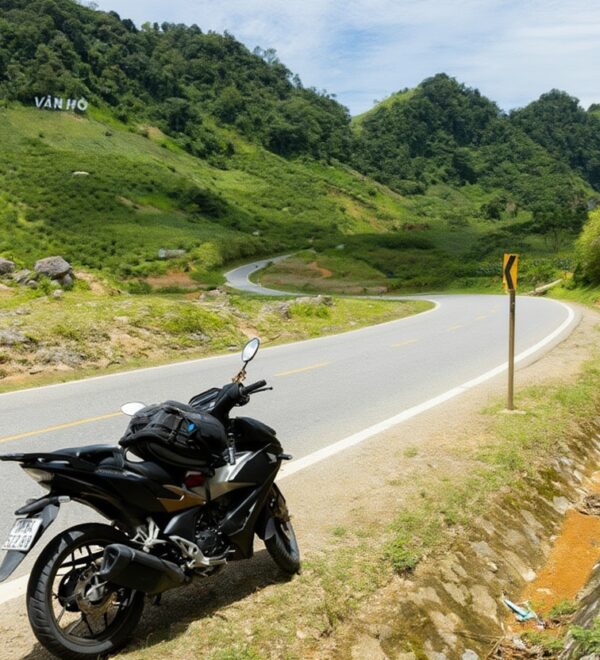
Month three in Vietnam. I had a Yamaha Exciter 150 — a bike that sounds exactly like it looks — and I was genuinely convinced I was allowed to ride it.
My logic: I had an IDP. I had a motorcycle endorsement on my US license. Surely these two things combined were legal in Vietnam.
They weren’t.
Not technically. And I found this out not at a police checkpoint — which I’d sailed through six times without issue — but from a Canadian expat lawyer at a bar in Tây Hồ who was explaining why his friend’s accident in Đà Lạt had resulted in a criminal charge, a six-figure hospital bill, and no insurance payout. All because the license situation wasn’t right.
This guide is the thing I wish I’d read before month three.
What Vietnamese Law Actually Says About Driving Licenses
The legal framework in Vietnam is clearer than most travel blogs make it sound. Here’s what the law says:
Under 50cc (automatic): No driving license required. This is the legitimate legal shortcut for tourists and it’s widely used.
50cc–175cc (semi-automatic, scooter, or manual): Requires a Class A1 Vietnamese driving license, or a foreign license officially exchanged for a Vietnamese one.
Above 175cc: Requires a Class A2 Vietnamese driving license. Even most Vietnamese riders don’t have this. Skip big bikes as a tourist entirely.
Now the IDP question, because this confuses everybody:
An International Driving Permit (IDP) issued by AAA (US), Post Office (UK), or equivalent is a translation document, not a standalone license. Vietnam recognizes the 1968 Vienna Convention on Road Traffic — and IDP holders from convention countries are theoretically able to drive. But: the IDP must be accompanied by your home-country license, and that combination still needs to be officially recognized for the specific vehicle class.
In practice, Vietnam’s transport authority (ĐRMT — Cục Đường bộ Việt Nam) interprets this as: your IDP gives you the right to apply for a Vietnamese license exchange, not to simply drive. This is different from how IDP works in many European countries.
✓Quick Answer
IDP alone does not legally allow you to ride a motorbike over 50cc in Vietnam. Technically, you need to exchange your foreign license + IDP for a Vietnamese license. In practice, this distinction is often ignored on the road — but becomes critical in accidents and insurance claims.
The Reality at Police Checkpoints
I’ve been stopped at motorbike checkpoints in Vietnam maybe a dozen times in five years. My experience, and the experience of pretty much every long-term expat I know:
Foreigners on motorbikes are usually waved through.
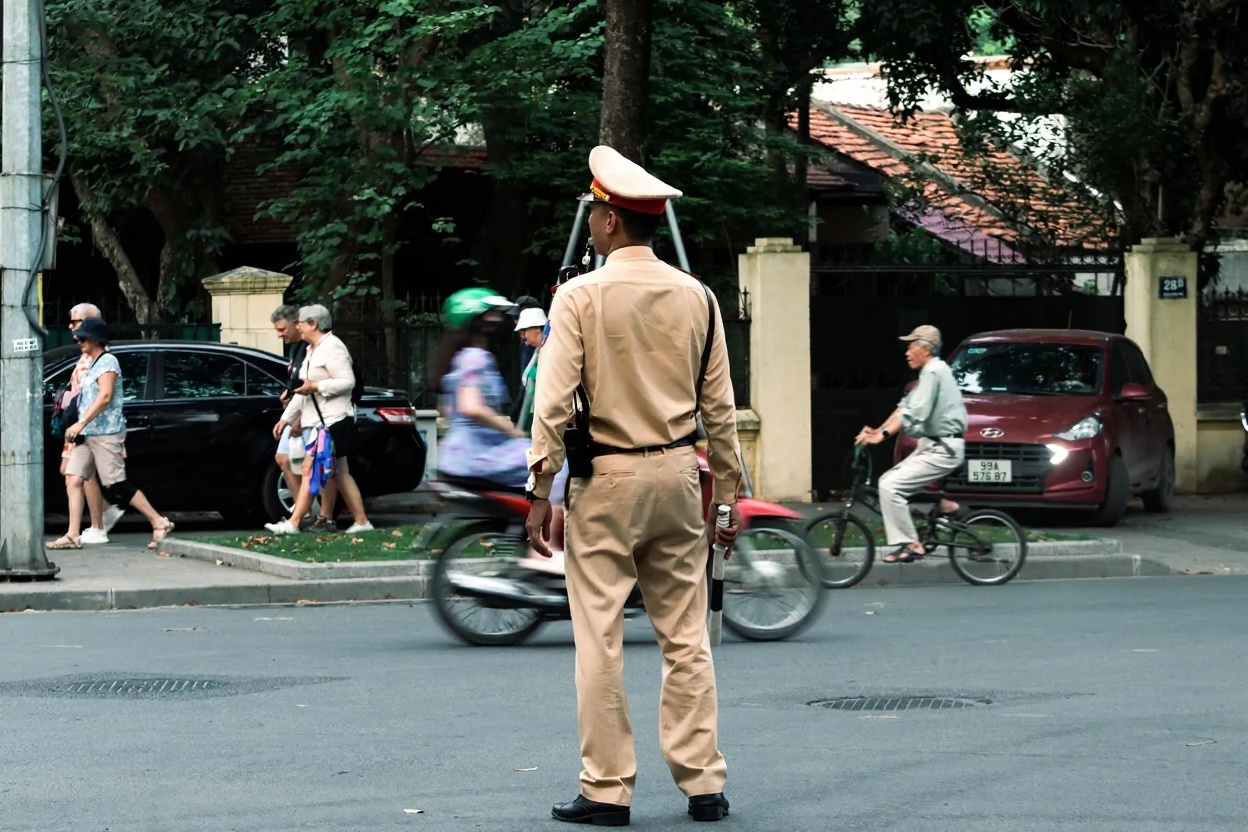
This isn’t a policy — it’s practical reality. Police at checkpoints are generally focused on Vietnamese riders and commercial vehicles. Stopping a foreign tourist who might not speak Vietnamese and will definitely make the checkpoint slower than it needs to be is often not worth the effort.
When I have been properly stopped: showing my US license and IDP usually satisfies the officer. In two cases I was asked to pay a small fine on the spot (200,000–800,000 VND / ~$8–31) and sent on my way. In one case the officer just looked at my documents, handed them back, and waved me through.
This sounds reassuring. It is not the whole story.
⚠Real Talk
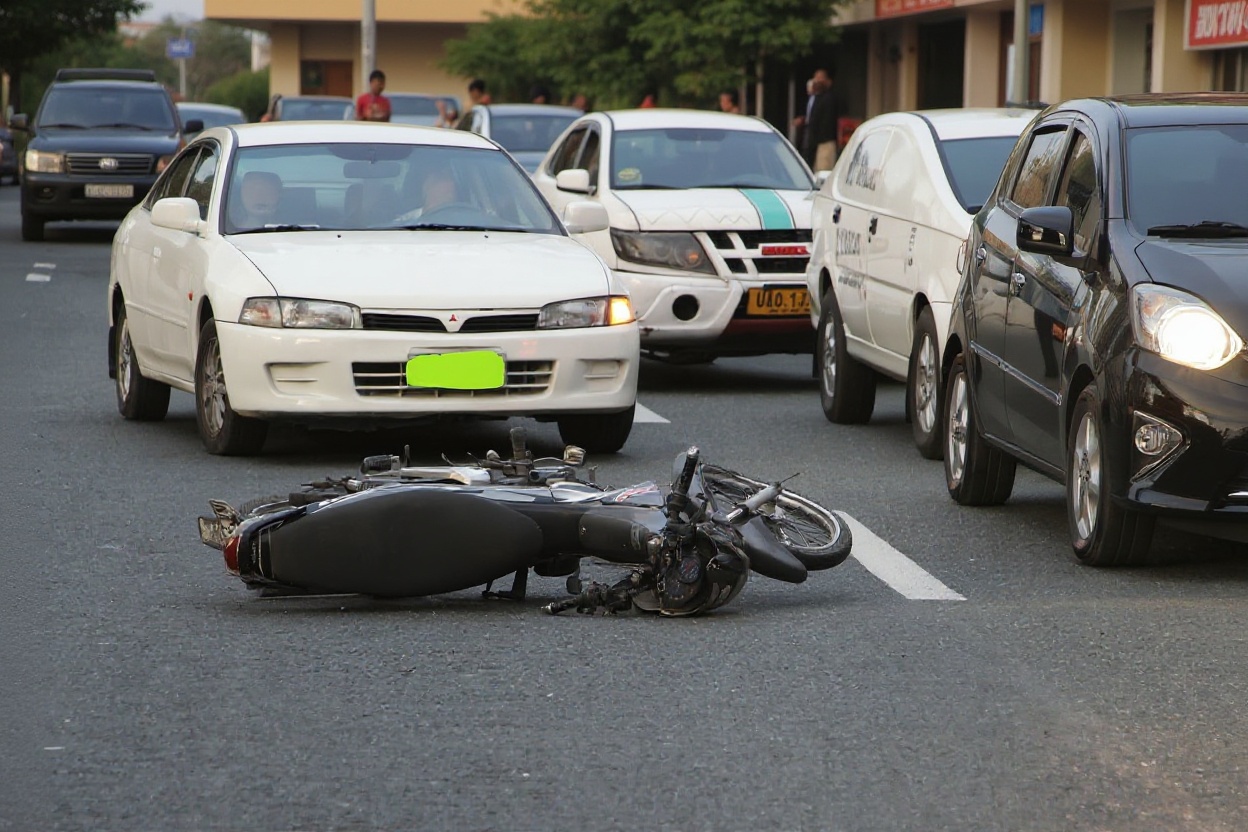
Police checkpoints are not where the license issue bites you. Accidents are. The moment there’s an incident — another vehicle involved, property damage, injury — enforcement becomes very different. Police who arrive at an accident scene will check licenses properly. If yours doesn’t hold up, the entire legal and insurance situation shifts against you.
What Happens If You Have an Accident Without a Valid License
This is the section that matters most. The reason to care about your license status has nothing to do with daily checkpoint risk — it has everything to do with what happens when something goes wrong.
Travel insurance: Most travel insurance policies explicitly void coverage for vehicle accidents if you were operating the vehicle without a valid license for that class of vehicle. This means: no medical coverage, no evacuation, nothing. Read your policy. Search for the phrase “valid license” or “appropriate license” in the terms. It’s there.
Vietnamese law: Operating a vehicle without a valid license is a traffic offense. In an accident involving injury, this shifts liability significantly toward you. It can convert what would have been a civil matter (insurance claim) into a criminal one.
Vietnamese police procedure: At an accident scene, police will take statements, check licenses, and may detain involved parties. Foreign tourists have been detained after accidents — usually released relatively quickly, but the process involves the police station, a translator, and potentially embassy contact. This is not a pleasant afternoon.
Hospital costs: Medical care in Vietnam is cheap by Western standards but not free. Major injuries requiring surgery or extended care can cost $5,000–$50,000+. If your insurance won’t pay (because of the license issue), you pay this yourself. Vietnam’s hospitals will hold you or require payment guarantees before treatment in some cases.
The Legal Shortcut: Sub-50cc Scooters
Here’s the option that’s genuinely legal, genuinely available, and genuinely underused by people who think they need a proper motorbike:
Sub-50cc automatics don’t require a license in Vietnam.
These include: small Honda Scoopy, some Vespa variants, the old Honda Spacy, and a range of local-brand 50cc scooters. They’re slower (top speed around 60–70 km/h), lighter, and easier to handle. For city riding and short trips — Hội An’s countryside, the Da Lat lake circuit, central Saigon — they do the job.
Rental cost: 80,000–120,000 VND/day (~$3–4.60). Available at most tourist-area rental shops that understand the legal situation.
The limitation: you won’t be doing the Ha Giang Loop on a 50cc bike. For serious motorbike trips — multi-day highland routes, long-distance touring — you either need a proper license or you need to make a clear-eyed decision about the risk tradeoff.
★Jake’s Pick
For first-time riders and city use: rent a Honda Scoopy or equivalent 50cc automatic. Learn the traffic patterns (they’re terrifying and logical at the same time), don’t panic, and give yourself 2 days before you try anything ambitious. The riding is fine — it’s the intersection logic that takes adjustment.
Motorbike Rental Prices in Vietnam 2026
Whether your license situation is sorted or not, here’s what rental actually costs:
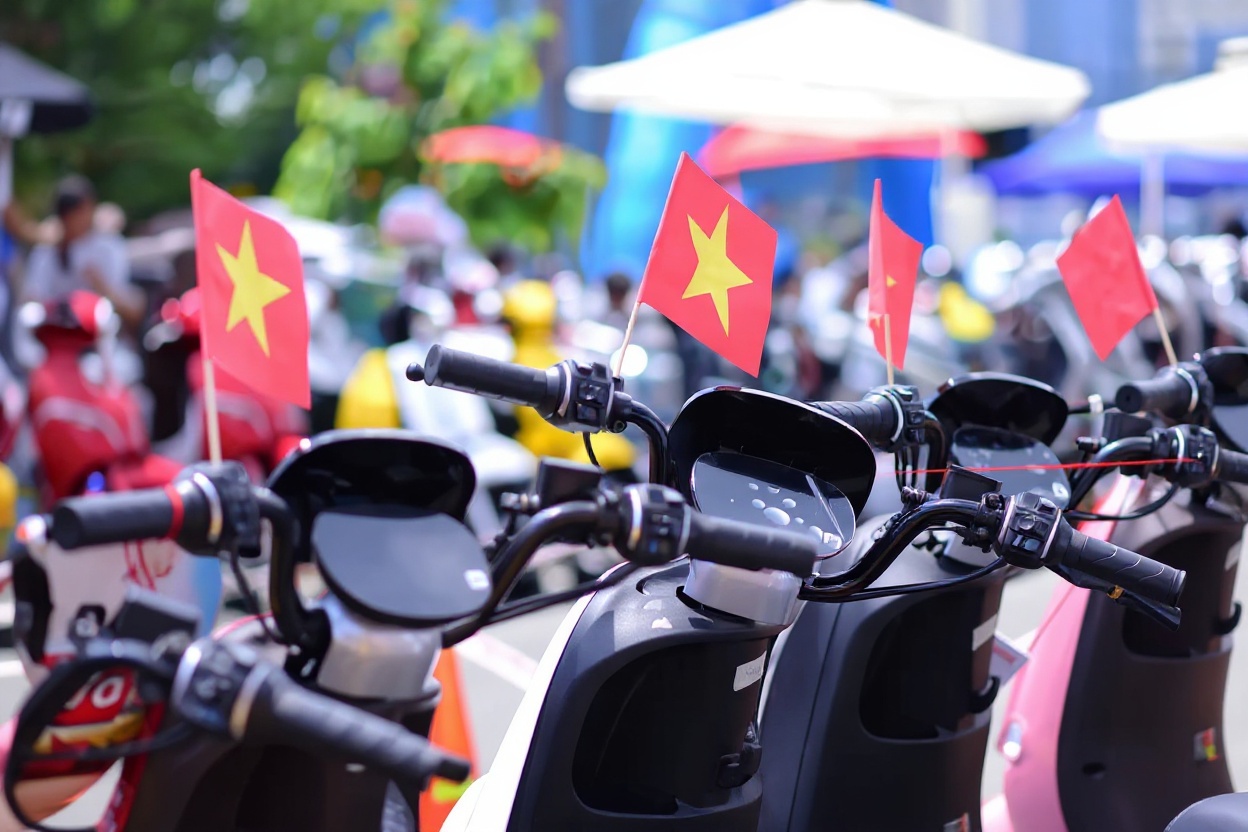
Fuel: 80,000–125,000 VND (~$3–5) for a full tank on a 110–125cc bike. You’ll get 200–300km per tank, depending on terrain. Fill up at Petrolimex stations — they’re the official government fuel brand and have accurate pumps.
What to Do if You’re Stopped at a Checkpoint
You’ll probably sail through every checkpoint. But knowing what to do if you’re stopped makes the difference between a 5-minute inconvenience and a stressful hour.
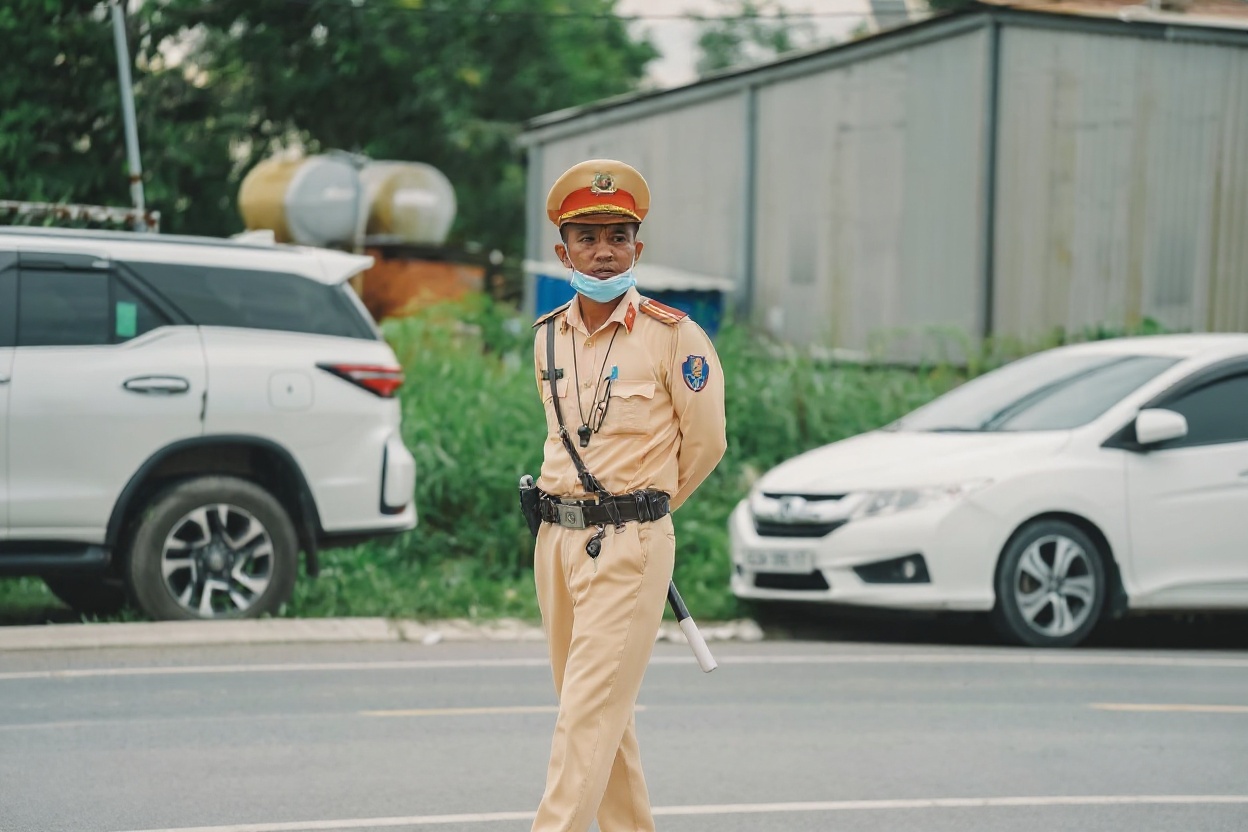
Stay calm and pull over completely. Don’t argue at the moment of being stopped. Follow the officer’s hand signals and pull off the road fully.
Have your documents ready: passport (or a clear photocopy — many expats carry copies and keep originals at the hotel), IDP, home country license, and the bike’s blue card (đăng ký xe).
What the officer usually wants to see: license, registration, proof the bike isn’t stolen. In my experience, most checkpoint stops of foreign tourists last under 3 minutes and end with a wave-through.
If there’s a fine: Ask for an official receipt (“biên lai” — say: bien-lie). Legitimate fines come with official paperwork. Requests for cash with no paperwork are informal — you have the right to refuse and ask for the official process, which means going to the local traffic police station. Most officers will drop it if you ask for formal receipts.
Common fines for tourists in 2026: No helmet: 400,000–600,000 VND (~$15–23). No license: 200,000–800,000 VND (~$8–31). Running a red light: 400,000–600,000 VND. These amounts are set by law — anything higher is negotiable in the wrong direction, which is why asking for a receipt matters.
Don’t: bribe. Don’t offer money unless an officer explicitly requests payment and provides paperwork. Unsolicited cash offers can make situations significantly worse.
Riding in Vietnam: What Actually Takes Adjustment
Vietnam drives on the right. That part is familiar if you’re from North America or continental Europe. What isn’t familiar: the intersection logic, the horn culture, and the way motorbike lanes operate.
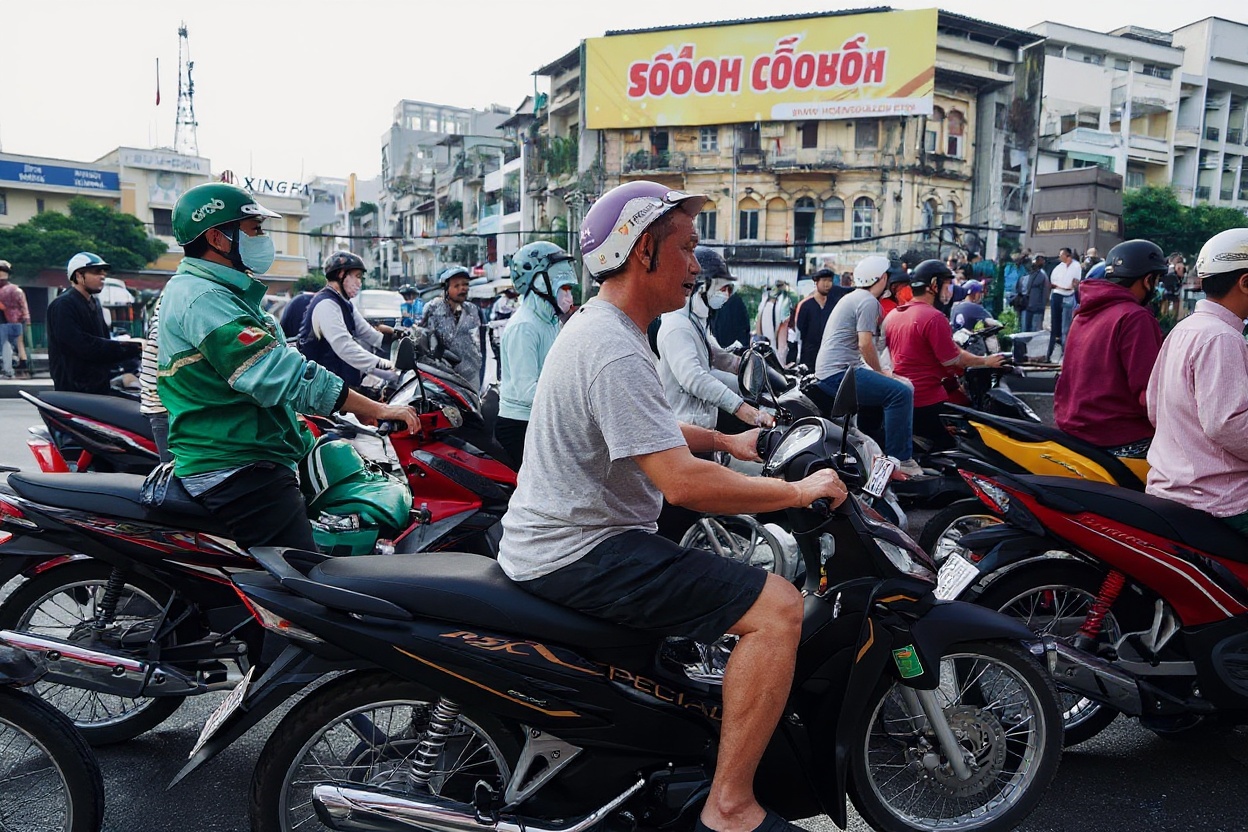
Intersections: Traffic in Vietnam often flows through red lights, especially on motorbikes. This sounds insane until you watch it for a while and understand the system: vehicles slow and merge rather than stop dead. As a foreign rider, resist your instinct to blast through on a green light without checking both directions. The system works for Vietnamese riders who’ve internalised it — it’s genuinely dangerous for people following home-country intersection rules.
The horn: In Vietnam, honking is communication, not aggression. A quick honk behind you means “I’m passing” or “I’m here” — not “you cut me off and I hate you.” Learn to use your horn. Not honking when vehicles need to know your position is actually riskier than honking too much.
Lane positioning: Motorbikes occupy the right lane. If you’re slower than traffic, hug the right. If you need to turn left, signal early and gradually move left through traffic — don’t cut hard. The left-turn manoeuvre takes new riders a while to get comfortable with.
Night riding: Avoid it. Vietnam’s road hazard density — unlighted motorbikes, pedestrians, stray animals, potholes, missing manhole covers — multiplies after dark. Experienced riders set a rule: be parked by 7pm on unfamiliar roads.
Rain: Vietnam has sudden, heavy rain. Wet roads plus unfamiliar bikes plus limited visibility is a significant risk combination. Pull over when it starts. Wait 15 minutes. Roads in Vietnam drain fast — you’d be surprised how quickly a downpour clears.
How to Get a Vietnamese Driving License (For Long-Term Visitors)
If you’re staying longer than a month and planning to ride regularly, getting a proper Vietnamese license is worth doing. The process is legitimate and not that painful.
Option 1: License Exchange (for holders of licenses from recognized countries)
Vietnam has bilateral license recognition agreements with many countries including the US, UK, Australia, EU countries, and Japan. The process:
Go to the ĐRMT (Cục Đường bộ) office in Hanoi (Hà Nội) or Saigon. Bring: your original foreign license, a notarized translation, your IDP, your passport and visa, 2 passport photos, and a health certificate from a Vietnamese clinic (simple eye and basic health check, 50,000–100,000 VND / ~$2–4). Pay the license fee: roughly 135,000 VND (~$5). Wait 1–2 weeks for the license to be issued.
The resulting license is a Class A1 Vietnamese license, valid for riding bikes up to 175cc. It’s a real license recognized by police and insurance companies.
Option 2: Full Vietnamese Driving Test
If your country doesn’t have a bilateral agreement or your existing license doesn’t qualify for exchange, you can take the Vietnamese driving test. Theory test (multiple choice, available in English), practical test, processing time of 2–4 weeks. More complex but achievable if you’re staying 3+ months.
One thing worth knowing about the license exchange process: Vietnamese authorities have tightened the documentation requirements in 2025–2026. Notarized translations must be done by a certified translator — Google Translate printouts won’t do it. In Hanoi, certified translation agencies cluster around Đống Đa district and cost 150,000–300,000 VND (~$6–12) per document. The whole process including health check, photos, translation, and fee typically costs under 500,000 VND (~$19) total. The inconvenience is mostly in the paperwork assembly, not the cost.
Expats in Hanoi often use the ĐRMT office at 1 Trần Hưng Đạo Street in Hoàn Kiếm — 21.0245° N, 105.8412° E. Go on a weekday morning; afternoons can have long waits. Bring more passport photos than you think you need — four to six, to cover all the forms.
What to Do Before Renting a Motorbike
Whatever your license situation, these things apply to every motorbike rental in Vietnam:
Take photos of every scratch before you ride. Motorbike shops occasionally claim pre-existing damage as new when you return the bike. Document everything with video if possible.
Check the brakes, lights, and horn before paying. Vietnam traffic depends on horns. A broken horn is a safety issue, not a minor inconvenience.
Get the blue card (đăng ký xe — registration document). This is the bike’s registration certificate. Carry it with you. Police checkpoints sometimes ask for this, not just your license.
Understand the fuel situation on long-distance routes. Small towns don’t always have fuel stations. The Ha Giang Loop has long stretches between villages — carry spare fuel in the highlands.
Wear a helmet. Always. Vietnam law requires it, fines start at 200,000 VND, and the roads are genuinely dangerous. Beyond that: Vietnamese crash helmets at rental shops are often cheap plastic. Bring your own or buy a real one (Protec or Royal M2 brands are available in Vietnam, 400,000–800,000 VND / ~$15–31).
Vietnam Driving License: Common Questions
Is an International Driving Permit (IDP) valid for riding a motorbike in Vietnam?
Not on its own. An IDP paired with your home-country license gives you the right to apply for a Vietnamese license exchange — it doesn’t automatically authorize you to ride over 50cc. In practice, police at checkpoints usually accept an IDP + home license. In accidents, the distinction matters legally and for insurance. If you’re riding regularly, exchange your IDP for a Vietnamese license at the local ĐRMT office.
Can I ride a motorbike in Vietnam without a license?
Sub-50cc automatic scooters don’t require a license under Vietnamese law — this is the legal option most tourists don’t know about. For anything over 50cc, you technically need a valid license. In practice, many tourists ride without one and aren’t stopped by police. The real risk isn’t checkpoint fines — it’s that your travel insurance will likely void coverage for any accident if you don’t have a valid license for the class of bike you’re riding.
What size motorbike can I ride with just an IDP in Vietnam?
Legally, an IDP should correspond to the Class A1 (under 175cc) if your home license has a motorcycle endorsement. Vietnam’s traffic law is structured around the home license + IDP being equivalent to the matching Vietnamese class. For practical purposes, most rental shops will rent you a 110–150cc bike with an IDP + home license without asking further questions. The risk calculus is yours to make.
How much does it cost to rent a motorbike in Vietnam?
Sub-50cc automatics: 80,000–120,000 VND/day (~$3–5). Standard 110–125cc semi-auto (Honda Wave/Blade): 245,000–370,000 VND/day (~$10–15). 125–150cc sports bikes: 370,000–610,000 VND/day (~$15–24). Guided tours with a local guide riding: $99–239/person/day. Fuel costs 80,000–125,000 VND (~$3–5) per tank, giving 200–300km range on a standard 110cc bike.
Do I need a motorbike license for the Ha Giang Loop?
Technically yes — you’ll be riding bikes over 50cc. In practice, the Ha Giang Loop is done by thousands of tourists annually, most without a Vietnamese license. Police presence is light on mountain routes. The more relevant question is insurance: check your travel insurance policy for the vehicle license clause before you go. If it voids coverage without a valid license, you’re uninsured on one of Vietnam’s more challenging roads. Consider a guided jeep tour or joining a motorbike tour with a local guide if the insurance gap concerns you. See the Ha Giang Loop guide for full planning context.
One last practical note that nobody includes: Vietnam’s motorbike rental shops occasionally retain your passport as a deposit. Don’t leave your actual passport. Offer a photocopy instead — most reputable shops accept this. If a shop insists on the original, find a different shop. Your passport is your most important document in Vietnam and you need it for hotels, hospitals, and any official dealings. Shops that need security for a 0/day rental aren’t shops you want to deal with if something goes wrong with the bike anyway.
Five years of riding in Vietnam, all 63 provinces, and my honest recommendation comes down to this: if you’re here for two weeks on the tourist trail, the sub-50cc automatic is the legitimate no-stress option. If you want proper bikes for real routes, spend the week getting your IDP exchanged for a Vietnamese license — it’s not much friction and it genuinely matters for your insurance coverage.
The motorbike is one of the best ways to experience Vietnam. Just do it with clear eyes about the rules.
For more on navigating Vietnam’s transport options — trains, sleeper buses, and the full moving-around picture — the Vietnam transport guide has the full breakdown. And if you’re planning the Ha Giang Loop specifically, the Ha Giang Loop guide covers what you actually need to prepare for those mountain roads.