Last updated: June 2026 — prices and opening hours verified June 2026.
Ninh Thuận doesn’t have a tourist circuit. Nobody’s shepherding you from sight to sight on a minibus. There’s no Old Town or Cable Car Ride or Floating Market. What it has is specific, real, and — if you time it right — quietly excellent.
I’ve done this province twice. The first time I was passing through on a motorbike and stopped for one night. The second time I planned for three days. The things I’m writing about here are the ones I actually went back to.
1. Nam Cuong Sand Dunes — Go at Dawn
✓Quick Answer
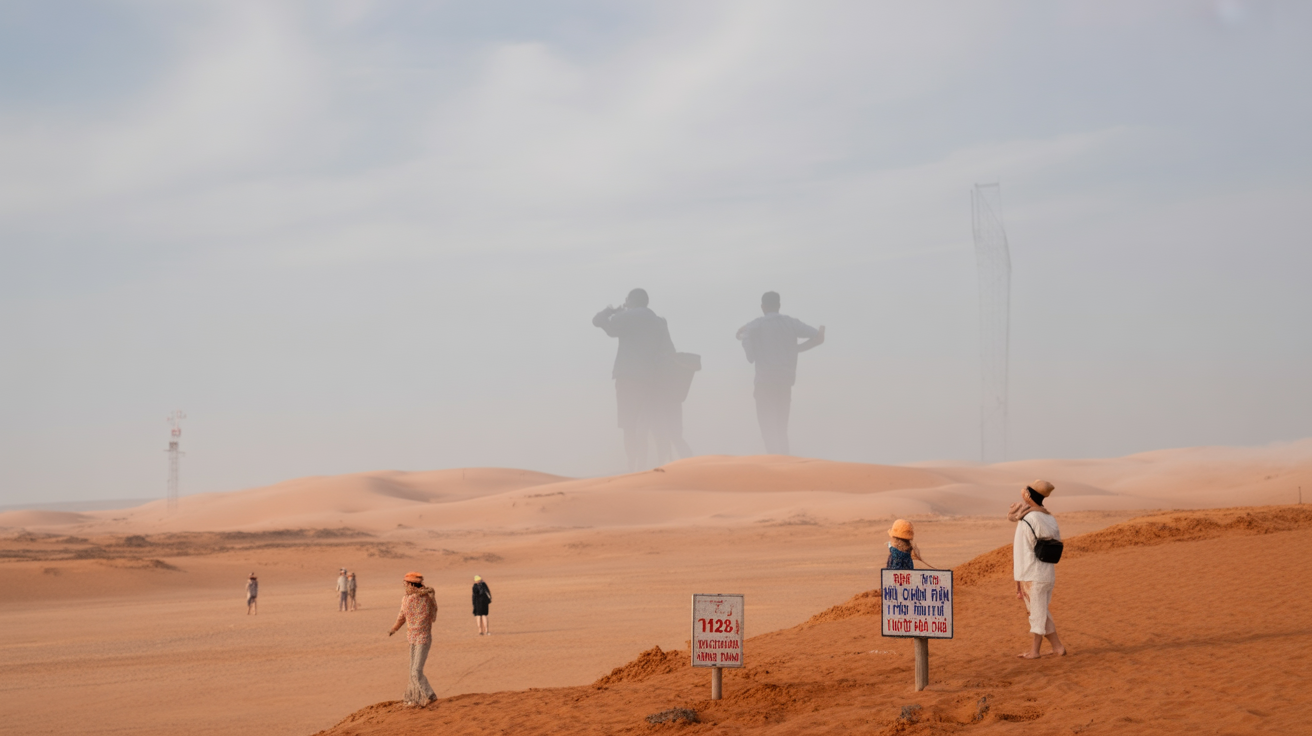
Nam Cuong dunes are 7km northeast of Phan Rang, free to enter, open all hours. Go between 5:30–8am for the best light and bearable heat. Rent a sandboard at the edge of the dunes for 100,000–150,000 VND (~$3.80–$5.70) for 30 minutes. The dunes are red-orange — different from the white dunes at Mũi Né.
350 hectares of red sand that changes color every 20 minutes as the sun moves. At first light it’s deep rust. By 7am it’s warm amber. By 9am it’s bleached and harsh and you want shade.
The dunes are free. Take the road heading northeast from Phan Rang center — follow the signs for Đồi Cát Nam Cương. From the main road parking area it’s a short walk to the first dune crest. No tour guide needed. No entrance booth. Just sand and wind and, if you go early enough, nobody else.
There are quad bikes and sandboards for rent at the base. The sandboard experience is worth the bruises — the slope is steep enough to be genuinely fun, and the sand is soft enough that falling over doesn’t hurt.
⚠Real Talk
By 10am in June the sand surface temperature could fry an egg. Families and Vietnamese domestic tourists arrive around 8-9am. If you want the dunes to yourself and the light at its best, set an alarm for 5:15am and accept that this is the price of the experience.
→Who It’s For
Anyone who’s willing to wake up early. The dunes are accessible without guides, without fitness requirements, and without paying for anything beyond a sandboard rental. The only people who don’t enjoy Nam Cuong are the ones who arrive at noon expecting magic.
2. Po Klong Garai Cham Towers — Vietnam’s Most Underrated Ancient Site
✓Quick Answer
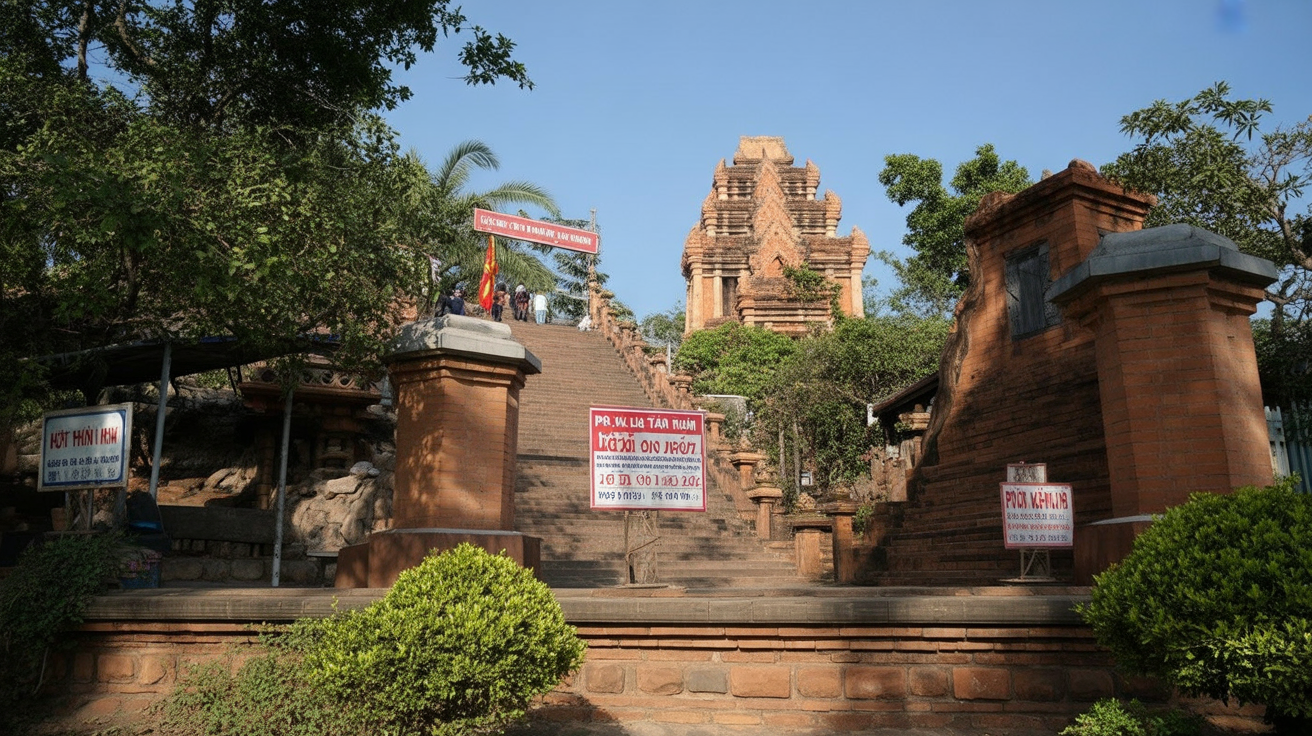
Po Klong Garai is 9km from central Phan Rang on the road south toward Nha Trang. Entrance: 30,000 VND (~$1.15), verified June 2026. Open daily. A 10-minute climb up a basalt hill. The towers are intact, the carvings are legible, and on most weekdays there are fewer than ten other visitors.
Three towers. Built by the Chăm (say: Cham) people between the 9th and 13th centuries — contemporaries of Angkor Wat, without the four million annual visitors. The brickwork still holds without mortar in the way Cham builders understood and modern engineers still argue about.
The main tower, Kalan, is the tallest — a dancing figure of Shiva carved above the entrance door that looks like it was cut last year, not a millennium ago. The priests’ house and fire tower complete the complex.
This isn’t a ruins site. The Chăm community still performs rituals here — most visibly during Katê Festival (usually October or November) when the towers become a ceremonial center with music, costumes, and rice wine. If your dates align, plan around it.
The small museum on-site is legitimately worth 15 minutes of your time. Cham sculpture, weaving samples, and a clear explanation of how the brick towers were actually constructed — no mortar, the bricks bonded through a technique using plant resins that researchers have spent decades trying to fully decode.
↗Insider Tip
The view from the hill over the valley below Phan Rang is worth the climb alone. Arrive in the late afternoon (4-5pm) for the best light on the towers and the coolest temperature of the day. The site stays open until 5:30pm.
3. Bầu Trúc Pottery Village

Ten kilometres south of Phan Rang. The Chăm pottery village of Bầu Trúc (say: Bow Chuck) is recognised as the oldest in Southeast Asia — and the techniques used here are genuinely unchanged. No wheel. The potter walks around the piece as they build it, shaping with their hands and a paddle. Clay comes from a nearby river.
Entry is free. The village is a working one — potters work in open-fronted workshops that you can watch from the street. Some invite you in. You can buy directly from artisans for significantly less than the same pots fetch in Hội An boutiques. Small decorative pots start at 50,000-80,000 VND (~$1.90-$3.05). Larger pieces run 150,000-300,000 VND (~$5.70-$11.40).
The open-air wood firings happen periodically — usually in the afternoon when production batches are ready. The smell of wood smoke and hot clay in the dry Ninh Thuận air is one of those sensory details that sticks.
→Who It’s For
Travelers interested in craft, culture, or ethical purchasing. The pottery here is the real thing, made by the community, sold by the makers. If you want a souvenir that isn’t mass-produced tourist tat, this is the place.
4. Vĩnh Hy Bay and Núi Chúa National Park
✓Quick Answer
Vĩnh Hy Bay is 40km north of Phan Rang — about 1 hour by motorbike. A small fishing village on a calm bay inside Núi Chúa National Park. Snorkeling and kayaking tours run for 150,000–200,000 VND (~$5.70–$7.60) per person. Lobster from the docks: 300,000–500,000 VND per kilogram (~$11.40–$19).
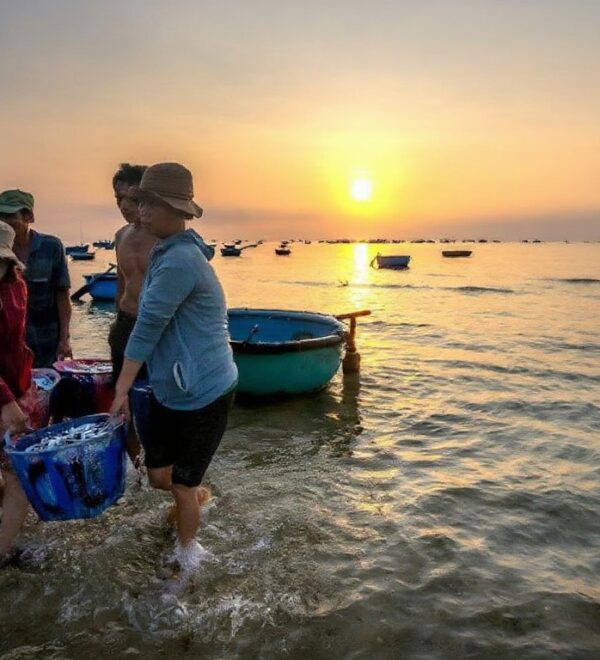
The road north from Phan Rang climbs through dry coastal scrub before dropping into Vĩnh Hy — a small bay framed by rocky headlands and mangroves. The village is maybe fifty fishing families. Boats tied up in the morning, nets spread on the docks. The water in the bay is clear in a way that feels unexpected given how dry the surrounding landscape is.
Snorkeling and kayak tours depart from the dock — small boats, no resort infrastructure, guides who are usually fishermen doing double duty. The coral isn’t pristine (boat anchoring has done damage over the years) but the bay itself is genuinely quiet and the mangrove sections are good for kayaking.
Eat at one of the half-dozen restaurants at the water’s edge. Order lobster if it’s in season — the price is a fraction of Nha Trang because there’s no tourist markup chain between the boat and your plate. Order it grilled with salt, lime, and chili. Don’t overthink it.
Núi Chúa National Park surrounds the bay — one of Vietnam’s driest protected ecosystems. The park entrance is on the road in. Basic entrance fee applies (20,000 VND/~$0.76). For serious hikers, trails into the park interior exist but require a local guide — ask at the village.
5. Ninh Chữ Beach
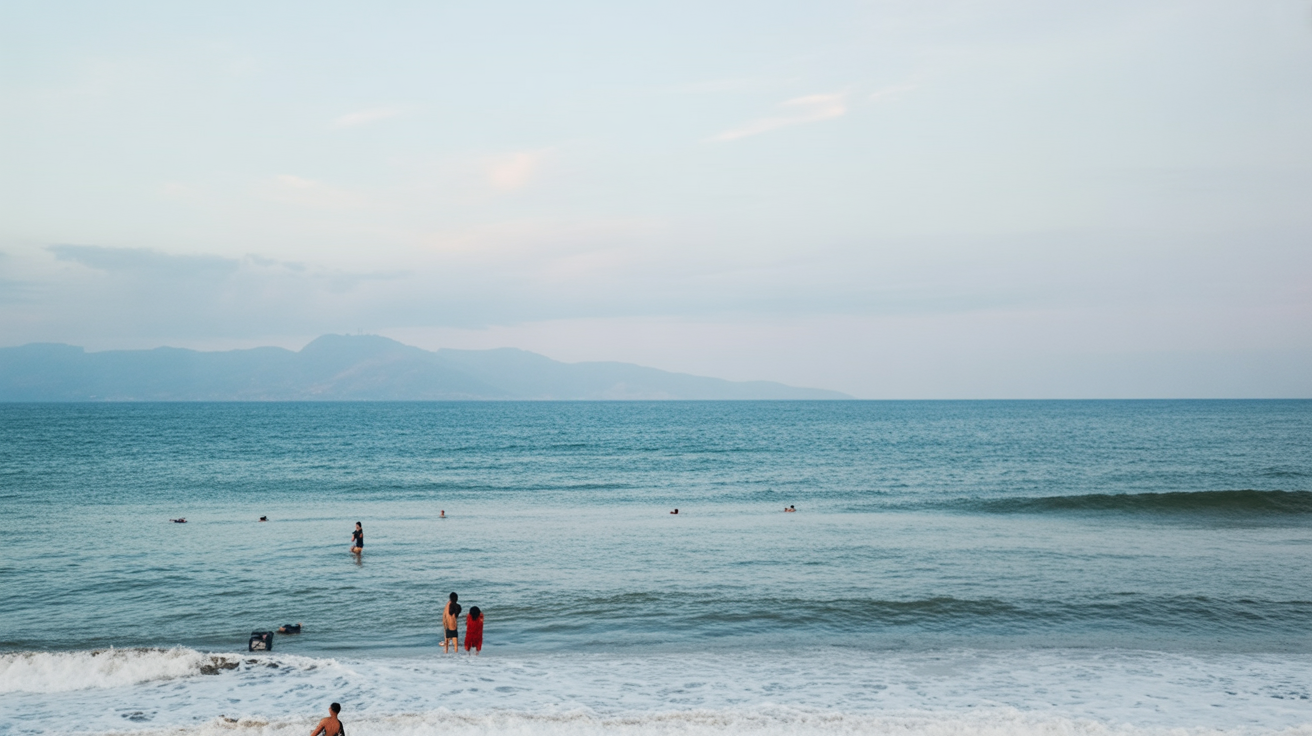
Five kilometres east of Phan Rang. The main local beach resort area — a long stretch of sand with a handful of Vietnamese-style resort hotels, seafood restaurants, and weekend families. It’s not postcard-perfect, but it’s clean, calm, and 20 minutes from everything else you want to do in the province.
Go in the late afternoon after the dunes and towers. The light is better for swimming and the beach empties out as Vietnamese families head to dinner. The water is warm and the waves are small — fine for a swim, not interesting for surfing.
Sun loungers and umbrellas are available at the hotel beach sections for 50,000-100,000 VND (~$1.90-$3.80) per chair. The public section of the beach is free and has the same sand and water without the plastic chairs.
6. Bình Tiên Beach — The Effort Worth Making
35km north of Phan Rang, past the Núi Chúa turnoff. A small bay between two rocky headlands — cleaner water than Ninh Chữ, fewer facilities, no resort development. The road in is sealed but narrow.
You need your own motorbike or hire a xe ôm driver who knows the road. There’s limited public transport. Facilities at the beach are minimal — a few family-run food stalls, no hotels directly on the sand.
Go on a weekday if you can. Vietnamese domestic tourists come on weekends and the beach gets busier than it looks like it should. On a Tuesday morning in late May, I had the bay almost entirely to myself for two hours. Worth every minute of the 45-minute ride from Phan Rang.
★Jake’s Pick
Bình Tiên on a quiet weekday morning. Arrive before 9am, swim before the wind picks up, eat at the first stall on the left from the beach entrance — grilled fish and rice, 60,000-80,000 VND (~$2.30-$3.05). Leave by noon before the heat becomes punishing.
7. Ninh Thuận Wine Region
Vietnam’s only significant wine-growing area sits in the hills west of Phan Rang — the same rain shadow that creates the dunes and dry landscape also produces the sunshine hours needed for viticulture. The local co-op winery produces rosé and red under the Vang Ninh Thuận label.
It’s not Burgundy. It’s not trying to be. It’s a Vietnamese wine made for the Vietnamese palate — slightly sweet, high-acid, pairs well with the local seafood. You can buy at the market in Phan Rang for 80,000-120,000 VND (~$3.05-$4.56) per bottle.
Some guesthouses and tour operators offer vineyard visits — a half-day trip into the hills with a tasting. Not essential, but if you’ve never seen a Vietnamese winery and have a spare morning, it’s genuinely interesting. Ask your guesthouse to arrange it.
8. Cà Ná Salt Flats
60km south of Phan Rang on Route 1, near the Bình Thuận border. Vast salt flats that turn brilliant white in the morning sun, with workers harvesting using traditional wooden tools. The visual is striking — the kind of thing you stumble across on a motorbike and stop the engine to look at properly.
Free to view from the road. Workers don’t mind photographs if you ask first (a gesture and a smile works fine without language). The harvesting season runs roughly November to June — outside this period the flats are dry and less dramatic.
Combine with Cà Ná Beach nearby (a small bay used by local fishermen) and you have a half-day side trip heading south if you’re planning to continue toward Phan Thiết or Mũi Né.
9. Kitesurfing at Mũi Dinh
Mũi Dinh (say: Mwee Ding) — the cape at the southern tip of Ninh Thuận province, 50km south of Phan Rang. From June to August, the northeast monsoon creates consistent 25-35 knot winds that make this one of Southeast Asia’s better kitesurfing spots.
Lessons and equipment rental available on-site. Expect to pay 700,000-1,200,000 VND (~$26.60-$45.55) for a beginner lesson, 300,000-500,000 VND (~$11.40-$19) per day for equipment rental if you’re already certified.
→Who It’s For
Kitesurfers or anyone seriously interested in learning. Skip it if you’re not — the journey to Mũi Dinh is 50km each way, and the beach itself has no particular appeal beyond the wind. Non-kiters who want beach time are better served at Bình Tiên or Ninh Chữ.
What to Eat in Ninh Thuận
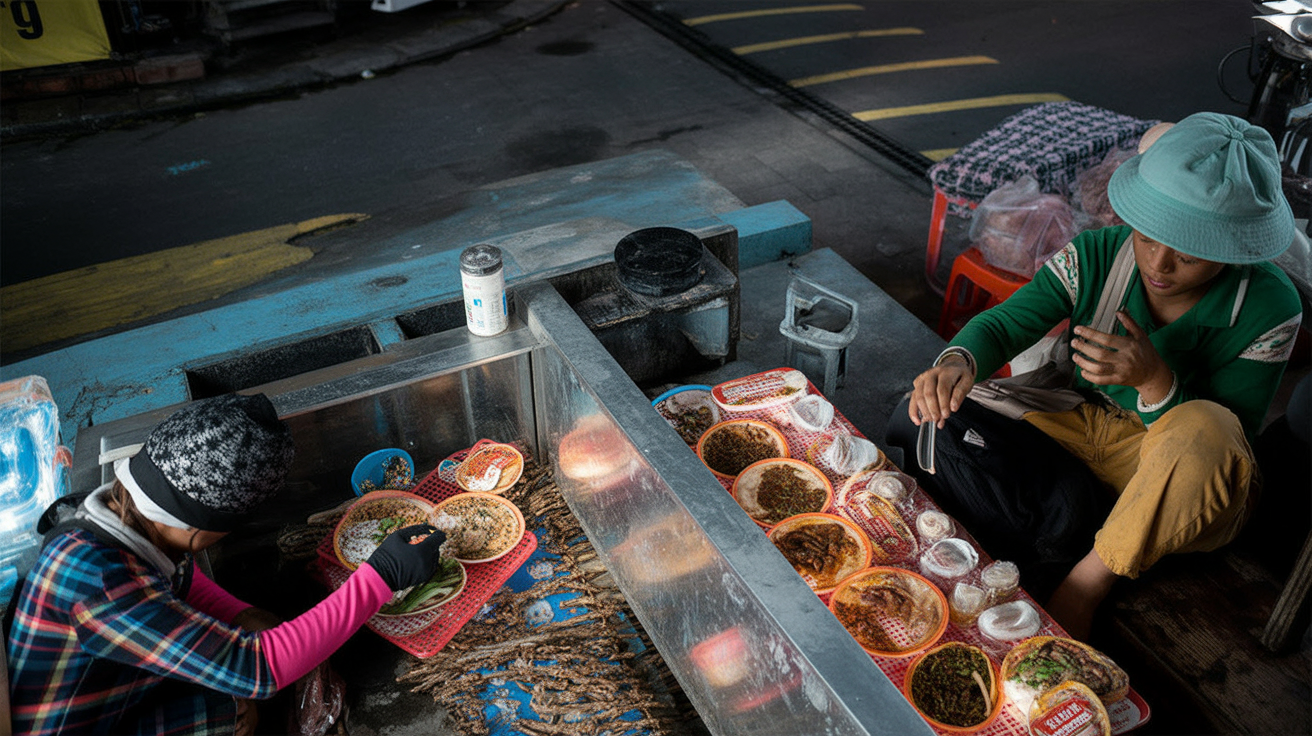
The food here is built around what’s local and what’s cheap. Neither of those things is a compromise.
Bánh Căn (say: Bahn Kan) — small rice cakes cooked two-at-a-time in clay molds over charcoal. The Chăm version uses a slightly different ratio of rice flour than the Nha Trang variant, and the molds are handmade at Bầu Trúc. Find them at street stalls near Phan Rang market from early morning — 20,000-40,000 VND (~$0.75-$1.52) for a plate of eight. Eat them with the dipping sauce provided. Don’t ask what’s in it. It’s good.
Fresh seafood at the port. Phan Rang has a working fishing port on the coast east of town. The restaurants that line the dock area buy directly from boats. Order whatever the server points at as the day’s catch — grilled with salt and pepper, or steamed with ginger and spring onion. Budget 150,000-300,000 VND (~$5.70-$11.40) per person for a proper seafood meal.
Lobster at Vĩnh Hy Bay. If you’re making the trip north, eat at the bay. 300,000-500,000 VND per kilogram (~$11.40-$19) bought at dock price. Grilled whole with lime and chili. The price difference between eating here versus a Nha Trang restaurant is significant enough to justify the motorbike ride.
Dragon fruit. Ninh Thuận grows more dragon fruit than anywhere else in Vietnam. Buy at roadside stalls for 10,000-20,000 VND (~$0.38-$0.75) per fruit. The red-flesh variety (Thanh Long ruột đỏ) is sweeter than the white — ask for it specifically.
Ninh Thuận wine — one bottle, with seafood, at a port restaurant. 80,000-120,000 VND (~$3.05-$4.56) at the market. Slightly sweet, high-acid. Drink it cold.
How to See Everything in 2 Days
Getting Around Ninh Thuận
Everything above requires a motorbike or a hired driver. There’s no tourist bus circuit, no Grab coverage outside of Phan Rang town, and no way to efficiently visit multiple sites without your own transport.
Motorbike rental in Phan Rang: 100,000–150,000 VND per day (~$3.80–$5.70). Most guesthouses either rent directly or know someone who does. Semi-automatics are easiest — Phan Rang traffic is light and the roads to the main sites are sealed.
If you don’t ride, hire a xe ôm driver for a full day — 300,000–500,000 VND (~$11.40–$19) for a day covering dunes + towers + one beach. Your guesthouse can arrange. Negotiate the route and price upfront, not on arrival at each site.
For car rental covering more ground, Localrent.com and QEEQ have vehicles in the region — useful if you’re traveling with a family or heavy bags.
Nha Trang is 65km north — easy to combine with Ninh Thuận. Klook has the best activity selection for the region.
Sort your eSIM and travel insurance before heading to Ninh Thuận — the province has limited English-language services.
Frequently Asked Questions
What are the best things to do in Ninh Thuận?
Nam Cuong dunes at dawn (free), Po Klong Garai Cham towers (30,000 VND/~$1.15), Vĩnh Hy Bay fishing village and snorkeling (150,000-200,000 VND), and Bầu Trúc pottery village (free entry). Rent a motorbike for 100,000-150,000 VND per day — you need it to reach all of these. Two days is enough to cover the highlights.
Is Ninh Thuận worth visiting?
Yes, if you want something genuinely different from the standard Vietnam circuit. Ninh Thuận has cultural sites (Cham towers, pottery village) that outperform most destinations in the south, and beaches that see a fraction of Nha Trang’s crowds. It’s best for travelers who’ve already done Hội An, Nha Trang, and Hà Nội and want Vietnam to surprise them again.
How many days do you need in Ninh Thuận?
Two nights covers everything on this list. Day 1: dunes + towers + pottery village + Ninh Chữ beach. Day 2: Bình Tiên beach + Vĩnh Hy Bay + return. One night works if you’re very efficient, but you’ll feel rushed on the northern route. Three nights adds vineyard visits, salt flats, and a relaxed pace — worth it if you’re not racing.
What is the best time to visit Ninh Thuận?
November to April — cooler temperatures (25-32°C), minimal rain, manageable wind. June to August is peak kitesurfing season but brutal for sightseeing. September and October have occasional rain but are still drier than the rest of Vietnam. Ninh Thuận is Vietnam’s driest province, so there’s no genuinely bad month — just better and worse ones.
Do I need a guide for Ninh Thuận?
No — all the sites on this list are accessible independently with a motorbike. Po Klong Garai and Bầu Trúc have basic English signage. Vĩnh Hy Bay has dock guides for snorkeling tours. The only time a guide adds real value is for Núi Chúa National Park interior trails, which require one for safety and navigation.
Ninh Thuận rewards people who show up early and move slowly. The dunes at dawn, the Cham towers in the late afternoon light, lobster at a dock table in Vĩnh Hy — these aren’t manufactured experiences. They’re just what happens when you get to a place before it’s been fully packaged. That window doesn’t stay open forever in Vietnam — take it while it’s still here.
For getting here from Saigon, see our Ninh Thuận from Saigon guide. For the broader picture of the province, our Ninh Thuận travel guide covers accommodation, food, best time, and honest verdict.