Last updated: June 2026 — festival dates and prices verified June 2026.
Mu Cang Chai is one of the few places left in northern Vietnam that still rewards the effort of getting there — our Mu Cang Chai guide has the logistics and the honest timing advice.
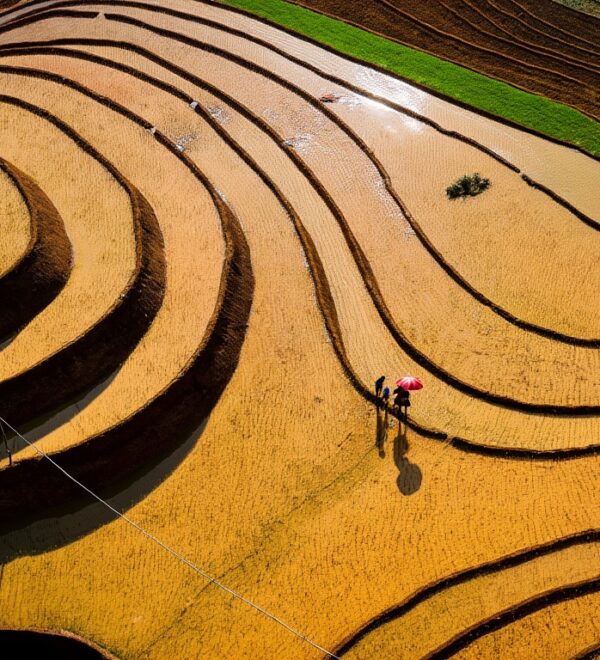
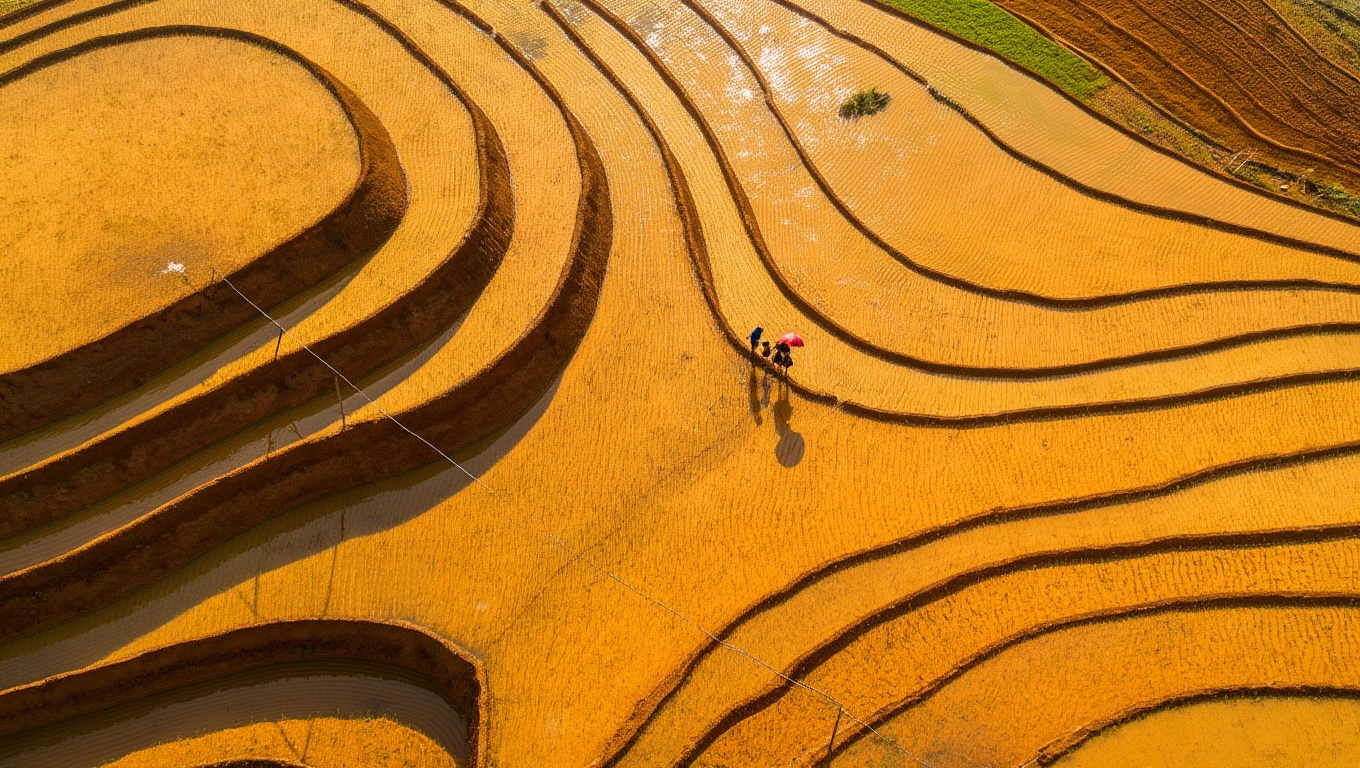
There are better paragliding sites in the world for technical flying — longer thermals, higher elevation, more dramatic terrain. Mù Cang Chải isn’t famous in paragliding circles for any of those things. It’s famous because the ground you fly over — 2,200 hectares of amber rice terraces in late September — is one of the most visually extraordinary flight landscapes on earth. The destination happens to have a ridge with the right wind patterns and the right elevation for a flight path that crosses the full La Pan Tán terrace system. The combination is unusual enough that photographers specifically plan trips around it.
The Mù Cang Chải Paragliding Festival
The annual Mù Cang Chải Paragliding Festival (Lễ Hội Dù Lượn Mù Cang Chải, say: lay hoy doo lwon) runs concurrently with the golden harvest peak — typically the last week of September and first week of October. The festival brings licensed pilots from across Vietnam and some international participants. Competitive flying events run during the day, and tandem flights are available for visitors.
The festival has grown significantly since it began — what started as a small regional event now draws thousands of domestic visitors and a growing number of international tourists who specifically plan the harvest-season visit around the flying. This is a good thing for the spectacle and a challenge for logistics: the best pilots book up fast, tandem flight slots disappear in advance, and the festival atmosphere (crowds, noise, organized tour groups) changes the character of Mù Cang Chải significantly during the core festival days.
✓Quick Answer
The Mù Cang Chải Paragliding Festival runs approximately late September to early October — exact dates vary year to year. Check the official announcement from Yên Bái provincial tourism for the specific dates each season, typically released 6–8 weeks before the event. During festival days, tandem flights run from roughly 7am until early afternoon when the thermals build too strongly. Outside festival days in the same season, licensed operators in town continue offering tandem flights on days with good conditions.
Tandem Flights — Everything You Need to Know
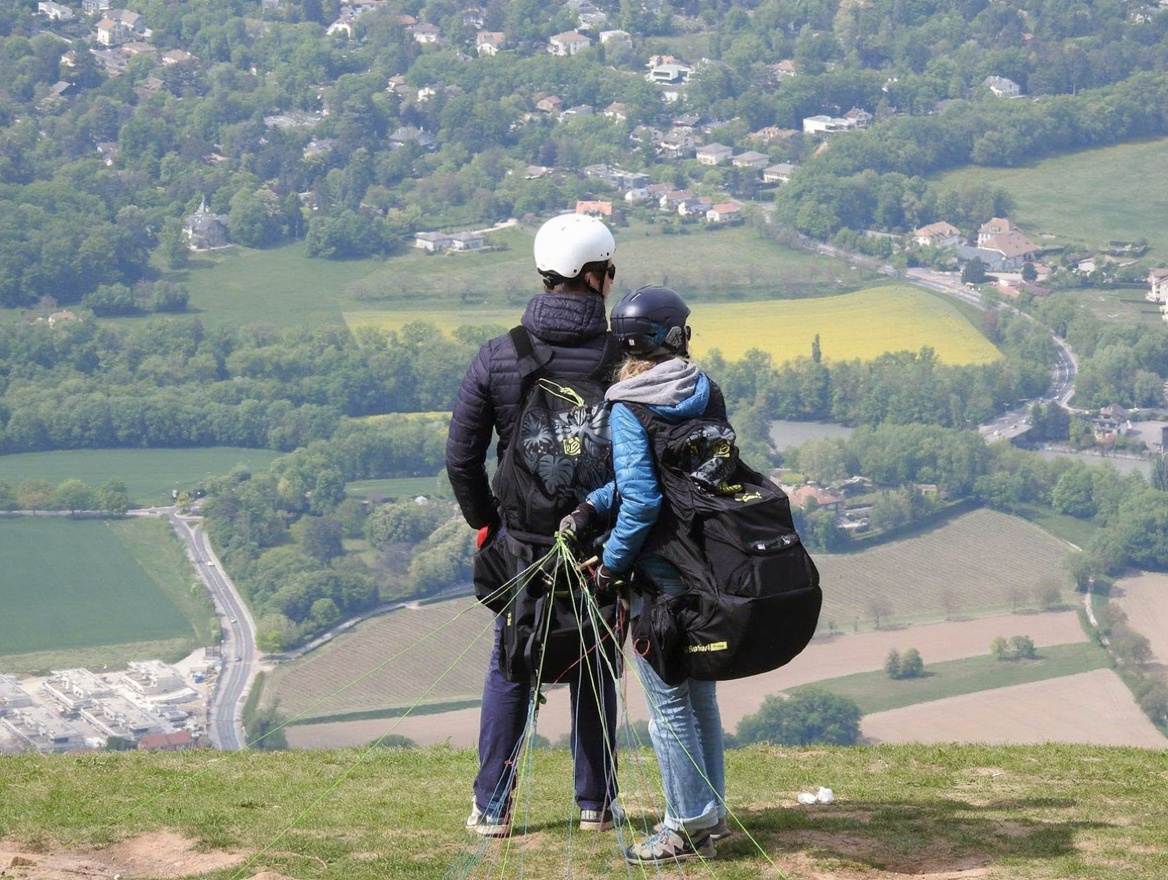
A tandem paragliding flight means you fly with a licensed pilot who handles all the controls. You sit in a harness in front of the pilot, who launches, navigates, and lands while you manage your photography. No experience, no training required. The pilot’s safety record and licensing are what matter — you don’t need to know anything about paragliding to do this.
Price: 1,500,000–2,500,000 VND (~$57–95) per person depending on the operator and the flight duration. The higher end typically covers a longer flight path or a pilot with more international experience. Some operators offer video packages (your flight filmed from a drone) for an additional 300,000–500,000 VND (~$11–19).
Duration: 10–20 minutes in the air from launch to landing. The flight covers approximately 7km over the La Pan Tán terrace system. Altitude above the terraces: roughly 200–400m depending on conditions and the thermal activity on the day.
Launch site: The main launch site is on the ridge above La Pan Tán, accessible by motorbike from the village (or the operator will transport you as part of the booking). The elevation at launch is approximately 1,200m — significantly higher than the viewing platforms, giving you the aerial compression perspective on the terraces that no ground-level viewpoint provides.
Landing zone: The lower terrace area near La Pan Tán village. The pilot navigates the landing; you help by following the pilot’s instructions to lift your legs when approaching the landing zone. It’s straightforward and the pilots do it dozens of times each festival day.
ℹKnow Before You Go
Weight and height restrictions apply — most operators have a maximum passenger weight of 90–100kg. If you’re close to the limit, confirm with the operator before booking. Heavy passengers require a more powerful pilot and a different harness configuration; some smaller operators won’t take heavier passengers. Also: vertigo or strong fear of heights makes this a bad choice. The launch involves running off a ridge — you’re airborne within 3–4 steps. People with severe acrophobia have had poor experiences here.
Weather and Cancellations
Paragliding in Mù Cang Chải is strictly weather-dependent. Flights don’t run in:
- Cloud cover below the launch site (no visibility over the terraces)
- Wind above approximately 20km/h at the launch site (unsafe launch conditions)
- Rain (obvious)
- Strong thermal activity in the afternoon (roughly after 1–2pm on sunny days, the air becomes too turbulent for safe passenger flights)
The morning window — 7am to noon — is the primary flight time on clear days. This aligns with the best photography light anyway: you get your terrace viewpoint session at dawn, watch the mist dissolve, then do the tandem flight at 8–10am while the light is still warm and the thermals are manageable.
⚠Real Talk
Weather cancellations happen regularly, even during harvest season. In a typical festival week, 2–3 of the 7–8 days may be too windy or too cloudy for tandem flights. If you’ve traveled to Mù Cang Chải specifically for the paragliding, budget for 3 nights minimum to maximize the chance of a flyable day. Book with an operator who offers a full refund on cancellation — reputable operators do; some of the opportunistic festival-week operators don’t. Confirm the cancellation policy before you pay.
Finding a Pilot and Booking
During the festival, the launch site area and Mù Cang Chải town have multiple paragliding operators competing for business. This is good for pricing and choice but requires some evaluation:
What to look for in an operator:
- Vietnamese Civil Aviation Authority (CAAV) certification for the pilot — ask to see it
- Recent tandem flight experience — pilots should be able to tell you how many flights they’ve done in the last month, not just in total
- Modern, well-maintained equipment — harnesses should look recent, not frayed
- Clear cancellation and refund policy in writing (or written on the receipt)
- Negative: pilots who pressure you into paying immediately without answering questions are a yellow flag
Where to find operators: Your La Pan Tán homestay host will know who the reliable pilots in the area are — this is the most useful referral. Alternatively, festival organizers typically have a list of certified operators at the event. During peak festival days, pilots congregate at the launch site from early morning — arrive there and make your selection before paying.
Advance booking: During the festival, advance booking via phone or through your homestay host is better than showing up and hoping for a slot. The best pilots fill their morning slots by 7am on clear festival days. If your accommodation host speaks Vietnamese, have them call ahead on your behalf the evening before — this is how most advance bookings work in practice.
What the Flight Actually Feels Like
Pre-launch nerves are normal. The launch site is on a ridge — you walk to the edge and the valley drops away below you. The pilot attaches your harness and runs through the pre-launch check. Then you run — three or four steps across the grass — and the wing catches and you’re airborne, the ridge below receding as you rise above it. There’s no drop, no stomach-lurch. The transition from running to flying is smooth enough that some passengers don’t register the exact moment it happens.
In the air over the terraces, the dominant sensation is silence. The wind noise stops — you’re moving with the air, not through it. The pilot holds position over the La Pan Tán terrace system, making gentle banks to keep the fields below you. You can see the Mâm Xôi hillock directly below, the same rounded shape you were photographing from the ground an hour ago, now the center of a terrace bowl that extends for several kilometers in every direction. The color at this elevation — golden amber, the morning light still on the fields — is the harvest palette compressed into a single aerial view.
The flight lasts 10–20 minutes. Some passengers report wishing it was longer; a few report being ready to land by minute 12. Both reactions are reasonable. The experience is more contemplative than adrenaline-driven — this is sightseeing at 300m, not thrill sport. If you’re expecting a roller-coaster, you’ll be underwhelmed. If you’re expecting the terrace landscape from an angle nobody else gets, you’ll leave satisfied.
Landing is the moment that requires the most passenger engagement — the pilot guides you down to the landing zone and tells you to raise your legs at the right moment. It’s the same movement as hopping up onto a low wall, timed to the pilot’s call. Get it wrong and you stumble; get it right and you walk smoothly off the harness and onto the grass. Most first-timers get it approximately right the first time.
Paragliding vs. Viewpoint Photography — Which First?
If you’re doing both in the same day (which you should), the optimal order depends on the weather:
Clear morning forecast: Viewpoint at dawn first (Mâm Xôi Hill, 5:30–8am), then paragliding at 8:30–10am when the morning thermals are building and the light is still warm. The aerial view after you’ve already seen the landscape from the ground gives you a frame of reference for what you’re flying over — you’ll recognize the Mâm Xôi hillock from above, which you wouldn’t if you flew first.
Overcast morning with possible afternoon clearing: Paragliding is unlikely to run until the cloud lifts. Do the Mâm Xôi walk and ground-level photography in the soft light (which actually works well for overcast conditions — no harsh shadow, even illumination across the terraces). Monitor conditions and check with your pilot mid-morning for the afternoon flight window forecast.
The one combination to avoid: planning paragliding for the same morning as your only dawn viewpoint session, if you have limited time. A weather cancellation kills both plans. If you have 2 nights, use Day 1 morning for the viewpoint and Day 2 morning for the paragliding — separate days, separate risk exposure.
Camera advice for the flight: the harness configuration on most tandem paragliders leaves your hands free. A camera with a neck strap (DSLR or mirrorless) works fine. Phone photography works well — the altitude gives you enough distance from the terraces for wide compositions, and most modern phone cameras handle the brightness range between sky and shadowed terrace walls adequately. Use a wrist strap or phone leash — the air flow during launch and banking is stronger than you expect. Dropping a phone at 300m over a rice terrace ends the story badly. Some operators can arrange a wrist mount if you ask in advance. Video on the flight is often more interesting than stills — the motion conveys the scale in a way that a single frame doesn’t.
Is Paragliding in Mù Cang Chải Worth It?
At 1,500,000–2,500,000 VND, this is significantly more expensive than most activities in this price bracket in Vietnam — a day of guided village trekking costs 300,000–500,000 VND, a boat trip in a bay costs 150,000–250,000 VND. The paragliding costs 5–10× more than anything else you’ll do in Mù Cang Chải.
The case for it: there is no other way to see the La Pan Tán terrace system from above. Drone footage exists, but you’re not in it. The aerial perspective — the terrace geometry from 300m up, the mountain ranges visible in every direction, the scale of 2,200 hectares of rice fields seen as a pattern rather than a view — is something the viewpoint platforms can’t give you. If you’ve come 300km from Hanoi to see this landscape, spending an additional 1,500,000 VND to see it from the one angle you can’t otherwise access is defensible.
The case against: if you’re not a photography person and the landscape experience is primarily about being in it rather than capturing it, the 10–20 minutes in the air may not justify the cost relative to another night in a La Pan Tán homestay, a guided trekking day in Che Cu Nha, or a day trip to Tú Lệ. The paragliding is spectacular but brief. The trekking is longer, cheaper, and gives you more time in the landscape.
Other Flying Options in Vietnam — How Mù Cang Chải Compares
Paragliding exists at several other sites in Vietnam — Da Lat, Mui Ne, Hoi An, Ba Vi near Hanoi. Each has a different character:
Da Lat paragliding: Tandem flights over the highland plateau, similar altitude and duration. The scenery is pine forests and agricultural fields — more varied terrain than Mù Cang Chải but less dramatically concentrated. The flight happens year-round rather than in a seasonal window, which makes scheduling easier. Price: similar to Mù Cang Chải, 1,200,000–2,000,000 VND.
Mui Ne kitesurfing and paragliding: Different activity in a different landscape — the sand dunes and coastal wind make this a technical flying site for more experienced pilots rather than a scenic tandem destination. Not comparable.
The reason Mù Cang Chải is specifically famous for paragliding is the harvest timing: the 2–3 week window when the terraces are golden coincides with the optimal flying season (October’s clear, dry weather is the best in the northwest). Da Lat has better infrastructure and year-round access; Mù Cang Chải has a window of aerial beauty that exists nowhere else in the country. If you’re in Vietnam during harvest season and want to do tandem paragliding, Mù Cang Chải is the specific answer.
For the full picture on everything to do in Mù Cang Chải including trekking, viewpoints, and the market, the Mù Cang Chải things to do guide has the complete breakdown. For timing your harvest-season visit, the best time to visit guide explains when the golden window actually opens each year.
Frequently Asked Questions
When is the Mù Cang Chải Paragliding Festival?
The festival typically runs in the last week of September and first week of October, timed with the golden rice harvest. Exact dates vary year to year — check Yên Bái provincial tourism announcements 6–8 weeks before harvest season. Outside of the festival, licensed operators in Mù Cang Chải offer tandem flights on any day with suitable weather conditions from mid-September to mid-October.
How much does paragliding in Mù Cang Chải cost?
Tandem flights cost 1,500,000–2,500,000 VND (~$57–95) per person. Optional video package (drone footage of your flight) costs an additional 300,000–500,000 VND (~$11–19). Transport to the launch site is often included — confirm with your operator. Book directly with the pilot or through your homestay host rather than through intermediary booking platforms which add a significant markup.
Do I need experience to paraglide in Mù Cang Chải?
No — tandem flights are designed for passengers with zero paragliding experience. A licensed pilot handles all controls from launch through landing. You sit in a harness in front of the pilot and manage your camera. Weight limit: usually 90–100kg maximum per operator — confirm before booking if you’re near the limit. Severe acrophobia makes tandem paragliding genuinely unpleasant; if heights are a problem, this is not the activity for you.
What if the weather is bad when I’m there?
Flights cancel when it’s too windy, cloudy, or rainy. Reputable operators refund fully on weather cancellations — confirm this policy before you pay. Plan 3 nights minimum in harvest season so you have multiple chances at a flyable morning. The harvest-season weather is generally good (October is dry season for this region) but clear mornings are not guaranteed every day. If you have only 1 or 2 nights, accept that the paragliding may not happen and don’t book operators who don’t offer refunds.
Two things worth sorting before you land: a Vietnam eSIM so you have data the moment you clear customs, and travel insurance — medical costs for uninsured foreigners in Vietnam are significant.
Airalo eSIMs activate instantly. Buy before departure — airport SIM queues in Vietnam can take 30+ minutes.
The Bottom Line
If you’re in Mù Cang Chải during harvest season, do the paragliding. It’s expensive by Vietnamese activity standards and it lasts only 15 minutes, but it gives you the one perspective on the La Pan Tán terraces that every viewpoint photograph is missing: the aerial geometry of 2,200 hectares of amber rice fields seen from above, the mountain ranges in every direction, the scale of the terrace system as a landscape rather than a scene.
Book with a certified pilot, confirm the weather refund policy, and go on a clear morning after you’ve already spent an hour at dawn on the Mâm Xôi platform. You’ll know exactly what you’re flying over, and you’ll understand what you’re seeing from the air in a way that the in-flight view alone wouldn’t give you.
The practical sequence for the best Mù Cang Chải day: 5:30am alarm, ride to La Pan Tán, watch the mist dissolve over the terraces from the Mâm Xôi viewpoint as the sun rises, spend an hour photographing the landscape from the ground. Then ride to the launch site, check the pilot’s certification, take the tandem flight at 8:30–9am when the thermals are building and the light is still warm. Return to the launch site. Have breakfast at a La Pan Tán village café. Spend the afternoon trekking toward Che Cu Nha. Come back to the homestay terrace at sunset to watch the light on the same landscape you saw from above that morning, and understand that you’ve seen it from all three angles now: ground level, viewpoint platform, and free flight. That’s the full version of Mù Cang Chải. The bus there and back are the price of admission.