Last updated: June 2026 — prices and logistics verified June 2026.
The rice terrace harvest window is short and the crowds arrive fast when it opens — our Mu Cang Chai rice terraces guide breaks down exactly which weeks to target.
Mù Cang Chải is one of those places where the photograph is the entry point but the stay is what makes it real. The terrace viewpoints are extraordinary. But the people who come back — and there are photographers and travelers who come back every single harvest season — aren’t coming for the viewpoints alone. They’re coming for the trekking between H’Mông villages, the paragliding with a 7km terrace runway below, the market at dawn with women in indigo cloth selling vegetables they grew on the slopes above.
Eight things to do here, ordered from most to least iconic.
1. Mâm Xôi Hill at Dawn — The Photograph Everyone Comes For
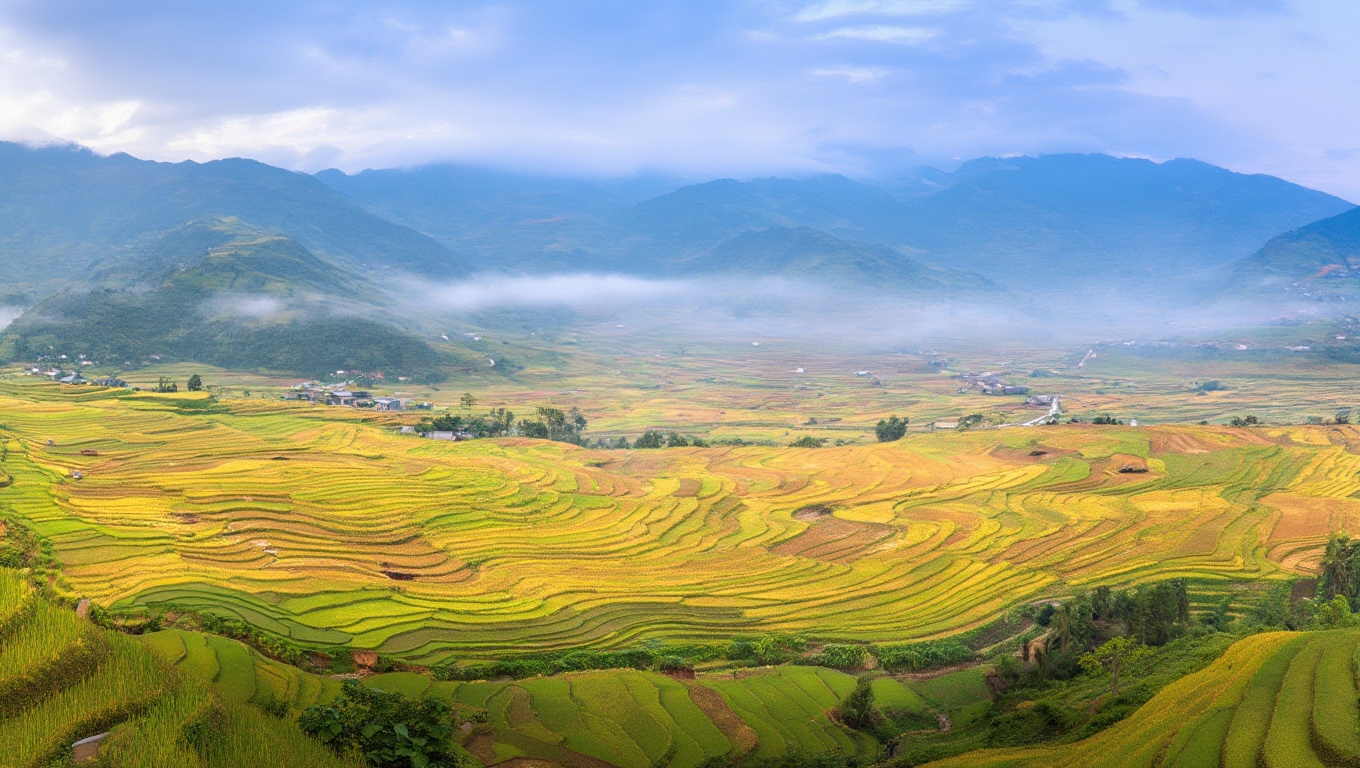
Mâm Xôi (say: mam soy — “sticky rice mound”) is the signature viewpoint of Mù Cang Chải — a rounded hill in La Pan Tán commune, completely surrounded by terraced fields on every slope. From the viewpoint platforms above it, the hill sits in the center of a bowl of rice terraces cascading down to the valley. At harvest time the colors are amber and gold. In the water season they’re silver and blue. At green growth the hill disappears into the color.
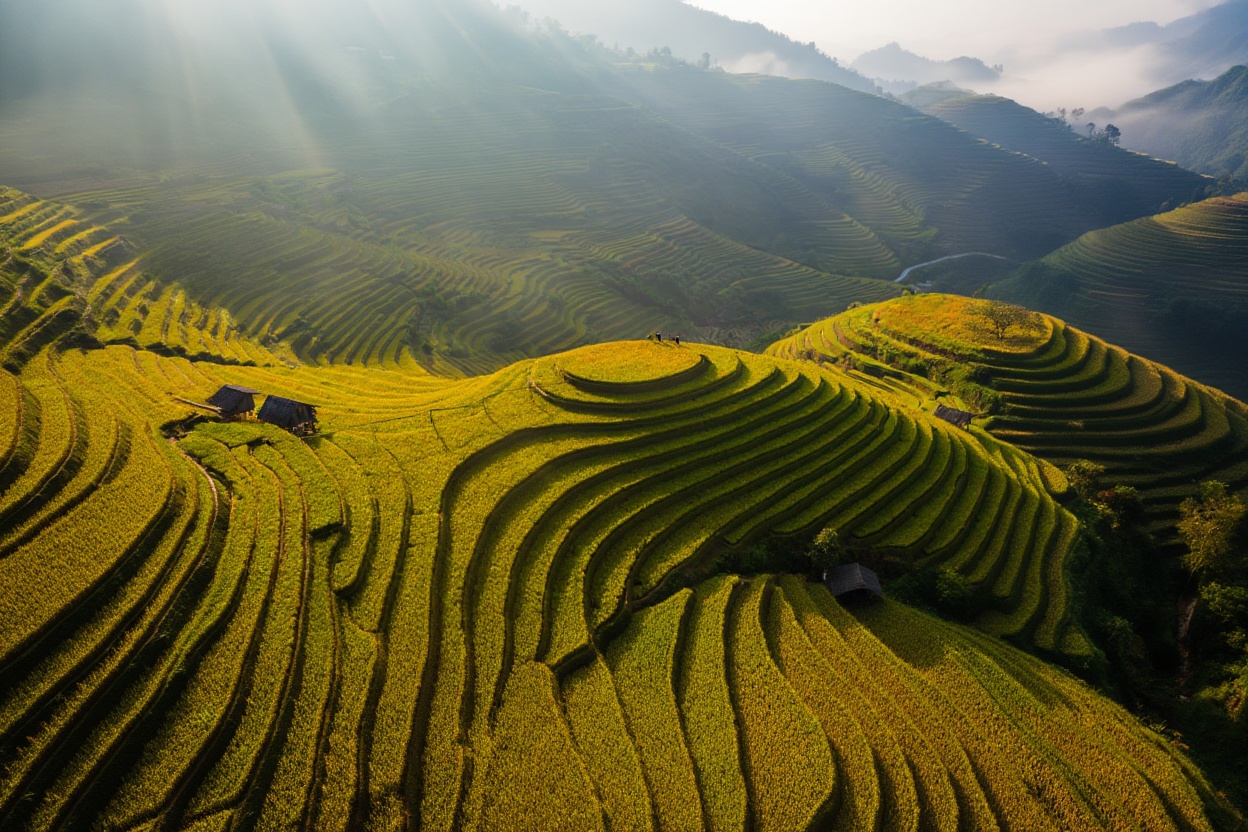
The logistics: 18km from Mù Cang Chải town on the road toward Tú Lệ. Entry: 20,000 VND (~$0.80) adults, 10,000 VND (~$0.40) children. Photography platform: 5,000 VND extra. Leave town or your La Pan Tán homestay by 5:30am. The mist sits in the valley until about 8am — you want to be there as it dissolves, not after it’s gone. By 10am the viewpoint platforms have tour groups on them and the light is flat.
✓Quick Answer
Mâm Xôi Hill is 18km from Mù Cang Chải town. Entry 20,000 VND. Go before 6:30am for the mist and the golden light. Best in late September–early October for harvest colors, and late May–June for flooded water reflections. The walk from the entrance to the upper viewing platforms takes 10–15 minutes on uneven steps.
↗Insider Tip
The highest viewpoint platform on Mâm Xôi is not the best angle — it puts the hill below you but loses the sense of scale. The mid-level platform, about halfway up the steps, gives you both the hill in the foreground and the full terrace backdrop. Most photographers stop there for the wide shot and continue up only for the aerial compression angle. Walk the whole thing once before you set up.
2. Village Trekking in Che Cu Nha — The Real Experience
Che Cu Nha (say: che koo nya) commune, 15km from town in the opposite direction from La Pan Tán, is less visited and more interesting for ground-level exploration. The road doesn’t take you to elevated viewpoints — it takes you into the terraces, walking along the irrigation channels between fields, through H’Mông villages where the terraces are narrow enough to touch both walls at once.
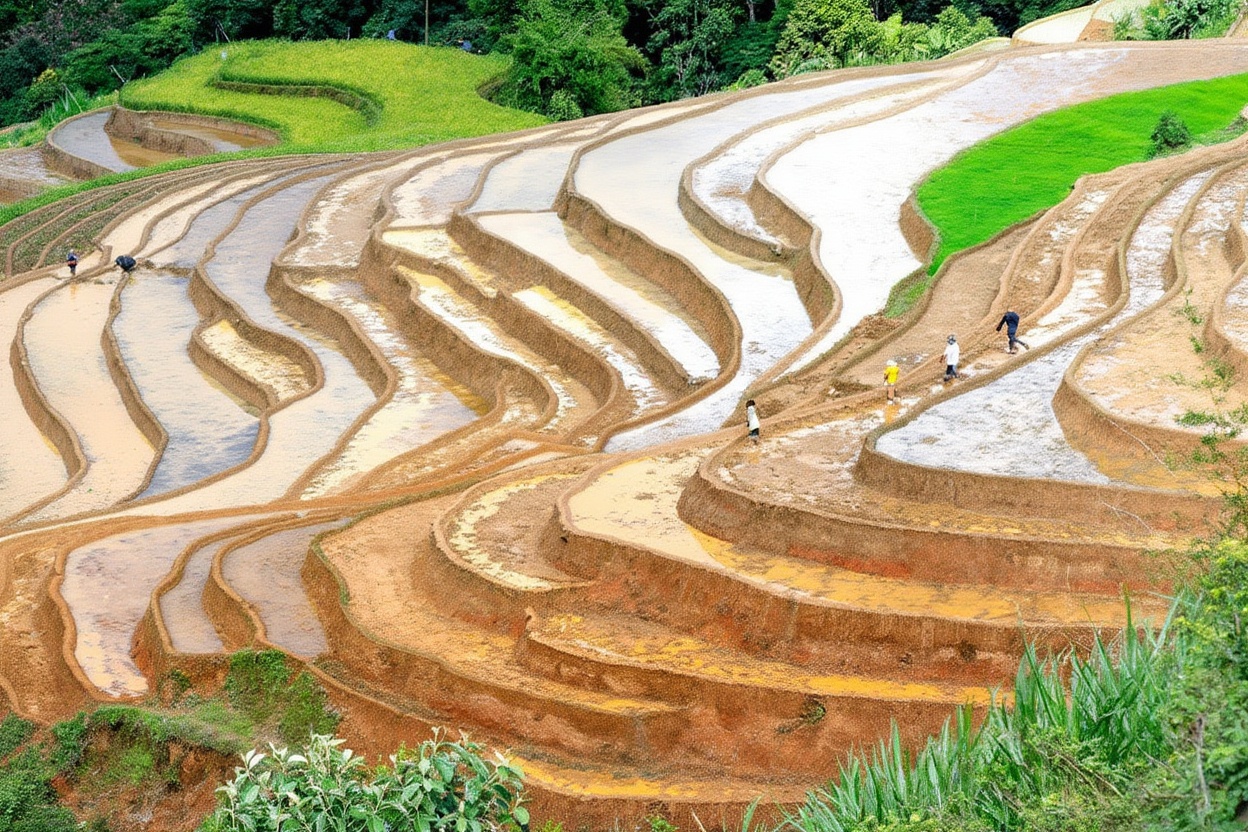
A local guide from Che Cu Nha village charges 300,000–500,000 VND (~$11–19) per day and will take you on routes that aren’t on any map — paths that connect the villages through the terraces, where the water buffalo share the trail and the women are harvesting by hand. This is where you understand that the terraces aren’t a landscape for photographers; they’re someone’s annual income.
Full-day trek from the Che Cu Nha junction: 5–7 hours including rest stops and lunch at a local family’s house (add 50,000–100,000 VND for a home-cooked meal). Wear shoes with grip — the terrace paths are wet and slippery, especially in the morning. Don’t wear anything you’d mind getting rice-paddy mud on.
→Who It’s For
Travelers who want more than photographs. If your goal is the best Instagram shot, stick to Mâm Xôi. If you want to walk through a working agricultural landscape and understand what 2,200 hectares of hand-built terraces actually looks like at ground level, this is your day.
3. Paragliding Over the Terraces — Best in the World for a Reason
Mù Cang Chải has become one of Vietnam’s premier paragliding sites — and during the golden harvest season, it’s regularly described as one of the most visually spectacular paragliding experiences in Southeast Asia. The launch site is on the ridge above the terraces, and the flight path takes you over 7km of golden rice fields with mountain ranges visible in three directions.
The Mù Cang Chải Paragliding Festival typically runs in late September to early October, timed with the harvest peak. Tandem flights with licensed pilots: approximately 1,500,000–2,500,000 VND (~$57–95) per person. Book in advance during festival season — pilots fill up fast and the festival dates mean the best weather windows are known months ahead.
✓Quick Answer
Paragliding season in Mù Cang Chải aligns with harvest: late September to mid-October. Tandem flights 1,500,000–2,500,000 VND. The launch site is on the ridge above La Pan Tán. No experience required for tandem. The flight takes 10–20 minutes depending on conditions. Weather-dependent — if it’s overcast or windy, flights are cancelled.
Outside of festival season, paragliding operators in Mù Cang Chải town can arrange flights on days with good conditions, but the main launch window and the full festival experience happen in harvest season. For the full detail on paragliding specifics, timings, and operators, the Mù Cang Chải paragliding guide covers it completely.
4. The H’Mông Saturday Market — Before It Becomes a Tourist Market
The weekly market in Mù Cang Chải town runs on Saturdays and draws families from the surrounding villages — H’Mông, Thái, and other ethnic minority groups coming down from the highlands to trade. Fresh produce, live chickens, hand-dyed indigo fabric, silver jewelry, agricultural tools, bundles of herbs, and the particular organized chaos of a market that exists entirely for local people with local purposes.
It runs from around 5:30am until noon. The best stalls — fresh greens, just-harvested sticky rice, forest mushrooms, wild honey — are gone by 8am. Get there early or get the second-tier produce. The food vendor section near the entrance serves bánh cuốn (say: ban kwon — steamed rice rolls) and bún (say: boon — rice noodle soup) from 20,000–35,000 VND (~$0.80–1.30) a bowl. The xôi nếp nương (say: soy nep nwung — purple sticky rice from mountain rice) is the local breakfast standard: order it with sesame salt and eat it while you walk.
⚠Real Talk
The market is genuine now but won’t be forever. As Mù Cang Chải’s tourist numbers grow, markets in similar destinations across the region have gradually shifted from local trade to craft-selling for visitors. Come while the pigs and the garlic are still the main event.
5. Dế Xu Phình — The Viewpoint Fewer People Find
Dế Xu Phình (say: day soo fin) commune is the most remote of the three main terrace areas — requiring a longer ride and a more committed approach than La Pan Tán. The reward: fewer people, more rawness, and a landscape that feels less curated than the Mâm Xôi viewpoint experience.
There are no established viewpoint platforms — you find your own angle by walking the ridge and the road. The terraces here step down into a narrower, deeper valley than La Pan Tán, and the light in the late afternoon (4–6pm) cuts across them at an angle that photographers who’ve done La Pan Tán at dawn specifically come here for. The village at the bottom of the valley is small and sees very few foreign visitors.
Add Dế Xu Phình to Day 2 of the motorbike circuit: La Pan Tán (dawn) → Mâm Xôi → lunch in town → Dế Xu Phình (afternoon light) → back to homestay. The round trip from town is about 50km — factor in the ride time when planning the day.
Getting there: take the main road out of Mù Cang Chải town heading northwest, past the district offices, and follow the signs for Dế Xu Phình commune. The road is paved but narrows significantly after the 20km mark. There are no formal viewpoint areas — the whole commune is the viewpoint. Stop where the road reaches a ridge and the terrace valley opens beneath you. You’ll know it when you see it.
6. Tú Lệ Village — The Best Day Trip from Mù Cang Chải
Tú Lệ (say: too lay) is a Thái village 40km southeast of Mù Cang Chải on the road toward Nghĩa Lộ. It’s famous for two things: the best nếp tan (say: nep tan — highland sticky rice, a specific variety grown only in this valley) in northern Vietnam, and the Tú Lệ hot springs.
The sticky rice at Tú Lệ has a different texture and sweetness from the varieties grown at lower elevation — the altitude, the water source, and the soil all affect the flavor in ways that matter if you’re paying attention. Local women sell it in small bags at the roadside market for 20,000–40,000 VND (~$0.80–1.50) per portion, cooked and ready to eat. It’s not street food theater. It’s just how people eat here.
Klook has the widest selection for Vietnam and is usually the cheapest. KKday is strong on day trips and local experiences.
he village, free to access. Basic facilities on site. The water temperature is around 40°C — correct temperature for soaking tired legs after two days of rice terrace hiking. Go in the late afternoon after a full day of trekking.
★Jake’s Pick
Tú Lệ on Day 3 of a Mù Cang Chải trip: ride to the valley in the morning, eat sticky rice at the market, soak in the hot springs after lunch, ride back in the late afternoon with enough energy left for one more sunset at La Pan Tán. The day costs almost nothing — petrol, sticky rice, and a market breakfast.
7. The Ridge Road at Sunset — No Entry Fee Required
The road between Mù Cang Chải town and La Pan Tán runs along a ridge with views into the terrace valleys on both sides for much of its 18km length. In the late afternoon — 4:30pm to 6pm in harvest season — the light comes from the west and hits the terraces at a low angle that makes them glow. You don’t need a viewpoint platform. You need to be on this road with your engine off and your phone out.
Pull over anywhere the view opens up. The road has passing places wide enough for a motorbike and the traffic is light on weekdays. This is free, requires no planning, and produces photographs that equal anything from the official platforms — because you’re at road level looking across rather than looking down from above.
If you have a manual camera, this is the time to use it. The warm side-light at 5pm in September–October hits the golden terraces at exactly the angle that makes them glow. The shadows fall into the terrace walls and create a depth and texture that midday overhead light completely flattens. The best road-level photographs from Mù Cang Chải come from this stretch, not from the official viewpoints — because nobody has told people to stop here.
8. Sunrise at Khau Phạ Pass — The Mountain Road Before the Crowds
Khau Phạ (say: kow fa) is one of the four great mountain passes of the Vietnamese northwest, crossing the ridge between Mù Cang Chải and Tú Lệ at around 1,200m elevation. In the early morning before 8am, the mist fills the valleys on both sides of the pass and the road runs above the cloud line — you’re looking down at a sea of white with mountain peaks above it.
Reaching the pass in time for sunrise means leaving Mù Cang Chải town by 5am. The road is 40km. At 5am in September it will be cold — 12–15°C at the summit — and the road surface has sections that require caution in the dark. But the Khau Phạ sunrise is one of the more unusual landscape experiences available in northern Vietnam, and almost no travel article mentions it because it requires an earlier start than most travelers are willing to make.
Practical Notes
Motorbike rental: Essential for everything outside of Mù Cang Chải town. Rental shops in town: 100,000–150,000 VND (~$4–6) per day for a semi-automatic. The roads to La Pan Tán and Che Cu Nha are paved but steep in sections — check the brakes before you accept the bike. Manual bikes are not recommended unless you’re experienced with mountain road gradient control.
Timing: The golden harvest season (mid-September to mid-October) is the peak for most activities — paragliding, photography, the market. Water pouring season (late May–June) is excellent for viewpoint photography and significantly quieter. Green season (July–August) is best for trekking. For the full calendar with what each month looks like, the Mù Cang Chải best time guide has the detail.
Guides: For trekking in Che Cu Nha or Dế Xu Phình, hire a local guide rather than arranging through a tour desk in Hanoi or Hà Nội-based agencies. Local guides charge 300,000–500,000 VND/day and know the paths. The money stays in the community. Ask your homestay host to connect you — this is how it should work.
For the complete picture on getting here, staying here, and what the rice terraces actually look like in each season, the Mù Cang Chải travel guide covers all of it.
Frequently Asked Questions
What is there to do in Mù Cang Chải besides the viewpoints?
Village trekking in Che Cu Nha (requires a local guide, 300,000–500,000 VND/day), paragliding over the terraces (1,500,000–2,500,000 VND, harvest season only), the Saturday H’Mông market in town (5:30am–noon), a day trip to Tú Lệ for sticky rice and hot springs (40km southeast), and the Khau Phạ Pass sunrise (pre-dawn ride). Three nights gives you time for all of them.
How long do I need in Mù Cang Chải?
Minimum 2 nights for the basics — Mâm Xôi at dawn twice, one day of exploration. Three nights is better: adds a trekking day, a Tú Lệ day trip, and enough time to be unhurried at the viewpoints. Four nights is for photographers who want multiple light conditions or the paragliding festival. One night is possible but you’ll feel like you barely arrived.
Is Mù Cang Chải worth visiting outside of harvest season?
Yes — but differently. The water-pouring season in late May–June has mirror-like flooded terraces with fewer tourists and similar photographic quality to harvest (some photographers prefer it). Green-growth season (July–August) is excellent for trekking with lush scenery but less dramatic viewpoints. The golden harvest in September–October gets the attention because the color is exceptional, but the province is worth visiting in three of its four seasonal states.
Do I need a guide for trekking in Mù Cang Chải?
For the main viewpoints (Mâm Xôi, La Pan Tán road): no. For village-to-village trekking in Che Cu Nha and Dế Xu Phình: yes. The paths are unmarked, cross private farmland, and involve river crossings in some routes. A local guide charges 300,000–500,000 VND/day, knows the routes by memory, and the money supports families in the villages you’re walking through.
Two things worth sorting before you land: a Vietnam eSIM so you have data the moment you clear customs, and travel insurance — medical costs for uninsured foreigners in Vietnam are significant.
Airalo eSIMs activate instantly. Buy before departure — airport SIM queues in Vietnam can take 30+ minutes.
The Bottom Line
Eight things to do in Mù Cang Chải — and unlike most “things to do” lists in Vietnamese travel, these aren’t padded with recommendations to visit the local pagoda and eat at a restaurant with good Google reviews. They’re eight genuinely distinct experiences that require different parts of the day, different amounts of effort, and different willingness to get up before the sun.
Do Mâm Xôi at dawn. Trek Che Cu Nha with a guide. Eat sticky rice in Tú Lệ. Sit in the hot springs until your legs stop aching. Let the paragliders have their fun if it’s harvest season — or book a tandem flight yourself and stop pretending you’re not tempted. Come back to the ridge road at 5pm and watch the light on the terraces one more time before it’s gone. The photographs you came for are waiting. So is the experience behind them, for anyone willing to stay long enough to find it.
This place earns its 8-hour bus ride. Most places don’t.
One last practical note that most guides skip: bring a headlamp. Not a phone torch — a headlamp. When you’re walking the terrace paths at 5:30am in October with your hands occupied by camera gear and a thermos of coffee from the homestay, having a light you don’t have to hold is the difference between a confident walk and a slow shuffle down a wet path. A 60,000–80,000 VND (~$2.30–3) headlamp from any Hanoi sports shop is the most useful thing in your bag that morning. The terraces don’t wait for the sun to come up before they’re worth seeing. Neither should you.