Updated June 2026
Why Con Dao Diving Is Different
Most diving in Vietnam is fine. Nha Trang has boats and sites and instructors and the surface interval beers are cold. Phu Quoc has An Thoi islands and a reasonable entry-level scene. But neither of them prepared me for the first time I went under in Con Dao.
The visibility difference is real and immediately obvious. Where Nha Trang regularly runs at 5–10m visibility due to coastal runoff and boat traffic, Con Dao sits far enough offshore (230km south of Saigon, 97km from Vung Tau) that the water stays genuinely blue. On a good day in May or June, 25–30m visibility is standard — not exceptional.
The coral coverage is the other thing. Vietnam’s inshore reefs have taken decades of damage from dynamite fishing, chemical runoff, and mass-market dive tourism. The Con Dao National Park — established 1993, covering 80% of the island group — was strict early enough that its reefs recovered in a way that most of Vietnam’s coastline didn’t. Sea turtles at multiple sites. Whale sharks spotted by local operators several times a year. Leopard sharks on the sandy patches at Côn Sơn Bay. Ray cleaning stations at the deeper sites.
⚠Real Talk
Con Dao is not a beginner’s playground in the way Nha Trang is. There are no large resort diving operations with 30 students descending in a single boat. The island has three or four serious dive operators and a limited total number of visitors. If you need hand-holding through your first-ever dive experience, Nha Trang’s instructor infrastructure is better. If you’re a certified diver who’s tired of mediocre sites, this is where you go.
Dive Sites: What’s Actually Out There
Côn Sơn Bay (North Side)
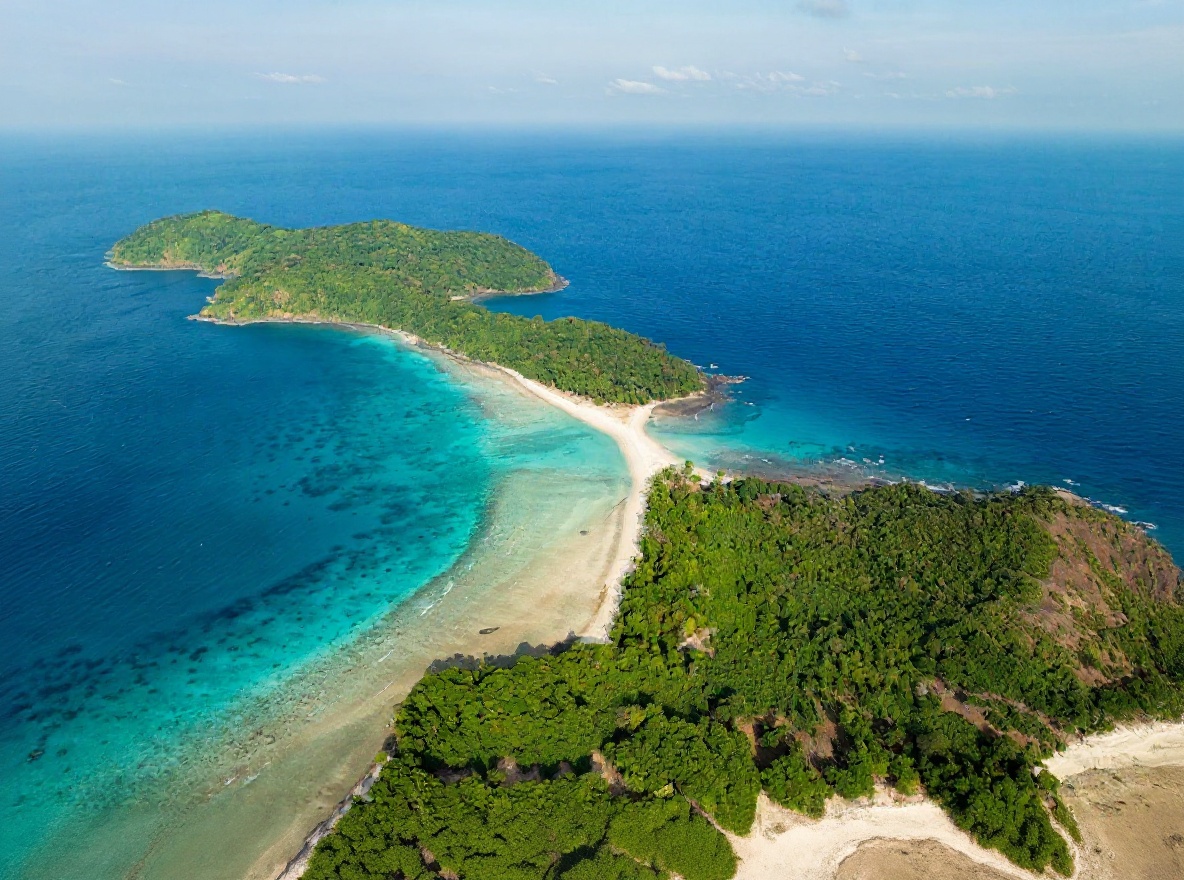
The bay directly north of Côn Sơn town is the most accessible diving area — 15–20 minutes from the island’s main pier by speedboat. Depths run 8–22m across most sites here. Good for newly certified divers and for underwater photography thanks to the lower current and protected conditions. Coral coverage is solid rather than spectacular — the better sites are further out.
Hon Tai: One of the most consistent sites in the bay for marine life density. Dense soft coral at 12–18m, regular sightings of lionfish, scorpionfish, and moray eels. Visibility typically 12–20m even during shoulder season.
Bãi Cạn: Sandy bottom at 14–18m with hard coral formations. Leopard sharks rest here during daylight hours — the site has better shark sightings than most Con Dao locations. Current can be moderate on incoming tide, which is when the big fish show up.
Outer Islands (Hon Bay Canh, Hon Cau)
The sites around Hon Bay Canh and Hon Cau, accessible in 40–60 minutes by speedboat, are where the serious diving happens. These are the locations where visibility regularly hits 25–30m and where the large pelagics pass through. Also the sites most exposed to current and surface chop — trips here are weather-dependent and not run when conditions are marginal.
Shark Point: The name comes from the white-tip reef sharks that patrol the rocky pinnacles at 15–25m. Not a guarantee on any given dive, but the site itself — multiple cleaning stations, dense marine life, strong current at the point — justifies the trip regardless. Intermediate experience recommended.
Hon Cau Wall: A vertical wall dropping from 5m to beyond recreational limits (30m+), carpeted with sea fans and soft coral. Strong current runs along the wall, which is what keeps the large fish — trevally, barracuda, the occasional Napoleon wrasse — feeding at the edge. Best dived as a drift dive by experienced divers.
Night Diving
Con Dao operators run night dives by arrangement, and the sites near Côn Sơn town come alive after dark in a way that the same locations don’t daytime. Nudibranchs, octopus, large cuttlefish, and sleeping sea turtles are the main draws. The operators who offer night dives are OceanDive (the island’s longest-established shop) and Rainbow Divers (the multi-site Vietnam chain with a branch here). Book 24 hours in advance — guides are limited.
Dive Operators: Who to Book With
Con Dao has a small but serious dive operator community. There are no large resort operations — the shops that exist have been here long enough to know the sites well and have a stake in keeping them healthy.
OceanDive Con Dao: The original operator on the island, established well before Con Dao became a tourist destination. PADI certified, small groups (maximum 6 divers per guide), equipment is well-maintained. They know the sites in the outer islands better than anyone and will tell you honestly when conditions are wrong for the outer sites. Expect $85–100 USD for a 2-dive day trip including equipment and surface interval snacks.
Rainbow Divers: Part of the Vietnam-wide Rainbow Divers network. More standardized operation, slightly larger boats, same quality of guides. Courses available here including Open Water and Advanced — the course environment (small number of students, good viz) is actually better than their mainland branches. Prices comparable to OceanDive.
Con Dao Dive: Newer operation, smaller, run by expats with long local experience. Higher instructor attention, slightly lower prices (around $75–90 for a 2-dive trip). Takes a maximum of 8 divers per boat total.
Best Time to Dive Con Dao
The Con Dao dive season runs April to September, peaking in May–August. This is when the southwest monsoon brings dry conditions to the island (the paradox of Vietnamese weather — southwest monsoon = dry for Con Dao, wet for everywhere else). Visibility is typically at its best: 20–30m, calm surface conditions, warm water at 28–30°C.
October to January brings the northeast monsoon, which affects Con Dao more severely than it does the central coast. Seas get rough, some outer island sites become inaccessible, and visibility drops to 8–15m. Operators still run trips to the bay sites in these months, but the outer islands — where the best diving is — may be closed for weeks at a time.
✓Quick Answer
Best diving months: May, June, July. April and August are also excellent. September is acceptable with slightly lower visibility. October to March: bay diving only, outer islands weather-dependent. Never plan a diving trip to Con Dao in November without flexible dates.
February and March are the shoulder months — not quite diving season, not quite closed. Local operators sometimes get lucky windows of calm weather, but conditions are genuinely unpredictable. If the primary reason for your trip is diving, these are not the months to go. If you’re combining diving with the rest of what Con Dao offers (the beaches, the prison history, the turtles), you can make it work with adjusted expectations.
Snorkeling vs Diving: Is Snorkeling Worth It Here?
Honest answer: Con Dao snorkeling is fine but not the reason to come here. The best reef life sits at 10m and below — shallow enough that you can see it from the surface, but the full picture requires going under. The exception is sea turtle sightings — turtles surface to breathe and are visible from a mask at the water surface, particularly around Bãi Lò Vôi and Hòn Bảy Cạnh during nesting season (June–September).
If you’ve never snorkeled before and want to see something memorable: a snorkeling trip to Hòn Bảy Cạnh during turtle season is genuinely impressive. If you’re a certified diver choosing between dive time and snorkeling, use your certification.
Sea Turtles: The Other Reason Divers Come
Con Dao is one of the last significant green sea turtle nesting sites in Vietnam. The national park protects nesting beaches on several of the outer islands — rangers stationed on Hòn Bảy Cạnh overnight from May through October to monitor nests and prevent poaching.
Dive operators can arrange night trips to watch turtle nesting (permitted, in small groups, with ranger accompaniment) during peak season June–August. The turtles come ashore between midnight and 4am. You wait in silence in the dark on the beach. A 150–200kg female pulls herself up the sand and excavates a nest with her back flippers while apparently oblivious to the small group of humans watching from 10m back. It’s one of those wildlife moments that removes the need for commentary.
Demand for the turtle watching trips significantly outstrips supply of ranger slots — book through your dive operator or accommodation at least 3–4 days in advance during peak months.
Jake’s Confession
I booked the bay diving trip, not the outer island trip, because it was $25 cheaper. The operator told me the outer islands were “probably fine” but conditions were “a little uncertain.” I played it safe. Back at the resort that evening, the two divers who’d taken the outer island trip described Hon Cau Wall in a way that made very clear I’d made the wrong call. $25. I still think about it.
If the operator says conditions are good for the outer islands and you have the certification for it — go. The bay sites are pleasant. The outer sites are the reason Con Dao is on this list.
What You’ll See: Marine Life Guide
Con Dao’s marine life varies significantly by site, depth, and season. Knowing what to actually look for helps — this is not a “dip in and see what happens” situation where everything is visible from 3m. The interesting stuff requires a bit of search time and guide familiarity with the site.
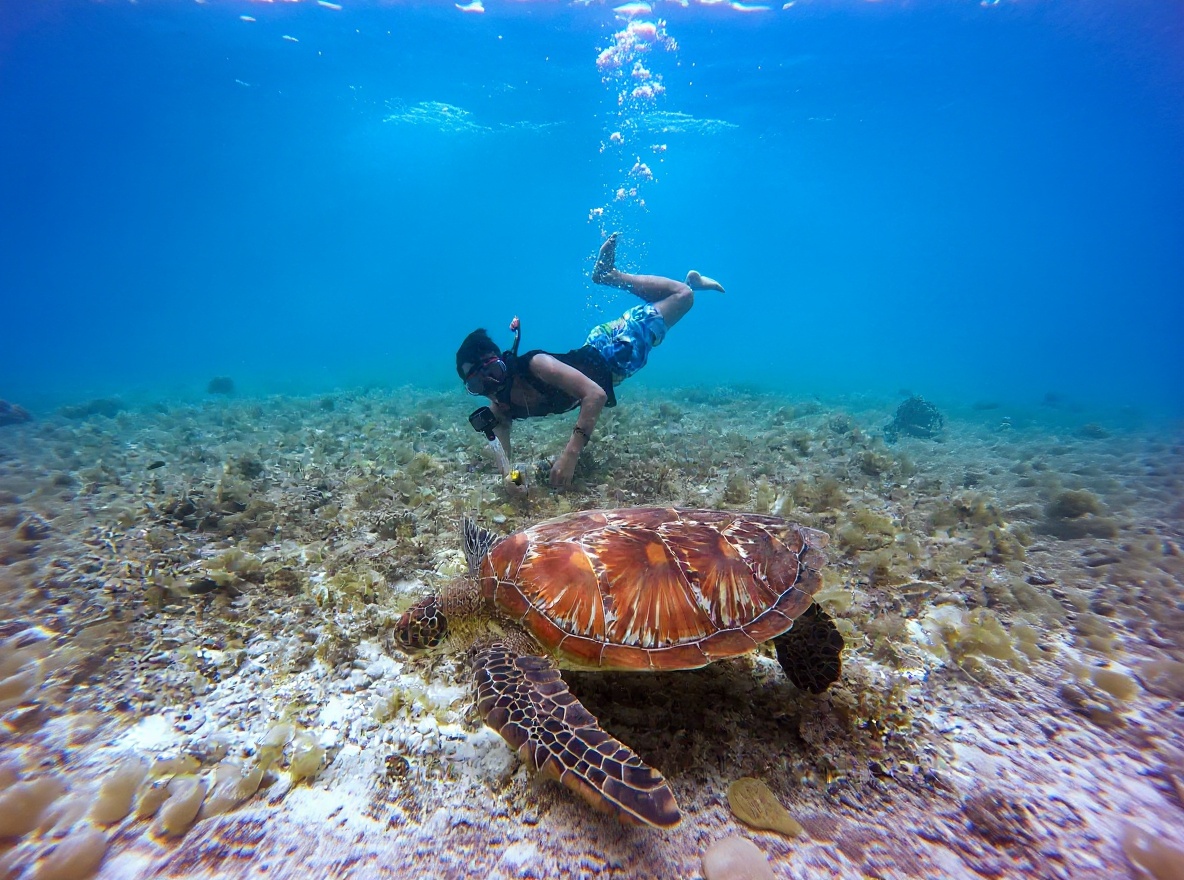
Sea turtles: Green sea turtles (rùa xanh — say: roo-ah san) are the headline species and the most reliably encountered. The nesting beaches on the outer islands mean turtles are in the water around Con Dao year-round, feeding on the seagrass beds in the bay. Hòn Bảy Cạnh bay sites produce the most consistent surface sightings. Underwater, turtles are spotted at 8–15m resting on coral ledges or feeding on sponges and soft coral.
Sharks: White-tip reef sharks at most outer island sites, particularly Shark Point around Hon Cau. Leopard sharks on the sandy patches at Bãi Cạn — they rest motionless in the sand in the morning hours and can be approached carefully without disturbance. Blacktip reef sharks occasionally in the shallows around the bay sites. Whale sharks are seasonal transients — encountered, not reliable.
Rays: Manta rays pass through the outer island sites on the oceanic current, most commonly May–July. Smaller stingrays buried in the sandy patches at bay sites throughout the year. Eagle rays have been spotted by local operators but are not a consistent sighting.
Reef fish: The expected Indo-Pacific community — Napoleon wrasse (the big ones, 1m+, at the outer sites), large schools of jacks and trevally at current-exposed points, moray eels in every crevice, parrotfish creating the white sand, grouper on every ledge. The fish size and density at the outer sites noticeably exceeds what you’d see at equivalent depths in Nha Trang — the national park protection has had visible effect on fish biomass.
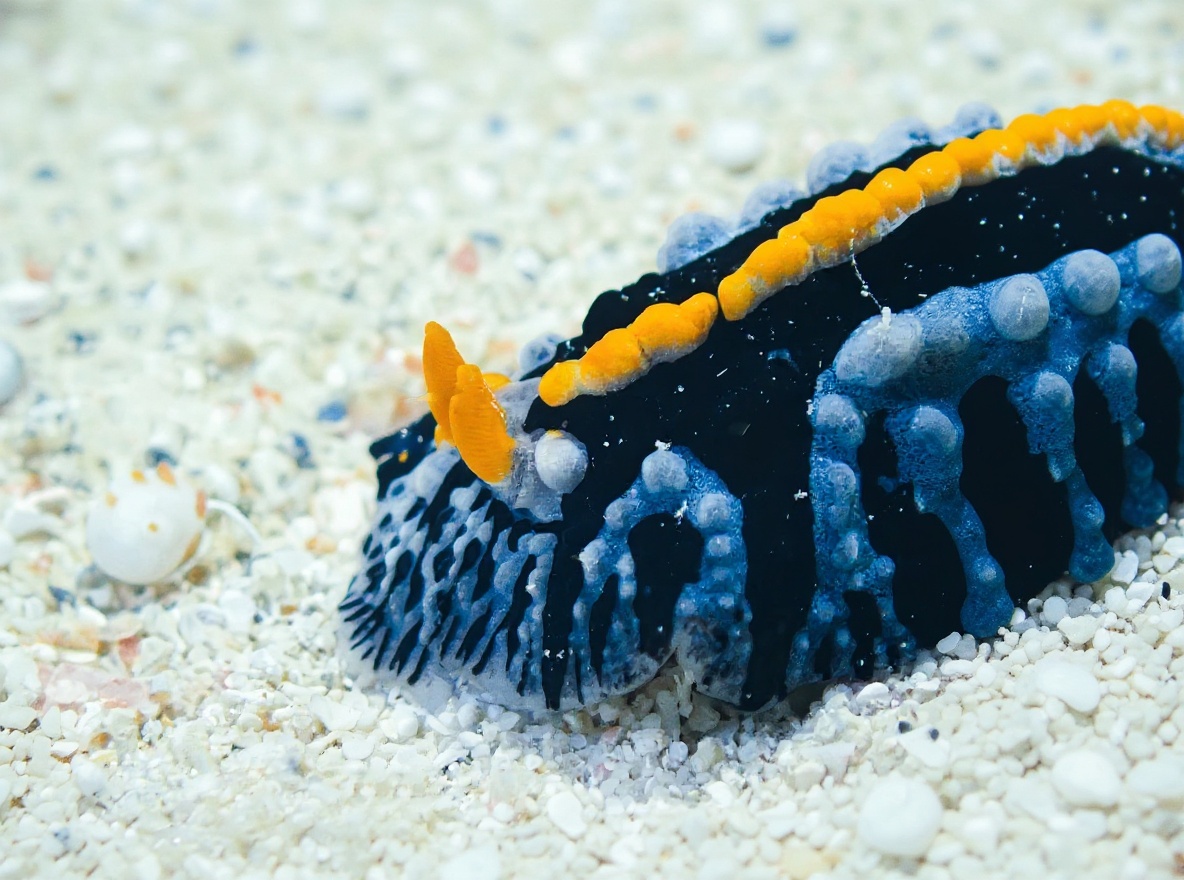
Nudibranchs: Con Dao has become a word-of-mouth destination among underwater macro photographers for its nudibranch diversity. The bay sites — particularly Hon Tai — have been documented with 40+ species by visiting researchers. Night dives here are especially productive. If you dive with a camera, tell your guide beforehand that you want to slow down for small stuff — the standard dive pace moves faster than macro shooting requires.
Gear: What Operators Provide vs What to Bring
Con Dao operators provide all the core equipment — BCD, regulator, wetsuit (3mm typically), fins, mask — in the dive package price. Equipment rental is included, not an add-on. The quality is generally good: shops with a small and serious client base maintain their gear better than high-volume tourist operations.
What’s worth bringing yourself: A well-fitted mask is the single piece of gear that makes the most difference — a leaky rental mask at 20m is miserable in a way that’s hard to recover from. If you dive regularly, travel with your own mask. Wetsuit: the 3mm provided is adequate for the water temperature, but if you run cold or plan multiple dives per day, a 5mm is more comfortable for surface intervals in October–November.
For photography: Bring your own housing setup — there are no dedicated underwater camera rental options on the island beyond the basic GoPro rentals some shops offer. The visibility and subject matter make Con Dao worth the inconvenience of traveling with photo gear.
Dive computers: Bring your own if you have one. Operators have rental computers but availability varies. On a 3-dive day trip to the outer islands, having your own computer matters for no-deco limit tracking across dives.
Combining Diving with the Rest of Con Dao
Most serious divers spend 3–5 days on Con Dao — enough for 6–10 dives across multiple sites plus time for the island’s other draws. The prison history (Con Dao housed Vietnamese political prisoners under French and American-backed South Vietnamese rule — the tiger cages at Phú Hải prison are still standing and are genuinely haunting) is worth a full half-day. The turtle beaches require an overnight or late-evening trip. The island’s beaches — Bãi Đầm Trầu on the north coast is the best — deserve at least one non-diving afternoon.
What doesn’t work well: arriving with only 1–2 days and trying to cram diving and everything else in. The outer island dive trips alone take a full day. Plan 4 nights minimum if diving is a priority alongside seeing the island properly. For the complete picture on what else is here, see our Con Dao things to do guide and Con Dao beaches.
Getting to Con Dao for Diving
Con Dao is a 45-minute flight from Saigon (Ho Chi Minh City) or a 12-hour overnight ferry from Vung Tau. Most serious divers fly. VASCO Airlines (Vietnam Airlines subsidiary) operates the route — book early, the planes are small (50 seats). Flights run from $60–120 USD one-way depending on booking timing. The ferry is cheap (~$15–25 USD) and arrives in time for early morning diving, but 12 hours on a boat the night before your first dive is not ideal recovery.
For the full logistics picture including accommodation options near the dive shops, see our Con Dao travel guide. For everything to do on the island beyond diving, see things to do in Con Dao.
Liveaboard Diving: The Outer Island Option
Con Dao doesn’t have a thriving liveaboard scene in the way the Similan Islands (Thailand) or Raja Ampat (Indonesia) do, but liveaboard trips are possible by arrangement through local operators for groups wanting extended access to the outer island sites. A 2–3 night liveaboard itinerary gives access to sites too far for a same-day trip and allows dawn and dusk dives when the larger animals are most active.
These trips are typically chartered rather than fill-to-capacity — you’re looking at minimum group sizes of 6–8 divers to make the economics work. The Vietnam Diving Association (VDA) periodically organizes guided outer island liveaboards during peak season that individual divers can join. Contact OceanDive or Rainbow Divers 2–3 months in advance if this is what you’re planning — the logistics require more lead time than a standard day trip.
For divers without a group, the standard outer island day trips (3-dive format, 6am departure, return by 5pm) cover most of what a liveaboard would reach in shorter form. The liveaboard advantage is primarily the dawn and dusk dives, not the site access itself.
Frequently Asked Questions
Is Con Dao good for beginner divers?
Yes, with a qualifier. The bay sites are appropriate for newly certified divers — calm, moderate depths, good visibility for learning. The outer island sites require comfortable buoyancy control and comfort with current. The island is not ideal for complete beginners taking their first Open Water course only because the infrastructure is smaller than mainland dive centers — but the learning conditions (small groups, clear water) are actually superior if you find a spot with a course.
How does Con Dao compare to Phu Quoc for diving?
Con Dao is objectively better for experienced divers — cleaner water, healthier reefs, more marine life, no crowding. Phu Quoc has more dive operators and slightly easier logistics (more boats, more dive times). If you’re doing a first-ever Open Water course and need infrastructure backup, Phu Quoc. If you’re a certified diver who wants the best underwater experience in Vietnam, Con Dao.
Do I need a dive certification to dive in Con Dao?
No — all operators offer Discover Scuba Diving experiences (intro dives) for uncertified visitors at $75–90 USD per dive. These are conducted in shallow bay sites with an instructor always within arm’s reach. Maximum depth is 12m. You cannot do the outer island sites on a discover scuba experience.
Are there whale sharks in Con Dao?
Whale sharks pass through the outer islands of Con Dao periodically, particularly around the seamount areas north of Hòn Cau. Local operators report sightings several times per year — not predictably enough to plan a trip specifically around them, but reliably enough that there’s a genuine chance on extended trips to the outer islands from May to August. Any sighting is up to luck and timing.
What’s the water temperature in Con Dao?
Water temperature runs 27–30°C from April to October. In the northeast monsoon months (November to February) it drops to 24–26°C — still comfortable in a 3mm wetsuit, which most operators provide or rent at 100,000–150,000 VND/day (~$4–6).
FAQ
Is Con Dao good for diving?
Con Dao is Vietnam’s best diving, though that’s a low bar in terms of competition. The national park protection has kept the reefs in better condition than anywhere on the mainland coast. Visibility averages 10–20 meters. You’ll see hawksbill turtles, blacktip reef sharks, reef fish, and (seasonally) whale sharks.
What is the best time to dive in Con Dao?
February to August is the main diving season. March to May is peak — calm seas, high visibility, and the best chance of whale shark sightings. July–August is still good. September to January brings rougher seas and reduced visibility. Some dive sites are inaccessible during the monsoon.
How much does diving cost in Con Dao?
A two-tank fun dive costs around $70–90 USD through the main operators (Rainbow Divers, Con Dao Diving). PADI Open Water certification runs $350–450 USD. Accommodation + diving packages start around $150/night at dive resorts.
How do I get to Con Dao for diving?
Fly Saigon (SGN) to Con Dao (VCS) — around 45 minutes, flights from Vietnam Airlines and Bamboo Airways, typically 800,000–1,500,000 VND one-way. Book 2–3 weeks ahead in high season. No ferry service currently operates to Con Dao from the mainland.
Are Con Dao dive sites suitable for beginners?
Several sites are — Con Dao Diving runs beginner-friendly sites with moderate depths (8–15 meters). The stronger conditions at sites like Hon Tai and the north side require Open Water certification and some experience. First-time divers should stick to the protected sites on the west side of Con Son island.