Last updated: June 2026 — current tour pricing and conditions verified
Bai Tu Long Bay sits northeast of Ha Long with the same limestone geology, a fraction of the boats, and no day-tripper ferry traffic — our Bai Tu Long Bay guide explains who it’s actually for.
The most humbling moment in Lan Ha Bay comes somewhere in the second hour of paddling. You’ve just navigated through a low tidal entrance — rock maybe 50cm above your face, the current pulling you sideways, your guide shouting something about leaning left — and you emerge into a completely enclosed lagoon.
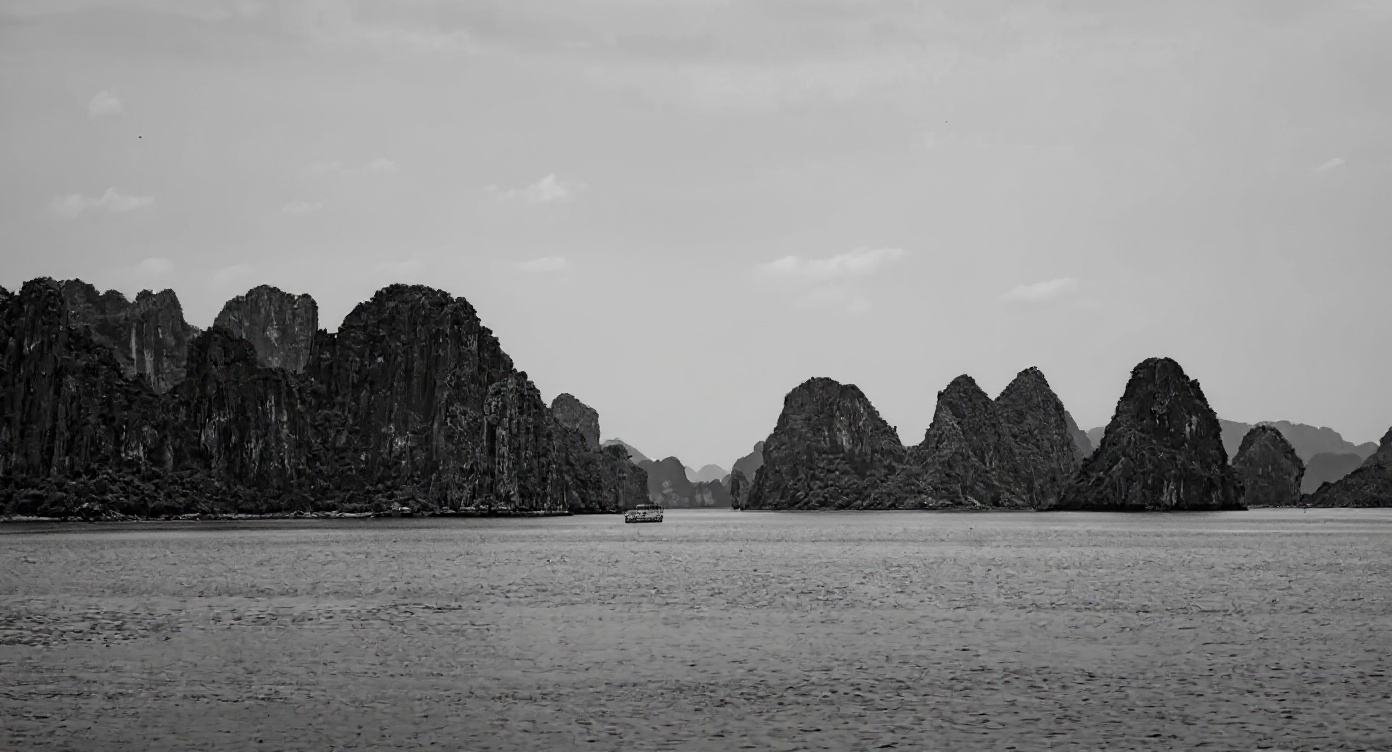
Cathedral-quiet. No engine noise. No other boats. The karst walls rise straight from the water on every side. Birds you can’t identify move somewhere in the cliffs. The water is clear enough to see bottom. It smells of salt water, wet limestone, and something green and alive from the vegetation crammed into every crevice above the tide line.
I didn’t take a usable photograph of this moment because I was too busy staring at it.
That’s the thing about kayaking these karsts: the photographs you’ve seen don’t prepare you for the experience from water level. The boats give you a view of the karsts. The kayak gives you a relationship with them. You paddle between them, duck under them, find the gaps they leave between islands and realize there are entire hidden worlds in there that the cruise boats never see. For a bay system that gets three million visitors a year, it contains a remarkable amount of quiet.
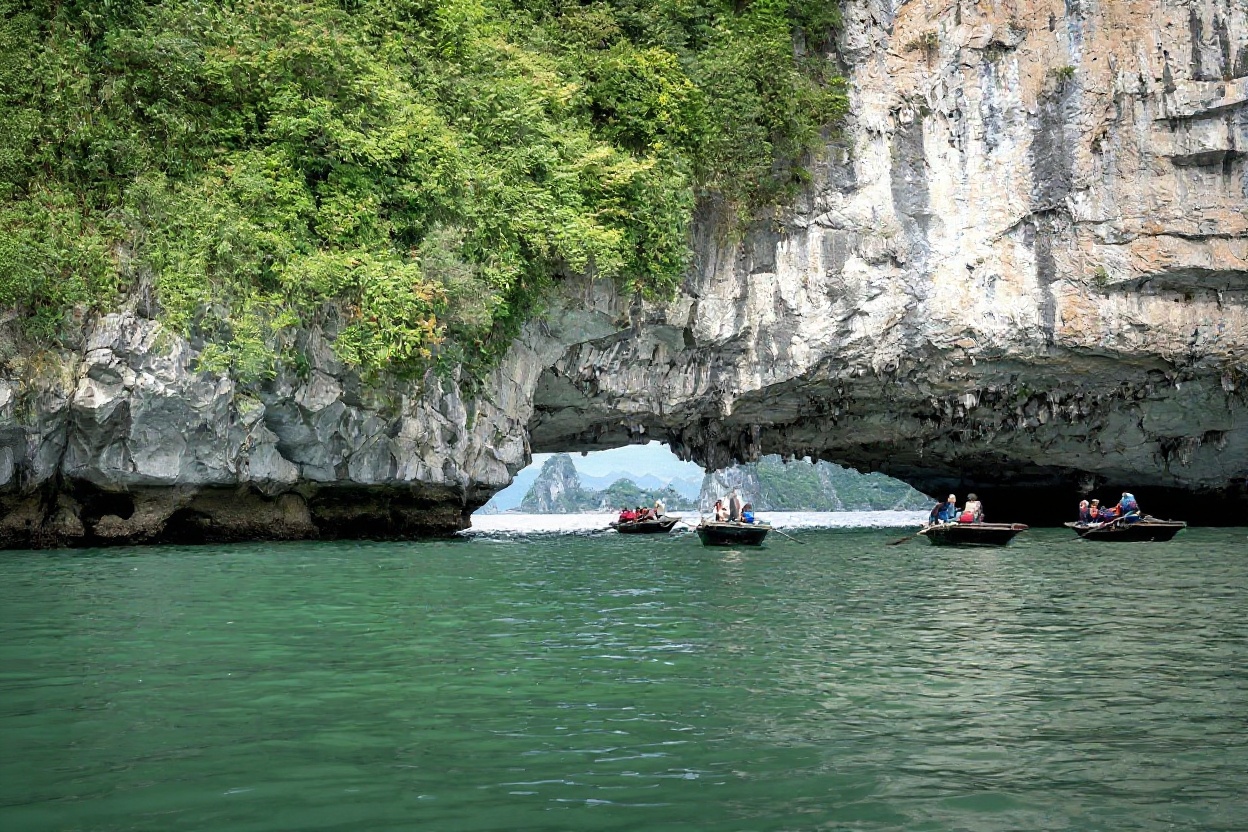
Ha Long Bay vs Lan Ha Bay for Kayaking: What Actually Matters
Most travelers book “Ha Long Bay” and get transported to the main cruise pier at Tuần Châu or Hòn Gai. That’s fine for a standard cruise. But for kayaking specifically — cave access, water clarity, paddling room — Lan Ha Bay is a different experience.
✓Quick Answer
For kayaking, book Lan Ha Bay not central Ha Long. Fewer day-trip boats means calmer water, less wake, and more space to explore. The caves accessible only by kayak are in Lan Ha. The trade-off: access via Cat Ba Island adds 30-40 minutes to your journey from Hanoi.
The central Ha Long Bay zone has over 500 registered cruise boats operating on any given day in peak season. Lan Ha Bay, which sits south of Ha Long in the same bay system but separated by geography, has a fraction of that traffic. The difference in the paddling experience — no wake from passing cruise boats, no sound of diesel engines bouncing off the karst walls — is not subtle.
The access to Lan Ha Bay differs from central Ha Long. From Hanoi: bus to Hải Phòng (2 hours), then speedboat to Cát Bà Island (40 minutes), then your cruise sails into Lan Ha Bay. Total transit from Hanoi: 3.5–4 hours. Slightly longer than the direct Ha Long cruise bus, but the kayaking experience on arrival is consistently better. Most Lan Ha Bay tour operators handle all connections as part of the package.
Dark and Bright Cave (Hang Tối và Hang Sáng): The Unmissable Stop
Two adjacent sea caves separated by a narrow channel, accessible only through a tidal passage low enough that you have to lie flat on the kayak to get through. No motorized vessel can enter. If the tide is right and your guide knows the route, you paddle through about 30 meters of darkness and emerge into a completely enclosed karst lagoon that the outside world doesn’t know exists.
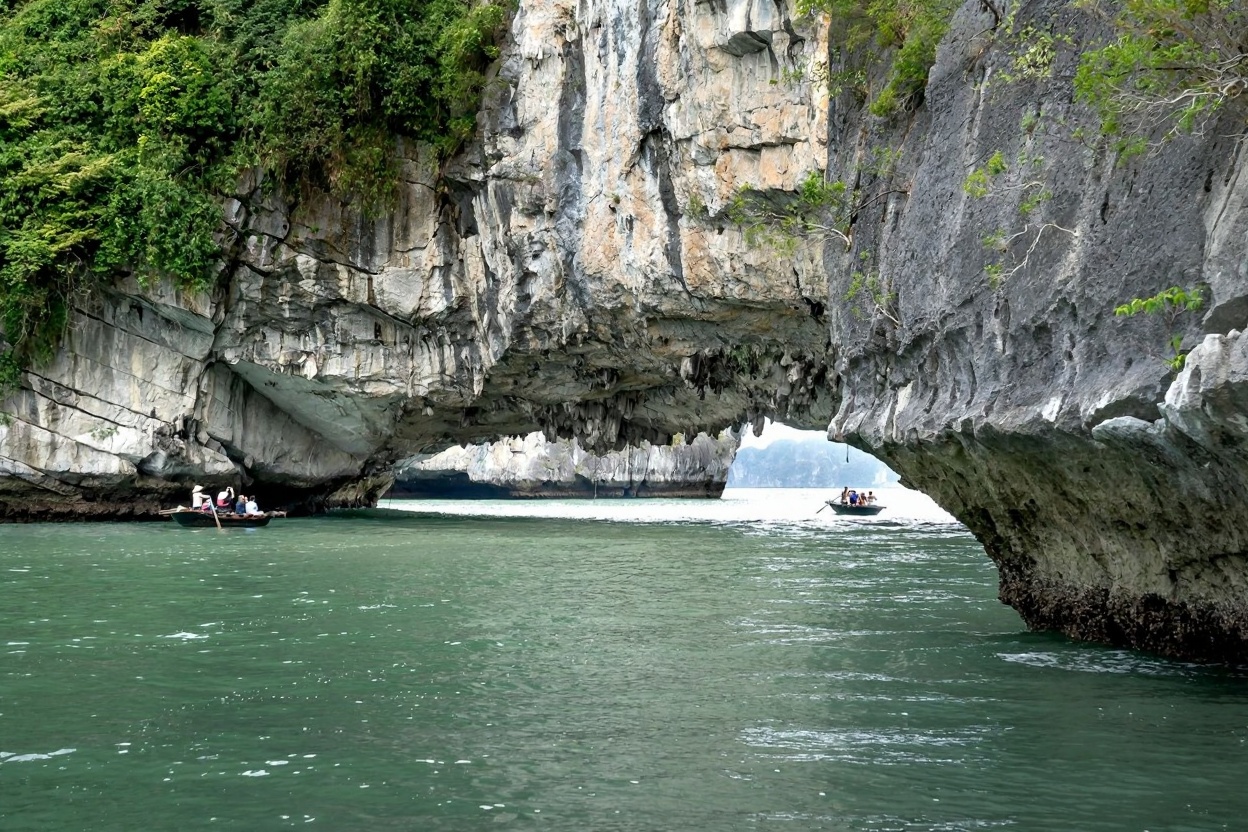
The two caves connect to each other and to the lagoon. “Dark Cave” (Hang Tối — say: hang toy) is accessed from the seaward side through the narrow tidal passage. “Bright Cave” (Hang Sáng — say: hang sang) opens onto the lagoon interior, where light enters through gaps in the karst ceiling at certain angles — in late morning, the water takes on a green-blue luminescence from light refracted off the seafloor.
Practical details for planning: the cave is in Lan Ha Bay, accessible from Cat Ba Island. The tidal window for safe paddling through the entrance is limited — usually late morning to early afternoon, roughly 9am to 1pm. Outside this window the passage may be too shallow or the current too strong. Your guide will know conditions that day. During peak typhoon season (July-August) the cave can be closed for days at a stretch due to sea conditions.
Not all cruises include this cave. Many Ha Long cruises visit Sung Sot (Surprise Cave) or Thiên Cung Cave via walkways — these are impressive but involve no paddling and are accessible to anyone. Dark and Bright Cave requires specifically booking a Lan Ha Bay cruise or day tour that lists cave kayaking in the itinerary. Before booking, ask directly: “Does this tour include kayaking through Dark and Bright Cave?” A vague answer means probably not.
↗Insider Tip
Arrive at Dark and Bright Cave on a weekday morning between 9–11am. Light enters the Bright Cave interior at the best angle at this time, the water clarity peaks before afternoon boat traffic disturbs the sediment, and weekday crowds are noticeably lighter. Saturday and Sunday can have 10-15 kayaks waiting their turn for the tidal passage. Midweek is noticeably different.
What Kayaking in Ha Long Bay Actually Involves
The kayaks used on Ha Long and Lan Ha Bay cruises are sit-on-top ocean kayaks — wide, stable, genuinely beginner-friendly. They don’t tip easily. The plastic hull construction means they’re heavy to turn but very forgiving in open water. You get a basic paddle demonstration from your guide that takes about 5 minutes. Previous kayaking experience is not required or expected.
Typical kayaking time on a 2-night cruise: 3–4 hours total across two sessions. One session in the afternoon of day 1 (usually 2 hours), another in the morning of day 2 (usually 1.5 hours). Distances are short — hundreds of meters to a few kilometers per session — and the pace is exploratory, not athletic. You stop frequently to look at formations, enter caves, photograph things. The physical exertion is low. The sensory experience is high.
The hardest physical challenge isn’t paddling distance — it’s maneuvering in the specific moments that matter. Cave entrances require active paddling against tidal current to hold position while you angle the bow correctly. Tight passages between karst formations require controlling your drift. None of this is technically difficult with a competent guide beside you, but it’s more engaging than open-water paddling.
Single kayaks and tandem kayaks are available on most cruises. Solo is better for maneuverability in tight passages — a tandem where one person is paddling significantly harder than the other creates tracking problems in narrow cave entrances. If you’re with a partner who is completely new to paddling and anxious about it, tandem gives them confidence. Otherwise, solo is the better experience.
→Who It’s For
Ha Long Bay kayaking suits travelers who want active engagement with the landscape rather than observing it from a boat deck. If you have significant back or shoulder injuries, the paddling technique required in confined cave spaces can aggravate them — mention this to your guide before cave sessions. Not recommended for children under 8 in the cave passages — the tidal entrance requires adult coordination and comfort in a low, enclosed space.
Choosing a Tour: Day Cruise, 1-Night, or 2-Night
The honest truth about day trips: a day cruise is not enough to properly kayak Ha Long or Lan Ha Bay. The transit from Hanoi to the bay and back takes 6–7 hours of your day. What’s left after the welcome lunch and navigation to the kayaking zone is roughly 45–60 minutes of actual paddling. You see the cave. You don’t experience it. This is the single most common complaint in Ha Long Bay reviews — “not enough time on the kayak.”
For kayaking as the primary purpose of the trip, the minimum is 2 nights, 3 days. This gives you two proper kayaking sessions with flexible timing around tides, an overnight anchorage in a quiet part of the bay (the experience of waking up to silence on the water at dawn is distinct from anything available during daylight), and actual time to sit on the kayak and notice things rather than constantly paddling to the next checkpoint.
For kayaking specifically, the mid-range 2-night cruise at $130–200 per person hits the sweet spot. What the premium over a 1-night cruise actually buys: a second full kayaking session the morning of day 3, before other cruise boats arrive at the cave zones. Early morning on the water in Lan Ha Bay — the karst mist, the silence, no other boats — is a different experience than the same route at 10am with four other cruises queued for the cave entrance.
What the budget vs mid-range choice means practically: at $130, you’re typically on a boat with 16-20 passengers, group kayaking sessions managed as a convoy, basic shared cabin. At $200, groups of 8-12, individual kayak timing more flexible, guide attention proportionally better. The kayak equipment is identical either way. The experience quality differences are real but not dramatic — a competent guide matters more than cabin thread count.
Getting to Ha Long Bay and Lan Ha Bay from Hanoi
For central Ha Long Bay (Tuần Châu pier): Direct limousine van from Hanoi to the pier, about 3–3.5 hours. Most overnight cruise packages include this transfer in the price — book through your cruise operator and a van picks you up from your hotel in Hanoi’s Old Quarter. If booking transfer independently: 200,000–280,000 VND (~$8–11) each way.
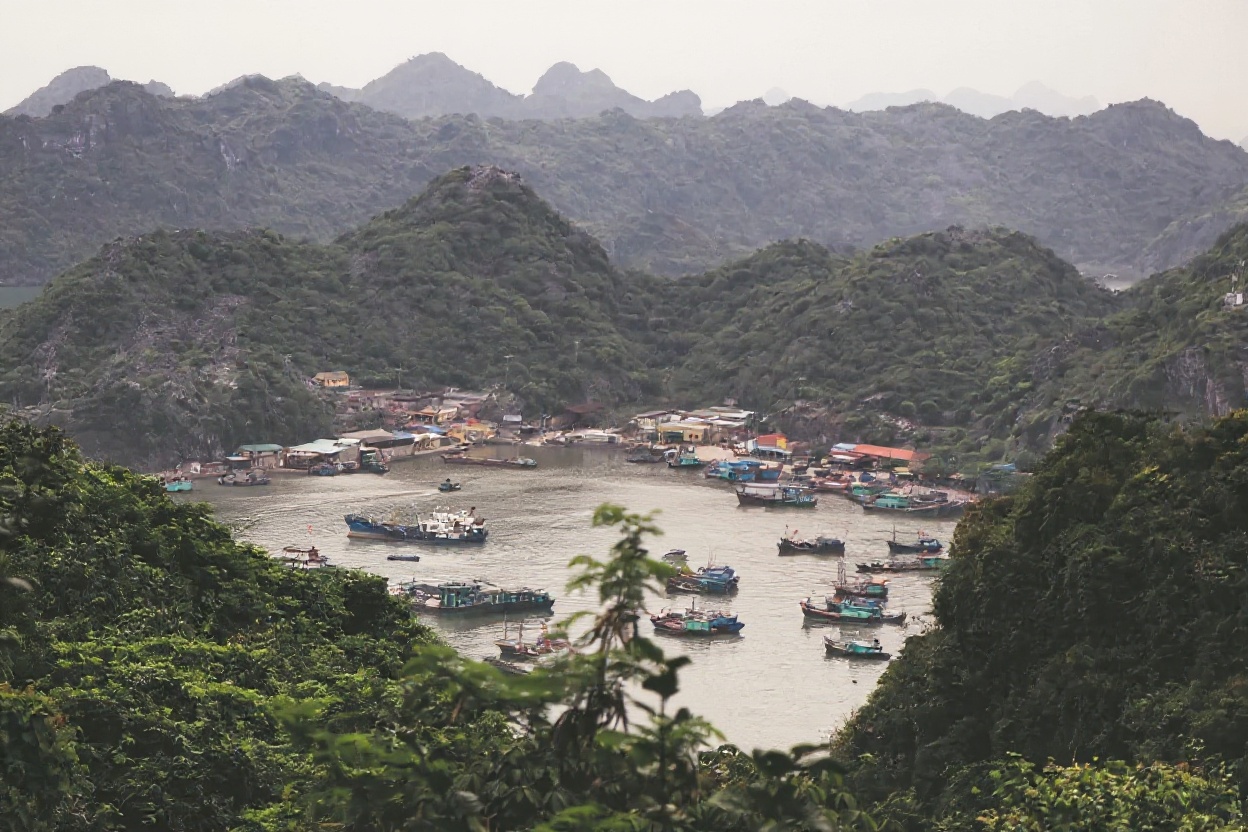
For Lan Ha Bay specifically: the route is different. Hanoi → Hải Phòng by highway bus (2 hours, 100,000–150,000 VND / ~$4–6), then Hải Phòng port to Cát Bà Island by speedboat (40 minutes, 220,000–280,000 VND / ~$8–11). From Cát Bà Island, your cruise or day tour departs into Lan Ha Bay. Total door-to-water time from Hanoi: roughly 3.5–4 hours. Most Lan Ha Bay cruise packages include the entire transfer chain in the booking price — don’t arrange it separately unless you’re extending your stay on Cát Bà Island.
⚠Real Talk
The cheapest Ha Long Bay tours — $45 day trips from Hanoi — are not lying about the price, but they are implying a better experience than they deliver. You spend 6 hours in a van for 45 minutes on a kayak. The boat is crowded. The itinerary is rushed. The cave visit involves dozens of other tour groups queuing for the same entrance. At this price point, Ha Long Bay is genuinely disappointing. At $130–200 for 2 nights in Lan Ha Bay, it’s one of the better experiences in northern Vietnam.
What Happened When I Brought Snorkeling Gear
First Ha Long Bay trip. I’d done research. Knew the water was clear. Packed my snorkeling mask, excited to combine kayaking with underwater time. Nobody in any article I’d read had mentioned a relevant fact: Ha Long Bay’s central zones have significant boat traffic year-round, and the underwater visibility near popular cave zones is often reduced by sediment disturbance from hundreds of vessel propellers. The water I’d seen in photographs — that luminous emerald — is a surface effect of light reflecting off shallow sand bottoms. Underwater is a different story.
I got one genuinely good snorkeling session in two days, in a small cove in Lan Ha Bay far from the main cruise routes. Water clarity there was reasonable — 4–5 meters of visibility, some coral formations. Everything else was either murky from boat traffic or cold enough (late October, water temperature 22°C) to make extended snorkeling uncomfortable without a wetsuit.
The lesson: kayaking in Ha Long Bay is excellent. Snorkeling is possible but location-dependent and season-dependent in ways no guide upfront. Don’t optimize your trip for snorkeling. Optimize it for kayaking, and if the conditions cooperate at one stop, that’s a bonus. If snorkeling is specifically your goal, the waters around Cát Bà Island’s southeastern coast have better conditions than the main bay area — ask your guide before packing masks.
Best Time of Year for Kayaking in Ha Long Bay
Weather matters significantly for the kayaking experience — not just comfort but accessibility of the caves.
March to May is the peak window. Mild temperatures (22–28°C), minimal rain, calm seas. Morning mist on the karsts at this time of year is at its most photogenic. Water clarity peaks. The spring tidal window for Dark and Bright Cave is reliable. Cruises in this window book out weeks ahead — don’t leave this to last minute.
September to November is the second strong window. Summer heat has broken, typhoon season has mostly passed by late September, humidity drops noticeably. October in particular combines good weather with lighter crowds than April-May. The karst mist returns in early morning.
June to August: hot (32–35°C on the water), humid, afternoon thunderstorms possible. The bay doesn’t close and many days are fine for kayaking — but midday heat on open water is intense, and the afternoon storm risk pushes kayaking sessions earlier. Visibility in some cave zones drops during heavy rain periods. Rain gear matters more than at any other time of year.
December to February: cold mist season. Temperatures can drop to 14–16°C on the water. Combined with sea spray and wind, this makes kayaking physically uncomfortable in short sleeves. The bay atmosphere is moody and atmospheric — worth visiting, but the kayaking experience suffers. Bring proper layers or reduce expectations for the paddling sessions.
What to Bring for Kayaking in Ha Long Bay
The cruise provides the kayak, paddle, and life jacket. You provide everything else.
Non-negotiables: Waterproof dry bag for your phone and camera — even a stable sit-on-top kayak will get water on the deck in cave passages and choppy conditions. UV-blocking rash guard or long-sleeve shirt — two hours on open water in Vietnam sun without arm coverage produces a distinctive stripe burn. SPF 50+ reef-safe sunscreen. Polarized sunglasses — glare off the water in midday is significant. Old shoes or water sandals that can get wet and dry quickly.
Also useful: Insect repellent for cave stops — humidity around karst rock means mosquitoes. A small microfiber towel. Cash for tips (100,000–200,000 VND / ~$4–8 per guide per day for attentive service is appropriate and genuinely appreciated). Any prescription medication should be in your dry bag, not left in the boat cabin.
Leave behind on the boat: Cameras and gear you’d be devastated to lose to water. Valuables beyond your phone. Most overnight cruises have a lockable storage area in your cabin — use it before every kayaking session. Loose items left on the kayak deck at a cave entrance have a predictable outcome.
ℹKnow Before You Go
Dark and Bright Cave entry requires lying flat on the kayak — anything balanced loose on the bow or lap will either get knocked off by the cave ceiling or soaked when the hull dips on the current. Before entering, secure your phone in a waterproof bag clipped to the kayak frame, or hand it to the guide who waits outside the passage. Guides explain this on every single tour. Someone always thinks it doesn’t apply to them.
Kayaking Regulations: What You Can’t Do
Ha Long Bay and Lan Ha Bay are UNESCO World Heritage-protected, which means kayaking outside designated zones can result in fines — reportedly up to 2,000,000 VND (~$78) for individuals and higher for operators. Your guide will stay within designated areas. If a guide suggests something that feels unofficial, trust that instinct.
The practical rules that matter day-to-day: no camping on islands, no entering cave systems without a licensed guide, no collecting coral or other marine material, no swimming in zones marked as restricted (usually the highest-boat-traffic areas). The kayaking itself is explicitly encouraged within approved routes — the regulations are about protecting specific zones, not limiting paddling activity. A licensed tour operator handles all of this automatically.
For the full picture on visiting Ha Long Bay — which caves to prioritize, how budget cruises compare to luxury, and whether Ha Long vs Bai Tu Long makes sense for your itinerary — see our complete Ha Long Bay cruise guide. For the broader northern Vietnam context and how Ha Long fits into a longer trip, the northern Vietnam travel guide covers the full region from Hanoi north.
Ha Long Bay Kayaking: Frequently Asked Questions
Can beginners kayak in Ha Long Bay?
Yes — no prior kayaking experience needed. The sit-on-top ocean kayaks used on Ha Long and Lan Ha Bay cruises are wide, stable, and genuinely beginner-friendly. Guides give a 5-minute technique demonstration before each session and accompany the group throughout. The only sections requiring active effort are narrow cave entrances where tidal current must be paddled against — guides assist with these. If you have back or shoulder injuries, mention this beforehand.
How long do you kayak on a Ha Long Bay cruise?
A 1-night cruise typically includes 1.5–2 hours of kayaking total. A 2-night cruise includes 3–4 hours across two sessions — one afternoon, one morning. A day tour gives roughly 45–60 minutes of actual paddling after the transit time and lunch. For kayaking as the primary goal, a 2-night cruise in Lan Ha Bay is the correct booking.
What is Dark and Bright Cave in Ha Long Bay?
Dark and Bright Cave (Hang Tối và Hang Sáng) is a pair of adjacent sea caves in Lan Ha Bay, accessible only by kayak or bamboo boat through a tidal entrance too low for motorized vessels. The passage requires lying flat on the kayak — about 50cm clearance above your face. Inside is an enclosed karst lagoon with clear water, cave swallows nesting in the cliffs, and complete absence of boat engine noise. Access depends on tide timing; most tours visit between 9am and 1pm.
Is Lan Ha Bay better than Ha Long Bay for kayaking?
Yes, for kayaking specifically. Lan Ha Bay has significantly lighter boat traffic, clearer water, more caves accessible exclusively by kayak, and a quieter overall atmosphere. The trade-off is slightly longer access time from Hanoi via Cát Bà Island. If kayaking is your primary purpose, Lan Ha Bay is worth the extra transit time. If you’re combining a standard cruise experience with some kayaking, central Ha Long Bay is more convenient.
How do I get to Ha Long Bay for kayaking from Hanoi?
For Lan Ha Bay: Hanoi → Hải Phòng by highway bus (2 hours, 100,000–150,000 VND / ~$4–6), then Hải Phòng port → Cát Bà Island by speedboat (40 min, 220,000–280,000 VND / ~$8–11). Total transit from Hanoi: 3.5–4 hours. Most cruise packages include all connections. For central Ha Long Bay: direct limousine van from Hanoi to Tuần Châu or Hòn Gai pier, 3–3.5 hours, usually included in cruise booking.
What should I pack for kayaking in Ha Long Bay?
Essentials: waterproof dry bag for phone and camera (mandatory — cave passages put water on the deck), UV-blocking long-sleeve rash guard, SPF 50+ sunscreen, polarized sunglasses, water shoes. Optional but useful: insect repellent for cave stops, small towel, cash for guide tips (100,000–200,000 VND per guide per day). Leave anything irreplaceable locked in your cabin before every kayaking session.