
Last updated: June 2026 — five years of market haggling across all 63 Vietnamese provinces
Learning even ten words of Vietnamese changes how locals treat you — our Vietnamese language guide covers the phrases that actually matter and why tones are less terrifying than they look.
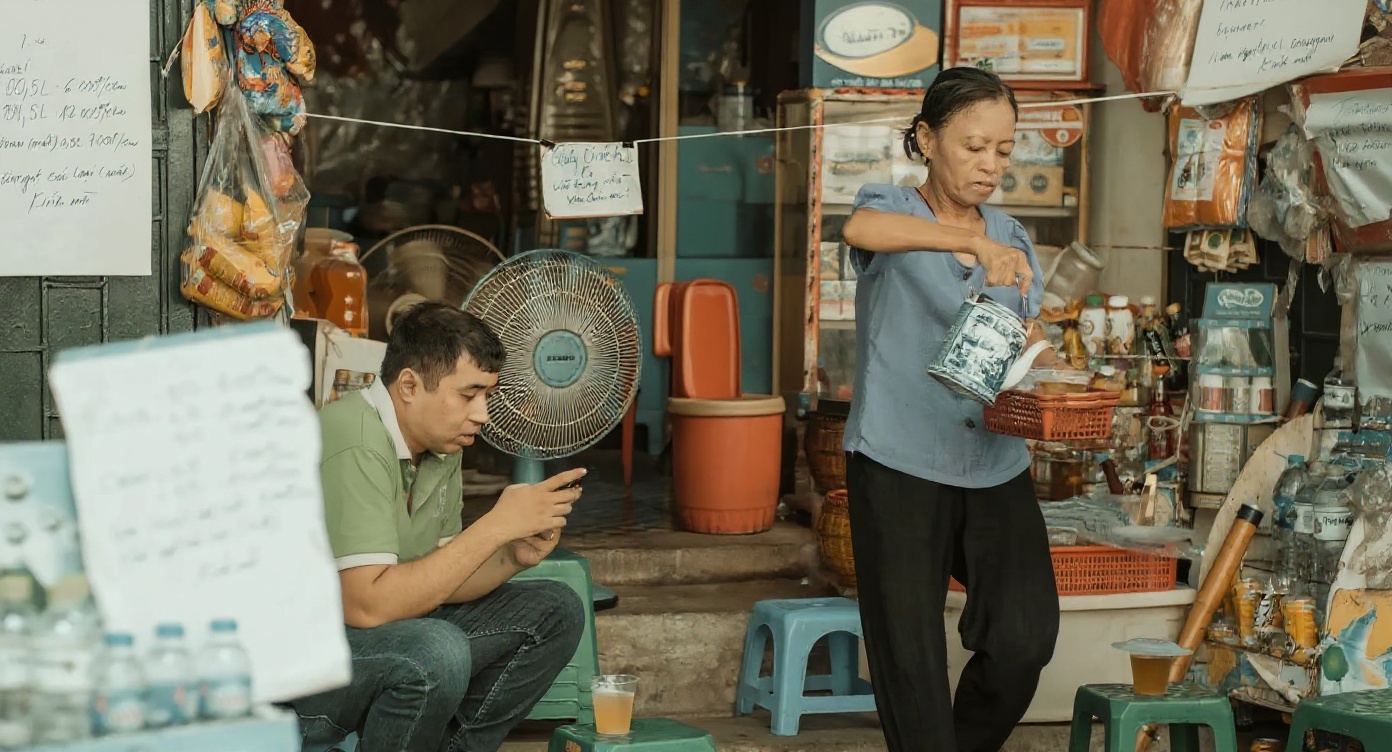
The negotiation that still makes me cringe happened in year one. I was at Đồng Xuân market in Hanoi, buying a pair of flip-flops. The vendor opened at 200,000 VND (~$8). I immediately countered with 50,000 VND (~$2).
She stopped talking. Put down what she was holding. Looked at me.
50,000 VND was below her cost price. The flip-flops were worth 100,000–120,000 VND. I had no idea — I’d read “start low” in some backpacker forum and applied it without any sense of proportion. The vendor wasn’t angry. She was just done. She waved me off, turned back to her phone, and I shuffled out of that stall having offended someone who had no time for tourists who confused “negotiating” with “insulting.”
I learned: knowing the actual value of something before you negotiate is the whole game.
Where Haggling Is Expected (and Where It Isn’t)
The most common mistake tourists make isn’t being too aggressive — it’s negotiating in places where prices are fixed and the attempt itself is rude.
✓Quick Answer
Haggling is expected at street markets, souvenir stalls, independent clothing and craft vendors, xe ôm motorbike taxis (without meters), and tour operators selling day trips. Fixed prices — no negotiation — apply at supermarkets, pharmacies, chain restaurants, most sit-down restaurants, ticketed attractions, Grab rideshare, and convenience stores.
Haggle here:
Wet markets (chợ) — vegetables, fruit, seafood from independent stalls. Souvenir markets — Bến Thành (HCMC), Đồng Xuân (Hanoi), Hội An Night Market. Clothing stalls in tourist areas. Independent tailor-made items. Street vendors selling non-food items. Day tours sold by independent operators, not booking platforms. Xe ôm taxi drivers without meters. Guesthouses and small hotels when negotiating directly (especially for multi-night stays).
Don’t haggle here:
Grab, Be, GoViet rideshare apps — price is algorithmic, the driver doesn’t set it. Restaurants with printed menus — the price is the price. Pharmacies — price fixing is real and messing with drug prices is not a game. Supermarkets (Co.opmart, VinMart, Lotte, AEON, Big C) — fixed prices. Train and bus tickets. National park entrance fees. Ticketed cultural sites — attempting to negotiate at Hội An Ancient Town, the Hue Imperial Citadel, or Phong Nha tickets is pointless and marks you as uninformed.
How the Price Ecosystem Works
Vietnamese market pricing follows a tiered system that visitors often misread as “scam” when it’s actually just economics.
Giá khách (foreign price) — the first price quoted to a tourist. Often 2–4x the local price for common items. Not a scam. The vendor knows you came from a country with higher purchasing power, the markup reflects that, and the price is still reasonable in absolute terms.
Giá người Việt (Vietnamese price) — what locals pay. Lower, sometimes significantly. You’re unlikely to get this price as a foreign tourist regardless of your Vietnamese skills, and chasing it obsessively will exhaust you and annoy vendors.
Giá thật (real price / fair price) — the middle ground where a negotiation lands when both parties are honest. This is what you’re after. Not the giá khách, not the giá người Việt. The giá thật.
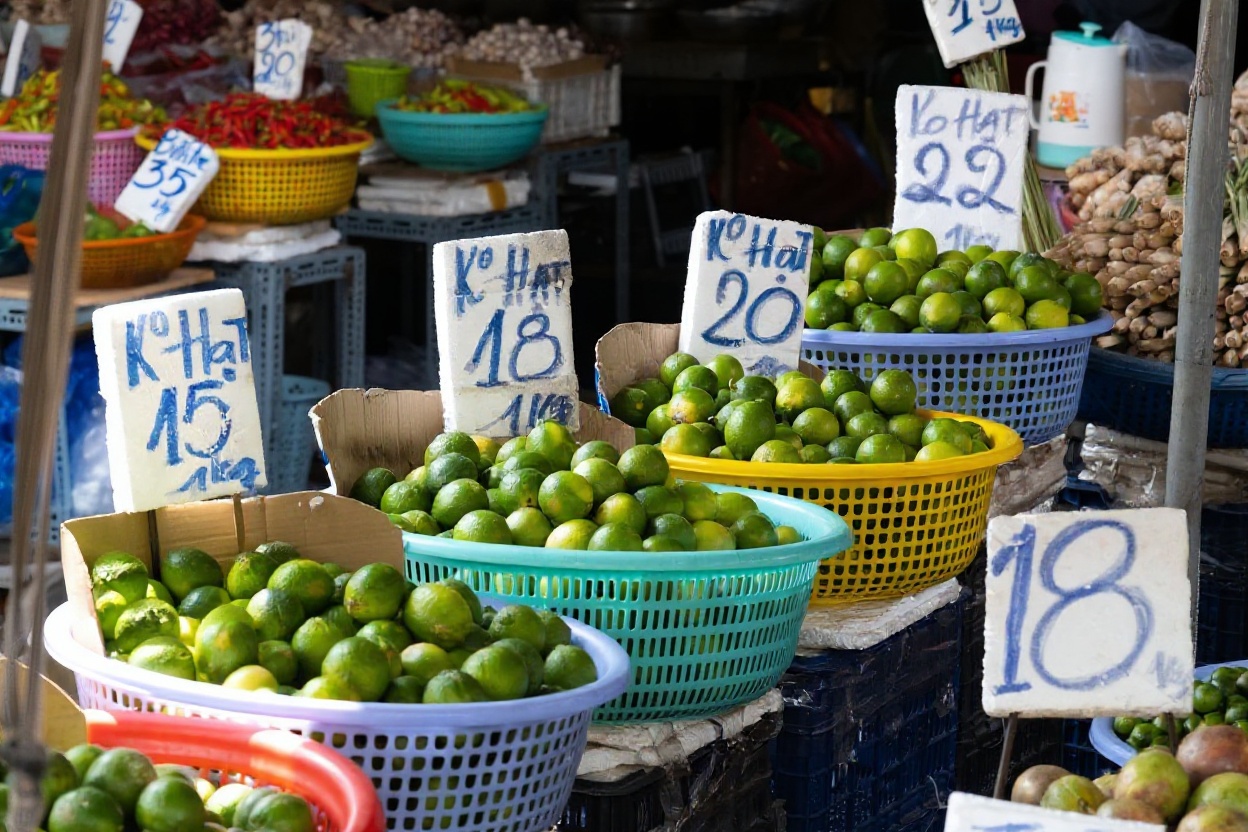
The practical implication: foreign tourists who insist on paying local prices for every item are wasting enormous social capital and time for marginal savings. Tourists who accept giá khách on everything are overpaying by a meaningful amount. The goal is the middle: know roughly what something is worth, open a fair negotiation, settle at a price both parties accept.
⚠Real Talk
That souvenir lacquerware box that opened at 300,000 VND (~$12) probably cost the vendor 80,000–100,000 VND to source. Hammering them to 90,000 VND is technically possible. It’s also taking income from someone who makes their living from 2mm profit margins on tourist goods. Know the fair price range and pay somewhere in it.
The Actual Negotiation: Step by Step
The mechanics of Vietnamese market haggling are simple once you’ve done it a few times. Here’s what actually works:
Step 1: Establish the opening price. Pick up the item. Show interest but not desperation. Ask “Bao nhiêu?” (bow nyew — how much?). They quote. Write it down or remember it.
Step 2: Pause. Look at the item again. Look at other items nearby. Let a moment pass. This isn’t theater — it genuinely signals you’re not in a rush and not committed yet.
Step 3: Counter at 50–60% of asking. Not 20%. Not 40%. Somewhere around half. Say the number in Vietnamese or show it on your phone calculator. Make it feel considered, not reflexive.
Step 4: They counter. You counter back. The rhythm: they come down, you come up. Meet somewhere in the middle. Three to five exchanges is normal. More than seven means one party is wasting the other’s time.
Step 5: If you’re stuck, walk away. Physically start to leave. In 70% of cases, the vendor will call you back at a better price. If they don’t, either you’re below their real cost or they don’t want to sell at your price. Both are valid outcomes.
Step 6: When you agree — commit. Once a price is set and you say yes, buy. Changing your mind after agreeing to a price is genuinely rude in Vietnamese culture and will make the next negotiation harder at that stall.
The Phrases That Change Everything
Attempting Vietnamese in a negotiation shifts the dynamic entirely. It signals you’ve been here before (or at least prepared), you respect the culture, and you’re not a fresh mark who will accept the first price quoted.
The five most useful Vietnamese phrases for haggling:
“Bao nhiêu?” (bow nyew) — How much? Said with a light upward tone, relaxed. Your opening move.
“Đắt quá” (dat kwa) — Too expensive. Not aggressive, just clear. Often said with a slight head shake and a laugh. The vendor expects this. It means the negotiation has begun.
“Giảm giá đi” (yam ya dee) — Reduce the price / Give me a discount. More direct. Appropriate when you’ve already been going back and forth for a few rounds.
“Tôi mua nhiều” (toy mwa nyew) — I’ll buy a lot. Signals bulk buying. Very effective if you’re genuinely buying multiple items — buying 5 silk scarves instead of 1 often unlocks a 20–30% bulk discount that would never have appeared for single items.
“Thôi được” (toi dwuk) — OK, that’s fine / deal. The close. Saying this with a small nod signals agreement. The negotiation is over.
Mistakes That Mark You as a Tourist
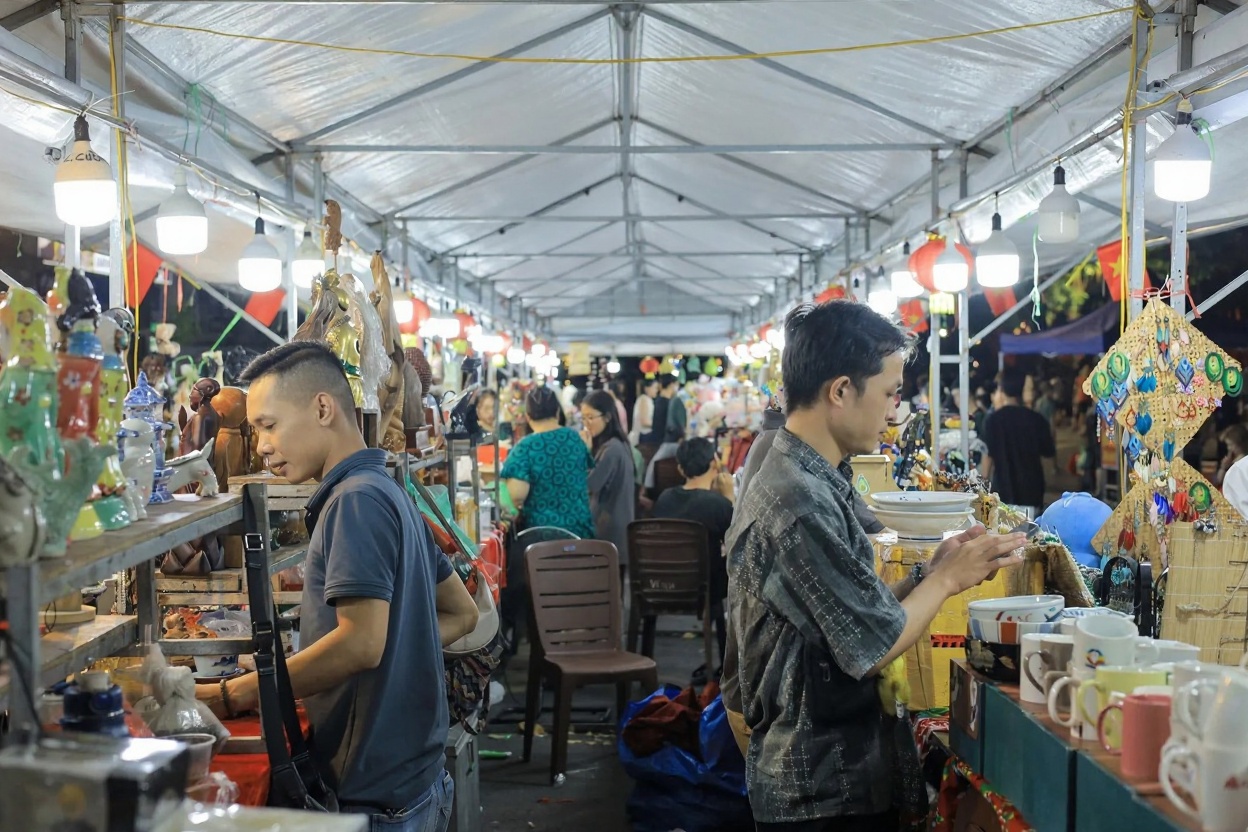
These are the behaviors that tell every vendor in a 10-stall radius that you’ve never done this before:
Starting too low. Countering at 20–25% of the asking price is not bold — it’s insulting. The vendor will often just stop engaging. Start at 50–60% maximum.
Showing excitement before the price is set. If you physically light up when you see something, pick it up, examine it closely, and ask the price — you’ve already lost. The vendor now knows you want it. Act more interested in the stall next door than the item you actually want.
Saying “yes” to the first counter. Vendors build a second negotiation buffer into their second number. If you immediately accept their first counter-offer, you’ve both overpaid and confirmed you had no idea what you were doing.
Negotiating food prices. A bowl of phở at 40,000 VND (~$1.60) doesn’t have a flexible price. Trying to negotiate your street food bill is not acceptable and signals deep disrespect. The 15,000 VND you might save is not worth it in any dimension.
Aggressive body language. Raised voice, pointed fingers, visible frustration — these shut the negotiation down. Vietnamese bargaining is performative theater, not a conflict. Smile, stay light, treat it like a conversation not a battle. The moment it becomes tense, one of you has done something wrong.
ℹKnow Before You Go
The best negotiators I’ve seen in Vietnamese markets are calm, curious, and genuinely unbothered about walking away. They’ve done their homework on fair prices, they’re pleasant throughout the exchange, and they close quickly once they hit their number. None of them are aggressive. Aggression slows negotiations and sours the outcome for everyone.
When to Just Use Grab Instead
For taxi and motorbike rides, the honest answer is: use Grab. The app sets the price algorithmically — the driver doesn’t set it, you can’t negotiate it down, but you also can’t be overcharged. The price you see at booking is the price you pay.
Grab fares in Vietnam are genuinely cheap by Western standards. A Grab motorbike (GrabBike) for a 3km ride in Hanoi runs 15,000–25,000 VND (~$0.60–1). A Grab car for the same distance: 45,000–65,000 VND (~$1.80–2.60). These prices are final and fair.
The xe ôm (say: say-ohm, the traditional motorbike taxi) negotiation exists and can be fun — but it requires knowing the real market rate to avoid getting massively overcharged. If you’re exhausted, in a hurry, or in an unfamiliar area, just use Grab. Save the negotiation energy for the market.
For a full breakdown of how to get around Vietnam without overpaying, see our Vietnam transport guide covering trains, buses, and ride apps across the country.
Bulk Buying Strategy: The Move Most Tourists Miss
The single most underused haggling technique in Vietnamese markets is bulk buying.
Vendors at souvenir markets are almost always happy to discount significantly if you’re buying multiples. The economics make sense: they move more product, reduce their transaction overhead, and clear stock. The price per unit drops as volume increases.
A realistic example: a vendor sells tourist t-shirts individually for 150,000 VND (~$6) after negotiation. Offer to buy five for 550,000 VND (~$22) total — that’s 110,000 VND (~$4.40) per shirt. Most vendors accept something in that range. If you’re buying gifts for people back home, this is the play.
The same logic applies to silk products, lacquerware, and craft items. At Hội An’s tailors, the bulk rate applies to multi-garment orders — negotiating one dress is harder than negotiating three dresses together.
↗Insider Tip
At Hanoi’s Đồng Xuân market, the best prices are on the upper floors where fewer tourists venture. Ground floor is tourist price. Second and third floors have vendors selling in bulk to local retailers — they’ll negotiate harder but the base price is lower. Worth the extra two minutes of stairs.
The Ethics of Haggling in Vietnam
Travelers sometimes feel guilty about negotiating prices in Vietnam. The guilt usually goes in the wrong direction.
Paying tourist price for everything in a market isn’t generous — it inflates price expectations for the next visitor and next vendor. It doesn’t create economic security for the individual vendor. The fair price negotiation is part of how the market economy functions.
What actually matters ethically: don’t bargain below a vendor’s cost. Don’t spend ten minutes negotiating over 10,000 VND (~$0.40) — the time you’re taking has a real cost to the vendor. Pay the agreed price without last-minute renegotiation. And if you change your mind about buying, say so early rather than stringing the negotiation along.
Respect is the operating principle. You’re negotiating with a person who depends on these margins, not an algorithm. Be firm on price and generous on manner.
Best Markets for Haggling in Vietnam by City
Different markets have different dynamics. Knowing which ones are serious haggling arenas and which are tourist traps with inflated starting prices saves time and frustration.
Hanoi:
Đồng Xuân Market (Chợ Đồng Xuân, 1 Đồng Xuân, Hoàn Kiếm) — the real market. Ground floor is tourist price on everything. Second and third floors are wholesale, which means lower base prices even for single purchases. Fabric, clothing, accessories, household goods. This is where locals shop. Go early (8–9am) before the tourist crowd arrives.
Hàng Da Market (Chợ Hàng Da, 8–10 Nguyễn Văn Tố) — slightly more authentic than Đồng Xuân in tourist footfall terms. Good for fresh produce, clothing, and everyday goods at local prices. Less souvenir-oriented, more practical.
Hanoi Night Market (Hàng Đào to Đồng Xuân, Fri–Sun evenings) — souvenir city. Prices start high and come down significantly. Competitive enough between vendors that you can use “the stall next door quoted me X” as leverage. See our Hanoi night market guide for the full breakdown.
Ho Chi Minh City:
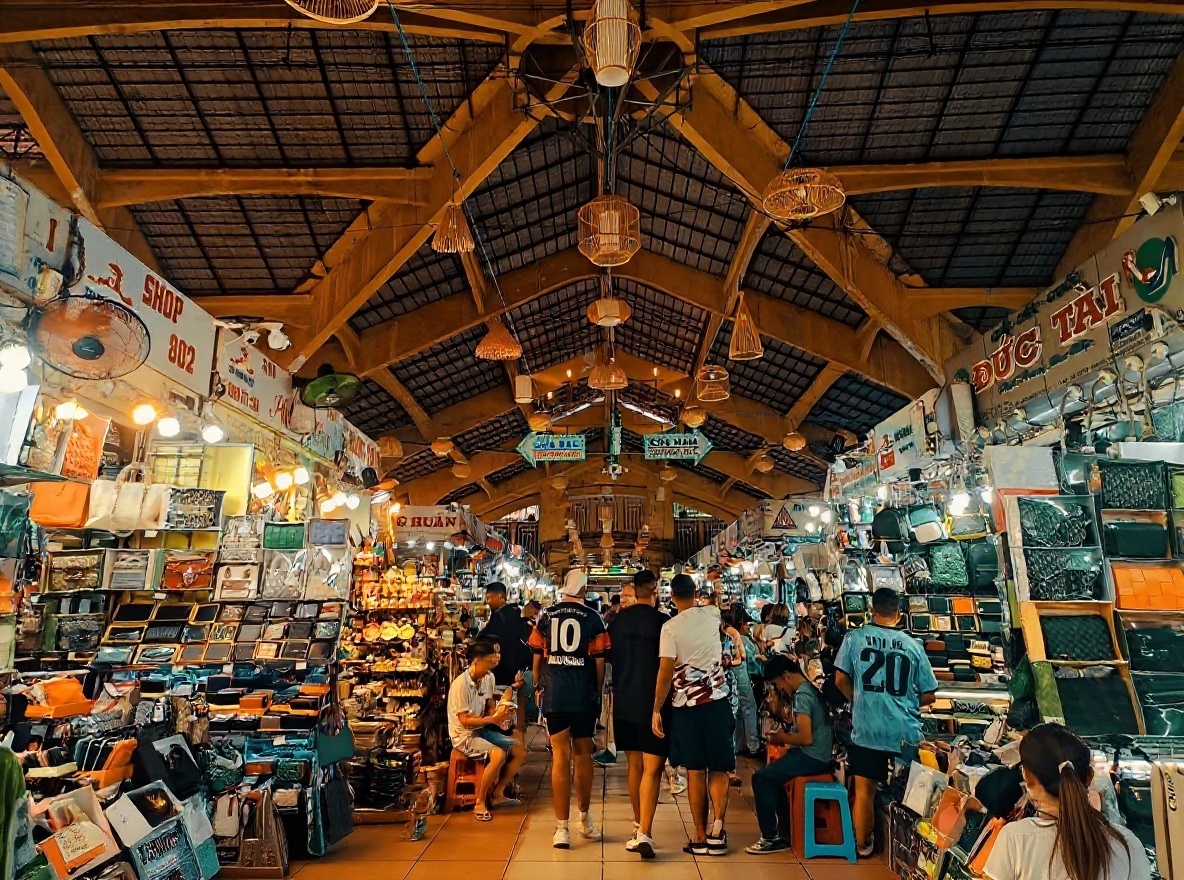
Bến Thành Market (1 Lê Lợi, District 1) — the most famous market in HCMC and the most tourist-priced. Opening asks are 3–4x fair price. The negotiation here is theatrical and expected. Don’t pay the opening price for anything. The surrounding streets — particularly Phan Chu Trinh — have lower prices than inside the market itself.
Bình Tây Market (57 Tháp Mười, District 6) — the wholesale market in Cholon, HCMC’s Chinatown. Predominantly selling to Vietnamese retailers, not tourists. Prices are lower, vendors are less accustomed to tourist-focused negotiation, and the experience is more authentic. Worth the 20-minute Grab ride from District 1.
Hội An:
Hội An Central Market (Trần Quý Cáp, Minh An ward) — a working market used by locals. Fruit, vegetables, fresh food at the back, clothing and accessories toward the tourist end. The further you walk from the tourist entrance, the more honest the prices.
Hội An Night Market (Nguyễn Hoàng, across An Hội Bridge) — souvenir-heavy and priced accordingly. Silk lanterns, lacquerware, clothing, textiles. Good bulk buying opportunity if you’re shopping for multiple people. Starting prices are high — expect to negotiate to 50–60% of the ask on most items.
Haggling Scams to Know Before You Shop
Most market interactions in Vietnam are straightforward. But a few patterns recur enough to be worth knowing:
The bait-and-switch on quality. You negotiate a price on the item shown, then the vendor wraps a different (inferior) version. Always physically check what’s handed to you before you pay. If it’s not the same quality as what you negotiated over, say so immediately: “Cái này khác — this isn’t the same one.”
The agreed price, then extras added. You agree 100,000 VND for a scarf. At payment, they add wrapping costs, or a “premium” surcharge, or somehow the total comes to 130,000 VND. Clarify “tổng cộng” (total) before you hand over money. “100,000 VND tổng cộng đúng không?” — 100,000 VND total, right?
Phantom bulk discount. Vendor offers “buy 3 get 1 free” at a price that, when you do the math, works out the same as buying 4 individually at a lower per-item price. Calculate the total before you agree. The deal should be better than what four individual negotiations would have gotten you.
The “my friend’s shop” tour redirect. A friendly local offers to show you the market, then guides you exclusively to their relatives’ stalls where prices are inflated and the “commission” for the guide comes from your purchase. Accept accompaniment from locals carefully — decide on items before you go with anyone, and be ready to politely exit any stall you didn’t want to enter.
For a comprehensive rundown of the full scam landscape in Vietnam beyond markets — motorbike tricks, fake taxis, tour booking fraud — see our Vietnam scams guide covering everything travelers actually get caught by.
→Who It’s For
This guide is most useful for: first-time Vietnam travelers shopping in tourist markets; anyone visiting HCMC’s Bến Thành or Hanoi’s Đồng Xuân; travelers planning to buy silk, lacquerware, clothing, or souvenirs. Skip the haggling theory if you’re staying in high-end resorts with fixed-price boutiques — but know the basics before you hit any open-air market.
Haggling in Vietnam: Frequently Asked Questions
Is haggling normal in Vietnam?
Yes — haggling is expected and normal in Vietnamese markets, souvenir stalls, and with independent street vendors. It’s not considered rude — it’s part of the commerce culture. What is considered rude is negotiating at fixed-price establishments (restaurants, pharmacies, supermarkets) or starting a negotiation you have no intention of completing.
How much should I bargain down in Vietnam?
Open at 50–60% of the asking price. Expect to settle between 60–75% of the original ask. The exact settlement depends on the item, the vendor, and your Vietnamese skills. Benchmarking against the price tables in this article gives you a reality check before you open any negotiation.
Do you haggle in Vietnamese restaurants?
No. Restaurant prices in Vietnam — whether a plastic-stool street food stall or a sit-down restaurant — are fixed. The menu price is the price. Do not attempt to negotiate food prices. It’s rude and will not work. The exception is group dining at casual restaurants where you might discuss a set menu price in advance — but that’s ordering, not haggling.
What is the best way to avoid overpaying in Vietnam?
Use Grab for transport (algorithmic, fair, no negotiation needed). Use supermarkets for basics (Co.opmart, VinMart). Learn approximate market prices for common souvenir items before you shop. Ask your guesthouse what a fair price is for something specific — local knowledge beats any guidebook table. And when in doubt, the walk-away move reveals whether you’re at a fair price faster than any amount of back-and-forth.