
Last updated: June 2026 — tested on the ground across northern and southern Vietnam
Haggling in Vietnam has a set of unwritten rules that make it less stressful once you know them — our Vietnam haggling guide covers when to bargain, what’s fair, and when to walk away.
I learned Vietnamese from a motorbike mechanic named Tuấn who worked off a laneway behind my first guesthouse in Hanoi’s Old Quarter. Zero English. He communicated mostly by pointing at engine parts and laughing at my pronunciation. That was month two of what was supposed to be a three-month trip.
After five years and all 63 provinces, my Vietnamese is conversational — enough to argue about football with a Bia Hoi vendor, order food from menus with zero English, and occasionally get a local price. I am still embarrassingly bad at the tones.
What I’ve learned: the language is hard, the attempt is easy, and the attempt is worth everything.

Is Vietnamese Hard to Learn?
Honest answer: yes and no.
The grammar is simpler than you’d expect. No verb conjugation. No gendered nouns. No plural forms. Sentences follow a logical subject-verb-object structure. The written script uses the Latin alphabet — modified with accent marks, but readable. You can pick up the phonetics of basic words within a day.
The hard part is the tones.
Vietnamese is a tonal language with six tones in the northern dialect (Hanoi standard) and five in the southern (HCMC). Each tone changes the meaning of a word entirely. The word “ma” can mean ghost, mother, rice seedling, horse, tomb, or “but” depending on which tone you use.
✓Quick Answer
Vietnamese is hard to learn fluently but easy to learn functionally. Grammar is simple. The challenge is tones — 6 different pitch patterns that change word meaning. For travel purposes, learn phonetic phrases and use Google Translate voice for everything else. Three hours of prep changes every interaction.
The six tones in northern Vietnamese:
Flat/level (level): ma — ghost. Said evenly, like reading off a list.
Falling (grave): mà — but. Drops down.
Rising-falling (hook): mả — tomb. Dips then rises.
Sharp rising (acute): má — mother. Rises quickly, high.
Creaky/broken (tilde): mã — horse. Wavy, slightly creaky.
Heavy falling (dot below): mạ — rice seedling. Heavy, drops quickly.
For travelers, this means mispronouncing “má” (mother) when you meant “ma” (ghost) is mildly amusing at worst. Mispronouncing certain other words is significantly more embarrassing. I will leave that for you to discover on your own.
⚠Real Talk
The tone system intimidates people into not trying at all. Don’t let it. Vietnamese people are used to foreigners butchering the tones — the base effort still registers. Say “xin chào” wrong and they’ll still hear “xin chào.” A mangled attempt gets a warm response. Zero attempt gets nothing.
Northern vs Southern Vietnamese: The Accent Gap
Vietnam has two main regional dialects, and they differ enough that it matters.
Northern Vietnamese (Hà Nội standard) is what most language courses teach. It has 6 tones and is considered the “official” dialect. If you learn phrases from Duolingo or a phrasebook, they’re likely northern.
Southern Vietnamese (Hồ Chí Minh City / Saigon standard) has 5 tones, different pronunciation of several consonants, and distinct vocabulary differences. The “d” sound in the north (pronounced like English “z”) is pronounced like “y” in the south. The word for “no” sounds different. Some common words are entirely different between regions.
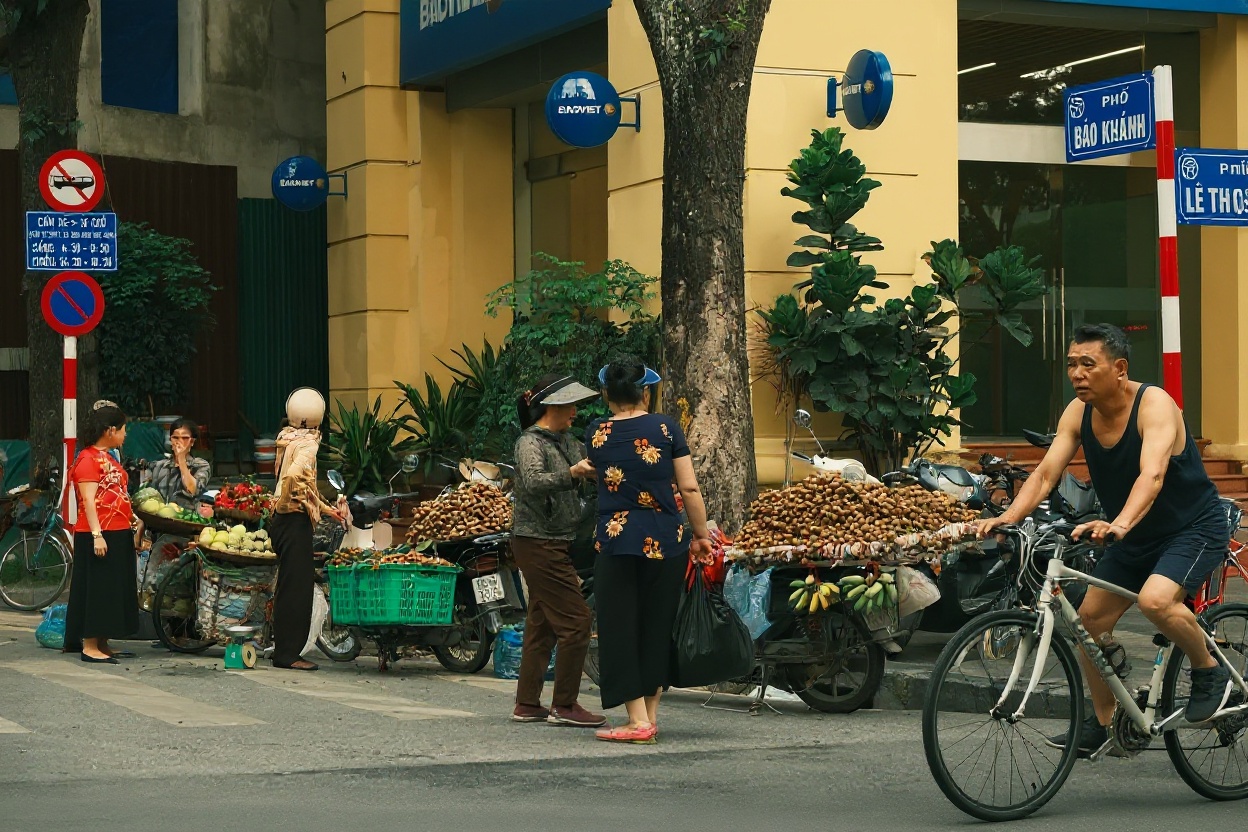
The practical upshot: if you learn northern Vietnamese phrases and use them in Ho Chi Minh City, locals will understand you but might smile at the accent. If you learn southern phrases and use them in Hanoi, same result in reverse. The regional difference is real, but it doesn’t break communication for travelers using basic phrases.
Where it matters: if you’re using Google Translate voice input in the south, switch the language setting to “Vietnamese (South)” for better recognition accuracy.
The 30 Phrases That Actually Matter
Most phrasebook lists are 200 words long and you remember none of them. These are the ones I actually use — the phrases with the highest return on learning time.
The Pronouns Problem (and Why “Em” Is the Cheat Code)
Vietnamese doesn’t have a neutral “you” and “I.” The pronouns you use depend on your age relative to the person you’re talking to, and getting it wrong ranges from slightly rude to hilariously wrong.
The main ones:
Anh (anh) — used when addressing an older male, or when an older male refers to himself. Also what women call their boyfriend.
Chị (chi) — used when addressing an older female, or when an older female refers to herself.
Em (em) — used to address someone younger than you, or to refer to yourself when speaking to someone older. This is the one travelers can use almost universally when speaking to adults, since you’re almost certainly going to be younger than the vendor, driver, or restaurant owner.
Tôi (toi) — the neutral “I” that works when age context is unclear. Safe but slightly formal.
↗Insider Tip
Use “em” as your default first-person pronoun in most travel interactions. Say “Em cảm ơn” (I thank you — speaking humbly to someone older) rather than just “cảm ơn.” It’s slightly more polite and Vietnamese people will notice. Tuấn, my mechanic teacher, said it was the first thing that made locals think I was actually paying attention.
Google Translate in Vietnam: What Works, What Doesn’t
Google Translate’s Vietnamese voice recognition has improved dramatically in the last three years. In 2021 it was barely usable. In 2026 it handles conversational Vietnamese reasonably well in clean acoustic environments.
The camera translation feature — point your phone at a menu, signboard, or price tag — is the single most useful tool for travelers in Vietnam. Vietnamese restaurant menus often have no English translation. Markets have handwritten price boards. Google Translate camera mode handles both surprisingly well.

Voice mode works in conversations but has limitations:
It struggles with strong regional accents, especially in rural areas where northern and southern Vietnamese blend with local dialects (Quảng Ngãi and Quảng Bình are particularly rough). It works better with Hanoi standard Vietnamese than with village dialects in Ha Giang or the ethnic minority languages of Sapa.
The conversation mode — where two people take turns speaking into the phone — works for structured exchanges. “How much for this?” / “250,000 dong.” / “Too expensive.” That works. Complex directions through a mountain village in a minority dialect — that doesn’t.
ℹKnow Before You Go
Download the Vietnamese language pack for offline use before you arrive. Data can be slow in rural areas — Ha Giang, Phong Nha, parts of Sapa — and having offline translate for menus and signs is genuinely useful when you’re somewhere without signal.
Learning Vietnamese Before You Go: The Minimum Viable Prep
Three hours of prep before arrival is genuinely enough to transform your interactions in Vietnam. Not fluency — just the base layer that makes locals smile instead of stare blankly.
The most effective pre-trip approach, in order of return on time:
1. Pimsleur Vietnamese Level 1 (first 5 lessons) — Audio-based, teaches you to produce sounds correctly. Tones explained simply. The pronunciation coaching is better than any written phrasebook because you hear the right sounds. Free trial, then paid after the first lesson.
2. Duolingo Vietnamese — A week of daily practice builds recognition of the script and common phrases. The gamification keeps you going longer than a phrasebook. Weak on tones but excellent for vocabulary. Free.
3. YouTube: “Vietnamese phrases for tourists” — Search specifically for native speakers demonstrating phrases, not English-speaking teachers. Hearing actual native pronunciation is irreplaceable.
4. Print a pocket phrasebook — Old-school and underrated. Battery-free. No signal needed. The 30-phrase table in this article is enough to print on a card and keep in your pocket.

Jake’s Language Confession
Year two in Hanoi. I was at a market in Đồng Xuân trying to buy a kilo of lychee. I wanted to say “it’s delicious” — “ngon lắm” — to the vendor after tasting one.
What I actually said, due to a catastrophically wrong tone on “lắm,” was something closer to “it’s obscene.”
The vendor — a woman in her 60s wearing a nón lá (say: non la, the conical hat) — stared at me for a full three seconds, then started laughing so hard she had to hold the table. She called over her neighbor. Her neighbor started laughing. Within ninety seconds there were four people listening to me attempt to say “delicious” correctly while they coached me through the tones.
I left with a kilo of lychee, charged at local price, and a standing invitation to come back on Friday when there was better fruit. All from a mispronounced word and the willingness to be laughed at.
The attempt is the whole point.
Vietnamese Number System: Counting for Markets and Taxis
Numbers come up constantly — haggling at markets, checking taxi meters, reading menus, paying for things. The good news: Vietnamese numbers follow a consistent and logical pattern once you know one through ten.
1–10: một (moht), hai (hi), ba (bah), bốn (bohn), năm (num), sáu (sow), bảy (bay), tám (tahm), chín (cheen), mười (mwee)
11: mười một (mwee moht). 20: hai mươi (hi mwee). 100: một trăm (moht tram). 1,000: một nghìn (moht neen). 1,000,000: một triệu (moht trieu).
For prices: Vietnamese dong amounts in millions get shortened. “Hai trăm” (200) usually means 200,000 VND in market context. Always confirm: “Hai trăm nghìn?” — “200,000 dong?” — to make sure you and the vendor are on the same page about zeros.
↗Insider Tip
When haggling, use a calculator or write numbers down rather than trying to negotiate verbally. Show them the number you’re willing to pay. They show you their price. No tones required. This works in every market from Hanoi’s Đồng Xuân to Hội An’s central market.
Saying No Politely: The Words That Protect You
Vietnam’s tourist areas — the Old Quarter, Bùi Viện street, Hội An Ancient Town — mean running a constant gauntlet of vendors, tour touts, and aggressive offers. Knowing how to decline firmly but without making enemies is a real skill.
“Không cảm ơn” (kohng gahm uhn) — “No thank you.” The standard polite decline. Works for everything from fake goods to unsolicited motorbike rides.
“Thôi” (toi) — “That’s enough / Stop.” Short, not rude, signals you’re finished engaging. Useful when a vendor won’t take the first no.
“Tôi đã có rồi” (toy da go roi) — “I already have one.” Cuts off the pitch before it escalates.
One thing that doesn’t work: making eye contact, engaging briefly, then trying to leave. Any response — including “no” in English — is taken as an opening to negotiate. In Hanoi’s Old Quarter, the fastest way to move through is to keep walking, say “không” without slowing down, and avoid full eye contact with vendors you aren’t intending to buy from.
This sounds harsh. It isn’t — it’s just how it works. Everyone understands the game. For more on how the scam ecosystem around tourist areas operates in Vietnam, see our Vietnam scams guide which covers everything from motorbike tricks to fake taxi meters.
Language Apps for Learning Vietnamese
If you want to go beyond basic phrases and learn conversational Vietnamese during a longer trip:
HelloTalk — language exchange app where you connect with Vietnamese speakers learning English. Free conversation partners, real language use, and you teach them something in return. The best method for building real fluency fast.
Drops — visual vocabulary app. Better than Duolingo for learning nouns (food items, directions, objects) because it uses visual associations. 5-minute daily sessions build vocabulary quickly.
Anki with a Vietnamese deck — flashcard system with spaced repetition. Overkill for a two-week trip, valuable for anyone staying longer than a month.
iTalki — connects you with Vietnamese tutors for video call lessons. Affordable at $8–15 per lesson. Even two sessions before your trip gives you a massive pronunciation advantage over guidebook self-study.
Language on the Road: Regional Differences That Trip Travelers Up
Vietnam is a long country — 1,650km from north to south. The language doesn’t stay still across that distance.
In Hanoi and the north, pronunciation is precise and tones are sharp. The “d” in “đi” sounds like “z” in English (it’s actually the unaspirated dental voiced consonant — but “z” is close enough). “Gi” sounds like “z” too. “Ng” at the start of words — as in “ngon” (delicious) — is the nasal that trips most English speakers because English doesn’t start words that way.
In Ho Chi Minh City and the south, the “d” softens to “y.” “Đi” (go) sounds more like “yee.” “Gi” sounds like “y” as well. The tone system simplifies — the two most distinctive northern tones (ngã and hỏi) merge in southern Vietnamese, which is why southerners hear five tones where northerners hear six.
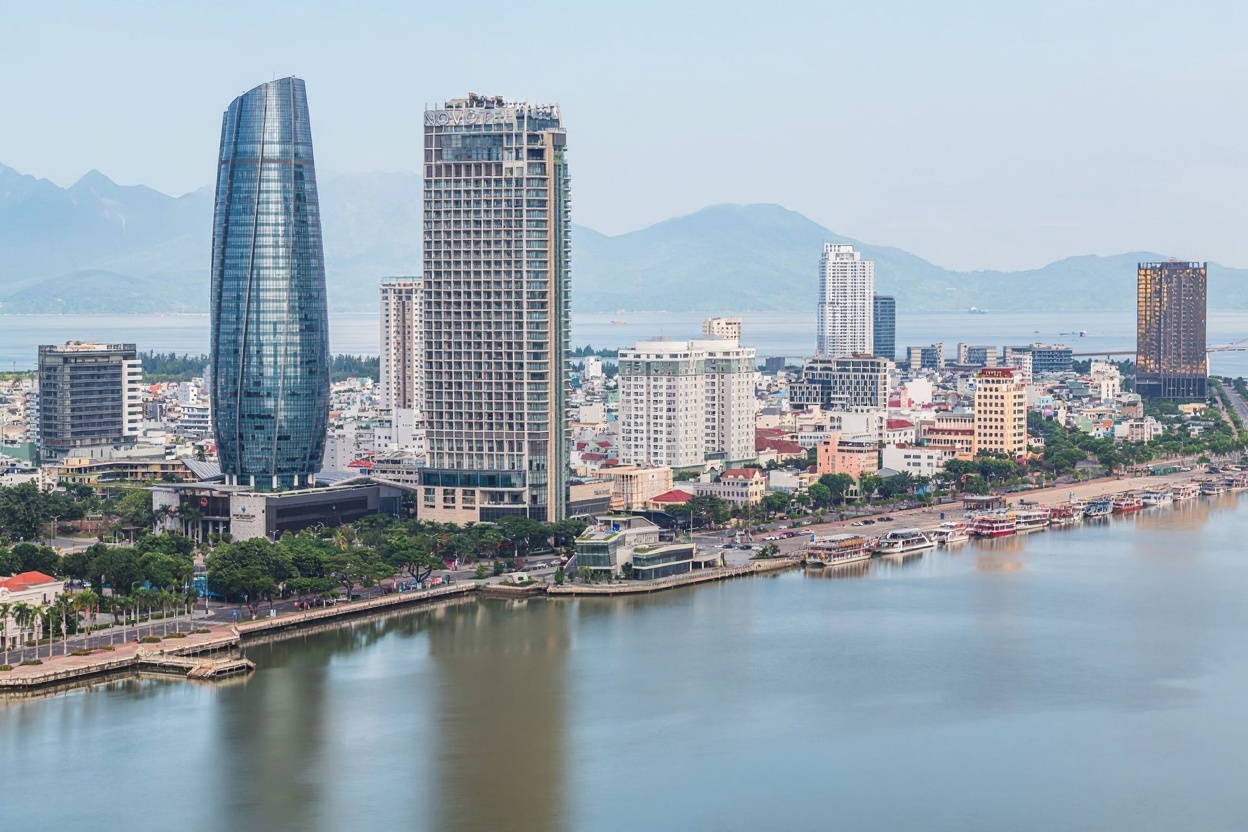
In central Vietnam — Huế, Đà Nẵng, Hội An — the accent is its own thing entirely. Thicker, more nasal, with different vowel sounds. Even Vietnamese people from the north sometimes need a moment to calibrate when hearing heavy Huế dialect. For travelers, the main impact is that Google Translate voice mode becomes less reliable in central Vietnam.
The ethnic minority areas — Sapa’s H’Mông and Dao communities, Ha Giang’s Tày and Nùng villages — have their own languages entirely distinct from Vietnamese. Many ethnic minority people in tourist areas speak some Vietnamese for commerce, but in deeper villages, neither Vietnamese nor your 20 phrases will get you very far. Here, a local guide becomes essential — not for the walking, but for the translating.
Our Ha Giang loop guide covers this in detail, including how to hire local guides from minority villages who speak both their native language and Vietnamese well enough to act as intermediaries. This matters more than most travel blogs acknowledge.
Vietnamese Script: The Good News (It’s Latin)
Most travelers expect Vietnamese to look like Chinese or Japanese — complex characters requiring years of study to read. The reality is surprisingly accessible.
Modern Vietnamese uses the Latin alphabet, modified with diacritical marks (accent-style marks above and below letters) to indicate tones and vowel sounds. This system was developed by 17th-century Portuguese missionaries and standardized by French colonial administration. The result is a writing system you can start reading within hours.
The core vowels and consonant sounds:
ă — shorter “a” sound, like “apple” without the emphasis
â — even shorter, like the “u” in “but”
ê — like “ay” in “hay”
ô — like “oh” with rounded lips
ơ — like the British “er” in “her”
ư — like saying “oo” while smiling instead of pursing lips
The tone marks are separate — they tell you which of the six tones to use. The base vowel tells you the sound. Once you learn this system, you can phonetically read Vietnamese menus, street signs, and shop names — getting pronunciation roughly right even without understanding meaning.
This is more useful than it sounds. When your phone dies and you need to ask a local for directions to a specific street, being able to read the street name aloud in something approximating Vietnamese pronunciation is far better than showing them a dead screen and shrugging.
ℹKnow Before You Go
Learn to read the Vietnamese alphabet phonetically before you arrive — not to understand meaning, just to produce sounds. A few YouTube videos covering the vowels and consonant combinations is a two-hour investment that pays off every time you try to pronounce a street name or dish correctly.
Vietnamese Language: Frequently Asked Questions
Do Vietnamese people speak English?
In tourist areas (Hanoi Old Quarter, Hội An, Hồ Chí Minh City backpacker district), English is widely spoken — hotel staff, tour operators, and restaurant workers in these areas usually communicate well. Outside tourist zones, English drops off quickly. In rural areas and markets, Vietnamese only is common. Young Vietnamese (under 30) generally have better English than older generations.
How do you say hello in Vietnamese?
“Xin chào” (pronounced: sin chow) is the standard greeting. It works in all situations and with all ages. A warmer version is to add the appropriate pronoun — “Xin chào anh” to an older man, “Xin chào chị” to an older woman. Saying just “Xin chào” with a nod works universally.
How do you say thank you in Vietnamese?
“Cảm ơn” (gahm uhn) is thank you. For a more polite version, add a pronoun: “Cảm ơn anh” (thank you, older man) or “Cảm ơn chị” (thank you, older woman). Vietnamese people use this with family-register pronouns constantly — learning even the basic version will be noticed and appreciated.
Is Vietnamese hard to learn?
Vietnamese grammar is simpler than most European languages — no verb conjugation, no gendered nouns. The challenge is the tonal system: 6 tones in northern Vietnamese change word meaning entirely. For basic travel phrases, three hours of prep is enough. For conversational fluency, expect six months to a year of serious study.
What language do they speak in Vietnam?
The official language is Vietnamese (tiếng Việt), spoken by around 87% of the population as a first language. Ethnic minority languages — Khmer, Hmong, Tày, Thái, and others — are spoken in highland and border regions. English is taught in schools and widely used in tourism. Chinese (Cantonese and Mandarin) is spoken in Chinese-Vietnamese communities in HCMC.
Can I get by in Vietnam without speaking Vietnamese?
Yes — in tourist areas, with Google Translate as backup, and with patience. But “getting by” in tourist areas means paying tourist prices, missing interactions that happen only in Vietnamese, and relying on a curated version of Vietnam. Even 20–30 phrases changes the texture of the trip significantly. The attempt matters more than the accuracy.