Last updated: June 2026 — prices and schedules verified June 2026.
Sapa gets the visitors. Mù Cang Chải gets the photographs. That’s not entirely fair — Sapa has its own beauty — but anyone who’s stood at the Mâm Xôi Hill viewpoint at dawn in late September, watching the mist dissolve over 7km of golden terraces while a Hmong woman walks her water buffalo below, knows why photographers keep coming back here and not to Sapa’s terraced hillsides.
The province is in Yên Bái, 300km northwest of Hanoi, at 1,000m elevation. The nearest city is Nghĩa Lộ, two hours south. There is no train. There is no airport. There is one road in and one road out. The isolation is the point.
When to Go — The Rice Terrace Calendar
Mù Cang Chải has three distinct seasons for the terraces, each with a different visual signature. Timing your visit correctly is the single most important decision you’ll make about this trip.
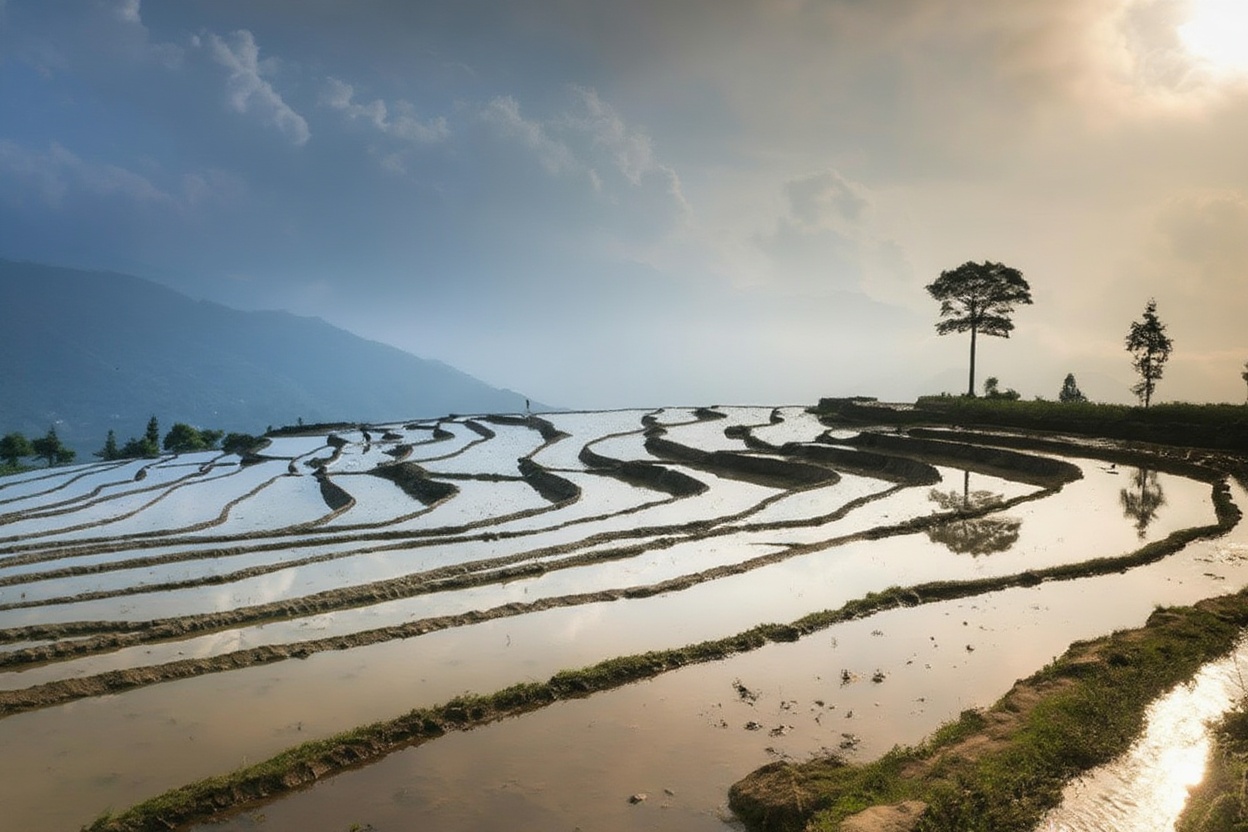
Water pouring season — late May to mid-June: Farmers flood the terraces to prepare for planting. The flooded fields reflect the sky, and on clear mornings the effect is genuinely hallucinatory — thousands of mirror fragments on a mountainside, the clouds and the light doubled back at you. This season is less famous than harvest but arguably more photographically interesting if you catch the right morning.
Green growth season — July to August: The rice is planted and growing. The terraces are a saturated, almost unnatural green. Less dramatic for photography than the two peak seasons, but also significantly less crowded. The mist is heavy in the mornings. This is the season for trekking rather than viewpoint photography — the landscape rewards movement.
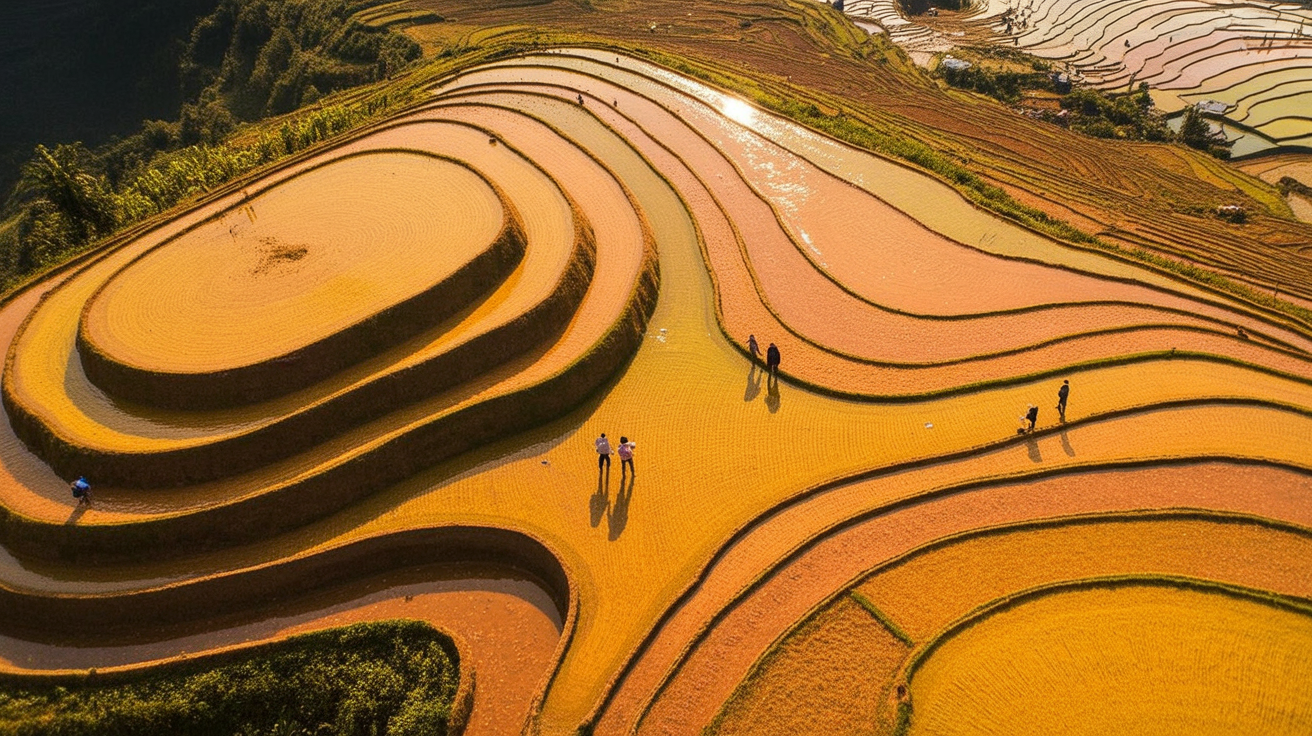
Golden harvest season — mid-September to mid-October: The peak. The rice ripens to gold, and the mountainsides look like someone laid amber-colored cloth across them in horizontal strips. This is the most photographed period and the most visited — expect more domestic Vietnamese tourists and more tour groups, especially on weekends. The light in the morning, before the golden color washes out in the midday sun, is exceptional. The window is narrow: roughly 2 weeks at peak color.
✓Quick Answer
Late September to early October is the peak for golden terraces — this is what most people come for. Late May to mid-June is the underrated alternative for water-reflection photography with fewer crowds. Avoid July–August if photography is the priority; choose it if trekking and green scenery are the goal. The golden harvest is worth the crowds. Book accommodation 2–3 months in advance for peak season.
How to Get to Mù Cang Chải from Hanoi
There is no train, no flight, and no viable self-drive option without at least 2–3 days of mountain motorbike experience. There is one realistic option for most travelers: the sleeper bus.
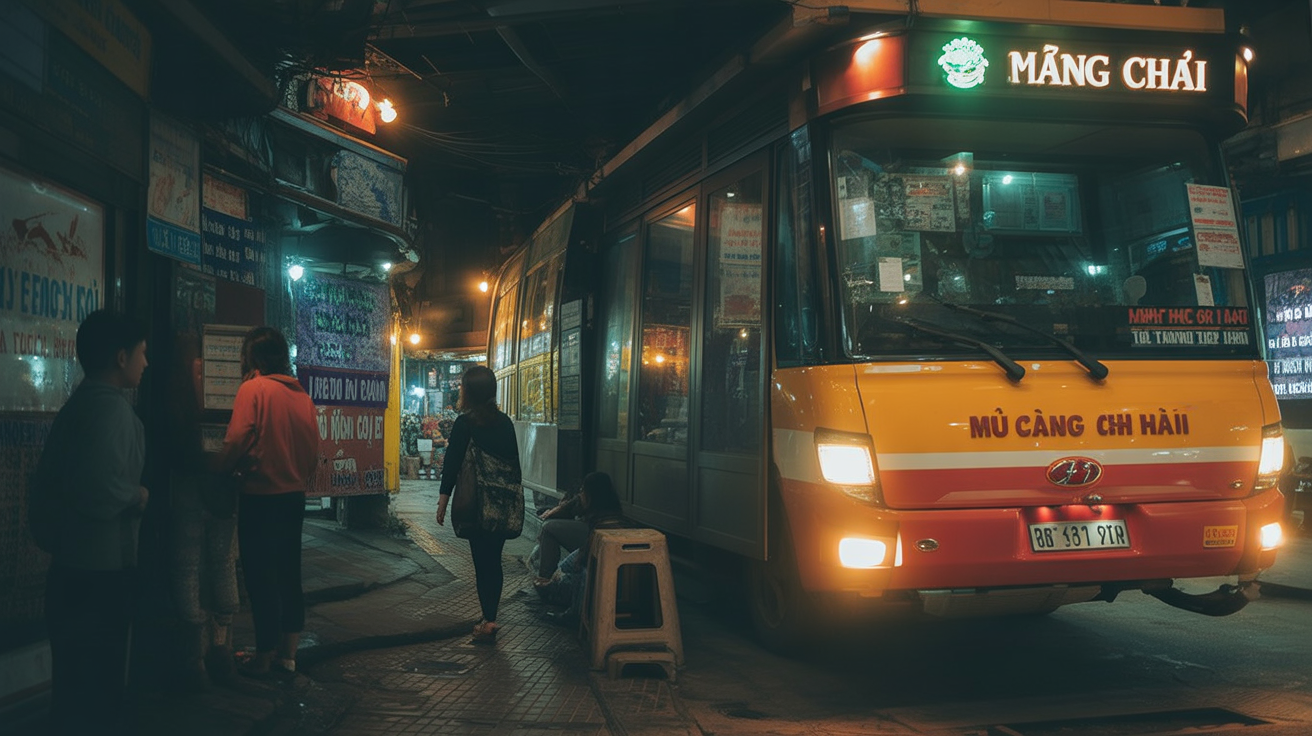
Sleeper bus from Hanoi: 8–9 hours, departing evening from Mỹ Đình bus station (some operators offer Old Quarter pickup). Price: 355,000–420,000 VND (~$13–16) per person one-way. Arrive in Mù Cang Chải town in the early morning, which actually works perfectly — it puts you there at dawn for the first morning’s viewpoint visit.
12Go covers most Vietnam routes — sleeper buses, trains, and island ferries. Compare schedules and book in advance during peak season (Dec–Feb, Jun–Aug).
Several operators run this route. Book through 12go.asia, Bookaway, or your Hanoi guesthouse. The major local operator is Liên Sơn — reliable, direct, no transfers. Check that the bus goes direct to Mù Cang Chải town rather than routing through Nghĩa Lộ with an onward connection.
✓Quick Answer
The sleeper bus from Hanoi to Mù Cang Chải takes 8–9 hours and costs 355,000–420,000 VND (~$13–16). Book in advance for peak season (September–October). The bus deposits you in town in the early morning — ideal timing for the first sunrise viewpoint. No train or flight exists. Driving yourself requires a motorbike and mountain road experience.
For the full detail on getting from Hanoi to Mù Cang Chải — including what to carry, what to check on the bus, and how to get from the town to the viewpoints — the Hanoi to Mù Cang Chải transport guide covers all of it.
The Rice Terraces — What You’re Actually Coming to See
Mù Cang Chải district has 2,200 hectares of terraced rice fields designated as a National Scenic Heritage Site. The terraces are concentrated in three main areas, each with a different character:
La Pan Tán (say: la pan tan): The most famous and most photographed area, about 18km from Mù Cang Chải town on the road toward Tú Lệ. The Mâm Xôi Hill viewpoint — more on this below — is in La Pan Tán. The terraces here step down from the road in a way that’s immediately visible and immediately overwhelming. This is the location in every photograph you’ve seen of this place.
Chế Cu Nha (say: che koo nya): 15km from town in the opposite direction. Quieter than La Pan Tán, with a different topography — the terraces here fold into a narrower valley rather than spreading across an open slope. Harder to reach without a motorbike, which means fewer visitors. The pre-dawn light here is excellent.
Dế Xu Phình (say: day soo fin): The most remote of the three main areas, requiring a longer ride. Fewer viewpoint platforms. More raw landscape and more opportunity to walk among the terraces rather than photograph them from above. The villages here have less tourist infrastructure — you’re more likely to be the only foreigner there.
Mâm Xôi Hill — The Main Event
Mâm Xôi (say: mam soy — literally “sticky rice mound,” named for the shape) is a rounded hillock in La Pan Tán commune, completely surrounded by terraced fields. From the viewpoint platforms at the top, the hill sits in the center of a bowl of terraces — fields stepping down from every direction to the valley below. At harvest, the colors are almost too saturated to photograph believably.
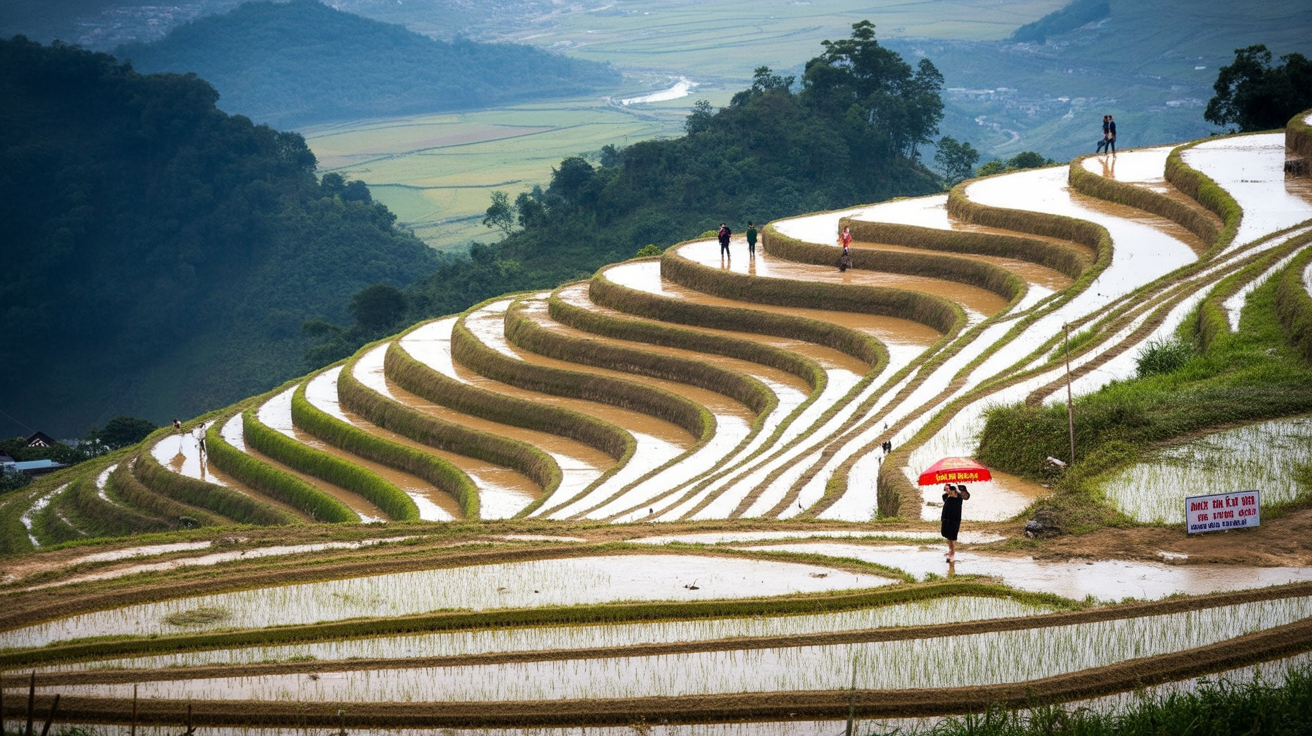
Entry fee: 20,000 VND (~$0.80) for adults. Photography platform: 5,000 VND (~$0.20) additionally. Walking down into the rice fields: 10,000 VND (~$0.40). These are some of the most reasonably priced entry fees in Vietnamese tourism.
Motorbike hire to the summit viewpoint: 60,000–100,000 VND (~$2.30–3.80) return from La Pan Tán junction, if you don’t have your own bike.
↗Insider Tip
Arrive at Mâm Xôi before 6:30am. The morning mist is in the valley until about 8am — you’ll see it dissolving as the sun rises over the ridge. The golden light before 8am is what makes the photographs. By 10am the light is flat, the mist is gone, and the viewpoint platforms have tour groups on them. The difference between arriving at 6am and arriving at 10am is the difference between the photograph you came for and a very crowded hill.
Trekking and Walking Routes
The terraces are spectacular from viewpoints, but the most memorable experience in Mù Cang Chải is walking through them. The scale of the landscape only becomes real at ground level — the height of the terrace walls, the sound of water moving through the irrigation channels, the smell of wet rice plants in the morning.
Local guides are available in La Pan Tán and Che Cu Nha villages for 300,000–500,000 VND (~$11–19) per day. This is worth doing for at least one full-day trek if you want to walk between villages rather than follow the road — the routes are not marked and local knowledge matters on the narrow paths between terraces.
Klook has the widest selection for Vietnam and is usually the cheapest. KKday is strong on day trips and local experiences.
passes through multiple terrace areas and several H’Mông villages. Stop wherever the view pulls you — there’s no wrong place to pull over on this road.
→Who It’s For
Mù Cang Chải is for travelers who plan around it — not a spontaneous detour. The journey from Hanoi takes most of a day. The viewpoints require early alarms. The best experiences (village trekking, dawn photography, stilt-house homestay) require at least 2 nights. Travelers doing Vietnam in 10–14 days who haven’t pre-allocated time for Mù Cang Chải should probably skip it and save it for a trip when they can do it properly.
Where to Stay in Mù Cang Chải
The most important decision about accommodation is where, not which. Mù Cang Chải town has budget hotels but no terrace views — it’s a market town in a valley. La Pan Tán village is where you want to sleep: 18km from town, directly surrounded by the terraces, with homestays that put you inside the landscape rather than adjacent to it.
Homestays in La Pan Tán: Traditional H’Mông and Thái stilt-house homestays with terrace views from the sleeping area. Prices: 100,000–400,000 VND (~$4–15) per person per night, usually including dinner and breakfast made by the family. This is the right way to do Mù Cang Chải. The food is home-cooked — thắng cố (horse meat stew, the regional specialty), sticky rice, wild herbs, grilled corn. The hosts don’t speak much English, which is fine. You’re not here for conversation; you’re here for the view from the terrace at sunrise.
orning. Not recommended unless the homestays are full.
Mid-range options: A small number of guesthouses with better facilities operate in the 400,000–700,000 VND (~$15–27) range. Worth having for the extra comfort on nights 2–3 when you’re tired and cold. Mountain temperatures at 1,000m elevation drop significantly at night, especially in September–October.
The H’Mông Villages — More Than a Backdrop
The people who built and maintain these terraces are H’Mông (say: hmong) — one of Vietnam’s ethnic minority groups, concentrated in the northwestern mountains. The terraces are not ancient ruins or a preserved heritage site. They’re working farmland, built and managed by families who have been farming this mountain for generations.
The women in the villages wear traditional H’Mông indigo-dyed clothing — the dark blue-black color comes from the same plant that gives the fabric its waterproofing, which matters at 1,000m when the mist comes in. The markets in Mù Cang Chải town on Saturdays and Sundays bring families down from the higher villages to sell produce and buy goods. The market is not staged for tourists.
A note on photography: ask before you photograph people in the villages, especially children and older women. Point your camera, make eye contact, wait for a nod. If they shake their head, put the camera down. This isn’t complicated, and it’s the difference between being a visitor and being an extraction tourist. The terraces are a national scenic heritage site; the people who live in them are not an attraction.
What I Got Wrong on My First Visit
I planned my first trip to Mù Cang Chải for late October, thinking I’d catch the tail end of harvest. The golden peak had passed two weeks earlier. The rice was already cut, the terraces were brown and muddy from the harvest, and the light was grey from the post-monsoon cloud cover. I’d spent 8 hours on a bus each way for a landscape that looked like a construction site.
The harvest window is real and narrow. In a normal year, peak golden color runs from roughly September 20 to October 10 — two and a half weeks. It varies by elevation: the higher terraces turn earlier, the lower ones later. If you’re planning a harvest-season visit, check recent traveler photos on Instagram (#mucangchai) for the specific year before you book — the golden window can shift by 1–2 weeks depending on the monsoon timing. Don’t trust the fixed dates in any guide, including this one.
The second thing I got wrong: I stayed in Mù Cang Chải town rather than La Pan Tán. This meant a 18km ride each morning in the dark to reach the viewpoints — manageable, but not what I’d recommend. If you’re going to set an alarm for 5am, it’s better to already be surrounded by the terraces than to spend 35 minutes riding to them in the dark with fog on your helmet visor.
Practical Notes
Phone signal: Viettel has the best coverage in the mountains — get a Viettel SIM before you leave Hanoi if signal matters to you. Mobifone and Vinaphone work in town but not in the outlying villages. GPS still functions without signal — download offline maps (Maps.me or OsmAnd) for the terrace roads.
Temperature: At 1,000m elevation, Mù Cang Chải is noticeably colder than Hanoi, especially at dawn in September–October. Bring a warm layer — a fleece or light down jacket — for the pre-dawn viewpoint ride. The temperature difference between 6am and noon is 8–10°C. Dress in layers.
Cash only: Mù Cang Chải town has ATMs, but La Pan Tán and the villages do not. Withdraw cash before you leave town. Most homestays, local restaurants, and entry fee points are cash only. Estimate your spend for the day and carry it with you.
Health and safety: Mountain roads in Mù Cang Chải are steep, narrow, and occasionally have gravel or loose rock on the bends — especially after rain. Ride at 30–40km/h on unfamiliar sections. There is no hospital in Mù Cang Chải district — the nearest proper medical facility is in Nghĩa Lộ, 2 hours south. Travel insurance that covers medical evacuation is not optional here. Get it before you leave Hanoi.
For the broader northern Vietnam travel context, the northern Vietnam guide covers how Mù Cang Chải fits into routes that include Sapa, Ha Giang, and the other highland destinations.
Frequently Asked Questions
When is the best time to visit Mù Cang Chải?
Late September to early October for golden harvest terraces — this is the peak and the window is narrow (about 2–3 weeks). Late May to mid-June for flooded water-reflection terraces with fewer crowds. July–August for green rice growth — less dramatic visually but good for trekking. Avoid November through March — the terraces are bare, the weather is cold, and there’s nothing to see.
How do I get to Mù Cang Chải from Hanoi?
Sleeper bus, 8–9 hours, 355,000–420,000 VND (~$13–16) one-way. Departures from Mỹ Đình Bus Station, some operators offer Old Quarter pickup. Book through 12go.asia or directly with Liên Sơn bus company. No train or flight exists. Driving yourself on a motorbike is possible but requires mountain road experience — at minimum 2–3 days of riding in Vietnam first.
Is Mù Cang Chải better than Sapa?
For rice terrace photography: yes, significantly. Mù Cang Chải has larger, more dramatic terraces with fewer tourists and less commercial development. For overall ease of travel, trekking infrastructure, and accessibility: Sapa wins. Sapa has better guesthouses, more English speakers, more organized trekking, and reliable transport. Mù Cang Chải is harder to reach and less comfortable — which is exactly why the landscape is still intact.
How many days do I need in Mù Cang Chải?
Minimum 2 nights, ideally 3. One night doesn’t give you two dawn viewpoint sessions, and both are worth doing: Mâm Xôi Hill in La Pan Tán on morning 1, and Che Cu Nha or Dế Xu Phình on morning 2. Three nights allows for a full-day guided trek between villages plus the photography sessions. One night is possible but you’ll leave wishing you’d stayed longer.
Two things worth sorting before you land: a Vietnam eSIM so you have data the moment you clear customs, and travel insurance — medical costs for uninsured foreigners in Vietnam are significant.
Airalo eSIMs activate instantly. Buy before departure — airport SIM queues in Vietnam can take 30+ minutes.
The Honest Summary
Mù Cang Chải requires effort. It requires an overnight bus, an early alarm, a motorbike, and a willingness to be cold at 6am in September. It does not have good coffee shops, reliable WiFi, or tour operators who speak fluent English. The road in from Nghĩa Lộ is steep and winding and occasionally terrifying if you’re not used to mountain driving.
What it has: 2,200 hectares of rice terraces that look like someone sculpted a mountain into art, H’Mông villages that have been farming the same slopes for centuries, a light quality at dawn that photographers fly to Vietnam specifically for, and the particular satisfaction of reaching somewhere that genuinely took an effort to reach.
Mù Cang Chải is the answer to the question most travelers don’t know to ask: “What would the Sapa rice terraces look like if nobody had built a cable car up the mountain yet?” The answer is here, 300km northwest of Hanoi, down a mountain road that takes 8 hours from the capital. The effort filters out the daytrippers. The long bus ride is the admission price for the view.
Two nights. Three dawns. One alarm at 5:30am that you’ll be glad you set.