Last updated: June 2026 — bus prices and schedules verified June 2026.
The 300km from Hanoi to Mù Cang Chải passes through Nghĩa Lộ before climbing into the mountains. The last 50km on the road from Nghĩa Lộ, winding through valleys and over passes at 1,000m, are the slowest and the most interesting part of the journey — if you happen to be awake as the bus climbs toward Mù Cang Chải town in the early morning, the landscape outside the window is already the thing you came to see.
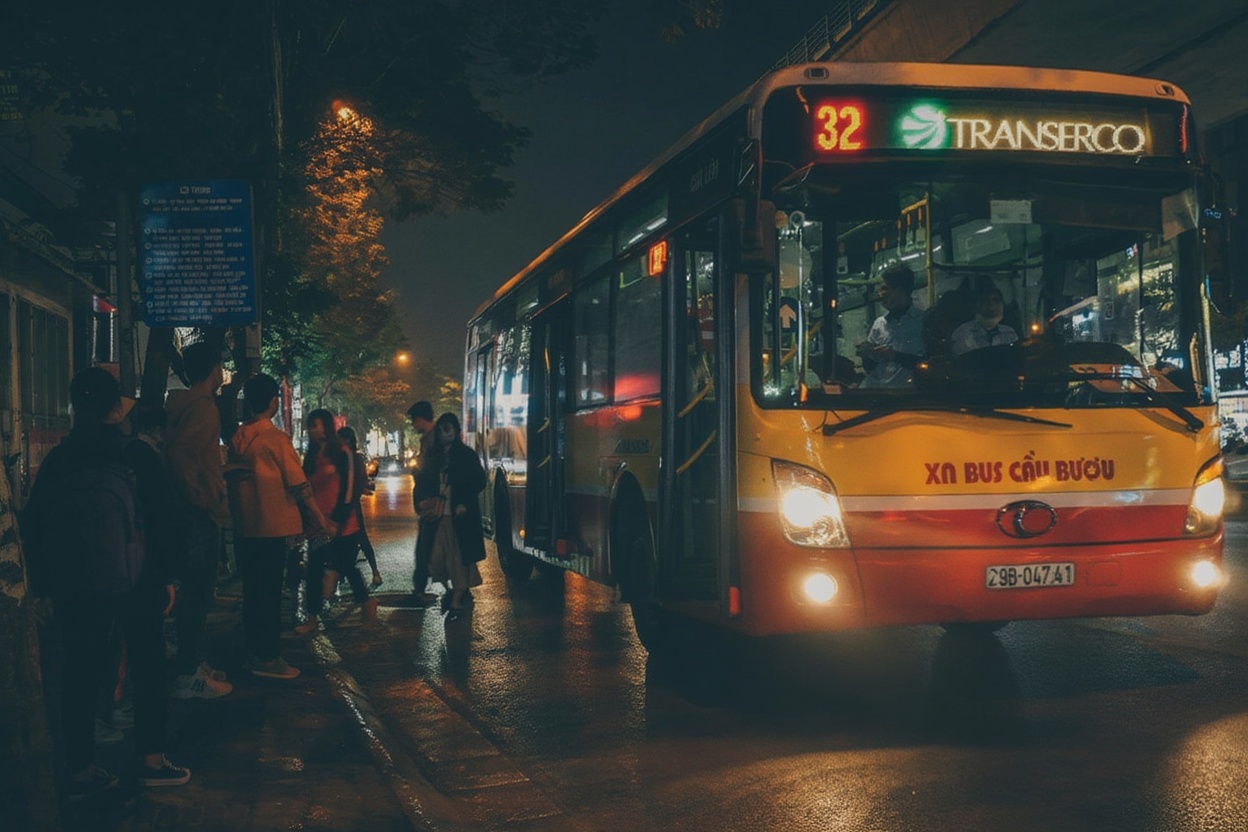
The Sleeper Bus — Every Detail You Need
The sleeper bus from Hanoi to Mù Cang Chải runs nightly. Multiple operators service the route with slightly different departure times, pickup points, and amenities. The basics are consistent across operators: reclining lie-flat berths (two rows of bunk beds), air-conditioning, blanket and pillow, bottled water. Journey time: 8–9 hours depending on route and traffic through the Hanoi outskirts.
✓Quick Answer
ng> The most established operator on this route. Direct service to Mù Cang Chải town. Pickup from Mỹ Đình bus station and some Old Quarter hotels on request. Reliable schedule, newer buses on the Mù Cang Chải route during peak season (September–October) when demand is highest.
Hùng Thịnh: Alternative operator with similar pricing and schedule. Also runs direct to Mù Cang Chải. Departure from Mỹ Đình. Check their schedule for current departure times — they occasionally add additional buses during the harvest festival period.
Both operators can be found on 12go.asia with real-time seat availability and online booking. Your Hanoi guesthouse can also arrange tickets with a 20,000–40,000 VND (~$0.80–1.50) booking fee — useful if you want someone to confirm pickup details in Vietnamese.
Departure Points in Hanoi
Mỹ Đình bus station (Bến Xe Mỹ Đình): The standard departure point for northwest Vietnam routes. In western Hanoi, about 8km from the Old Quarter. Get there by Grab (15–20 minutes, 60,000–80,000 VND ~$2.30–3 from the Old Quarter) or by taxi. Arrive at least 20 minutes before departure — the bus leaves on schedule.
Old Quarter hotel pickup: Some operators offer pickup from specific Old Quarter hotels or from Trần Nhật Duật street. Confirm pickup details when you book — the pickup time is typically 30–45 minutes before the Mỹ Đình departure. This is more convenient but requires the operator to know your hotel location.
ℹKnow Before You Go
The sleeper bus berths are designed for Vietnamese body proportions — travelers over 185cm may find the berths slightly short. Top bunks require climbing a steep ladder in the dark at 2am if you need the toilet. Book a lower bunk if this matters to you. Specify when booking: “lower berth” = giường dưới (say: gwong zwoy).
The Journey — What to Expect Hour by Hour
Knowing what the journey looks like helps you sleep through the right parts and be awake for the wrong ones (the mountain approach at dawn).
9–10pm departure: Bus loads in Hanoi. The first 2–3 hours are on flat lowland roads — Hanoi suburbs, then rice paddies and small towns as you head northwest. Nothing to see in the dark. Sleep.
1–2am: Nghĩa Lộ area. The bus typically stops briefly — toilet break, engine check. A few vendors sometimes appear at the roadside with hot corn and drinks. If you’ve been sleeping, this is the natural wake point. Back to sleep after 15 minutes.
3–5am: The mountain section begins. The road climbs from Nghĩa Lộ toward Mù Cang Chải, passing through the Khau Phạ Pass area. If you’re awake, the hairpin bends and the occasional view of valley lights below are worth watching. If you’re not awake, you’ll be in Mù Cang Chải town soon anyway.
5–7am arrival: Mù Cang Chải town. The bus typically drops passengers at the town center or a designated stop. The surrounding hills are visible as the sky lightens. You arrive at exactly the right time to check into your accommodation, leave your bag, and ride directly to the La Pan Tán viewpoints for the first morning’s dawn session.
What to Pack for the Bus
The overnight bus from Hanoi arrives at Mù Cang Chải in the early morning, and you’ll typically go straight from the bus to the viewpoint rather than checking into accommodation first. What you need accessible in your daypack, not buried in your main bag in the hold:
Warm layer: Essential. Mù Cang Chải at 5am in September–October is 12–15°C — significantly colder than Hanoi. The bus itself is over-air-conditioned (bring a layer for the bus too, not just the arrival). A fleece or light down jacket that compresses into your daypack weighs nothing and changes the quality of your first morning completely.
Headlamp: If you’re riding to the viewpoints before full daylight — which you should be — a headlamp is better than a phone torch for navigating the terrace paths. 60,000–80,000 VND (~$2.30–3) from any Hanoi sports or trekking shop.
Cash: Mù Cang Chải ATMs exist in town but are occasionally out of service or out of money during peak season when demand spikes. Withdraw cash in Hanoi before you leave — 800,000–1,000,000 VND (~$30–38) covers motorbike rental, terrace entry fees, food, and guide fees for 2 days comfortably.
Snacks and water: The bus typically has one stop around 1–2am for toilet access. Food options at the stop are limited and the timing is inconvenient. Pack a snack and a 500ml bottle of water for the bus. You won’t need more — the trip is 8 hours and you’ll be asleep for most of it.
Offline maps: Download Maps.me or OsmAnd with the Yên Bái province data before you leave Hanoi. Phone signal is patchy once you’re in the terrace areas. GPS works without signal — offline maps will navigate you to La Pan Tán, Che Cu Nha, and Dế Xu Phình from Mù Cang Chải town without needing data.
Motorbike from Hanoi — For the Experienced Rider
Riding a motorbike from Hanoi to Mù Cang Chải is doable but requires genuine experience on Vietnamese mountain roads — not “I’ve rented a scooter in Bali” experience, but “I’ve ridden mountain passes in Vietnam before” experience. The route via Nghĩa Lộ crosses several significant passes, and the final approach to Mù Cang Chải includes the Khau Phạ, one of four historically famous passes in the Vietnamese northwest.
The standard two-day self-ride route: Day 1 Hanoi → Nghĩa Lộ (200km, ~5 hours), overnight in Nghĩa Lộ. Day 2 Nghĩa Lộ → Mù Cang Chải (50km, 1.5–2 hours on mountain road). This gives you daylight on the mountain approach and avoids riding the passes at night.
Klook has the widest selection for Vietnam and is usually the cheapest. KKday is strong on day trips and local experiences.
mountain road behavior, see the Vietnam motorbike guide. The Khau Phạ Pass section specifically requires reading before you attempt it — the gradient and the surface are manageable but not forgiving of overconfidence.
Private Car — For Groups
A private car from Hanoi to Mù Cang Chải makes economic sense for 4–5 people splitting the cost. Expect 3,000,000–4,500,000 VND (~$114–170) for a 7-seat vehicle. Book through your Hanoi hotel or via a local car hire operator in Hanoi. Journey time: 7–8 hours depending on route and driver pace.
The advantage of a private car over the bus: flexibility to stop along the route, daylight travel so you see the mountain scenery, and door-to-door delivery to your accommodation rather than the town bus stop. The disadvantage: you need a group, you’re paying 8–10× the bus cost, and the driver may want to push through without stops.
Getting Around Once You Arrive
The bus drops you in Mù Cang Chải town. Everything you’re coming for is 15–20km away, which means you need transport immediately on arrival. Options:
Motorbike rental in town: 100,000–150,000 VND (~$4–6) per day. Rental shops open early, especially during harvest season when buses arrive at dawn full of photographers. Your homestay can arrange a bike in advance if you book ahead — useful for peak season when demand is high.
12Go covers most Vietnam routes — sleeper buses, trains, and island ferries. Compare schedules and book in advance during peak season (Dec–Feb, Jun–Aug).
Xe ôm from town to La Pan Tán: If you don’t ride, a motorbike taxi from town to La Pan Tán is 80,000–120,000 VND (~$3–4.50) one-way. Negotiate the day rate for a driver to take you around the terrace areas — 400,000–600,000 VND (~$15–23) for a full day covers all three commune areas with return trips.
For everything about what to do once you’re there and how to structure the terrace visits, the Mù Cang Chải travel guide covers the full itinerary.
The Return Journey — Hanoi from Mù Cang Chải
The return bus runs the same route in reverse — afternoon departure from Mù Cang Chải, overnight, morning arrival in Hanoi. Typical departures: 2–4pm, arriving Hanoi’s Mỹ Đình station at 10pm–midnight.
This timing matters for planning your last day: you can do a full morning at the viewpoints, check out of your accommodation around noon, eat lunch in town, and catch a 2–3pm bus back to Hanoi. You don’t lose a day to the return journey.
Book the return bus before you leave Hanoi if you’re traveling in peak season (September–October). The same operators (Liên Sơn, Hùng Thịnh) run the return direction. Price is the same: 355,000–420,000 VND (~$13–16). Your Mù Cang Chải homestay can help you arrange it locally if you need to change your plans after arriving.
If you’re continuing onward from Mù Cang Chải rather than returning to Hanoi — to Sapa (via Nghĩa Lộ and Lào Cai), to Điện Biên Phủ, or continuing west on the mountain route — the road connections exist but require a local bus transfer at Nghĩa Lộ. Ask your homestay to help with the local bus schedule rather than attempting to navigate the connections independently.
Combining Mù Cang Chải with Other Northwest Destinations
Mù Cang Chải sits on a route that connects several major northwest Vietnam destinations. Options for extending the trip:
Mù Cang Chải + Sapa: From Mù Cang Chải, ride or bus north to Nghĩa Lộ, then northwest toward Lào Cai and Sapa. The total distance Mù Cang Chải to Sapa is approximately 200km by road — a full day’s ride, or a bus-and-transfer combination. Doing both destinations in one northwest loop (Hanoi → Mù Cang Chải → Sapa → Hanoi by train) adds 2–3 days and gives you the two best rice terrace destinations in northern Vietnam back-to-back for comparison.
Mù Cang Chải + Ha Giang: Further afield, Ha Giang Loop is northeast of Mù Cang Chải by road. The connection requires routing back through Yên Bái or Tuyên Quang — not a direct connection, but doable as part of a 10–14 day northwest circuit. For the Ha Giang route details, the northern Vietnam guide covers the full circuit logic.
Mù Cang Chải + Nghĩa Lộ: Nghĩa Lộ is the nearest town of any size — 50km south, 1.5 hours. It has better hotel infrastructure than Mù Cang Chải and a Saturday market that’s similar in character to the Mù Cang Chải market. Some travelers base themselves in Nghĩa Lộ and do day trips to Mù Cang Chải — viable but adds 3 hours of riding per day and loses the dawn-arrival advantage of the overnight bus.
Bus Safety and Practical Realities
Vietnamese sleeper buses have a reasonable safety record but the mountain road section of this route — particularly the Khau Phạ Pass approach in the predawn — is driven faster than feels comfortable. The driver has done it hundreds of times and knows the road. You have not, and you don’t. Trust the driver, put in earplugs if the hairpin bends wake you up at 3am, and don’t look out the window if heights in the dark aren’t your thing.
Luggage goes in the hold beneath the bus. Keep valuables — phone, camera, passport, cash — in your daypack on the berth with you. The hold is locked during transit, not accessible mid-journey, and the bags don’t get mixed up, but keeping anything irreplaceable within arm’s reach is the right practice on any overnight bus in Vietnam.
The bus air-conditioning is set by the driver and will likely be cold — colder than you want at 2am. Bring a layer for the bus itself, not just for the mountain arrival. The blanket provided is thin.
Motion sickness note: the mountain road section from Nghĩa Lộ to Mù Cang Chải (approximately 50km of hairpin bends) can affect travelers who are sensitive to winding roads. If you’re susceptible, take motion sickness medication before boarding — the full effect of the road comes at 3–5am when changing positions on the berth isn’t easy. Upper berths are generally worse for motion sensitivity than lower berths — book lower if this is a concern.
One thing I got wrong on my first trip: I booked an early 6pm departure thinking more time meant better preparation. The early bus arrives around 2–3am — before the viewpoints open, before your homestay can check you in, and after a sleep window that’s too short to be useful. The 9–10pm departure is the correct one. It puts you in Mù Cang Chải at dawn, in the natural flow of the day. Book the late bus.
Booking Tips for Peak Season
The Mù Cang Chải Paragliding Festival in late September to early October coincides exactly with the golden harvest peak. This is the busiest period — domestic Vietnamese tourists, photographers, tour groups. The sleeper bus fills up. Accommodation books out. Motorbike rentals get claimed early in the morning before late arrivals can get them.
Book your bus at least 2 weeks ahead for harvest season travel. Book accommodation in La Pan Tán at least 1 month ahead — the better homestays with terrace views fill up in September. If you arrive without a booking during harvest season, you’ll find accommodation in Mù Cang Chải town but you’ll be 18km from the viewpoints with no reserved motorbike waiting.
For the water pouring season (May–June) and green growth season (July–August), same-week booking is usually fine — these seasons see a fraction of the harvest crowd.
Frequently Asked Questions
How long is the bus from Hanoi to Mù Cang Chải?
8–9 hours. Overnight buses typically depart Hanoi around 9–10pm and arrive in Mù Cang Chải at 5–7am. The journey covers 300km, with the last 50km on mountain roads from Nghĩa Lộ — this section is slower than the highway and accounts for roughly 1.5–2 hours of the total.
Is there a train from Hanoi to Mù Cang Chải?
No. There is no train to Mù Cang Chải. The Reunification Express and other national train lines do not service Yên Bái district. The closest train station with reasonable frequency is in Yên Bái city, about 150km north of Mù Cang Chải — taking the train to Yên Bái and then a bus is a longer and more complicated route than the direct overnight bus from Hanoi.
What bus company goes from Hanoi to Mù Cang Chải?
The main operators are Liên Sơn and Hùng Thịnh. Both run direct overnight sleeper buses from Mỹ Đình bus station. Book via 12go.asia for English-language booking with seat selection, or through your Hanoi guesthouse. Price: 355,000–420,000 VND (~$13–16) one-way.
Can I do Mù Cang Chải as a day trip from Hanoi?
No — the journey is 8–9 hours each way. A day trip would require 16–18 hours of bus travel for a few hours at the destination. Minimum stay is 2 nights; 3 nights is recommended. Anyone who travels this far for one morning at a viewpoint will wish they’d stayed longer. The overnight bus timing — arriving at dawn — is designed for a multi-night stay.
Two things worth sorting before you land: a Vietnam eSIM so you have data the moment you clear customs, and travel insurance — medical costs for uninsured foreigners in Vietnam are significant.
Airalo eSIMs activate instantly. Buy before departure — airport SIM queues in Vietnam can take 30+ minutes.
The Bottom Line
The overnight bus from Hanoi to Mù Cang Chải is the right transport and the right timing. Eight hours of sleep on a reclining berth delivers you to the mountains at dawn, in exactly the right position for the day’s first photography session at La Pan Tán. The journey itself is not the obstacle it sounds like — you sleep through most of it, and the morning arrival is part of what makes the experience work.
Pack a warm layer for the arrival — Mù Cang Chải at dawn in September or October is 12–15°C colder than Hanoi. Have your accommodation address ready for the motorbike rental negotiation immediately off the bus. Set your alarm for 5:30am for the La Pan Tán ride. You’ll be glad about all three of those things within an hour of stepping off the bus.
The 300km is not a drawback. It’s the filter. Mù Cang Chải is what it is — 2,200 hectares of working rice terraces with almost no commercial tourism overlay — specifically because getting there requires a full night of travel. The distance is why the landscape is still intact. Pay the 8 hours. It’s the correct price for what’s on the other side of it.

Planning Cheat Sheet
| Main operator | Liên Sơn sleeper bus: 355,000–420,000 VND, depart ~9–10pm Mỹ Đình, arrive ~5–7am |
|---|---|
| Book via | 12go.asia or your Hanoi guesthouse (small fee) |
| No alternatives | No train, no flight. Private car only for groups of 4–5 at 3M–4.5M VND |
| Journey time | 8–9 hours. Mountain road last 50km — slow, scenic. |
| On arrival | Rent motorbike immediately: 100,000–150,000 VND/day from town shops |
| Peak season | Book bus 2 weeks ahead, La Pan Tán homestay 1 month ahead for harvest (Sep–Oct) |