Home
›
Vietnam Travel
›
Đà Lạt Waterfalls: The 4 Worth Visiting (And How to Skip the Traps)
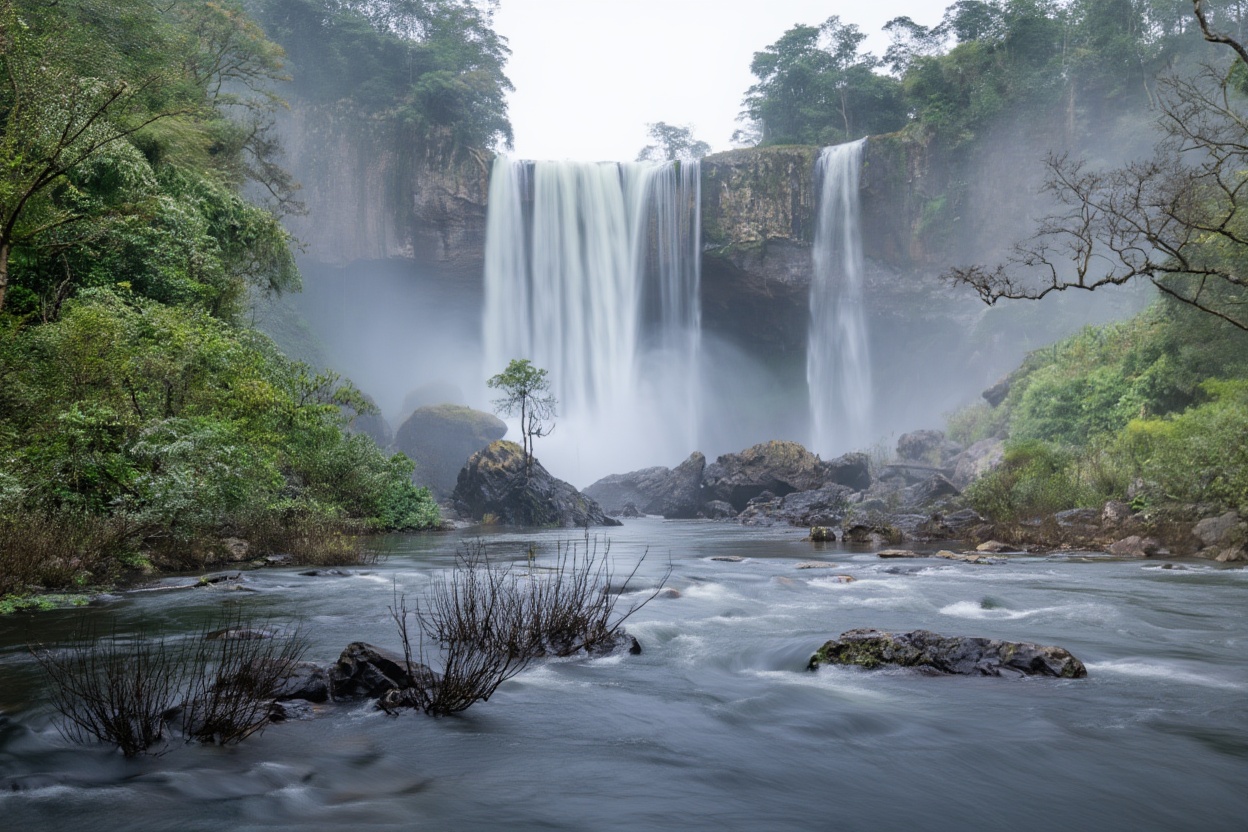
Đà Lạt waterfalls in rainy season — the flow changes the experience entirely
Đà Lạt Waterfalls: The 4 Worth Visiting (And How to Skip the Traps)
The best waterfalls near Đà Lạt: Elephant Waterfall (Thác Voi) for the walk-behind curtain experience and dramatic jungle gorge, and Pongour Waterfall for sheer scale — 7 tiers of cascades, 50km from the city, far fewer tourists than the alternatives. Datanla Waterfall is the most visited because it’s the closest and has the most infrastructure, including an alpine coaster that’s actually fun. Liên Khương is the least remarkable. Go in rainy season (May–October) for proper volume.
Datanla Waterfall: most visited, most touristy — the alpine coaster is fun, the waterfall itself is decent
Pongour Waterfall: largest in the region, 50km from Đà Lạt, fewer tourists, genuinely impressive
Elephant Waterfall: dramatic drop into a jungle gorge, you can walk behind the curtain — genuinely worth it
Liên Khương Waterfall: closest to Đà Lạt, easiest access, fine but unremarkable — skip if time is limited
Best season: May–October rainy season for maximum flow; dry season (Nov–Apr) the falls are a trickle
Bottom line: Elephant Waterfall + Pongour as a day trip — skip Datanla unless you want the coaster
✈ Search Flights to Vietnam
Last updated: June 2026 — entry fees and conditions verified June 2026.
Đà Lạt’s waterfalls have a reputation problem. Most of them sit inside entry-fee parks with outdoor amusement rides, souvenir stalls, and loudspeakers playing Vietnamese pop. The actual waterfalls — the water, the gorge, the jungle — are underneath all that, and they’re genuinely impressive, particularly in rainy season when the flow is at full volume. You just have to want them enough to look past the context.
Four waterfalls. Here’s what each one is actually like, who it’s for, and which one I’d skip.
Đà Lạt waterfalls in rainy season — the flow changes the experience entirely
1. Elephant Waterfall (Thác Voi) — The Best One
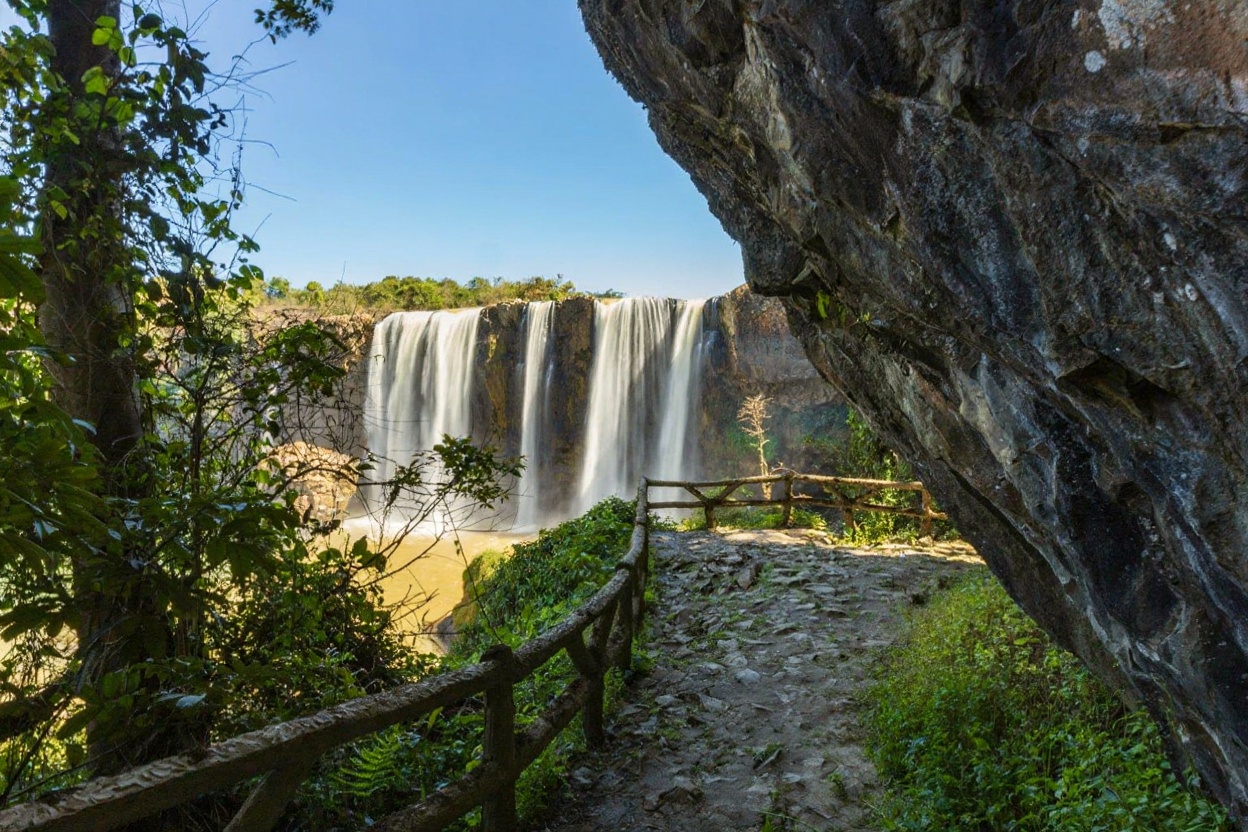
Elephant Waterfall (say: tak voy) is 30km southwest of Đà Lạt on the road toward Liên Khương. A 14m drop into a basalt-walled gorge, with enough volume in rainy season that the mist reaches the viewing area 50m back from the base. The specific attraction here: you can walk behind the falls. A narrow path cut into the rock face leads behind the curtain — you’re standing in a space between the falling water and the cliff wall, the sound is completely overwhelming, and the light through the white water is strange and pale and worth the wet clothes.
Elephant Waterfall (Thác Voi) — the path behind the curtain is what makes it the best one
Entry: 30,000 VND (~$1.15) adults. The descent to the base involves steep concrete steps — about 5 minutes down, 8 minutes back up. Wear shoes with grip; the path is permanently wet from the spray. The path behind the falls requires ducking and passing through a gap in the rock — not accessible for people with significant mobility limitations or severe claustrophobia.
✓Quick Answer
Elephant Waterfall is 30km from Đà Lạt city center — about 40 minutes by motorbike on the QL20 road. Entry 30,000 VND. The walk-behind-the-curtain path is the specific reason to come; without it, the waterfall is impressive but not different from the others. Go in rainy season (May–October) for the full volume. Combine with Liên Khương Airport road for a half-day south-of-Đà-Lạt loop.
I arrived at Elephant Waterfall on a dry-season afternoon in March expecting something modest. The falls were running at maybe 30% of rainy-season volume and were still loud enough to make conversation impossible at the base. The path behind the curtain — even with reduced flow — put me in a space that felt genuinely removed from the souvenir stall 200m above. The walk back up the steps in the wet shoes was the price. Worth it.
→Who It’s For
Anyone who wants a physical interaction with a waterfall rather than a photograph of one from a distance. The walk-behind path requires getting wet, ducking through a gap, and accepting that your shoes will be damp for the rest of the day. If that sounds like a problem, stick to the viewing platforms. If it sounds fine, this is the best thing to do in Đà Lạt on a rainy-season afternoon.
2. Pongour Waterfall (Thác Pongour) — The Most Impressive
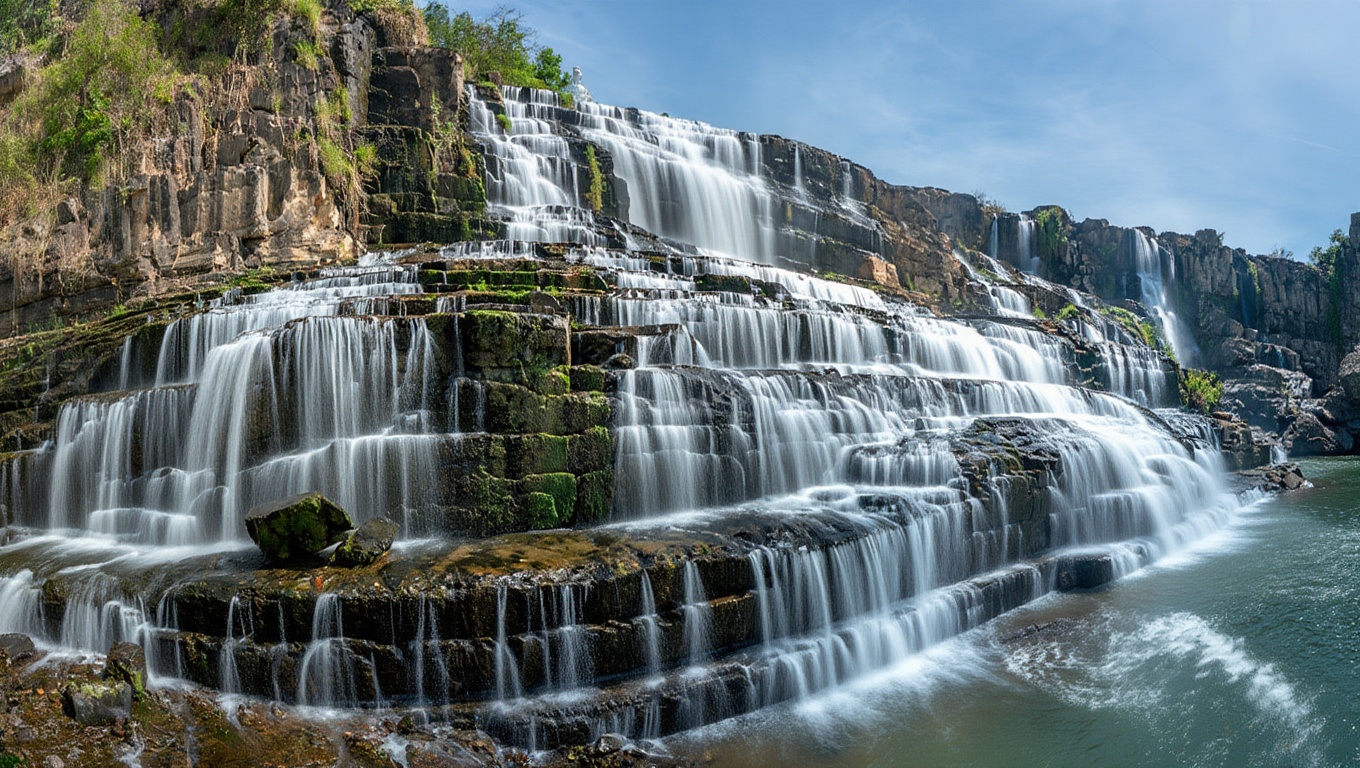
Pongour (say: tak pong-oor) is 50km south of Đà Lạt on the road toward Phan Thiết. Seven terraced cascades dropping across a wide basalt shelf — the total width of the falls in rainy season is estimated at over 100m, which makes it one of the widest natural cascades in Vietnam. The scale is the point: where Elephant is dramatic in a narrow, enclosed way, Pongour is dramatic in an open, overwhelming way.
Pongour at peak rainy season flow — 100m wide, 7 tiers, and 50km from the tourist crowds
Entry: 25,000 VND (~$0.95) adults. The site is genuinely less developed than Datanla — fewer amusement rides, less infrastructure, more of the actual waterfall. In rainy season (June–August peak), the falls flood the basalt shelf entirely and the viewing area at the base gets mist from 60m away. In dry season, the seven tiers reduce to a series of modest threads — not impressive. Pongour is a rainy-season destination.
The 50km from Đà Lạt makes it a fuller commitment than the closer falls — combine it with a drive through the tea and coffee plantations on the QL20 road for a complete half-day out of the city. The road south of Đà Lạt toward Pongour passes through some of the better agricultural scenery in the region: pine forests give way to flower farms, then to the lower-elevation coffee and tea country that makes the drive worth doing regardless of the waterfall.
↗Insider Tip
Go on a weekday. Pongour is a Vietnamese domestic tourist destination — on weekends it fills with families from Hồ Chí Minh City on day trips, and the parking area and viewing platforms get crowded. On a Tuesday in June, you may have the viewing area largely to yourself. The 50km drive is slightly longer than the other falls, which further reduces the casual drop-in crowd.
3. Datanla Waterfall (Thác Datanla) — The Tourist One
Datanla (say: tak da-tan-la) is 7km south of Đà Lạt city center — the closest and most visited waterfall in the region. Entry: 40,000 VND (~$1.50). The main draw is an alpine coaster that runs down through the pine forest to the waterfall base (additional fee: 70,000–100,000 VND ~$2.65–3.80) — a seated bobsled-style ride on a steel track that’s genuinely fun and genuinely touristy. The coaster empties into the lower waterfall area where a series of cascades drops through a narrow gorge.
The waterfall itself is smaller than Elephant or Pongour but more accessible — wide paths, handrails, café at the bottom, clean facilities. The gorge below the main falls has some genuinely dramatic sections if you walk the full lower circuit, which most visitors don’t bother with because they’re either waiting for the coaster or heading back up immediately after the main falls.
Book Tours & Activities — Da Lat
Klook has the widest selection for Vietnam and is usually the cheapest. KKday is strong on day trips and local experiences.
Datanla is the waterfall you visit when you don’t have time or transport to go further afield, or when you want the coaster. The waterfall experience — standalone, without the infrastructure — is the least impressive of the four. The coaster is fun and worth doing for the context it gives you (the forest, the altitude drop, the arrival at the falls from above). Don’t come for the waterfall. Come for the ride and the falls as a bonus.
Combining Datanla with a Đà Lạt city half-day: Easy — it’s 15 minutes from the city center and fits neatly into a morning before the flower gardens or a late afternoon after the markets. The proximity is the argument for Datanla; there’s no other.
One honest note about the gorge walk at Datanla: if you decline the coaster and walk the forest path down to the base, the first 200m of the descent through the pine forest before you reach the amusement infrastructure is genuinely peaceful. Early morning before 9am — before the first groups arrive — the path to Datanla has a quality that the busy midday visit doesn’t. The falls themselves are illuminated by green filtered light through the pine canopy. It’s a 20-minute window before the coaster passengers start arriving. Worth knowing about if you’re already nearby and want the version without the queues.
4. Liên Khương Waterfall (Thác Liên Khương) — The Skip
Liên Khương (say: tak lyen kwong) is 26km south of Đà Lạt near the airport of the same name. A single-tier falls dropping into a flat-bottomed valley, accessible via a paved path with good infrastructure. Entry: 20,000 VND (~$0.75).
It’s the least remarkable of the four — not dramatic, not unusual, not particularly large. The surrounding landscape is pleasant and the facilities are clean. If you’re driving past on the way to or from Liên Khương Airport, stopping for 20 minutes makes sense. As a specific destination, it doesn’t justify the trip from Đà Lạt when Elephant Waterfall is only 4km further on the same road.
→Who It’s For
Travelers arriving or departing via Liên Khương Airport with 45 minutes to spare and a motorbike or taxi. Everyone else: drive the extra 4km and go to Elephant Waterfall.
Rainy Season vs Dry Season — When to Go
This matters more for Đà Lạt waterfalls than for almost any other attraction in the city. Đà Lạt’s dry season (November–April) reduces all four falls to a fraction of their rainy-season volume. Pongour in March looks like a series of small streams over a wide rock shelf. Elephant in February has enough flow for the walk-behind experience but not the volume that makes the mist reach the viewing platform. Datanla is the least affected — being a smaller falls in a narrow gorge, the volume difference is proportionally less dramatic.
Rainy season (May–October, peak June–August) transforms the falls. Pongour becomes a 100m-wide roar that you can hear from the parking area. Elephant’s mist makes umbrellas necessary from 30m back. Datanla’s gorge fills with brown-green water and the coaster arrival into the lower section becomes properly dramatic.
If you’re visiting Đà Lạt in dry season: still go to Elephant Waterfall for the walk-behind experience (the path is accessible year-round) and note that the other falls are better saved for a return visit in rainy season. Don’t go specifically for Pongour in dry season — the 50km round trip for a trickle over a wide rock is not worth the petrol.
WATERFALL COMPARISON 2026
Đà Lạt — Which Falls to Visit
Waterfall
Distance
Entry
Verdict
🐘 Elephant (Voi)
30km SW
30,000 VND
✅ Best — walk behind
🌊 Pongour
50km S
25,000 VND
✅ Most impressive (rainy season)
🎢 Datanla
7km S
40,000 + 70,000–100,000 VND
⚠️ For the coaster, not the falls
💧 Liên Khương
26km S
20,000 VND
❌ Skip — unremarkable
vietnamunlock.com — All prices verified June 2026. Rate: ~26,355 VND = $1 USD.
Getting to the Waterfalls
By motorbike: The recommended option. Đà Lạt motorbike rental: 100,000–150,000 VND (~$4–6) per day. All four waterfalls are on paved roads and accessible on any motorbike. The road to Pongour (50km south on QL20) is a good riding road — relatively light traffic, good surface, agricultural scenery. The road to Elephant (30km on QL27) is narrower but still straightforward.
By taxi or Grab: Grab operates in Đà Lạt. For Datanla (7km), Grab is a realistic option. For Elephant and Pongour, the round trip by Grab adds up — negotiate a fixed rate with a local taxi for a multi-stop waterfall day rather than using Grab for each leg. A full-day taxi hire covering both Elephant and Pongour with waiting time costs around 500,000–700,000 VND (~$19–27), which splits reasonably across two or three people.
Book Transport — Buses, Trains & Ferries
12Go covers most Vietnam routes — sleeper buses, trains, and island ferries. Compare schedules and book in advance during peak season (Dec–Feb, Jun–Aug).
Guided tours: Đà Lạt guesthouses and tour operators offer waterfall day trips — typically covering 2–3 falls with transport and a local guide for 150,000–300,000 VND (~$6–11) per person in a small group. The guide adds genuine value at the lesser-known falls where the access paths aren’t obvious, and the shared transport reduces the cost per person compared to a private hire. Useful if you don’t have a motorbike and are traveling solo or with one other person.
Recommended half-day loop: Đà Lạt city → Elephant Waterfall (30km, 40 min) → Liên Khương (skip, or 4km diversion if convenient) → Pongour (50km, 20 more minutes south) → back via QL20. Total: ~160km round trip, 4–5 hours including time at each falls. Best in rainy season, best on a weekday.
What to Wear and Bring
Đà Lạt is at 1,500m elevation — cooler than coastal Vietnam by 8–10°C. In the rainy season, the afternoon temperature drops significantly after rain and the gorges are genuinely cold from the spray. What to bring to the waterfalls:
Footwear: Closed shoes with grip, not sandals or flip-flops. The paths at all four falls are permanently damp from spray and the steps cut into the gorge walls at Elephant get slippery. The walk-behind path at Elephant specifically requires you to step on uneven wet rock — any open footwear is a bad choice.
Dry bag or waterproof phone case: Essential for Elephant if you’re doing the walk-behind. The spray at close range is significant enough to soak a pocket or bag. A dry bag for your phone and camera is worth carrying — they cost 50,000–80,000 VND (~$2–3) at Đà Lạt market and work correctly.
Change of clothes: If you do the walk-behind path at Elephant, your clothes will be wet. Having a dry layer in your bag means the drive back to Đà Lạt at 1,500m elevation doesn’t involve 40 minutes of cold from damp cotton. Basic foresight but the kind of thing nobody mentions in travel guides and everyone wishes they’d known.
Rain jacket: If you’re going in rainy season, carry one regardless of the morning forecast. The mountains around Đà Lạt generate afternoon storms that develop quickly. A packable jacket in your bag is the difference between a comfortable motorbike ride back and an unplanned shelter stop.
Cash: All waterfall entry points are cash only. Carry enough for entry fees (totalling 75,000–140,000 VND ~$3–5 for all four if you visit them) plus food and petrol on the road.
For the full Đà Lạt picture — flower markets, Crazy House, highland cuisine, and the best time to visit — the Đà Lạt Flower Festival guide and the central Vietnam planning section have the regional context.
Frequently Asked Questions
What is the best waterfall near Đà Lạt?
Elephant Waterfall (Thác Voi) is the best for experience — a walk-behind path through the basalt gorge that gets you inside the falls rather than in front of them. Pongour Waterfall is the most visually impressive in rainy season — 7 tiers and over 100m wide at peak flow. Datanla is the most convenient (7km from city) and has an alpine coaster. Visit Elephant as a priority; add Pongour if you’re there in May–October.
When is the best time to visit Đà Lạt waterfalls?
Rainy season — May through October, with June–August as the peak flow period. In dry season (November–April), all four falls run at reduced volume. Pongour specifically is disappointing in dry season. Elephant Waterfall is worth visiting year-round because the walk-behind experience works even at lower flow, but the drama of full-volume rainy-season flow is significantly better.
How far are the waterfalls from Đà Lạt city center?
Datanla: 7km, 15 minutes. Liên Khương: 26km, 35 minutes. Elephant (Voi): 30km, 40 minutes. Pongour: 50km, 60 minutes. All are on paved roads accessible by motorbike. Combining Elephant and Pongour in one half-day is practical — they’re in the same general direction south of the city.
Can I visit the waterfalls without a motorbike?
Yes — Grab operates in Đà Lạt and can take you to Datanla easily. For Elephant and Pongour, a full-day taxi hire is more cost-effective than Grab for the longer distances: negotiate 500,000–700,000 VND (~$19–27) for a return trip to both falls with waiting time. Some Đà Lạt guesthouses organize waterfall day trips with a driver for a fixed price.
The Bottom Line
Đà Lạt’s waterfalls are better than their reputation and worse than their marketing. The amusement-park infrastructure around Datanla is genuinely distracting. The 50km drive to Pongour in dry season is genuinely not worth it. But Elephant Waterfall in rainy season — standing behind a 14m curtain of water in a basalt gorge with the sound pressure physical against your chest — is one of those things that doesn’t make the Đà Lạt highlight lists and should.
Go in rainy season. Go to Elephant first. Combine it with Pongour if the flow is good and you have a full morning. Skip Liên Khương. Do the Datanla coaster if you’re traveling with kids or want something different from standing in front of water. The falls are here. The context around them is optional.
Before You Go
Two things worth sorting before you land: a Vietnam eSIM so you have data the moment you clear customs, and travel insurance — medical costs for uninsured foreigners in Vietnam are significant.
Airalo eSIMs activate instantly. Buy before departure — airport SIM queues in Vietnam can take 30+ minutes.
Beyond the Falls — Other Water in Đà Lạt
Đà Lạt’s relationship with water isn’t just waterfalls. The city is built around Xuân Hương Lake — a reservoir in the center of the city that’s best at dawn when the mist comes off the water and the pine-covered hills are still grey. The lakeside walking path at 6am is one of the more unusual things you can do in a Vietnamese city: cool enough for a jacket, quiet enough to hear the birds, populated almost entirely by elderly Vietnamese doing morning exercises.
Tuyền Lâm Lake, 8km south of the city, is a reservoir surrounded by pine forests and accessible by paddle boat, kayak, and one of the most photogenic cable car routes in the highlands (Đà Lạt Cable Car, 70,000 VND return). The lake itself is calm and largely undeveloped except for a Buddhist monastery on the northern shore. Worth a half-day if you have time beyond the waterfalls.
The Valley of Love (Thung Lũng Tình Yêu) is a tourist park around a small lake north of the city — entry 150,000 VND, inflated prices, aimed at Vietnamese couples rather than independent travelers. It’s mentioned here specifically so you know to skip it. The lake is pleasant; the price and the plastic swan paddle boats surrounding it are not the version of Đà Lạt worth your afternoon.
For serious hiking to Langbiang Mountain (2,167m), the summit above Đà Lạt with views to the coast on clear days, the approach is from Lạc Dương town 12km north. A local guide is recommended for the upper section — the jeep road and the hiking path share the same ridge and it’s easy to take a wrong turn in the cloud. Allow a full day from Đà Lạt city and back. The view from the summit on a clear morning, looking east over the coffee and tea country toward the coastal lowlands, is among the better highland vistas in southern Vietnam.
“I moved here on a 3-month trial run. That was 5 years ago. I’ve since been to all 63 provinces, ridden every loop worth riding, and eaten things I still can’t name. This blog is what I wish existed when I landed.”