Last updated: June 2026 — verified against current transport, accommodation, and attraction details
The first thing you notice arriving by hydrofoil is the oil tankers. Dozens of them. Sitting in the water off the coast, because Vũng Tàu is the center of Vietnam’s offshore petroleum industry. There are oil company headquarters on the main boulevard. Engineers on rotation from Russia, Korea, and Singapore fill the expat-friendly restaurants. The beach clubs advertise DJ sets on Saturday nights.
This is not Đà Nẵng. It’s not Phú Quốc. It’s an industrial city that happens to have beaches, a giant Jesus statue, and some of the best fresh seafood in southern Vietnam. Once you understand that, Vũng Tàu is excellent. When you show up expecting Bali, you’ll be confused.
I’ve been here eight times. Always for a weekend. Always for the same reasons: hydrofoil from Bach Dang pier, seafood lunch on Thùy Vân, a sunset at the Jesus statue, back to HCMC on Sunday. It works.
Is Vung Tau Worth Visiting?
Yes — with the right expectations. Vũng Tàu is worth visiting if:
You’re based in Ho Chi Minh City and need a beach fix without flying. You want to see domestic Vietnamese beach tourism in action (it’s fascinating — packed with Vietnamese families, seafood restaurants with tanks outside, plastic chairs on the sand). You’re interested in the Jesus Christ statue, which is genuinely more impressive than photos suggest. You want cheap fresh seafood. You have a weekend to spare.
Skip Vũng Tàu if:
You’re doing a Vietnam highlights trip and choosing between beach destinations — Phú Quốc and Nha Trang have clearer water and more classic resort experience. You want the pristine, uncrowded beach experience — Vũng Tàu’s beaches are good, not great. You’re short on time and HCMC still has things on your list to see.
✓Quick Answer
Vũng Tàu is a 90-minute hydrofoil from HCMC — worth it as a weekend trip for fresh seafood, the Jesus statue, and local beach atmosphere. Not worth a dedicated beach trip if you’re visiting Vietnam specifically for beaches; Phú Quốc and Nha Trang are better for that. Come for what Vũng Tàu actually is, not what you wish it were.
Getting to Vung Tau from Ho Chi Minh City
Hydrofoil (recommended): The most enjoyable way. High-speed boat from Bạch Đằng pier in HCMC’s District 1, docking at Cầu Đá port in Vũng Tàu. Journey time: 90 minutes. Two operators — Petro Express and Green Lines — run multiple departures daily from roughly 6:30am to 5pm. Cost: 200,000–250,000 VND (~$7.70–9.60) one-way. The experience of crossing the Mekong Delta shipping lanes on a high-speed ferry, watching the city skyline recede behind you and the refinery towers grow ahead, is a good one.
Book online through the operator websites or 12Go Asia. Weekend sailings sell out — book at least 2–3 days ahead on Fridays and Saturdays.
Bus: Phương Trang (FuTa) and several other operators run daily buses from Mien Dong bus station in HCMC. Cheap and reliable. Drops you at Vũng Tàu bus station (about 3km from the beach) where Grab is available for the final leg.
What to Do in Vung Tau
Christ of Vung Tau (Tượng Chúa Kitô Vua) — the statue on top of Núi Nhỏ (Small Mountain) that overlooks the sea. 800+ steps up to the base of the statue, plus another 100 steps inside the statue itself to reach the shoulder platform and the view from inside the arms. The climb takes about 30–40 minutes at a normal pace. The view at the top — ocean one side, city below, refinery coastline in the distance — is genuinely arresting. Open daily from roughly 7:30am to 5pm. No entrance fee.
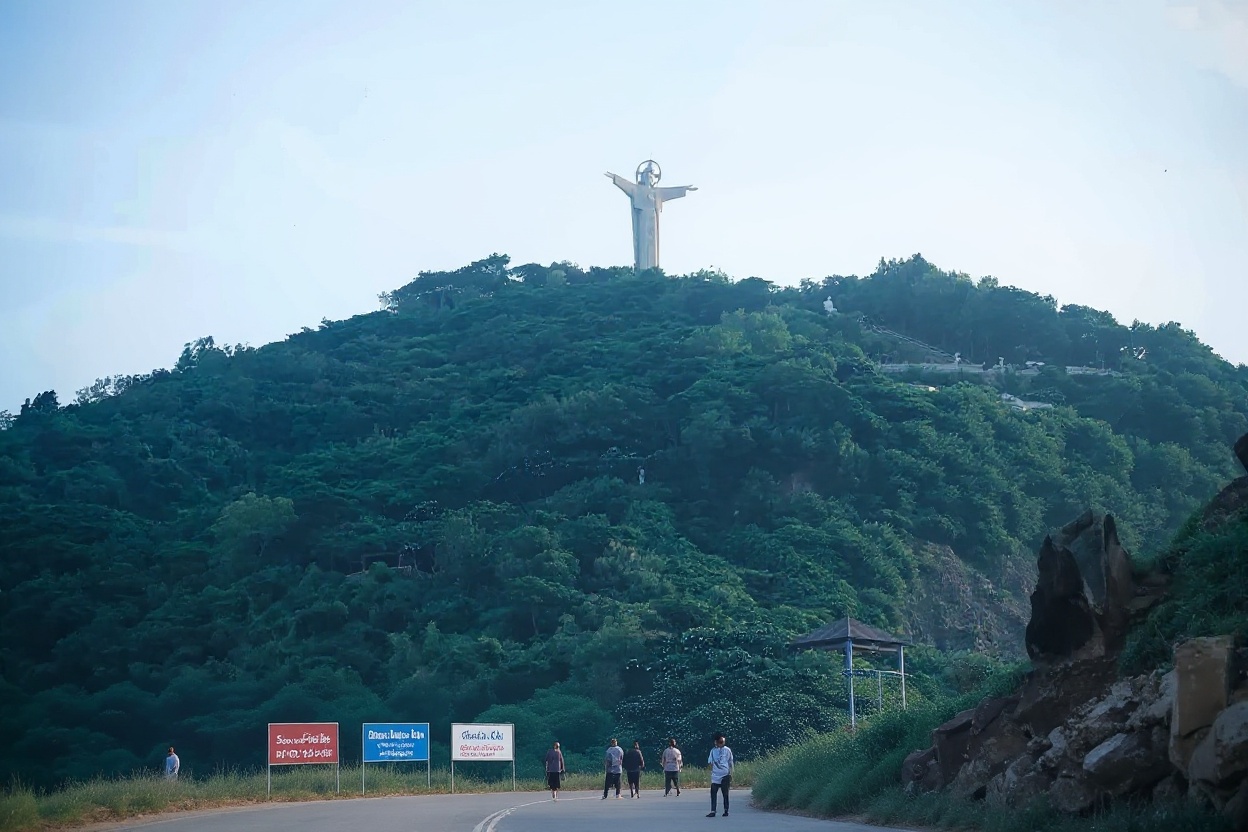
Go in the morning before 9am or in the late afternoon. Noon in the heat is brutal on exposed stone steps. The statue from below at sunset turns golden in a way that justifies the climb twice.
Bạch Dinh (White Palace) — French colonial villa turned museum, built in 1898 as a summer residence for French Governor-General Paul Doumer, later used by Emperor Bảo Đại and then as a residence for South Vietnamese presidents. Set in forested grounds on a hill above Front Beach. The architecture is impressive — French Indochina colonial at its most intact. Entrance fee: 30,000 VND (~$1.15). Allow 45–60 minutes. Worth it for the building; the museum collection is secondary.
Dinh Cô Temple and Hon Ba Island — at the southern end of Back Beach, Dinh Cô is a Goddess temple on a rocky outcrop. Hon Ba is a tiny island just off the beach, accessible on foot at low tide only. The walk across the tidal flat — calf-deep in clear warm water, rocky underfoot — to the small temple on the rock is one of those Vietnam experiences that photographs well and feels even better. Check tide tables before you go.
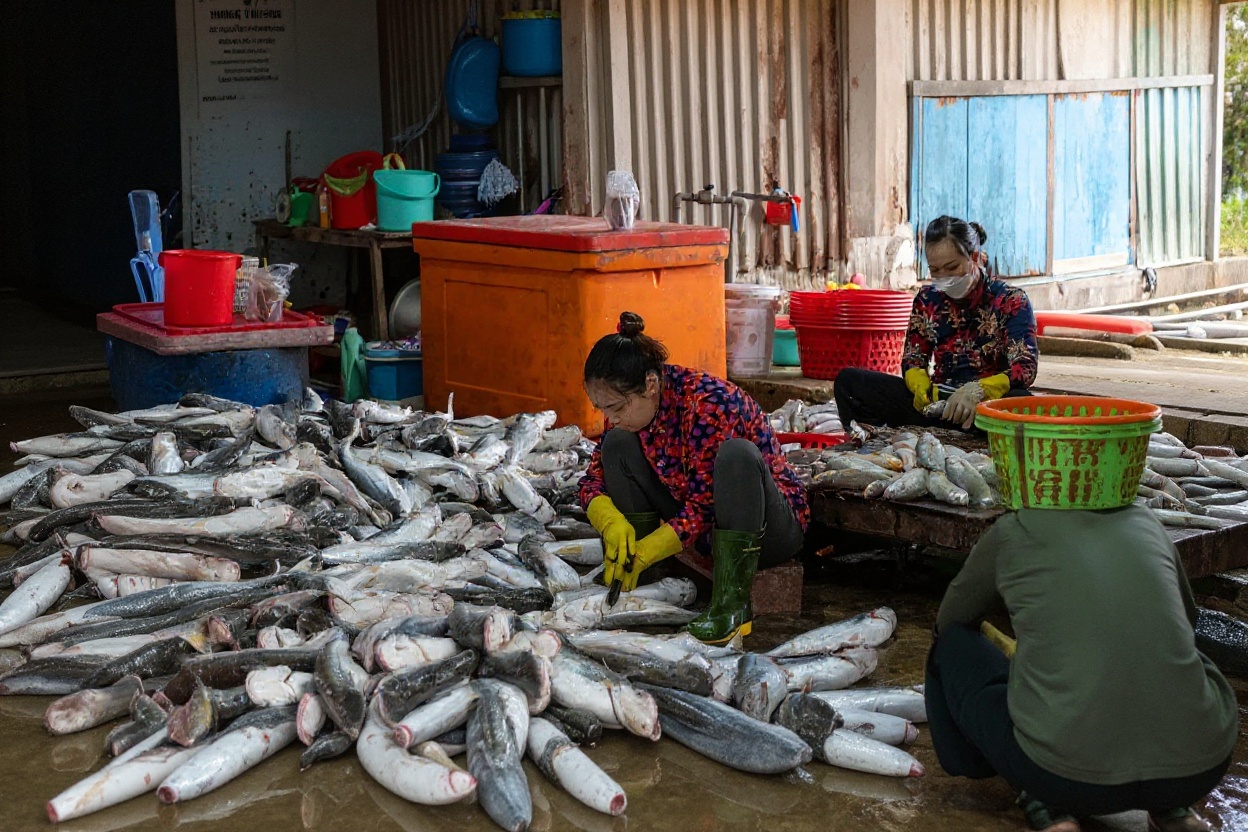
Fishing harbor — Vũng Tàu’s working fishing harbor on the north end of town. Early morning (5–7am) is the active time: boats coming in, fish being sorted, the smell of salt and diesel and fresh catch mixing together at the dock. Not a tourist attraction — a working harbor — which makes it more interesting. Buy fresh seafood here to take to a “make your own” seafood restaurant that will cook it for you.
Vung Tau’s Beaches: Which One to Use
Vũng Tàu has three main beaches. They are not all equal.
Thùy Vân (Back Beach) — the best beach in Vũng Tàu by a wide margin. Long, wide, well-maintained section, with beach clubs, sunbeds (20,000–30,000 VND / ~$0.77–1.15 for the day), seafood restaurants right on the sand, and enough space to find a calm corner even on weekends. The water is clearer than Front Beach but not Caribbean-clear — it’s a murky greenish sea, fine for swimming, not for snorkeling.
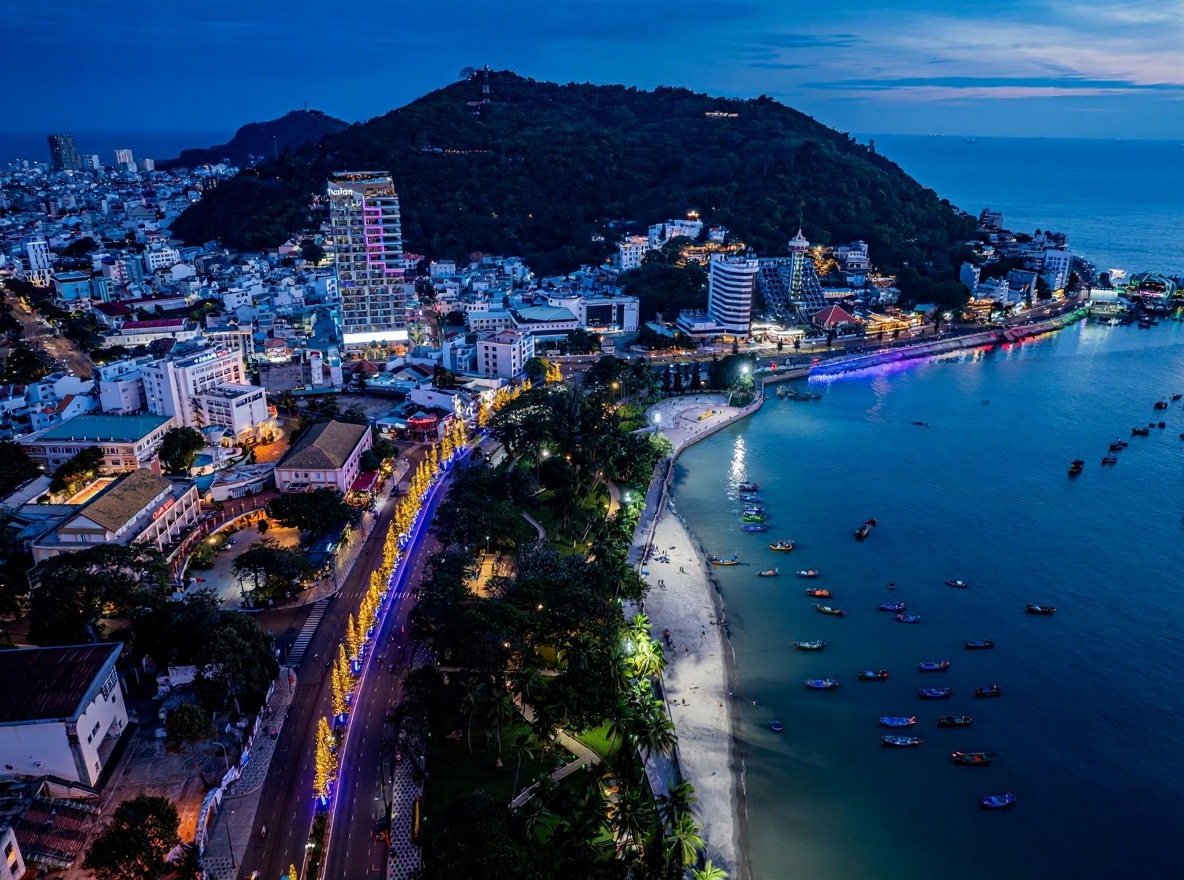
Bãi Trước (Front Beach) — the main seafront boulevard facing the harbor. Photogenic in the way that grand old promenades are photogenic. Not for swimming — the water is polluted from harbor activity. Fine for a morning walk or sunset drinks at the cafés that line the boulevard. Don’t plan to swim here.
Bãi Dứa (Pineapple Beach) — quieter, rockier, between the two mountains at the tip of the peninsula. Less facilities, more local. The quietest of the three. If you want to escape the Back Beach crowds on a Saturday, this works.
→Who It’s For
Back Beach is the beach for swimming, sunbathing, and seafood. Front Beach is for evening walks and the promenade atmosphere. Pineapple Beach is for solitude and a more local feel. Come on a weekday if possible — weekend crowds at Back Beach are genuinely intense during Vietnamese domestic tourism peak (school holidays, July, August).
Vung Tau Seafood: Where to Eat
The seafood in Vũng Tàu is the best argument for the trip. Fresh, cheap, and cooked in the southern Vietnamese style — light, slightly sweet, heavy on herbs and lime.
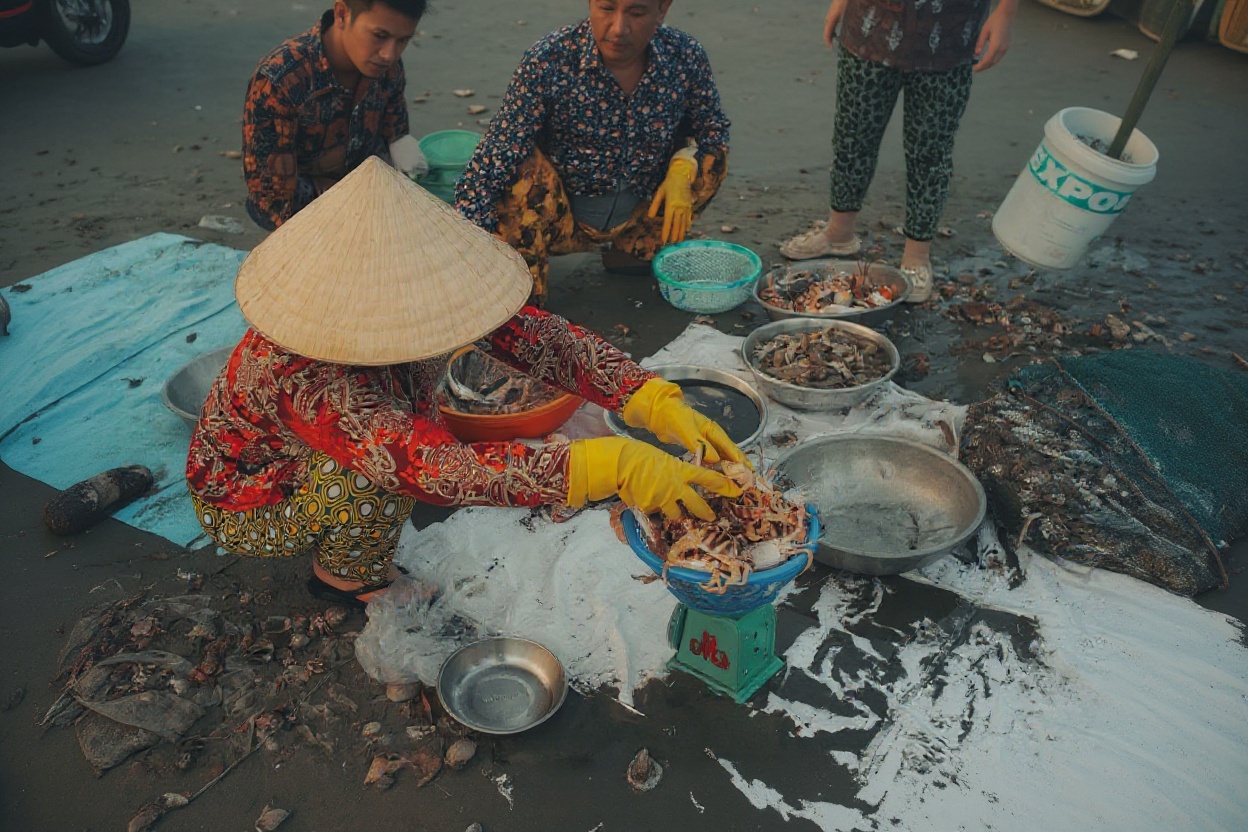
The beach restaurant strip on Thùy Vân (Trần Phú street at the beach end) — dozens of restaurants with tanks of live seafood outside the door. Point at what you want. It’s cooked immediately. Tiger prawns grilled with salt and chili: 150,000–200,000 VND (~$5.80–7.70) for a portion. Grilled clams with spring onion butter: 80,000–120,000 VND (~$3.10–4.60). Fresh crab cooked in tamarind: 250,000–400,000 VND (~$9.60–15.40) depending on size and season. These are local prices — not backpacker prices, not tourist prices. This is what Vũng Tàu residents eat.
One non-obvious eating option: Vũng Tàu has a significant Russian expat population from the oil industry, which means the city has genuine Russian restaurants and bakeries — an unexpected cultural layer that’s worth a meal at least once. Near the Front Beach boulevard, look for the signs in Cyrillic.
Bánh khọt (say: banh khot) — Vũng Tàu’s signature dish. Tiny crispy rice pancakes fried in a dimpled pan, filled with seasoned shrimp, topped with coconut cream and green onion, served with fresh herbs and shrimp paste. A Vũng Tàu specialty that tastes better here than anywhere else in Vietnam. Order it everywhere. Cost: 60,000–100,000 VND (~$2.30–3.85) for a plate of 10–12.
Where to Stay in Vung Tau
Vũng Tàu has a wide accommodation range because it serves both domestic Vietnamese weekend tourists and oil industry workers on rotation.
Budget guesthouses near Back Beach: 250,000–400,000 VND (~$9.60–15.40) per night. Basic, clean, air-conditioned. The Bình Minh area behind the beach has several good options.
Mid-range hotels on or near Thùy Vân (Back Beach): 600,000–1,200,000 VND (~$23–46) per night. Several newer boutique hotels opened in the past 3 years catering to HCMC weekenders. Quality is good, breakfast usually included.
Premium/resort options: The Grand Hotel Vũng Tàu and Imperial Hotel are the traditional choices for Vietnamese families on a proper beach holiday. Expect to pay 1,500,000–3,000,000 VND (~$58–115) per night.
↗Insider Tip
Book accommodation for Friday/Saturday nights at least a week ahead during Vietnamese national holidays (April 30, September 2, Tết shoulder period) and school summer holidays (June–August). Vũng Tàu fills completely with domestic tourists during these periods. Prices spike 30–50% and availability disappears.
Getting Around Vung Tau
Vũng Tàu is small enough to navigate comfortably by motorbike rental or a combination of Grab and walking.
Motorbike rental — the best way to see the whole peninsula. Rental shops cluster near the hydrofoil pier and along Thùy Vân beach road. Daily rate: 120,000–180,000 VND (~$4.60–6.90). Helmet included. Vũng Tàu’s roads are straightforward — a ring road around the peninsula connects all the main sights, with minimal traffic compared to HCMC. The coast road south past Back Beach to Dinh Cô and Hon Ba is a 20-minute ride through residential streets that gives a real sense of how the city lives rather than just how it performs for tourists.
Grab — works in Vũng Tàu. Useful for getting from the hydrofoil pier to your accommodation, and for late-night returns when motorbike confidence is lower. Not as convenient as having your own wheels for exploring.
Bicycle rental — available near Back Beach for flat-road rides along the promenade. 50,000–80,000 VND (~$1.90–3.10) per day. Fine for the beachfront — not ideal for the mountain climbs.
Vũng Tàu’s geography is a peninsula with two mountains (Núi Lớn and Núi Nhỏ) at the tip. The city wraps around the base of both. Front Beach and the old city center are on the harbor side (northwest). Back Beach runs along the eastern shore. The fishing harbor is north. From the hydrofoil pier to Back Beach is about 4km by road — a 15-minute Grab or a scenic 20-minute ride on a rented motorbike along the waterfront boulevard.
Best Time to Visit Vung Tau
Vũng Tàu’s weather follows southern Vietnam’s pattern: dry season from December to April, wet season May to October.
December to March is the best weather for beach days — lower humidity, less rain, clearer skies. This is peak domestic tourism season, which means Back Beach is busy on weekends and prices are slightly higher. Weekday visits during this period are significantly quieter.
April and May — shoulder season before the rains. Good weather, fewer crowds than peak winter. The best combination of conditions and manageable crowds.
June to September — rainy season. Afternoon showers are common. The beach is less appealing in rain, but mornings are often clear and temperatures are slightly lower. Hotels are cheaper. If you’re doing the Jesus statue or White Palace rather than beach time, the season matters less.
October and November — transitional. Weather becoming drier. Still warm. Beginning of the domestic tourism ramp-up before peak December.
ℹKnow Before You Go
Vietnamese national holidays — April 30 (Liberation Day), September 2 (National Day), and the Tết period (late January/early February) — bring massive domestic tourist volume to Vũng Tàu. Prices spike and everything books out. If you’re visiting during these windows, book accommodation and hydrofoil weeks in advance.
Vung Tau vs Other Beach Destinations from HCMC
The honest comparison travelers need before booking:
Vũng Tàu vs Mũi Né: Mũi Né is 200km further east (3.5–4 hours from HCMC) but has better kitesurfing, more interesting sand dunes, and a slightly more resort-town feel. Vũng Tàu has a quicker travel time and more authentic local character. If you want adventure activities, Mũi Né. If you want easy seafood weekend, Vũng Tàu.
Vũng Tàu vs Phú Quốc: Not really comparable. Phú Quốc is a proper island, requires a flight (1 hour from HCMC), has dramatically clearer water, resort infrastructure, and a different price bracket entirely. Vũng Tàu is a day trip or weekend. Phú Quốc is a destination.
Vũng Tàu vs Nha Trang: Nha Trang is 5 hours north on the Reunification Express or a 1.5-hour flight. Better beach, better diving, more international tourist infrastructure. Vũng Tàu is the HCMC locals’ choice — not a substitution for Nha Trang on a Vietnam highlights trip.
For a fuller comparison of Vietnam’s beach destinations and which fits your trip best, our southern Vietnam guide covers the full picture from the Mekong Delta to the Phú Quốc archipelago.
Day Trip vs Overnight in Vung Tau
A day trip from HCMC is feasible — hydrofoil at 7:30am, full day, hydrofoil back at 5pm. You get: seafood lunch, the Jesus statue, maybe a couple of hours at Back Beach.
An overnight unlocks the early morning harbor activity, a proper sunset at the White Palace, the evening when the beach boulevard comes alive with vendors and families, and a second morning at the beach when it’s cooler and less crowded.
If time allows: overnight is the better experience by a significant margin. One night at a mid-range hotel costs less than the price difference between a day-tour operator package and doing it independently anyway.
What Jake Got Wrong About Vung Tau (And What He Learned)
First visit, I brought snorkeling gear. This was optimistic to the point of delusion. The waters around Vũng Tàu are not clear — they’re the outflow of the Mekong River delta, brown and silty, with visibility measured in centimeters not meters. The snorkel gear stayed in my bag the whole weekend. I ate bánh khọt instead and stopped being sad about the snorkeling almost immediately.
Second mistake: I showed up on a Saturday in August during school holidays. Back Beach was wall-to-wall Vietnamese families — umbrellas, plastic chairs, children, food vendors, music from three different sources. It was extremely alive and deeply chaotic and barely relaxing. I also could not find a single seat at a seafood restaurant for the first 45 minutes because every table was spoken for.
The lesson: come on a weekday when possible. If you must come on a weekend, arrive Friday evening. Eat dinner Friday when the crowds have thinned, wake early Saturday for the statue climb and harbor walk before the day-trippers arrive by 10am, then beach in the afternoon when the volume has stabilized. Sunday morning is quieter than Saturday afternoon by a wide margin.
Third lesson: the White Palace charges a separate entrance from the grounds. You pay 30,000 VND to enter the grounds and another 30,000 VND to enter the building. Both are worth it. Being surprised at the second fee because I hadn’t read ahead was entirely my own fault.
Vung Tau Vietnam: Frequently Asked Questions
How far is Vung Tau from Ho Chi Minh City?
Vũng Tàu is 120km southeast of Ho Chi Minh City — 90 minutes by hydrofoil from Bạch Đằng pier in District 1, or 2–2.5 hours by bus from Miền Đông bus station. The hydrofoil is more enjoyable and not much more expensive. Weekend sailings book out — reserve at least 2–3 days ahead.
Is Vung Tau worth visiting?
Yes — for the right reasons. Vũng Tàu is excellent for a weekend escape from HCMC: fresh seafood, the Christ statue, decent beach, local Vietnamese tourism atmosphere, and the White Palace. It’s not the right choice if you’re doing Vietnam beach highlights — Nha Trang and Phú Quốc have better beaches and clearer water. Come for what Vũng Tàu is, not what you want it to be.
What is Vung Tau famous for?
Vũng Tàu is famous for three things: the Christ of Vũng Tàu statue (one of the largest Jesus statues in Asia), bánh khọt (tiny crispy shrimp rice pancakes unique to the region), and its role as the center of Vietnam’s offshore oil industry. It’s also the most accessible beach from Ho Chi Minh City, making it the default weekend escape for Saigon residents.
What is the best beach in Vung Tau?
Back Beach (Thùy Vân / Bãi Sau) is the best beach for swimming and sunbathing — long, wide, reasonably clean with beach clubs and seafood restaurants. Front Beach (Bãi Trước) faces the harbor and is polluted — good for walking, not swimming. Pineapple Beach (Bãi Dứa) is the quietest option for those avoiding crowds.
How do you get from Ho Chi Minh City to Vung Tau?
The best option is the hydrofoil from Bạch Đằng pier in District 1 — 90 minutes, 200,000–250,000 VND (~$7.70–9.60) one-way. Phương Trang buses run regularly from Miền Đông bus station for 80,000–120,000 VND (~$3.10–4.60) but take 2–2.5 hours. Weekend hydrofoils need advance booking.