I nearly gave up on Hoi An at 2pm on a Tuesday.
Hoi An has more cooking classes than anywhere else in Vietnam and more variation in quality — our Hoi An cooking class guide breaks down what to look for and which market visits are actually worth it.
Then at 6pm the electric streetlights dimmed and the silk lanterns came on. The yellow walls went amber. The Thu Bon River reflected it all back. A woman was setting up a noodle cart on the corner and the smell of star anise hit the evening air like a slow exhale. Two hours later I was booking an extra night.
That gap between the midday version and the evening version is the whole story of things to do in Hoi An. The Ancient Town is real and worth your time. It just requires managing when you show up and what you expect to find.
Last updated: May 2026 — Ancient Town ticket prices, tailor district tips, and An Bang Beach access verified.
Things to Do in Hoi An: The Real List
The standard guides give you the same list: Ancient Town, Japanese Bridge, lanterns, tailor, cooking class, beach. All legitimate. What’s missing is sequencing, timing, and which version of each experience is actually worth your time.
✓Quick Answer
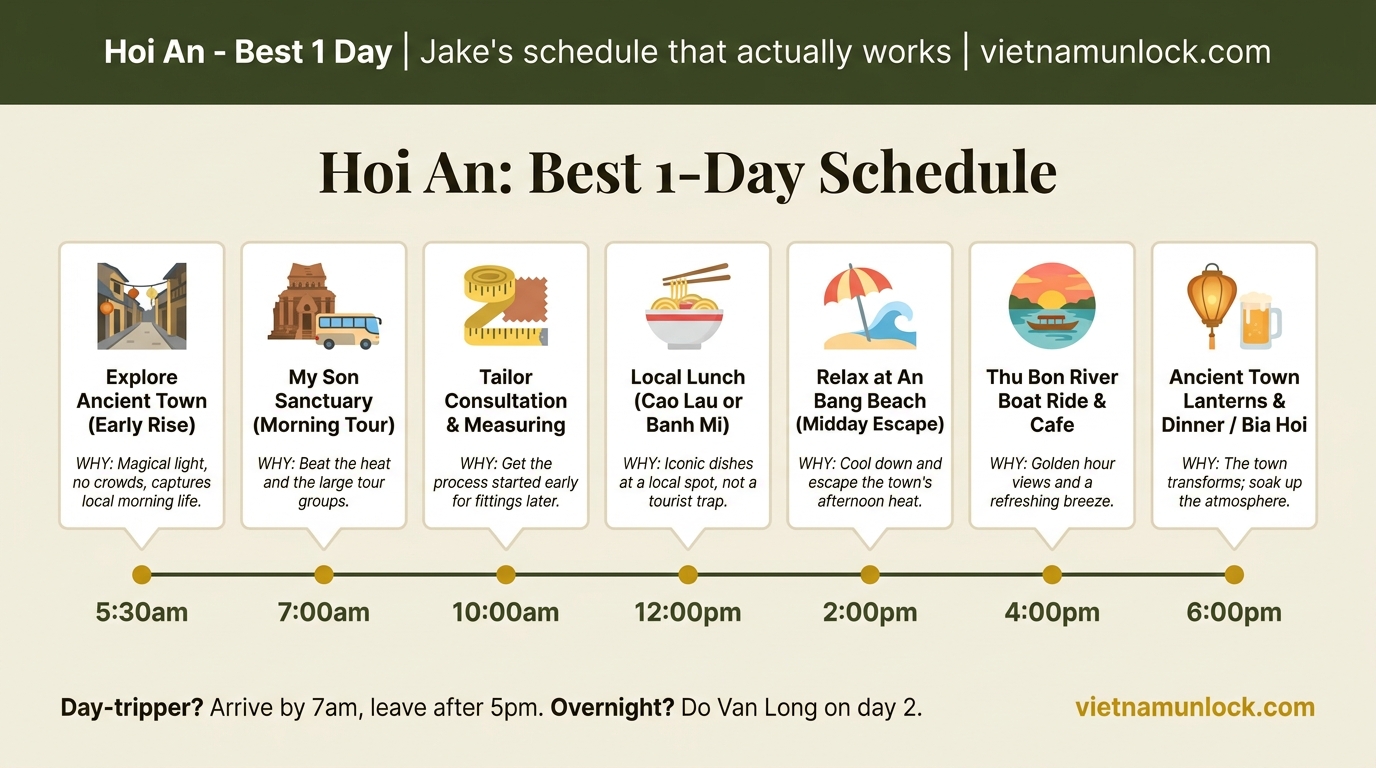
Give Hoi An two full days minimum. Day 1: Ancient Town at dawn, My Son Sanctuary afternoon, lantern evening. Day 2: cooking class morning, An Bang Beach afternoon. If you want a tailor order — arrive day 1 for measurements, collect day 3. Don’t rush it.
Explore the Ancient Town — But Not at Midday
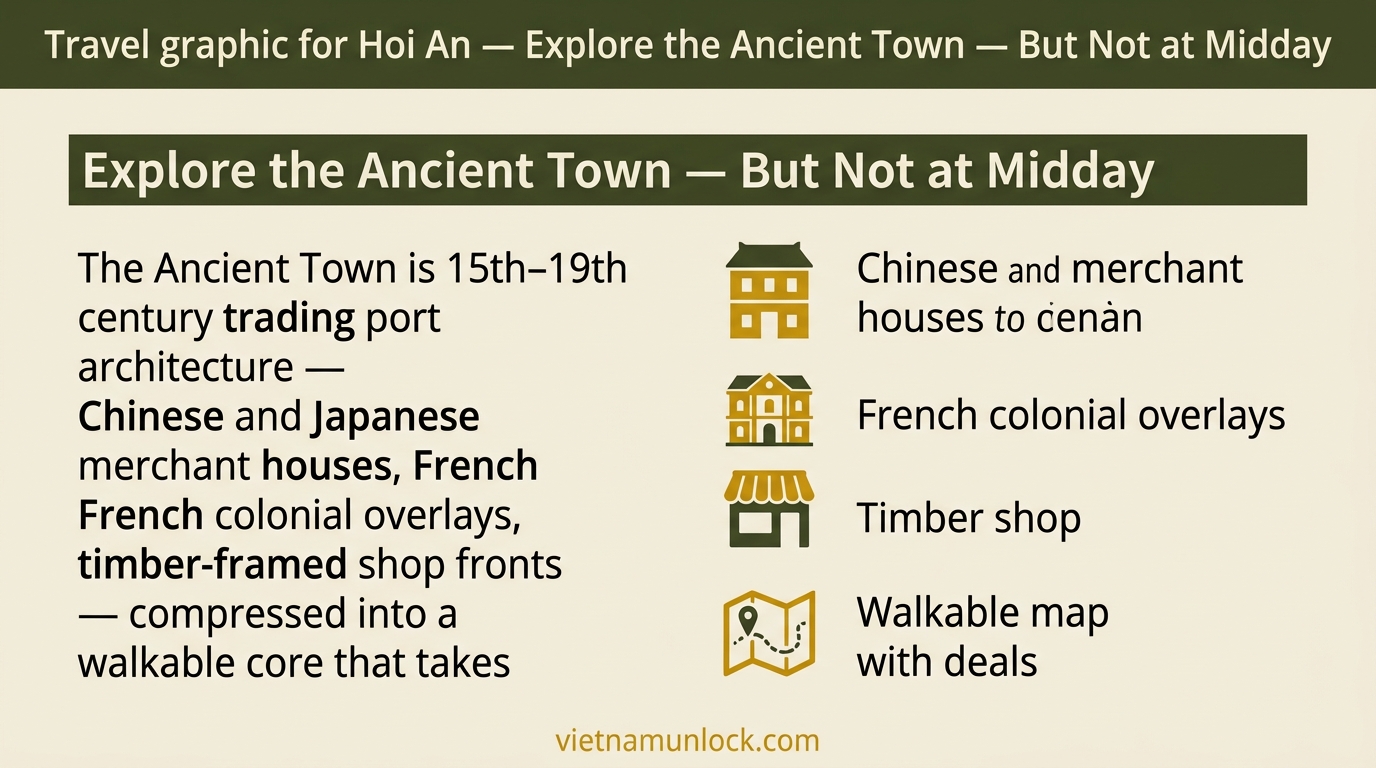
The Ancient Town is 15th–19th century trading port architecture — Chinese and Japanese merchant houses, French colonial overlays, timber-framed shop fronts — compressed into a walkable core that takes about 45 minutes to cross at a tourist pace. UNESCO listed it in 1999 because nothing else in Vietnam looks quite like it.
The combined ticket costs 120,000 VND (~$5) and covers entry to any 5 attractions from the official list. Buy at the booths at any Ancient Town entrance. It covers merchant house interiors, the Japanese Covered Bridge interior, the Folk Museum, and several assembly halls.
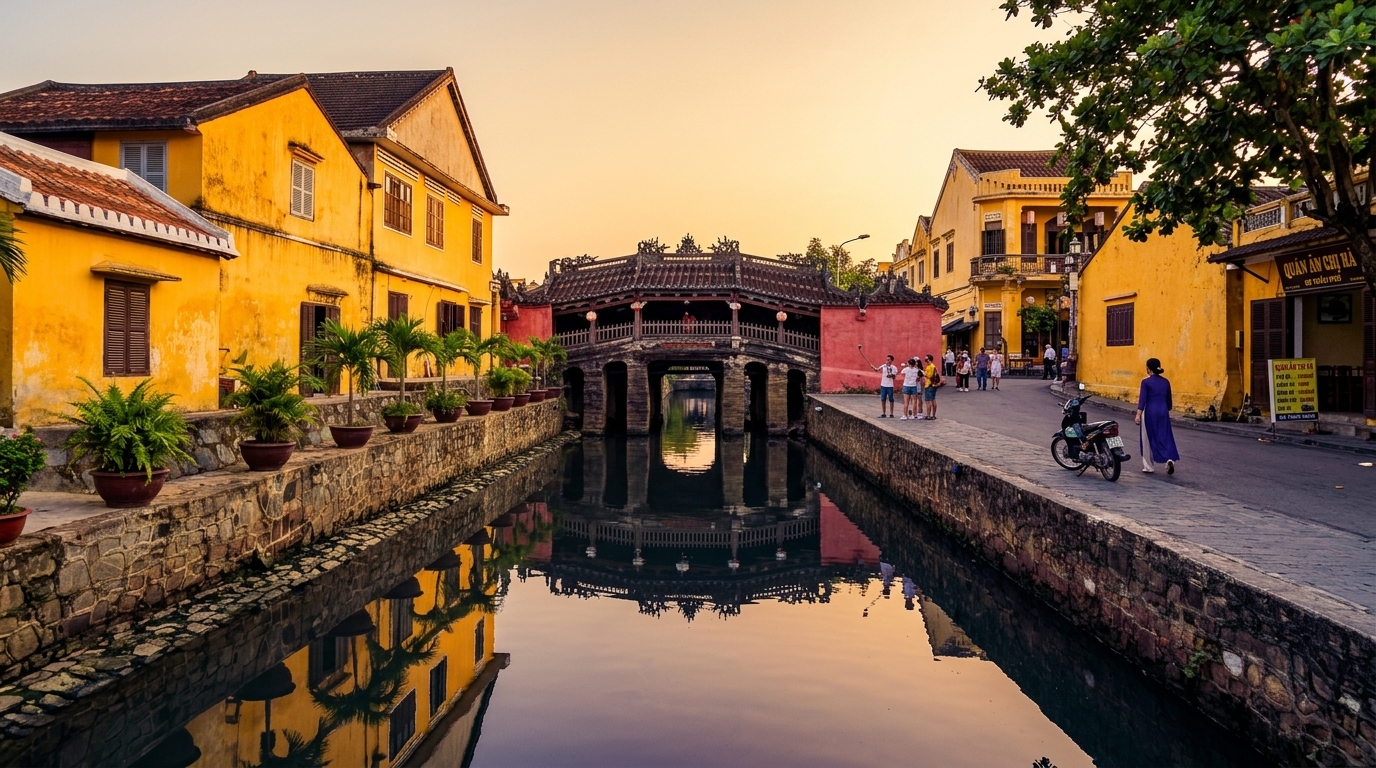
Japanese Covered Bridge (Chùa Cầu, say: chooa cow) — built in 1593 to connect the Chinese and Japanese merchant quarters. The timber interior smells of old incense and damp wood. Worth five minutes. Go early morning when the light comes in from the east and the bridge is empty enough to actually see the carved detailing on the railings.
Merchant houses — Tan Ky House and Phuc Kien Assembly Hall are the two most worth the ticket. Tan Ky is the more intimate: dark rosewood furniture, internal courtyard open to the sky, incense smoke curling in warm air. The family still lives here. You’ll walk through their dining room. That’s intentional — the line between museum and inhabited home is genuinely blurred, in a way that feels earned rather than staged.
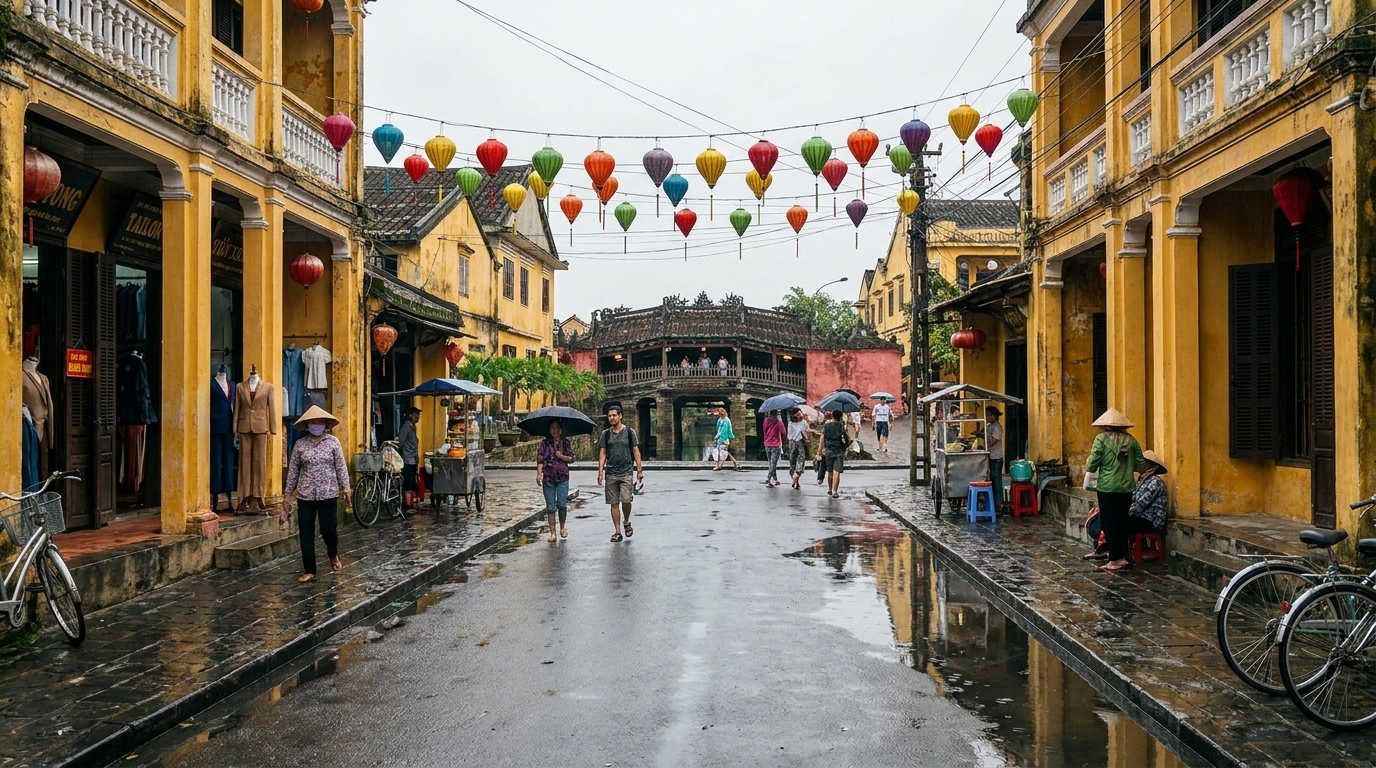
The timing is not optional. Before 9am: cool, relatively empty, the light turns the yellow walls gold. After 6pm: lanterns on, electric lights dimmed, the town transforms. Midday from roughly 11am–4pm is genuinely unpleasant — heat compounds on packed stone alleys, tour groups move in waves, street sellers get more aggressive with each pass.
The ideal sequence: Ancient Town before 8am, breakfast at a riverside spot, disappear for the middle of the day (beach, nap, tailor fitting), return at 5pm as the afternoon heat drops. The transition from daylight to lantern glow at dusk is one of the more earned travel moments in Southeast Asia. Worth the patience.
↗Insider Tip
The full moon Lantern Festival (14th of each lunar month) closes the main streets to motorbikes, kills the electric lights, and fills the Ancient Town with silk lantern glow and traditional music. It’s the version of Hoi An that earned the reputation. If your dates overlap, plan everything around it. If they don’t — any evening after 7pm is still significantly atmospheric.
Get Something Made — The Tailor Reality
Hoi An has over 500 tailor shops. The quality range is enormous. I know this because I’ve been on both ends of it.
My first attempt: two fittings in 48 hours, suit collected the morning I was leaving. The shoulders sat wrong. The jacket button broke after four wears. No time to go back. Expensive lesson in false economy — I paid $120 for something I donated six months later.
Here’s what actually works: allow 3 days and insist on 3 fittings. The first fitting is measurements and fabric selection. The second (24 hours later) catches cut issues before they’re permanently stitched in. The third is the final check before you pay. If a shop tells you they can do it in 24 hours with one fitting — they can. But the result reflects the time they spent on it.
Price guide (2026):
- Áo dài (say: ow yai — traditional Vietnamese dress): $25–80
- Women’s dress or blouse: $30–80
- Men’s suit: $80–200 for decent fabric; $200–350 for linen or wool-blend
- Men’s shirts: $15–40 each
- Trousers: $30–55
Bring reference photos. Bring a garment that fits well if you want it replicated. The tailors here are skilled at reverse-engineering cuts — they need something to work from. “I want something like this” plus a photo from your phone is more useful than any amount of describing.
Bà Lê Tailors on Trần Phú Street is consistently recommended by expats and repeat visitors. Not the cheapest. But the cut is right and they’ll tell you directly if a style doesn’t suit your build — which is exactly the kind of honesty worth paying for.
→Who It’s For
Custom tailoring is worth it if you’re in Hoi An for 3+ days with specific garments in mind. One-night stopover? Skip it — the rushed version disappoints every time. The best tailors will actually tell you this. If a shop is aggressively pushing same-day orders, that’s your signal to walk out.
The Hoi An Food Scene — Where to Actually Eat
Hoi An has three dishes you won’t find like this anywhere else in Vietnam. Not variations — the actual dishes as they’re meant to be eaten.
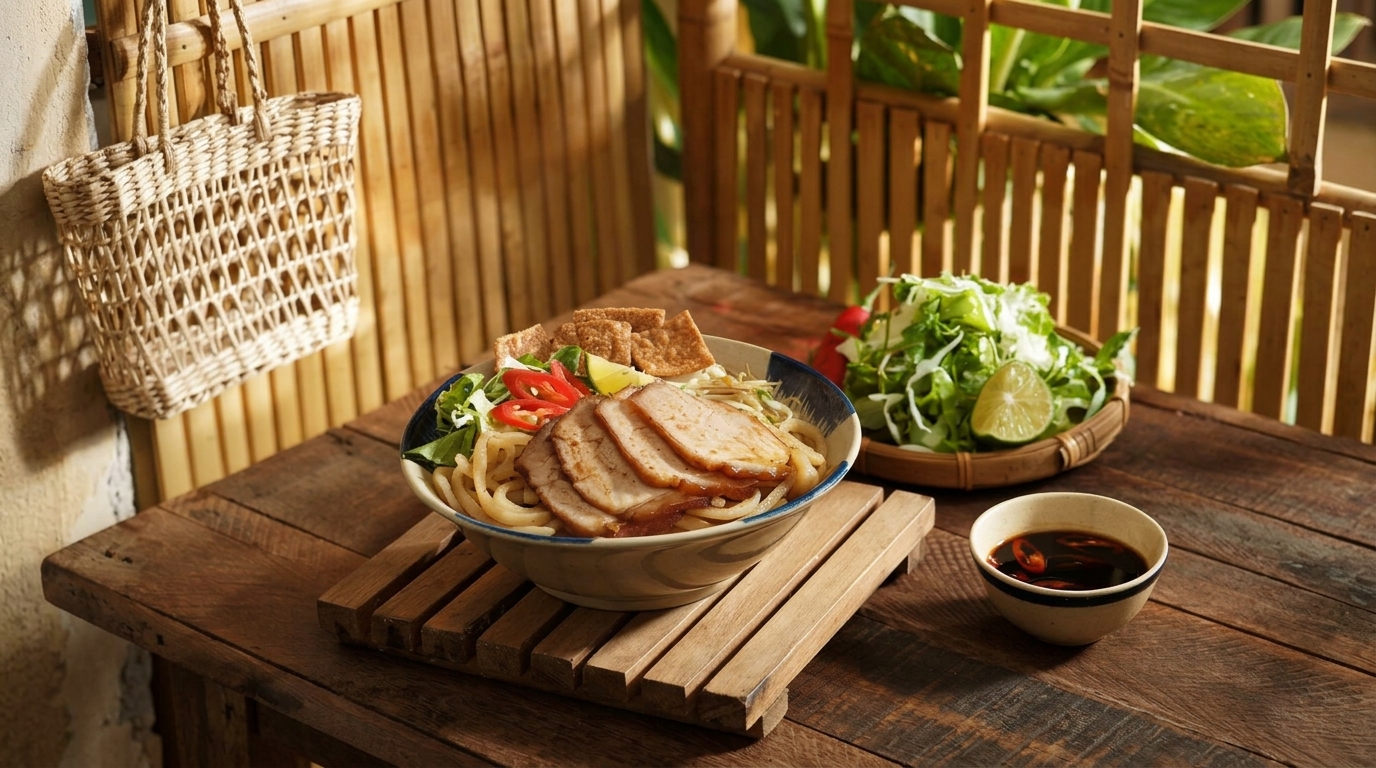
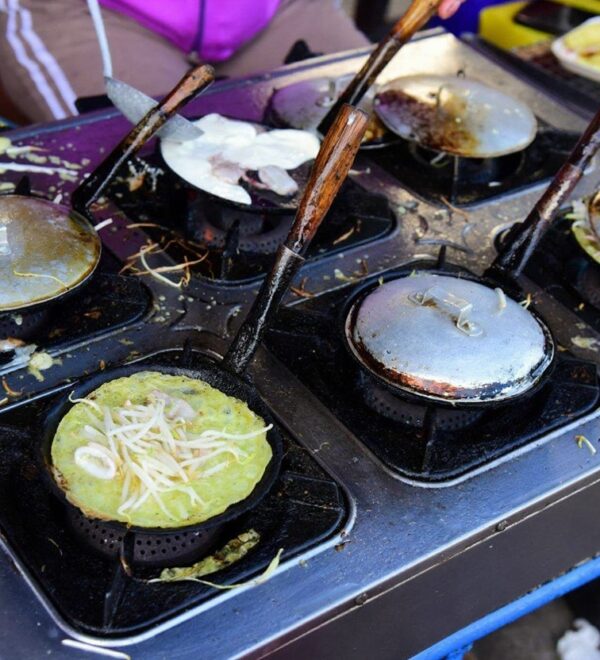
Cao Lầu (say: cow low) — thick chewy noodles with pork slices, bean sprouts, crispy rice crackers, and a small amount of dark broth. Traditionally made using water from the Bá Lễ Well and lye-processed local rice. You can order Cao Lầu in Hanoi — it won’t taste the same. The texture is completely different without the local water treatment. Trung Bac on Trần Phú Street is the most-cited local spot. Around 30,000–40,000 VND ($1.20–$1.60) a bowl.
Bánh Bao Vạc / White Rose Dumplings — translucent rice paper shaped into open roses, filled with shrimp, topped with crispy fried shallots. Made exclusively by one family in Hoi An and supplied wholesale to restaurants across the Ancient Town. Delicate, slightly sweet, nothing like standard Vietnamese dumplings. Around 35,000–60,000 VND ($1.40–$2.40) per plate.
Cơm Gà Hội An (say: gom ga hoy an) — Hoi An chicken rice. Shredded poached chicken over turmeric-yellow rice, fresh herbs, green papaya salad on the side. Chicken poached in stock and torn by hand — the texture is nothing like carved roast chicken. Bà Buội on Phan Chu Trinh Street is the most-cited local spot. Around 35,000–50,000 VND ($1.40–$2) a plate.
Hoi An Central Market on Trần Phú — opens at 5am. The produce section is the real thing: local vendors, live fish in plastic tubs, herbs bundled with rubber bands. Food stalls inside serve breakfast — Mì Quảng (turmeric-broth noodles with pork), Bánh Mì, fresh rice paper rolls — before the tourist foot traffic arrives. Come before 8am or don’t bother.
⚠Real Talk
The riverside restaurants on Bach Dang Street are beautiful and convenient. They’re also the most expensive places to eat in Hoi An with the least interesting food. One block back from the river: smaller, louder, cheaper, better. Distance from tourist foot traffic is directly correlated with quality-to-price ratio in this town.
Day Trips from Hoi An: My Son Sanctuary and An Bang Beach
My Son Sanctuary — a cluster of Cham Hindu temple ruins from the 4th–14th centuries, 40km from Hoi An. UNESCO listed. Red brick towers rising from jungle clearings, carved with Sanskrit inscriptions and relief sculptures of Hindu deities. Nothing else in Vietnam looks like this.

Entrance: 150,000 VND (~$6). Tour from Hoi An: typically $8–15 including transport, half day. Go at 7am. The tour bus convoy arrives at 9–10am. Midday at My Son is exposed, hot, and crowded — avoidable if you leave early. Bring water. Wear shoes, not sandals — the paths between temple clusters are uneven stone and compacted dirt.
An Bang Beach — 3km from the Ancient Town, quieter than Cua Dai, better beach food, less developed. Grab a sun lounger from one of the beach bars — free with a drink, around 20,000 VND without. The water is warm, waves are gentle, and the bánh mì carts on the road behind the beach do steady lunchtime trade. As good as any beach in Central Vietnam without the resort overhead.
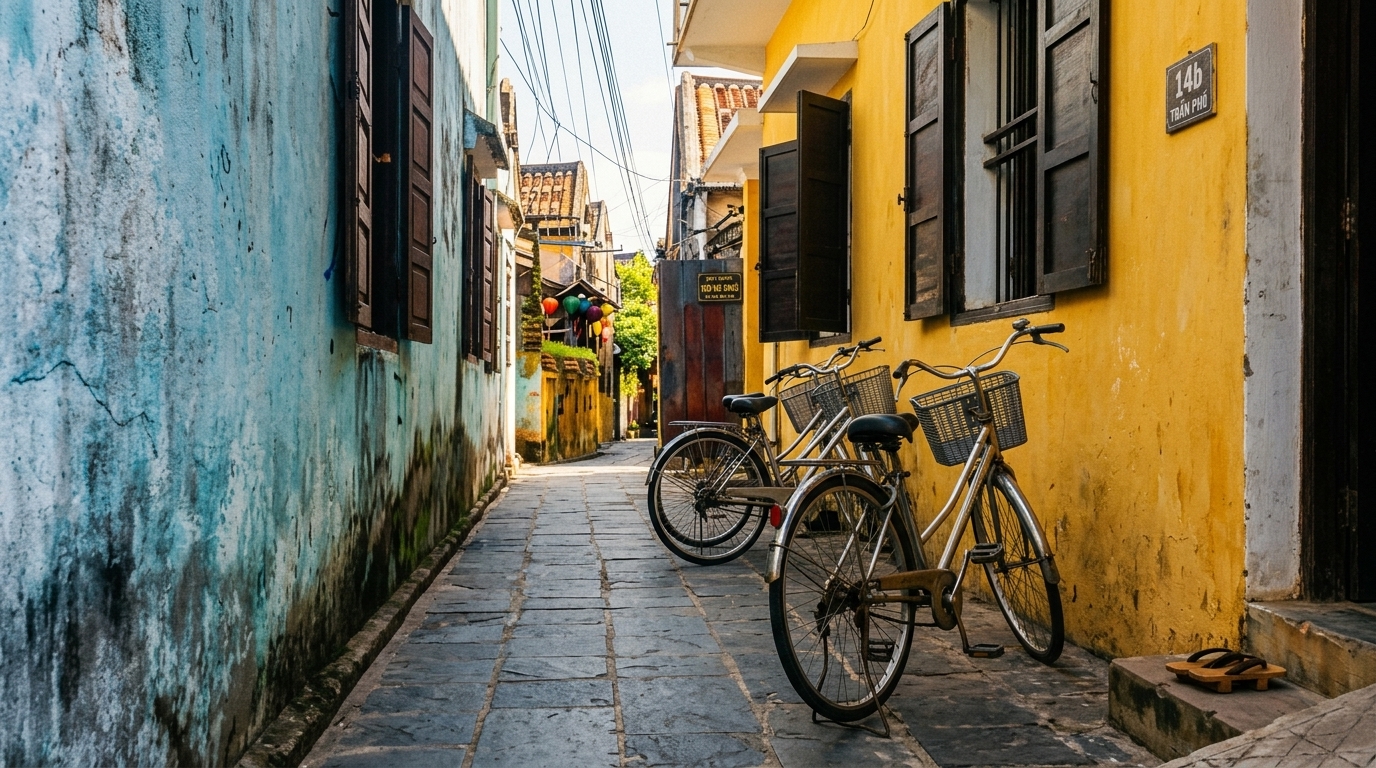
Getting there by bicycle: 50,000–70,000 VND per day rental, 20 minutes from Ancient Town. Hoi An is completely flat — the bicycle is the correct answer for almost everything in and around the town.
Cooking Class: Worth It Once
Hoi An’s cooking classes are genuinely good — not a tourist gimmick dressed up as cultural immersion. Most include a market visit, hands-on preparation of 4–6 dishes, and the meal at the end. Price range: $18–35 USD per person depending on group size.
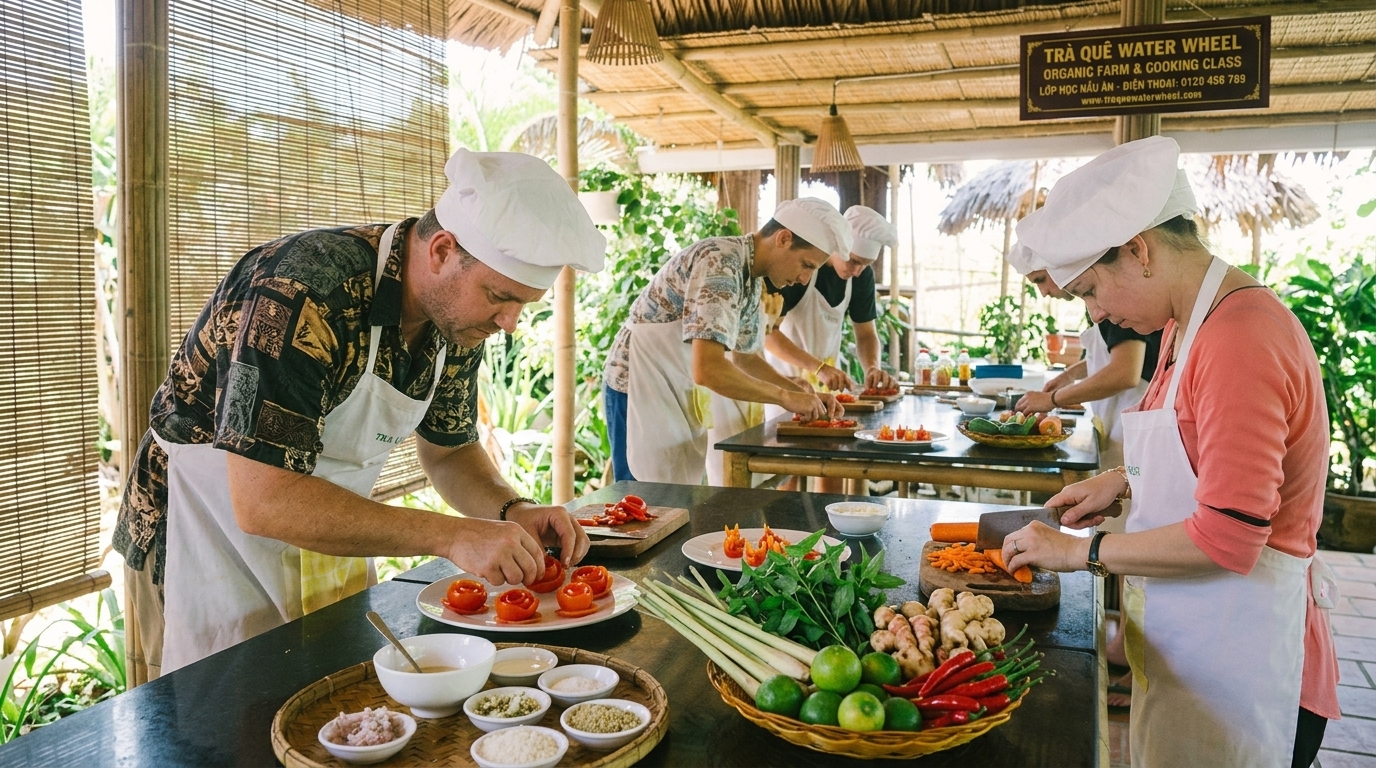
The format: morning market walk with a local guide who explains ingredients and how to pick fresh herbs (practically useful), then 2–3 hours cooking. You’ll make Cao Lầu, spring rolls, and usually one more complex dish. Practical teaching — you’re actually cooking, not watching a demonstration.
Red Bridge Cooking School and Morning Glory Cooking Class are the most consistently recommended. Morning Glory includes a short boat trip to the school — adds 30 minutes but the river approach is good. Book 24 hours ahead; popular sessions fill up by mid-afternoon the day before.
If you’ve done a cooking class elsewhere in Vietnam, the Hoi An format is similar enough that a second one adds diminishing returns.
Getting Around Hoi An
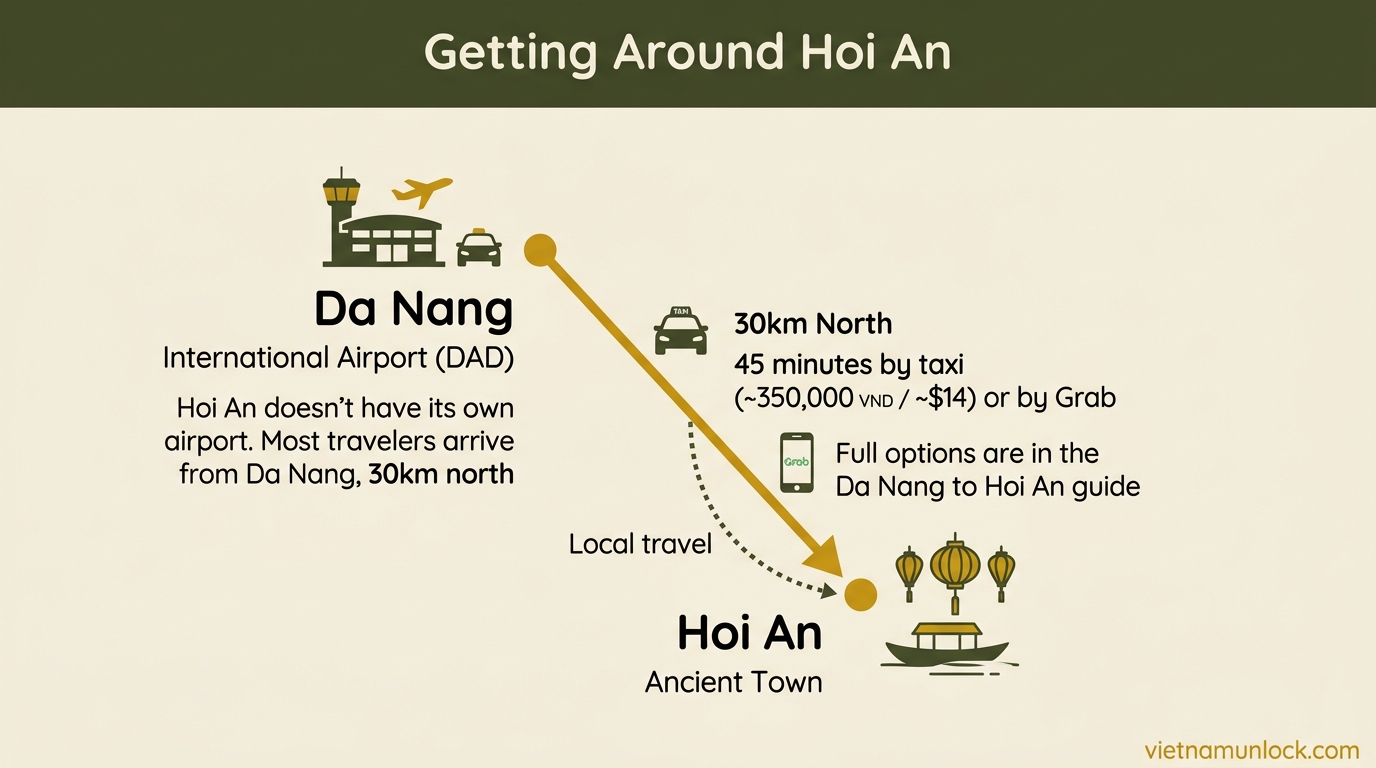
Hoi An doesn’t have its own airport. Most travelers arrive from Da Nang, 30km north — 45 minutes by taxi (~350,000 VND / ~$14) or by Grab. The full options are in the Da Nang to Hoi An guide.
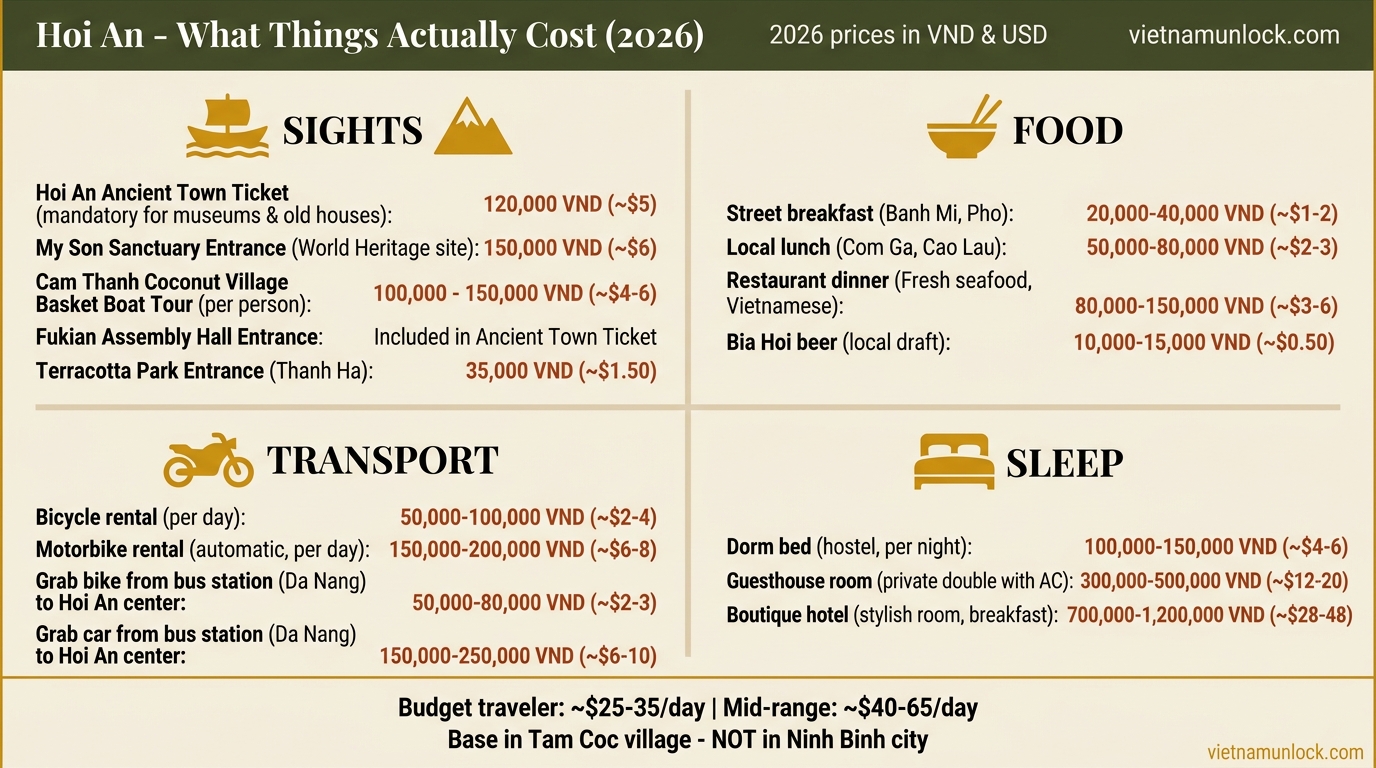
Within Hoi An, the bicycle solves almost everything. Flat town, short distances, rental shops on every main street at 50,000–70,000 VND per day. For My Son Sanctuary, book a half-day tour or negotiate a motorbike driver for the morning. For An Bang Beach, cooking school, tailor appointments — bicycle.
12Go covers most Vietnam routes — sleeper buses, trains, and island ferries. Compare schedules and book in advance during peak season (Dec–Feb, Jun–Aug).
Motorbikes are technically restricted in the Ancient Town core during peak hours. Enforcement varies, but the result is streets that feel more walkable than almost anywhere else in Vietnam — which is part of what makes the place work.
ℹKnow Before You Go
Hoi An Ancient Town floods during typhoon season (October–November). Some years ankle-deep water in the ground floors of merchant houses. The town still operates — locals use sandbags and waterproof sandals. Pack accordingly if visiting in this window. The flooded version of Hoi An has its own atmosphere; it’s different, not necessarily worse.
What to Skip (Or Manage Expectations For)
Hoi An Memories Land — large-scale cultural performance show on the south bank. Impressive production values. Authentically hollow content. Fine for a rainy-evening fallback; skip if you’re here for actual Hoi An.
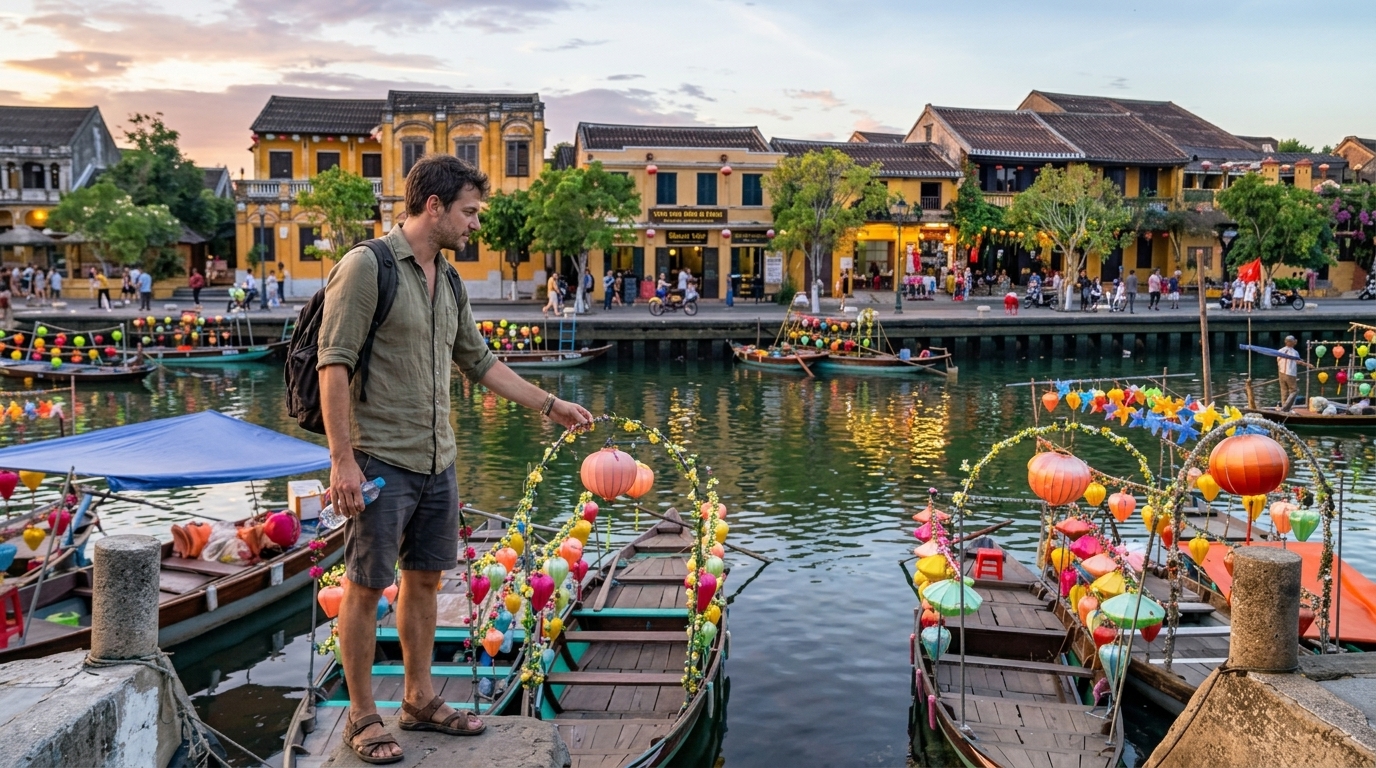
Lantern boat rides on the Thu Bon River — women float paper lanterns and charge 50,000–100,000 VND per lantern. Pretty for photos, heavily commodified in practice. The environmental impact of paper lanterns in the river is real; the town now sells reusable bamboo lanterns as an alternative.
Shopping on An Hoi Island — directly across the river from the Ancient Town. Mostly tourist souvenir stalls, identical silk goods at inflated prices, lantern shops with the same inventory. The Night Market is fine for a 20-minute wander; skip it as a shopping destination.
FAQ: Things to Do in Hoi An
How many days do you need in Hoi An?
Day 1: Ancient Town in the morning, My Son Sanctuary in the afternoon, lanterns by the river at 7pm. Day 2: cooking class in the morning, An Bang Beach in the afternoon. If you’re getting clothes made — start measurements on day 1 and collect on day 3. That’s the third day sorted.
Is the Hoi An tailor experience actually worth it?
Yes — with the right time commitment. Hoi An tailors can produce well-made custom garments at a fraction of what you’d pay at home. The failure mode is rushing: 24-hour orders tend to have fitting problems you don’t notice until you’re on a plane home.
When is the best time to visit Hoi An?
February to April is the clear answer — dry season, moderate temperatures, good morning light on the yellow walls. October–November is typhoon season: the town can flood. Still operational, but pack waterproof sandals and check conditions before arriving. July–August is peak crowds and peak heat — manageable with the timing rule (before 9am, after 6pm), rough if you ignore it.
Is the full moon Lantern Festival worth timing your trip around?
If you can overlap dates without contorting your whole itinerary — yes. The full moon festival (14th of each lunar month) closes the main streets to motorbikes, kills the electric lights, and replaces them with silk lanterns and traditional music. It’s the Hoi An that earned the reputation. Regular evenings after 7pm are still good — the festival is the magnified version.
Is My Son Sanctuary worth the half-day trip from Hoi An?
Yes, for most travelers. It’s the only Cham Hindu temple complex in Vietnam and the architecture looks like nothing else in the country. Go at 7am, allow 2 hours on site, return by noon. Skip it only if ancient ruins genuinely don’t interest you — it’s not a mainstream crowd-pleaser, it’s an honest niche.
Do I need a ticket to walk around the Ancient Town?
No — you can walk the streets, eat at restaurants, and look at the exteriors without a ticket. The 120,000 VND combined ticket covers entry to the named attraction interiors: Japanese Covered Bridge, Tan Ky House, Phuc Kien Assembly Hall, the Folk Museum. If you want to go inside those, buy it. If you’re satisfied with street-level wandering, you don’t need it.