I almost didn’t go to Ba Be Lake. I had Ha Giang booked, I had my route planned, and Ba Be was just a name on the map that kept appearing in “off-the-beaten-path” lists I half-ignored. Then a guy named Lộc — a Hanoi-based expat who’d lived there three years — told me over a Bia Hoi that Ba Be was “beautiful and the drive out from Hanoi is lush.” He wasn’t selling anything. That was enough.
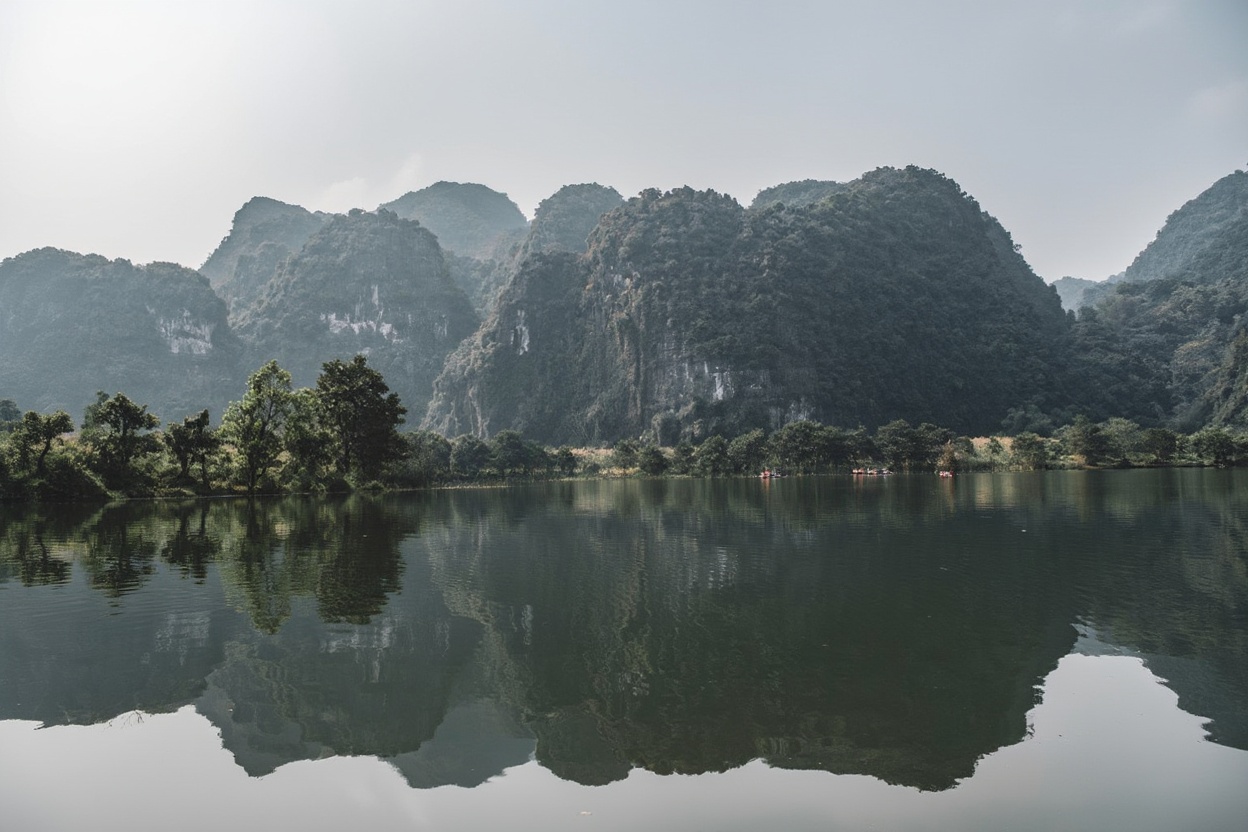
Ba Be is Vietnam’s largest natural freshwater lake. Not a reservoir, not a dam project — a real lake, carved by limestone karst geology in Bac Kan Province, 240 kilometers north of Hanoi. Three connected bodies of water (Ba Be literally means “Three Lakes” in Vietnamese: Ba = three, Be = lakes) covering 500 hectares, surrounded by national park forest, and home to Tay minority villages that have been on that water for centuries.
Most travelers don’t come. That’s the whole point.
Is Ba Be Lake Worth It?
> **Quick Answer:** Yes — if you want the opposite of Ha Long Bay. Same karst landscape, fraction of the tourists, zero floating villages selling overpriced beer. Budget 2 nights minimum. Most people come from Hanoi and use it as a stop on the way to Cao Bang or Ha Giang.
The honest comparison: Ha Long Bay has the name, the marketing, the cruise infrastructure. Ba Be has the actual stillness. The water is clear enough to see bottom in shallow sections. You can hear frogs at night. On a Tuesday morning in November, I shared the lake with two other boats — both Vietnamese fishing families.
What Ba Be offers that nowhere else in the north does: a real freshwater lake ecosystem, Tay village homestays for $15 a night (meals included), and a cave where thousands of bats pour out at dusk in a continuous stream that takes ten minutes to clear. It’s the kind of place that doesn’t need an itinerary — it needs two days of slowing down.
What Ba Be doesn’t offer: paved paths to every viewpoint, restaurant options beyond your homestay, or reliable WiFi. If those are dealbreakers, go somewhere else.
Where Is Ba Be Lake?
Ba Be Lake sits inside Ba Be National Park in Bac Kan Province — northeastern Vietnam, about 240km from Hanoi. The nearest town of any size is Cho Ra, 20km away. The province capital Bac Kan is 70km south. Cao Bang city, the gateway to Ban Gioc Waterfall, is about 70km northeast — which is why Ba Be works well as a stop on a Cao Bang loop itinerary.
The lake itself sits at roughly 145 meters above sea level, ringed by forested limestone mountains that top out around 1,554 meters (Phja Bjooc, the highest in the park). The forest is primary — not plantation — which is why the biodiversity numbers are serious: 233 bird species, 65 mammal species including bears, clouded leopards, and slow lorises, and over 550 plant species documented.
How to Get to Ba Be Lake from Hanoi
> **Quick Answer:** Sleeper bus is the standard move — 8 hours overnight, ~180,000 VND, arrives at Ba Be area in the morning. Private car takes 5–6 hours and runs $80–120. Motorbike is doable and spectacular but commits most of a day each way.
See our full Hanoi to Ba Be Lake transport guide for bus companies, departure points, and what the journey actually looks like. The short version:
12Go covers most Vietnam routes — sleeper buses, trains, and island ferries. Compare schedules and book in advance during peak season (Dec–Feb, Jun–Aug).
- Sleeper bus: Hung Thanh or Thanh Binh buses leave from Giap Bat or My Dinh stations. Overnight departure around 9–10pm, arrives near the lake by 5–6am. Cheapest option at 160,000–200,000 VND. Bring warm layers — the bus AC goes hard.
- Private car/minivan: Booked through your Hanoi hotel or Grab. 5–6 hours on decent roads. $80–120 depending on vehicle. Best option for groups of 3–4 splitting the cost.
- Motorbike: 240km, manageable in a day. Highway 3 to Bac Kan then smaller roads to Cho Ra. The last 20km into the park are winding limestone valley — genuinely good riding. Allow 6–7 hours including stops.
- No train: No rail access. Don’t look for it.
From Ba Be, onward transport to Cao Bang takes about 2 hours via mountain road. To Ha Giang: no direct bus — you go through Thai Nguyen, which adds most of a day.
What to Do at Ba Be Lake
The full breakdown is in our Ba Be Lake things to do guide. Here’s the structure of a 2-night visit:
Boat Trip on the Lake
The baseline activity — and the right one to start with. Long wooden boats with outboard motors take you across the main lake bodies, through narrow channels between karst formations, past floating vegetation islands that drift with the seasons. The boat operators from Pac Ngoi village know where the light hits best in the morning.
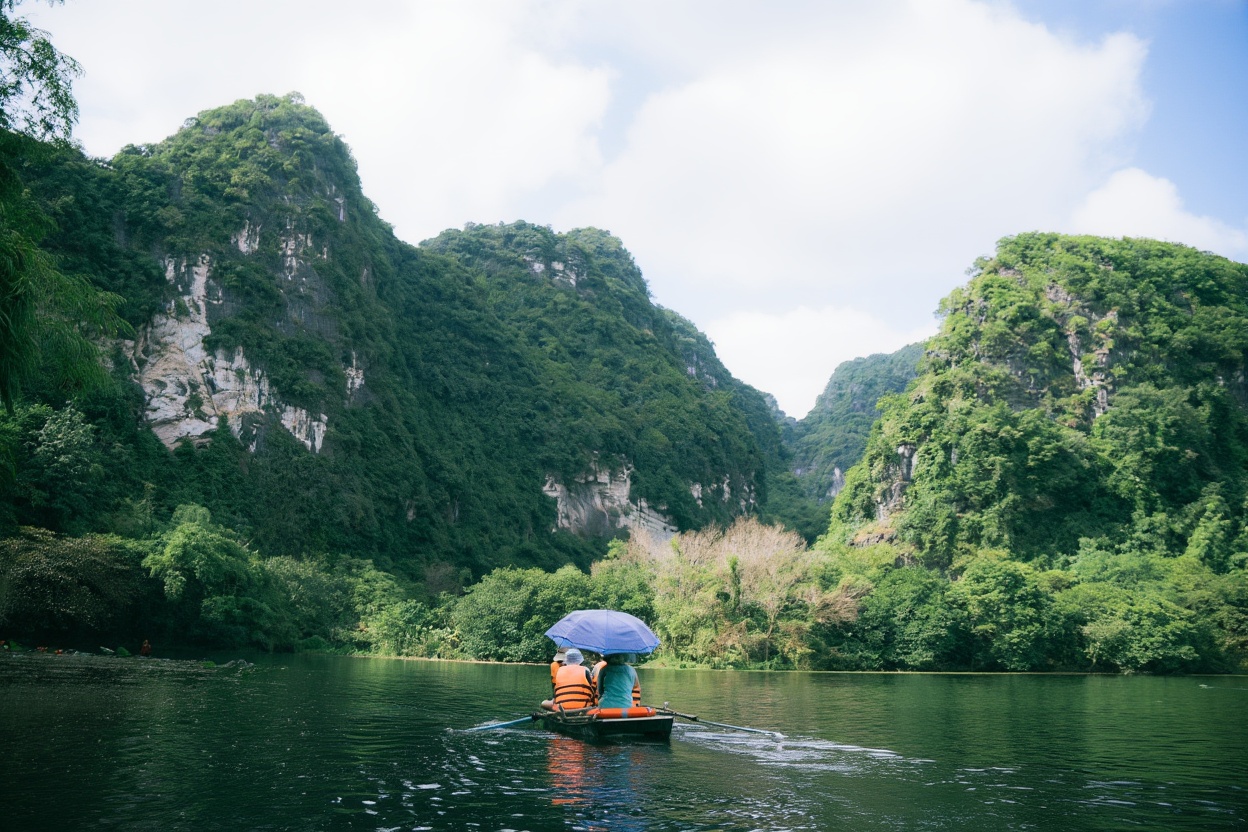
The standard full-day lake tour covers: Puong Cave, Widow Island (An Ma Island), Dau Dang Waterfall, and a Tay village stop. About 5–6 hours on the water. You can also book half-day versions that skip one or two stops.
Boat hire options:
- Join a group tour: 200,000–250,000 VND per person (minimum 4–6 people)
- Private boat: 600,000–900,000 VND for the whole boat (fits 6–8 people)
- Kayak rental: 100,000–150,000 VND/day — best for independent exploration of the shoreline channels
Book through your homestay the night before. The lake operators are all registered with the national park.
Puong Cave
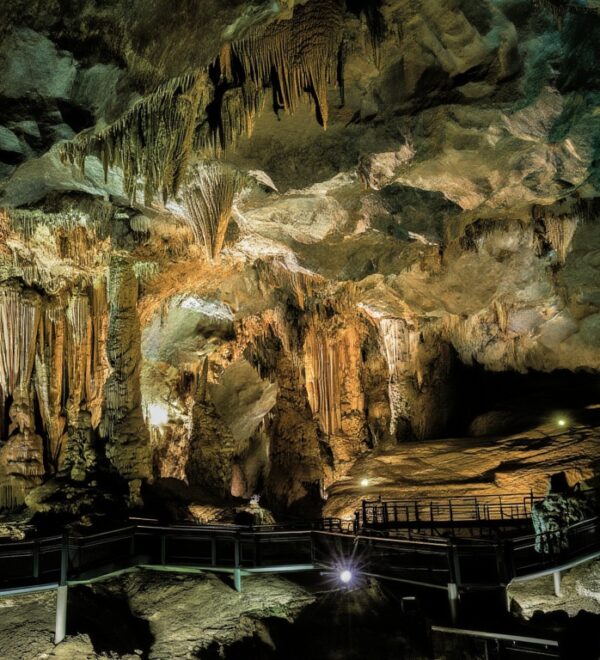
A limestone cave that a river runs through — you enter by boat, pass through a 300-meter passage with stalactites hanging low over the water, and exit the other side. Standard cave, decent stalactite formations. The reason to care: at dusk, approximately half a million bats exit the cave in a continuous stream. It takes a full ten minutes for the column to clear. You hear them before you see them — a white noise that builds until the sky is moving.
Puong Cave is part of the standard lake tour. Entrance included in national park fee. Go for the bats, not the geology.
Dau Dang Waterfall
At the southern end of the lake where the Nang River enters. The waterfall is a series of limestone step cascades about 30 meters wide — not dramatic height, but wide enough that you can walk across rocks at the base and feel the mist on your face. Best after the rainy season (September–November) when water volume is high. In dry season (March–April) it’s still photogenic but calmer.
I made the mistake of going in choppy post-rain water — the boat rocked enough that I got genuinely queasy on the approach. If you’re prone to motion sickness, sit in the middle of the boat and look at the horizon, not your camera.
Pac Ngoi Tay Village
The main homestay village, accessible by boat or a 3km walk from the park entrance. Stilt houses on the lakeshore, mostly Tay ethnic minority families. The village has around 100 households — a few dozen now offer registered homestays. It’s not a performance village set up for tourists. People grow rice, fish the lake, and let travelers sleep in their spare rooms.
Evening in Pac Ngoi: a dinner of lake fish, morning glory, sticky rice, and whatever vegetables are growing that week. The host families don’t speak much English. Bring a translation app and patience, or come with a Vietnamese-speaking travel companion.
Trekking
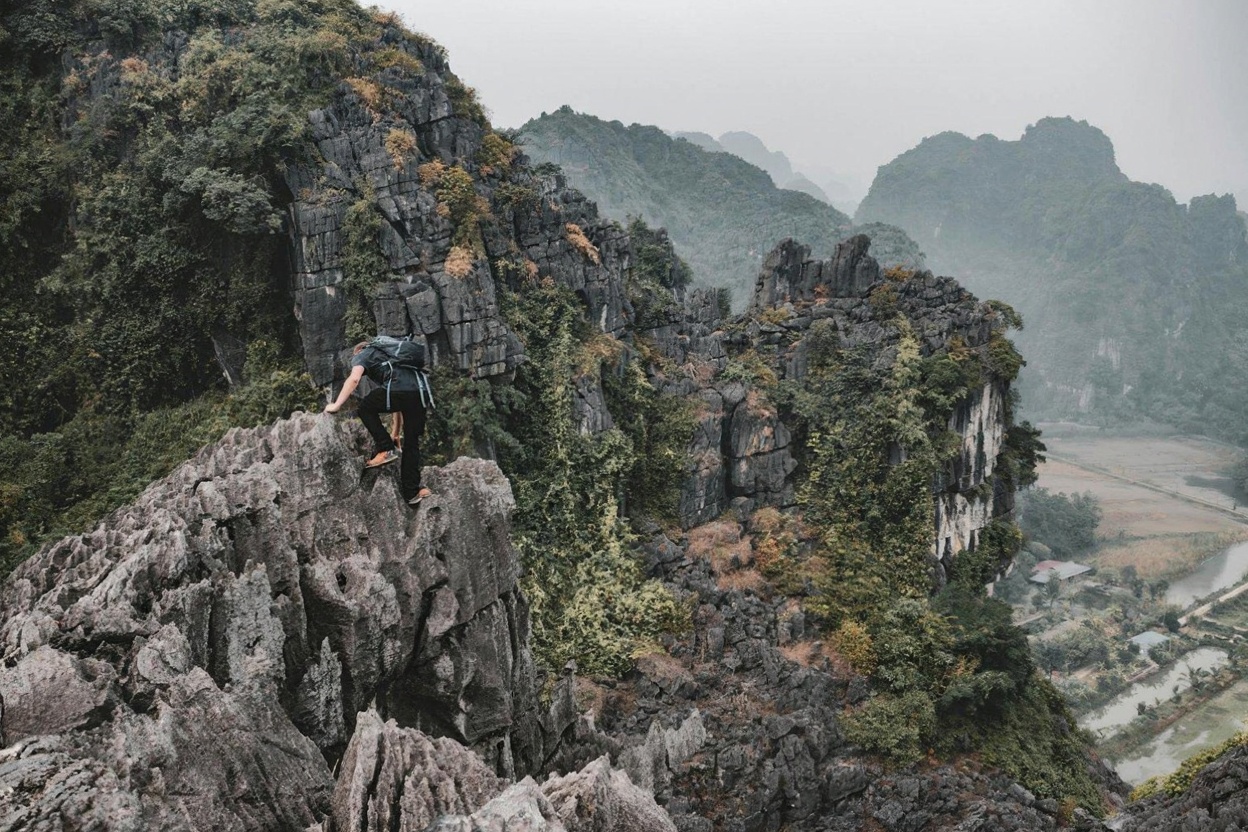
The national park has marked trails ranging from 3km to 15km. The ridge trails above the lake give you the view you came for — the water through forest, the villages at the edge. Hire a guide from the park (100,000–200,000 VND/half day) if you’re going deeper than the lake-view trail. The forest is genuinely dense and the paths aren’t always obvious.
Best dawn walk: the ridge above Pac Ngoi, 45 minutes from the village, for lake views at sunrise when mist hangs over the water.
Where to Stay at Ba Be Lake
> **Quick Answer:** Pac Ngoi village homestays are the move — $12–20/person/night, includes dinner and breakfast, run by Tay families on the lakeshore. The national park guesthouse is a fallback if you want your own bathroom and don’t care about atmosphere.
Ba Be Lake Accommodation: What Things Cost
| Type | Price/Person/Night | What’s Included |
|---|---|---|
| Pac Ngoi homestay (basic) | 250,000–350,000 VND (~$10–14) | Mattress on floor, mosquito net, dinner + breakfast |
| Pac Ngoi homestay (bed room) | 350,000–500,000 VND (~$14–20) | Bed, fan, dinner + breakfast |
| Ba Be National Park Guesthouse | 400,000–600,000 VND (~$16–24) | Private room, hot shower, no meals |
| Eco-lodge (limited options) | 700,000–1,200,000 VND (~$28–48) | En-suite, lake view, breakfast |
Prices approximate as of 2025-2026. Homestay prices include full board and are per person. National park guesthouse near park HQ, 5-min walk from boat dock.
ater still high from rainy season, cool weather, lush vegetation, mist on the water in the morning. March–April works well too. Avoid July–August peak rainy season when flooding can close trails.
Ba Be Lake — Month by Month
| Month | Weather | Verdict |
|---|---|---|
| Jan–Feb | Cold (8–15°C nights), misty, dry | Atmospheric but bring real layers. Tet crowds in Feb |
| Mar–Apr | Warming up, dry, clear water | Good visibility, pleasant trekking temps |
| May–Jun | Getting hot, rainy season starts | Manageable — some trails muddy |
| Jul–Aug | Heavy rain, occasional flooding | High risk — some areas inaccessible |
| Sep–Oct | Rain tapering off, water high | October is excellent — full waterfall, rich green |
| Nov–Dec | Cooler, drying out, clear mornings | November peak. December cold, quiet, beautiful |
The elevation at 145 meters means Ba Be doesn’t get the extreme heat of the lowlands in summer, but it also means it gets genuinely cold in December and January — cold enough that sleeping in an unheated stilt house with a single blanket is rough. If you’re going in winter, ask the homestay in advance about bedding.
Ba Be Lake National Park: Entry Fees and Logistics
Ba Be Lake — Costs at a Glance
| Cost | Price |
|---|---|
| National Park entrance fee | 80,000 VND/adult (~$3.20) |
| Boat tour (join group) | 200,000–250,000 VND/person |
| Private boat hire | 600,000–900,000 VND/boat |
| Kayak rental | 100,000–150,000 VND/day |
| Trekking guide | 100,000–200,000 VND/half day |
| Homestay (with meals) | 250,000–500,000 VND/person |
2025–2026 prices. Park entrance paid at gate on arrival. Boat hire through homestay or directly at Pac Ngoi dock.
There’s no ATM in Pac Ngoi village. Cho Ra town (20km away) has a Vietcombank ATM. Bring cash for everything — entrance fee, boat hire, homestay. The homestay families don’t take card.
Phone signal: weak to nonexistent in Pac Ngoi. Viettel has marginally better coverage than the other carriers in this area. Download offline maps (Google Maps, Maps.me) and your translation app before leaving Cho Ra.
Ba Be Lake + Cao Bang: The Northeast Loop
The smartest way to visit Ba Be Lake is as part of a northeast Vietnam circuit, not as an out-and-back from Hanoi. The standard loop:
Northeast Vietnam Loop — 5–6 Days
| Day | Route |
|---|---|
| Day 1 | Hanoi → Ba Be Lake (sleeper bus overnight, or drive) |
| Day 2 | Ba Be Lake boat tour, Puong Cave, Dau Dang Waterfall |
| Day 3 | Morning trekking + Pac Ngoi village → afternoon drive to Cao Bang |
| Day 4 | Cao Bang: Pac Bo historic site, Phong Nam Valley, Thang Hen Lake |
| Day 5 | Ban Gioc Waterfall + Nguom Ngao Cave |
| Day 6 | Return to Hanoi (bus or car) |
This loop works in either direction — some people prefer starting in Cao Bang (ban gioc first, lake second). The Ba Be → Cao Bang road is mountain highway through Bac Kan Province, about 2.5 hours in good conditions. See our Cao Bang travel guide for the full picture on what to do once you’re there.
Klook has the widest selection for Vietnam and is usually the cheapest. KKday is strong on day trips and local experiences.
g — these are different experiences — but the question comes from a real place: if you have limited time in the north, where does Ba Be fit versus the obvious choices?
| Ba Be Lake | Ha Long Bay | |
|---|---|---|
| Crowds | Very low (mostly Vietnamese weekenders) | High — cruise industry scale |
| Scenery type | Freshwater lake, forest, caves | Salt water bay, limestone islands |
| Accommodation | Village homestays | Cruise boats, Cat Ba island hotels |
| Budget | $20–40/day all-in | $40–150/day depending on cruise quality |
| Getting there | Harder (no direct tour infrastructure) | Easy (endless tour packages from Hanoi) |
| Wildlife | Real biodiversity (birds, bats, forest) | Mostly scenic geology |
| Who it’s for | Travelers who’ve seen the highlights | First-timers, anyone who wants the iconic image |
If it’s your first time in Vietnam and you have 10 days: do Ha Long Bay. If you’ve been before, or if “boat + limestone + village” sounds better than “cruise + floating bar + selfie spot,” Ba Be is the one.
Real Talk: What Ba Be Lake Is Actually Like
The lake is genuinely quiet on a weekday. The forest is thick enough that you forget how close you are to rice fields. The boat operators from Pac Ngoi are competent and calm — no hard sells, no performance. The homestay dinner will probably be the best meal of the trip: lake fish grilled over charcoal, morning glory with garlic, sticky rice, a bottle of rice wine that appears after the meal whether you asked for it or not.
What nobody warns you about: the road in. The last 20km from Cho Ra to the park entrance is narrow mountain road with trucks coming the other way. If you’re on a motorbike, it’s great. If you’re in a car, it’s fine but slow. If you’re on a bus, pray the driver knows the road (he does).
The other thing: bring insect repellent. The lake at dusk is beautiful. The mosquitoes at dusk are also beautiful in their own way, and they are hungry.
One expat who’d lived in Hanoi three years summed it up on a Vietnam forum: “Ba Be lake is beautiful and the drive out from Hanoi is lush.” It’s not a quote that makes a tourism brochure. It’s the kind of thing someone says when they mean it.
What to Pack for Ba Be Lake
Ba Be Lake is not a gear-intensive destination, but it has specific requirements that catch people out.
Insect repellent: Non-negotiable. DEET-based, applied at dusk, reapplied if you’re near the water after dark. The lake ecosystem is rich in birdlife and bat colonies — and mosquitoes. The repellent you find at Cho Ra town convenience stores is fine; the stuff sold at Pac Ngoi homestays is also fine. But having it at dusk, not scrambling for it, matters.
Warm layers for evenings: The lake sits in a valley. Temperatures drop faster than you expect when the sun goes behind the ridgeline. October through March: a fleece or light down jacket for after 6pm. July and August are hot enough that you won’t need this.
Waterproof layer: Even in the dry season, afternoon rain showers happen. The boat tours offer no cover. A lightweight packable rain jacket takes up no space and saves a miserable afternoon.
Cash: No card machines in Pac Ngoi. Bring enough for: entrance fee (80,000 VND), boat hire, homestay nights, and a buffer. The Vietcombank ATM in Cho Ra is 20km away and occasionally out of service.
Offline maps: Download the Ba Be National Park area on Google Maps or Maps.me before leaving Hanoi. Mobile data disappears in the valley. The trail system isn’t signed consistently enough to navigate blind.
Shoes with grip: The trekking trails are limestone — slippery when wet, sharp when dry. Trail runners or light hiking shoes. Flip flops for the boat and the village; something with grip for the forest.
See the full Vietnam packing list for the broader gear picture — but for Ba Be specifically, insect repellent and cash are the two things that will ruin your trip if you don’t have them.
Ba Be Lake FAQ
How many days do you need at Ba Be Lake?
Two nights is the minimum. One night is possible but you’ll spend most of it traveling. Two nights gives you: one full day on the water (boat tour, Puong Cave, Dau Dang), one morning for trekking or kayaking, and time to actually sit still for an hour without feeling rushed.
Can you visit Ba Be Lake without a tour?
Yes. Book transport independently (sleeper bus or private car), book a homestay directly in Pac Ngoi through your Hanoi hotel or via phone, and arrange the boat through the homestay. You don’t need a tour agency — the boat operators at the dock in Pac Ngoi will sort you out. Vietnamese is helpful; English is rare this far north.
Is Ba Be Lake safe?
Straightforwardly yes. The national park is well-managed. The boat operators are experienced. The main risks are practical: motion sickness on choppy water, mosquitoes at dusk, and cold nights in winter. No crime concerns specific to Ba Be.
What’s the difference between Ba Be Lake and Ba Be National Park?
Ba Be Lake is the lake. Ba Be National Park is the protected area surrounding it — 7,610 hectares of limestone forest. The park encompasses the lake plus the surrounding mountains, caves, rivers, and villages. When people say “Ba Be,” they usually mean the whole park experience, not just the water.
Can you swim in Ba Be Lake?
Yes, in parts of it. The water is clean by Vietnamese standards. The homestay operators can point you to good swimming spots — the deeper lake sections are cleaner than the shallower river approaches. Avoid swimming near the waterfall approach channels where motor boats pass regularly.
Is there WiFi at Ba Be Lake?
Some homestays have WiFi — expect slow and intermittent. Mobile signal in Pac Ngoi is weak. Plan for 2 days of low connectivity. Download maps, translations, and anything you need before leaving Cho Ra town.
Ba Be Lake Planning Cheat Sheet
Ba Be Lake — Quick Reference
| Category | Details |
|---|---|
| Location | Bac Kan Province, 240km north of Hanoi |
| Best time to visit | October–November (peak) or March–April |
| Minimum time needed | 2 nights |
| National Park entrance | 80,000 VND/adult |
| Boat tour (group) | 200,000–250,000 VND/person |
| Homestay with meals | 250,000–500,000 VND/person/night |
| Transport from Hanoi | Sleeper bus: ~180,000 VND | Private car: $80–120 |
| ATM | Cho Ra town (20km from lake) — bring cash |
| Mobile signal | Weak — Viettel best option |
| Onward to Cao Bang | ~2.5 hours via mountain road |

Planning Cheat Sheet
| Getting There | ** Sleeper bus is the standard move — 8 hours overnight, ~180,000 VND, arrives at Ba Be area in the morning. Private car takes 5–6 hours and runs $80– |
|---|