
Da Nang International Airport (DAD) is the best airport experience in Vietnam. That’s a low bar — Vietnam’s airports are variable — but Da Nang legitimately earns it. It’s small, modern, close to everything in central Vietnam, and the immigration queue moves faster than Saigon or Hanoi.
Most travelers fly into Da Nang for one of two reasons: to explore Da Nang itself, or to get to Hoi An (30km south). The airport handles both routes well, and the transfer options are simpler than what you deal with in either Saigon or Hanoi.
Here’s everything from wheels down to hotel lobby.
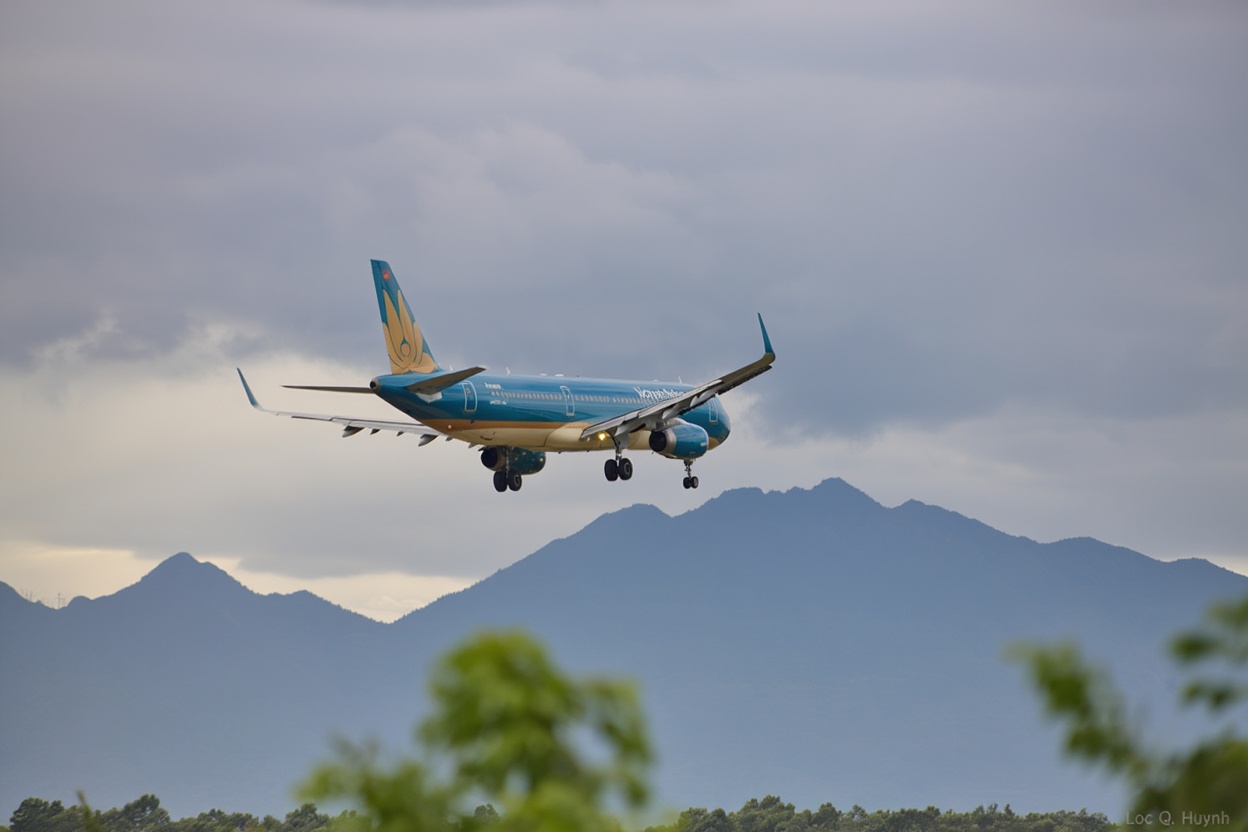
Da Nang Airport — Quick Facts
| Airport code | DAD (Da Nang International Airport) |
| Distance to Da Nang city | ~3km to city center |
| Distance to Hoi An | ~30km (~45–60 min) |
| Distance to Hue | ~100km (~2 hours) |
| Travel time to Da Nang city | 5–15 minutes by Grab/taxi |
| Grab to city | 60,000–120,000 VND (~$2.50–5) |
| Grab to Hoi An | 350,000–500,000 VND (~$14–20) |
| Bus to Hoi An | ~35,000 VND (orange bus, every 20–30 min) |
| Fast track service | Available — pre-book via agents (~$25–40/person) |
Why Da Nang Airport Works Better Than Expected
A few things make Da Nang airport easier than Vietnam’s other major airports.
First, the distance. The airport is about 3km from central Da Nang — the closest airport-to-city relationship in Vietnam. A Grab to your hotel in My Khe beach area or the downtown promenade costs under $5 and takes under 15 minutes outside rush hour. Compare that to Tan Son Nhat (6km, 15–60 minutes in Saigon traffic) or Noi Bai (30km, 45–90 minutes from central Hanoi). Da Nang is genuinely convenient.
Second, the scale. Da Nang airport handles far fewer passengers than Saigon or Hanoi. Immigration queues are shorter. Baggage claim is faster. The terminal is newer and better signposted. First-time arrivals don’t feel like they’re navigating a bureaucracy designed to confuse them.
Third, the positioning. Da Nang is the hub for central Vietnam — it’s where you land to reach Hoi An, Hue, Phong Nha, and the Hai Van Pass. Landing in Da Nang rather than Hanoi and bussing south, or landing in Saigon and flying up, saves hours of transit on a Vietnam itinerary. More travelers are choosing to fly into Da Nang specifically, and the airport has scaled to serve them.
Getting from Da Nang Airport to the City
> **Quick Answer:** Grab is the easiest option — 60,000–120,000 VND ($2.50–5), 10–15 minutes to most central Da Nang hotels. The pickup area is straightforward outside the arrivals exit. No major scam situation like Saigon; the airport is small enough that the chaos is managed.
Da Nang’s airport-to-city transfer is simpler than Saigon’s. The airport is small, the exit is straightforward, and the unofficial taxi scam scene is less aggressive than what you encounter at Tan Son Nhat.
Grab (recommended): Same principle as everywhere in Vietnam — download the app before your flight, set up payment, and book from the arrivals exit. The Grab pickup area at Da Nang airport is clearly signed. Price to central Da Nang or My Khe Beach: 60,000–120,000 VND depending on exact destination and time of day. A Grab motorbike (GrabBike) is even cheaper at 25,000–50,000 VND if you’re traveling solo with a day pack.
Taxi: Metered taxis from the official rank work fine. Reliable brands in Da Nang: Tiên Sa (blue), Đà Nẵng Taxi, VinaSun (if you see them). Don’t accept offers from drivers approaching you in the terminal — use the official rank outside. Price to city center: 70,000–120,000 VND.
Hotel pickup: Many Da Nang hotels offer free or paid airport pickup, especially the beachfront resorts. Worth checking before you book — if the hotel is on the beach and offers free transfer, it removes one variable from arrival day.

City bus: Da Nang has a public bus network. Routes connecting the airport area to central Da Nang exist, but they’re less straightforward for arrivals with luggage than Grab or taxi. If you’re committed to the budget option and have time, check the current route map via Google Maps after you get a SIM card in the arrivals hall.
Da Nang Airport to Hoi An: The Route Most Travelers Actually Need
> **Quick Answer:** Most travelers fly into Da Nang specifically to reach Hoi An. Grab car costs 350,000–500,000 VND and takes 45–60 minutes. The small orange bus from Đống Đa Street costs 35,000 VND and runs every 20–30 minutes but requires getting to the stop first.
Hoi An doesn’t have its own airport. The nearest is Da Nang. This means most people flying into Da Nang are actually headed 30km south, and the Da Nang airport-to-Hoi An route is one of the most-traveled transfers in central Vietnam.
Grab to Hoi An: 350,000–500,000 VND (~$14–20), 45–60 minutes. This is confirmed by multiple Reddit travelers. One: “I see that the cost of the trip on Grab is roughly 350K VND to 500K VND for the trip.” This is the standard price for a direct Grab from the airport to Hoi An Ancient Town. Book it from the airport arrivals area — most Da Nang drivers accept the route without issues.
One Reddit insight worth knowing: “I take Grab 1 time, exchange phone number. From there he’s my driver around Hoi An, Danang, 200k anywhere in the area.” — If you find a reliable driver on your first Grab in the region, exchanging WhatsApp numbers and booking him directly for future trips often works out cheaper than app prices. Drivers prefer it because they don’t pay Grab’s commission.
Orange bus (Da Nang → Hoi An): There’s a small orange bus running the Da Nang–Hoi An route for 35,000 VND (~$1.40). It runs every 20–30 minutes from the city, not from the airport directly. To use it: take a Grab to Đống Đa Street (or the main Da Nang bus stop) first, then catch the orange bus south. Total cost: Grab to bus stop (~40,000 VND) + bus (35,000 VND). Total time: 90 minutes+ with the connection. Worth it if you’re on a very tight budget; Grab direct is worth the extra $10 if you’ve just landed.
Private transfer to Hoi An: 250,000–400,000 VND for a pre-booked car, slightly less than Grab if you negotiate with a local driver. Hotel shuttles to Hoi An are common and often reasonably priced — check what your Hoi An accommodation offers before landing.
Da Nang Airport Fast Track: What It Is and Whether It’s Worth It
> **Quick Answer:** Fast track is a pre-booked VIP immigration service that puts you in a shorter, priority lane. Costs $25–40 per person through booking platforms. Worth it when the airport is busy (peak season, peak hours) and you have a tight connection. Overkill for most off-peak arrivals when the standard queue moves in under 20 minutes.
Da Nang Airport Fast Track is a legitimate service, not a scam. It’s offered by several booking platforms (Klook, Get Your Guide, local transfer companies) and provides you with:
- A meet-and-greet representative at the gate or immigration area
- Priority lane access through immigration and customs
- Faster baggage claim processing (sometimes)
- Sometimes includes a transfer to your hotel
Price range: $25–40 per person for immigration assistance only; $35–60 per person for fast track plus transfer. Book in advance — these services need your flight details before you land.
When fast track is worth it:
- Peak season (February–April, July–August) when multiple international flights land simultaneously
- If you have a domestic connection within 2 hours
- Group travel where getting everyone through quickly matters
- If you’ve had consistently bad immigration experiences at other Vietnamese airports
When fast track is not worth it:
- Off-peak arrivals — Da Nang immigration at a quiet midweek midday can move in under 15 minutes without any priority service
- If your time at Da Nang airport is measured in days, not hours
- Solo travelers arriving outside peak hours — the standard queue is genuinely manageable
One TripAdvisor reviewer who went through Da Nang immigration without fast track: “Yes there were about 20 people in each queue but it took less than 20 minutes to get through. Far faster than Thai immigration, no questions.” That experience is typical for off-peak arrivals. It’s not Changi Airport, but it’s not Saigon during Tet either.
Inside the Airport: Layout and Facilities
Da Nang International Airport has one main terminal building handling both international and domestic flights, though they use separate sections. Unlike Saigon’s two-terminal split (T1 international, T2 domestic), Da Nang’s layout keeps everything under one roof — which simplifies domestic connections considerably.
Arrivals hall: After clearing immigration and collecting bags, you exit into a single arrivals area where you’ll find SIM card counters, ATMs, currency exchange, and the taxi/transfer desks. It’s compact and well-signposted in English. First-time arrivals who’ve done Saigon or Hanoi typically comment on how much calmer it is.
Domestic vs international sections: If you have a domestic connection after an international arrival, you need to exit to the landside area, check in again for the domestic flight, and re-enter through domestic security. The walk between sections is short — the terminal is small. Allow at least 90 minutes between an international arrival and a domestic departure to handle immigration, baggage, and re-check-in.
Food and drink in the terminal: The departure-side terminal has several restaurants and cafés serving Vietnamese food and international options. Post-security food is airport-priced (double what you’d pay outside), but the quality is reasonable. If you have a long layover or are waiting for someone to arrive, the landside area outside arrivals has a Highlands Coffee and a few food stalls at normal prices.
Luggage storage: Available in the arrivals hall area for travelers who want to explore the city before checking in. Rates vary by operator — typically 50,000–100,000 VND per bag per day. Useful if you arrive early and your hotel doesn’t have early check-in.
International and Domestic Airlines at Da Nang
Da Nang has expanded its international connectivity significantly over the past decade. Direct routes exist from major Asian hubs including Seoul, Tokyo, Singapore, Bangkok, Kuala Lumpur, Hong Kong, and several Chinese cities. Low-cost carriers (AirAsia, Scoot, VietJet Air, Bamboo Airways) run the budget routes; Vietnam Airlines handles full-service domestic and some international routes.
For travelers building a Vietnam itinerary: the most common gateway routing uses Bangkok (Suvarnabhumi) or Singapore (Changi) as a hub to connect to Da Nang, especially for travelers from Europe, Australia, or the Americas who want to enter Vietnam via central Vietnam rather than Hanoi or Saigon. From Bangkok to Da Nang: AirAsia and Bangkok Airways both operate the route regularly.
Domestic routes connect Da Nang to Hanoi, Ho Chi Minh City, Phú Quốc, and several other Vietnamese cities. The Da Nang–Hanoi and Da Nang–Saigon routes run multiple times daily and are competitive in price — booking 3–4 weeks in advance, you can often find one-way tickets under 500,000 VND ($20).
First Things to Do in the Arrivals Hall
SIM card: Telecom counters (Viettel, Vinaphone) are in the arrivals hall. Buy a tourist SIM here — 80,000–150,000 VND for 7–30 days of data. Having local data from the moment you exit means Grab works immediately, Google Maps works, and you don’t depend on café WiFi for orientation.
ATM and currency: ATMs in the arrivals hall give Vietnamese Dong at current rates (typically better than airport exchange counters). Withdraw enough for your first day — 500,000–1,000,000 VND (~$20–40). For larger currency exchange, the gold shops in central Da Nang and Hoi An offer better rates than any airport counter.
Klook has the widest selection for Vietnam and is usually the cheapest. KKday is strong on day trips and local experiences.
he flight, the airport WiFi gives you time to download and set it up before exiting. Takes 3–5 minutes. Worth doing before you step into the taxi offer zone outside.
Getting to Da Nang Airport for Departure
> **Quick Answer:** Allow 2.5 hours before international departure, 2 hours for domestic. The airport is 10–15 minutes from the city center, but immigration queues at peak times can be longer than expected. Don’t cut it close.
The departure experience at Da Nang is straightforward — the terminal is well-organized and the queues generally move faster than Saigon. The main variable is timing.
12Go covers most Vietnam routes — sleeper buses, trains, and island ferries. Compare schedules and book in advance during peak season (Dec–Feb, Jun–Aug).
From central Da Nang: Grab to the airport costs the same as the reverse — 60,000–120,000 VND. Book it 30 minutes before you want to leave your hotel to allow for pickup time.
From Hoi An: Grab from Hoi An to the airport runs 350,000–500,000 VND (same as the reverse). Allow 60–90 minutes for the journey plus airport time. Departing from Hoi An for an international flight: leave the Ancient Town at least 3.5 hours before wheels-up.
From Hue: Hue to Da Nang airport is roughly 100km — about 2 hours by car. Private car or Grab: 500,000–800,000 VND. Alternatively, train to Da Nang city station then Grab to the airport. If flying out from Da Nang after time in Hue, build in significant buffer for the road or train journey.
Airport security timing: International check-in closes 60–90 minutes before departure depending on the airline. Security and immigration together take 20–40 minutes on normal days, up to 60 minutes on peak days. Don’t arrive exactly at the minimum — the airport’s small scale means if there’s a queue at security, there’s no alternate route.
Da Nang as a Hub for Central Vietnam
One underused advantage of Da Nang airport: it positions you well for multiple central Vietnam destinations, not just the city itself.
Distances from Da Nang airport:
- Da Nang city center: 3km (~10 min)
- My Khe Beach: 4km (~12 min)
- Hoi An: 30km (~45–60 min)
- Marble Mountain: 8km (~20 min)
- Hue: 100km (~2 hours)
- Phong Nha: 230km (~3.5 hours)
For travelers doing the Da Nang–Hoi An–Hue central Vietnam stretch, flying into Da Nang and flying out of Da Nang (or Hue, for a one-way itinerary) is usually the most efficient routing. Our Da Nang things to do guide covers what’s worth your time in the city before or after the transfer.
Practical Info
Da Nang Airport — At a Glance
| Need | Answer |
|---|---|
| Grab to city center | 60,000–120,000 VND (~$2.50–5), 10–15 min |
| Grab to Hoi An | 350,000–500,000 VND (~$14–20), 45–60 min |
| Taxi to city | 70,000–120,000 VND — use official rank, metered |
| Bus to Hoi An | 35,000 VND — requires Grab to bus stop first |
| Fast track | $25–40 via Klook/Get Your Guide — pre-book |
| SIM card | Arrivals hall counters — 80,000–150,000 VND |
| ATM | Available in arrivals — withdraw 500k–1M VND |
| Depart: from Da Nang | Arrive 2.5 hours before international departure |
| Depart: from Hoi An | Leave Hoi An 3.5 hours before international departure |
| Depart: from Hue | Leave Hue 3.5–4 hours before departure (2hr drive) |
FAQ
What is Da Nang Airport fast track and is it worth it?
Fast track is a pre-booked VIP immigration service that puts you in a priority lane, bypassing the standard queue. It costs $25–40 per person and is available through Klook, Get Your Guide, and local transfer companies. Worth booking during peak season or if you have a tight connection. Off-peak, the standard Da Nang immigration queue usually clears in under 20 minutes without it.
How do I get from Da Nang airport to Hoi An?
Grab is the easiest option — 350,000–500,000 VND (~$14–20), 45–60 minutes. Book it from the airport arrivals area, the driver will accept the Hoi An route. Budget option: get a short Grab to the central Da Nang bus stop (~40,000 VND) then take the orange bus to Hoi An (35,000 VND) — but adds 30+ minutes and requires a connection.
How far is Da Nang airport from the city?
About 3km from central Da Nang — the closest major airport-to-city distance in Vietnam. Grab or taxi takes 10–15 minutes outside rush hour. Even in traffic, you’re rarely looking at more than 25–30 minutes.
Is Grab available at Da Nang airport?
Yes. The Grab pickup area is signed outside the arrivals exit. Book from the app after clearing customs, match the license plate, and you’re set. Download Grab before your flight to set up your account with payment details.
How early should I arrive at Da Nang airport for departure?
2.5 hours before international departures, 2 hours for domestic. The airport is small so check-in moves faster than Saigon or Hanoi, but immigration queues at peak times (especially Sunday evenings when beach tourists are departing en masse) can build up surprisingly fast. Don’t cut it to the minimum — there’s no alternate security lane if there’s a queue, and the departure hall isn’t large enough to absorb a sudden crowd easily. When in doubt, 3 hours for international is the safe call, especially during high season.
Can I get from Da Nang airport directly to Hue?
Yes by Grab or private car — about 100km, 2 hours, 500,000–800,000 VND depending on vehicle. Alternatively, take a Grab to Da Nang railway station and catch the train to Hue (~2 hours, 60,000–120,000 VND for a seat). If you have luggage and no schedule pressure, the train is scenic; the Hai Van Pass section — a 21km coastal mountain pass between Da Nang and Hue — is one of the most photographed railway segments in Vietnam. You’ll see the South China Sea on one side and green mountain slopes on the other as the train climbs. Our Da Nang guide covers what’s worth seeing in the city before heading north.
Da Nang Airport — Cheat Sheet
| ✅ Grab is the best option — pickup outside arrivals | ✅ Buy SIM in arrivals hall before exiting |
| ✅ To Hoi An: Grab 350–500k VND direct | ✅ Fast track worth it in peak season / tight connections |
| ✅ Airport 3km from city — 10–15 min transfers | ✅ From Hoi An: leave 3.5 hours before international flight |
| ❌ Don’t exchange large amounts at airport | ❌ Don’t accept unlicensed taxi offers inside terminal |
| ❌ Fast track unnecessary off-peak | ❌ Bus to Hoi An not direct from airport |