Last updated: May 2026 — prices and logistics verified May 2026.
Quy Nhon’s beaches are some of the cleanest on the central coast and still genuinely uncrowded — our Quy Nhon beach guide breaks down the best spots and how to reach Ky Co island.

I almost didn’t go.
I was on a beach in Hoi An, Googling the bus south, when I fell into a Reddit thread: “Stay in Hoi An or go to Quy Nhon?” Three of the top comments said some version of “there’s absolutely nothing to do there.” One person said “don’t spend more than two or three days.”
So I booked two nights.
I ended up scrambling to extend to five. The guesthouse had no availability, which meant dragging my bag three blocks in the midday heat to find another one. It was annoying and completely my fault.
The people saying “there’s nothing to do” in Quy Nhon are the people who stayed in a resort, went to one beach, and left. They’re not wrong that it’s quiet. They’re wrong about what quiet means. Quy Nhon is the kind of quiet where you can actually hear the ocean. That’s not nothing — that’s the whole point.
Lonely Planet named it one of the world’s 25 best destinations for 2026. The only Vietnamese city to make the list. Here’s what that means: go before the tour buses figure it out.
What Makes Quy Nhon Different (And Who Should Actually Go)
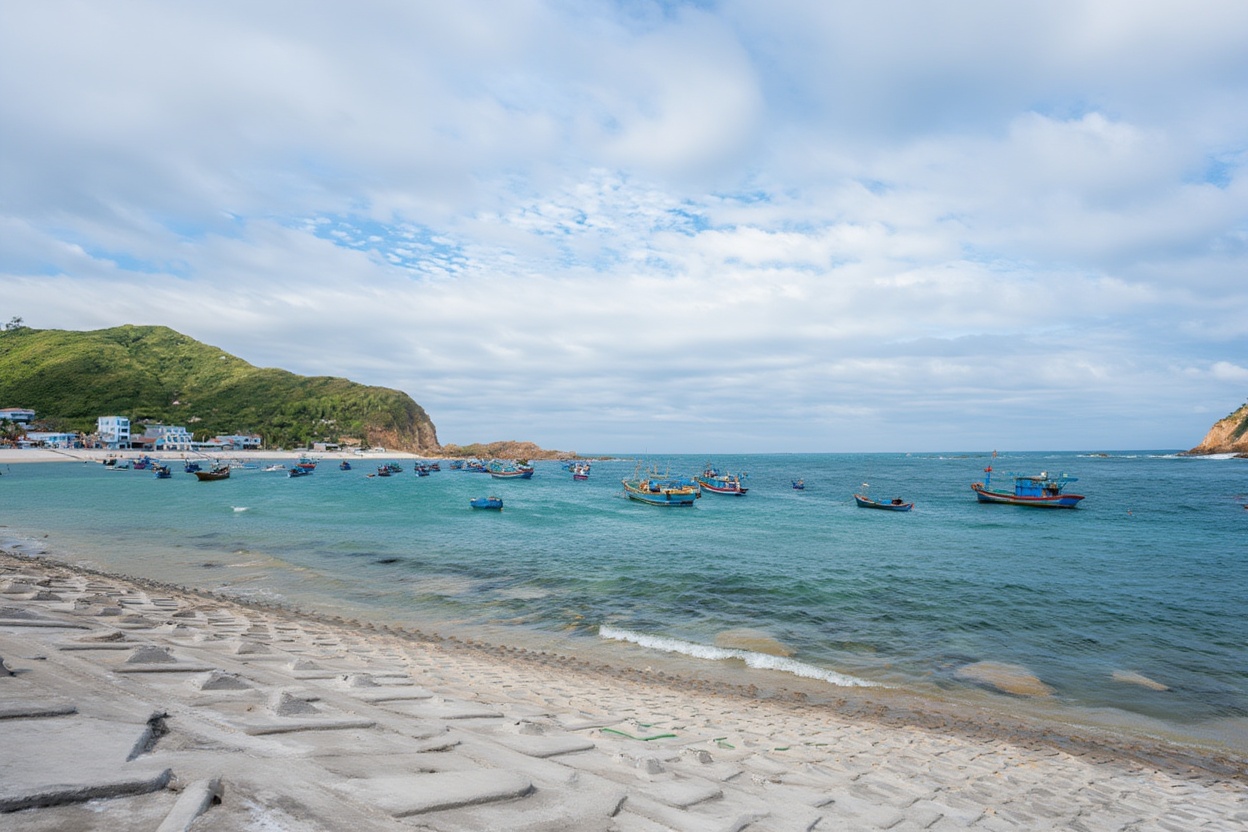
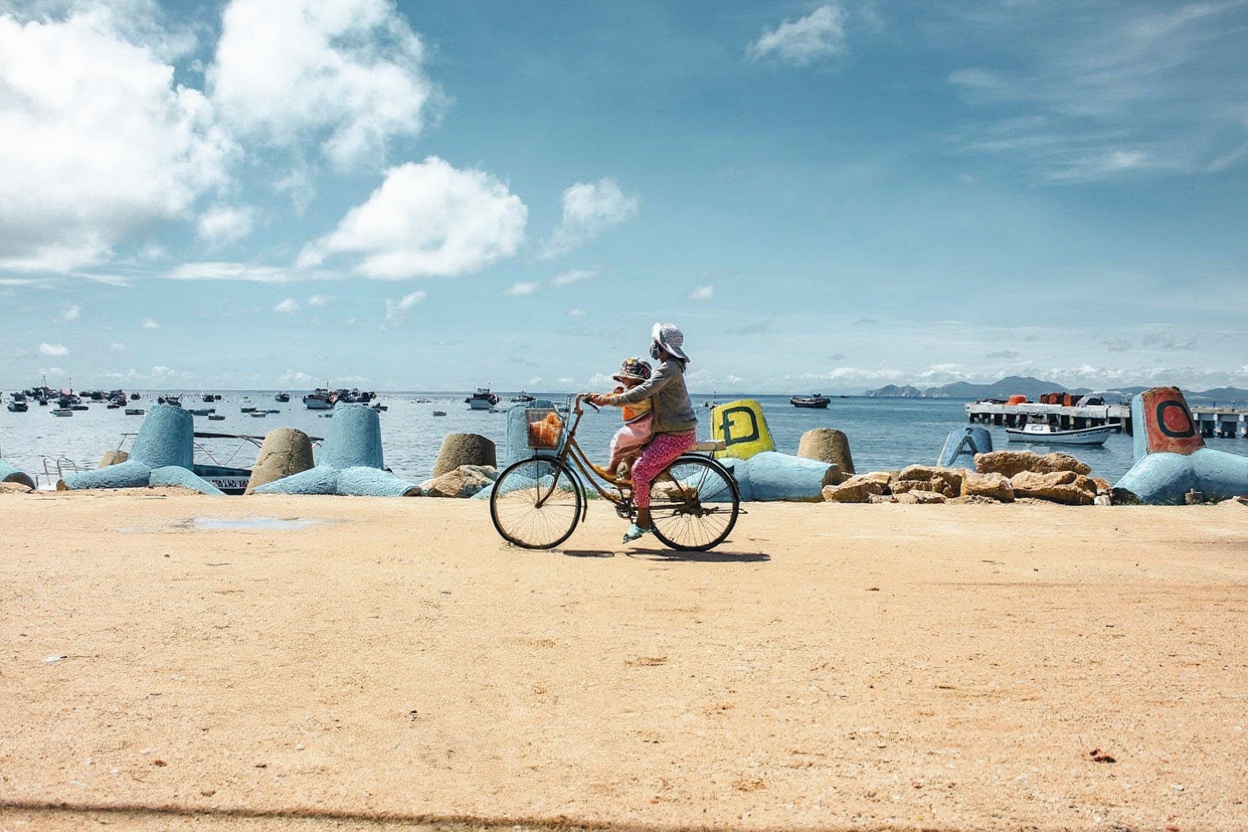
Quy Nhon sits in a natural bay on Vietnam’s south-central coast. The city itself is working-class and functional — not polished, not particularly photogenic. Seafood restaurants spill onto sidewalks. Motorbikes park directly in front of pagodas. The promenade is 5km long and mostly used by locals doing laps at 5am.
This is a feature, not a bug.
What Quy Nhon has — and what Nha Trang and Da Nang have lost — is a sense that the city exists for the people who live in it. The beaches are genuinely good. The food is regional and specific. The Cham towers in the center of town don’t have an entrance fee or a gift shop. A local Reddit commenter who actually lives there put it this way: “I planned a packed schedule over 4 days and there were still things we didn’t get to do.”
That’s Quy Nhon. Not “nothing to do.” Just nothing manufactured to do.
→Who It’s For
Go if you want beach without the party scene, seafood without the tourist markup, and a Vietnamese coastal city that still functions as a Vietnamese city. Skip if you need a packed activity roster, five-star beach clubs, or English menus everywhere.
Getting to Quy Nhon: From Hoi An, Hue, Da Nang
 Hoi An to Quy Nhon run — 3 hours, open tour buses, depart early morning” loading=”lazy” width=”1200″ height=”675″ style=”width:100%;height:auto;”>
Most travelers hit Quy Nhon as part of the central Vietnam run: Da Nang — Hoi An — Quy Nhon — Nha Trang.
For the full central Vietnam corridor, see our central Vietnam travel guide.
12Go covers most Vietnam routes — sleeper buses, trains, and island ferries. Compare schedules and book in advance during peak season (Dec–Feb, Jun–Aug).
From Hoi An (the most common route)
Open tour buses run daily from Hoi An to Quy Nhon. Journey time: around 3 hours. Ticket: roughly 150,000–200,000 VND (~$6–8). Book through your guesthouse the night before — they’ll arrange pickup.
The road hugs the coast for most of it. If you’re coming from a week in Hoi An, the shift in energy is immediate. Less lantern-lit charm, more actual coast.
↗Insider Tip
Leave Hoi An early — the 7–8am departure means you arrive before noon and have the full day. The late bus gets you in at dinner, which is fine but you’ll miss the beach hours.
From Da Nang
Sleeper bus from Da Nang: about 3.5–4 hours, 200,000–250,000 VND (~$8–10). Alternatively, the Reunification Express train stops at Dieu Tri station (10km from Quy Nhon city center — take a Grab into town, about 60,000 VND). Quy Nhon also makes a natural gateway into the southern Vietnam circuit if you’re continuing down to Nha Trang and beyond.
For a comparison of bus vs. train along this stretch, see our Vietnam train journey guide.
From Hanoi (direct flight)
Phu Cat Airport, 30km north of the city. Vietjet and Vietnam Airlines both fly direct from Hanoi. Round-trip fares book out around 1,700,000 VND (~$65) a month in advance — I’ve seen them lower. Grab from the airport to central Quy Nhon: roughly 200,000 VND (~$8).
The Beaches — Ky Co, Bai Xep, Eo Gio, and Rang
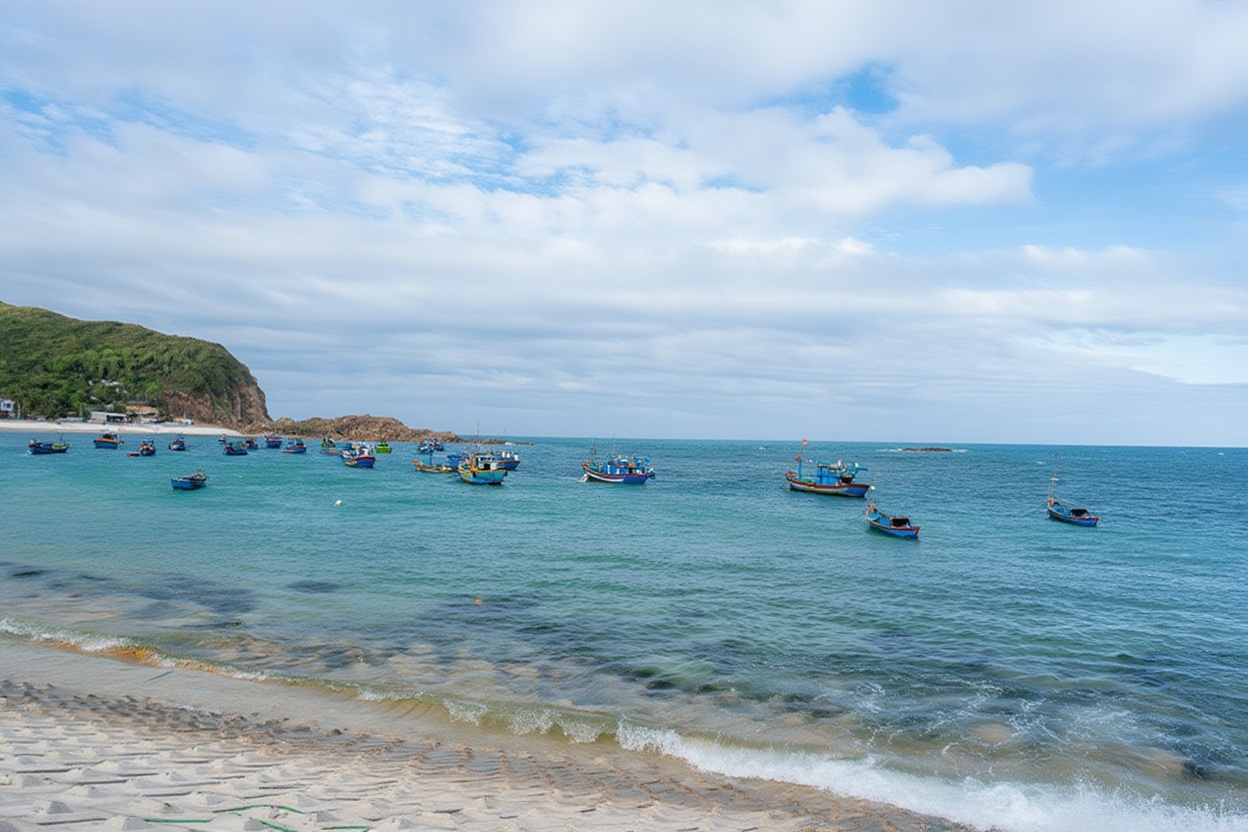
The beaches are the reason most travelers come to Quy Nhon, and the beaches are genuinely excellent. Here’s how they actually compare.
Ky Co Beach — The Headline
Twenty kilometers north of the city. Turquoise water, white sand, limestone backdrop. It earns the comparisons. The process to get there: pay 20,000 VND (~$0.80) at the entrance gate (verified May 2026), park your motorbike, take a shuttle to the beach. The shuttle isn’t free — budget another 20,000–30,000 VND depending on who’s running it that day.
Bring cash. Bring sunscreen. Go early — by 11am the sun bounces off the sand hard enough to make you regret every decision.
The water is the specific turquoise that happens when limestone meets shallow sea. You’ll hear the phrase “Maldives of Vietnam” thrown around. It’s not wrong. It’s also not the Maldives — there are longtail boats, a few snack stalls, and the shuttle doesn’t run reliably after 4pm. That’s fine. That’s actually the point.
ℹKnow Before You Go
Rent a motorbike in Quy Nhon city to reach Ky Co (roughly 100,000–150,000 VND per day for a manual). The alternative is a tour — fine, but you lose the flexibility of staying until golden hour. Google Maps route: follow Highway 1 north, then turn east toward Nhon Hai — signs appear after the turnoff.
Bai Xep — The Fishing Village One
Twelve kilometers south of the city center. A small bay, wooden fishing boats pulled onto black sand, a handful of guesthouses run by local families. The water here is darker than Ky Co — you’re in a proper fishing harbor, not a postcard inlet.
What Bai Xep has that Ky Co doesn’t: the chance to watch the fishing fleet come in at 5am, and to eat the catch at lunch for almost nothing. There’s a hostel — Life’s a Beach — that puts travelers right on the water and organizes morning snorkeling trips.
★Jake’s Pick
Bai Xep over Ky Co if you’re staying more than two nights. Ky Co for the turquoise-water photo. Bai Xep for the actual feeling of being somewhere real. Spending a night at Life’s a Beach hostel, watching the boats, eating grilled fish at a plastic table on the sand — that’s the version of Quy Nhon worth traveling for.
Eo Gio — Wind Strait
About 20km north of the city, near Ky Co. “Eo Gio” means Wind Strait — it’s a rocky inlet where the cliffs funnel the sea breeze into something close to a gale. There’s a paved walking trail along the limestone cliffs, panoramic views of the East Sea below. The wind hits your face hard and constant, salt spray from the waves 40 meters down.
No entrance fee. No crowds (yet). Visit on the way to or from Ky Co — it’s 5 minutes off the same road and dramatically different energy from the beach.
Rang Beach — The City Beach
The 5km promenade beach that runs through central Quy Nhon. Clean enough, wide enough, dotted with beach chairs and a few beach cafes. Locals swim here every morning. Travelers use it as a morning run or evening sunset spot.
Not the reason you came to Quy Nhon, but it’s there, it’s free, and it’s pretty good for a city-center beach.
Things to Do in Quy Nhon Beyond the Beach

Here’s where the “nothing to do” criticism actually has a point: if you want planned activities with booking links and tour guides, Quy Nhon is thin. What Quy Nhon has instead is a city that rewards wandering and patience.
Thap Doi — Cham Towers in the City Center
Twin red-brick towers from the 12th century, right in the center of Quy Nhon off Trần Hưng Đạo Street. They’re beautifully preserved, surrounded by manicured gardens, and — unlike the Cham ruins at My Son — completely free to enter and uncrowded. No entrance fee (verified May 2026). No tour groups.
Klook has the widest selection for Vietnam and is usually the cheapest. KKday is strong on day trips and local experiences.
archaeologists can still identify — a technique they’ve never fully replicated. Walk around the base at dusk when the towers catch the last orange light.
For more on the Cham legacy in central Vietnam, the things to do in Hoi An guide covers My Son sanctuary as a day trip context.
Banh It Towers — The One Outside Town
About 20km north of Quy Nhon on a hilltop above the coastal highway. Four towers, older and more atmospheric than Thap Doi — this is what you’d find if you stumbled across Cham ruins without any tourism infrastructure at all. Steps up a hill, no facilities, practically nobody else there on a weekday morning.
Worth the motorbike detour on the way to Ky Co.
Ghenh Rang — The Poet’s Cliff
A rocky headland 3km north of the city center. The tomb of Han Mac Tu — a Vietnamese poet who died here of leprosy in 1940 and whose work became more famous after his death — sits on a pine-covered hill above the sea. The steps up the hill smell of incense and salt air. The view from the top takes in the entire Quy Nhon bay.
Most tourists skip this. Most tourists miss the one spot in Quy Nhon that makes you understand why Vietnamese people come here on pilgrimage.
Morning Market — Cho Lon
Quy Nhon’s main wet market on Phan Boi Chau Street. Best before 8am. Towers of dried squid, tanks of live shellfish, fishwives shouting prices over each other. The smell is intense — salt and fish sauce and wet concrete. This is where the seafood you’ll eat tonight was alive this morning.
Where to Eat in Quy Nhon: Real Spots, Real Prices
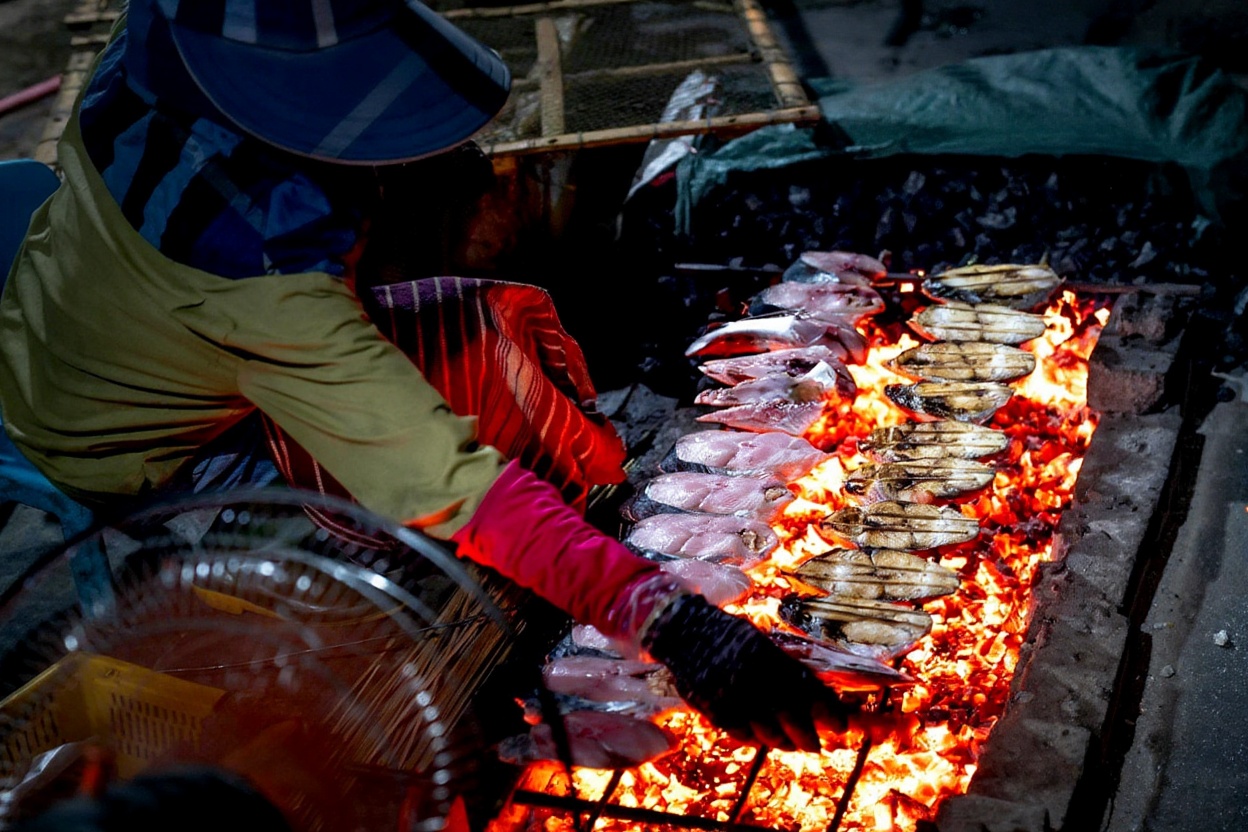
Quy Nhon’s food scene is one of the most underrated in Vietnam. This is Binh Dinh province — a regional cooking tradition built around fresh seafood and dishes you won’t find anywhere else with the same specificity.
The Food Street: Ngo Van So
Between Xuan Dieu and Nguyen Hue streets, running about 100 meters. Open 2pm to midnight, peak hours 6–9pm. Thirty-odd stalls, charcoal smoke hanging in the air by 7pm, the sizzle and pop of batter hitting oil audible from half a block away.
Order here: bánh xèo tôm nhảy (say: bahn say-oh tohm nyay) — the jumping shrimp pancakes. The name is literal. The shrimp are fresh enough that they’re still moving when they hit the batter. The pancake comes out golden and crisp, stuffed with shrimp and egg, eaten wrapped in rice paper with herbs and a peanut dipping sauce. Roughly 30,000–50,000 VND (~$1.20–2) per plate (verified May 2026).
Also on this street: nem nướng (grilled pork sausage over charcoal, eat with rice paper), bún cá (fish noodle soup, broth sweet from fish bones), and every variation of grilled seafood available.
Specific Spots Worth Knowing
Banh Xeo Tom Nhay Rau Mam — 91 Dong Da Street. This is the original jumping-shrimp pancake spot. Crowded after 6:30pm. Go at 5:30–6pm and get a table. 50,000 VND per plate (verified May 2026 via Vietnam Nomad).
Bun Ca Thuy — 261 Tang Bat Ho Street. Fish noodle soup, 30,000 VND (~$1.15). The broth is the cleanest, sweetest fish stock I’ve had in Vietnam — not fishy at all, just deep and oceanic. Open mornings only; get there before 9am or it’s gone.
Ong Hung — 24 Dien Hong Street. Regional snacks and nem nuong. 48,000 VND (~$1.85) for a plate. A bit more formal than the street stalls but the quality is consistent.
Cay Man — 742 Tran Hung Dao Street. One of the cheapest spots in the city — 20,000 VND per bowl. No atmosphere, no menu in English, just the thing in front of you in a plastic bowl and it tastes exactly right.
⚠Real Talk
Travelers consistently note that Quy Nhon food spots rarely have English menus or English speakers. Point at what others are eating. Have Google Translate ready. The discomfort lasts about 90 seconds and then you have the best meal of your trip.
For the full seafood corridor from central Vietnam south, our Nha Trang travel guide has the comparison context — very different food scene, much more touristy.
Where to Stay in Quy Nhon
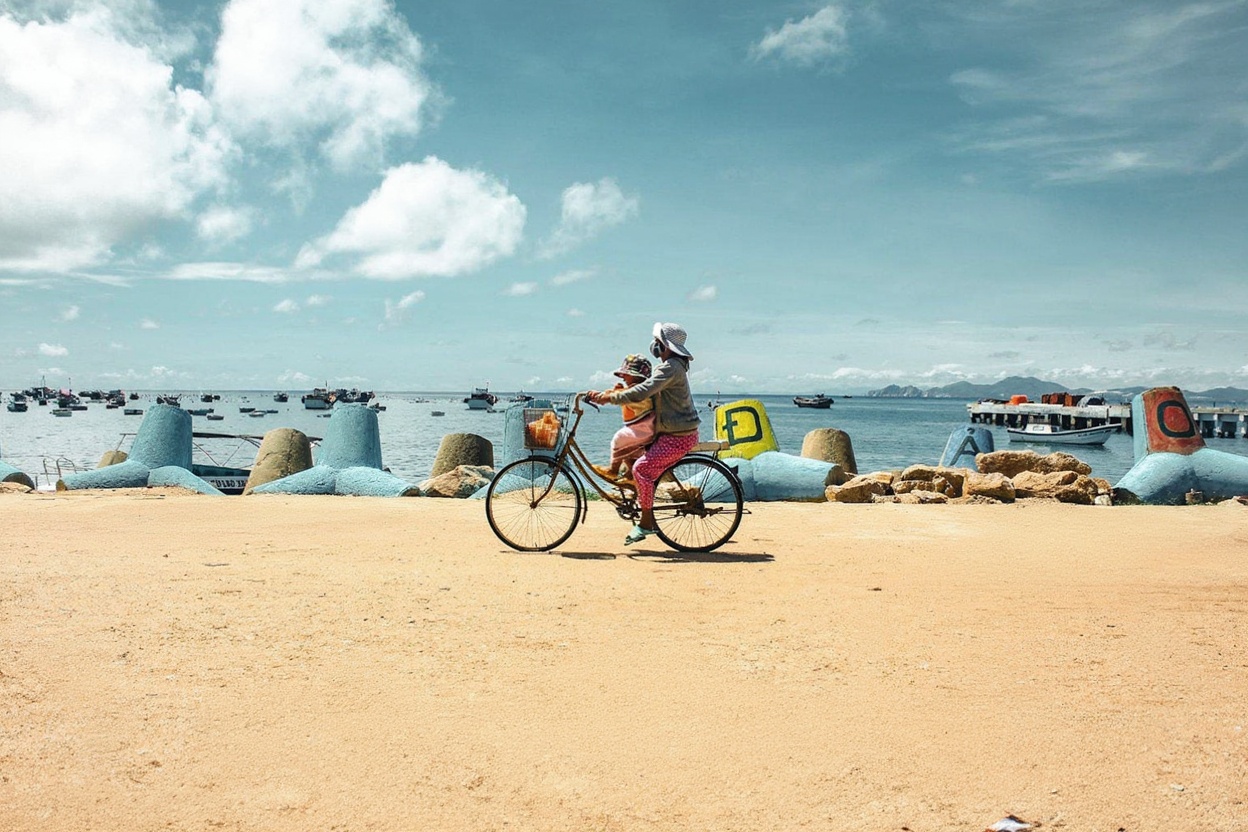
The accommodation scene in Quy Nhon splits cleanly into three zones: beach promenade (central, convenient), Bai Xep (fishing village, 12km south), and resort zone (FLC/Anantara area, not for most of the readers of this guide).
Budget: 150,000–500,000 VND (~$5.70–19)
Life’s a Beach Hostel — At Bai Xep, 12km south of the city. Dorm beds from 150,000 VND (~$5.70), right on the fishing beach. If you’re doing the backpacker circuit, this is the one. Morning snorkeling trips, good common area, the sound of the sea through the window all night.
dy”>Le Mint Hotel. Rooftop pool, complimentary buffet breakfast, free bicycle rentals, central location. The “excellent value” tag from Lonely Planet isn’t PR — it’s accurate. Book direct and check for current rates.