Last updated: May 2026 · Jake Morrison · 5 years in Vietnam

I nearly skipped Quy Nhon after reading a handful of Reddit comments saying “not much to do.”
That was a mistake — or almost one.
A local resident replied to one of those threads with something that stuck: “I planned a packed schedule over 4 days and there were still things we didn’t get to do.” That’s not a place with nothing to do. That’s a place where the wrong travelers showed up, sat at a beachfront hotel, and reported back from there.
Here’s what’s actually on the list — the version from someone who went looking.
1. Ky Co Beach — The One That Changes How You Talk About Vietnam Beaches
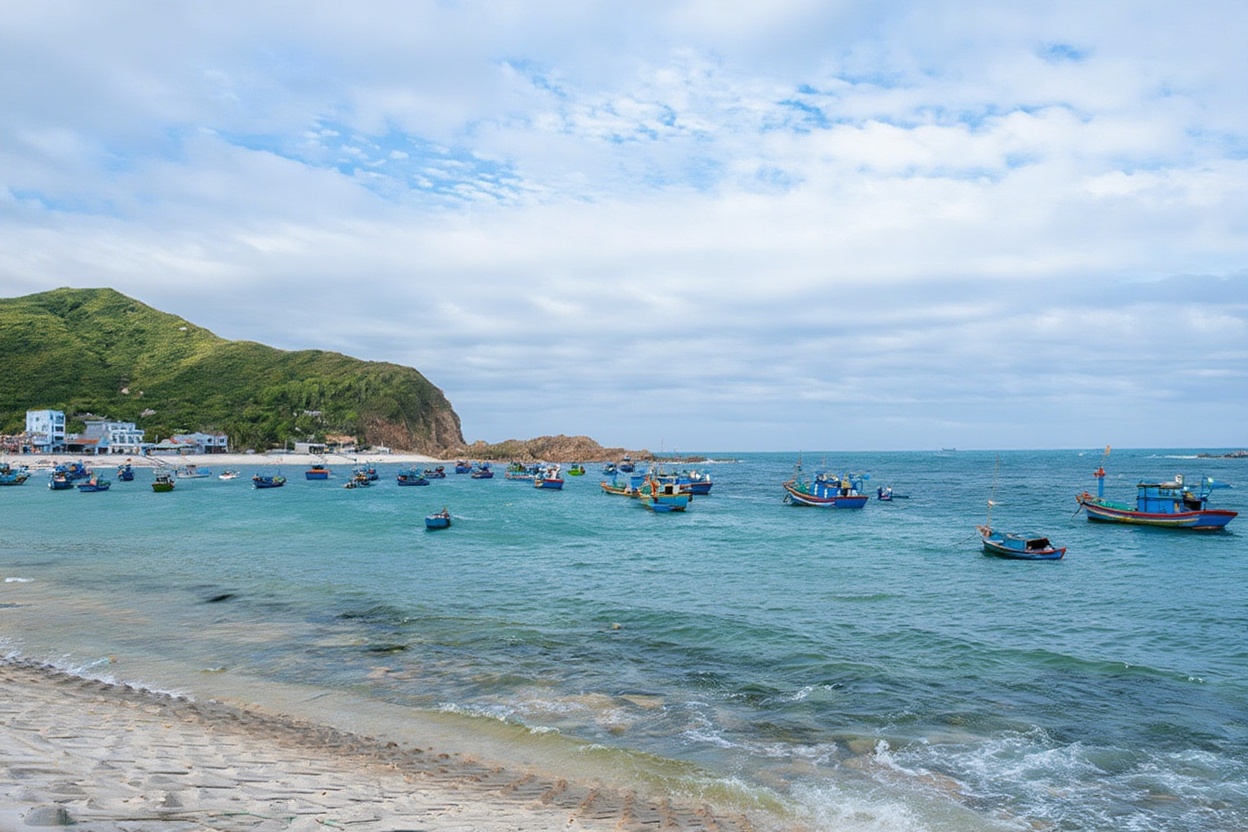
Ky Co (say: kee co) gets described as the Maldives of Vietnam. That’s lazy shorthand, but the turquoise water is real — cleaner and bluer than anything on Da Nang or Nha Trang’s main strip. Limestone cliffs frame a cove that doesn’t feel like it belongs on the central coast.
> **Quick Answer**
> Ky Co costs 20,000 VND (~$0.80) entrance plus 80,000–100,000 VND (~$3–4) return boat from Quy Nhon city. The trip takes 45 minutes each way. Go on a weekday, arrive before 10am, and bring cash — no ATM on site.
Getting there takes a little effort, which is exactly why it hasn’t been ruined yet.
The boat from Quy Nhon takes around 45 minutes and costs roughly 80,000–100,000 VND (~$3–4) return. Alternatively, motorbike to the turnoff and then a boat shuttle for 20,000 VND (~$0.80) each way from the parking area to the beach. You pay the entrance fee at the gate — 20,000 VND (~$0.80). There’s a snack stall and basic facilities. Don’t expect sunbeds or beach bars.
Go on a weekday if you can. High season weekends bring Vietnamese domestic tourists, and the cove gets tight. Arrive before 10am and you’ll often have large stretches of it to yourself.
The swim is excellent. Warm, clear, and shallow enough near the shore to wade out a hundred metres. The snorkelling off the rocks at the far end is worth packing a mask for.
ℹKnow Before You Go
No ATM at Ky Co. Bring cash for the entrance fee, boat, food, and drinks. The return boat stops running around 4–5pm — check the last departure time when you arrive and don’t lose track of it.
2. Bai Xep — The Fishing Village That Makes Ky Co Look Like a Resort
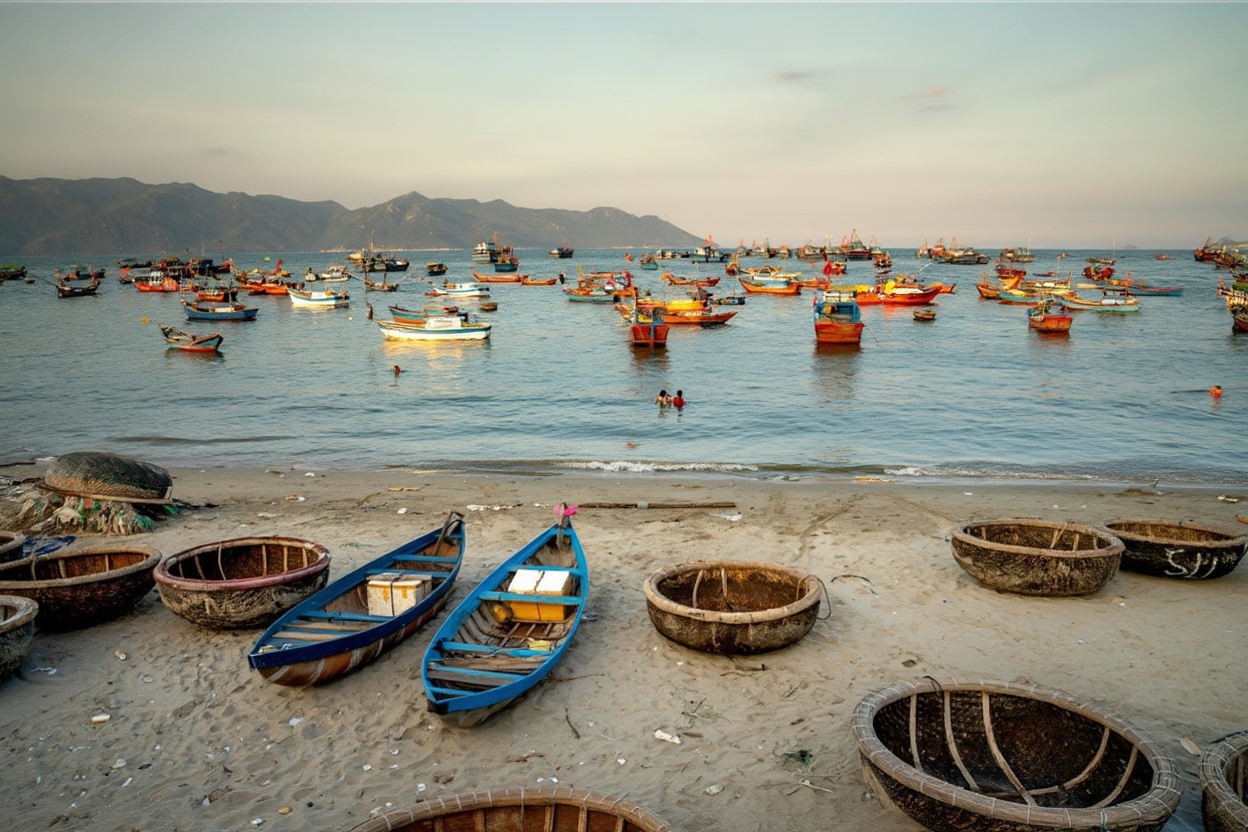
Bai Xep is 6km south of Quy Nhon. No turquoise water, no dramatic cliffs. What it has instead is wooden fishing boats hauled up on a grey-sand beach, salt-dried fish drying on racks in the morning sun, and almost no signage telling you what to do next.
That’s the point.
The action here is slow: watch the boats come in before 7am, eat a bowl of bún cá (say: boon ca) from a street stall for 30,000 VND (~$1.15), swim in water that feels like a private beach because the guests from the resort hotels haven’t arrived yet. Life’s a Beach Hostel runs the social hub for backpackers staying the night.
Where Bai Xep wins over Ky Co is authenticity. The fishing village is still operating as a fishing village — the boat smell, the ice bins, the kids running barefoot past you on the way to school. Ky Co is a day-trip beach. Bai Xep is a place to sleep.
★Jake’s Pick
Bai Xep over Ky Co if you’re not a “turquoise water” person. The overnight stay at a guesthouse right on the beach for 350,000–500,000 VND (~$13–19) wrecks the Instagram version of Vietnam travel in the best possible way. You hear the boats leave at 5am. You can’t unhear it.
3. Eo Gio — The Cliff Walk Nobody on TripAdvisor Has Heard Of
Eo Gio translates roughly as “wind gap.” That name undersells it.
It’s a headland 20km north of Quy Nhon with walking trails along the clifftops, ocean on three sides, and views that look better than any travel photo you’ve seen of it. The wind comes off the water hard — bring a light layer even in April.

> **Quick Answer**
> Eo Gio is 20km north of Quy Nhon by motorbike. Entrance costs 20,000–30,000 VND (~$0.80–1.15). The clifftop walk takes 1–1.5 hours return. Best on a weekday morning — the trail thins out fast once you clear the parking area.
The trail takes 1–1.5 hours return. The path is well-maintained and not technical. You don’t need a guide. Motorbike is the standard way to get there — 20km from the city on a road that runs coastal most of the way. Add it to a morning loop with Nhon Hai commune for a half-day.
Entrance fee: around 20,000–30,000 VND (~$0.75–1.15). No food stalls inside. Eat in Nhon Hai on the way back.
⚠Real Talk
Eo Gio gets enough Vietnamese domestic visitors on weekends that the parking area can feel crowded. The walking trail itself spreads people out and thins quickly. Come early or come on a Tuesday. The photos from the cliff edge are best in the first two hours of morning light anyway.
4. Ghenh Rang Cliff Park — The Viewpoint Everyone Misses
I missed Ghenh Rang on my first visit entirely. Found out about it from a guesthouse owner in Bai Xep on the second trip, after I’d already told him I’d “done Quy Nhon.”
He looked at me like I’d said I visited Hanoi and skipped Hoan Kiem.
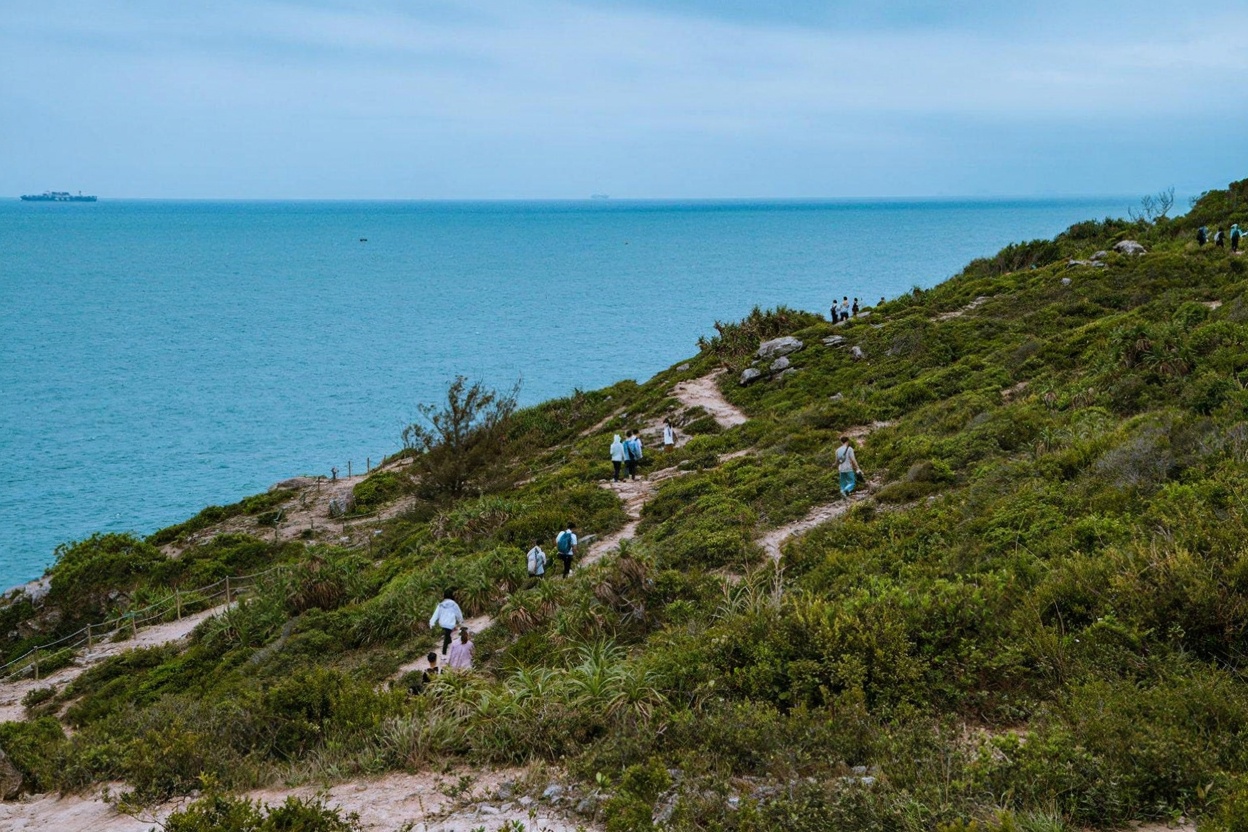
Ghenh Rang is a hillside park on the northern edge of the city, about 3km from the promenade. It has walking paths through pine trees along cliff edges, ocean views from multiple lookout points, and the tomb of Hàn Mặc Tử (say: Han Mac Too) — a Vietnamese Romantic poet who died of leprosy at 28 and left behind some of the most read poems in the canon.
The park charges 40,000 VND (~$1.50) entry. Takes 45–60 minutes to walk properly. Best at golden hour — the light hits the cliffs from the south and the whole thing turns orange.
No crowds. No tour buses. A genuine oversight in the standard itinerary.
5. Thap Doi Cham Towers — A Thousand Years in the Middle of the City
Most visitors skip Thap Doi (say: tap doi) because it’s described in guidebooks as “Cham towers you’ve already seen elsewhere.” That’s true in structure. It’s not true in context.

These two 12th-century red brick towers sit in the middle of a residential neighbourhood, completely surrounded by motorbikes, coffee shops, and school kids. The contrast is the thing. You’re not looking at them from behind a museum rope — you’re standing next to a 900-year-old building with someone’s washing line visible two metres away.
Entry is free or a nominal fee of around 20,000 VND (~$0.80). Takes 20–30 minutes. Combine it with a coffee stop on Tran Hung Dao Street afterward (Ba Xe coffee stall at 50/22C Nguyen Thai Hoc Street does black iced coffee for 20,000 VND).
Worth the detour. Not worth building a whole day around.
6. The Food Street — Ngo Van So After Dark
Quy Nhon’s food reputation centers on one street: Ngo Van So. Around 30 stalls running from 2pm to midnight, peaking 6–9pm when it gets genuinely packed.
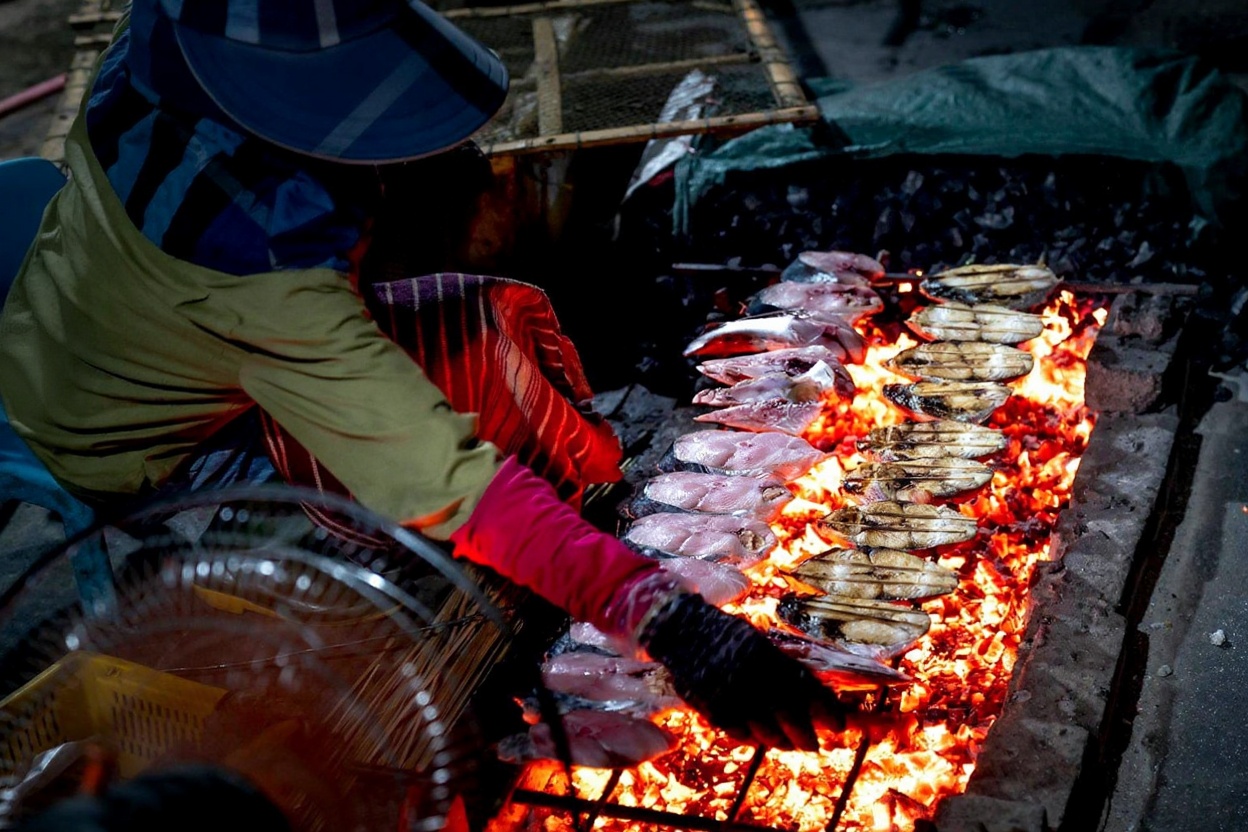
What to order:
**Bánh xèo tôm nhảy** (say: bahn say-oh tom nyay) — “jumping shrimp pancakes.” Mini crispy rice-flour pancakes filled with shrimp that are still moving when they hit the pan. 50,000 VND (~$1.90) at Banh Xeo Tom Nhay Rau Mam, 91 Dong Da Street.
**Nem nướng** (say: nem nyoong) — grilled pork sausage, eaten wrapped in rice paper with herbs. Every stall has a version. Usually 30,000–45,000 VND (~$1.15–1.70).
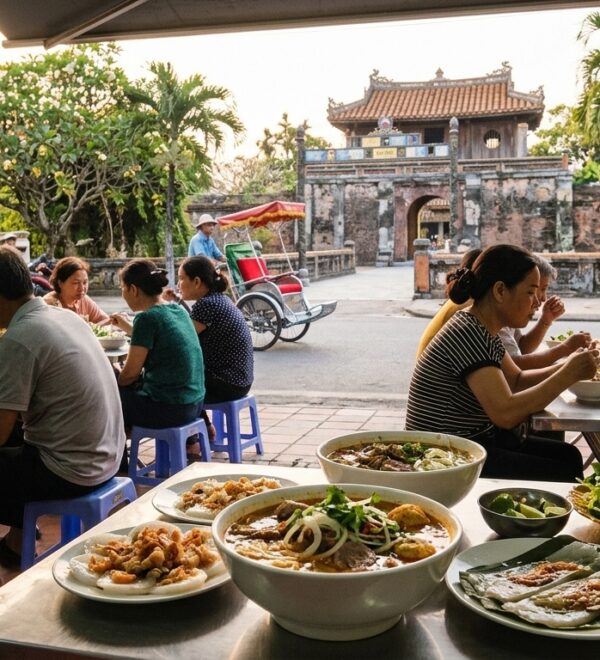
**Bún cá** (say: boon ca) — the local fish noodle soup. Sweet, light broth, fish cake, glass noodles. Bun Ca Thuy at 261 Tang Bat Ho Street, 30,000 VND (~$1.15), is the standard recommendation.
The street noise is part of it — charcoal smoke, generator hum from the stalls’ lights, the scratch of chopsticks on ceramic bowls. Don’t eat here before 6pm. The stalls haven’t properly lit up yet and you’ll miss the atmosphere.
↗Insider Tip
Ngoc Lien restaurant at 379 Nguyen Hue Street is the local choice for a sit-down bún cá breakfast. 35,000 VND (~$1.35). Open from early morning. The soup is cleaner and more delicate than street-stall versions — worth doing once even if you’re eating Ngo Van So every night.
7. Rent a Motorbike and Do the Coastal Loop
120,000–150,000 VND (~$4.55–5.70) per day gets you a semi-automatic. Most guesthouses around the promenade rent them directly or know someone who does.
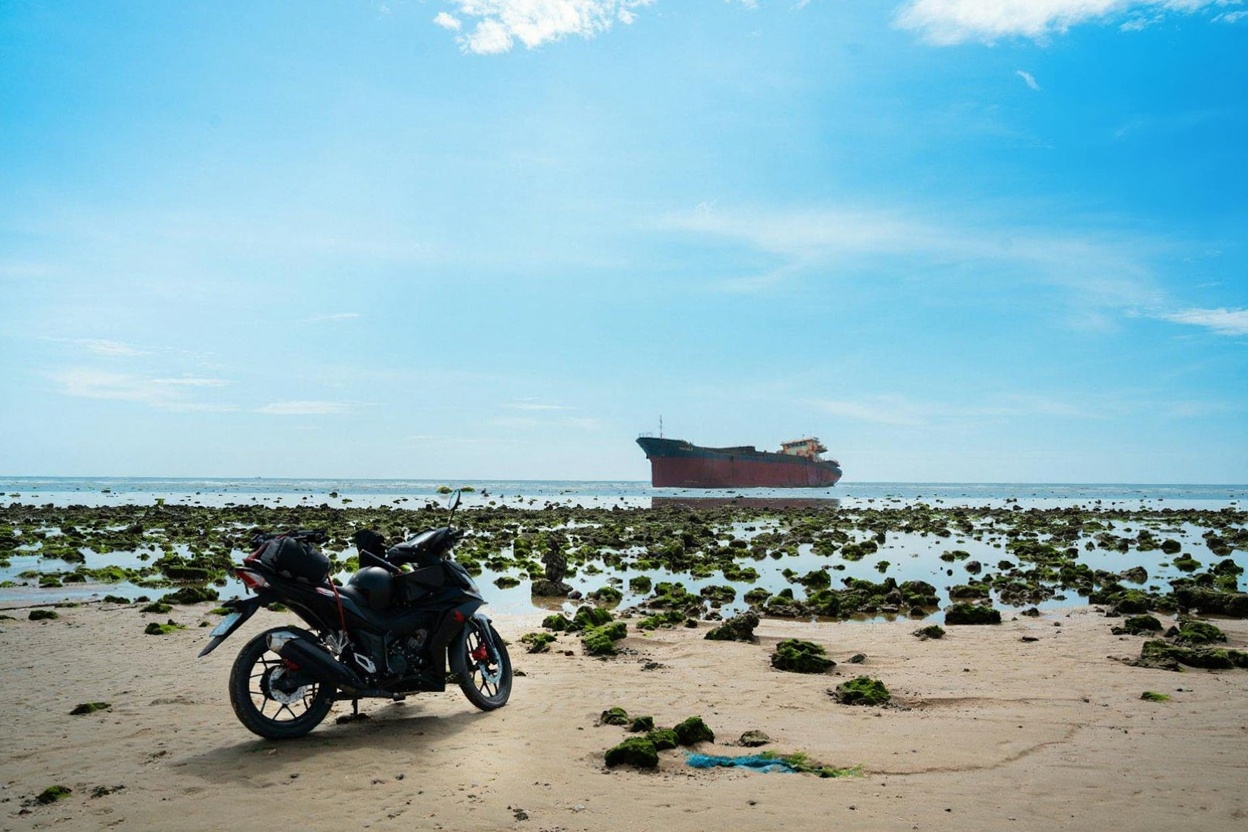
The best loop (full day, roughly 80km):
Start early. Head south along the coastal road to Bai Xep and the fishing village. Continue to Haven Vietnam for a coffee if you’re not staying there — it’s a proper hotel at the beach where the restaurant puts tables on the sand at night. Then loop back north via the wind turbine fields.
The wind turbines are a strange detour that ends up being one of the more memorable stops. They line a ridgeline above the coast and you can get within 50 metres of them — the hum is deeper than you expect. No entrance fee. No facilities. Just you and the turbines.
North loop alternative: Add Eo Gio and Nhon Hai commune for seafood lunch by the water. The road north from Quy Nhon runs along cliff edges for a stretch that’s genuinely good riding — light traffic, wide views.
8. Ba Hoa Mountain — The One for Hikers
Ba Hoa Mountain sits 15km north of the city. A local Redditor mentioned it in the same breath as Ky Co when listing what to do — it’s the kind of place that appears in no Western guidebook but shows up in every local recommendation thread.

The hike takes 2–3 hours return depending on pace. Moderate difficulty — some steep sections in the final stretch, rocky in places. The reward is a 360-degree view of the coastline from Quy Nhon north to the wind turbine ridgeline.
Start early — before 7am if you want the light and before 9am if you want to beat the heat. Bring water. The summit is exposed. Entrance is free or nominal. No facilities at the top.
For context on fitness level: standard sneakers work. You don’t need hiking boots. One water bottle per person is fine for the 2-hour round trip in cooler months; two in March–September. For a deeper dive into what to order and where, the Quy Nhon food guide covers every dish worth tracking down.
9. Rang Beach — The One You’ll Have to Yourself in the Morning
Rang Beach is the quieter end of the main city beach, about 3km south of the centre where the promenade thins out and the resorts end. Fishing boats anchor here overnight. In the morning before 8am it’s effectively empty.
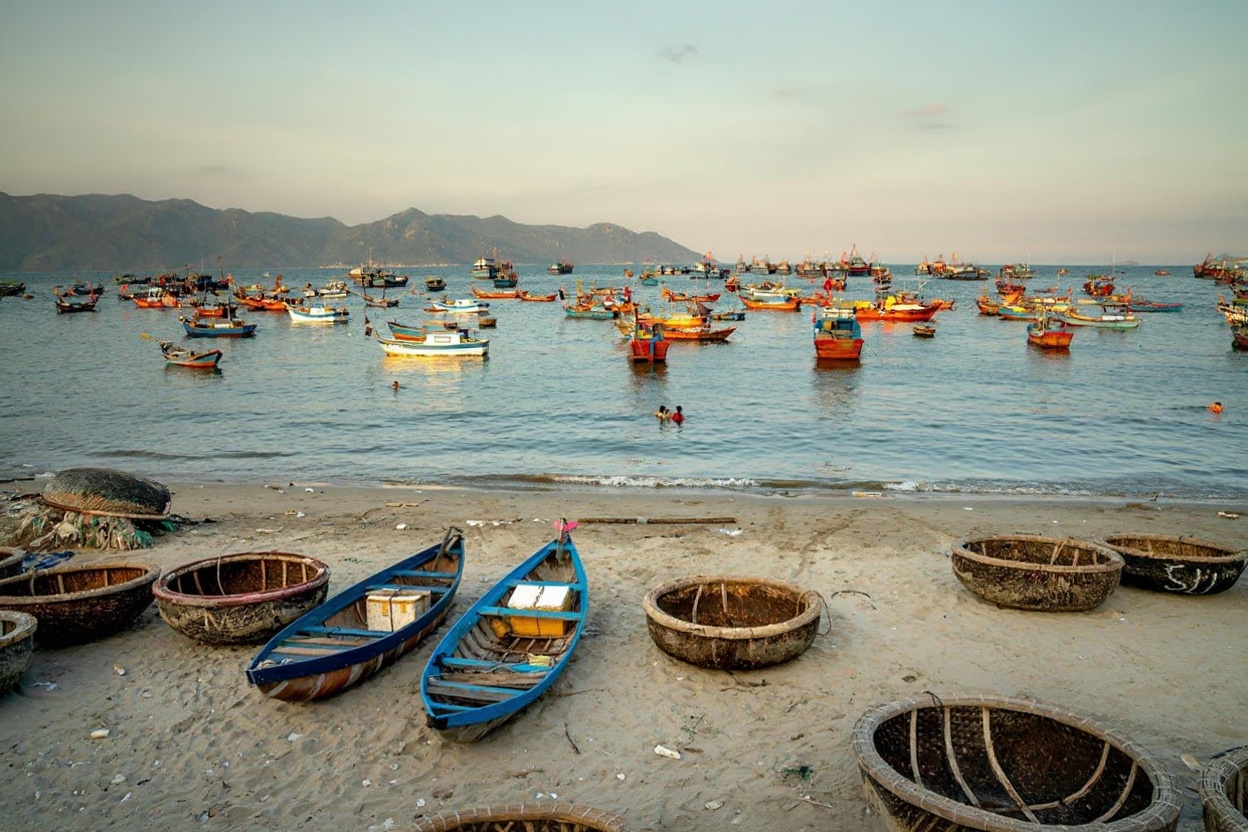
No entrance fee. No facilities. The swim is calm most of the year. The beach itself is about 2km long and gradually becomes more remote as you walk south toward where the fishing village starts properly.
Best used as the end of an evening walk from the promenade — turn left at the southern end of Nguyen Tat Thanh and follow the coast road south past the casuarina trees. The sand turns from busy to completely empty over the space of about 15 minutes’ walking.
How to Structure 3–4 Days
The standard mistake is trying to see everything in one direction: promenade hotel → Ky Co → repeat. The city’s activities spread north and south, and they’re best seen in loops.
Day 1: City — Thap Doi towers, Ghenh Rang cliff park (late afternoon), Ngo Van So food street for dinner. Walk the promenade at dusk when the light is best and the fishing boats are coming in.
Day 2: Ky Co Beach — full day. Take the morning boat, stay until early afternoon, back for a late lunch at a promenade seafood restaurant.
Day 3: Motorbike south — Bai Xep fishing village (morning swim), Haven Vietnam coffee stop, wind turbine ridgeline, back north via the coastal road in the late afternoon.
Day 4: North loop — Eo Gio cliffs and Ba Hoa Mountain (one or the other, not both, unless you’re an early riser). Seafood lunch at Nhon Hai commune on the coast. Afternoon back at the city beach.
That’s four full days and there are still things not on the list — the night market, the Binh Dinh Museum, the street coffee scene on Tran Hung Dao. The “nothing to do” assessment is a myth built by travelers who never left the hotel pool.
For getting from Hoi An to Quy Nhon, see our Hoi An guide on transport options — the open tour bus is the standard move and takes about 3 hours.
If you’re extending the trip south, check the full Quy Nhon travel guide for where to stay, food, and the best time to visit.
Who Quy Nhon Is (And Isn’t) For
Quy Nhon works best for a specific type of traveler. Getting clear on this saves you from arriving with the wrong expectations.
→Who It’s For
You want a beach town that hasn’t been packaged for tourists yet. You eat at street stalls rather than beach clubs. You’re happy renting a motorbike and figuring it out. You want 3–4 days of genuine activity, not resort-and-relax.
It’s not ideal if you need English menus everywhere, a reliable beach club scene, or the kind of nightlife that runs past 11pm. Quy Nhon’s bar scene is thin. The food scene is excellent but almost entirely Vietnamese-language — Google Translate on a menu is standard practice here.
The travelers who report “nothing to do” are usually the ones who arrived without a motorbike, stayed on the promenade, and didn’t venture past the obvious. The travelers who arrive with a rough plan — Ky Co one day, Bai Xep the next, motorbike loop after that — leave wishing they’d booked an extra night.
One more thing: Quy Nhon rewards morning people. The fishing boats, the empty beaches, the food stalls doing their best work — almost all of it is better before 9am than after noon. If you’re the type who sleeps until 10am and starts the day slowly, you’ll see a different (and lesser) version of this city than someone who’s out by 7.
Two things worth sorting before you land: a Vietnam eSIM so you have data the moment you clear customs, and travel insurance — medical costs for uninsured foreigners in Vietnam are significant.
Airalo eSIMs activate instantly. Buy before departure — airport SIM queues in Vietnam can take 30+ minutes.
FAQ — Things to Do in Quy Nhon
How many days do you need to see the main things in Quy Nhon?
Three nights is the minimum to cover the main beaches and the city properly. Four nights is better — it lets you do a day at Ky Co, a day on the motorbike south to Bai Xep, and still have time for the city food scene and Ghenh Rang cliff park without rushing any of it. Locals consistently say visitors underestimate how much is here.
Klook has the widest selection for Vietnam and is usually the cheapest. KKday is strong on day trips and local experiences.
class=”vu-faq-a”>Yes — it’s the single best beach within a 2-hour range in central Vietnam for turquoise water and clarity. The trip involves a boat (45 minutes from the city, or shorter from the parking area) and costs around 80,000–100,000 VND (~$3–4) return plus 20,000 VND (~$0.80) entrance. Go on a weekday. The water is clearest from February to August when the dry season keeps sediment settled.
What is the best thing to eat in Quy Nhon?
Bánh xèo tôm nhảy (jumping shrimp pancakes) at 91 Dong Da Street — 50,000 VND (~$1.90). The shrimp are live when they hit the pan. For a sit-down meal, bún cá (sweet fish noodle soup) at 261 Tang Bat Ho Street for 30,000 VND (~$1.15). For the full experience: dinner on Ngo Van So food street after 6pm when all 30 stalls are running.
Can you do Quy Nhon without a motorbike?
Partially. The city sights (Thap Doi, Ghenh Rang, the food streets) are walkable or Grab-able. Ky Co is reachable by organized tour or taxi. But Eo Gio, Bai Xep, and the coastal loop are significantly harder without a motorbike — the roads are too spread out for Grab to be practical and tours to these spots are rare. Renting a motorbike (120,000–150,000 VND/day) opens the best parts of the itinerary.
Is Quy Nhon good for non-beach travelers?
Better than expected. The food scene is one of the strongest on the central coast for price-to-quality. The Cham towers at Thap Doi are genuinely ancient (12th century) and crowd-free. Ghenh Rang has a literary heritage site. Ba Hoa Mountain has a proper hiking trail. If you combine the city food scene with the cliff parks and cultural sites, you can do three days without touching the beach at all — though you’d be missing the best part. If you’re building a longer route down the coast, our southern Vietnam guide covers everything from Nha Trang to the Mekong.