
Last updated: May 2026 · Jake Morrison · 5 years in Vietnam
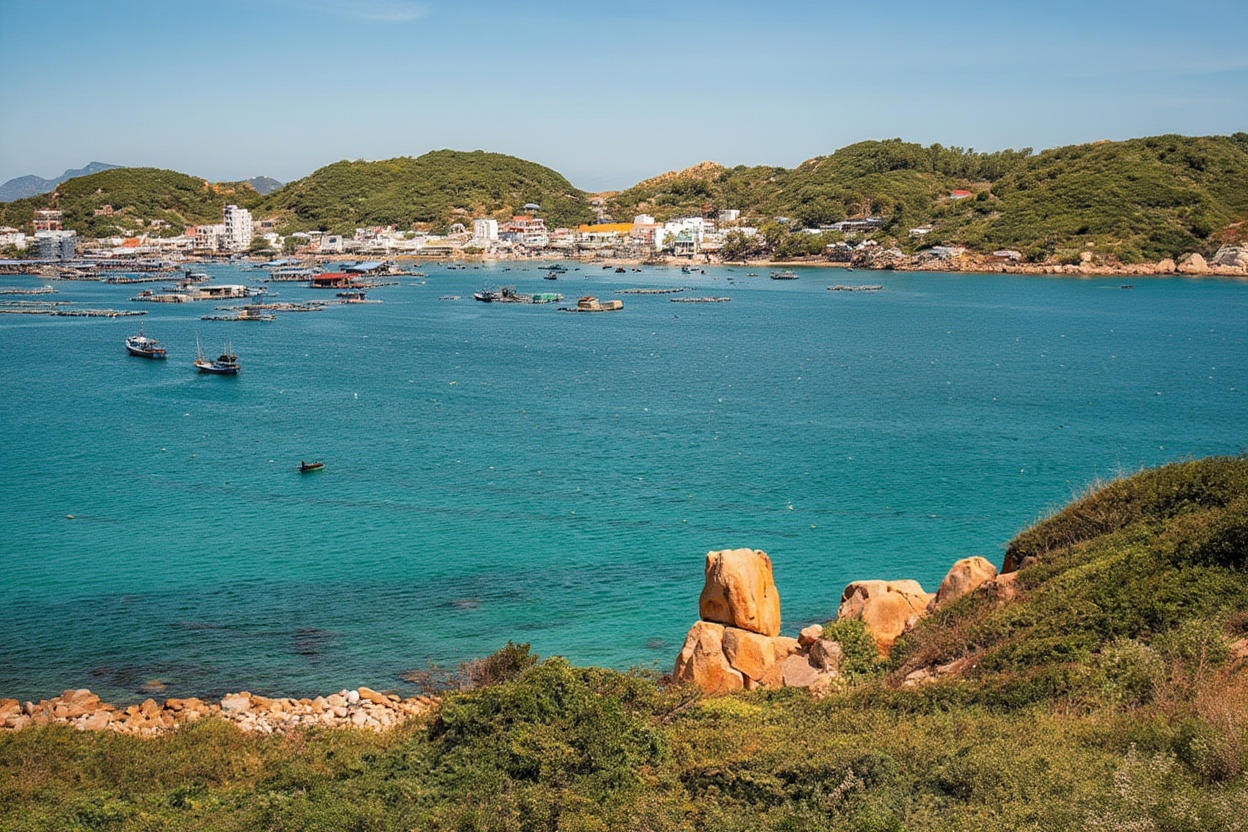
I took the open tour bus the first time and it was fine. Uneventful. Three hours, a seat by the window, dropped in the city centre at 11am. Quy Nhon’s promenade appeared through the windscreen and I was immediately glad I’d come.
The second time I rode a motorbike from Hoi An. Left at 6am. Arrived at 5pm. Did not regret a single minute of the extra seven hours.
Both approaches are valid — they’re just for different trips. Here’s what each one actually involves.
The Route — What You’re Actually Travelling Through
The distance from Hoi An to Quy Nhon is roughly 180km by road. The route runs south from Hoi An through Da Nang, picks up the coastal highway past Marble Mountain, and stays close to the sea for long sections through Quang Nam and Quang Ngai provinces before crossing into Binh Dinh and arriving in Quy Nhon.
The landscape shifts between the two cities in a way that’s easy to miss if you’re looking at your phone. The north end — from Hoi An down to about Da Nang — is developed: beach resorts, construction sites, urban sprawl. Once you clear Da Nang heading south, the road opens up. The coast gets wilder, the towns get smaller, and the fishing villages you pass through look nothing like the tourist infrastructure you just left behind. By the time you hit Quang Ngai and Sa Huynh, you’re in a part of central Vietnam that most travelers only see through a bus window at 80km/h.
Quy Nhon itself is a working city of around 300,000 people — not a resort, not a tourist enclave. It has a proper promenade, a seafood night market, a university, and four or five beaches within half an hour’s ride that are genuinely less visited than anything in the Hoi An–Da Nang corridor. The contrast with where you came from is immediate and deliberate. That’s part of why people make this trip.
Option 1 — Open Tour Bus (The Standard Route)
The open tour bus is the default choice for most independent travelers on the central coast. It’s not glamorous — the “open tour” system means the bus picks up from multiple guesthouses, stops a couple of times, and drops you at a central point in the destination city — but it works. If you’re starting the journey from the old town itself, our Hoi An travel guide covers getting oriented before you head south.

✓Quick Answer
Open tour bus from Hoi An to Quy Nhon: 150,000–200,000 VND (~$5.70–7.60), 3–3.5 hours, departs 7–8am. Book through your guesthouse the evening before. Drop-off is in Quy Nhon city centre near the promenade. No direct booking website needed — every guesthouse in Hoi An sells tickets.
Booking: Walk to the front desk of your guesthouse in the evening and ask for a ticket to Quy Nhon tomorrow. The guesthouse either sells directly or calls a partner bus company. You pay on the spot or the next morning. No app, no website, no advance booking required — next-day is standard.
Pickup: The bus company sends a van to your guesthouse address at the time given (usually 7–8am). You load your bag, the van does one or two more pickups in the area, then transfers you to the main bus.
The journey: The route goes north from Hoi An toward Da Nang briefly before heading south on the coastal highway. There’s usually one or two toilet stops. Air conditioning runs the whole way. The road is sealed and mostly smooth. Journey time is 3–3.5 hours depending on stops and traffic.
Drop-off: Central Quy Nhon, near the promenade — typically around Hung Vuong Street or the bus company’s local depot. Your guesthouse in Quy Nhon can usually arrange a Grab to meet you if you tell them the drop-off address in advance.
ℹKnow Before You Go
“Open tour” buses vary in quality depending on which company your guesthouse books. Most are fine. Occasionally you get an older vehicle with weaker AC. If you’re booking during peak season (June–August) or around Tet, book two days ahead rather than one — seats do sell out on popular routes.
Option 2 — Train (Scenic, More Effort)
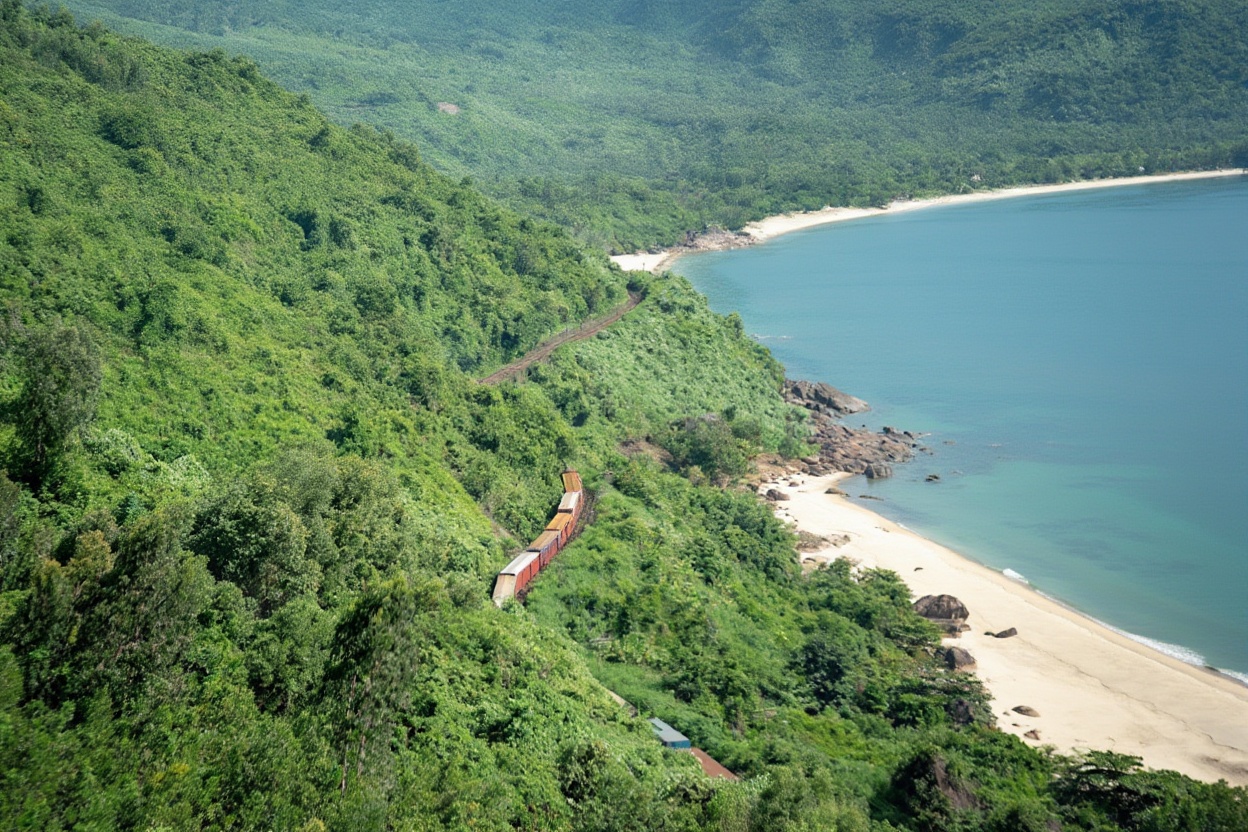
The train from Da Nang to Quy Nhon is a different experience from the bus — you sit higher, the views across the coastal terrain are better, and the journey feels less like transit and more like travel. The catch: there’s no train station in Quy Nhon itself.
✓Quick Answer
Train from Da Nang to Dieu Tri (the station for Quy Nhon): 2–2.5 hours, 80,000–150,000 VND (~$3–5.70) for a hard seat. From Hoi An, take a taxi or Grab to Da Nang train station first (30–45 min, ~100,000 VND). Then Grab from Dieu Tri to Quy Nhon city (10km, ~80,000–100,000 VND). Total time: 4–5 hours. Total cost: 300,000–400,000 VND (~$11.40–15.20).
The station you want is Dieu Tri (ga Diêu Trì) — not Quy Nhon, which has no train station. Dieu Tri is 10km outside the city. From there, Grab is the standard option (80,000–100,000 VND, ~$3–3.80 into the centre).
The full journey from Hoi An: Grab or taxi from Hoi An old town to Da Nang train station (30–45 minutes, 100,000–150,000 VND, ~$3.80–5.70). Train from Da Nang to Dieu Tri (2–2.5 hours, 80,000–150,000 VND for hard seat, 150,000–250,000 VND for soft seat). Grab from Dieu Tri to Quy Nhon (80,000–100,000 VND).
Total time: 4–5 hours door to door. Total cost: 260,000–500,000 VND (~$10–19) depending on seat class and taxi to Da Nang.
When it’s worth it: If you enjoy train travel and the views matter to you more than efficiency, this is the better experience. The stretch from Da Nang southward runs along cliff edges above the sea for one extended section — the kind of scenery you don’t see from a bus window.
Booking: Vietnam Railways website (dsvn.vn) sells tickets online, or book through your guesthouse at a small markup. Trains from Da Nang to Dieu Tri run several times daily. Check the departure time before booking the taxi to Da Nang — you need to arrive at the station at least 30 minutes before departure.
Option 3 — Motorbike (Full Day, Worth Every Hour)
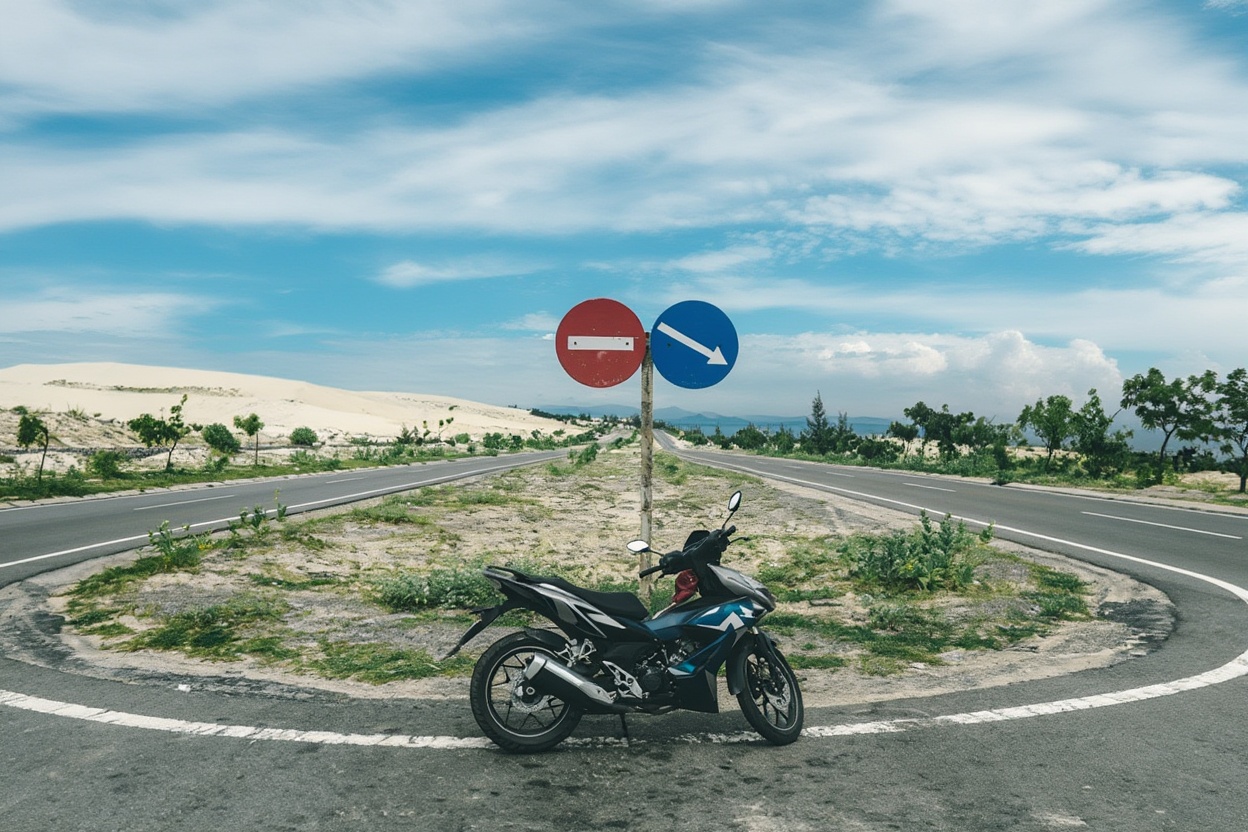
The coastal road from Hoi An to Quy Nhon by motorbike is one of the better riding days in central Vietnam. Not Ha Giang Loop dramatic — no mountain passes, no altitude — but genuinely good: coastal stretches, light traffic once you clear Da Nang, a road that follows the sea for long sections south of Tam Ky.
✓Quick Answer
Klook has the widest selection for Vietnam and is usually the cheapest. KKday is strong on day trips and local experiences.
ay. You need a motorbike already in Hoi An or rented there (120,000–180,000 VND/day).
The route: Hoi An → Da Nang (via the coastal road past Marble Mountain) → south on Highway 1 or the coastal road through Tam Ky → Quang Ngai (good lunch stop) → south to Sa Huynh (a small beach town worth a 20-minute stop) → continue to Quy Nhon.
Timing: Leave Hoi An by 6am to arrive in Quy Nhon before sunset with time for stops. The first 50km through Da Nang is the most traffic-heavy section — clearing it before 8am makes the rest of the day significantly easier.
Stops worth making:
Marble Mountain (Da Nang, 11km from Hoi An) — if you haven’t already done it, the caves and viewpoints take 45–60 minutes. Otherwise ride past.
Sa Huynh (roughly halfway) — a small fishing town with a beach that sees almost no foreign tourists. The seafood at the market-style restaurants by the water costs 80,000–120,000 VND (~$3–4.55) for a full lunch. The town marks the transition from Quang Ngai to Binh Dinh province — the food changes noticeably south of here.
My Lai Memorial (near Quang Ngai, slight detour inland) — for travelers with historical interest in the Vietnam War. Not on the direct route but 20km off Highway 1. Takes 1–1.5 hours with the visit.
The confession: I left at 7:30am on my first motorbike run between these two cities instead of 6am. Getting through Da Nang in morning rush hour took 45 minutes instead of 20. The road was still good, the arrival was still before dark, but I spent half of Quang Ngai in heat I could have avoided. Leave at 6am.
→Who It’s For
The motorbike route is for travelers who already ride, have a full day to give it, and want the road as part of the trip rather than just transit. If you’re not comfortable riding Vietnamese highway conditions — trucks, buses overtaking on curves — stick to the bus. This is not a beginner route.
Option 4 — Private Car or Transfer
Private transfers from Hoi An to Quy Nhon run 800,000–1,200,000 VND (~$30.35–45.50) for a 4-seater car booked through a local transfer company or your guesthouse. The journey is 3–3.5 hours door to door — same time as the bus but with pickup from your exact address and drop-off at your exact guesthouse in Quy Nhon.
✓Quick Answer
Private car from Hoi An to Quy Nhon: 800,000–1,200,000 VND (~$30.35–45.50) for up to 4 passengers. Book through your Hoi An guesthouse or a transfer company like Mango Travel. Splits to 200,000–300,000 VND per person in a group of 4 — comparable to the bus price per head.
For solo travelers: the bus is almost always the better value. For pairs: it depends on how much you value the door-to-door convenience. For groups of 3–4: the cost per person drops to 200,000–300,000 VND (~$7.60–11.40) — competitive with the bus while offering significantly more comfort and timing control.
Private transfers can also make stops on request — useful if you want to see Marble Mountain or Sa Huynh without committing to a full motorbike day.
Which Option Is Right For You
The open tour bus is the right call for most people. It’s the path of least resistance — book it the evening before, get picked up in the morning, arrive before lunch. If you want to spend your energy in Quy Nhon rather than figuring out transport, this is what you take.
The train makes sense if you enjoy train travel as an experience in itself, or if the coastal views matter to you more than arrival time. The extra hour or two is worth it for some travelers; for others it’s just friction. The key is understanding upfront that there’s no train station in Quy Nhon — Dieu Tri is the station, and you need a Grab to cover the final 10km.
The motorbike route is for a specific type of trip — one where the journey is the point, not just a means of getting somewhere. You need to already ride, you need a full day, and you need to leave early. If any of those conditions don’t apply, the bus is faster and less stressful.
The private car makes mathematical sense for groups of three or four. Split between four people, a 1,000,000 VND (~$38) car becomes 250,000 VND (~$9.50) each — a small premium over the bus for door-to-door service and the ability to ask the driver to stop along the way.
→Who It’s For
Bus: solo travelers, couples, anyone who values simplicity. Train: slow travelers, rail enthusiasts, anyone who wants the coastal views. Motorbike: confident riders with a full day. Private car: groups of 3–4, families, anyone with luggage that doesn’t fit on a bus rack.
Arriving in Quy Nhon — First 30 Minutes
The open tour bus drops you near the city centre, typically within a 10–15 minute walk or short Grab from the promenade hotels. If your guesthouse isn’t on the drop-off side of town, have the address ready and get a Grab — 30,000–50,000 VND (~$1.15–1.90) for most in-city trips.
From Dieu Tri station (train arrivals): step out of the station, open Grab, type your Quy Nhon hotel address. The 10km ride takes 15–20 minutes and costs 80,000–100,000 VND (~$3–3.80). Ignore any tuk-tuk or motorbike taxi drivers at the station exit offering fixed prices — Grab will be cheaper and more reliable.
From a motorbike arrival: you’ll come into the city on Highway 1 from the north (via Da Nang direction) or the southern coastal road. The promenade runs along Nguyen Tat Thanh Street — follow the coast signs and you’ll find it. Guesthouses on the promenade have parking. After a full day on the road, the stretch of coast that opens up as you ride into the city hits differently than it would from a bus window. Worth noting: there’s usually a cluster of massage places right off the promenade that are used to road-tired arrivals.
The promenade is a 5km stretch along the city beach — this is where most budget and mid-range accommodation sits. If you haven’t booked yet, walk the promenade in both directions from your drop-off point and pick by price, not by the first sign you see.
Full details on where to stay, what to eat, and how many days to budget: see the Quy Nhon travel guide. For beach planning once you’re there: Quy Nhon beaches guide covers all five options and the logistics of each.
Two things worth sorting before you land: a Vietnam eSIM so you have data the moment you clear customs, and travel insurance — medical costs for uninsured foreigners in Vietnam are significant.
Airalo eSIMs activate instantly. Buy before departure — airport SIM queues in Vietnam can take 30+ minutes.
FAQ — Hoi An to Quy Nhon
How long does it take to get from Hoi An to Quy Nhon?
Open tour bus: 3–3.5 hours. Train (via Da Nang, plus Grab from Dieu Tri): 4–5 hours total. Private car: 3–3.5 hours. Motorbike: 6–9 hours depending on stops. The bus is the fastest practical option for most travelers. All routes are roughly the same road distance — around 180km — the difference is logistics and stopping points.
Is there a direct bus from Hoi An to Quy Nhon?
Open tour buses marketed as “direct” typically route via Da Nang (the only major hub between the two cities) and may pick up additional passengers there. The total journey time accounts for this. There is no separate “local” bus service that runs the full route — the open tour bus is the standard public option. Book through your guesthouse for the most reliable experience.
Can you do the journey in one day and still have time to explore Quy Nhon?
Yes on the bus — arriving by 11am gives you a full afternoon. The Ngo Van So food street runs from 2pm and the city beach is walkable from any promenade hotel. On the train, arriving by 1–2pm still gives a solid afternoon. On the motorbike, arriving at 4–5pm means you get the promenade at dusk and the food street in the evening. Only the motorbike route leaves you genuinely short on exploration time on day one.
What is the cheapest way from Hoi An to Quy Nhon?
Open tour bus at 150,000 VND (~$5.70) is the cheapest practical option. The train is technically similar in cost if you get a basic hard seat, but the Grab from Dieu Tri adds 80,000–100,000 VND and the taxi to Da Nang adds another 100,000 VND — making the total more expensive. Motorbike has the lowest fuel cost (~50,000 VND) but assumes you already have a bike.
What should I do if I want to stop along the way?
The motorbike or private car are the only options that allow flexible stops. The open tour bus has fixed stops (toilet breaks only) and won’t deviate for sightseeing. If you want to see Sa Huynh beach, visit the My Lai Memorial, or spend an hour at Marble Mountain en route, book a private transfer and specify the stops when booking — most transfer companies accommodate this for a small surcharge or no extra charge.
Is Quy Nhon worth a stop or should I go straight to Nha Trang?
Worth a stop — the two cities are not interchangeable. Nha Trang is more developed, more touristy, and more expensive. Quy Nhon is smaller, quieter, and cheaper, with beaches that see a fraction of the traffic. Most travelers who skip Quy Nhon in favour of going straight to Nha Trang regret it when they talk to people who didn’t. Budget two or three nights. If you hate it, you can always leave early — but almost nobody does.
Can I book the open tour bus on the day of travel?
Usually yes during low season, but it’s not a guarantee. During June–August and around Vietnamese public holidays, the Hoi An–Quy Nhon route can sell out. The safe move is to book the evening before. Ask your guesthouse — if they can’t get a seat for tomorrow, they’ll tell you immediately and you can plan accordingly. Same-day booking is a risk, not a strategy.