Last updated: June 2026 — current transport prices and cave access conditions verified
Every train from Da Nang to Hanoi stops at Đồng Hới. I’ve passed through Đồng Hới four times on that journey and actually stayed twice. The city sits on a narrow coastal strip between the South China Sea and the first foothills of the Trường Sơn mountain range — which is to say it’s compressed, quiet, and navigable on foot in a way that Đà Nẵng or Nha Trang are not.
The first thing you notice stepping out of Đồng Hới train station: the smell of salt air from the sea mixed with the charcoal smoke from a bánh mì cart parked permanently outside the exit. Two women argue quietly over price at a flower stall. A xe ôm driver (say: say-ohm, motorbike taxi) calls out “Phong Nha?” to every tourist-looking person who walks past. He’s not wrong — most of them are going exactly there.
Đồng Hới is a city that knows what it is. It’s not trying to be a destination. It’s a starting point. And as starting points go, it’s a good one — affordable, functional, and less chaotic than larger coastal cities further south. Two days here before or after Phong Nha is a reasonable itinerary. Five days in Đồng Hới without a plan is a long time in a quiet provincial city.
Getting to Dong Hoi: Train, Bus, and Flight
Đồng Hới is on the main Hanoi–Ho Chi Minh City rail line, which makes it straightforward to reach from almost anywhere on the coast.
✓Quick Answer
From Hanoi: overnight sleeper train takes 9–11 hours (200,000–800,000 VND depending on class). From Da Nang: 3–4 hours by train (130,000–400,000 VND). From Hue: 2–3 hours by train or bus (~100,000–200,000 VND). Dong Hoi airport has flights from Hanoi (~1 hour, 300,000–900,000 VND) and Ho Chi Minh City.
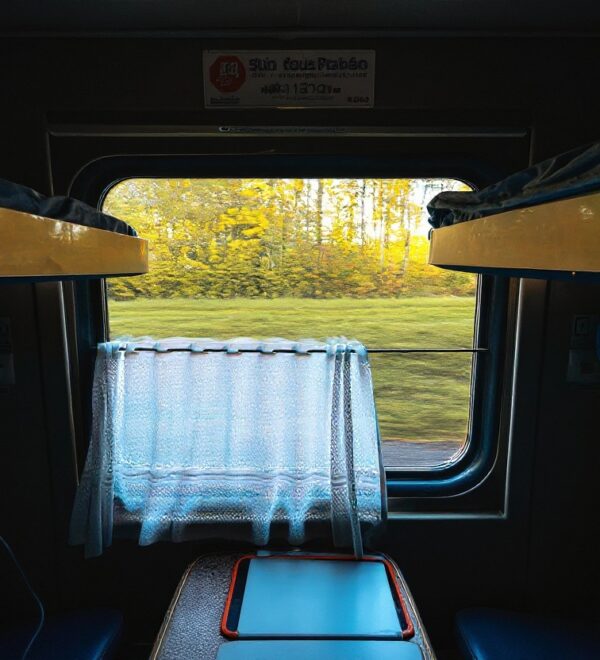
The sleeper train from Hanoi is the classic way to arrive — you board in the evening, sleep in a four-berth or six-berth cabin, and wake up somewhere in northern central Vietnam with the mountains already close. Soft-berth (four-berth cabin) is worth the extra cost over hard berth for longer overnight journeys. If the Hanoi to Da Nang train narrative interests you, the Vietnam train journey guide covers the full Reunification Express experience.
Dong Hoi to Phong Nha: Getting to the Caves
Đồng Hới is 45km from Phong Nha village, the base for cave exploration in Phong Nha-Kẻ Bàng National Park. Several transport options with very different price-to-convenience ratios:
Local bus: 35,000 VND (~$1.35). Buses run from Đồng Hới town center to Phong Nha village several times daily. Journey time roughly 1 hour. Seats are usually available without booking, but luggage space on local buses is limited — this works best for day-trippers without large bags. Ask your accommodation in Đồng Hới where the current departure point is; it shifts occasionally.
Taxi or private car: 350,000–450,000 VND (~$13–17). More expensive, but direct, air-conditioned, and accommodates luggage. Worth it if you’re arriving or departing with large backpacks, if you’re arriving from the airport, or if you have a tight schedule. Grab rides sometimes work for this route from the airport — check availability before defaulting to a taxi desk.
Motorbike rental from Đồng Hới: 120,000–180,000 VND (~$5–7) per day. The 45km ride is genuinely beautiful — rice paddies, river crossings, the mountains rising ahead of you. If you’re comfortable on a motorbike and not carrying too much luggage, this is the best experience option. Road quality is good. Navigation is straightforward on one main road.
Bicycle: possible for the fit. Cyclists do make this ride — it’s not technically challenging and the road is mostly flat. Phong Nha village has bicycle rental too (50,000–70,000 VND/day) for getting around locally once you’re there.
What to Do in Dong Hoi (Besides Pass Through)
If you’ve arrived late on the train and are spending a night before heading to Phong Nha the next morning, Đồng Hới has more to offer than a transit stop.
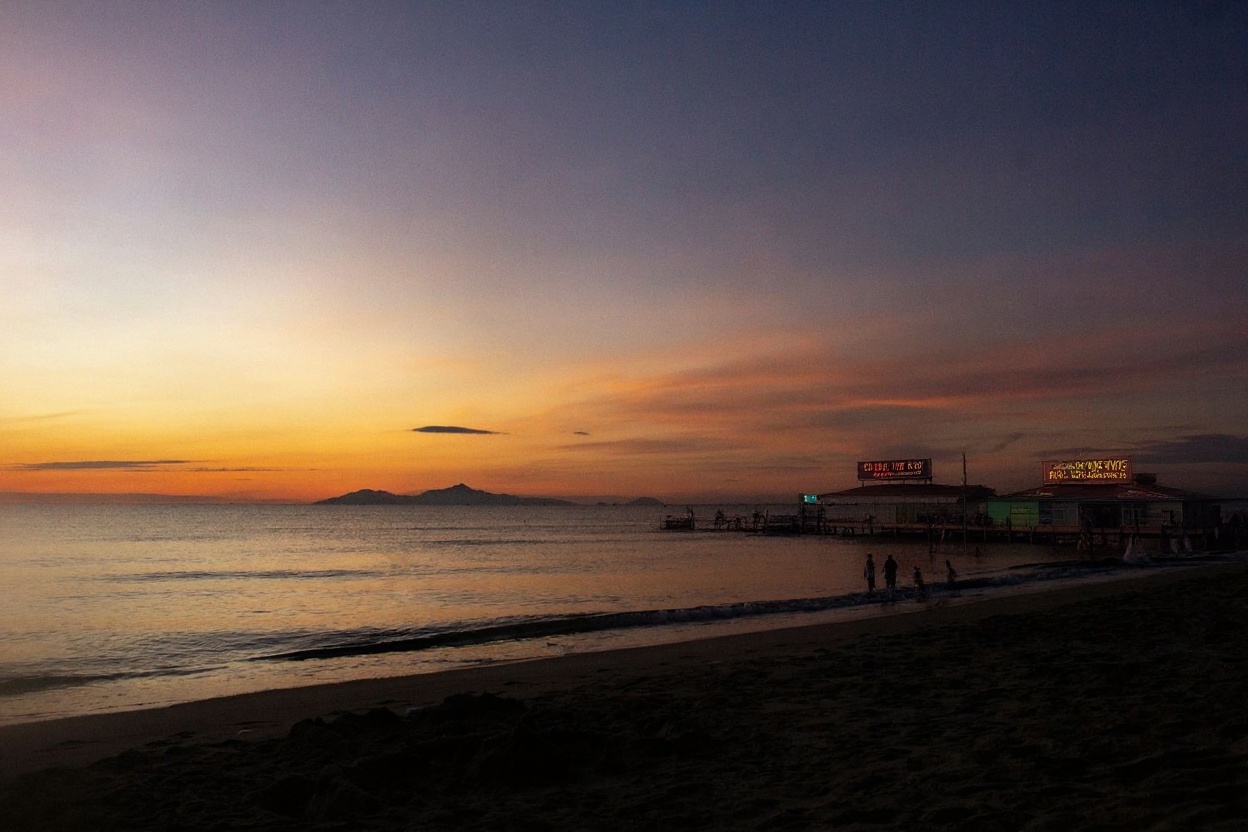
Nhật Lệ Beach and the estuary. Đồng Hới sits at the mouth of the Nhật Lệ River where it meets the South China Sea. The beach is uncrowded by Vietnamese coastal standards — wide, clean, with no hawkers. Sunrise here is quiet and worth getting up for. Swimming is fine in the calmer months; the estuary current can be strong during typhoon season.
Đồng Hới Citadel ruins. The original Đồng Hới citadel was largely destroyed by American bombing during the Vietnam War — the city was one of the most heavily bombed in the country, as it sat at the border between North and South Vietnam (the 17th Parallel division). What remains of the old citadel walls and gates is visible in the city center. Not a major sight, but the historical context — standing at what was literally the front line of the country’s division — is striking if you’ve read anything about the war.
Tam Tòa Church. Another visible marker of the war: a bombed-out Catholic church that has been preserved in ruins as a war memorial rather than rebuilt. The bell tower is partially standing. Sobering and photogenic in equal measure. Free to walk through.
Đồng Hới market (Chợ Đồng Hới). The central market is the best place to eat breakfast before getting on the bus to Phong Nha. Bánh cuốn (steamed rice rolls with minced pork), bún bò Huế (spicy beef noodle soup, 30,000–50,000 VND / ~$1.20–2), and the local specialty bánh canh cua (crab thick noodle soup) — all available from 6am in the market stalls. The market also sells packaged snacks and water for the cave day trips.
Duck Stop. This sounds made-up, but it’s a real and genuinely absurd tourist attraction: a riverside property where over 100 ducks roam freely around the garden and the walkways, and you can feed them and interact with them. Entry: 100,000 VND (~$4). Duration: about 10 minutes before you’ve had enough duck interaction. Located about 3km from Phong Nha village center — most travelers combine it with a bike ride or include it on the road between Đồng Hới and the caves.
⚠Real Talk
Đồng Hới is not a standalone destination. If someone told you “you have to spend 3 full days in Đồng Hới,” they are wrong. One night to recover from travel, a morning walk on the beach, and a fresh breakfast at the market is the correct amount of Đồng Hới for most travelers. The caves are the reason to be here. Go to the caves.
Should You Stay in Dong Hoi or Phong Nha Village?
The decision that most Phong Nha travelers get wrong: where to base yourself.
Đồng Hới has better transport connections (airport, train station, more frequent buses), better city amenities (ATMs, pharmacies, larger hotels, more restaurant variety), and a beach. Phong Nha village has the caves literally on its doorstep, a tight cluster of tour operators, guesthouses, and restaurants oriented entirely toward cave tourism, and the nightlife of a small, friendly backpacker village.
The right answer depends on what you’re optimizing for:
Stay in Phong Nha village if: Caves are your primary purpose. You want to maximize time in the park and minimize daily transport. You like the social atmosphere of a small traveler hub. Budget accommodation in Phong Nha village (200,000–400,000 VND / ~$8–16 for a private room) is good value. You’re planning multiple cave days.
Stay in Đồng Hới if: You’re arriving late at night and just need a bed before moving on. You want a more comfortable hotel at a city price point. You’re flying in or out and need airport proximity. You prefer having food options beyond “restaurants aimed at cave tourists.” You’re spending only one night total in the area before your train south or north.
The compromise that works for many travelers: one night in Đồng Hới on arrival (train or flight logistics), then two nights in Phong Nha village for cave days, then return through Đồng Hới to catch onward transport. Our Phong Nha caves guide covers the specific cave options — Paradise Cave, Dark Cave, Phong Nha Cave boat tour — in detail.
Where to Eat in Dong Hoi
Đồng Hới’s food scene is quietly good — undiscovered compared to more famous central Vietnam cities, which means no tourist pricing and no performance for foreigners.
Bánh canh cua (say: bahn kahn koo-ah): the local specialty — a thick, almost gelatinous rice noodle soup with crab meat, fish cake, and shrimp in a rich orange broth. The smell when a bowl arrives is pure shellfish and turmeric. Found at market stalls from early morning, usually 30,000–50,000 VND (~$1.20–2) per bowl. This is breakfast in Đồng Hới. Order it before 9am; many stalls sell out.
Bún bò Huế: the spicy beef noodle soup variant from nearby Huế is omnipresent in central Vietnam. In Đồng Hới it’s made with more of the local fermented shrimp paste (mắm ruốc — say: mam zuok) than the Huế original, giving it a sharper, more pungent flavor. 30,000–45,000 VND at sit-down spots near the market.
Fresh seafood: the fishing harbor is active. Grilled squid (mực nướng — say: muk nyung) served with salt, chili, and lime is available at riverside stalls in the evening, 80,000–150,000 VND per portion. Order by weight; the vendor will show you the raw seafood before grilling. This is dinner in Đồng Hới — sit outside, look at the river, order a Bia Hà Nội.
Bia hơi and roadside snacks: the culture of cheap fresh draft beer (bia hơi — say: beer hoi) exists here at 5,000–10,000 VND per glass, consumed on low plastic stools at wooden tables on the pavement. This is where locals are from 5pm onward. A few words of Vietnamese in the right tone and you’ll be offered a glass before you’ve sat down.
Where to Stay in Dong Hoi
Accommodation in Đồng Hới is cheaper than equivalent options in Da Nang or Hoi An and noticeably more functional than guesthouses in small Phong Nha village. The trade-off is the 45km commute to the caves each day.
Budget guesthouses (150,000–300,000 VND / ~$6–12 per night): Clean private rooms around the train station area and the old town market. Breakfast is usually included (bánh mì or a simple noodle soup). Air conditioning standard. The density of guesthouses within walking distance of the train station is high — walk out and pick one rather than booking ahead unless you’re arriving very late.
Mid-range hotels (400,000–800,000 VND / ~$16–31 per night): Beach-facing hotels along the Nhật Lệ River estuary are the best value in this range — you get a sea view and a short walk to the beach for the same price as a standard city hotel room. Sun Spa Resort and Sun Hotel are recognizable names. Breakfast usually included. Free parking if you’ve rented a motorbike.
What’s lacking: There are no genuinely boutique or design hotels in Đồng Hới at the level you’d find in Hội An or Hà Nội. Upmarket accommodation is better sourced in Phong Nha village, where eco-lodges and riverside resorts have been developing for the past decade. If you want a premium Phong Nha experience, base yourself there, not in Đồng Hới.
↗Insider Tip
Guesthouses around Dong Hoi’s Nhat Le Beach offer sea-view rooms for the same price as standard city rooms inland. If you’re spending one night here, pay the 30,000–50,000 VND premium for a beach-side room — waking up to the estuary view before catching the morning bus to Phong Nha is a good way to start a cave day.
What Waits in Phong Nha: A Quick Cave Overview
Đồng Hới itself is the transit. The reason you’re here is Phong Nha-Kẻ Bàng National Park, a UNESCO World Heritage site with the world’s largest known cave system. A quick reference before you arrive:
Phong Nha Cave (boat tour): The original cave. You board a small wooden boat at Phong Nha village and travel by river into the cave entrance — about 1.5km inside. Illuminated stalactites and stalagmites, formations that have been developing for 250 million years. Open year-round including during rainy season when other caves close. 150,000 VND (~$6) per person. Duration: 1.5–2 hours.
Paradise Cave (Thiên Đường): 31km of mapped passages, the longest dry cave in Asia. The accessible section (1km boardwalk) is overwhelming in scale — the ceiling rises 72 meters, the formations are enormous. Entrance fee: 250,000 VND (~$10). Open February through September; closes October–December during rainy season. The extra 2km boardwalk extension costs 100,000 VND more and is worth it to escape the main tourist crowd.
Dark Cave (Hang Tối): An adventure cave involving zip-lining in over the river, swimming through underground sections, and crawling through mud baths. Genuinely fun, not suitable for anyone with mobility limitations. 450,000 VND (~$17) full package. The zip-line alone is 150,000 VND if you just want the entrance. Most popular cave for younger travelers.
Hang Én and other expedition caves: Hang Én (the world’s third largest cave) requires a 2-day overnight trek through jungle with licensed guides from Oxalis Adventure — cost around 5,500,000 VND (~$210) per person. Son Đoòng, the world’s largest cave, requires a 4-day expedition costing $3,000+ per person. These are fully separate experiences from day-trip caving. Book months ahead, not on arrival.
What I Got Wrong: The Bus I Missed
First time through Đồng Hới. Train arrived late afternoon, found a room, went out for dinner. The bus to Phong Nha I’d planned to take the next morning left at 7am. The “main bus station” I’d read about in an outdated blog post had moved. The pickup point for the local bus was at a different street corner — this is standard in Vietnamese provincial towns, where bus routes shift seasonally and nobody updates the travel blogs. I spent 45 minutes walking around the wrong part of the city asking xe ôm drivers who each pointed me in a different direction.
The solution was obvious in retrospect: ask my guesthouse the night before, specifically, where the bus to Phong Nha currently departs from. They knew. The answer took 30 seconds. I took the 9am bus instead of the 7am bus and lost two hours. The lesson applies everywhere in rural Vietnam: ask your accommodation, not a travel blog or a map, for current bus pickup locations.
Best Time to Visit Dong Hoi and Phong Nha
The caves are the determining factor here, and the caves have a hard weather constraint.
February to August is generally the best window. Low rainfall, comfortable temperatures (22–32°C). This is when all major caves are open. Paradise Cave is the one most sensitive to water levels — it closes or reduces boardwalk access during flooding. Check current status with your tour operator before booking Paradise Cave specifically.
September is a transitional month — rain begins picking up. Usually still viable for the major caves but the risk of closure increases.
October to December is rainy season in central Vietnam. Multiple caves close during this window due to flooding and safety concerns. Phong Nha Cave (the boat tour cave) generally stays open, but Paradise Cave and many others do not. The countryside around Phong Nha floods significantly in November. If your itinerary lands here, verify with operators which caves are accessible before you book the whole trip around them.
January is cool (temperatures drop to 15–18°C in the evenings), but typically dry. A reasonable time to visit if you pack for cooler weather. The caves are usually open again after the December flooding season ends.
The full central Vietnam seasonal breakdown and how Phong Nha fits into a longer itinerary is in our central Vietnam travel guide.
Dong Hoi and Phong Nha FAQ
Is Dong Hoi worth visiting?
Yes, as a gateway to Phong Nha-Ke Bang National Park — not as a standalone destination. Dong Hoi has a good beach, wartime history at the Citadel ruins and Tam Toa Church, and a functional food market. One night is the right amount. Travelers who base entirely in Dong Hoi for cave exploration spend too much time on the Dong Hoi–Phong Nha commute.
How do you get from Dong Hoi to Phong Nha?
Local bus: 35,000 VND (~$1.35), about 1 hour, several departures daily. Taxi: 350,000–450,000 VND (~$13–17), faster and door-to-door, good for luggage-heavy travelers or tight schedules. Motorbike rental (120,000–180,000 VND/day) for the most scenic and flexible experience — the 45km road through rice paddies and foothills is genuinely beautiful. Ask your guesthouse for the current bus pickup location rather than relying on outdated blog directions.
Should I stay in Dong Hoi or Phong Nha?
Stay in Phong Nha village if you’re spending 2+ days in the cave area. Stay in Dong Hoi if you’re arriving by flight or train and just need one transition night before heading to Phong Nha, or if you’re departing from the airport or want a more comfortable city hotel. The best formula: one night in Dong Hoi on arrival, two nights in Phong Nha village for cave days, exit through Dong Hoi for onward transport.
When should you avoid visiting Phong Nha?
Avoid October to December if cave access is your primary purpose. Central Vietnam’s rainy season peaks in November, causing flooding that closes major caves including Paradise Cave. Phong Nha Cave boat tours usually remain open, but many caves do not. January–September is generally the safe window, with February–August being the optimal period for all cave options.
How far is Dong Hoi from Phong Nha?
45km by road. About 1 hour by local bus, 45 minutes by taxi or private car. The road passes through rice paddies and river valleys before reaching the karst foothills around Phong Nha village. It’s a straightforward route on a single main road — easy to navigate independently on a motorbike.