Last updated: May 2026 — prices and access verified May 2026.
I’ve driven the Huế–Đà Nẵng route four times. The first three I took the highway tunnel — 6km through the mountain, done in 8 minutes, nothing to see. The fourth time I took the Hải Vân Pass road. The difference between those two experiences is the difference between a commute and a reason to be in Vietnam. I pulled over three times on the descent just to stand there and stare at the ocean.
Lang Co beach sits at the bottom of that road. Here’s what it’s actually like, and what to do with your time there.
Where Is Lang Co?
Lang Co (say: lang koh) is a small town on a narrow peninsula in Thừa Thiên Huế province, about 65km south of Huế city and 35km north of Đà Nẵng. It sits on a sand spit between the Lăng Cô lagoon and the South China Sea. The Hải Vân Pass (say: hai van — “ocean cloud pass”) rises to 496m directly above the town on the south side.
✓Quick Answer
Lang Co is 65km south of Huế (about 1–1.5 hours by motorbike or car via the pass road, slightly faster by highway). From Đà Nẵng: 35km north, about 45 minutes by car via the coastal road. The Hải Vân Tunnel bypasses the town entirely — if you’ve been taking the tunnel, you’ve been driving past Lang Co without seeing it.
The coordinates: 16.22° N, 108.07° E. The town center is on the lagoon side of the peninsula; most accommodation and restaurants face the lagoon. The ocean beach is a 5-minute walk east across the narrow strip of land.
The Hải Vân Pass — The Main Reason to Come Here
The Hải Vân Pass is one of the most famous motorbike roads in Vietnam — featured on Top Gear in 2008, cited in every Vietnam travel guide written since. It’s on those lists for good reason. The road climbs from Lang Co on the north side to 496m, with views back over Lang Co bay and lagoon on one side and Đà Nẵng Bay opening on the other. The ocean is visible from both sides of the summit for most of the ascent.
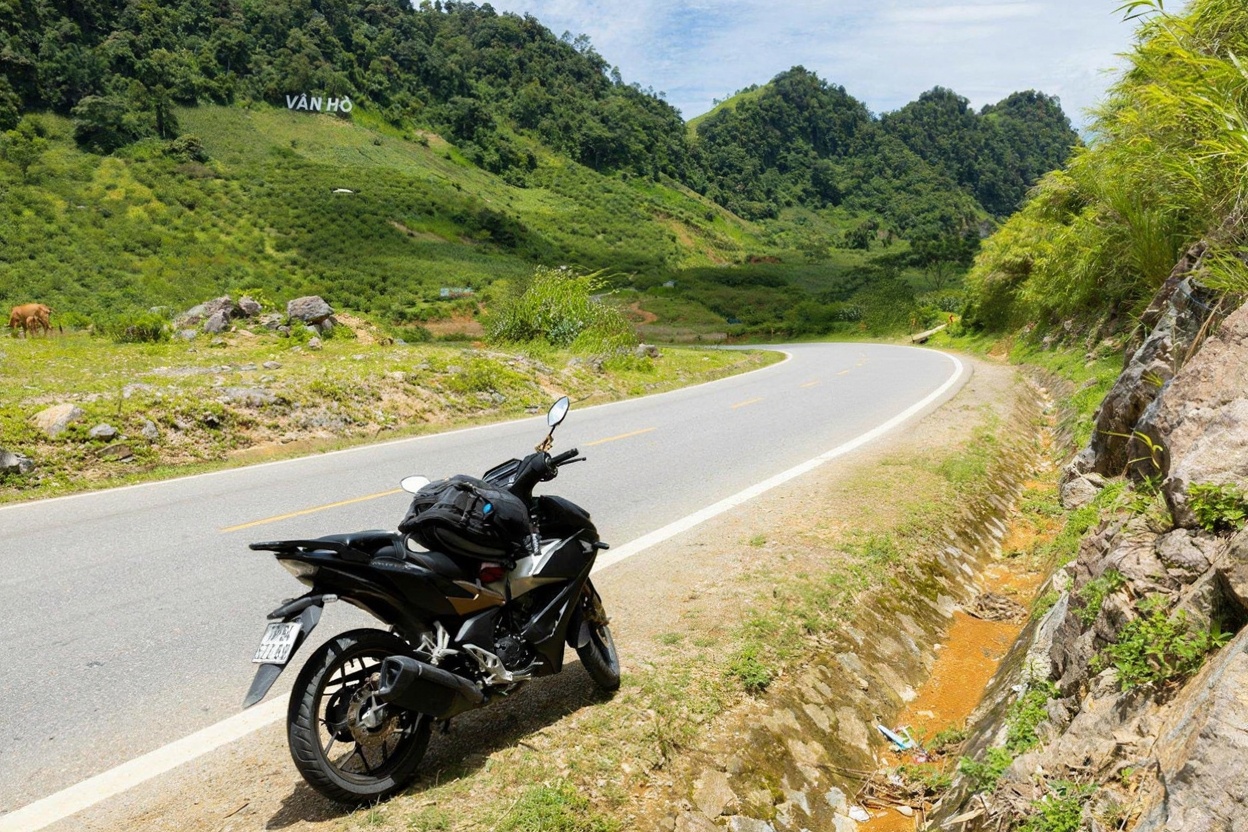
At the summit, there are French colonial-era fortifications and old American-era military structures, now overgrown and open to walk around. The view from the summit pavilion extends north and south — on a clear day you can see both Lang Co bay and Đà Nẵng simultaneously. On a cloudy day, which is frequent, the pass lives up to its name: literally “ocean cloud.”
✓Quick Answer
Riding the Hải Vân Pass on a motorbike takes about 45 minutes to 1 hour each way — the road is steep in sections and requires patience, not speed. Take the QL1A national road (the old pass road), NOT the tunnel. The approach from the Lang Co (north) side is longer and more dramatic than the Đà Nẵng (south) side. Leave Lang Co in the morning before 9am to beat the tour jeeps that arrive in convoy around 10am.
The pass road can also be driven in a car, but the experience is substantially better on a motorbike. If you don’t ride, hire a xe ôm (say: say ohm, motorbike taxi) driver from Lang Co town for 200,000–300,000 VND (~$8–11) for a return trip to the summit — negotiate before you get on. The drivers who hang around the town guesthouse area in the morning know the road well and will stop at the viewpoints if you ask them to.
Practical notes for riding the pass yourself: the road surface is generally good, with some patching on the lower sections. The gradient peaks at around 10–12% on the upper hairpin bends — semi-automatic motorbikes handle this fine at low speed. The descent toward Đà Nẵng is steeper than the Lang Co approach; use engine braking on the downhill sections rather than riding the hand brake all the way down. The road is narrow in places — single-lane width with informal passing points. Traffic from the Đà Nẵng side is the dominant flow in the morning; from the Lang Co side in the afternoon. Go against the traffic flow where you can.
Fuel: the last reliable petrol station before the pass on the Lang Co side is in Lang Co town. Fill up before you ride — there’s no fuel on the pass itself. After the descent on the Đà Nẵng side, petrol is immediately available on the approach to the city.
For everything about riding motorbikes in Vietnam — licenses, what to check on a rental bike, insurance, and road behavior — the Vietnam motorbike guide covers the detail. The Hải Vân Pass is intermediate difficulty, not a beginner road, but it’s well within reach for anyone who’s ridden in Vietnamese cities for a few days.
⚠Real Talk
The Hải Vân Pass has become very well-known, which means tour jeeps and group motorbike tours now do it regularly. On weekends and Vietnamese holidays, the summit can be surprisingly crowded with Vietnamese domestic tourists and organized groups. The pass itself is still the pass — the views haven’t changed. Go on a weekday, go early, and don’t let the other tourists at the summit ruin what the road itself was.
Lang Co Beach — The Actual Swimming
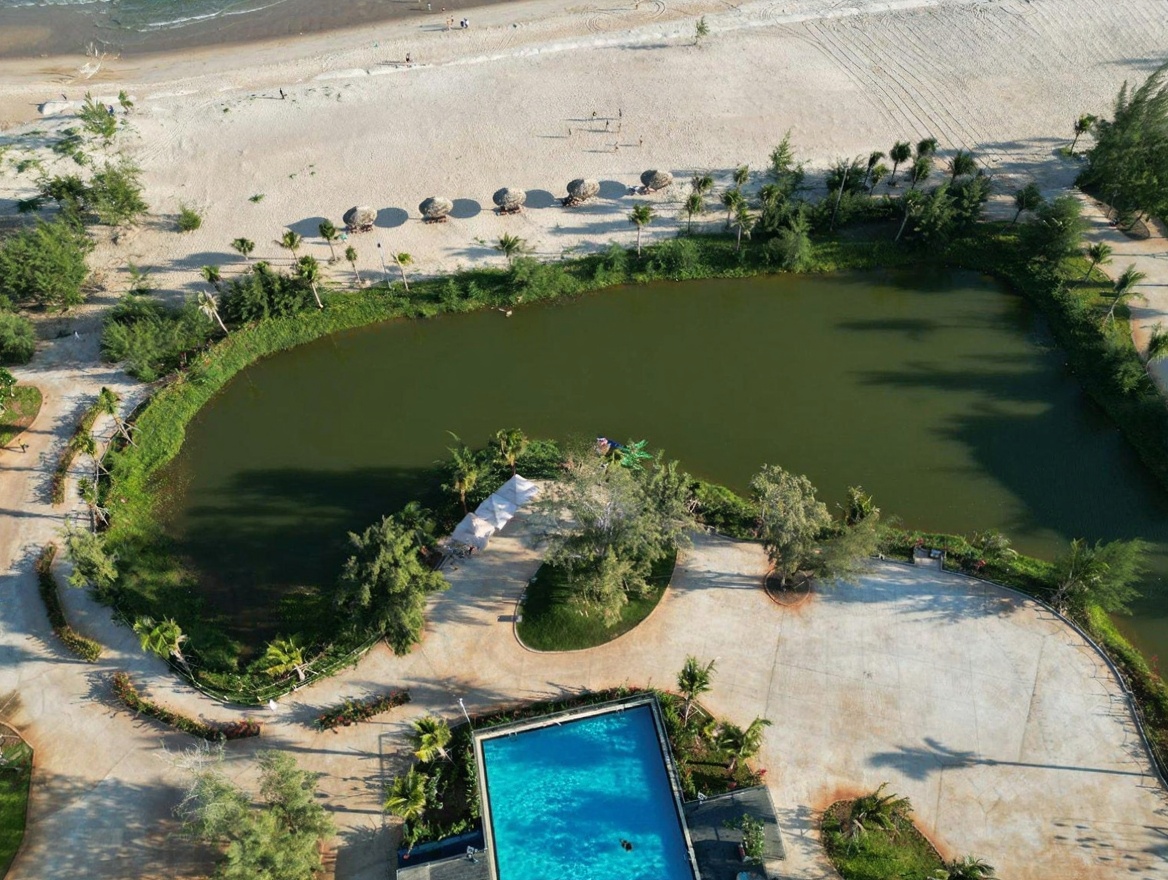
The ocean beach on the eastern side of the peninsula runs for about 10km of unbroken sand. It faces east and catches the morning light directly. In the dry season (March–August), the water is clear and the waves are consistent but manageable for swimming. In September–November, swell from passing weather systems can make conditions rough — check before you go in.
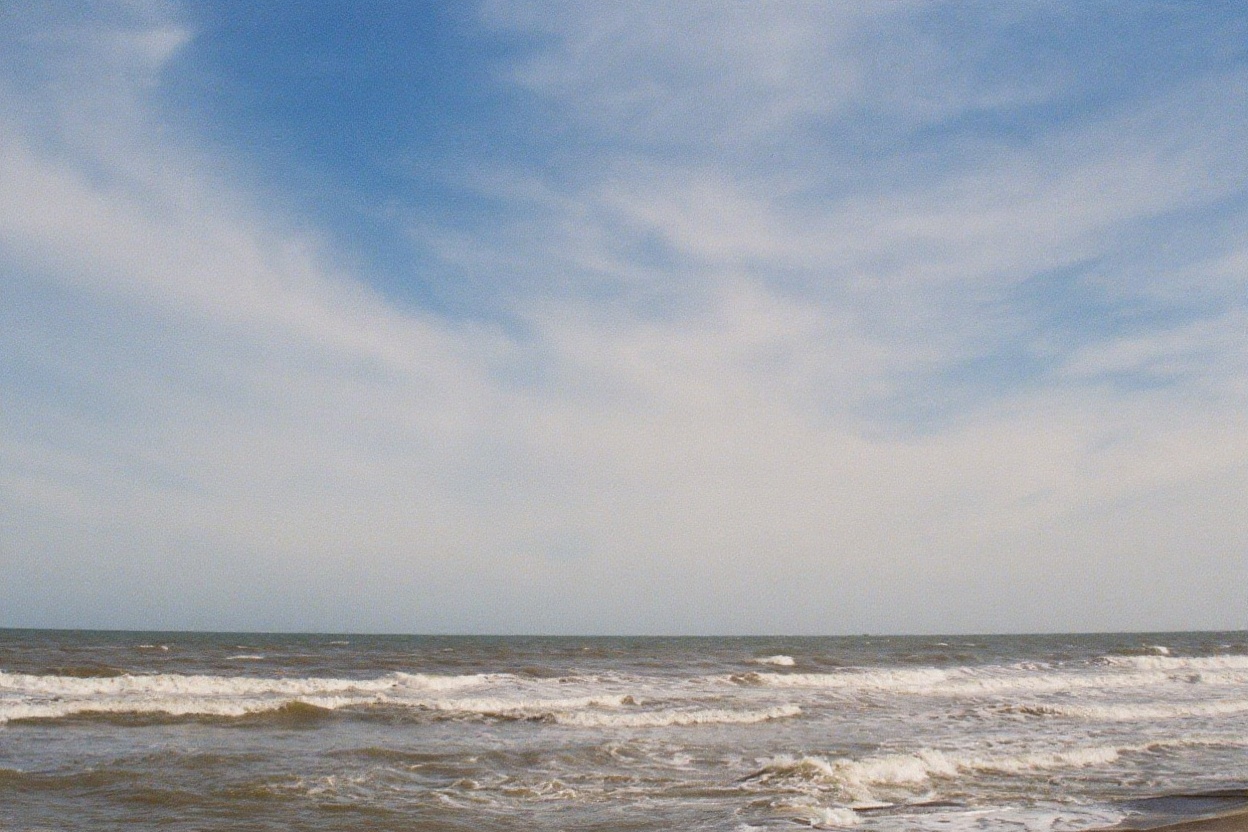
The beach has minimal infrastructure. A few food vendors operate near the main town beach access point, selling coconuts, seafood, and corn. No beach bars, no sunlounger rentals, no water sports operators. The resorts (primarily Laguna Lăng Cô on the southern end) have private beach sections with loungers, but those are for guests.
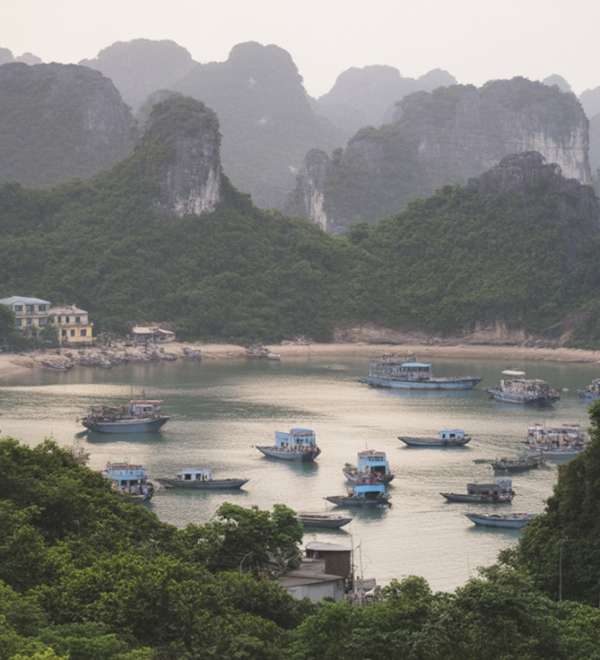
Lagoon side: The Lăng Cô lagoon on the western side of the peninsula is calmer than the ocean side and better for small children. Local fishing boats cross it regularly. The shallow, warm water of the lagoon is not particularly good for swimming — visibility is lower than the ocean side — but it’s where the sunset views are and where most of the restaurants and guesthouses face.
→Who It’s For
Couples or families wanting one quiet night between Huế and Đà Nẵng — good choice. Travelers who want beach facilities, nightlife, or organized activities — wrong stop. Solo motorbike travelers doing the central coast route — mandatory overnight. Package tour groups doing Huế–Hội An in 2 days who are already scheduled for the tunnel — it’s not worth fighting the itinerary for.
Things to Do in Lang Co (Beyond the Pass)
The Hải Vân Pass takes up most of a half-day. What to do with the rest of the time in Lang Co:
Lagoon boat trip: Small wooden fishing boats cross the Lăng Cô lagoon from the town pier. You can hire one for 50,000–100,000 VND (~$2–4) for an hour on the water — the boatman will take you across to the sand bar, wait while you swim, and bring you back. It’s not organized tourism; you’re negotiating with fishermen who also do this as a side income. Walk to the main town pier in the early morning and ask.
Klook has the widest selection for Vietnam and is usually the cheapest. KKday is strong on day trips and local experiences.
he town sits along the lagoon’s southern bank. Nets piled on the quayside, boats tied up between runs, old men mending gear in the shade. It’s worth an hour on foot — not because anything specific happens there, but because it gives you the unglamorous version of the place that the resort doesn’t show. The smell of drying fish and diesel and salt water. The sound of an outboard motor starting cold in the early morning.
Sunrise on the ocean beach: The eastern beach faces directly into the morning sun coming off the South China Sea. Nobody manages it, no one sets up chairs, there are no vendors at 6am. Walk across the peninsula from the lagoon side — 5 minutes — and find 10km of empty sand with the sun rising out of flat water. This is one of the better free experiences in central Vietnam and almost no one talks about it because it doesn’t have a name.
The Bach Ma National Park access road: About 40km north of Lang Co, the Bach Ma National Park (say: bak ma — “white horse”) has one of the more dramatic upland drives in the region — the road climbs to 1,450m through dense jungle with views east over the coast. It’s a day trip from Lang Co that most travelers don’t know about, requiring a full day and a reliable motorbike with enough power for the gradient. Worth it if you have a spare day and any interest in birdwatching or mountain scenery outside the beach-pass-beach circuit.
Where to Stay in Lang Co
Accommodation splits into two categories: the large resort (Laguna Lăng Cô) and everything else.
Laguna Lăng Cô: A Banyan Tree resort on the southern end of the peninsula. Beautiful property, private beach, multiple restaurants, full facilities. Prices start around 3,000,000–5,000,000 VND (~$114–190) per night and go up. If budget is not a constraint and you want a night of pure comfort between the two cities, this is one of the better resort options on the central coast. If budget is anything close to a consideration, it isn’t the right choice.
What to Eat in Lang Co
Lang Co’s main food claim is seafood from the lagoon — crab, shrimp, and fish pulled out of the same water you’re looking at from the restaurant terrace. The local speciality is cua đá (say: kwa da — rock crab) steamed or grilled with salt and chili. Expect 80,000–150,000 VND (~$3–6) per portion at honest local spots near the lagoon.
Bún bò Huế (say: boon bo hway — Huế-style spicy beef noodle soup) is available at small local shops for 25,000–40,000 VND (~$1–1.50) a bowl. It’s better here than in many Đà Nẵng restaurants that have diluted the recipe for tourist palates. The spice level is real.
Stay away from any restaurant facing the highway with a menu in four languages and photos next to every item. Walk into town, find the tables with plastic stools and no English signage, point at what the table next to you is eating. This method has never failed me in Lang Co.
A note on the breakfast situation: Lang Co town has a morning market (chợ, say: choh) that opens around 5:30am and wraps up by 8am. Fresh produce, still-hot bánh mì from a woman with a portable grill, cà phê (say: ka fay) for 15,000 VND from a thermos. Get there by 6am before the vendors with the best stuff pack up. If you miss it, the guesthouse breakfast situation in Lang Co is uniformly mediocre — fried egg and white bread, maybe noodle soup if you ask.
The imperfection confession: I arrived in Lang Co on a Sunday evening expecting a quiet beach dinner. Half of Huế had the same idea. The lagoon-side restaurants were full, the seafood prices were 40% higher than the menu suggested, and the crab I eventually ordered was clearly not fresh. Lang Co on a weekend in July or August is a different place from Lang Co on a Tuesday in April. Time your overnight accordingly — or at least don’t arrive on a Saturday evening expecting the empty-town experience.
Getting to Lang Co
From Huế: approximately 65km south on Highway 1A. By motorbike via the pass: 1.5–2 hours depending on how many times you stop. By car: 1 hour direct. By train: Lang Co has a small railway station (Lăng Cô station) on the Reunification Express line — around 1 hour from Huế, trains stopping here are limited. By bus: buses on the Huế–Đà Nẵng route will drop you at the Lang Co junction; it’s a short xe ôm ride into town from the junction.
From Đà Nẵng: 35km north via the coastal road below the Hải Vân Tunnel. By car: 45 minutes. By motorbike over the pass: 1–1.5 hours (and worth every extra minute). The road south from the pass summit drops straight into Đà Nẵng with the bay opening up in front of you — one of the best arrival moments in central Vietnam.
12Go covers most Vietnam routes — sleeper buses, trains, and island ferries. Compare schedules and book in advance during peak season (Dec–Feb, Jun–Aug).
Best time to visit: March through August is the dry season for this stretch of the central coast. September through November brings monsoon rain from the northeast — Lang Co can get genuinely flooded in a bad typhoon season. The Hải Vân Pass road becomes wet and dangerous in heavy rain and is occasionally closed during severe weather. Check conditions before riding. December through February is cooler and can be grey, but the beach and pass are still accessible and often empty.
Lang Co fits naturally into a central Vietnam route between Huế and Đà Nẵng. For the full picture on both cities, the Huế travel guide and the Hội An things to do guide cover what’s worth your time on either side of this stop.
Frequently Asked Questions
Is Lang Co worth stopping at between Huế and Đà Nẵng?
Yes, if you combine it with the Hải Vân Pass. The beach on its own — while genuinely good — doesn’t justify a special stop. The pass road above Lang Co is one of the best short motorbike rides in Vietnam, and stopping overnight at Lang Co is the natural way to break the Huế–Đà Nẵng journey while doing the pass properly. If you’re in a car and taking the tunnel, there’s less reason to stop.
How do I get to Lang Co from Huế?
From Huế: 65km south on Highway 1A. By motorbike over the Hải Vân Pass: 1.5–2 hours. By car via the highway: about 1 hour. Trains from Huế to Lăng Cô station run on the Reunification Express — check the schedule at dsvn.vn for trains stopping at this small station. Buses on the Huế–Đà Nẵng route drop passengers at the Lang Co junction, about 2km from town.
Is Lang Co safe for swimming?
Yes in the dry season (March–August). The ocean-side beach has consistent east-facing waves that are swimmable for most adults. September through November, weather systems passing offshore create swell that makes conditions unpredictable — watch the waves before you enter and pay attention to any local warnings. The lagoon side is calmer year-round but not ideal for swimming due to lower visibility and boat traffic.
What is special about Lang Co?
The combination of the Hải Vân Pass directly above it and the lagoon-and-ocean geography of the peninsula. National Geographic has listed it as one of the world’s most beautiful bays. The beach itself is genuinely beautiful — 10km of white sand with the Trường Sơn mountains as a backdrop — and it gets very few foreign visitors compared to the central coast stops on either side of it.
Two things worth sorting before you land: a Vietnam eSIM so you have data the moment you clear customs, and travel insurance — medical costs for uninsured foreigners in Vietnam are significant.
Airalo eSIMs activate instantly. Buy before departure — airport SIM queues in Vietnam can take 30+ minutes.
The Honest Summary
Lang Co is what most travelers are looking for when they picture central Vietnam — a bay with mountains behind it, a beach with nobody on it, a lagoon at sunset, a mountain road that makes you understand why people ride motorbikes through this country. It just happens to sit between two cities that both have better tourism infrastructure and more things to do, so most people blow past it on the tunnel and never stop.
That’s your advantage. Stop. Ride the pass. Eat the crab. Sleep by the lagoon. Leave the next morning with a clear view south toward Đà Nẵng Bay opening up as you come off the pass — and understand that the tunnel was always the wrong choice.
Lang Co doesn’t ask much from you. One night, one morning, a tank of petrol for the pass. The return on that investment — the views, the empty beach at sunrise, the lagoon at dusk with the mountains turning orange behind the fishing boats — is out of proportion to the effort. Very few places on the central Vietnam coast can say the same.
Come before the boutique hotels get here. Come before there’s a beach club with a resident DJ. Come while the fishing boats still outnumber the tourist boats and the crab is still worth ordering. That window exists right now. It won’t for much longer.