Last updated: May 2026
The South Island — The Best Half of Phu Quoc
The southern third of the island has the best beaches (Sao, Khem), the historical site (Phu Quoc Prison), the An Thoi pier for island boat trips, and some of the island’s least-developed coastal road. The 50km loop from Duong Dong down the west coast to An Thoi, across to Sao Beach, and back north is the best half-day motorbike route on the island.
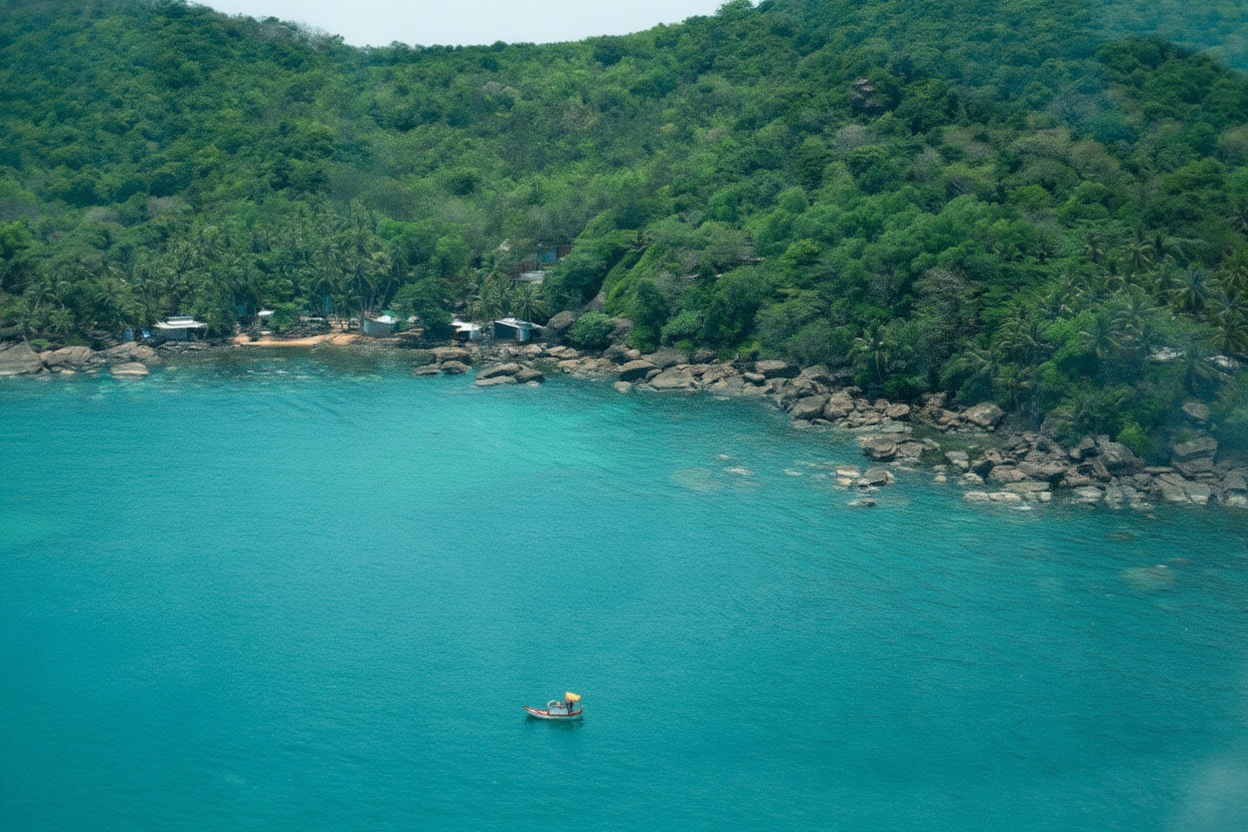
Sao Beach (Bai Sao) — 25km southeast of Duong Dong, 45 minutes by motorbike. The island’s most photographed beach: white sand, turquoise water, shaded by trees at the back. Arrive before 8am for empty beach. By 10am the day-tripper minibuses arrive and the beach fills. Beach chair rental from restaurants: 100,000–150,000 VND/day (~$3.80–5.70). For the full breakdown, see our Phu Quoc beaches guide.
Khem Beach (Bai Khem) — 28km south. The JW Marriott occupies the best section, but the middle of the beach is publicly accessible with chair rental at 150,000–200,000 VND. The finest sand on the island. Combine with Sao Beach as a single south-coast half-day.
Phu Quoc Prison (Nhà Tù Phú Quốc) — near An Thoi, 35km from Duong Dong. Free entry, open 8am–5pm. The prison operated by South Vietnam and later the US-backed government during the 1950s–1970s, holding North Vietnamese and Viet Cong prisoners. The wax figure recreations of torture methods are confronting — presented from the North Vietnamese perspective, as you’d expect from a Vietnamese historical site. Worth an hour if you’re on the south coast and want context on the war that most Vietnam travelers encounter only through the War Remnants Museum in Saigon. Not appropriate for young children.
Snorkelling the An Thoi Islands
The An Thoi archipelago — 15 small islands south of Phu Quoc — has the clearest water and best coral reef accessible from the island. Day trips depart from An Thoi pier (35km from Duong Dong) at 8am and return by 4pm. The standard boat trip includes 3–4 snorkelling stops, a floating seafood lunch, and time on the islands themselves.
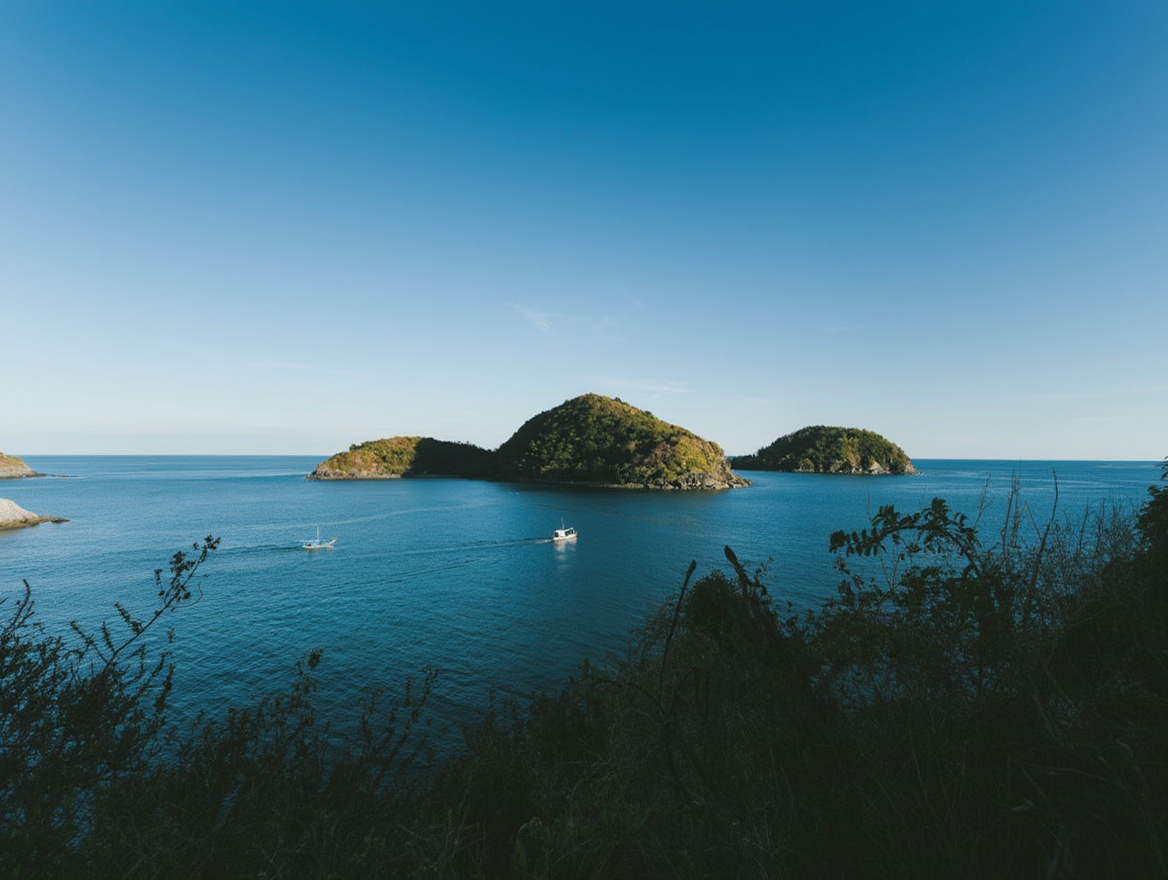
Cost: 400,000–600,000 VND per person (~$15–23) for a shared boat trip with snorkelling gear and lunch included. Private charter for a group: 2,000,000–4,000,000 VND (~$76–152) depending on the boat and route. The shared trips are perfectly adequate — you’re on the water for 8 hours with 15–20 other people, which is a reasonable trade for the cost.
Visibility at the An Thoi islands: 5–15 meters in dry season (November–April), significantly reduced in wet season. The coral cover is better than anything close to the main beach but not pristine — years of tourism and anchor damage have degraded some sections. The snorkelling is still worth doing as the only practical reef access from the island.
Book the night before through your guesthouse or at the An Thoi pier directly. Most tours depart at 8am — which means either staying near An Thoi the night before (small guesthouses at the pier) or leaving Duong Dong at 6:30am by motorbike.
Phu Quoc Night Market — The Essential Evening
The Night Market in Duong Dong is the best single evening activity on the island. Open from roughly 5pm to 11pm along the waterfront near Dinh Cau temple and rock. Street seafood stalls, grilled meat, tropical fruit, clothing, souvenirs — the standard night market format, but with a fresh-catch seafood quality that’s noticeably higher than elsewhere.
What to eat at the Night Market:
Grilled scallops with spring onion and peanut oil (sò điệp nướng mỡ hành — say: so diep nuong mo hanh): 80,000–120,000 VND (~$3–4.55) for a plate of 6–8. The spring onion gets slightly charred, the scallop itself stays tender, and the peanut oil caramelizes on the grill edge. The best version in Phu Quoc.
Grilled squid (mực nướng): 60,000–100,000 VND (~$2.30–3.80) for one whole squid. Served with a dipping sauce of lime and salt or sweet chilli.
Phu Quoc pepper crab (cua rang tiêu): fresh crab with Phu Quoc’s famous pepper. Expensive (300,000–500,000 VND / ~$11–19 for a 300–500g crab) but the island’s most distinctive local dish.
Fish Sauce Factory Tour — The Island’s Best Free Activity
Phu Quoc fish sauce (nước mắm Phú Quốc) is the island’s most famous product — made from anchovies and salt in huge wooden barrels, fermented for 12–15 months. The Hung Thanh factory near Duong Dong offers free tours that take you through the production process: the barrel rooms where the smell hits immediately (fermented anchovy, salt, and something funkier underneath), the tasting table with different fish sauce grades, and the shop selling bottles to take home.
Free entry. Open 8am–5pm daily. Takes 30–45 minutes. The smell inside the barrel room is genuine and overwhelming — not unpleasant once you understand what you’re smelling, but prepare for an aggressive first impression when you open the first barrel-room door.
The tour is legitimately interesting from a food-production perspective — seeing the production scale (thousands of barrels, each holding 10,000kg of fermenting fish) puts Vietnamese cooking in a different context. The fish sauce from these barrels ends up in every bowl of phở and every dipping sauce across Vietnam.
The North Coast Ride — Ganh Dau and the National Park
The north coast road from Duong Dong to Ganh Dau (30km, 50 minutes) passes through Phu Quoc National Park — the island’s interior forest, which covers 50% of the island’s land area and is one of the few remaining lowland tropical forests in southern Vietnam. The road is good and passes through increasingly forested terrain as you head north.
Ganh Dau at the northern tip: basic grey-sand beach, a few seafood restaurants on stilts, and a direct view across 3km of water to the Cambodian coast. On clear days (typically November–February) you can see individual trees on the Cambodian shoreline. There’s an inexplicable quality to standing at the northernmost point of a Vietnamese island with Cambodia visible across the water.
Wildlife in the National Park: Phu Quoc is one of the few places in Vietnam where you might see wild bears (sun bears), slow lorises, and rare birds without a guide. More practically visible from the road: monitor lizards (up to 1.5 meters, sometimes crossing the road), fruit bats in large colonies at dawn and dusk, and hornbills audible from the road. If you’re driving slowly with the engine low, the forest sounds are worth stopping for.
Ham Ninh Fishing Village — For Seafood Lunch
Ham Ninh is on the east coast, 15km from Duong Dong — the island’s most authentic remaining fishing village, with wooden restaurants on stilts over the water and a working boat harbor. The water here is murky (river outflow, not beach quality), but the seafood is fresh and the setting is the most local-feeling on an increasingly resort-dominated island.
Lunch at Ham Ninh: steamed clams with lemongrass, whole grilled fish, garlic butter shrimp. Prices lower than the Night Market — a full seafood lunch for two: 300,000–500,000 VND (~$11–19). Arrive by noon before the day-tour groups from Long Beach descend on the restaurant row.
Renting a Motorbike — The Non-Negotiable
Everything above requires a motorbike. Grab works for single trips but the costs add up fast — 80,000–120,000 VND each way to Sao Beach means 300,000+ VND round-trip per day before you’ve done anything. Renting a motorbike for 150,000–200,000 VND/day solves this entirely.
Where to rent: any guesthouse or hotel front desk can arrange one, or walk the main road in Duong Dong and you’ll find rental shops with bikes outside. Semi-automatic (Honda Wave, Yamaha Sirius): 150,000–180,000 VND/day. Automatic scooter: 170,000–220,000 VND/day. Most shops ask to hold your passport — leave a cash deposit instead (500,000–1,000,000 VND) and keep your passport. Check the bike before you leave: tyres, brakes, lights, any existing damage, and photograph it with your phone.
Klook has the widest selection for Vietnam and is usually the cheapest. KKday is strong on day trips and local experiences.
. The main road from Duong Dong to the south (past Sao Beach to An Thoi) is paved and maintained. The north coast road to Ganh Dau passes through the national park and is narrower but good. The east coast road to Ham Ninh has some rough sections. Night riding on unlit rural roads is the main danger — stick to daylight hours for anything beyond Duong Dong.
Duong Dong Produce Market — Worth the 6am Alarm
The morning market in Duong Dong (Chợ Dương Đông) opens around 5am and is effectively finished by 8am. It’s a working wholesale-to-retail market, not a tourist attraction — local restaurants buy their fresh catch here before the day-tripper boats arrive. The fish section alone: 15–20 varieties of fresh fish, live crabs, live prawns, mantis shrimp, clams, and the small anchovies that get fermented into fish sauce. Prices are low (buying direct from the market stall, not the tourist seafood restaurants on the beach).
Go between 6am and 7am for the most activity. No charge to enter, no tour required. The market is in central Duong Dong, 200 meters north of the Night Market site. Navigation note: the smell guides you in from 50 meters away. The inner wet market section — tiled floor, ceiling fans, individual stall owners calling prices in Vietnamese — is the most photogenic section, though photographing people’s stalls politely means buying something, which at these prices is not a hardship.
Pepper Plantations — One Stop Worth Making
Phu Quoc black pepper is a legitimate product with a geographic indication (like champagne from France — “Kien Giang pepper” is a designated provenance). The pepper plantations in the island’s interior were here long before the resorts. Driving between Duong Dong and Sao Beach, you pass working plantations on both sides of the road — long vine-covered trellises with pepper clusters visible in harvest season (roughly January–February). The pepper smell on a warm afternoon is unexpectedly pleasant: sharp and aromatic, nothing like the dust you get from a shaker.
Several plantations near the Duong Dong–Sao Beach road allow visits: walk in, look around, buy pepper directly. The black pepper here is sold at the farm at 100,000–150,000 VND per 100g — significantly cheaper than airport shops or hotel gift stores. Red pepper (harvested earlier in the season) and white pepper (dried black pepper with the outer skin removed) are also available. Good as a lightweight souvenir.
What to Skip — The Honest Version
VinWonders: A large theme park on the north coast — rollercoasters, water park, cable car to an adjacent island. Admission: 600,000–900,000 VND/person (~$23–34). The water park is good by Vietnamese standards. The cable car is genuinely impressive (the world’s longest, technically). Worth it if you’re specifically here for a family theme park day and especially if children under 12 are involved. Not worth it for adults who’ve come for the island’s natural environment — that’s not what VinWonders is selling.
Grand World: An entertainment complex near Duong Dong — shows, gondola rides, international food court. Designed as an evening activity. One Reddit user described the gondola rides as “fun for kids” — that’s exactly right. Not compelling for adults traveling without children.
The Dinh Cau Rock Temple: At the entrance to Duong Dong port. Worth 15 minutes as you’re passing by. Not worth going out of your way for — it’s a small coastal shrine, not a significant historical site. The sunset view over the harbor from Dinh Cau rock is actually quite good in November–January.
What I Got Wrong in Phu Quoc
I spent my first two days on Long Beach waiting for something to happen. The resort strip is designed to keep you in it — sun chairs, pool bar, beach restaurant, repeat. It’s fine. It’s exactly what it’s advertised as. I just hadn’t come for that.
Day three I rented a motorbike and went south. Arrived at Sao Beach at 7:30am with almost no one else there. Spent two hours in the water. Rode to Khem Beach, had the beach nearly to myself until 9:30am when the day-tripper vans started arriving. Rode back through pepper plantations, stopped at the fish sauce factory, ate lunch at a market stall in Duong Dong for 45,000 VND. Everything that happened on a motorbike that day was better than two days stationary on Long Beach.
The island’s good experiences mostly require moving. The resort strip is where you sleep. The motorbike is where you live.
Two things worth sorting before you land: a Vietnam eSIM so you have data the moment you clear customs, and travel insurance — medical costs for uninsured foreigners in Vietnam are significant.
Airalo eSIMs activate instantly. Buy before departure — airport SIM queues in Vietnam can take 30+ minutes.
Frequently Asked Questions
What is Phu Quoc most famous for?
Fish sauce (nước mắm Phú Quốc) — the island has been producing it for centuries and Vietnamese fish sauce with the Phu Quoc designation is the premium product. Also famous for black pepper (Kien Giang pepper plantations) and the white sand beaches. In tourism terms: Phu Quoc is most famous as Vietnam’s largest island and its “beach destination” — the resort development and proximity to Saigon make it the default domestic and regional holiday island.
Is there enough to do in Phu Quoc for a week?
Yes — without stretching. A week allows: south coast beaches thoroughly, An Thoi snorkelling trip, north coast motorbike day, fish sauce factory, Ham Ninh seafood village, several nights at the Night Market, and enough time on Long Beach for the sunset you came for. Add a half-day cooking class or a second island snorkelling trip if you want more structure. A week is the comfortable version; 4–5 nights covers everything essential.
Is Phu Quoc good for snorkelling?
Better than the mainland coast but not top-tier Southeast Asia. The An Thoi island day trips have the best accessible reef — 5–15 meters visibility in dry season, coral in reasonable condition, small fish. Compare it to Koh Tao in Thailand or Komodo in Indonesia and you’ll be disappointed; compare it to most beach destinations in mainland Vietnam and it’s significantly better. Go on the day trip, enjoy what’s there, don’t expect Maldives.
Is the Phu Quoc cable car worth it?
As a standalone activity: only if you have specific interest in cable cars or want the aerial view of the south coast. The cable car to Hon Thom (Sun World) crosses 7.9km of ocean — the world’s longest gondola when it opened. The views are genuinely impressive on clear days. The island it terminates on (Hon Thom) has a beach and resort but nothing that justifies the full Sun World theme park entrance fee (600,000–900,000 VND). If you’re already at the Sun World complex for another reason, the cable car is worth adding. As a standalone day activity for adults without children, the cost-to-experience ratio is poor.
How many days do you need in Phu Quoc to see everything worth seeing?
Four full days covers everything described in this guide — the south coast beaches, An Thoi snorkelling trip, north coast ride, Night Market several evenings, fish sauce factory, and Ham Ninh for lunch. Five days is comfortable if you want to slow down and repeat the best beaches. Three days is tight but workable if you prioritize (south coast day + snorkelling day + fish sauce/night market day). Anything under 3 nights means the travel time to/from the island eats significantly into your experience — one full day getting there and leaving is a lot for a 2-night stay.
What time of year is best for things to do in Phu Quoc?
November to April is dry season — the best window for all outdoor activities. November and March–April give you dry weather with lower prices and fewer crowds than the peak December–February window. May–October is wet season: afternoon thunderstorms, rougher seas that cancel the An Thoi snorkelling trips on bad days, and jellyfish in higher numbers in August–September. Beach activities still work in wet season (mornings are usually clear), but snorkelling reliability drops significantly. For An Thoi island day trips specifically, November–April is the only reliable window.
Is Phu Quoc good for solo travelers?
Yes — the island works well for solo travelers with a motorbike. The Night Market is easy to navigate alone (point-and-order at stalls), Sao Beach is safe and not isolated, and the An Thoi island boat trips run on shared boats so you’re with other travelers for the day. Long Beach has enough guesthouse density that solo travelers on budget are comfortable. The island’s one challenge for solos: the evening options outside the Night Market are limited — it’s more of a couple/family destination than a solo-traveler social hub. But if you’re happy exploring independently by motorbike during the day and eating well in the evening, Phu Quoc is a strong choice.
For getting to the island and transport options, see our Phu Quoc from Saigon guide. For beach-by-beach breakdowns including which sections suit what kind of traveler, see our Phu Quoc beaches guide.
FAQ
What are the best things to do in Phu Quoc?
Sao Beach (swimming, sunbathing — the island’s best sand). Motorbike circumnavigation of the island (full day, see north coast and pepper farms). Cai Rang night market (food, local atmosphere, 5 PM–midnight). Snorkeling trips to An Thoi archipelago (An Thoi Islands, 25km south). Cua Can River for kayaking. Phu Quoc National Park for jungle hiking.
Is snorkeling in Phu Quoc worth it?
Honest answer: mediocre. Coral bleaching has affected most accessible dive sites. The An Thoi archipelago has the best remaining coral but some boat operators oversell it. Expect visibility of 5–10 meters, some reef fish, and possibly sea turtles. Compare to: Cham Islands near Hoi An (similar quality), Ko Tao in Thailand (significantly better). Book through reputable operators — avoid the cheapest boat tours.
What is the Phu Quoc night market like?
The Dinh Cau Night Market is one of Vietnam’s best seafood markets — fresh, lively, and reasonably priced compared to the tourist restaurants. Go hungry between 5–7 PM before the evening rush. Grilled seafood (mực nướng/grilled squid, tôm nướng/grilled prawns) at 80,000–200,000 VND per serve. Cold Saigon Beer for 15,000–20,000 VND. The atmosphere is better than the food quality requires.
How many days do you need in Phu Quoc?
Three nights minimum to see the main beaches, do a snorkeling trip, explore the north of the island, and spend an evening at the night market. Five to seven nights if you want to properly relax at a beach resort and not feel rushed. Day trips from Saigon are not worth the flight cost.
Can you drink the tap water in Phu Quoc?
No — tap water is not drinkable anywhere in Vietnam, including Phu Quoc. Use bottled water (6,000–10,000 VND per 1.5L bottle at convenience stores). Refill stations exist at some resorts. Bring a water filter bottle (LifeStraw or Sawyer) if you want to reduce plastic use.