Updated June 2026
The August Angle Most Travel Guides Miss
Every “best time to visit Vietnam” article ranks August near the bottom. They’re using the wrong metric — they’re optimizing for beach weather at Ha Long Bay and Hoi An, which in August is genuinely difficult.
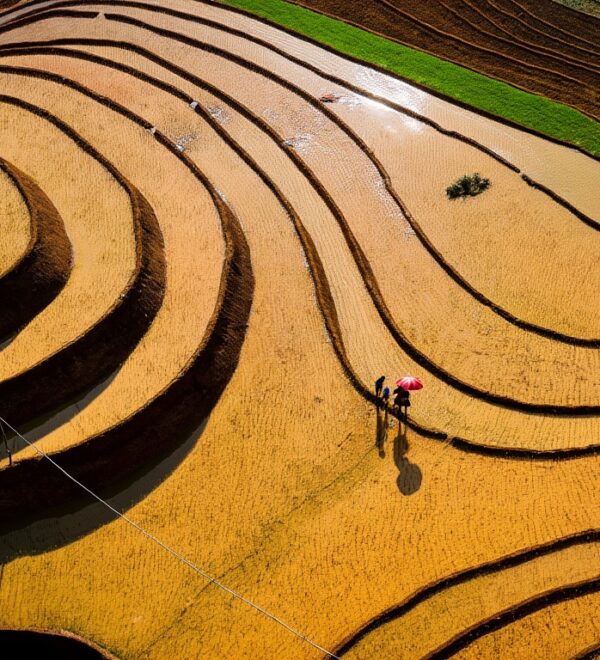
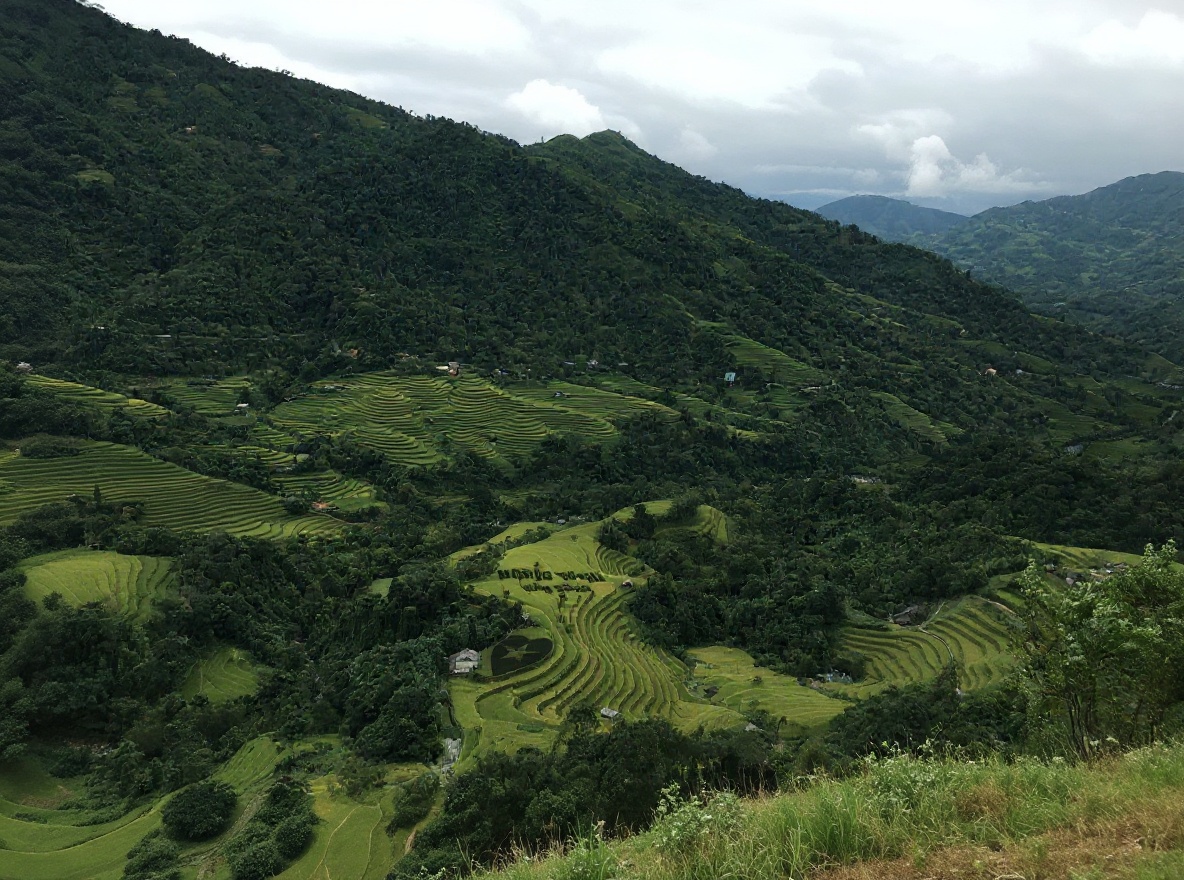
But August is one of the best months for a specific type of Vietnam trip: the northern highlands. Ha Giang Loop, Sapa, Mù Cang Chải — all of these are at their most dramatic in late July and August, when the rice terraces flood with water and turn a shade of green that doesn’t show up on a phone screen but stays in your memory. The roads are challenging. The scenery is worth it.
Who August is actually for: budget travelers willing to dodge rain, highland trekkers, and anyone who wants to ride Ha Giang Loop without a convoy of Instagram-seeking tourists on either side.
✓Quick Answer
Vietnam in August works well for Ha Giang Loop, Sapa, Mù Cang Chải, and Hanoi (with heat tolerance). Skip Da Nang, Hoi An, and the central coast beaches — typhoon risk is real. Budget travelers get 15–25% lower prices than November peak.
Vietnam August Weather: Regional Breakdown
North Vietnam (Hanoi, Ha Giang, Sapa): Hot, Rainy, Worth It
Hanoi in August averages 34–36°C (93–97°F) with high humidity and about 16 rain days. The rain comes in bursts rather than all-day drizzle — a heavy downpour for 30–60 minutes, then steam and sunshine. It’s uncomfortable but manageable if you adjust your schedule: do outdoor things in the morning, find air-conditioned coffee shops at 2pm, walk around the Old Quarter after 6pm when the temperature drops a few degrees and the street food stalls come alive.
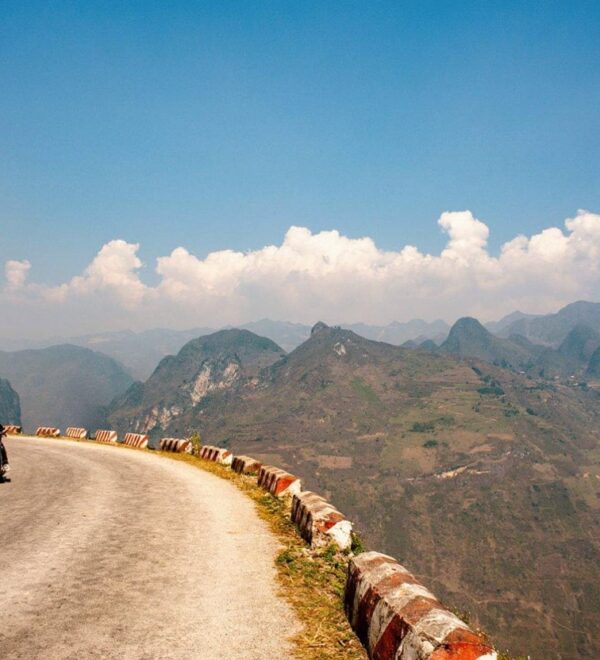
The highlands are a different story. Ha Giang province gets rain but also gets the most spectacular version of itself. The Đồng Văn Karst Plateau turns lush. The Nho Quế River goes deep emerald. If you’re riding the Ha Giang Loop, August traffic is lighter than the September peak, roads are passable (check current conditions — landslides are real after heavy rain), and the scenery justifies every wet kilometer.
Central Vietnam (Hue, Da Nang, Hoi An): The Real Risk Zone
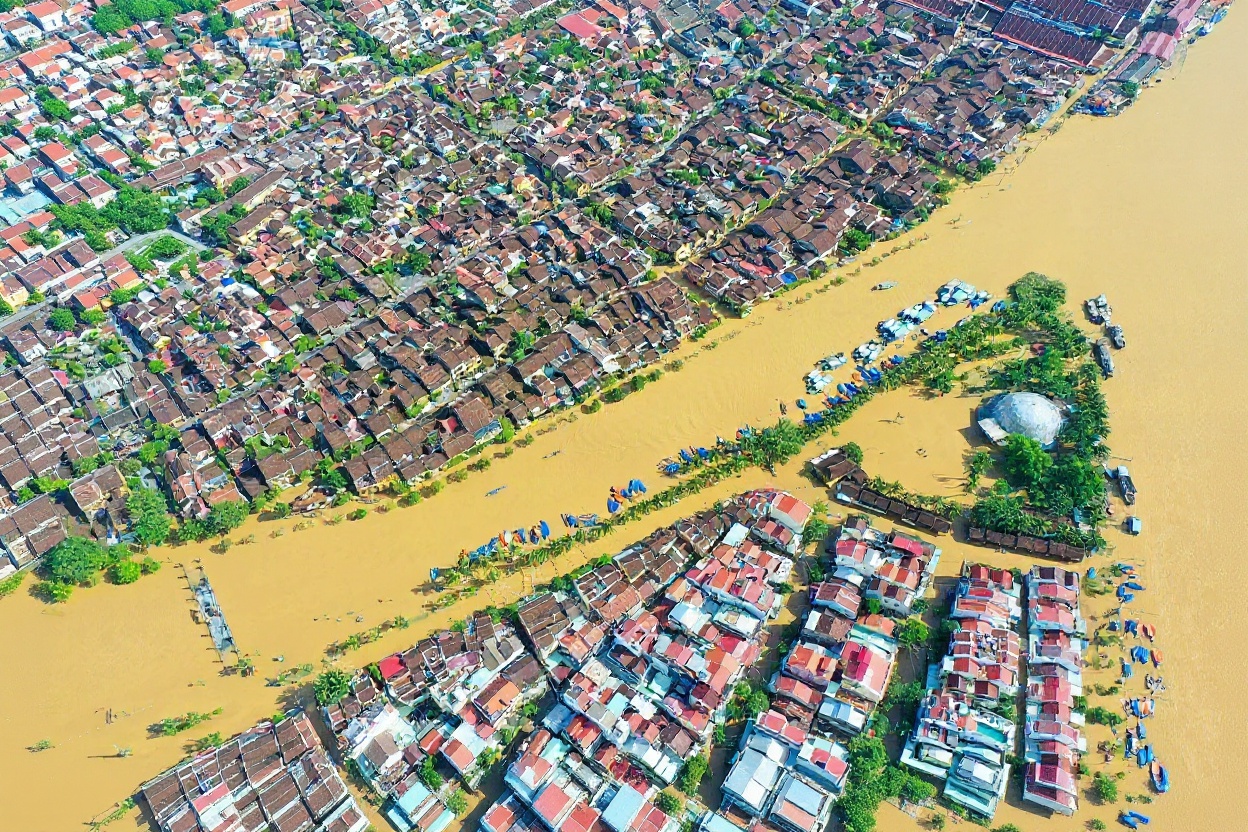
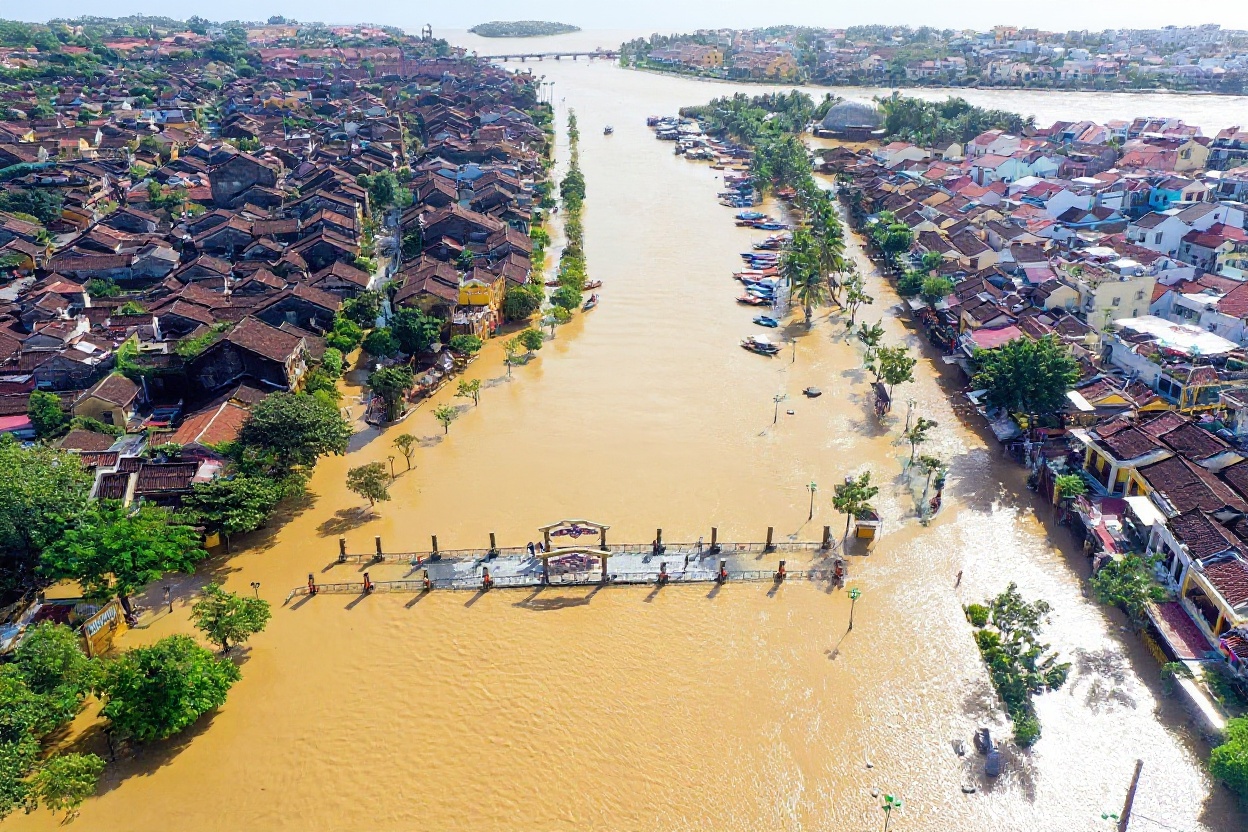
Here’s what the tourist boards don’t say clearly: the South China Sea typhoon season peaks between August and November, and central Vietnam is directly in the path. In August 2020, Typhoon Sinlaku shut down Da Nang for four days. In 2017, flooding in Hoi An during typhoon season put the Ancient Town under 60cm of water. These aren’t theoretical risks.
August actually has fewer rain days in Da Nang than October (the wettest month). But what August has is the threat of a typhoon arriving and cancelling your trip with 48 hours notice. If you’re building a trip around Da Nang’s My Khê beach or the lanterns in Hoi An’s Ancient Town, August is the month to avoid. If you’re willing to take the gamble, prices are 20–30% lower and crowds are thinner.
Hue is a partial exception. It’s slightly further north and receives a bit more weather protection. August can work for visiting the Imperial City, royal tombs, and food markets — but have a rain contingency plan. For more on what to do there, see our Hue things to do guide.
South Vietnam (Saigon, Mekong Delta): Predictable Monsoon
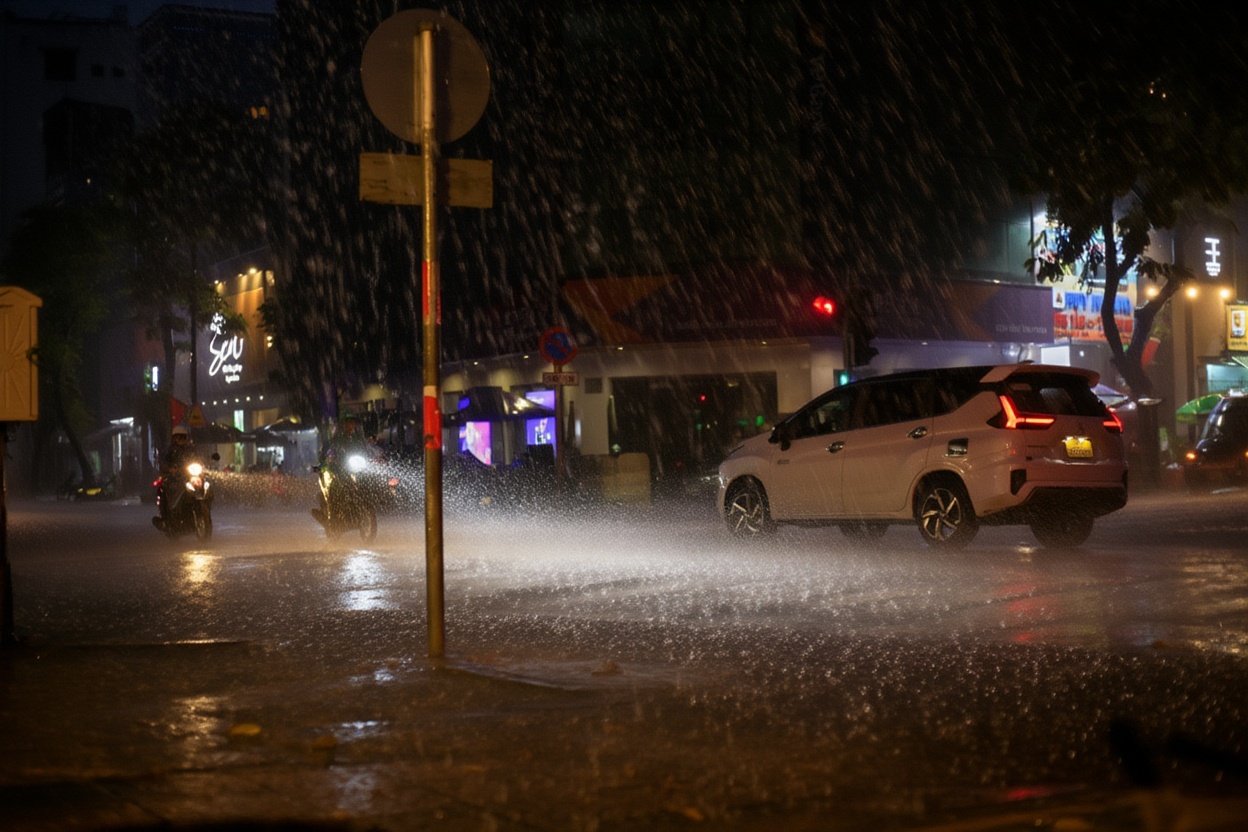
August is deep monsoon season in the south, but the rain pattern here is completely different from the typhoon risk of central Vietnam. It rains hard — sometimes dramatically hard — for 1–3 hours in the afternoon, then it stops. By 5pm the streets are drying and the evening market scene is fully operational.
Ho Chi Minh City actually works in August. The humidity is high, the afternoon rains are intense, but the city never truly shuts down. The outdoor sites (Củ Chi Tunnels, the Mekong delta boat trips) are wetter and more atmospheric. Prices are lower than the November–April high season.
Phu Quoc is the exception in the south — this is peak monsoon there, with long stretches of rough sea that cancel boat tours and make swimming dangerous. Skip Phu Quoc in August.
August Traveler Scenarios: Who Should Go Where
Scenario 1: The Highland Rider
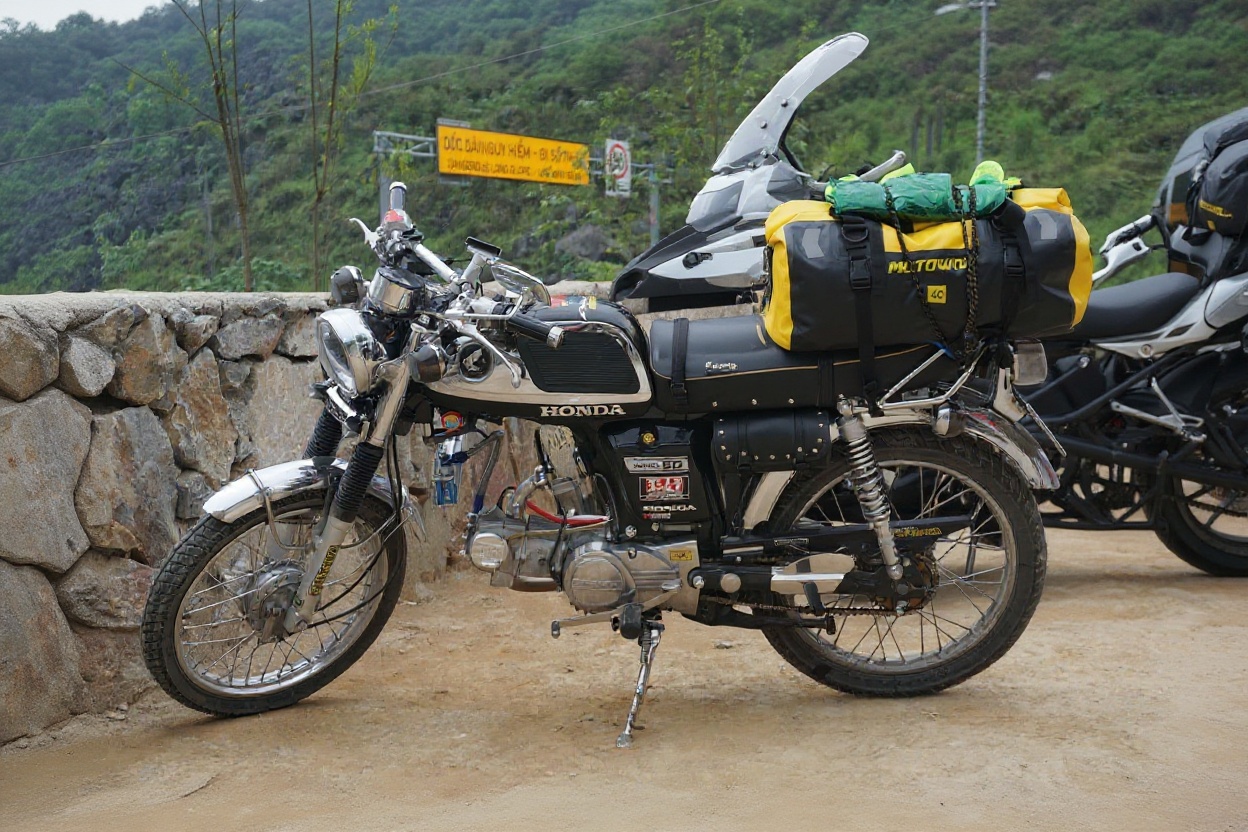
You want Ha Giang Loop on a motorbike. You’ve read the guides. August is actually your best option between June–September. The rice terraces are at their most dramatic — the paddies flooded, the green violent and layered up every hillside. Crowds are 30–40% lighter than October (the post-harvest-peak). The main consideration: check road conditions before you go. Landslides happen on Route 4C and 4H after heavy rain. Local Facebook groups and hostel staff in Hà Giang town will have real-time intel. For everything about the route itself, our Ha Giang Loop guide has the full picture.
Scenario 2: The Budget Traveler on a Tight Timeline
You have 2 weeks, want to see Hanoi, the north, and get south to Saigon. August makes economic sense: accommodation prices are 15–25% below November–April peak, flights to Hanoi are cheaper, and the classic overland route (Hanoi → Ninh Bình → Huế → Hội An → Đà Nẵng → Saigon) is doable with the caveat that the central section carries weather risk. Budget travelers who accept that caveat and have flexible dates for the Hoi An leg come out significantly ahead financially.
Scenario 3: The Beach-First Traveler
You want coastal Vietnam — Da Nang, Hoi An beach, Mui Ne, Phu Quoc. August is the wrong month. Typhoon risk on the central coast and monsoon conditions in the south make beach-focused trips genuinely difficult. Wait until November for central coast, or February–April for Phu Quoc. If the beach is non-negotiable and the dates are fixed, Da Nang in August has some good days — just don’t build an itinerary around ones that require good weather.
Vu Lan Festival: August’s Under-Rated Cultural Moment
August falls during the Vietnamese Ghost Month (tháng Cô Hồn — say: tang koh hon), which peaks with Vu Lan Festival (Lễ Vu Lan — say: lay voo lan), usually in late August, on the 15th day of the 7th lunar month. In 2026, that falls around August 28.
Vu Lan is a Buddhist festival for honoring ancestors and parents — think of it as a Vietnamese equivalent of All Souls’ Day, but more elaborate and more public. Pagodas across the country hold ceremonies with flower offerings and prayers for the dead. Pink roses are pinned on those whose parents are living; white roses for those whose parents have passed. The ceremony at Quán Sứ Pagoda in Hanoi is worth attending.
The flip side of Ghost Month: some Vietnamese businesses avoid major transactions, and a few locals will tell you it’s bad luck to move house, start businesses, or make big purchases. It creates a cultural texture to August that’s genuinely interesting to witness — burning paper offerings at street intersections in the evening, clusters of incense smoke rising from apartment balconies.
✓Quick Answer
Vu Lan Festival in late August (August 28, 2026) is one of Vietnam’s most visually striking Buddhist observances. Pagodas hold public ceremonies — Quán Sứ Pagoda in Hanoi is the most accessible. Zero tourist-trap energy. Just show up, be quiet, don’t photograph worshippers without a nod.
Real Talk: What’s Actually Bad About August
The heat is real. Hanoi in August is 34–36°C with humidity that makes it feel closer to 40°C. Walking around for three hours in the middle of the day is unpleasant — not dangerous for healthy adults, but genuinely draining in a way that affects how much you enjoy things. Plan outdoor activity for 7–10am and 5–8pm. Midday is for coffee shops, museums, and air conditioning.
Typhoon disruption can kill your itinerary. If a typhoon hits the central coast while you’re booked in Hoi An, you might spend two days indoors watching YouTube while the Ancient Town floods. This happens. Not every August, but more than occasionally. Anyone building an August trip around Hoi An should have flexible accommodation bookings (not prepaid non-refundable) and an alternative plan.
Ha Long Bay is rougher in August. The bay is passable and most cruises run, but rough weather is more common than in winter months. Some cruise operators cancel trips with 24–48 hours notice when weather deteriorates. Two-night bookings are safer than one-night because they give the operator flexibility to reschedule if needed.
The Ha Giang Loop has real road hazards after heavy rain. The pass at Mèo Vạc can be closed for hours after a landslide. The scenic stretches on Route 4C near Ma Pí Lèng are exposed cliff road that becomes more technical in wet conditions. Not impassable — thousands of riders do it in August — but it warrants respect and an experienced rider, not someone who hired a semi-automatic for the first time in Hà Giang town. Our Ha Giang Loop guide covers the road conditions and what skill level you actually need.
Budget Impact: What August Does to Your Costs
August is low-to-mid season in the north and high season in the south for domestic tourism (Vietnamese families travel in August because it’s school holiday). The result is a split market: Hanoi and Ha Giang accommodate prices are slightly lower than December peak, but Phu Quoc (when it’s open) and beach destinations have domestic Vietnamese demand that keeps prices from dropping much.
Overall for international travelers: expect 15–25% below November–March peak pricing on accommodation and internal flights. The savings are most pronounced in Hanoi, Hue, and Hoi An (where international demand is low). Budget travelers who specifically target August and north-focused itineraries can trim significant costs from a 2-week trip — on a $500 budget trip, that’s a real $75–125 difference.
Jake’s Take: The August Trip I’d Actually Do
I’ve done Vietnam in August three times. The first time I made the classic mistake: booked a beach bungalow in Hội An, arrived to three straight days of rain, spent 40 USD sitting in a café re-reading the same two chapters of the same book.
The second time I went north-only: Hanoi, Ninh Bình for the caves and boat rides, then 5 days on the Ha Giang Loop. That trip was brilliant. The loop was soaked for two of the five days and I didn’t care because the scenery was so disproportionately dramatic that wet roads were a minor inconvenience. Ate phở with a hostel crew at 7am in Hà Giang town and watched the mist burn off the karsts. That’s the version of August I’d recommend.
The third time was Hanoi plus one week in HCMC — the monsoon rains turned afternoon Saigon into a warm shallow river for 45 minutes, then dried up completely. Great city for August, actually. The rain gives you a reason to duck into the covered Ben Thành market corridors and eat bánh xèo (say: bahn say-oh) at the indoor stalls.
August vs. Other Months: Quick Comparison
Where to Base Yourself in August
Given August’s regional weather patterns, your base choice matters more than in other months. Here’s where to anchor each leg of a trip.
Hanoi is the right northern hub. It handles August rain better than anywhere else — the Old Quarter drains fast, there’s endless indoor food-and-coffee infrastructure, and the museums (Vietnam Museum of Ethnology, Hỏa Lò Prison) give you genuine content on wet afternoons. Stay near Hoàn Kiếm Lake for walkability. For the Old Quarter vs West Lake decision, our Hanoi where to stay guide breaks down the neighborhoods honestly.
Hà Giang town is the Loop base. The guesthouses on Nguyễn Trãi street (particularly around Lùng Cú road junction) fill with Loop riders in August. Good places get booked quickly in August — reserve 2–3 days ahead rather than winging it. Most guesthouses will check road conditions for you each morning and know the current status of the passes.
Ninh Bình works better in August than most people expect. The boat rides through Tràng An are atmospheric in the rain — mist on the karsts, fewer tourists, the water level higher and greener. Tam Cốc village accommodation is cheaper in August. Stay at least 2 nights to do both the boat ride and Mua Cave viewpoint (do the cave climb at 7am before the heat). See our Ninh Bình where to stay guide for specific guesthouses that deal well with monsoon drainage.
Ho Chi Minh City works as a south anchor. The Phạm Ngũ Lão area (District 1) is the backpacker hub and the infrastructure — covered walkways, indoor markets, night street food — is built for exactly this kind of rain-and-heat climate. The afternoon downpours fill up the coffee shop terraces and outdoor bia hơi spots with locals doing the same thing you are: waiting it out pleasantly.
Practical Planning: How to Do August Right
Book accommodation flexibly. In central Vietnam especially, don’t prepay non-refundable stays. Use Booking.com “free cancellation” filters and keep your Da Nang/Hoi An nights as close to free-cancel as you can get them. This costs nothing and protects you from a 48-hour typhoon forecast that changes your plans.
Pack for rain, not cold. August in Vietnam is hot and wet, not cold and wet. A lightweight rain jacket or poncho is more useful than an umbrella. Quick-dry clothing is mandatory. Sandals or waterproof sneakers beat any leather shoe you’d wear in October. Leave the heavy hiking boots at home unless you’re doing highland trekking.
Adjust your schedule. The rain pattern in north and south Vietnam is mostly afternoon. Plan outdoor, photo-dependent activities for the morning. Build in a 2pm–4pm rest/café window. Resume outdoor exploration at 5pm. This isn’t deprivation — the evening light after an August rain in Hanoi is legitimately beautiful.
For Ha Giang: check road conditions the day before each leg. WhatsApp group “Ha Giang Loop Riders” (search for it in Hà Giang town hostel reception — they’ll have the current link) posts daily road condition updates during monsoon season. If Ma Pí Lèng pass has a reported landslide, wait a day rather than riding through it.
For the complete Vietnam planning picture, our best time to visit Vietnam guide covers every month across all three regions.
One last thing on packing for August: bring a small dry bag or waterproof phone case. Not because your phone will get wet — but because when you’re on a motorbike and it starts raining in Ha Giang, you want to stop, pull out your camera without ceremony, and shoot the mist coming off the limestone without fumbling for waterproofing. August rain is half the visual story up there. Be ready for it rather than sheltering from it.
FAQ: Vietnam in August
Is August a good time to visit Vietnam?
It depends on where you go. August is excellent for Ha Giang Loop and north Vietnam highlands — lush, dramatic, cheaper than peak. It’s risky for central Vietnam beaches (Da Nang, Hoi An) due to typhoon season. South Vietnam is manageable with predictable afternoon monsoon rains. Budget travelers who focus on the north and avoid the central coast can have a genuinely great August trip.
Does it rain a lot in Vietnam in August?
Yes, but differently by region. Hanoi gets about 16 rain days — mostly afternoon bursts. The highlands get more frequent rain but cooler temperatures. The south gets 20+ rain days with heavy monsoon rains that usually clear by evening. Central Vietnam is the most problematic: fewer rain days but typhoon risk that can cause multi-day disruption.
Is it safe to visit Vietnam in August?
Yes, with caveats. The central coast carries real typhoon risk — not just rain, but potential for canceled transport and flooding. The Ha Giang Loop has road hazards from landslides after heavy rain. Neither of these makes Vietnam unsafe, but they require flexibility and weather awareness. Avoid prepaid non-refundable bookings in high-risk zones.
Which part of Vietnam is best in August?
North Vietnam — specifically Ha Giang, Sapa, and Mù Cang Chải — is at its most dramatic in August. Hanoi is hot but functional. The Mekong Delta and Ho Chi Minh City work with afternoon rain patterns. Da Nang and Hoi An beaches are the worst choice in August.
How hot is Vietnam in August?
Hanoi averages 34–36°C (93–97°F) with high humidity — feels closer to 40°C. The highlands are cooler at 26–30°C (79–86°F) and significantly more pleasant. Ho Chi Minh City runs around 30–32°C (86–90°F) with humidity that the afternoon rains partially relieve. Pack light, loose, quick-dry clothing.
Is August peak season in Vietnam?
No. August is shoulder-to-low season for international tourists in most regions. It’s a minor domestic high season (Vietnamese school holidays) in beach destinations like Vũng Tàu, which can create weekend crowd spikes at spots closer to Saigon. For international visitors, August means 15–25% lower prices than November–March peak.