
Getting a SIM card in Vietnam takes five minutes and costs less than your last airport coffee. It’s one of the most straightforward parts of any Vietnam trip, and yet I still see travelers navigating Hanoi on a spotty hotel WiFi, unable to call a Grab, unable to load Maps offline, because they didn’t sort this before leaving the airport.
Here’s everything you need: what to buy, where to buy it, which carrier to choose, and whether an eSIM makes more sense for your situation.
Internet access in Vietnam is fast and cheap — our Vietnam WiFi and data guide covers SIM card options, pocket WiFi, and what to expect at cafés and hostels.
Local SIM vs eSIM: Which One?
Both work well in Vietnam in 2026. The choice depends on your phone and your preference for convenience vs. cost.
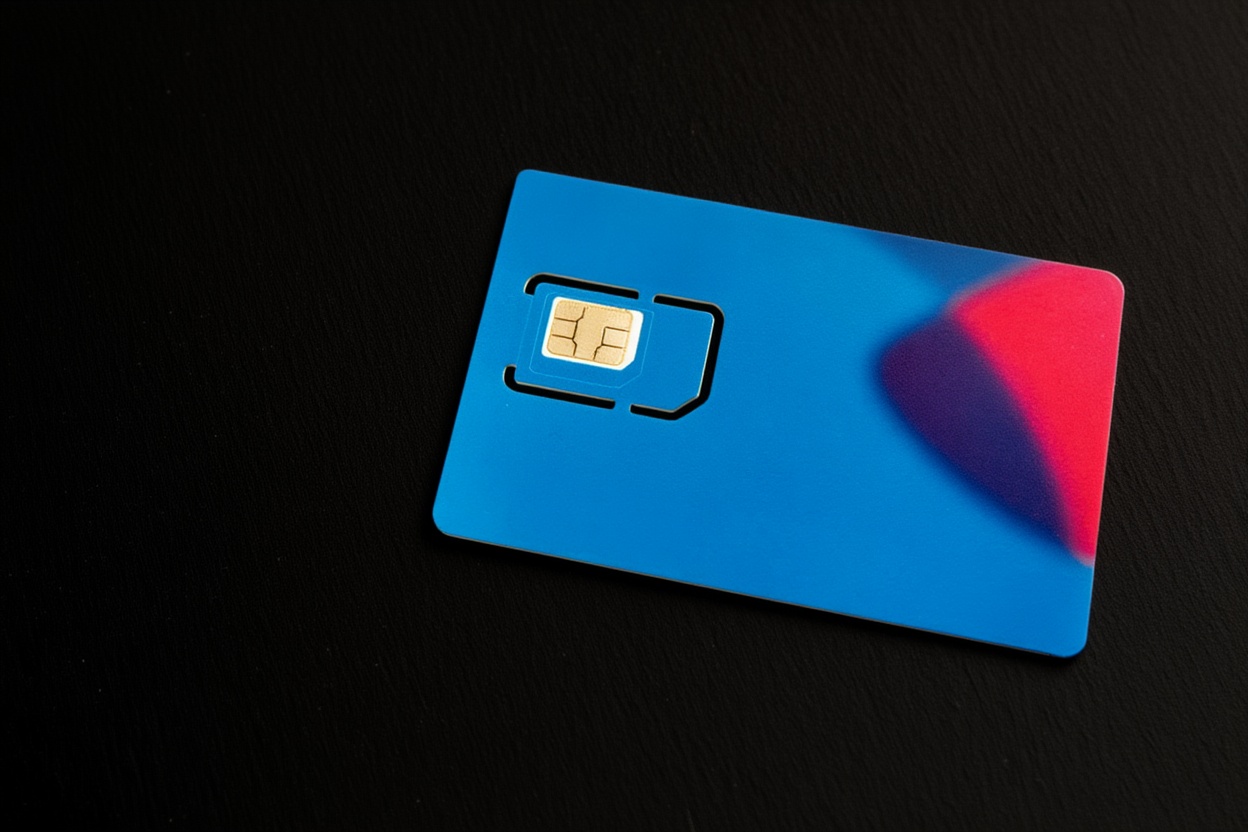
Local physical SIM card: Costs 100,000–200,000 VND ($4–8) for 30 days with 30–100GB data depending on the plan and carrier. Available at the airport (official carrier booths in arrivals — not the tourist desks), in any mobile phone shop throughout Vietnam, and at convenience stores. Requires removing your current SIM and potentially losing access to your home number. The cheapest option.
eSIM from an international provider (Airalo, Holafly, Airlink): Costs $10–20 for 30 days. Installed before departure — you arrive in Vietnam with connectivity already active from the moment your plane lands. Works on dual-SIM phones without removing your home SIM. No physical card fumbling. Worth the extra cost for the convenience of having connectivity immediately in arrivals, before you’ve found the carrier booth.
eSIM from a Vietnamese carrier directly: Viettel and Mobifone both offer eSIM activation. Cheaper than Airalo ($6–10 for equivalent data) but requires activation at an official store or app, which can take longer than a physical SIM swap. Best for longer stays where the cost difference adds up.
| Option | Cost (30 days) | Data | Setup time | Best for |
|---|---|---|---|---|
| Local SIM (Viettel/Mobifone) | 100,000–200,000 VND ($4–8) | 30–100GB | 5–10 min at booth | Budget travelers, long stays |
| Airalo / Holafly eSIM | $10–20 | 3–30GB | Before departure (instant) | Convenience, dual-SIM phones |
| Vietnamese carrier eSIM | $6–10 | 30GB+ | 15–30 min at store | Longer stays, tech-comfortable |
Which Carrier to Choose: Viettel, Mobifone, or Vietnamobile?
Three carriers dominate the Vietnamese mobile market. All three offer SIM cards at airports and throughout the country. The differences matter depending on where you’re going.
Viettel: The largest network in Vietnam with the best rural and mountain coverage. If you’re doing the Ha Giang Loop, northern highlands, or any rural routing, Viettel has the most reliable signal in areas where the other carriers struggle. Also the carrier most commonly recommended by long-term expats for general reliability. Best 4G coverage in small provincial towns. Slight premium in some packages.
Mobifone: Strong in major cities (Hanoi, HCMC, Da Nang), decent in tourist areas, drops off faster in remote regions. Good choice if your itinerary is city-focused or stays on the main tourist trail (Hanoi → Hue → Hoi An → HCMC). Similar pricing to Viettel for most standard packages.
Vietnamobile: Cheapest of the three, notably lower data prices. Network coverage is the weakest — fine in cities, unreliable in rural and mountain areas. Suitable if you’re staying in major cities and cost is the primary consideration. Not recommended for Ha Giang, Sapa, or any extended time in rural provinces.
My recommendation: Viettel for rural and northern travel; Mobifone or Viettel for city-only itineraries. Either is a safe default choice if you’re not sure of your route.
Where to Buy a SIM in Vietnam
Airport (best first option): Every major Vietnamese international airport — Nội Bài (Hanoi), Tân Sơn Nhất (HCMC), Đà Nẵng, Phú Quốc — has official carrier booths in the arrivals hall. Look for the branded Viettel and Mobifone stands (not the generic tourist desks). Staff speak enough English to process a SIM sale. Prices at official airport booths are standard rates, not marked up. The process: hand over your passport for ID verification, choose a plan, pay, have the SIM inserted, receive a PIN, done. For Hanoi arrivals specifically, see our Hanoi SIM card guide for booth locations and current pricing at Nội Bài airport.
Mobile phone shops (city centers): Any of the thousands of mobile phone shops (cửa hàng điện thoại) throughout Vietnam sell SIM cards. You can usually find official carrier stores — Viettel has branded shops in every district of every major city. These often have the widest selection of data plans and the most up-to-date pricing.
Convenience stores (7-Eleven, Circle K, GS25): Many convenience stores in larger cities now sell prepaid SIM cards, though the plan options are more limited than a carrier shop. Useful in a pinch.
What to avoid: Tourist desk SIM card offers in hotels and on the tourist strip. These mark up SIM prices 50–200% and sometimes sell you older, less-value plans. The guesthouse owner offering you a SIM card for 400,000 VND should be declined in favor of the Viettel shop three blocks away at 150,000 VND.
Current Data Plans and Pricing (2026)
Plans change frequently but the structure is consistent. Current options as of 2026:
Viettel:
Super 4G (30 days): 30GB data + calls + texts — 120,000 VND (~$4.80)
MAX 4G (30 days): 60GB data — 150,000 VND (~$6)
Vietnam tourist SIM (30 days): 60GB + unlimited data for social apps — 200,000 VND (~$8)
Mobifone:
M120B (30 days): 30GB data — 120,000 VND (~$4.80)
M150B (30 days): 60GB data — 150,000 VND (~$6)
Unlimited tourist plan: 100GB + throttled unlimited — 200,000 VND (~$8)
In practice: any 30-day plan at 100,000–200,000 VND gives you more data than a typical 2-week tourist needs. Even heavy users streaming maps, videos, and making Grab calls struggle to exceed 15–20GB in a 2-week trip. Don’t pay for the “unlimited” package unless you’re working remotely and streaming video intensively.
Registration and Passport Requirements
Vietnam requires passport verification for SIM card activation. The process is quick — the booth attendant photographs your passport or enters your passport number, and the SIM is registered under your name. This is a standard government requirement introduced in 2023 for all prepaid SIM purchases.
You cannot buy a SIM without a passport. Driving license won’t work; hotel card won’t work. Bring your passport to the airport or carrier store when buying. Note: some travelers who bought SIMs without registration at smaller shops or convenience stores have found their SIMs deactivated after a few days. Always use an official carrier booth or store.
For eSIM purchases from Airalo or Holafly, passport registration is not required — these are international providers operating outside the Vietnamese registration system. This is one advantage of eSIM for travelers who prefer not to have their details in the Vietnamese telecom registry.
Data Speed and Coverage Reality
Vietnam’s 4G LTE network is actually impressive for a country at its development stage. In major cities and tourist areas, you’ll frequently see 30–50 Mbps download speeds — faster than many hotel WiFi connections. The speed degrades in rural areas but Viettel typically maintains a usable 4–10 Mbps even in provincial towns.
5G is available in Hanoi, HCMC, and Da Nang on all three major carriers, though 5G phone compatibility is required and coverage is still limited to specific urban districts. For most travelers, 4G is the practical speed ceiling and it’s more than adequate.
Dead zones exist in Ha Giang (the valleys between passes have gaps), remote Sapa trails above the village level, and some national park interiors. Download your offline maps (Google Maps, Maps.me) before entering these areas. A fully cached offline map works without any connection.
Is Your Phone SIM-Unlocked? How to Check
Before anything else, you need to know whether your phone will accept a Vietnamese SIM. US phones purchased on installment plans or with carrier subsidies are typically locked to that carrier and will not accept a foreign SIM. Phones purchased outright (full retail price, no contract) are usually unlocked from the start.
How to check (iPhone): Settings → General → About → scroll to “Carrier Lock.” If it reads “No SIM restrictions,” you’re unlocked. If it shows a carrier name, you’re locked to that carrier. Contact your carrier to unlock — all major US carriers (AT&T, Verizon, T-Mobile) are legally required to unlock phones that have completed their payment plans. The process typically takes 24–72 hours and is free.
How to check (Android): Insert a SIM from a different carrier. If you get a signal, you’re unlocked. If you see a “SIM network unlock PIN” screen or “Invalid SIM” error, you’re locked. The unlock request process is the same as iPhone — contact your carrier.
The eSIM workaround: If your phone is carrier-locked but supports eSIM technology (iPhone XS and later, most flagship Android phones since 2020), you can use an international eSIM provider without touching your physical SIM. The eSIM adds a second line alongside your locked SIM. This is why eSIM has become increasingly useful for US travelers — it sidesteps the unlock question entirely.
SIM tray size: All Vietnamese carrier SIMs are nano-SIM format (the smallest size). All iPhones since the 5 and virtually all modern Android phones use nano-SIM. If your phone is older, bring a SIM adapter.
International Roaming vs Local SIM: The Real Cost
US carriers offer international day passes. AT&T charges $10/day for international day pass. Verizon charges $10/day. T-Mobile includes some international data in Magenta and Essentials plans (typically throttled to 128kbps — technically data but not practically useful for Grab or Maps). For a 14-day trip, those day pass options run $140 for two weeks of service. A Vietnamese SIM for the same period: $4–8 total. For a full breakdown of where your money goes in Vietnam, see our Vietnam budget guide. Before committing to roaming, also check our guide to Vietnam ATM fees — cash costs add up faster than data charges for most travelers.
The math is simple. Even Airalo’s most expensive Vietnam plan ($18 for 20GB, 30 days) costs less than two days of AT&T international roaming. Unless you’re on T-Mobile’s high-speed international plan (which adds a meaningful per-day charge for speeds above throttle), buying a local SIM or international eSIM is the only sensible option.
The one scenario where roaming makes sense: a very short trip of 1–2 days where SIM switching is more hassle than a $10–20 total charge. For anything longer, local SIM wins decisively.

How to Top Up Your SIM in Vietnam
If your plan expires during a longer stay or you want to extend data, topping up is straightforward — but the method isn’t obvious if you’ve never done it.
Scratch card (thẻ cào): The most common method. Buy a top-up card at any convenience store, mobile shop, or carrier store. The card has a scratch-off panel revealing a 12–15 digit code. Dial the recharge code on your phone (Viettel: *100*[code]#; Mobifone: *100*[code]#), press call, and the balance is loaded instantly. Cards come in 20,000, 50,000, 100,000, and 200,000 VND denominations.
App top-up: Viettel has the My Viettel app; Mobifone has the My MobiFone app. Both allow top-up and plan purchase directly via credit card or bank transfer — useful if you’re comfortable navigating a Vietnamese-language app. The interface has enough English labels to manage.
Convenience store digital top-up: 7-Eleven, Circle K, and GS25 can process digital top-ups by entering your phone number at the register. Give the cashier your Vietnamese number and the amount. Faster than scratch cards if you have change issues.
Plan renewals vs top-up balance: Note the difference. A “top-up” (nạp tiền) adds VND balance to your account, but doesn’t automatically renew your data package. To continue using data, you also need to subscribe to a data plan: dial the USSD code for your plan (Viettel Super 4G: *098*1# → select the 30-day option). Most travelers find it simpler to just buy a new SIM for an extended stay — at 150,000 VND it’s cheaper than the hassle of navigating USSD menus in Vietnamese.
Making Calls in Vietnam: Local and International
Data gets all the attention, but if you need to make actual phone calls, there are a few things to know.
Calling local Vietnamese numbers: Your Vietnamese SIM comes with a local phone number. Local calls cost approximately 1,000–2,000 VND per minute on standard plans, but most tourist-tier plans include a call allowance or bundle. Most travelers only make local calls to confirm bookings, talk to their guesthouse, or occasionally call a restaurant. For these purposes, the included call minutes in any standard plan are more than sufficient.
Calling home (US): Use WhatsApp, FaceTime, or Google Duo over data — free and better quality than international voice calls. If you genuinely need to call a US number (VOIP, customer service line), Google Voice has rates around $0.02/minute to US numbers. International calls through your Vietnamese SIM are expensive: 5,000–15,000 VND per minute depending on plan and destination.
Receiving calls from the US: If your US phone is your primary number, this is where keeping your US SIM matters. A dual-SIM phone lets you receive US calls (on your AT&T/Verizon SIM) while running Vietnamese data (on the local SIM). Single-SIM phone users who swap their US SIM for a Vietnamese one will miss US calls while in Vietnam — relevant if you’re expecting work calls or have people who might need to reach you via your US number. For most vacation travelers, not a real concern; set up a voicemail message before you leave saying you’re abroad and reachable by WhatsApp.
Two-factor authentication: This matters more than travelers expect. If your bank or any essential service sends 2FA codes to your US phone number and you’ve replaced your SIM, you won’t receive those texts. Before swapping SIMs: log into your bank account and confirm your session, download and set up your authenticator app for 2FA (Google Authenticator, Authy), and enable WhatsApp 2FA if you’re using it. eSIM users with dual-SIM phones avoid this issue — your US number stays active on the physical SIM.
Airalo vs Holafly vs Other eSIM Options
If you’ve decided on an eSIM from an international provider, the main options compared:
Airalo: The most established eSIM marketplace. Vietnam plans from $4.50 for 1GB to $18 for 20GB (30 days). Reliable activation. Customer support exists and responds. Recommended for first-time eSIM users. Plans work on HSCSD/LTE with Mobifone as the underlying carrier.
Holafly: Unlimited data plans at daily rates (~$6–8/day or $27 for 30 days). Higher cost than Airalo for equivalent data if you’re not a heavy user. Unlimited is the appeal — no tracking data usage. Uses Mobifone or Viettel network depending on plan.
Airlink: Less known, competitive pricing. Vietnam plans similar to Airalo at $5–15 range for 30 days. Fewer user reviews but generally functional. Worth comparing against Airalo before purchase.
For most travelers on a 2-week trip: Airalo’s 5–10GB plan at $8–12 is more than adequate. The data calculation: Google Maps navigation uses ~5MB/hour. Two hours of Grab rides per day: ~10MB. Messaging and light browsing: ~50MB/day. Total for a 14-day trip at moderate usage: 2–4GB. The 5GB plan is safe unless you’re streaming video.
Frequently Asked Questions
Can I use my US phone in Vietnam?
Yes, as long as your phone is SIM-unlocked (not carrier-locked to AT&T, Verizon, etc.). Most US phones sold since 2015 can be unlocked — check with your carrier before traveling. If your phone is locked, you can only use it with a WiFi connection in Vietnam, which significantly limits your ability to use Grab or navigate without WiFi. eSIM avoids the SIM-lock issue entirely if your phone supports eSIM technology.
Do I need a SIM card in Vietnam?
Not strictly required, but strongly recommended. Grab (the ride-hailing app) requires a live data connection to function. Google Maps works offline only if you’ve pre-downloaded maps — and updates, re-routing, and live traffic require connectivity. Messaging, booking accommodation last-minute, and looking up restaurant hours all require connectivity. Relying solely on hotel WiFi creates awkward gaps when you’re on the street and need directions. The 5-minute airport SIM card purchase is one of the best time-to-benefit investments in the trip.
Can I buy a Vietnamese SIM card before arriving in Vietnam?
Physical SIMs are only sold in Vietnam. eSIMs from providers like Airalo can be purchased and installed before departure — this is the solution if you want connectivity the moment you land. Buy the Airalo plan online, install via the Settings app (your phone needs eSIM support), and it activates when you land in Vietnam. No airport booth required.
What’s the best eSIM for Vietnam?
Airalo is the most reliable and widely reviewed option. Their Vietnam-specific plans start at $4.50 for 1GB and go up to $18 for 20GB (30 days). For a typical 2-week trip at moderate data usage, the 5GB plan at $8 is sufficient. If you’re a heavy data user or stream video, buy 10–15GB. Holafly’s unlimited plans are worth considering if data usage is unpredictable.
Will my iPhone work with a Vietnamese SIM?
Yes, if your iPhone is unlocked (check Settings → General → About → Carrier Lock). iPhones sold directly from Apple are unlocked from day one. iPhones purchased through AT&T, Verizon, or T-Mobile on an installment plan are locked until the plan is paid off. iPhone XS and later also support eSIM, which means you can add a Vietnamese eSIM as a second line while keeping your US SIM active — the best of both worlds. iPhone 15 and 16 sold in the US are eSIM-only (no physical SIM tray), so if you’re on one of these models, an eSIM provider like Airalo is your only option unless you use the built-in international roaming.
How do I get a SIM if I arrive late at night?
All major international airports in Vietnam operate SIM card booths through arrivals regardless of the hour — Nội Bài and Tân Sơn Nhất both have 24-hour carrier booths because international flights arrive at all hours. If for some reason the booth is unstaffed on a late arrival, convenience stores inside the airport terminal (7-Eleven, Circle K in HCMC’s T1) also sell prepaid SIMs. As a backup, buy your Airalo eSIM before departure so you have connectivity the moment you land regardless of booth hours.
Can I keep my Vietnamese SIM for a return trip?
Vietnamese prepaid SIMs expire after a period of inactivity — typically 90 days without a top-up or recharge will deactivate the number. If you plan to return within a year, top up the SIM with 20,000–50,000 VND before leaving Vietnam to reset the inactivity clock. Keep the SIM in a labeled envelope at home. On return, you’ll need to buy a new data plan (your balance still covers basic calls and texts) — dial the plan code or visit a carrier shop. The convenience of having a pre-registered Vietnamese number on return is worth the minor effort, though honestly for most people the difference between keeping a SIM and buying a new one at the airport is about 150,000 VND and five minutes.