Last updated: May 2026 · Jake Morrison · 5 years in Vietnam
The mistake most people make in Quy Nhon is treating it like a one-beach destination.
They pick Ky Co — the obvious choice — spend a day there, and then wonder what else there is. The answer is four more beaches, each one completely different from the last. Give them each half a day and you’ll use up a week.
Here’s what each one actually is, how to get to it, and what you should actually expect when you arrive.
Getting to the Beaches — Transport from Quy Nhon
The city sits at the centre of the beach geography. Two beaches are south (Bai Xep, Ky Co), two are north (Eo Gio, Bai Tram), and one is the city beach itself (Rang). Transport options and costs vary significantly depending on which direction you’re heading.
✓Quick Answer
12Go covers most Vietnam routes — sleeper buses, trains, and island ferries. Compare schedules and book in advance during peak season (Dec–Feb, Jun–Aug).
A motorbike rental (120,000–150,000 VND/day, ~$4.55–5.70) is the most practical option for all five beaches. Grab works for Bai Xep (50,000 VND one way) but is expensive and unreliable for Eo Gio and Bai Tram. Ky Co requires a boat regardless of how you get to the access point.
Motorbike (most flexible): 120,000–150,000 VND/day from guesthouses on the promenade or Tran Hung Dao Street. Semi-automatic recommended. This is the standard choice for anyone spending 3+ days in Quy Nhon — it opens all five beaches and the coastal loop in a single rental.
Grab (for non-riders): Works well for Bai Xep (6km south, ~50,000 VND one way) and Rang Beach (walking distance). For Eo Gio and Bai Tram, Grab is available but the 20–25km ride costs 150,000–200,000 VND (~$5.70–7.60) each way, and drivers may be reluctant to wait. Factor in return transport before committing.
Boat tours (for Ky Co): Several guesthouses and tour operators on the promenade run day trips to Ky Co for 200,000–300,000 VND (~$7.60–11.40) per person including boat and entrance. Convenience premium over the DIY boat is real but not huge — the independent route is straightforward and cheaper.
Bicycle: Rang Beach and the promenade end of the city beach are genuinely bikeable. Bai Xep is possible on a good day (6km, flat). Ky Co, Eo Gio, and Bai Tram are not practical by bicycle.
Ky Co Beach — The Turquoise One
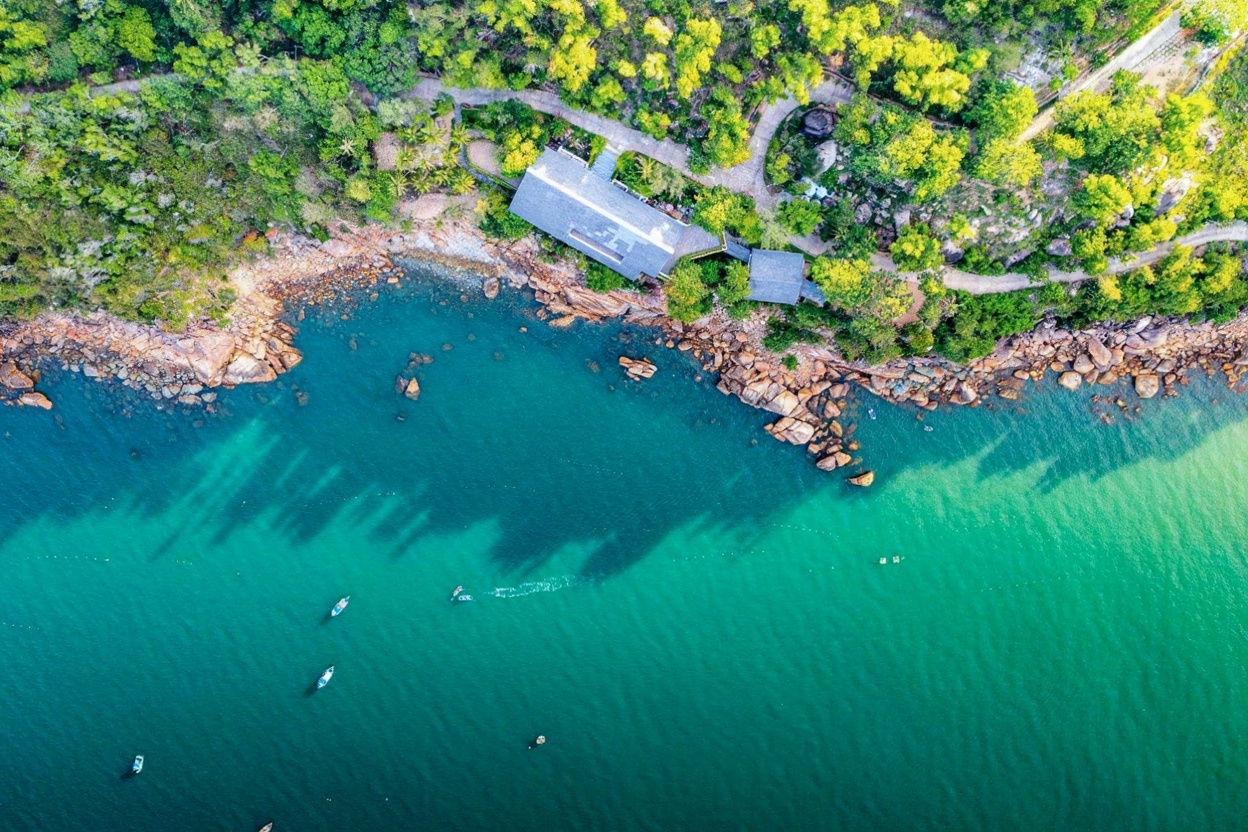
Ky Co (say: kee co) is the beach that put Quy Nhon on the international radar. The water is a specific shade of blue-green that photographs better than it needs to — it looks like a filter was applied, but it’s real. The cove is framed by limestone cliffs on two sides, and the sand is coarse and white.
✓Quick Answer
Ky Co Beach costs 20,000 VND (~$0.80) entry plus 80,000–100,000 VND (~$3–4) return boat from Quy Nhon city. The trip takes 45 minutes each way. Bring cash — no ATM on site. Last boat back runs around 4–5pm.
Access is the thing people get wrong. There are two ways in:
Option 1 — Boat from the city: Boats depart from the Quy Nhon fishing harbour and take 45 minutes. Return fare runs 80,000–100,000 VND (~$3–4). The last return boat leaves Ky Co around 4–5pm — confirm the exact time when you board the outward journey.
Option 2 — Motorbike + short boat: Ride to the Ky Co parking area (around 15km from the city). Park there and take the 10-minute shuttle boat for 20,000 VND (~$0.80) each way. This gives you more flexibility on timing and is cheaper if you’re already renting a motorbike for the day.
Either way, you pay the 20,000 VND (~$0.80) entrance fee at the gate.
What’s there: one long cove, a snack stall, basic toilet facilities, and a snorkelling area off the rocks at the far end. No sunbeds for hire, no beach bar, no umbrellas. Bring everything you need for a full day — food, water, sunscreen, a mask if you want to snorkel.
The snorkelling is genuinely good. The visibility runs 4–6 metres on a calm day and the reef off the eastern rocks has fish. Don’t expect Phu Quoc — but for central Vietnam, this is as clear as the water gets.
ℹKnow Before You Go
High season weekends (June–August) bring Vietnamese domestic tourists in volume. The cove can feel packed by 11am. On weekdays from February to May, you can have 200 metres of beach to yourself. Arrive early or come mid-week.
Bai Xep — The Fishing Village Beach
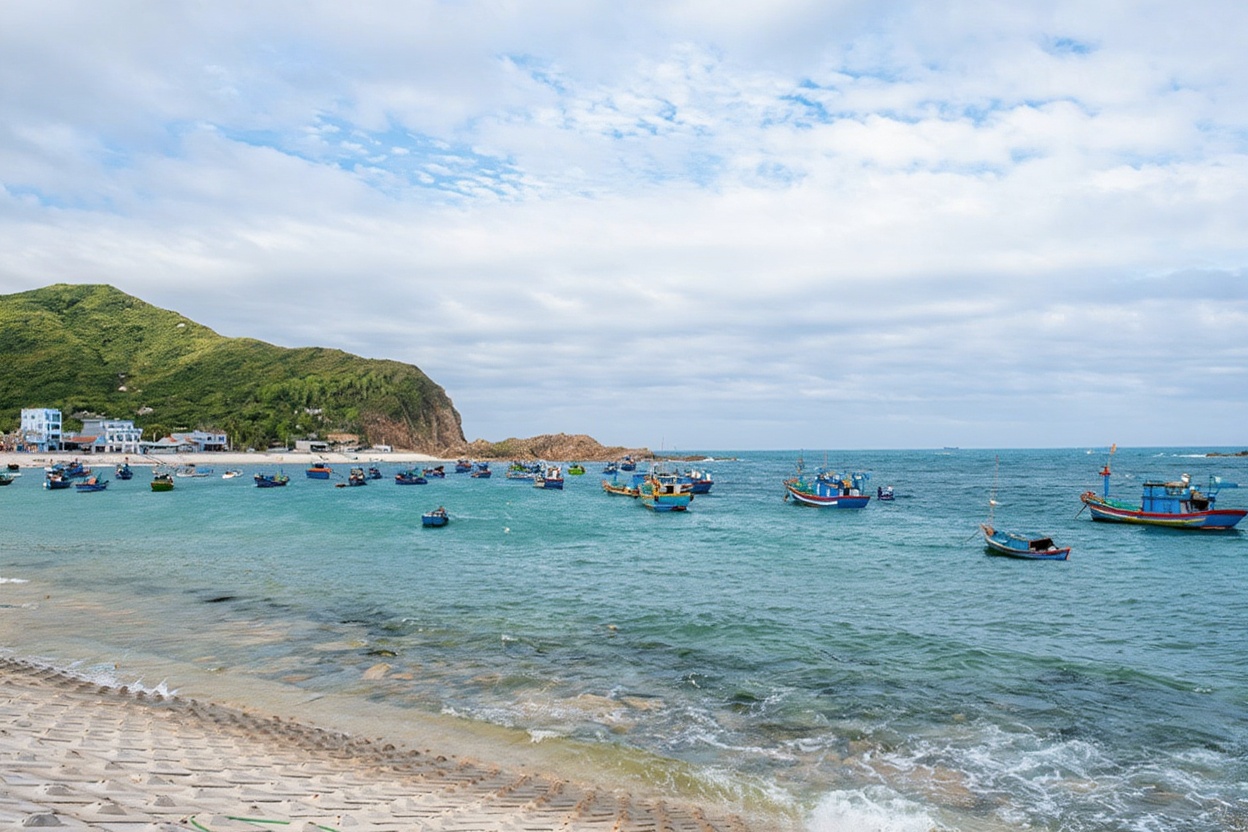
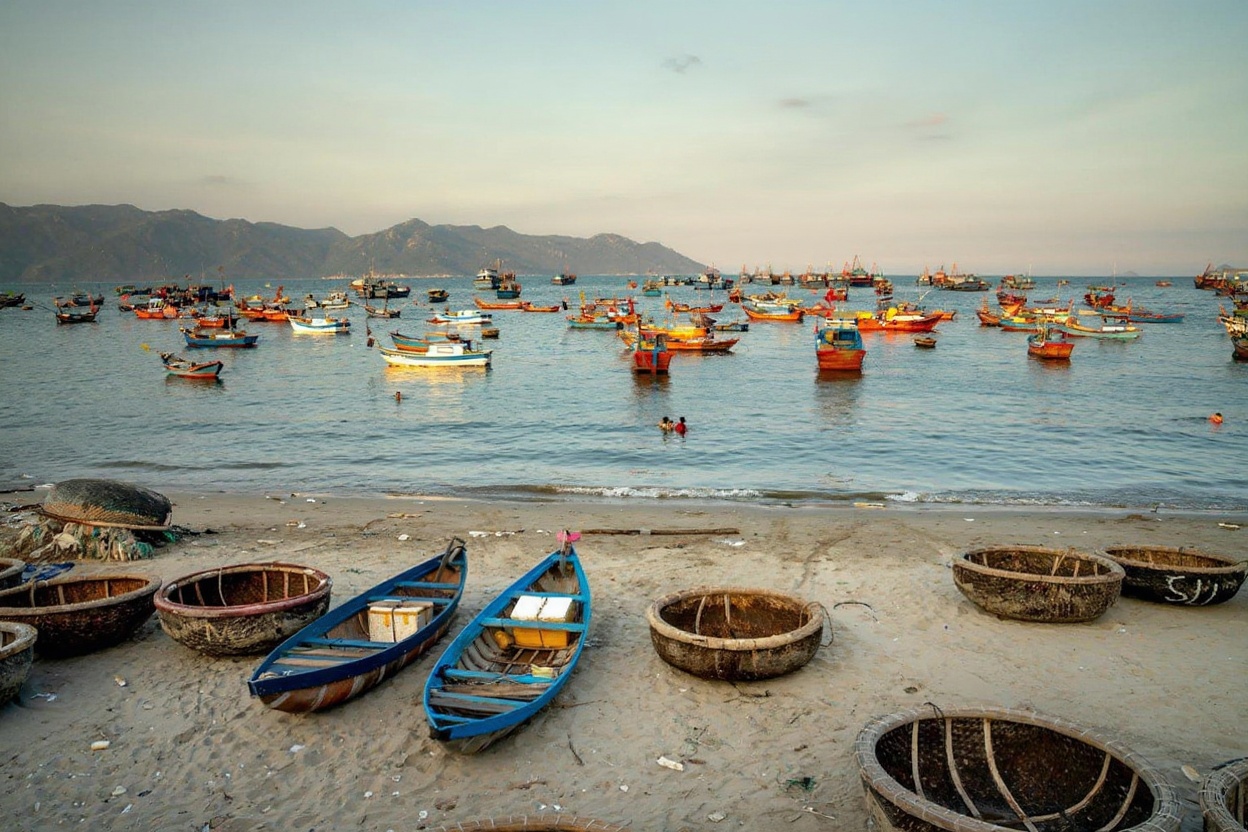
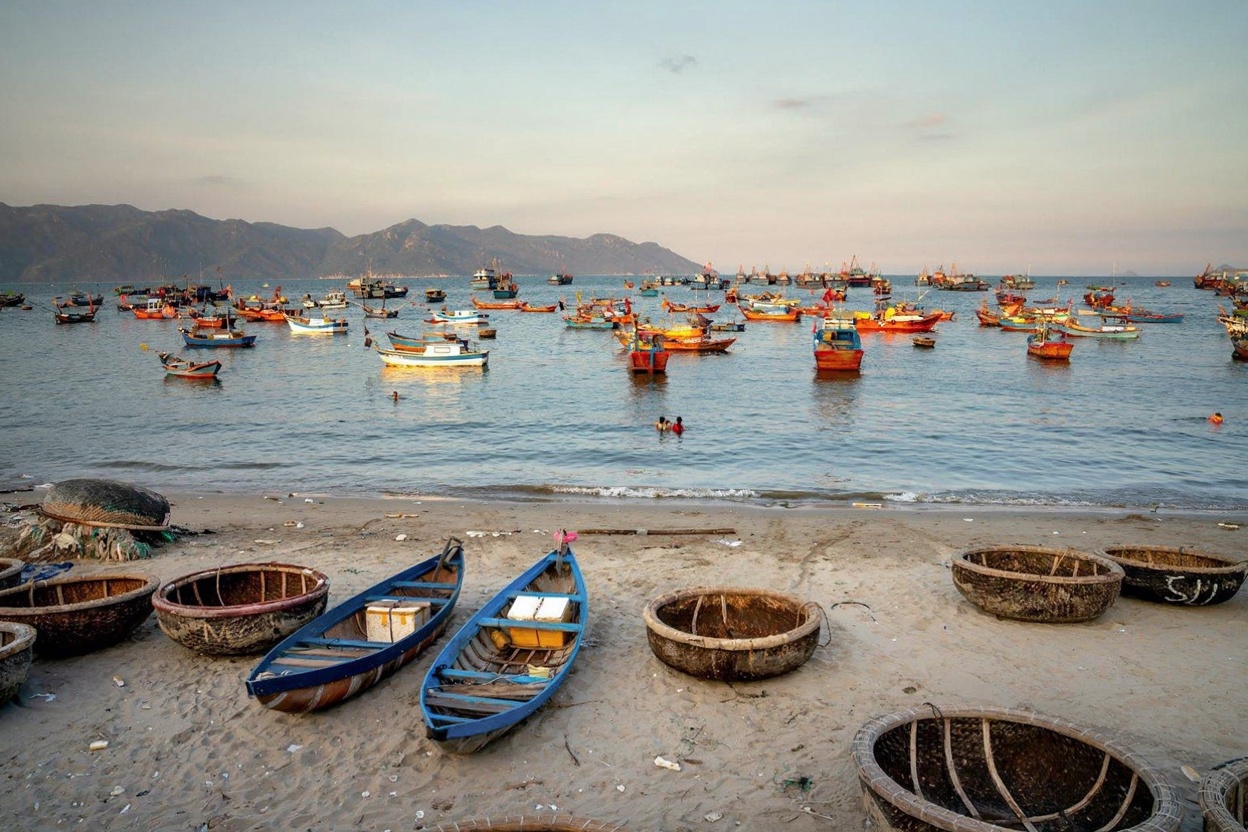
Bai Xep (say: bye sep) sits 6km south of the city. It’s not a beautiful beach in the conventional sense — the sand is grey-white, the water is clear but not turquoise, and the fishing boats that anchor here make the shoreline look more working-harbour than resort.
✓Quick Answer
Bai Xep is 6km south of Quy Nhon by motorbike or Grab (around 50,000 VND ~$1.90). No entrance fee. The beach is best in the morning before 9am. Overnight guesthouses run 350,000–500,000 VND (~$13–19). Life’s a Beach Hostel is the main backpacker spot.
That’s the point. Bai Xep works because it’s not trying to be a resort beach.
The fishing fleet still operates out of here. At 5–6am, boats go out. By 7am, the ones that stayed in haul their catch on the beach and the ice buyers arrive. The village sounds like a village — generator hum, children, dogs, the creak of wood on sand. By 9am it quiets back down and the beach is yours.
The swim is perfectly fine — calm, clear, no currents worth worrying about in the dry season. But people who come specifically to swim and compare it to Ky Co will be disappointed. That’s not what Bai Xep is for.
Where Bai Xep wins: overnighting here. A guesthouse right on the beach for 350,000–500,000 VND (~$13–19), dinner at a table in the sand, waking up to the fishing boats leaving before sunrise. Life’s a Beach Hostel is the most-mentioned backpacker option — it’s been running long enough to have established the social scene in the village.
★Jake’s Pick
Do Bai Xep as an overnight, not a half-day trip. The village at dusk when the boats come back, and the beach at 6am when they leave again — those are the two moments. A day-tripper from Quy Nhon misses both.
Eo Gio — The Cliff Beach
Eo Gio (say: ay-oh zee-oh) translates as “wind gap” and the name is accurate — the wind here comes off the South China Sea without anything to slow it down. It’s a headland 20km north of Quy Nhon with walking trails along the clifftops, not a swimming beach.

✓Quick Answer
Eo Gio is 20km north of Quy Nhon by motorbike (30-minute ride). Entrance costs 20,000–30,000 VND (~$0.80–1.15). The clifftop walk takes 1–1.5 hours return. Not a swimming beach — come for the views, not the water. Best in the morning before the wind picks up.
The walk follows the clifftop for 3–4km with the ocean dropping away on one side. The path is maintained and wide enough to walk without drama, but exposed enough that a breeze becomes a proper wind at the narrowest points.
Views: north toward Nhon Hai commune and the wind turbine ridgeline, south toward Quy Nhon’s promenade. On a clear morning (February to May), the water below the cliffs is the same blue-green as Ky Co.
No swimming here. The cliffs drop directly into rough water and there’s no beach access from the trail. Combine Eo Gio with lunch in Nhon Hai commune afterward — a small fishing village 2km further north where you can get fresh seafood at a roadside restaurant for 150,000–200,000 VND (~$5.70–7.60) per person.
Rang Beach — The City Beach
Rang Beach is the quiet southern stretch of Quy Nhon’s main city beach, where the promenade developments end and the casuarina trees start. No entrance fee. No facilities. The fishing boats anchor offshore at night and the beach smells faintly of salt and diesel in the early morning.
✓Quick Answer
Rang Beach is free and 10–15 minutes walk south from the main promenade hotels. Best before 8am when it’s empty. The swim is calm and safe in dry season. No facilities — bring your own water.
The practical case for Rang: it’s the easiest beach to use. Walk south from your hotel, find a spot on the sand, swim. No boat, no entrance fee, no planning. The water is calm and clear in the dry season (February–August). Suitable for swimming most mornings.
Where it falls short: by 9–10am in high season, Vietnamese families and day-trippers fill it up. By noon it feels like a public park on a hot day. The morning window is the only time it works as a quiet swim.
The best stretch runs from where Nguyen Tat Thanh road meets the shore southward for about 1.5km — past the casuarina trees and away from the cluster of beach chairs and umbrellas near the hotels. Walk further south and the beach empties significantly.
Bai Tram — The One Most Guides Skip
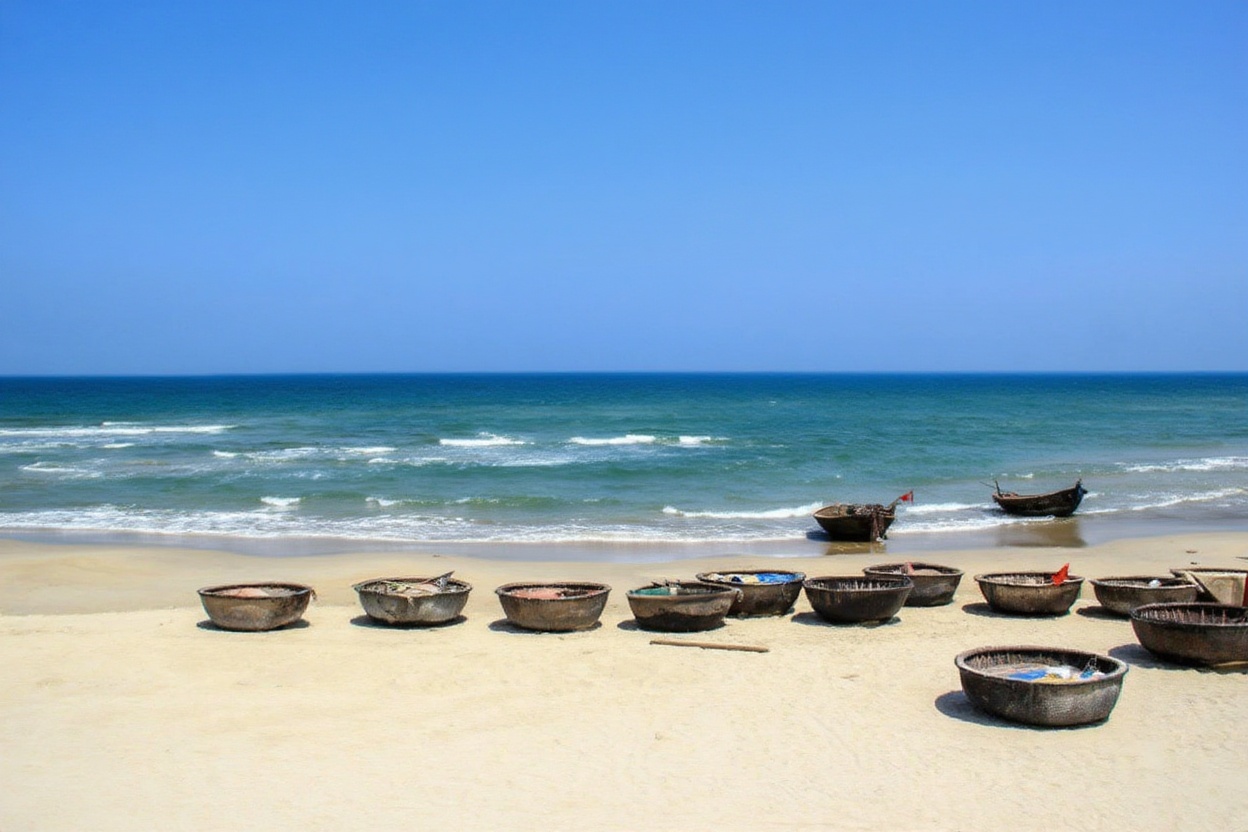
Bai Tram is 15km north of Quy Nhon, past Eo Gio, along a coastal road that gets genuinely quiet. There are no facilities, no entrance fee, and almost no international tourists. The beach is a 1km arc of white-grey sand backed by casuarinas, with good swimming in flat water.
✓Quick Answer
Bai Tram is 15km north of Quy Nhon by motorbike (25-minute ride). No entrance fee, no facilities. The beach is empty most days. Combine it with Eo Gio and Nhon Hai commune for a full morning north coast loop.
The local Redditor who lives in Quy Nhon mentioned Bai Tram as one of the spots he includes in his packed 4-day itinerary — the kind of detail that doesn’t make guidebooks because there’s no hotel to sponsor the mention.
How to get there: motorbike north from the city, past Eo Gio, continue on the coast road. No signage — ask at the guesthouse in Nhon Hai or use Google Maps (search “Bãi Trâm Nhơn Hải”). The road is paved most of the way.
Best combined with: the north coast loop — Ghenh Rang cliff park (city, 3km north), Eo Gio (20km), Nhon Hai seafood lunch (22km), Bai Tram (25km), back to city. Full morning, done by 1pm.
What to Know Before You Go — Practical Notes for All Beaches
A few things apply across all five beaches that the individual guides don’t cover.
Motorbike vs Grab: A motorbike (120,000–150,000 VND/day, ~$4.55–5.70) opens all five beaches. Without one, Ky Co requires booking a boat tour, Eo Gio and Bai Tram are awkward by Grab, and Bai Xep works but costs 50,000+ VND (~$1.90) each way. If you’re doing the beaches seriously, rent a motorbike.
Water conditions by season: February to August is the reliable window. The South China Sea calms down and the water clears. September brings the start of the typhoon season — Ky Co boat trips are frequently cancelled October through December. January is often grey and cool, with rough enough swells to make Ky Co access unreliable. Rang Beach and Bai Xep remain swimmable most of the year.
Sunscreen and shade: None of the five beaches has reliable shade infrastructure except basic beach umbrellas at Rang. Ky Co has no rentable sunbeds and the cliffs don’t provide much shadow until mid-afternoon. Bring strong sunscreen (SPF 50+), a rash guard if you burn easily, and a hat. The UV at this latitude (13°N) is significant from 10am to 3pm.
Cash only everywhere except the promenade hotels: Ky Co, Bai Xep, Eo Gio, and Bai Tram have no ATMs and no card machines. Budget for the full day in cash before you leave the city. The nearest ATMs to all of them are on the Quy Nhon promenade.
Crowds and timing: Quy Nhon gets domestic Vietnamese tourism on weekends during Vietnamese school holidays (June–August and Tet in January/February). Ky Co in particular fills up on these weekends. The beaches are significantly quieter on weekdays and outside school holiday windows — if your schedule has flexibility, use it here.
⚠Real Talk
The “turquoise Maldives” photos of Ky Co circulating on Vietnamese Instagram are taken in specific light conditions — early morning, no clouds, flat water, phone camera with a polarising effect. Real Ky Co on an overcast Tuesday in July is still a good beach, but it won’t look like those photos. Go for the experience, not the shot.
How to Plan Your Beach Days in Quy Nhon
The geography splits naturally into two directions from the city — north and south — and the best approach is to plan one day in each direction rather than bouncing back and forth.
South day: Ky Co Beach as the headline. Leave early (before 9am to catch the first boat or beat weekend crowds on the road). Spend 4–5 hours at Ky Co. On the way back, stop at Bai Xep for a late lunch and a walk through the fishing village. Return to the city by late afternoon.
North day: Motorbike loop. Ghenh Rang cliff park first (city edge, 3km). Then Eo Gio (20km, 1.5hr walk). Seafood lunch in Nhon Hai commune. Bai Tram if you want an empty beach on the way back. Done by 1–2pm.
Third day: Overnight at Bai Xep. Leave the promenade hotel, check in at Life’s a Beach or a beachfront guesthouse. Spend the afternoon swimming and watching the boats. Wake up at 5:30am and watch the fleet go out. Then back to Quy Nhon for the afternoon flight or bus.
This structure uses three days and covers all five beaches. You don’t need to rush any of them.
For getting around between beaches, see the motorbike section in our Quy Nhon things to do guide — 120,000–150,000 VND per day gets you a semi-automatic from most guesthouses on the promenade.
If you’re arriving from Hoi An, the central coast section of our Hoi An guide covers the transport options in detail.
Two things worth sorting before you land: a Vietnam eSIM so you have data the moment you clear customs, and travel insurance — medical costs for uninsured foreigners in Vietnam are significant.
Airalo eSIMs activate instantly. Buy before departure — airport SIM queues in Vietnam can take 30+ minutes.
FAQ — Quy Nhon Beaches
Is Ky Co Beach worth the trip from Quy Nhon?
Yes — it’s the single best beach on the central coast for turquoise water and clarity. The combination of boat trip, limestone cove, and uncrowded swimming makes it genuinely worth the effort. Go on a weekday if you can. The trip is most rewarding February to August when the water is clear and calm. Outside that window (especially October–December), swells can cloud the water and make the boat crossing rough.
Which beach is best for swimming in Quy Nhon?
Ky Co for the clearest water and best snorkelling. Rang Beach for the easiest swim without any logistical effort — just walk out from your hotel and get in. Bai Xep is fine for swimming but the appeal is the village atmosphere, not the water quality. Eo Gio has no swimming — it’s a cliff walk. Bai Tram has clean, flat water and almost no one in it.
When is the best time to visit Quy Nhon’s beaches?
February to August is the dry season window — clear water, calm seas, consistent sun. March to May is peak dry season: least rain, best visibility at Ky Co, cooler temperatures than July and August. October to December brings typhoon risk and rough seas — Ky Co boat trips are often cancelled. January can be grey and cool, though Rang Beach is still swimmable.
Can you do Ky Co Beach without a tour?
Yes — it’s straightforward independently. Take a public boat from the Quy Nhon fishing harbour (buy the ticket at the dock), pay the entrance fee at the gate, spend the day, catch the return boat before 4–5pm. No guide needed. Alternatively, motorbike to the parking area and take the shorter shuttle boat. Most travelers do it independently without any trouble.
Is Bai Xep better than Ky Co?
Different, not better or worse. Ky Co wins on water quality and scenery — if turquoise water and snorkelling are your priority, Ky Co is the answer. Bai Xep wins on authenticity and atmosphere — if you want to sleep in a fishing village, eat at a table in the sand, and hear the boats leave before sunrise, Bai Xep is the one. Most people with 3+ days do both.
Do you need to book Ky Co in advance?
No booking required for independent visits. Just show up at the Quy Nhon fishing harbour in the morning and buy a boat ticket on the spot. Boats run regularly from around 7am. If you’re going via a guesthouse tour, booking the day before is enough — these trips rarely sell out except during major Vietnamese public holidays in summer. The only time advance planning matters is during June–August school holidays when weekend crowds are highest. For the full city picture, our Quy Nhon travel guide covers accommodation, food, and how to structure your days.