Why Cao Bang — and Why Now
I’ve done the Ha Giang Loop four times. The first time, in 2021, I passed maybe a dozen other foreign motorcyclists over four days. Last October, I counted forty-plus at the same guesthouse in Đồng Văn.
Ha Giang is still worth doing. But it’s not the secret it was.
Cao Bang is where Ha Giang was in 2019.

The landscape is different, too — not the sharp, dramatic peaks of Ha Giang, but something wider. Rolling karst hills, rice paddies so green they look painted, rivers that cut through limestone gorges. And at the end of it, a waterfall that does the thing where you round a corner and your brain doesn’t immediately accept what your eyes are seeing.
One Reddit user who’d just done the loop put it plainly: “I just got back from the Cao Bang loop and it was amazing.” No further elaboration. That’s usually the sign of a place that actually got to you.
Ban Gioc Waterfall: What You’re Actually Coming For
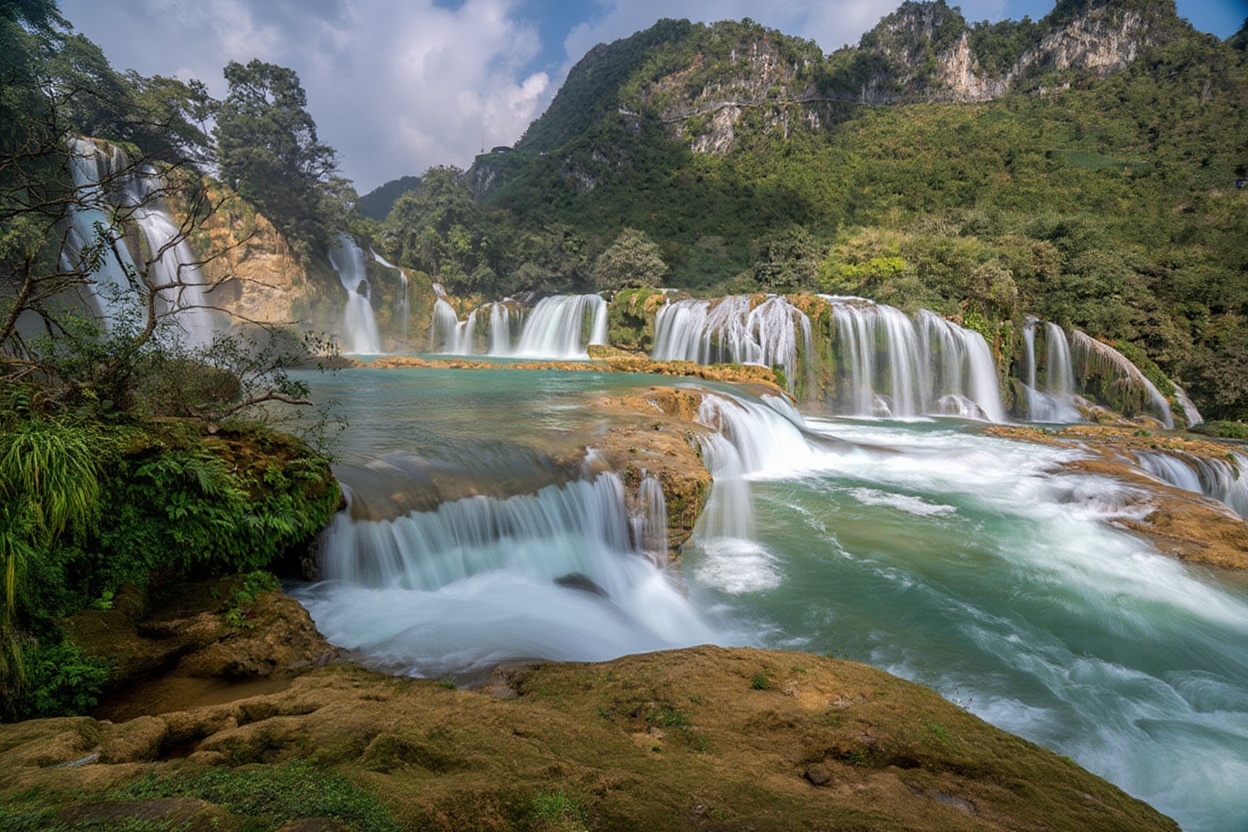
Ban Gioc (Thác Bản Giốc) is 270 steps and a bamboo raft ride from the Chinese border. On a clear day, you can see the Chinese red-and-gold banners on the far bank. The waterfall is shared — the Chinese call it Detian, and it runs into their territory on the right side.
> **Quick Answer:** Ban Gioc is about 85km from Cao Bang city — roughly 2 hours by motorbike or car. Entrance is around 45,000 VND (≈ $1.80 USD). Bamboo raft to get closer: 80,000–100,000 VND per person. Go at dawn if you can — the light is different and the Chinese tour groups haven’t arrived yet.
Three tiers. The water is a pale turquoise where it pools at the base, the kind of color you expect in a travel brochure and don’t actually believe until you’re standing there sweating in the humidity.
The falls are widest during and just after rainy season — September and October, when the water volume peaks. Dry season (November–April) gives clearer water, better light, easier roads to get there. Neither version is wrong.
What nobody tells you: the bamboo rafts that take you to the base of the falls are completely worth the 80,000 VND. Without a raft, you’re watching from a distance. With one, you’re close enough to feel the mist on your arms and hear nothing except water.
Budget 2–3 hours here minimum. Most people who rush it regret it.
Nguom Ngao Cave: The Easy Add-On That Isn’t Actually Easy
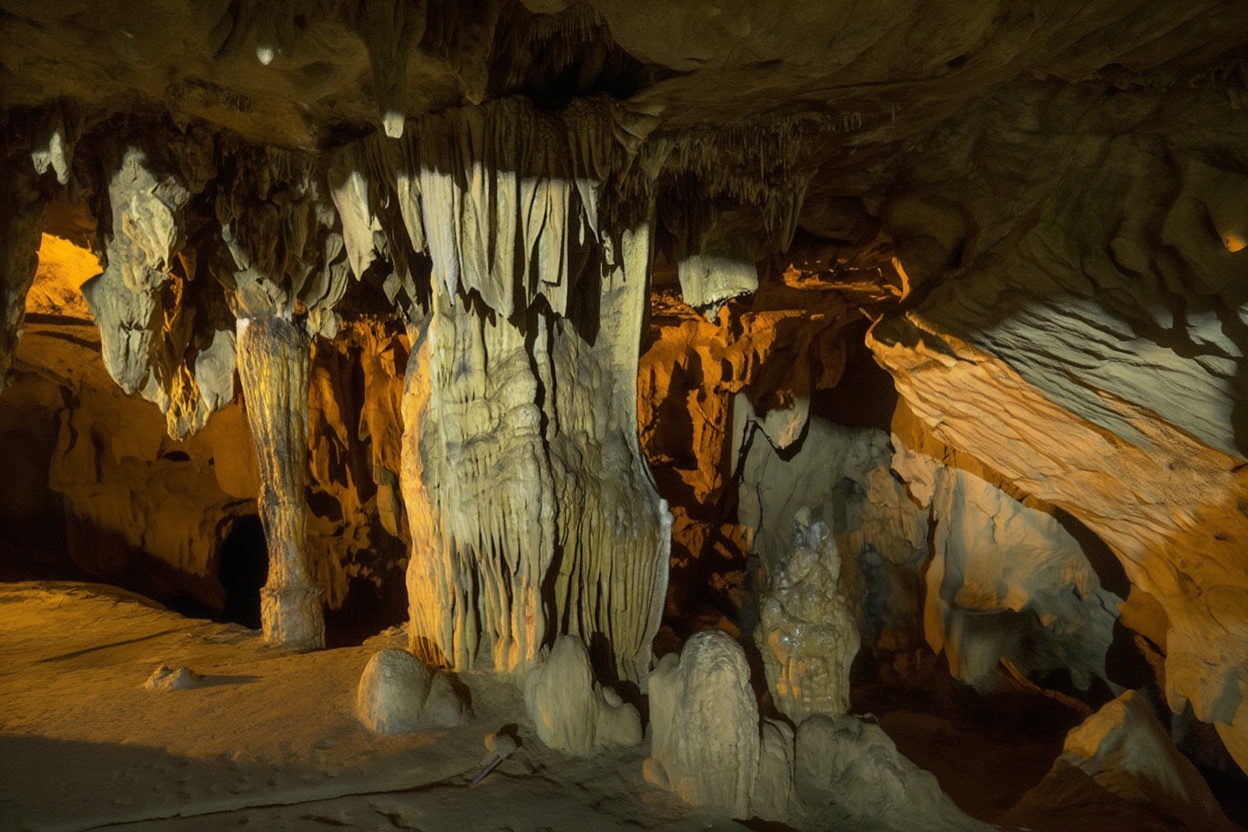
Three kilometers from Ban Gioc. That’s how close Nguom Ngao Cave is. Most people visit both in the same half-day.
Nguom Ngao means “Tiger Cave” in the Tày language. The name comes from the tigers that reportedly sheltered here before they became locally extinct. The cave itself stretches 2.1km of illuminated passages — the explored total is closer to 3km — with stalactite formations dense enough to feel almost excessive.
> **Quick Answer:** Nguom Ngao entrance fee: around 40,000 VND (≈ $1.60 USD). The lit section takes 45–60 minutes to walk. A guide is included in the entrance price. Wear shoes with grip — the floor is wet and uneven in places.
I’ll be honest: if you’ve done Phong Nha or the big caves in Ha Long, Nguom Ngao won’t blow your mind on scale. But it’s genuinely impressive for what it is, and the combination of waterfall + cave in the same half-day is hard to beat in terms of sheer bang-for-effort ratio.
The cave air is noticeably cooler than outside — welcome relief if you’re visiting in the warmer months. Pack a light layer if you run cold.
Pac Bo: Ho Chi Minh’s Cave and the History Nobody Explains Properly
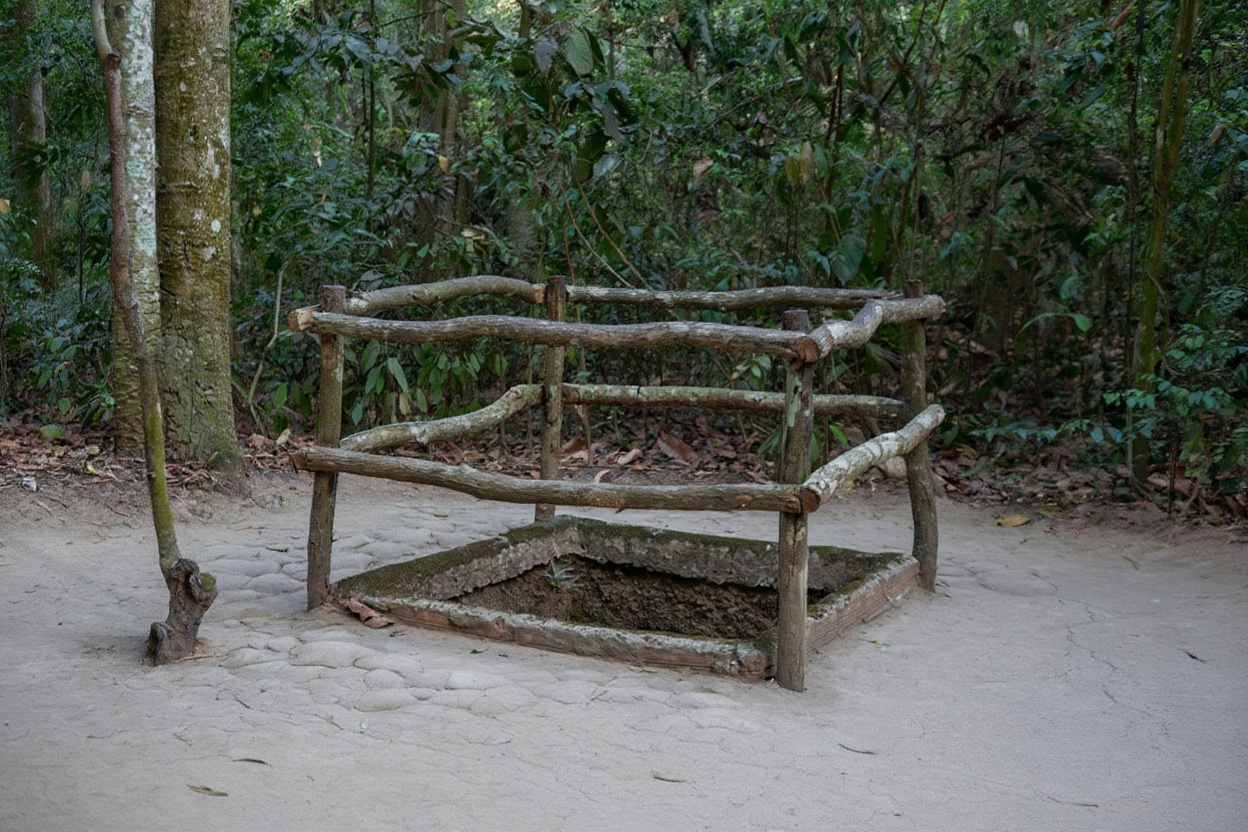
Pac Bo is where Ho Chi Minh crossed back into Vietnam from China in 1941 after thirty years abroad. He lived in this cave for months, used the stream nearby as a mirror to shave, named it Lenin Stream, and named the mountain Karl Marx.
That’s the kind of detail that makes sense when you’re standing there and completely baffling when you read it in a history book.
> **Quick Answer:** Pac Bo is 55km northwest of Cao Bang city — about 1.5 hours by motorbike. Entrance fee: roughly 20,000–30,000 VND. Most people combine it with the drive toward Ha Giang or as a standalone half-day from Cao Bang city.
The site itself is quiet. Green, forested, the stream running cold even in summer. There’s a small museum near the entrance that’s exactly as earnest and slightly confusing as any historical museum in northern Vietnam. Worth 30 minutes. The walk to the actual cave is short — the site is more about the idea of the place than any dramatic spectacle.
If you care about Vietnamese history, this is non-negotiable. If you’re purely chasing landscapes, it’s an optional add-on.
Phong Nam Valley: The Overnight Stop Most People Skip
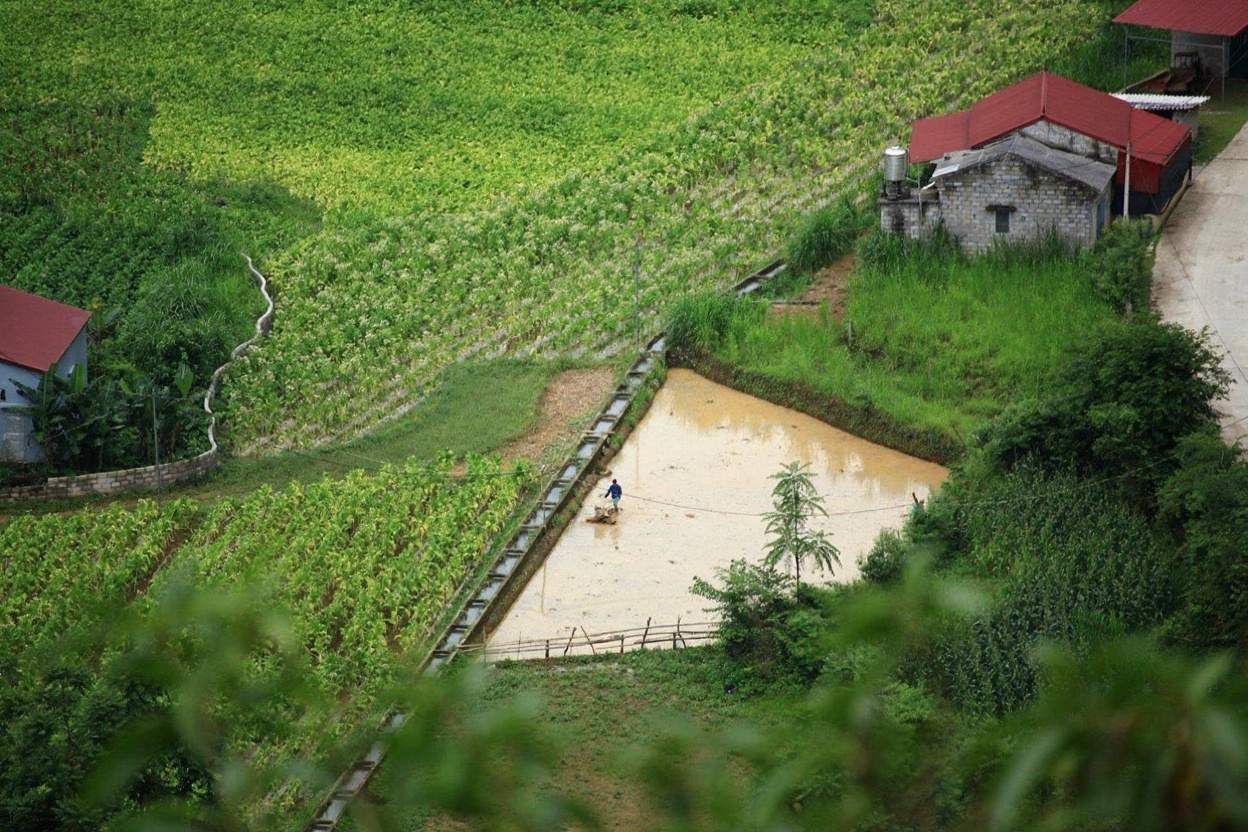
Phong Nam Valley sits on the road between Cao Bang city and Ban Gioc. It’s not a destination in its own right — it’s a place to stop, slow down, and actually look at where you are.
Rice terraces. Stilt houses. The kind of valley that looks like it belongs in a different era, not because it’s been preserved for tourists but because tourism hasn’t gotten there yet in any meaningful way.
One travel writer who actually drove the route put it directly: “I highly recommend spending the night in Phong Nam Valley.” The accommodation options are basic — family homestays, usually around 200,000–300,000 VND per person including dinner and breakfast. Don’t expect wifi or hot water beyond a gas heater. Do expect a meal cooked over a wood fire and a level of quiet that cities have made people forget is possible.
If you’re doing a 3-day Cao Bang itinerary, build Phong Nam in as your first overnight.
Thang Hen Lake and the “Angel Eye”
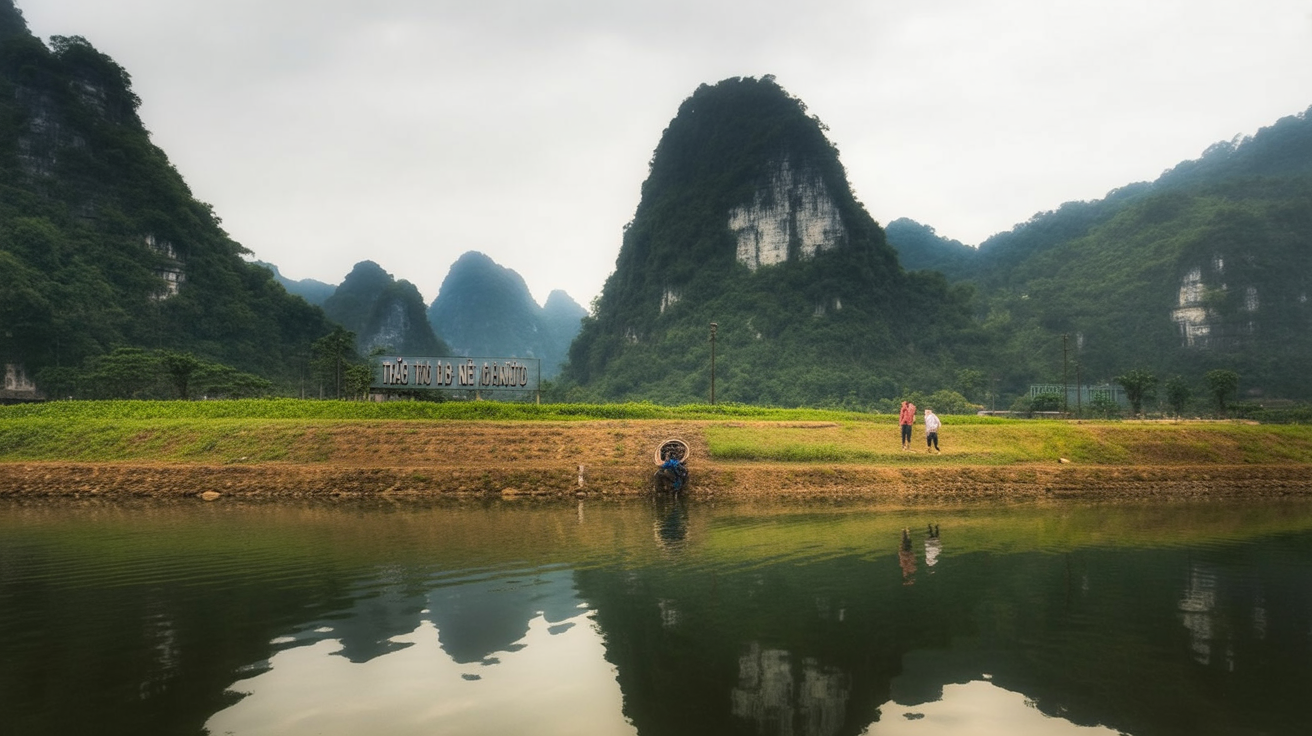
Thang Hen is a system of 36 interconnected lakes in the karst hills south of the Chinese border. The “Angel Eye” (Mắt Thần) view is the one that gets shared on Instagram: looking down from a ridge at a circular lake framed by limestone hills, the reflection nearly perfect on a still morning.
It’s about 25km from Cao Bang city. The road up to the viewpoint requires either a capable motorbike or a willingness to walk the steeper sections. The view is legitimately earned.
Visit early. The light is better before 9am, and the reflection disappears when wind picks up later in the day.
Cao Bang City: The Base Camp Nobody Writes About
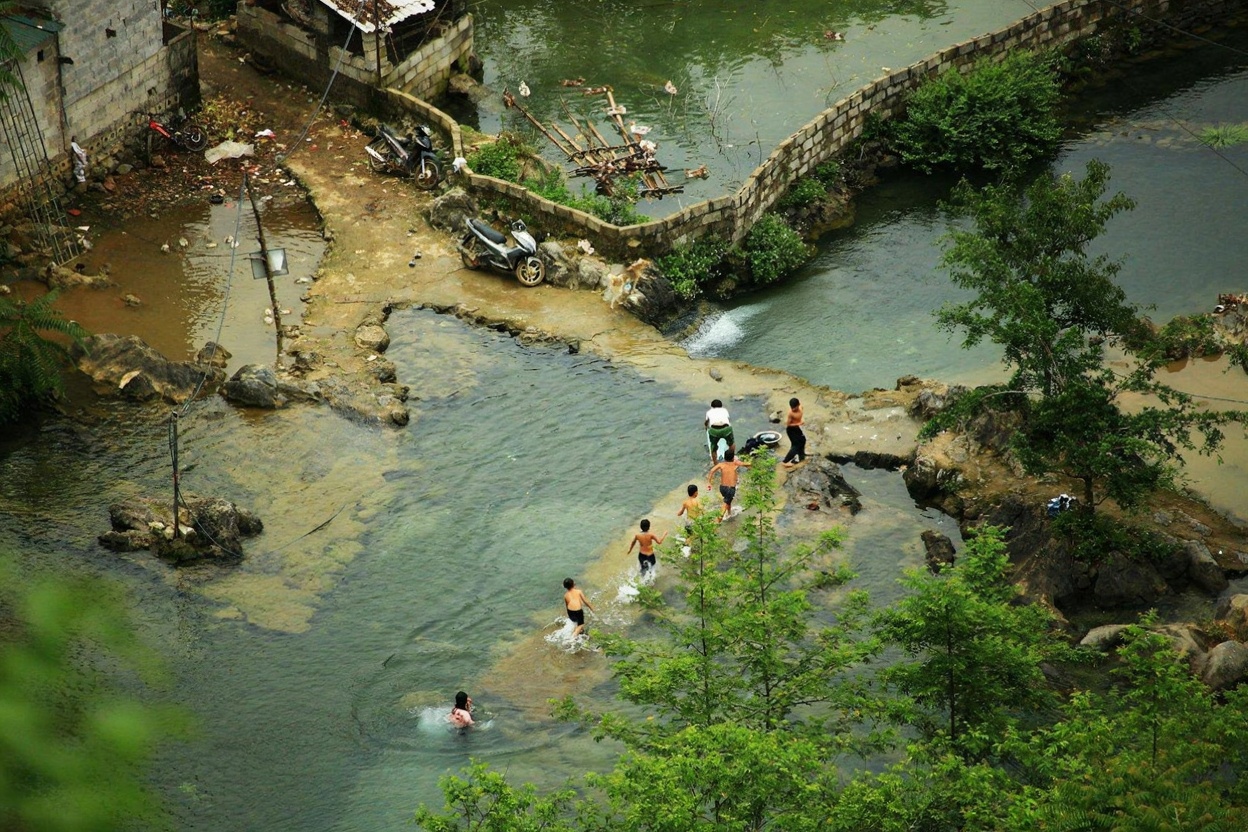
Cao Bang city is not a destination. It’s a base. Population around 120,000, a river running through the middle, a weekend night market along the riverfront, and enough guesthouses and restaurants that you won’t need to try hard to eat well.
The night market runs Friday and Saturday evenings — food stalls, local produce, a few souvenir stands, occasional live music. It’s aimed at Vietnamese visitors more than foreign tourists, which means the prices are normal and nobody is performing “local experience” at you.
For food: look for bún hến (rice noodles with freshwater clams), bánh cuốn (steamed rice rolls with minced pork), and whatever’s coming off the grill at any given stall. Cao Bang province also has its own style of smoked meat — thịt lợn sấy — that you’ll find at the market and in local restaurants. Order it.
Cao Bang Budget — What Things Actually Cost
| Item | Cost (VND) | Cost (USD) |
|---|---|---|
| Bus Hanoi → Cao Bang (sleeper) | 200,000–250,000 | $8–10 |
| Motorbike rental per day | 150,000–200,000 | $6–8 |
| Car + driver full day | 1,500,000–2,000,000 | $60–80 |
| Guesthouse Cao Bang city | 200,000–400,000 | $8–16 |
| Phong Nam Valley homestay (incl. meals) | 200,000–300,000/person | $8–12 |
| Ban Gioc entrance fee | 45,000 | $1.80 |
| Ban Gioc bamboo raft | 80,000–100,000 | $3.20–4 |
| Nguom Ngao Cave entrance | 40,000 | $1.60 |
| Pac Bo entrance | 20,000–30,000 | $0.80–1.20 |
| Meal at local restaurant | 40,000–80,000 | $1.60–3.20 |
| Daily total (budget) | 500,000–700,000 | $20–28 |
Prices as of May 2026. Entrance fees subject to change — verify on arrival.
How to Get to Cao Bang from Hanoi
> **Quick Answer:** Bus from Hanoi takes 6–7 hours and costs 200,000–250,000 VND ($8–10). Private car is 6 hours and runs $80–120. Motorbike is possible if you’re experienced — the roads are good by northern Vietnam standards but long. No direct train.
The fastest reliable option for most people is the sleeper bus from Hanoi’s Gia Lam bus station or My Dinh. Several companies run the route: Hung Thanh and Gia Phat are the names that come up most often. Depart in the evening, arrive in Cao Bang city early morning, start your day without losing it to transit.
If you’re going with a group or want flexibility, a private car with driver is the smarter move. Split four ways, the cost is comparable to taking the bus, but you stop when you want and can do the return on your own schedule. Book through your hotel in Hanoi or use 12Go Asia to compare options.
Motorbike from Hanoi is doable — it’s a full day of riding (250km, mountain roads, slow average speed). I’d only recommend it if you’re already comfortable with northern Vietnam mountain riding and you’re planning to loop back through Ha Giang or a different route. Riding there and back the same way wastes the experience.
See our full Vietnam transport guide if you’re still comparing options across the whole country.
Getting Around Cao Bang Province
The core sites — Ban Gioc, Nguom Ngao, Phong Nam Valley — are strung along a single main road heading northeast from Cao Bang city. The road is good. Paved, reasonably maintained, with views that make you brake for no reason except that the scenery demands it.
Your options:
12Go covers most Vietnam routes — sleeper buses, trains, and island ferries. Compare schedules and book in advance during peak season (Dec–Feb, Jun–Aug).
Rent a motorbike in Cao Bang city. 150,000–200,000 VND per day. This is the right choice if you’re comfortable on a semi-automatic and have experience with mountain roads. You move at your own pace, which matters here.
Hire a car + driver. 1,500,000–2,000,000 VND per day. The practical choice for non-riders, groups of 3+, or anyone doing Pac Bo (which is in the opposite direction from Ban Gioc) in the same day.
Join a tour from Hanoi. Several operators now run the “Cao Bang Loop” as a 3–4 day guided tour, sometimes combined with Ha Giang into a 7–10 day northern Vietnam circuit. Useful if you don’t want to think about logistics. Expect to pay $80–150 USD per person for a small-group Cao Bang tour, more for the full Ha Giang + Cao Bang combination.
The Ha Giang + Cao Bang combination is genuinely appealing — it turns two separate trips into one coherent northern circuit. If you’re planning either one, consider whether the other fits your timeline.
For Ha Giang context, see our Ha Giang Loop guide — particularly the transport section, which breaks down how the two routes connect.
Where to Stay in Cao Bang
Cao Bang city has enough guesthouses that you won’t struggle to find a bed. The mid-range options cluster around the central market area and along the riverfront.
For most people doing a 2-night Cao Bang trip, the practical split is: night 1 in Cao Bang city (arriving by bus, getting organized, doing the night market), night 2 somewhere near Ban Gioc or in Phong Nam Valley.
accommodation for sleeping, not to be in.
When to Go
> **Quick Answer:** October to April is best — dry season, clear roads, good light at Ban Gioc. October and November are the sweet spot: water still full from rainy season, crowds (such as they are) minimal. Avoid July and August if you’re riding a motorbike — the roads to Ban Gioc can be genuinely dangerous when wet.
Dry season runs October through April. The road to Ban Gioc is straightforward in dry conditions; in heavy rain, the karst limestone sections get slick and unpleasant.
October and November are the best months. The water at Ban Gioc is still high from rainy season — you get the full visual impact — but the skies are clear and the temperatures are comfortable without being cold. This is also when the rice terraces around Phong Nam Valley are at their most photogenic: golden harvest color before the fields are cut.
February and March are good for clear skies and cool temperatures. The water at Ban Gioc drops noticeably compared to October, but the light is better for photography.
May through September: rainy season. The waterfall is at its most dramatic, but the roads can be compromised and visibility from viewpoints like Thang Hen is often blocked by cloud. It’s still doable — one traveler I found wrote that May was “a bit cloudy but nothing I couldn’t handle” — but go in knowing the tradeoffs.
Cao Bang Itinerary: 2 Days vs 3 Days
2-Day Cao Bang Itinerary
| Day | Plan |
|---|---|
| Day 1 (arrive morning) | Bus arrives Cao Bang city AM → rent motorbike or hire car → Thang Hen Lake + Angel Eye view → Cao Bang city night market |
| Day 2 (early start) | Leave 6am → Phong Nam Valley (stop, breakfast) → Ban Gioc Waterfall (2–3 hrs) → Nguom Ngao Cave (1 hr) → return Cao Bang city → overnight bus back to Hanoi |
3-Day Cao Bang Itinerary
| Day | Plan |
|---|---|
| Day 1 | Arrive Cao Bang city AM → Pac Bo Historical Site (half day west of city) → Cao Bang city night market |
| Day 2 | Cao Bang city → Phong Nam Valley (stop) → Ban Gioc at dawn → Nguom Ngao Cave → overnight near Ban Gioc or Phong Nam |
| Day 3 | Thang Hen Lake + Angel Eye early → back to Cao Bang city → bus to Hanoi (evening) |
3 days gives a much better experience than 2 — the 2-day version is rushed. If you can only do 2, prioritize Ban Gioc and skip Pac Bo.
Real Talk: What Cao Bang Is and Isn’t
Real Talk: Cao Bang is not a polished destination. The accommodation is basic, the signs are mostly in Vietnamese, and you will spend more time on mountain roads than at actual attractions. That’s the deal. If you want infrastructure, go to Ha Long Bay. If you want one of the most dramatic landscapes in northern Vietnam with almost no foreign tourists, Cao Bang is the trade-off that makes sense.
Also: the road between Cao Bang city and Ban Gioc passes through small towns with almost no tourist infrastructure. You will need to communicate in Vietnamese or via Google Translate for most transactions. This is fine. It’s not a problem. It’s the reason the prices are normal and nobody’s overcharging you.
Cao Bang vs Ha Giang: Should You Do Both?
This comes up on Reddit constantly. A solo traveler who was planning the Ha Giang Loop posted: “I’m looking into going on a motorcycle tour of Ha Giang and Cao Bang later this year. Did you prefer one over the other?”
Honest answer: they’re different enough that comparison is slightly wrong.
Ha Giang is dramatic, vertical, and famous. The Loop is a well-established circuit with guesthouses, cafes, and tour groups — it’s still spectacular but you’re doing it alongside people. Cao Bang is horizontal, wide, and quiet. The waterfall at Ban Gioc is something Ha Giang doesn’t have.
If you have 10+ days in northern Vietnam: do both. Combine them into a single loop — Hanoi → Ha Giang → Bao Lac → Cao Bang → Hanoi. Several tour operators now run this as a 7–10 day circuit. It’s genuinely one of the best overland routes in Southeast Asia.
If you have 4–5 days in northern Vietnam: choose based on what you want. Ha Giang for mountain passes and dramatic scenery. Cao Bang for a waterfall that actually earns its reputation and significantly fewer other foreigners around you.
For the Ha Giang side of this, see our complete Ha Giang Loop guide. For northern Vietnam itinerary options that fit both in, see the northern Vietnam guide.
FAQ: Cao Bang Questions People Actually Ask
- Is Cao Bang safe for solo travelers?
- Yes. One Reddit user who just finished the route wrote: “I’ve been in the north for 20 days and have felt very safe.” The roads are the main variable — they’re good by northern Vietnam standards but require attention. Solo female travelers have reported no particular issues beyond standard road awareness.
- Do I need a visa for the Chinese border area?
- No extra visa for Vietnamese territory. You can approach the border area at Ban Gioc on the Vietnamese side without any additional permits. Crossing into China requires a separate Chinese visa — this is not part of a normal Cao Bang trip.
- Can I rent a motorbike in Cao Bang city?
- Yes — there are rental shops near the central market area. Expect 150,000–200,000 VND per day for a semi-automatic. Bring your license; enforcement is inconsistent but it matters if anything goes wrong.
- Is Ban Gioc worth it with a budget of only 2 days from Hanoi?
- Barely. You’ll spend 12–14 hours in transit for a full round trip, which leaves you roughly one full day at the sights. It’s doable but rushed. If you genuinely only have 2 days, consider whether a closer destination (Ninh Binh, for example) makes more sense. If Ban Gioc is specifically what you’re after, it’s worth adding a third day.
- What’s the Cao Bang Loop exactly?
- It’s an unofficial name for the route that combines Ha Giang and Cao Bang into a single northern Vietnam circuit — typically 7–10 days. The route goes Hanoi → Ha Giang → Dong Van → Meo Vac → Bao Lac → Cao Bang → Ban Gioc → Hanoi. Some tour operators now offer this as a package; it can also be done self-guided on a motorbike.
Two things worth sorting before you land: a Vietnam eSIM so you have data the moment you clear customs, and travel insurance — medical costs for uninsured foreigners in Vietnam are significant.
Airalo eSIMs activate instantly. Buy before departure — airport SIM queues in Vietnam can take 30+ minutes.
Planning Cheat Sheet
- How long: 2 days minimum, 3 days recommended
- When: October–April (dry season). October–November for peak water + clear skies
- From Hanoi: Sleeper bus (~200,000–250,000 VND) or private car (~$80–120). 6–7 hours
- Getting around: Rent motorbike (150,000–200,000 VND/day) or car + driver (1,500,000–2,000,000 VND/day)
- Don’t miss: Ban Gioc at dawn (before the day-tripper buses), bamboo raft at the base, Nguom Ngao Cave same half-day
- Budget: $20–28/day covers accommodation, transport, entrance fees, and food
- Stays: Night 1 in Cao Bang city, Night 2 near Ban Gioc or Phong Nam Valley
- Add Ba Be Lake: 70km west of Cao Bang — Ba Be Lake makes a natural add-on, with Tay village homestays and a limestone lake that sees almost no foreign visitors
- Bus booking: Book Hanoi–Cao Bang on 12Go Asia or direct with Hung Thanh / Gia Phat at Gia Lam station
Combine with: Ha Giang Loop (7–10 day northern circuit) or Ninh Binh + Ha Long as a standalone northeast add-on