Updated June 2026
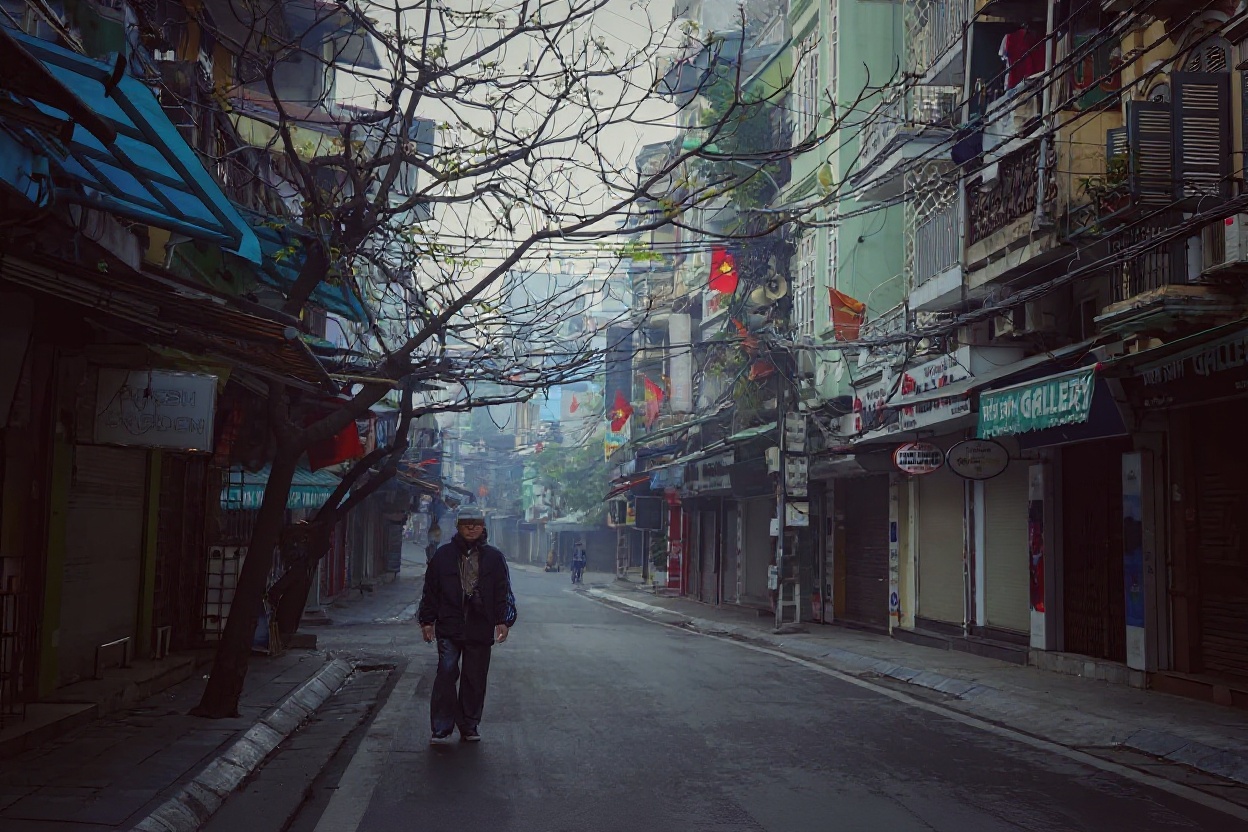
Why the Old Quarter Rewards Walking (And When to Go)
The Old Quarter is 1.2 square kilometers. That sounds small. It takes three hours to walk properly because every block has something that makes you stop: a temple squeezed between two shophouses, a woman selling bún bò (say: boon baw) from a cart the size of a bicycle, a doorway that opens into a courtyard you weren’t expecting.
The optimal window is 6:30–10am. This is when the morning markets run, the street food cooks are at full output, and the motorbike density hasn’t yet reached the afternoon peak where walking becomes an obstacle course. By 11am the streets are navigable but the atmosphere has shifted.
✓Quick Answer
Start at Hoan Kiem Lake’s northern shore, walk north into the Old Quarter, spend 3–4 hours drifting the 36 Streets, and end at Dong Xuan Market. Best days: Tuesday–Friday, when the weekend crowds haven’t arrived and the trade streets function as working commerce rather than tourist corridors.
The Walking Route: Start to Finish
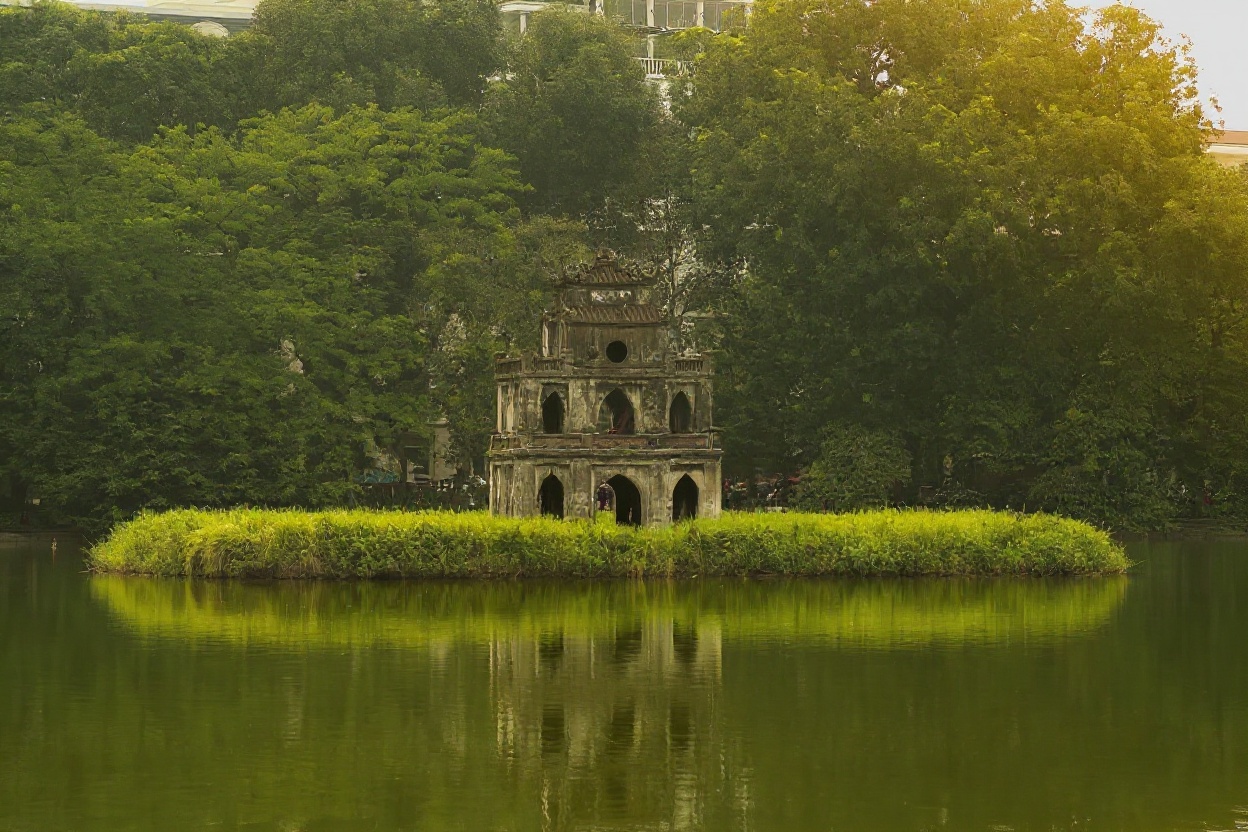
Stop 1: Hoan Kiem Lake (30 minutes)
Start at the southern end of Hoan Kiem Lake, at the 21.0285° N, 105.8524° E entrance near the Ly Thai To statue. Arrive early — the lake at dawn has a quality that disappears with the sunlight. Old men doing tai chi beside the water. Women selling flowers from bicycle baskets. The sound of the city warming up underneath the birds.
Walk counterclockwise around the lake. Ngoc Son Temple on the small island in the northern half is worth the 30,000 VND (~$1.15) entry if you haven’t been. The Huc Bridge — red, wooden, curved — is also worth crossing slowly rather than rushing.
Confession: I’ve walked this lake probably 200 times and I still stop at the northern end near the old post office to watch the morning traffic begin. It doesn’t get old. The consistency of a Vietnamese morning is the closest thing this country has to a national identity.
ℹKnow Before You Go
The lake area fills with exercise groups, old men playing chess, and vendors selling corn and banh mi from carts between 6–8am. After 9am it transitions into tourist territory. The morning version is worth the early alarm.
Stop 2: Dinh Tien Hoang and the Entry to the Old Quarter (10 minutes)
From the lake’s northern shore, walk north on Dinh Tien Hoang street. This is the boundary between the modern city and the Old Quarter. Cross Hang Dao street and you’re in. The architecture shifts immediately — the tube houses narrow, the facades lean slightly forward, the street noise changes pitch from car horns to motorbike weaving.
Stop 3: The Silver Street and the Silk Quarter (45 minutes)
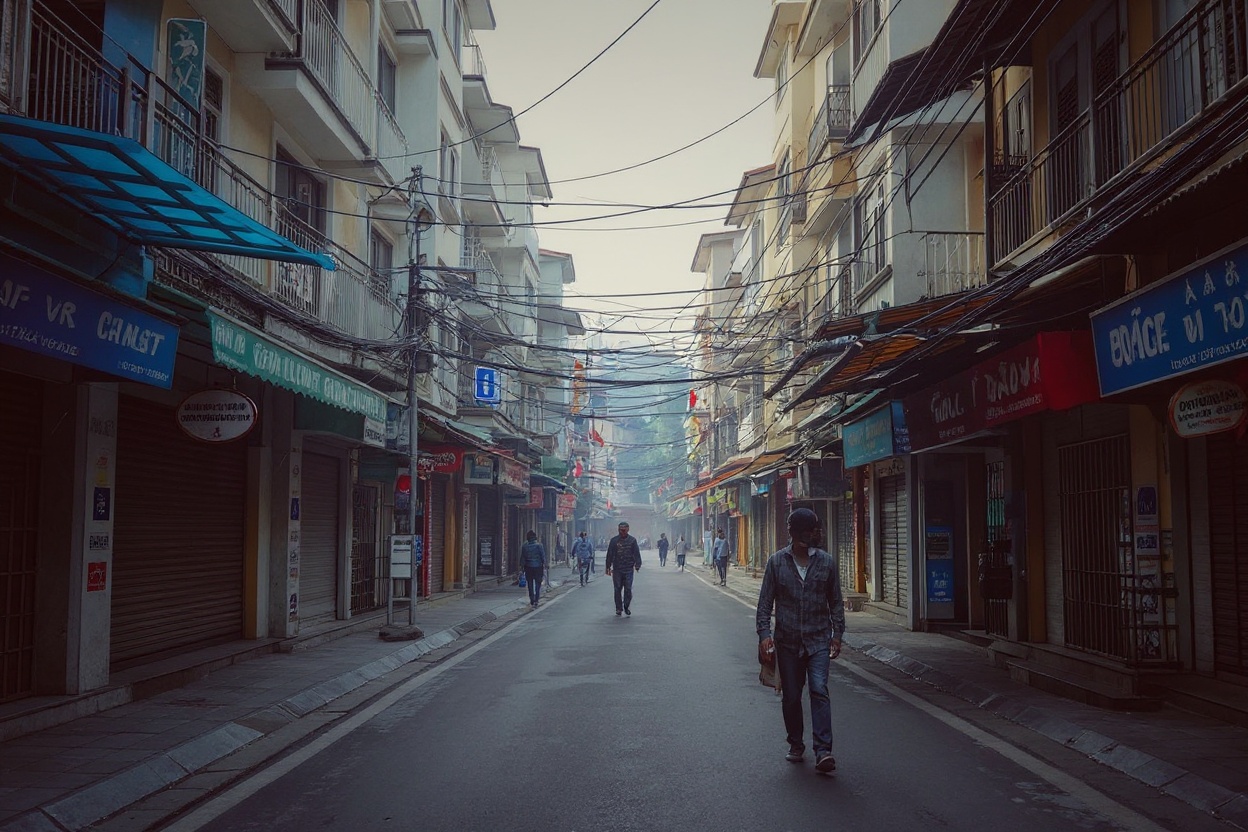
Turn west onto Hang Bac (hang bak — “silver goods”). This street has sold silver jewelry and decorative metalwork since the 15th century. The shops still function — not purely as tourist props, though plenty of tourists buy here. Watch for the workshop doors left open behind the shop fronts: men soldering tiny clasps, women polishing bracelets, the workshop floor gritty with metal dust.
Continue north onto Hang Ngang, then west on Hang Duong. Hang Duong means “sugar goods” and it still does — the wholesale candy and dried fruit sellers remain. The smell shifts: burnt sugar, dried chrysanthemum, something that might be shrimp paste underneath. Turn south on Hang Gai (silk street) for the best concentration of fabric shops if you’re planning tailor work. Most of the quality tailors operate off the main drag but source their silk here. For the full rundown on getting clothes made, see our Hoi An tailors guide — Hoi An does it better, but Hanoi’s Hang Gai has better raw material selection.
Stop 4: St. Joseph’s Cathedral (15 minutes)
West end of Hang Bac leads you toward Nha Tho (nha toh — “church”) street. St. Joseph’s Cathedral at 21.0272° N, 105.8472° E is the French Gothic church that photobombs every Hanoi Instagram. It’s genuinely worth the detour — the square in front of it collects Vietnamese teenagers in the evening, and the café strip on Ly Quoc Su street behind it has the best coffee-to-tourist-pressure ratio in the neighborhood.
The cathedral is free to enter during mass hours (6am, 6pm on weekdays; 5am, 7am, 9am, 6pm on weekends). Outside of mass it’s open but officially requires a “guide donation.” Jake’s advice: go during the 6am mass, sit in the back, and leave 20,000 VND when you exit. Better than the guided tour and more honest.
Stop 5: Ma May Street and the Heritage House (30 minutes)
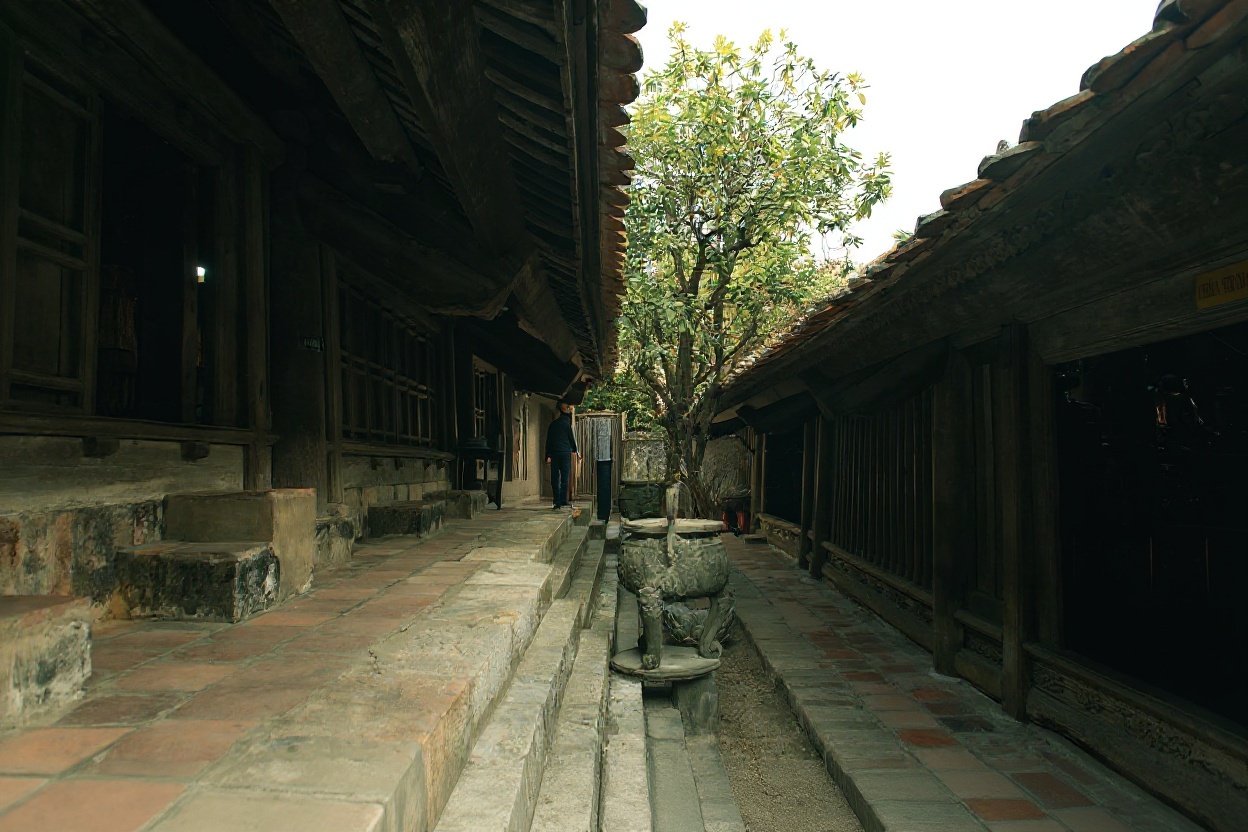
Head back east through the grid to Ma May Street (21.0354° N, 105.8495° E). This is one of the better-preserved streets in the Old Quarter — narrower, with more original facade detail surviving. At number 87, the Hanoi Old House (Ngôi Nhà Di Sản) is an intact 19th-century tube house maintained as a museum. Entry is 10,000 VND (~$0.40). It’s small — you’re through in 20 minutes — but it shows exactly what the Old Quarter looked like before the renovation wave: ground floor commerce, narrow staircase, open-air courtyard in the middle, sleeping quarters at the back.
Tube houses are built narrow because property tax was historically levied on street frontage. Deeper is cheaper. A single family might live in a building 4 meters wide and 50 meters deep.
↗Insider Tip
The alleys (ngõ — say: ngaw) running perpendicular to the main streets are where the actual neighborhood life happens. Ngõ Gach, Ngõ Huyện, and the unnamed alleys off Hang Bong are worth a few minutes of wandering. You will definitely get turned around. That’s the point.
Stop 6: Street Food Stops (Mandatory)
Three stops that belong in any Hanoi walking tour, no exceptions:
Bún Chả Hương Liên (24 Lê Văn Hưu, technically just south of the Old Quarter) — where Obama ate in 2016, yes. The bún chả (say: boon chah — grilled pork and noodles) is legitimately excellent and the Obama footage made it permanent mythology. Lunch only, 11am–2pm. Cost: 40,000 VND (~$1.55). Worth it: yes, despite the sign outside about Anthony Bourdain.
Bánh Cuốn Bà Hanh (14 Hàng Gà) — steamed rice rolls with wood-ear mushrooms and ground pork. The woman running this has been here since before anyone reading this was born. 30,000–40,000 VND (~$1.15–1.55). Breakfast only, gone by 9am.
Cà Phê Trứng Giang (39 Nguyễn Hữu Huân) — egg coffee. This is the original: Nguyễn Giang invented it in 1946, whipping egg yolks with sugar and condensed milk into something between a dessert and a beverage. The current shop is run by her daughter. 30,000 VND (~$1.15) and worth every đồng. For the full coffee rabbit hole, see our Hanoi coffee culture guide.
Stop 7: Dong Xuan Market (45 minutes)
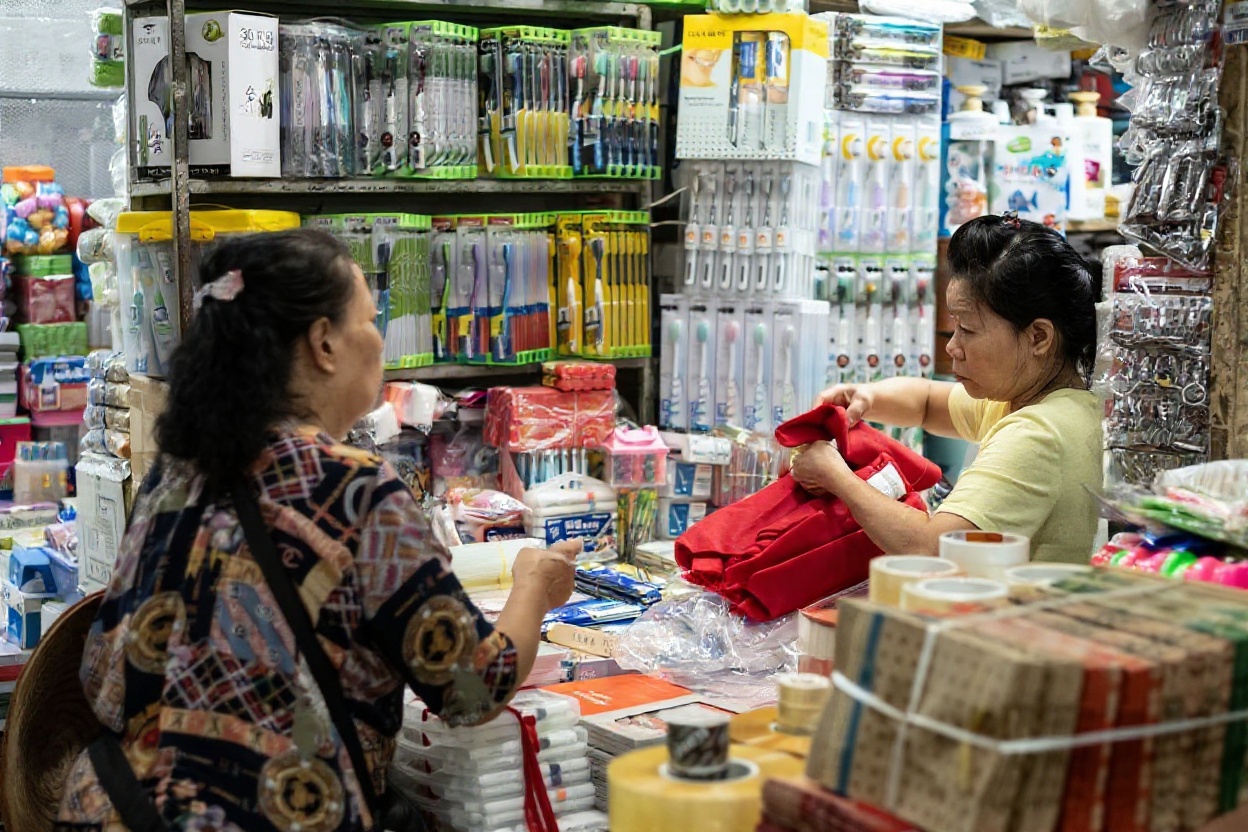
End the walk at Dong Xuan Market (21.0401° N, 105.8484° E) at the northern end of the Old Quarter. The market itself is on three floors: ground level has fresh produce, dried goods, and street food; upper floors are wholesale clothing, fabric, and household items that mostly serves local buyers rather than tourists.
The most interesting part is the street market that surrounds the building on Dong Xuan and Hang Khoai streets — fresh fish laid on ice at 6am, live frogs in plastic bags, piles of unidentified herbs, women squatting behind bowls of morning rice soup. This is the part that photos can’t fully translate. The smell of the fish market section hits before you turn the corner, and it doesn’t let you forget it.
The Hanoi markets guide has the full picture on Dong Xuan and the other major markets worth a detour.
Understanding the 36 Streets: What You’re Actually Walking Through
The “36 Streets” is a shorthand that survives from the Lê dynasty, when guilds organized by trade were assigned to specific streets and the street name reflected the product sold there. Most of the original 36 functions have changed — Hang Tre (bamboo) no longer sells bamboo, Hang Muoi (salt) doesn’t sell salt — but the organization of commerce by cluster still loosely holds.
The ones that still function as advertised, or close to it:
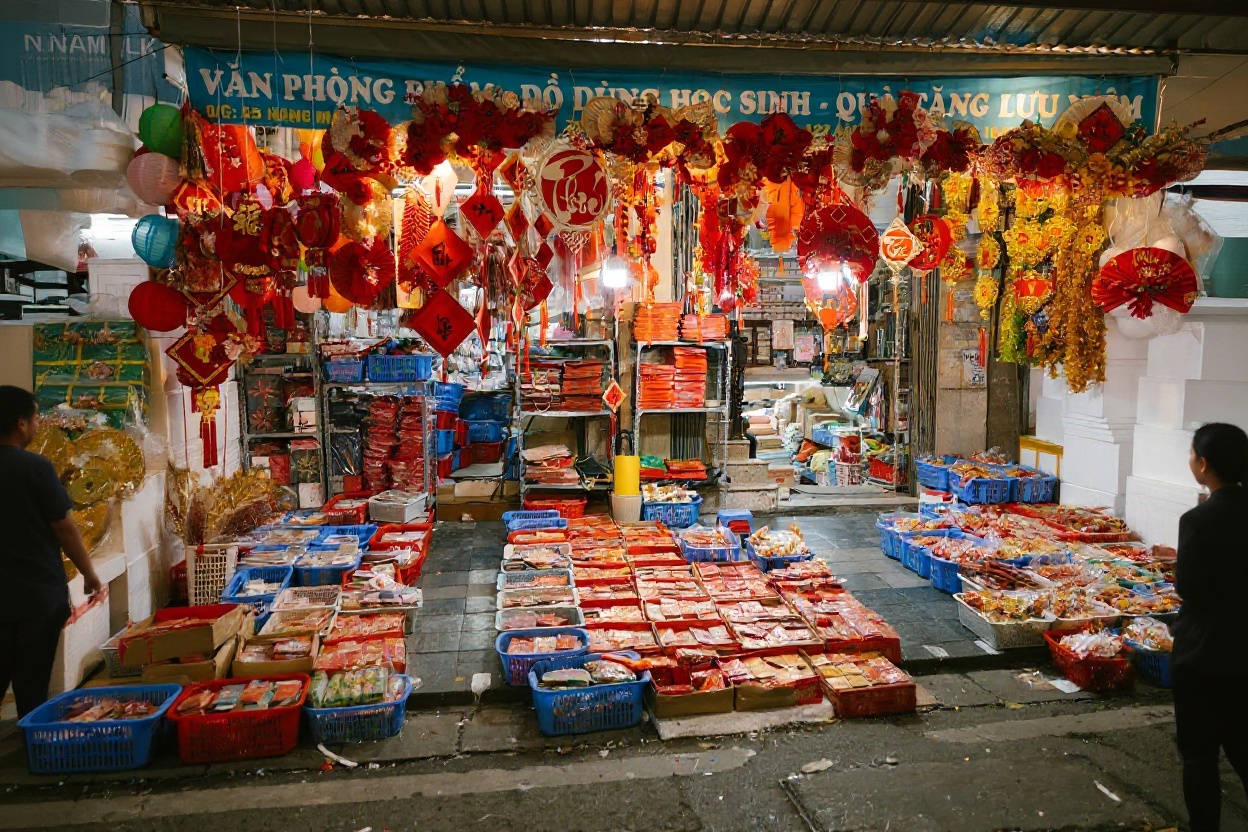
Hang Bac (silver goods) — still jewelers and metalwork shops. Modern mostly, but a few traditional silversmiths remain with open workshops. Hang Gai (silk) — still fabric, silk, and embroidery. The quality ranges enormously; the shops nearest Hoan Kiem are tourist-grade, the ones further north are wholesale to the garment industry. Hang Duong (sugar) — candy wholesalers and dried fruit, especially visible around Tết when the street fills with ô mai (preserved plum) and sugared ginger. Hang Ma (votive paper goods) — this one is the strangest survival: the street still sells paper effigies, fake money, and ceremonial objects burned as offerings to the dead. Paper iPhones, paper Mercedeses, paper stacks of dollar bills. The production scale is industrial.
Walking Hang Ma on a normal Tuesday afternoon, you pass a man loading a truck with cardboard Airpods in bulk. This is not a museum exhibit. This is the street economy of Vietnamese Buddhist practice, operating the same way it has for 400 years, just updated for 2026 consumer goods.
The Tube House Architecture You’re Walking Past
The Old Quarter’s narrow buildings — sometimes only 2–3 meters wide, sometimes 20+ meters deep — are called nhà ống (say: nha ohng — tube houses). They look like buildings compressed sideways. They are.
When the Lê dynasty granted land to guilds, plots were measured by street frontage. Shorter frontage = lower tax. Every family minimized their width and maximized their depth, building into the block like roots. The result: streets of buildings that look like a single face with infinite back rooms. Look through any open door and you’ll see it — the shop gives way to a workshop gives way to a courtyard gives way to a kitchen gives way to a bedroom stacked above the washing line.
Most of what you see now is 19th–20th century reconstruction, not original Lê-dynasty building. The French colonial period knocked down and rebuilt significant portions. But the footprint — the lot sizes, the street widths, the block organization — is genuinely medieval.
The Evening Walk: A Different Old Quarter
The morning version of the Old Quarter is about commerce and food. The evening version, especially Friday–Sunday, is about something else entirely.
From about 6pm onward, the streets around Hoan Kiem Lake become a pedestrian zone (phố đi bộ — say: foh dee baw). The motorbikes are pushed out, the streets fill with people, and the tempo changes from working city to social city. Families walk, teenagers sit in circles on the pavement, street performers set up, and the food vendors reposition for the evening market traffic.
Ta Hien Street (known locally as “Beer Street” and to tourists as the backpacker corridor) runs east from Luong Ngoc Quyen. This is where the bia hơi (say: bee-ah huh — fresh draft beer, brewed daily) culture concentrates. A glass costs 10,000–15,000 VND (~$0.40–0.60). The plastic chairs are uncomfortable. Nobody cares. The combination of cheap beer, warm night air, and the noise of a Vietnamese evening street is the experience that keeps people in Hanoi longer than they planned.
I came to Hanoi planning to stay three months. I stayed five years. A meaningful portion of that decision was made on a plastic chair on Ta Hien with a bia hơi and an ashtray, around day four.
⚠Real Talk
The Old Quarter at night is safe but not quiet. If you’re staying nearby, bring earplugs. The karaoke bars and the beer-street bars run until 2am on weekends. The morning market starts at 5am. The gap between them is not long enough.
Practical Info: What to Know Before You Walk
✓Quick Answer
Wear flat shoes, not sandals — the Old Quarter pavements are uneven, narrow, and occasionally occupied by motorbikes parked across them. Carry small cash (no ATMs inside the tight streets). Keep bags closed and in front of you in the market areas.
Transport to the Start
Hoan Kiem Lake is 3–5km from most hotels in the West Lake district and about 1km from Old Quarter hostels. Grab motorcycle runs 20,000–40,000 VND (~$0.75–1.55) from most of the tourist accommodation zone. Bus 09 runs from Long Bien bus station straight to Hoan Kiem for 9,000 VND (~$0.35) if you want to arrive cheap.
What to Carry
Cash: 200,000–300,000 VND (~$8–12) covers coffee, food stops, and the temple entry. Camera or phone: yes. Bag: small and closed at the front. Rain gear: between May and September, afternoon showers arrive fast and turn the stone pavements into ice. A light poncho (sold for 15,000 VND at any street vendor) handles it better than an umbrella in the narrow streets.
What to Skip
The Old Quarter has a set of tourist-facing experiences that are worth naming so you can decide with full information. The Hanoi Old Quarter Night Tour on a cyclo (pedicab): the cyclo is genuinely fun, but the circuit is fixed, the price is negotiated on the street where tourists get quoted 200,000–500,000 VND, and the “experience” is looking at the outside of buildings you can walk to yourself. Skip it unless you need the seat. The shops selling “handmade” lacquerware on Hang Trong — most of it is factory-produced in a province south of Hanoi, not hand-crafted in the back room. The guy with a Polaroid camera who wants to take your photo near Hoan Kiem and then charge 50,000–100,000 VND for the print. All fine if you want them. Just know what you’re paying for.
Getting Lost on Purpose
The best instruction for the Old Quarter: put the map away after the first 30 minutes. The streets are genuinely confusing — they curve, they don’t connect where the grid suggests they should, and several named streets run into unnamed alleys. This is not a problem. It’s the feature. The Old Quarter is dense enough that you’re never more than 10 minutes from somewhere recognizable, and the wrong turns are almost always better than the intended route.
Frequently Asked Questions
How long does the Hanoi Old Quarter walking tour take?
Allow 3–4 hours minimum. If you add the cathedral detour, a proper sit-down coffee stop, and the Dong Xuan market time, 5 hours is comfortable. Most people try to rush it in 2 hours and leave feeling like they missed something — because they did.
Do I need a guide for the Hanoi Old Quarter?
No. The Old Quarter is compact and dense, and a guide tends to move at the group’s slowest pace past predetermined stops. The independent version, where you follow what’s interesting instead of a script, consistently produces better results. If you want historical context, carry the free map from most Old Quarter hostels — it has the trade-street history written on the back.
Is the Hanoi Old Quarter safe to walk at night?
Yes, with the standard caveats: keep bags closed, use Grab over street taxis, and skip the genuinely dark alleys after midnight. The main streets around Hoan Kiem and Ta Hien Street (the backpacker bar area) are well-lit and have enough foot traffic to make solo walking comfortable at any hour. The Old Quarter at 10pm on a weekend is actually one of the more lively street scenes in Southeast Asia.
What are the best streets in the Hanoi Old Quarter?
Hang Bac (silver) for the working craft atmosphere, Ma May for intact architecture, Hang Gai for silk and fabric quality, and Hang Chieu (rattan and bamboo) for the sensory overload of products stacked floor-to-ceiling in a 3-meter-wide shop. Avoid Hang Be market area unless you go at 6am — it’s purely tourist souvenir by 9am.
Is the Old Quarter walkable in one day?
More than walkable — you can cover the essential ground in half a day. A full day in the Old Quarter is actually better spent spreading two sessions: morning for markets and street food, evening for the café and bar scene when the streets light up and the energy shifts from commercial to social. For everything else to add to your Hanoi time, see our things to do in Hanoi guide.
Can I combine the walking tour with day trips from Hanoi?
Yes — most people do one or two mornings in the Old Quarter, then use Hanoi as a base for Ninh Binh, Ha Long Bay, or Sapa. The walk itself is a half-day commitment, which leaves afternoons free for the city’s museums (Vietnam Museum of Ethnology is the one worth your time — 40,000 VND, ~$1.55) or the West Lake neighborhood. For the full picture on what to pair with a Hanoi base, see our Hanoi day trips guide.
Which Hanoi Old Quarter streets are best for photography?
Ma May at 7am before the motorbikes fill in. Hang Ma on any morning when the paper goods shops roll out their stock — a cascade of paper lanterns, effigy motorcycles, fake dollar bills. Hang Chieu (rattan and bamboo) for the product-density shots where the stock spills into the street. The Huc Bridge at Hoan Kiem in the first hour of dawn, when the mist still sits on the water and the light is the color of old brass. All of these work better between 6:30–8am than at any other time — which is the same answer to almost every “when is the best time” question about Hanoi.
Where should I stay to make the walking tour easiest?
The Old Quarter itself puts you within 10 minutes’ walk of everything on this route. For budget travelers, the Hang Bun and Ngo Huyen street area has the best concentration of hostel-priced accommodation near the walk start. West Lake is quieter and better for mid-range stays but adds a 15–20 minute Grab to Hoan Kiem. For the full rundown on Hanoi neighborhoods, see our Hanoi Old Quarter vs West Lake guide.
FAQ
How long does it take to walk the Hanoi Old Quarter?
A thorough self-guided walk covers 2.5–4 hours depending on how many stops you make. The 36 Streets area is compact — about 1 square kilometer — but worth taking slowly. Early morning (6–8 AM) is best for the street food vendors and before tour groups arrive.
What are the best streets to walk in Hanoi Old Quarter?
Hang Bac (silver/jewelry street, also good for lacquerware), Hang Ma (paper goods and offerings), Hang Gai (silk), Lan Ong (traditional medicine — the smell alone is worth it), and Ta Hien Street for the Bia Hoi corner. The numbered streets on the map don’t always correspond to the actual products sold there anymore.
Is the Hanoi Old Quarter safe to walk alone at night?
Yes — the Old Quarter is active until late and safe to walk. Keep a hand on your bag at traffic intersections and be aware of motorbike bag-snatchers on the busier streets. The Bia Hoi corner area (Ta Hien / Luong Ngoc Quyen intersection) gets lively after dark with backpackers and local street drinkers — perfectly safe.
Where should I start a Hanoi Old Quarter walking tour?
Start at Hoan Kiem Lake (Sword Lake) at the south end of the Old Quarter. Walk north on Hang Gai, turn east through the more traditional streets toward St. Joseph’s Cathedral, then loop through the market streets back toward the lake. Ending at Dong Xuan Market (the covered market at the north end) gives you a natural finish.
What’s the best time of day for a Hanoi Old Quarter walk?
6–8 AM for street food and vegetable market activity before the tourist rush. 3–5 PM for the late afternoon light and when shophouses reopen after the midday lull. Sunday evenings when Hang Dao and surrounding streets become a pedestrian zone — no motorbikes, street performers, and a different atmosphere from weekday walking.