I’m going to tell you something a Reddit commenter laid out clearly that most travel guides skip entirely — because understanding this changes every decision you make at a Hoi An tailor shop:
“These shops generally don’t make the outfits themselves. Once they take your measurements, they go to the workshop that makes the clothes for all of these shops. The workshop will take a pre-made piece that is closest to your measurements and sell it to the shop, which in turn sells it to you at a markup. This is why they are able to promise you one-day turnaround time, and why the material doesn’t always match what you chose.”
Read that again. The “custom tailor” shop in Hoi An’s Ancient Town takes your measurements, tells you to come back tomorrow, and sends the order to a shared factory that makes it from a pre-cut template closest to your size. This is why 500+ shops can all promise 24-hour turnaround. This is why “I chose wool and they used polyester” is a recurring complaint. This is the system.
Understanding this doesn’t mean you can’t get something good made in Hoi An — you absolutely can, and people do. It means you need to know which shops don’t operate this way, what to ask, and what to avoid. That’s what this guide is actually about.
Is Getting Clothes Made in Hoi An Worth It?
> **Quick Answer:** Yes, with the right tailor and the right item. No, if you walk into a street-tout shop and expect a tailored suit in 24 hours for $30. The range between “excellent value, well-made garment” and “looks like Shein” is determined almost entirely by which shop you choose and how much time you allow.
The honest Reddit verdict: divided, but not randomly. The people who had bad experiences made identifiable mistakes. The people who had good experiences followed identifiable rules. This is a system you can navigate, not a lottery.
What you can realistically get in Hoi An that’s genuinely worth it:
- A well-fitted linen shirt or dress with 3–4 days and a proper tailor: excellent value at $25–60
- An ao dai (Vietnamese traditional dress): Hoi An is one of the best places in Vietnam to have one made, $40–120 for quality work
- A blazer or structured jacket with multiple fittings and a tailor who cuts in-house: possible, requires research, budget $80–200
- A full suit: proceed with extreme caution — this requires a tailor who genuinely cuts and sews, multiple days, and ideally a referral from someone who’s had a suit made there before
What’s genuinely not worth it at Hoi An prices:
- Pure silk garments from tourist-strip shops — one traveler ordered a $200 silk kimono at Hoi An’s most popular shop, then found the identical item for $35–50 at tailors in Hue and Da Nang. The Hoi An markup on tourist-area silk is real.
- Anything with a 24-hour turnaround and complex construction — no one cuts, sews, fits, adjusts, and finishes a suit in 24 hours. That garment came from the workshop.
How the System Actually Works
Most Hoi An tailor shops operate as middlemen between you and a network of garment workshops on the outskirts of town. The shop has the customer-facing space, the fabric samples, the measuring tape, and the sales staff. The actual cutting and sewing happens elsewhere, by workers paid per piece.
This model isn’t inherently bad — plenty of the world’s clothing works this way. The problem is that it creates misaligned incentives: the shop profits from margin and volume, the workshop profits from speed, and the customer gets a garment that’s “close to” what they ordered rather than made specifically for them.
The signs that a shop uses this model:
- Promises turnaround under 48 hours for complex garments
- Has racks of near-identical ready-to-modify pieces in back
- Can’t show you an in-house cutting table or sewing area
- Doesn’t do a stand-up fitting (they take measurements, you leave, you return for the finished item)
The signs a shop does genuine tailoring:
- Asks you to come back for at least one in-progress fitting before the garment is finished
- Has a visible cutting table and machines on-site (or can take you to see their workroom)
- Quotes a longer timeline — 3–5 days minimum for a suit
- Asks specific questions about construction (lining preference, button placement, seam allowance for future weight changes)
The 3 Red Flags — Memorize These
The Reddit thread titled “Worst Tailor in Hoi An” generated a near-perfect list of warning signs in the comments. Someone who got burned described the shop: a woman standing outside luring people in, very friendly initially, payment upfront, promised next-day delivery. When they returned: wrong fabric, wrong measurements, poor stitching, no refund. The most upvoted response:
“Warning sign #1: lady standing on the streets luring people in. Warning sign #2: promised a day to get several pieces of clothing. Warning sign #3: after the payment is done. I never trust any business that has someone on the street actively trying to lure people in, and for things that need to be made I very rarely trust promises of fast work.”
So the three flags:
Red flag 1 — Street touts. Any shop that stations someone on the pavement to physically redirect tourists into the store is not a shop focused on quality or repeat business. They’re optimizing for foot traffic. Walk past.
Red flag 2 — Sub-48-hour turnaround promises on complex garments. A shirt in 24 hours: possibly real tailoring. A suit in 24 hours: definitely the workshop system. Ask: “How do you make this so fast?” A good tailor will explain their process. A workshop middleman will deflect.
Red flag 3 — Full payment upfront before any fitting. Reputable tailors take a deposit (30–50%), complete an in-progress fitting, and collect the balance on pickup after you’re satisfied. Full payment before you’ve seen the garment is a system where you have no leverage.
What to Actually Get Made
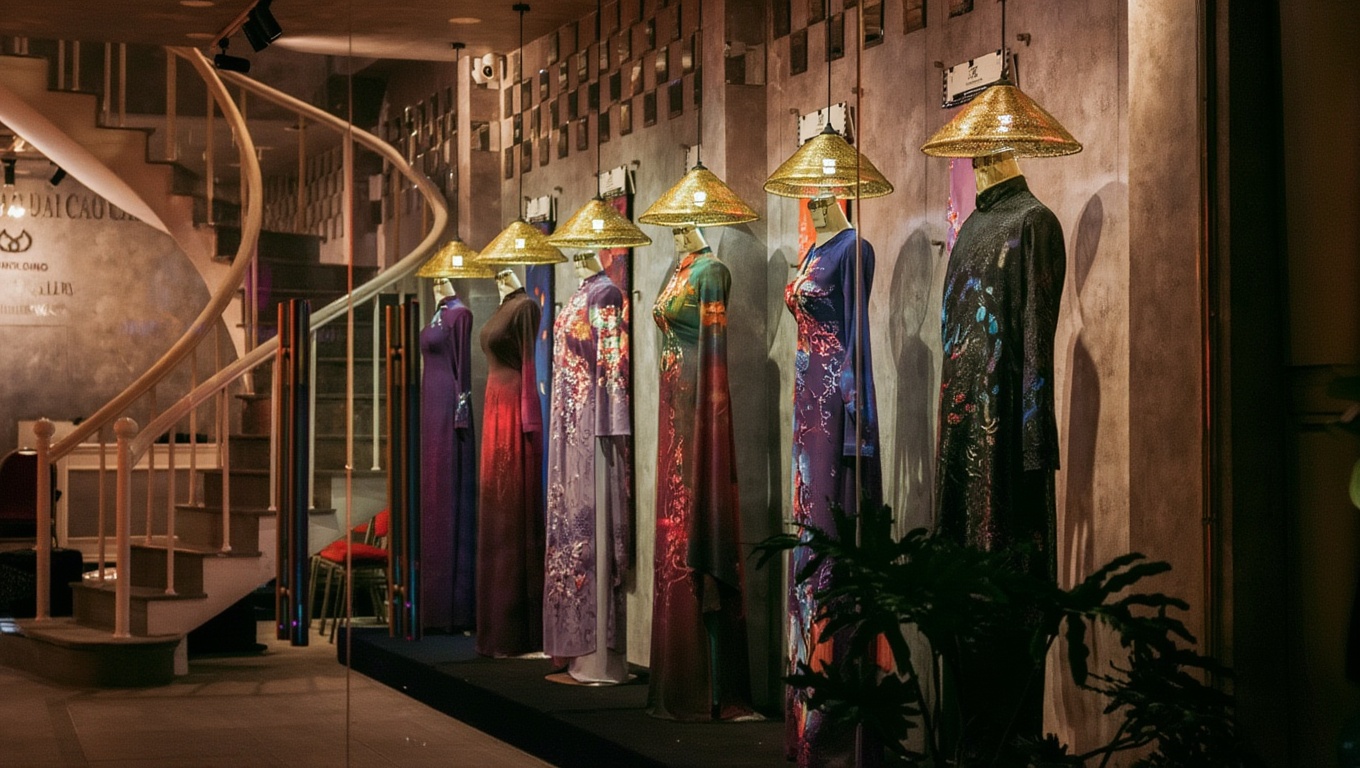
Ao Dai — Yes
Vietnam’s traditional dress is the one thing to get made in Hoi An without hesitation. The tailors here have been making ao dai for generations; they understand the construction better than any Western pattern could specify. A properly fitted ao dai in high-quality silk or brocade runs $60–150 from a good tailor. Budget $40–80 for cotton or polyester blends. Allow 3–4 days for fittings.
Bring reference photos if you have a specific style preference (round neck vs v-neck, sleeve length, side slit position). The tailor will have lookbooks; what’s in the lookbook is what they’re confident making.
Linen and Cotton Pieces — Yes
Simple linen shirts, dresses, wide-leg trousers — this is the sweet spot for Hoi An tailors. The construction is forgiving, the fitting process is relatively quick, and even mid-tier shops produce decent results. A linen shirt: $20–45. A simple dress: $25–55. A pair of wide-leg trousers: $20–40. Allow 48–72 hours and one fitting.
Blazers and Structured Jackets — With Caution
A well-structured blazer requires real tailoring skill: the shoulder construction, the lapel roll, the canvas interlining. Not every Hoi An shop can do this properly. If you want a blazer, look specifically for a shop with visible in-house construction and ask to see examples of finished blazers (not a lookbook photo — the actual finished garment). Budget $80–180, allow 4–5 days, plan for 2 fittings.
Full Suits — Think Carefully
A suit is where the Hoi An system fails most visibly. The Reddit community is divided: some people have had genuinely good suits made; others have received garments that — in one commenter’s words — “look like it was from Shein.” The difference comes down entirely to the specific tailor. If you’re committed to a suit, look for tailors with explicit international reputations (multiple years of positive reviews with photos, not just aggregate ratings), plan 5–7 days, budget $150–400 for quality work, and accept that the cheapest option is not the right option here.
Silk Garments — Compare Prices First
The markup on silk in Hoi An’s Ancient Town tourist strip is significant. One traveler paid $200 for a silk kimono in Hoi An’s most popular shop and found near-identical pieces in Hue and Da Nang for $35–50. If you want silk, ask the tailor to show you the fabric’s weight and weave, not just the label. Real silk is cool to the touch, burns with a protein smell (like hair), and has a particular luster. Polyester blends sold as silk are common in tourist-area shops.
Price Guide: What Things Cost in Hoi An
Hoi An Tailors — Price Reference 2025–2026
| Item | Budget Shop | Quality Tailor | Notes |
|---|---|---|---|
| Linen shirt (men’s) | $15–25 | $30–55 | Simple construction, good value even at mid-range |
| Linen dress (women’s) | $20–35 | $35–70 | Allow fitting; sleeveless simpler than structured |
| Cotton trousers | $15–25 | $25–45 | Wide-leg easier than tailored; specify waist/hip carefully |
| Ao dai (cotton/poly) | $30–50 | $50–90 | Allow 3 days minimum; 2 fittings ideal |
| Ao dai (silk) | $60–100 | $100–180 | Verify silk quality; get a sample swatch to keep |
| Blazer | $50–80 | $100–200 | Only from shops with in-house construction |
| Full suit (2-piece) | $80–150 | $200–400 | Research tailor carefully; don’t do cheapest option |
| Silk kimono/robe | $40–80 | $100–200 | Compare prices in Hue/Da Nang before committing |
Prices from 2025–2026 Reddit reports and travel sources. Negotiate, but don’t negotiate to a price point that makes quality impossible. Budget options have tradeoffs.
How to Choose a Tailor in Hoi An
Research before you arrive. The subreddit r/VietNam has a dedicated thread on tailors that gets updated regularly. Specific shops mentioned repeatedly in positive contexts (as of 2025–2026): Bebe Tailor, 41 Tailor, Yaly Couture (established, tourist-facing but known), Blue Eyed Tailor. This list changes — check the subreddit for current consensus, filtered to posts from the last 12 months.
Look at review photos, not aggregate stars. A 4.2-star rating tells you little. Twenty Google review photos showing finished garments on real customers — with visible construction detail — tells you everything. If a shop’s reviews are all 5-star text with no photos, be sceptical.
Visit in person before committing. Walk the Ancient Town street (Tran Hung Dao and Le Loi have concentration of better-reputation shops). Go in, ask to see examples of finished work, ask how long the process takes and whether there will be a fitting. How a shop handles these questions tells you more than any online review.
Don’t choose based on price alone. “You either can get it cheap, fast, or quality — pick two, and Hoi An tailors usually pick cheap and fast.” This is the correct framework. A shop competing on being the cheapest is telling you something about their production model.
The Fitting Process: What to Expect
A good tailoring experience in Hoi An runs like this:
Day 1 (visit 1 — consultation): Browse fabrics, choose your fabric and design, get measured. The tailor should measure at minimum: chest, waist, hips, shoulder width, arm length, neck, and inseam if relevant. A good tailor asks you to wear the kind of undergarment you’ll wear under the finished piece. Pay the deposit (30–50%).
Day 2 or 3 (visit 2 — baste fitting): The garment exists in rough form — often a white baste version in cheap fabric, or the actual garment pre-seam-allowance. This is where you catch structural issues: shoulder alignment, sleeve length, waist suppression. The tailor marks adjustments. This is the most important visit.
Day 3 or 4 (visit 3 — final fitting): The finished garment. Check everything: seams, lining, buttons, zipper operation if relevant, overall fit when moving (sit down, raise your arms, check that nothing pulls). Pay balance only when satisfied.
If a shop doesn’t offer visit 2 (the baste fitting), they’re using the pre-made workshop model. You’ll get something, but it won’t be genuinely tailored to you.
What to Bring and Prepare
Reference images: Save photos to your phone before you go. “Something like this” with a clear image works better than describing silhouettes in a second language. The tailors understand visual references far better than verbal descriptions.
A garment you like: If you have a shirt or dress that fits you perfectly, bring it. Many tailors will use it as a reference pattern rather than measuring from scratch. This produces better results for fit.
Your real measurements, roughly known: Chest, waist, hips in centimeters. You don’t need to know these precisely — the tailor measures you — but knowing your approximate numbers helps you catch errors in the measuring process.
Enough time: Minimum 3 days in Hoi An to have something made properly. 4–5 days is better. If you’re in Hoi An for 2 days, skip the tailors or limit yourself to a simple item with one fitting.
Shoes you’ll actually wear: For dresses and trousers, bring the shoes you’ll wear with the finished piece. Hem length matters and the tailor should see your actual footwear.
Hoi An vs Other Cities for Tailoring
One experienced commenter who’d bought “at least 100 pieces from tailor shops in Vietnam over the last few years” was direct: “Most Vietnamese tailors are taking a turn for the worse since Covid. Stick with the big city.”
The Hanoi and Saigon tailoring scenes are less tourist-facing and, for certain items (particularly suits and formal wear), produce better results at comparable or lower prices. Hoi An’s advantage is concentration and competition — there are more tailors per square kilometer than anywhere else in Vietnam, which makes comparison-shopping easy if you have the time.
The honest hierarchy for tailoring in Vietnam:
- Ao dai: Hoi An is excellent. Also good in Hue.
- Simple clothing: Hoi An fine; also available in Hanoi/Saigon with more selection.
- Formal suits: Hanoi and Saigon have more established suit tailors with longer client histories. Hoi An is possible but requires more research.
- Silk garments: Compare prices across cities before committing to Hoi An’s Ancient Town rates.
If Something Goes Wrong
The most common complaint pattern: garment doesn’t fit properly, traveler is leaving the next day, shop offers minor alterations that don’t fix the core problem. What to do:
If you have time: Return to the shop immediately when you notice the issue, not the morning of your departure. Any legitimate tailor wants you to leave satisfied — a bad review from a tourist spreads quickly in the Old Quarter. Be specific: “The shoulder seam is 2cm too far forward” is fixable. “It doesn’t feel right” is not.
If you’re leaving the next day: Your leverage is limited. A deposit payment structure (which you should have insisted on) means you haven’t paid for something you can’t use. Full upfront payment means you’re negotiating from zero leverage. This is why the payment structure matters before the garment is started.
Fabric mismatch: If you receive a different fabric from what you chose, this is a legitimate complaint with photographic evidence (the swatch sample, the delivery receipt if one exists). Reputable shops handle this. Street-tout shops don’t.
Document everything: Keep the fabric swatch they gave you at the consultation. Take a photo of the fabric next to a reference (your phone, the sample book page). If there’s a dispute about material, you need this documentation.
Getting Items Home Without Destroying Them
Silk and linen wrinkle in luggage. The garment that fits perfectly in the Hoi An fitting room can arrive home looking like it was rolled up in a backpack — because it was. Packing strategies that work:
For silk ao dai and dresses: ask the tailor to hang the garment in a cloth bag rather than folding it into a plastic one. Hang it in your hotel room for the remaining nights. For the flight, roll silk loosely inside a dry-cleaning bag or silk pillowcase rather than folding; it wrinkles less when rolled.
For linen: linen wrinkles structurally — the wrinkles are part of the textile’s character and fall out with wear or a light steam. Don’t stress about linen creases from packing. They’ll resolve.
For suits: try to carry the jacket as a personal item rather than in checked luggage. If checked, fold it inside-out with the lining exposed (this protects the face fabric), lay it flat on top of everything else, and accept it’ll need pressing when you arrive.
Ask the tailor how to care for the specific fabric — the maintenance instructions matter more for longevity than anything you’ll do to the garment in the next two weeks. A properly maintained silk ao dai lasts decades; one put through a hot wash cycle is ruined in an afternoon.
Hoi An Tailors FAQ
How long does it take to get clothes made in Hoi An?
Budget tailors: 24–48 hours (workshop system). Quality tailors with fittings: 3–5 days for simple pieces, 5–7 days for suits. If you’re in Hoi An for less than 3 days, keep it to simple items or skip tailoring entirely.
What’s the best tailor in Hoi An?
There’s no universally best tailor — it depends on what you want made, your budget, and your timeline. Shops that appear repeatedly in positive Reddit discussions (2024–2026): Bebe Tailor, 41 Tailor, Blue Eyed Tailor, Yaly Couture. Search r/VietNam for the most current thread — the community updates this regularly and the recommendations shift.
Can you get a good suit made in Hoi An?
Yes, but it requires research, a generous budget ($200+), 5–7 days, and a tailor who genuinely cuts and sews in-house. The cheap, fast suit option exists and produces cheap, fast results. Don’t choose a suit tailor based on price.
What should I bring to a Hoi An tailor?
Reference photos of what you want, a well-fitting garment you own for reference, your shoe height for dresses/trousers, and your measurements roughly known. Come with ideas — the tailors can work from photos, fabric swatches you bring, or items you want replicated.
Are Hoi An tailors worth it?
For the right items (ao dai, simple linen pieces, casual clothing) with the right tailor and enough time: yes, genuinely good value. For complex garments from tourist-strip shops with 24-hour promises: no, the results rarely justify the price or the story you tell about them afterward.
Two things worth sorting before you land: a Vietnam eSIM so you have data the moment you clear customs, and travel insurance — medical costs for uninsured foreigners in Vietnam are significant.
Airalo eSIMs activate instantly. Buy before departure — airport SIM queues in Vietnam can take 30+ minutes.
Hoi An Tailors — Planning Cheat Sheet
Hoi An Tailors — Quick Reference
| Category | Details |
|---|---|
| Time needed | Minimum 3 days in Hoi An. 5 days for suits. |
| Best items to order | Ao dai, linen shirts/dresses, simple trousers |
| Avoid | Street-tout shops, sub-24hr turnaround promises, full upfront payment |
| Price range (quality) | $30–60 simple pieces | $100–200 structured jackets | $200–400 suits |
| Research source | r/VietNam — filter last 12 months for current tailor recommendations |
| Fitting visits | Good tailor: 3 visits minimum. Budget shop: 1 visit (workshop model) |
| What to bring | Reference photos, a garment that fits you, shoes you’ll wear with the item |
| Silk warning | Compare silk prices in Hue/Da Nang — Hoi An Ancient Town markup is real |
Planning your time in Hoi An? Our Hoi An things to do guide covers everything beyond the tailor shops — the Ancient Town timing, the food scene, and the day trips worth taking. For the full city picture, the Hoi An travel guide has where to stay, when to go, and how to structure your days.