Last updated: June 2026 — ATM fee data verified, 2026 banking regulation changes included
Six months into living in Hanoi, I was still making amateur ATM mistakes. Not because I didn’t know better — I’d read the guides. I was just lazy about walking the extra 200 meters to find a VPBank when there was a Vietcombank ATM right in front of me. Then I sat down and actually calculated what those “small” fees were costing me per month. It was embarrassing. Three minutes of walking would have saved me $15 a month, every month.
Vietnam’s banking situation is genuinely manageable — it’s not Cambodia or Myanmar — but there are specific, recurring ways that travelers overpay. This guide covers all of them.
How Cash Works in Vietnam: The Honest Picture
Vietnam is a cash-first economy for most street-level transactions. Pho for breakfast: cash. Xe om (motorbike taxi): cash. Market shopping: cash. Guesthouses under $30/night: often cash. Street food: always cash. Beer at a plastic-stool bia hoi: cash.
The shift to cards happens when you step into: mid-range restaurants with printed menus, hotels above $40/night, tour operators and booking offices, air-conditioned coffee chains (Highlands Coffee, The Coffee House), convenience stores (Circle K, GS25, FamilyMart). At these places, Visa and Mastercard are generally accepted. AmEx has lower acceptance rates — don’t rely on it.
The practical implication: you will withdraw cash regularly in Vietnam regardless of how card-capable your life usually is. Budget travelers eating at street stalls and staying at cheap guesthouses will run cash-only for most daily spending. Mid-range travelers will use a mix. Even travelers staying at $100+/night hotels need cash for transport, tips, and any time they step off the hotel compound.
✓Quick Answer
How much cash should you carry? A daily budget of 500,000–800,000 VND (~$19–30) covers street food, local transport, and one or two paid attractions. Keep 1–2 million VND on hand when leaving cities. In rural areas, banks and ATMs become sparse — stock up before you leave Hanoi, Hue, Hội An, or HCMC.
ATM Fees in Vietnam: What You Actually Pay
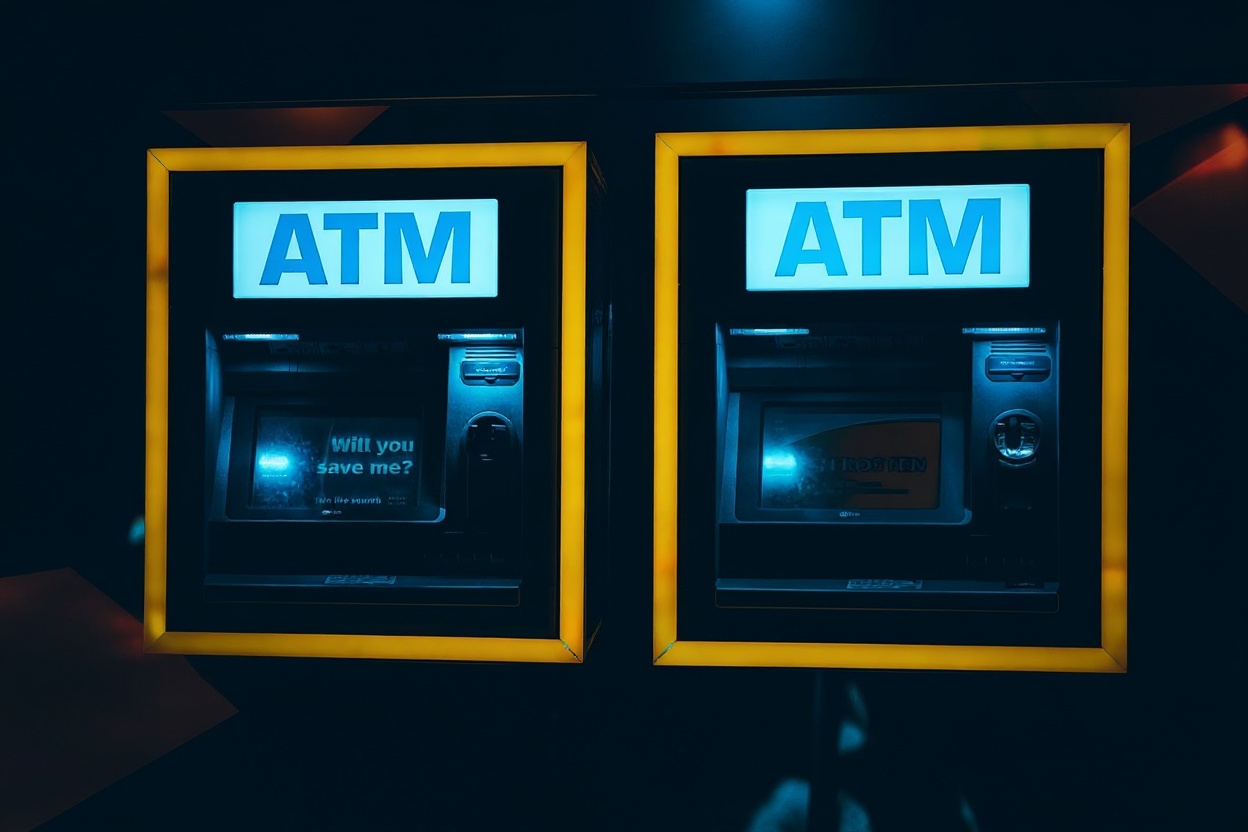
Two layers of fees hit every foreign ATM withdrawal in Vietnam. Understanding both is the only way to control the cost.
Layer 1 — The Vietnamese bank’s local surcharge. This is the fee the ATM machine charges you for using it with a foreign card. It varies by bank and is disclosed on screen before you confirm the withdrawal. The range for most major banks: 30,000–55,000 VND (~$1.15–2.10) per transaction. Some banks charge percentage-based fees that are significantly higher on large withdrawals.
Layer 2 — Your home bank’s foreign transaction fee. This is charged by your own bank and varies wildly: some banks charge 0%, others charge 1–3% of the transaction amount plus a flat fee. If your bank charges a $5 fee plus 2% on a $150 withdrawal ($3), you’re paying $8 in fees on top of whatever the Vietnamese ATM charges. This is where the real damage accumulates for travelers who don’t check.
Withdrawal limits are another practical constraint. In cities, most major bank ATMs allow 3,000,000–5,000,000 VND (~$115–190) per transaction. Outside major cities — rural Ha Giang, remote Phong Nha, small towns — ATMs may cap at 1,000,000–2,000,000 VND per withdrawal, which means multiple transactions and multiple fees for the same amount. Plan accordingly: withdraw enough cash before leaving urban centers on multiday trips.
Dynamic Currency Conversion: The One Rule That Saves You Real Money
This deserves its own section because it catches so many people — including experienced travelers. Dynamic currency conversion (DCC) is when an ATM or payment terminal offers to charge you in your home currency instead of Vietnamese dong. It sounds convenient. It is a trap.
When you accept DCC, the conversion happens at the terminal’s exchange rate — typically 3–7% worse than the interbank rate your card would use. On a 3,000,000 VND (~$115) withdrawal, that’s $3.45–$8 in extra fees that you paid for literally no reason. The ATM didn’t provide a service — it just captured a margin by doing a conversion you didn’t need.
The screen wording varies: “Do you want to pay in USD?” or “Pay in your home currency for a guaranteed rate?” or just a pre-selected option that looks like it’s been chosen for you. The rule: always select Vietnamese dong (VND). Always. Every time. If you accidentally press the wrong button, cancel the transaction and start again.
⚠Real Talk
DCC is not just an annoyance — it’s the highest per-transaction fee trap in Vietnam banking and completely avoidable. Some ATMs are designed to make the “charge in USD” option look like the default or safer choice. It isn’t. Select VND every time.
Credit Cards in Vietnam: Where They Work
Vietnam’s credit card acceptance has expanded significantly since 2020, but the cashless infrastructure is still inconsistent outside of urban tourist areas.
Where cards reliably work: Hotel check-in and checkout at mid-range and above properties (basically anything on Booking.com that charges $30+/night usually accepts cards). Restaurant chains and tourist-focused restaurants in Hanoi, HCMC, Hội An, Da Nang. Convenience stores (Circle K, GS25, FamilyMart). Airport shops and duty free. Major tour operators with booking offices. Some larger supermarkets (Co.opmart, VinMart).
Where cash is still needed: Street food stalls — all of them. Local markets (Bến Thành, Đồng Xuân, local wet markets). Xe ôm and motorbike taxis (unless using the Grab app, which is card-compatible). Independent guesthouses and homestays under $25/night. Rural petrol stations. Most transportation options including local buses, ferries, and local trains (though overnight train bookings can be done online with card).
The mobile payment situation: Vietnam has two dominant mobile payment apps — MoMo and ZaloPay — but these require a Vietnamese phone number and bank account to set up, so they’re not accessible to tourists. Grab app works with international cards for rides and food delivery and is genuinely useful — download it before you arrive.
2026 regulation change: Vietnamese law now prohibits using credit cards to transfer money to e-wallets or payment accounts (MoMo, ZaloPay, VNPay). This doesn’t affect travelers directly — it’s about domestic transfers — but it’s worth knowing if you’re staying longer term and trying to navigate mobile payments.
The Best Cards to Bring to Vietnam
The goal is a card that charges zero or near-zero foreign transaction fees and has competitive exchange rates. The specific card landscape changes by country, but the criteria are universal:
Zero foreign transaction fee debit card. This is the priority. In the US: Charles Schwab High Yield Investor Checking reimburses all ATM fees worldwide — it remains one of the best travel banking products available. Wise (formerly TransferWise) multi-currency card is another solid option used widely by expats in Vietnam. In the UK: Starling Bank and Monzo offer competitive rates. In Australia: Citibank and ING have popular fee-free options.
Credit card for larger purchases. A Visa or Mastercard with no foreign transaction fee. Keep it for hotel bookings, tour payments, and other larger expenses where the acceptance is reliable. Don’t use a credit card at ATMs — the cash advance fees and interest that kicks in immediately make it significantly more expensive than using a debit card.
If you arrive without a good card: getting cash in US dollars before departure and exchanging at a gold shop (tiệm vàng — say: tyem vang) in Vietnam often delivers better rates than ATM withdrawals. Gold shops operate as informal currency exchange and consistently beat bank rates. They’re legal, they’re common, and Hanoians and Saigonese use them regularly. The main challenge: you need USD cash and the confidence to walk into a shop and negotiate.
Money Safety: What’s Actually Worth Worrying About
ATM skimming exists in Vietnam but is not a widespread epidemic the way some guides imply. The risk is highest at standalone ATMs in poorly lit areas and at machines that look physically modified (loose parts around the card slot, odd attachments). Big-bank ATMs inside convenience stores or bank lobbies are lower risk. The standard precautions: cover the keypad when entering your PIN, check for physical tampering before inserting your card, use ATMs in busy public spaces during daylight hours.
Keep daily spending cash (under 500,000 VND) accessible in a pocket. Keep larger cash reserves in a money belt or hotel safe — not loose in a backpack or daypack that’s on your back while on a motorbike.
Notify your bank before traveling. This is basic, but it prevents the frustration of your card being blocked for “unusual” international activity when you need it. Call or set travel notification in your banking app before you fly.
Currency Exchange in Vietnam: The Better Rate Strategy
ATMs are convenient. They’re not always the cheapest option. If you’re traveling with USD cash (or EUR, AUD, GBP), exchanging at a gold shop often beats the ATM rate by 1-2% — which on $500 is $5–10 saved, enough for a meal and a couple of Bia Hois.
Gold shops (tiệm vàng — say: tyem vang) are the informal currency exchange network that Vietnamese people actually use. You’ll find them in most Vietnamese towns and all cities — look for small shops with glass display cases showing gold bars and jewelry, often with current USD/VND rates displayed in the window. They’re fully legal and widely trusted.
How it works: walk in, show your cash, ask for the current rate. They’ll quote you a VND amount. There’s no commission — the margin is built into the rate. Compare the number to the current interbank rate (Google “USD to VND” on your phone for the reference). A good gold shop will be within 100–200 VND per dollar of the interbank rate. Anything worse than 200 VND/dollar under the interbank rate and you can try a different shop — there are usually several nearby.
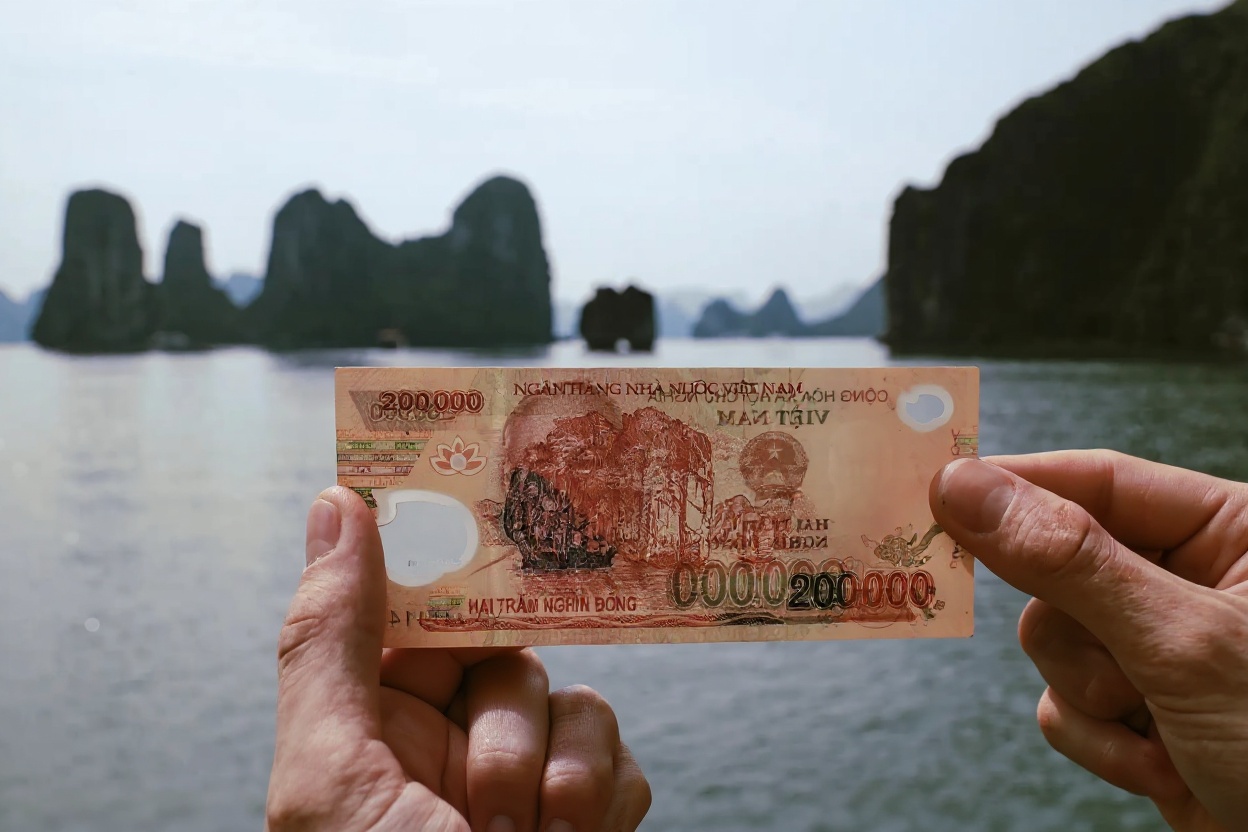
One practical note: bring the cleanest, newest USD bills you have. Vietnamese gold shops (and banks) apply a penalty rate for worn or marked bills, particularly older US $100 bills. Series 2006 or older, any bills with writing on them, or bills with tears or small marks will be refused or exchanged at a worse rate. If you’re planning to bring USD for exchange, get crisp $100 notes from your bank before departure.
For travelers who don’t have USD cash, the ATM remains the practical default. But knowing the gold shop option exists is useful — especially if you’re doing a longer trip and the fee difference compounds over multiple weeks.
↗Insider Tip
Đồng Xuân Market area in Hanoi’s Old Quarter and Bến Thành Market neighborhood in HCMC have clusters of gold shops with competitive rates — more competition means better rates. The gold shops near tourist attractions often have worse rates than those used by local Vietnamese business owners a few streets further in.
Apps and Tools That Actually Help
Two tools that solve real money problems in Vietnam:
Grab app. Cards accepted for payment — Visa, Mastercard, international debit. This matters because it removes the need to have exact small-denomination cash for motorbike rides. Grab is also the safest option for late-night transport from restaurants and bars when counting out the right dong for a negotiated fare is the last thing you want to do. Download before you arrive and link your card in settings. Note: Grab Pay wallet requires a Vietnamese phone number, but paying by credit/debit card on individual trips works fine with foreign cards.
Wise app (or xe.com for quick checks). Shows the real mid-market exchange rate. Use it to check before any currency exchange — ATM, gold shop, or hotel desk. The hotel rate is almost always the worst. The gold shop rate should be within 1% of mid-market. If you’re being offered worse than 1.5% under mid-market rate, it’s worth walking 100 meters to find another option.
What to avoid: Airport currency exchange booths on arrival consistently offer poor rates — 5-10% under mid-market is common at Vietnamese airports. If you need emergency cash at the airport, use the airport ATM instead (look for Vietcombank or Techcombank in arrival halls — VPBank isn’t always present). You’ll pay the ATM fee but get a far better exchange rate than the currency counter.
What Happens If Your Card Gets Blocked or Swallowed
Your card gets blocked for unusual activity — this happens more often than you’d expect when you start withdrawing cash in a new country. The fix: call your bank’s international number (saved in your phone before you leave) and verify the transaction pattern. Most banks unblock within minutes once you confirm you’re traveling. This is why the pre-trip notification call matters.
ATMs swallow cards for a few reasons: entering the wrong PIN three times (the machine retains the card as a security measure), leaving the card in the slot too long after a transaction, and in rare cases, mechanical malfunction. If an ATM swallows your card, note the bank name and ATM location, and call the bank’s customer service number printed on the machine. Most major Vietnamese banks (Vietcombank, Techcombank, VPBank) have 24/7 hotlines. The card retrieval process takes 1-5 business days — which is why carrying two cards is worth the hassle.
The two-card rule: bring two separate payment cards for Vietnam, kept in separate locations (not both in the same wallet). One in your daypack, one in your hotel safe. If one gets blocked, swallowed, or lost, you’re not stranded. This is the single most practical banking advice for Vietnam — not which ATM has lower fees, but making sure you have a backup when the primary fails.
Emergency cash without a card: wire transfers to yourself via Western Union work at many Vietcombank and Agribank branches with ID. It’s slow and has fees but functions as a last resort. Alternatively, apps like Remitly and Wise can send money to your Vietnamese contacts who can advance you cash. Plan for the possibility before you need it, not after.
Jake’s Mistake: The Fee Blindspot
Eighteen months in, I thought I had the ATM situation dialed. VPBank when possible, Vietcombank when not. No DCC. Sensible amounts per withdrawal to minimize transaction count.
What I hadn’t noticed: my main travel debit card had quietly changed its foreign transaction fee policy from 0% to 1.5%. I hadn’t read the fine print email. For three months I’d been paying 1.5% on every withdrawal — on top of the VND 30,000–55,000 local fee — without noticing. On a month where I withdrew the equivalent of $600 total, that was $9 in invisible fees I thought I’d optimized away.
The fix took ten minutes: switched to a Wise card, saved the difference immediately. The lesson: check your bank’s fee policy before every trip, not just once when you first get the card. Policies change, and the change notification is usually in an email you didn’t read.
Vietnam ATMs and Credit Cards FAQ
Is it better to use ATMs or exchange currency in Vietnam?
It depends on your home currency and what you’re starting with. ATMs (with a zero-fee card at a VPBank) are convenient and give competitive rates. Exchanging USD cash at a gold shop (tiệm vàng) typically gives slightly better rates than ATMs and avoids withdrawal fees entirely. Avoid airport exchange counters — they consistently have the worst rates. Hotel exchange desks are slightly better than airports but worse than banks and gold shops.
Which ATM should I use in Vietnam to avoid fees?
VPBank consistently appears as the lowest-fee option for foreign cards — the local surcharge is minimal or zero depending on your home bank’s agreements. Techcombank is the second best option. Avoid BIDV and TPBank for large withdrawals — both charge percentage-based fees that add up quickly. Always check the fee disclosure screen before confirming, and cancel the transaction if the fee seems high.
Do I need cash in Vietnam or can I use a credit card?
You’ll need cash for street food, local markets, xe ôm rides, cheaper guesthouses, and most things outside tourist-oriented businesses. Credit cards work at mid-range and upscale hotels, restaurant chains, large tour operators, and convenience stores. The practical answer: bring a debit card with low foreign transaction fees, withdraw cash as needed from VPBank ATMs, and carry a credit card as backup for larger purchases at card-accepting businesses.
Is it safe to use ATMs in Vietnam?
Yes, with standard precautions. Skimming exists but isn’t pervasive. Use ATMs inside bank lobbies or well-lit convenience stores. Cover your PIN entry. Check for physical tampering before inserting your card. Keep your daily spending cash accessible, and larger reserves in a hotel safe or money belt. The bigger financial risk in Vietnam isn’t card fraud — it’s paying unnecessary fees through poor ATM choice or accepting dynamic currency conversion.