
The short version: American citizens get 45 days in Vietnam without applying for anything in advance. You show up, immigration stamps your passport, and you have 45 days. For trips longer than 45 days, or for people who want maximum flexibility, the Vietnamese e-Visa costs $25, takes three minutes to apply for online, and gives you 90 days multiple entry. That’s it. Vietnam’s entry requirements are straightforward, low-cost, and vastly simpler than the reverse — a Vietnamese citizen applying for a US visa faces a genuinely difficult process. Coming into Vietnam as an American, you have it easy.
Here’s everything about the 2026 entry requirements, the e-Visa application process, common mistakes, and the scam sites that charge $50–100 for a $25 visa.
Do US Citizens Need a Visa for Vietnam?
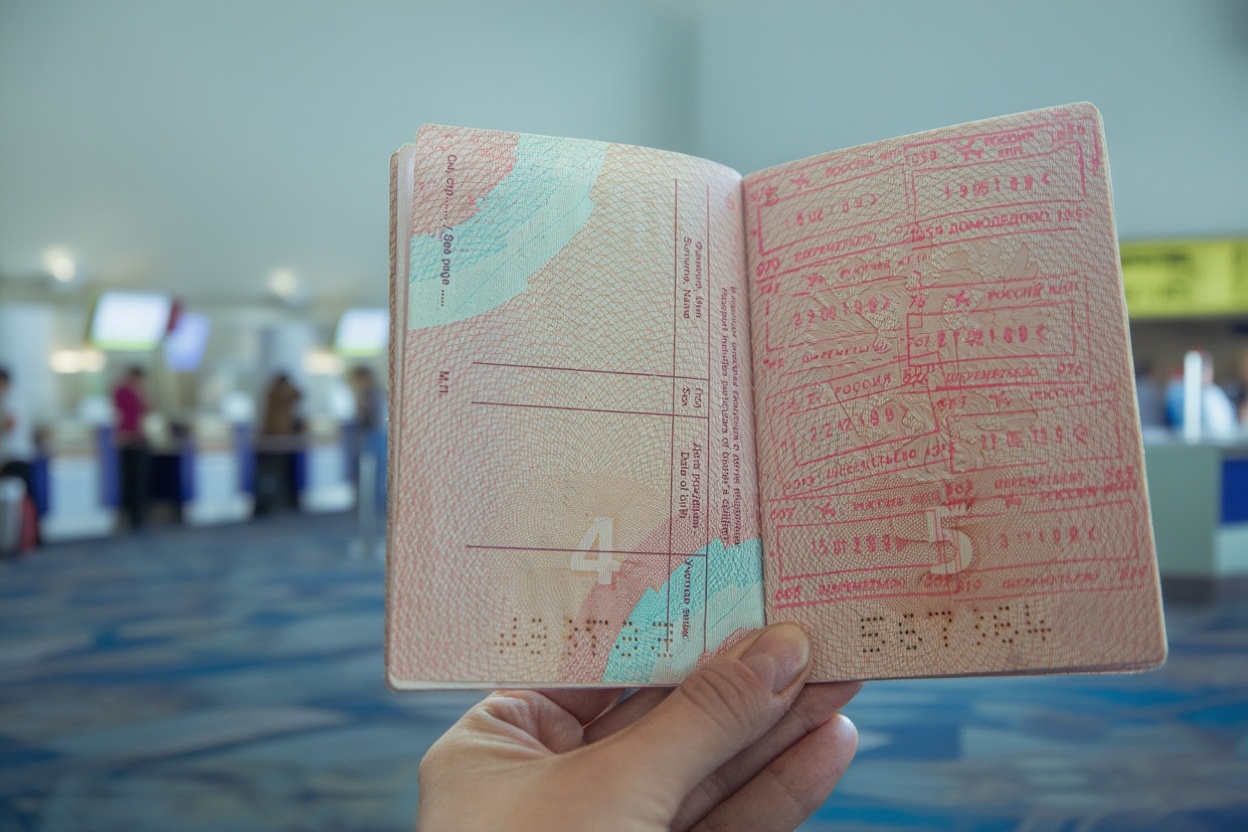
No, not for stays up to 45 days. Vietnam introduced 45-day visa-free entry for US citizens in 2023 as part of a broader tourism push that extended the same privilege to citizens of the UK, Germany, France, Italy, Spain, and several other countries. Before 2023, Americans received only 15 days visa-free — the extension was a significant upgrade and most US visitors don’t need a visa at all.
The visa-free entry applies to air arrivals at all international airports and most land and sea borders. You don’t need to fill out any paperwork in advance, don’t need a visa sticker in your passport, and don’t need to register with any government system before arrival. Present your US passport, answer the standard immigration questions, receive your stamp showing the allowed 45-day duration.
The 45-day counter starts from your date of entry, not from the date your return flight departs. If you enter on May 1, you must leave by June 14 at the latest — and immigration checks on exit. Overstaying results in a fine (1 million VND per day overstayed) and potential complications for future entry. Don’t overstay; it’s avoidable with a small amount of planning.
For trips exactly 45 days or shorter: No visa needed. Book your flight, pack your bag, go.
For trips longer than 45 days: Apply for the e-Visa before departure.
The Vietnamese e-Visa: What It Is and When You Need It
The Vietnamese e-Visa is an electronic travel authorization issued by Vietnam’s Ministry of Public Security. As of 2023, it provides:
- 90-day maximum stay per visit
- Multiple-entry (leave and re-enter Vietnam during the validity period)
- Valid for single entry or multiple entry (select multiple entry when applying)
- Costs $25 USD, paid online
- Processing time: typically 3 business days
- Valid from your specified entry date for 90 days total duration
You need the e-Visa if your trip is longer than 45 days, or if you want the flexibility to enter, leave (say, for a side trip to Cambodia or Laos), and re-enter Vietnam during your stay. The 45-day visa-free entry is single-entry — you leave Vietnam, you’ve used it, and re-entry starts a new 45-day period (which is generally fine, but requires exiting the country).
The e-Visa is also useful if you’re arriving by land border where immigration officers occasionally give shorter visa-free stamps than 45 days. An e-Visa with your requested dates removes this ambiguity.
How to Apply for the Vietnamese e-Visa
Apply only at the official Vietnamese government site: evisa.xuatnhapcanh.gov.vn. This is the only legitimate application portal. Third-party “visa service” websites that appear in Google ads are not affiliated with the Vietnamese government — they charge $50–150 for the same $25 visa and add no value whatsoever.
The application process takes about 10–15 minutes:
Step 1 — Start your application: Select “E-Visa for foreigners” → enter your passport information, nationality, intended entry date, intended exit date.
Step 2 — Upload documents: You need two photos: your passport biographical page (the photo page) and a passport-style photo of your face. The face photo requirements are strict — straight-on, no glasses, white background, taken within the past six months. The system rejects poor-quality uploads; use good lighting and a plain wall behind you.
Step 3 — Select entry/exit point: Choose your airport or border crossing for arrival and departure. You can change this later if your plans change — it doesn’t bind you to that exact entry point, but matching it to your actual flight is advisable to avoid any delays at immigration.
Step 4 — Pay $25 by credit/debit card: The system accepts Visa, Mastercard, and some other cards. Payment goes directly to the government system.
Step 5 — Wait and download: Processing is typically 3 business days but can be faster. You receive the e-Visa PDF by email — download it and print a copy or save it offline on your phone. Some immigration officers prefer to see a printed copy, though digital is usually accepted.
Apply at minimum 5–7 business days before your trip to account for any processing variations. Don’t apply the day before departure — if there’s any issue with your documents, you won’t have time to correct it.
Visa-Free Entry vs e-Visa: Which Is Right for Your Trip?
| Situation | Recommendation | Why |
|---|---|---|
| Trip under 30 days, no exit/re-entry | Visa-free (no application) | No cost, no paperwork, 45-day stamp at arrival |
| Trip 31–45 days, no exit/re-entry | Visa-free, but get e-Visa for buffer | Visa-free gets you to 45 days; e-Visa gives buffer if plans extend |
| Trip 46–90 days | e-Visa ($25, 90 days) | Visa-free maxes at 45 days; e-Visa covers the full stay |
| Side trip to Cambodia/Laos planned | e-Visa (multiple entry) | Visa-free entry restarts on re-entry; e-Visa allows planned re-entry within 90 days |
| Arriving by land border | e-Visa recommended | Land border stamps can be inconsistent; e-Visa specifies exact duration |
Visa on Arrival: Is It Still Relevant?
Vietnam offered “visa on arrival” for years — technically you applied for approval online, received a letter, and got your physical visa stamped at the airport. This system still technically exists but has been largely superseded by the e-Visa, which is cheaper, faster, and more widely available. For US travelers, there is no reason to use the visa-on-arrival system when the e-Visa is simpler. Some third-party agencies still advertise visa-on-arrival services and charge $40–80 for a service the e-Visa replaces at $25. Ignore these services.
Length of Stay Extensions: Can You Extend in Vietnam?
Extending a tourist visa inside Vietnam is technically possible but practically difficult and not recommended. The official process requires going to the immigration office (Cục quản lý xuất nhập cảnh) in Hanoi, HCMC, or Da Nang with your passport and fee. Wait times are long, the process is bureaucratic, and outcomes are not guaranteed — extensions are at the discretion of the immigration officer. Refusals happen.
The practical solution for extending your stay: exit Vietnam briefly and return. A “visa run” to Cambodia (Phnom Penh or Siem Reap by air), Laos (Vientiane, Luang Prabang), or Thailand resets your entry. If you entered on a 45-day visa-free stamp, you exit and receive a new 45-day stamp on return (assuming this is your first or second visit that calendar year — immigration officers have discretion on repeat short-stay patterns). If you have an e-Visa with multiple entry, you can leave and return within the original 90-day validity without any additional fee.
The “visa run” strategy is openly used by long-term travelers and expats. The cost: a $60–120 round-trip flight to Bangkok, Phnom Penh, or Vientiane, plus 2–3 days of your time. Budget accordingly if you’re planning a stay beyond 45 days.
Passport Requirements
Your US passport must be valid for at least 6 months beyond your intended departure date from Vietnam — this is a standard international requirement. Immigration will check your passport validity on arrival. If your passport expires in less than 6 months, renew before traveling; immigration will deny entry otherwise.
Your passport also needs at least two blank pages for entry and exit stamps. If you’re a frequent traveler with a nearly full passport, this is worth checking before you go.
The Visa Scam Sites: How to Spot Them
Type “Vietnam e-visa” into Google and you’ll see multiple paid ads for third-party services at $50–150. These are not scams in the fraud sense — they will actually obtain your visa. They are, however, charging $25–125 extra for a service that takes 15 minutes on the official government website. They target travelers who don’t know the official site exists or who are nervous about the process.
Identifying the official site: the URL contains “xuatnhapcanh.gov.vn” — that’s the Ministry of Public Security domain. Any other URL is a third party. The official site is basic, functional, and not beautifully designed — this makes travelers nervous and third-party sites capitalize on that anxiety with polished interfaces and “guaranteed processing” language.
There is nothing a third-party service can do that you cannot do yourself on the official site. Apply directly. Save $25–125.
What to Bring to Immigration at the Airport
Vietnam’s immigration process is efficient — at Nội Bài (Hanoi) and Tân Sơn Nhất (HCMC), the queue moves fast and most travelers are through in 15–30 minutes even during busy arrivals peaks. The immigration officer will check:
Your passport: Must be valid at least 6 months beyond your departure date. Hand it over open to the biographical page; the officer will scan it. Keep it accessible in your bag rather than buried at the bottom.
Your e-Visa (if applicable): Print a copy or have it ready on your phone. The e-Visa approval letter has a QR code that immigration scans. Some officers prefer paper; others are fine with the phone screen. Having both options ready eliminates any delay.
Completed arrival card (possibly): Vietnam moved away from mandatory arrival cards for most foreign visitors in 2023, but some entry points or specific circumstances may still have forms at the immigration desk. Immigration officers will ask if needed — don’t stress about finding a form before you reach the counter.
Proof of onward travel: Immigration officers occasionally ask for evidence that you’re leaving Vietnam — an outbound flight booking, a bus booking to Cambodia, or similar. This is uncommon for US visitors but not rare at some entry points. Have your outbound booking on your phone or printed just in case. A return flight booking to the US or a booking for a connecting flight onwards satisfies this.
Hotel/accommodation address: You may be asked for your first night’s address. Your hotel confirmation email is sufficient. If you’re staying with friends, have their address ready.
Vietnam Visa Requirements for Other Nationalities
This guide focuses on US travelers, but Vietnam’s visa policy applies broadly to most Western visitors. As of 2026, visa-free entry (45 days) applies to citizens of:
Australia, Canada, Germany, France, Italy, Spain, UK, Netherlands, Denmark, Sweden, Norway, Finland, Poland, Czech Republic, Russia, Japan, South Korea, Singapore, Thailand, Malaysia, Indonesia, Philippines, and approximately 25 other countries total.
Citizens of countries not on the visa-free list need an e-Visa or visa on arrival approval in advance. The e-Visa system at evisa.xuatnhapcanh.gov.vn is available to citizens of over 150 countries — check the official site for your specific nationality if you’re not a US citizen. Processing and cost ($25) are the same regardless of nationality.
Some nationalities receive shorter visa-free periods (15 days for ASEAN members) or have specific bilateral agreements. The official MPS site is the authoritative source for current visa-free duration by nationality, as these agreements can change.
Vietnamese e-Visa: What Can Go Wrong
The e-Visa application is simple but there are failure modes to be aware of:
Photo quality rejection: The face photo requirement is strict — straight-on, white background, no glasses, no shadows, recent. The system automatically rejects poor photos. Take the photo in good lighting against a white wall, upload it at full resolution. If rejected, you’ll be asked to resubmit and the processing clock restarts.
Name mismatch: Enter your name exactly as it appears on your passport, including all middle names. A mismatch between your e-Visa and passport can cause delays at immigration — an officer may need to manually verify or you may be held for secondary screening. Double-check the name spelling before submitting.
Dates confusion: The e-Visa’s validity period starts from the date you specify as your intended entry date, not from the date you apply. If you apply two weeks before travel and specify your entry date correctly, you’re fine. If you accidentally enter the wrong intended entry date (say, today’s date instead of your actual travel date), you may arrive and find your e-Visa showing an entry date that’s already passed. Read the dates twice before submitting.
Payment failure: The payment system accepts Visa and Mastercard but occasionally has issues with cards from certain US banks. If your first card fails, try a different card. Having two cards from different banks available ensures you can complete the $25 payment.
Processing delays: Standard processing is 3 business days. If you apply on a Friday, don’t expect approval until Wednesday. During Vietnamese national holidays (Tet, April 30, September 2), processing can slow to 5–7 days. Apply 2 weeks before any travel involving the e-Visa, not 3 days.
Vietnam Visa Cost: The Full Breakdown
The cost of entering Vietnam as a US citizen is genuinely low:
Visa-free entry: $0. No fee, no application, nothing to pay. The visa-free stamp is issued at no charge at immigration.
e-Visa: $25, paid online at the government portal. This is the full cost — no additional fees at the airport, no service charges on the government site, no “processing fee” on top of the base rate. Total cost: $25.
Third-party e-Visa services: $50–150 (strongly not recommended). These services add zero value over the official $25 portal. You’re paying a middleman to submit the same form you can submit yourself.
Comparison to other Southeast Asia destinations: Thailand is visa-free for 60 days with no application. Cambodia charges $35 for an e-Visa. Indonesia: 30-day visa-on-arrival at most entry points, no advance application needed, no fee. Laos charges $35–42 for a visa on arrival (fee varies by nationality). By regional standards, Vietnam’s entry requirements are among the most straightforward and low-cost for US travelers — the $25 e-Visa for a full 90 days of multiple-entry flexibility is better value than most of its neighbors offer.
Two things worth sorting before you land: a Vietnam eSIM so you have data the moment you clear customs, and travel insurance — medical costs for uninsured foreigners in Vietnam are significant.
Airalo eSIMs activate instantly. Buy before departure — airport SIM queues in Vietnam can take 30+ minutes.
Frequently Asked Questions
How many times can Americans enter Vietnam per year on visa-free entry?
There is no explicit annual limit on visa-free entries for US citizens, but immigration officers have discretion. If you’re entering on a 45-day visa-free stamp, exiting, and immediately re-entering for another 45 days repeatedly, officers may question your intent and grant a shorter stay or request evidence of onward travel. For stays involving a clear pattern of repeated short visa-free entries, getting an e-Visa for your intended stay is cleaner and avoids any ambiguity. The e-Visa’s 90-day validity is more than most travelers need.
Can I work or do business in Vietnam on a tourist visa?
No. Tourist visas (including the e-Visa) permit tourism and leisure only. Working or conducting business on a tourist visa is a violation of Vietnamese immigration law. For business travel, Vietnam offers a separate business visa class. For long-term work, a work permit and temporary residence card are required. Enforcement against short-term travelers on tourist visas is minimal, but technically doing paid work while on a tourist visa is not permitted.
What if I overstay my Vietnamese visa?
Overstaying incurs a fine of 1 million VND (~$40) per day overstayed, plus potential complications at immigration. You pay the fine at immigration on departure. Staff are efficient about processing this, but the fine adds up quickly — 3 days overstay is $120. More significantly, repeated overstays can affect your ability to obtain future Vietnamese visas or even be flagged for additional scrutiny at immigration. Don’t overstay; the e-Visa’s 90-day duration is enough for almost any trip, and the visa run for extensions is straightforward if you need more time.
Do I need any vaccinations for Vietnam?
No vaccinations are required for entry. Vietnam does not require proof of any vaccination for tourists. The CDC recommends being up-to-date on routine vaccines and considering Hepatitis A and Typhoid (both food/water-borne risks), Hepatitis B, and Japanese Encephalitis (for rural and agricultural areas, long trips). Malaria prophylaxis is generally not recommended for tourist itineraries focused on cities and coastal areas, though it may be relevant for rural northern stays. Consult a travel medicine clinic or your doctor 6–8 weeks before departure for personalized recommendations.
Is Vietnam e-Visa double-checked when I board my flight?
Airlines check your visa (or verify your eligibility for visa-free entry) before boarding at your departure airport. The check-in agent scans your passport and verifies your entry eligibility in the airline system. If you have an e-Visa, have the PDF ready — you may be asked to show it at check-in. If you’re relying on visa-free entry, the check-in system verifies your passport nationality against the visa-free list. On arrival in Vietnam, the immigration officer performs the actual stamp — what happens at the departure airport is just a pre-check to ensure you’re not denied boarding and then denied entry.
Can I enter Vietnam if I have a criminal record?
Vietnam does not routinely access foreign criminal databases during the e-Visa application or at immigration. Minor convictions or misdemeanor charges from years ago are unlikely to cause any issue. However, Vietnam has full discretion to deny entry to any foreign national and doesn’t publish explicit guidelines on what criminal history triggers refusal. For serious convictions, particularly drug offenses (Vietnam has very strict drug laws and views drug history seriously), consult a Vietnamese embassy if you have concerns. For the vast majority of travelers, this is not a relevant concern.